Vermont School Garden

A visit to a Vermont public school garden through the seasons.


Leave a comment

More on Flint Corn


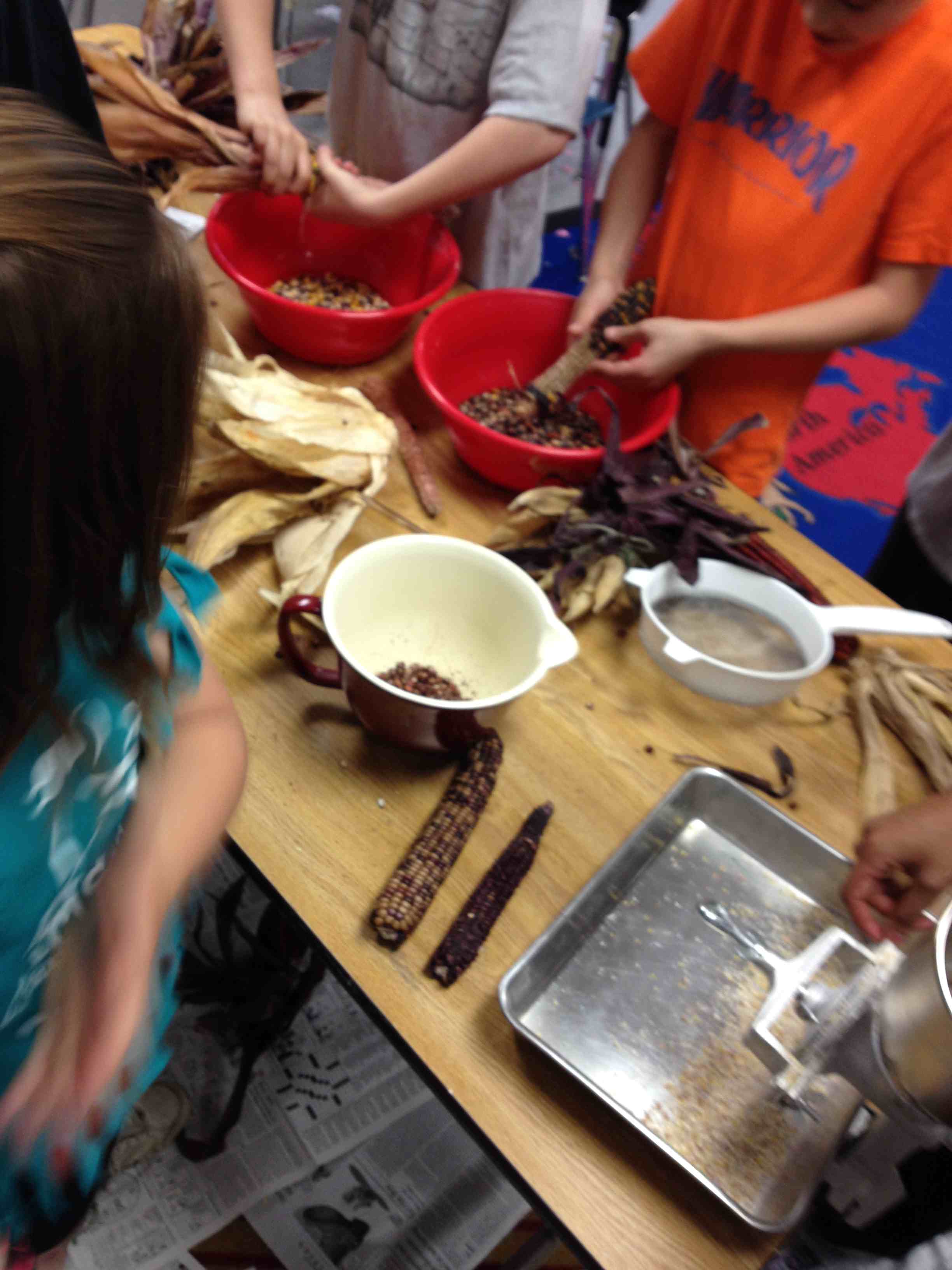
removing kernels from cobs

removing kernels from cobs


Just in time for their trip to Sturbridge Village next week, the second 5th grade class at school tried their hand at grinding corn and making baked corn pudding. This time we also created a vegan version, substituting tofu for eggs and soy milk for cow’s milk. It CAN be done! Nutmeg and molasses have become new friends of the fifth graders. I wish I had taken some photos of the kids enjoying their pudding. I was too busy dishing out thirds and fourths!


 Click Here: Corn Pudding Recipe


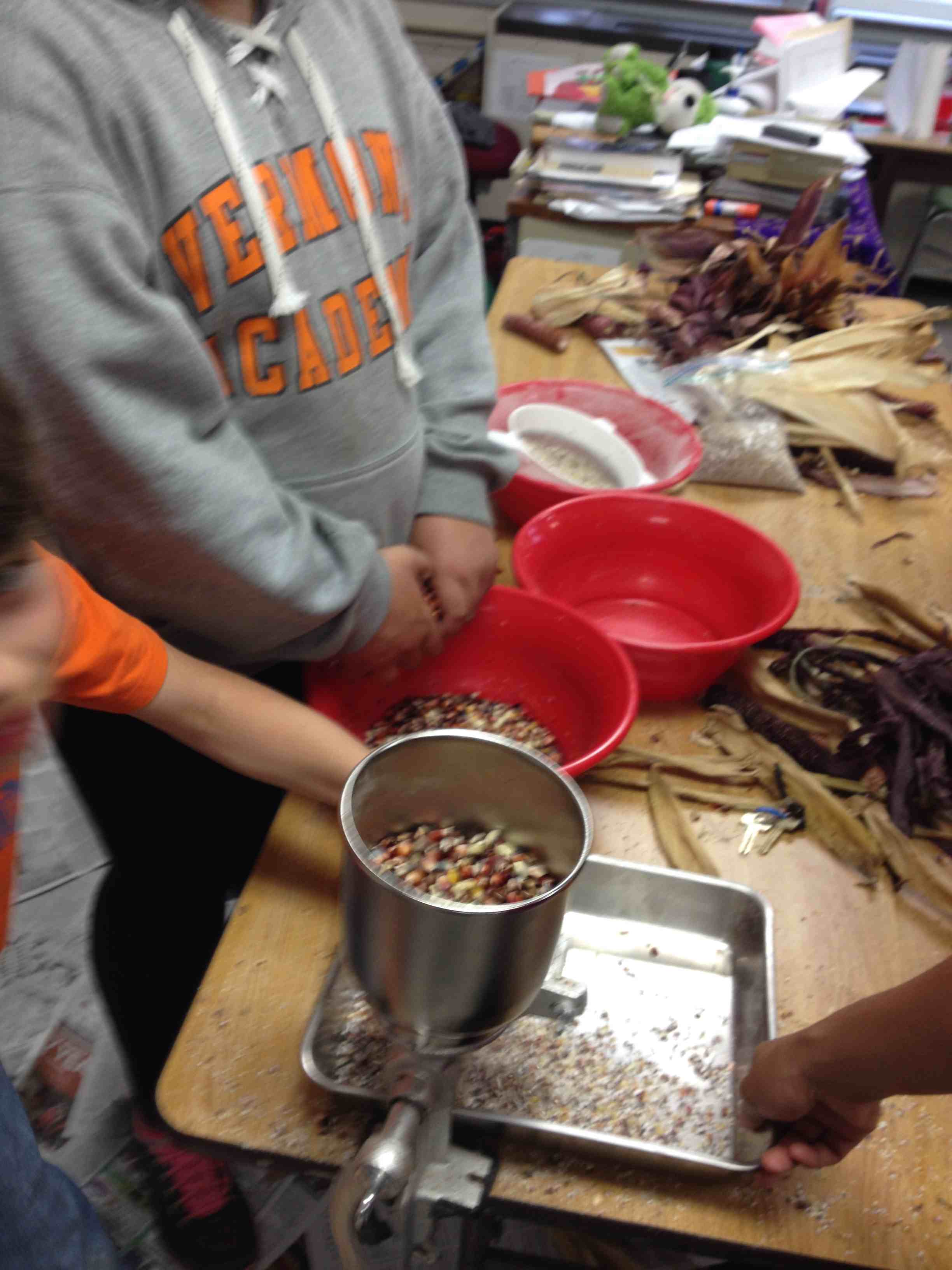
grinding corn kernels

grinding corn kernels

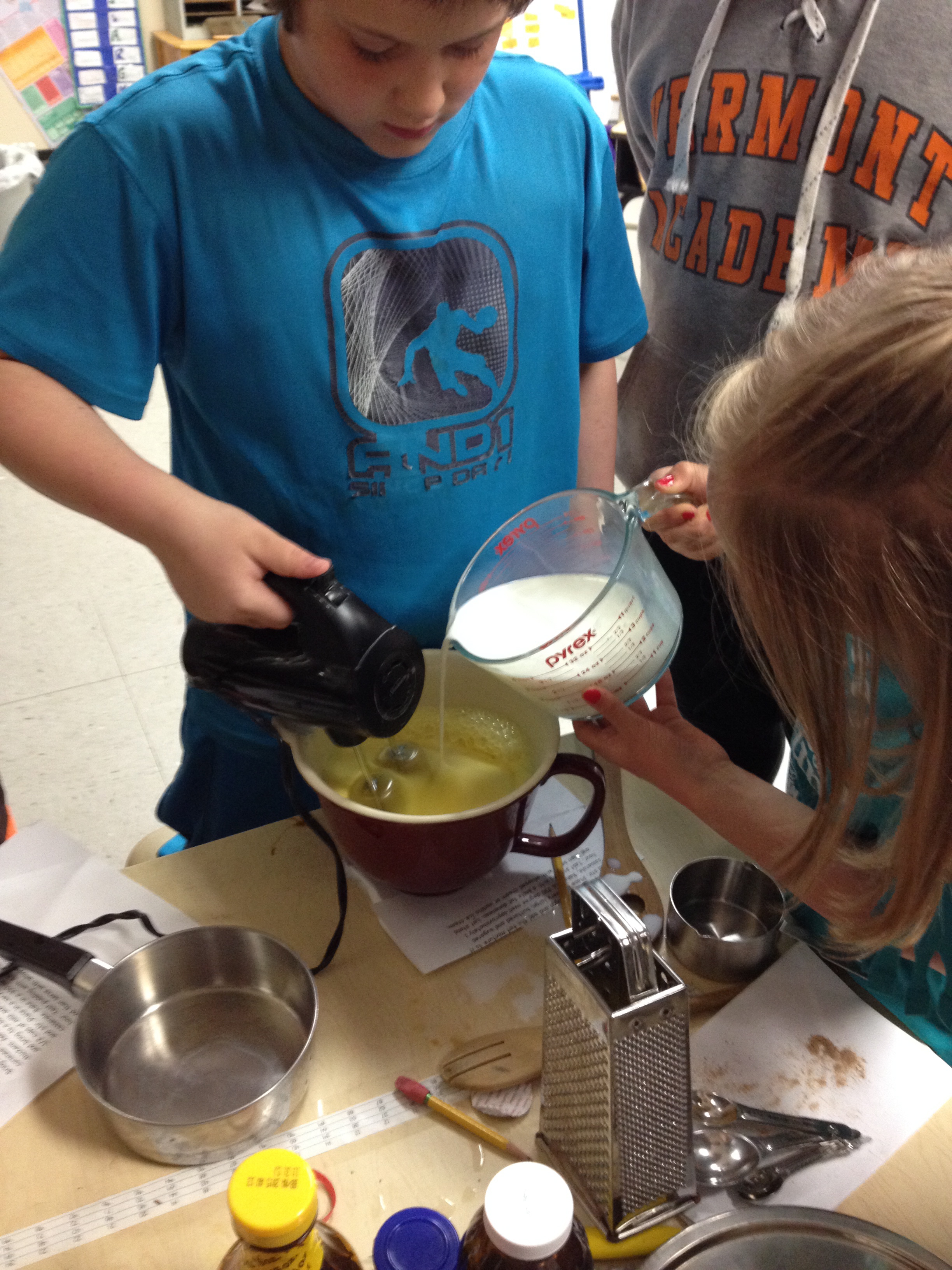
adding milk to eggs

adding milk to eggs

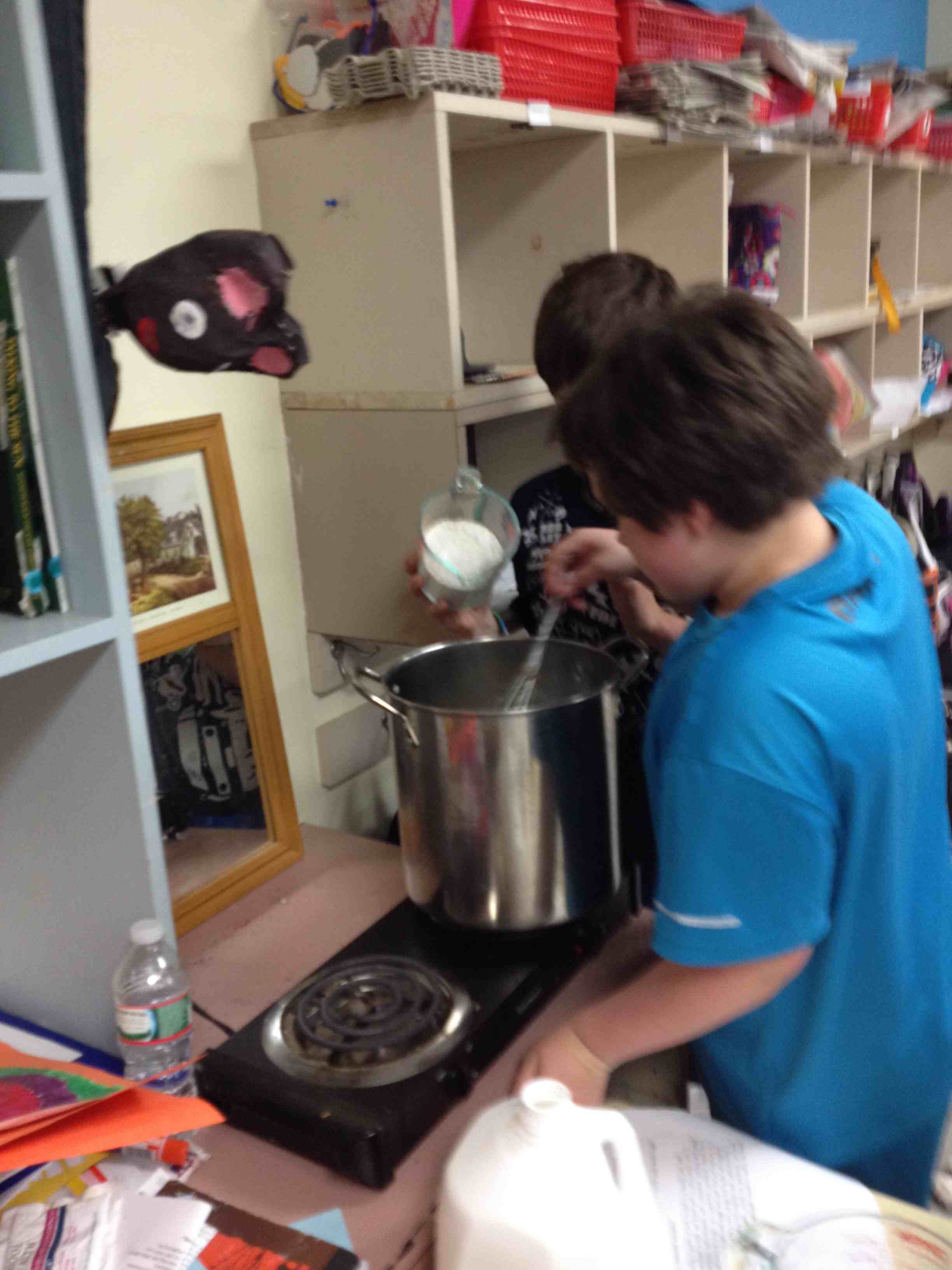
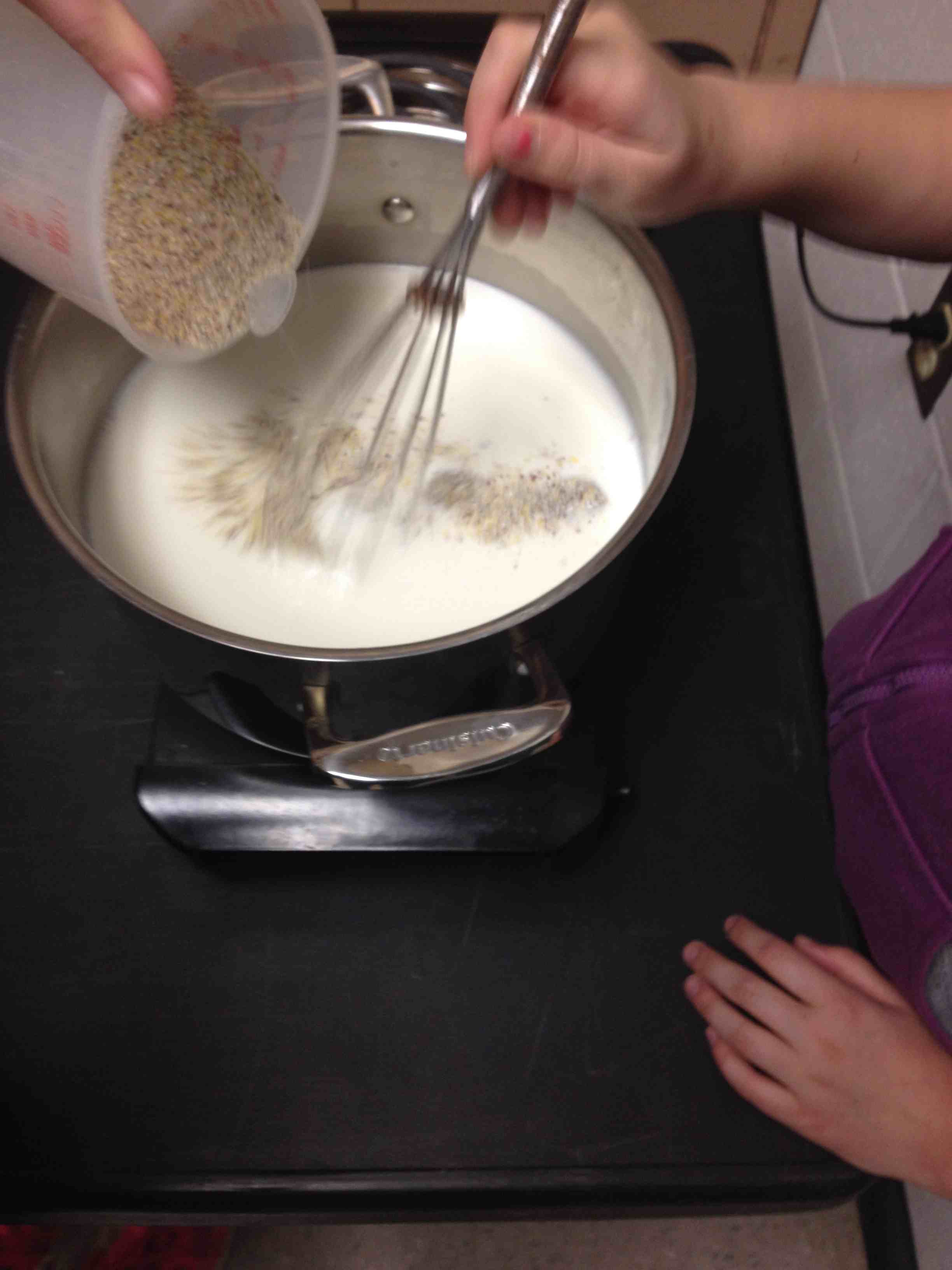
adding corn meal to pudding

adding corn meal to milk


Leave a comment

COOKING LIKE NATIVES AND SETTLERS: FLINT CORN

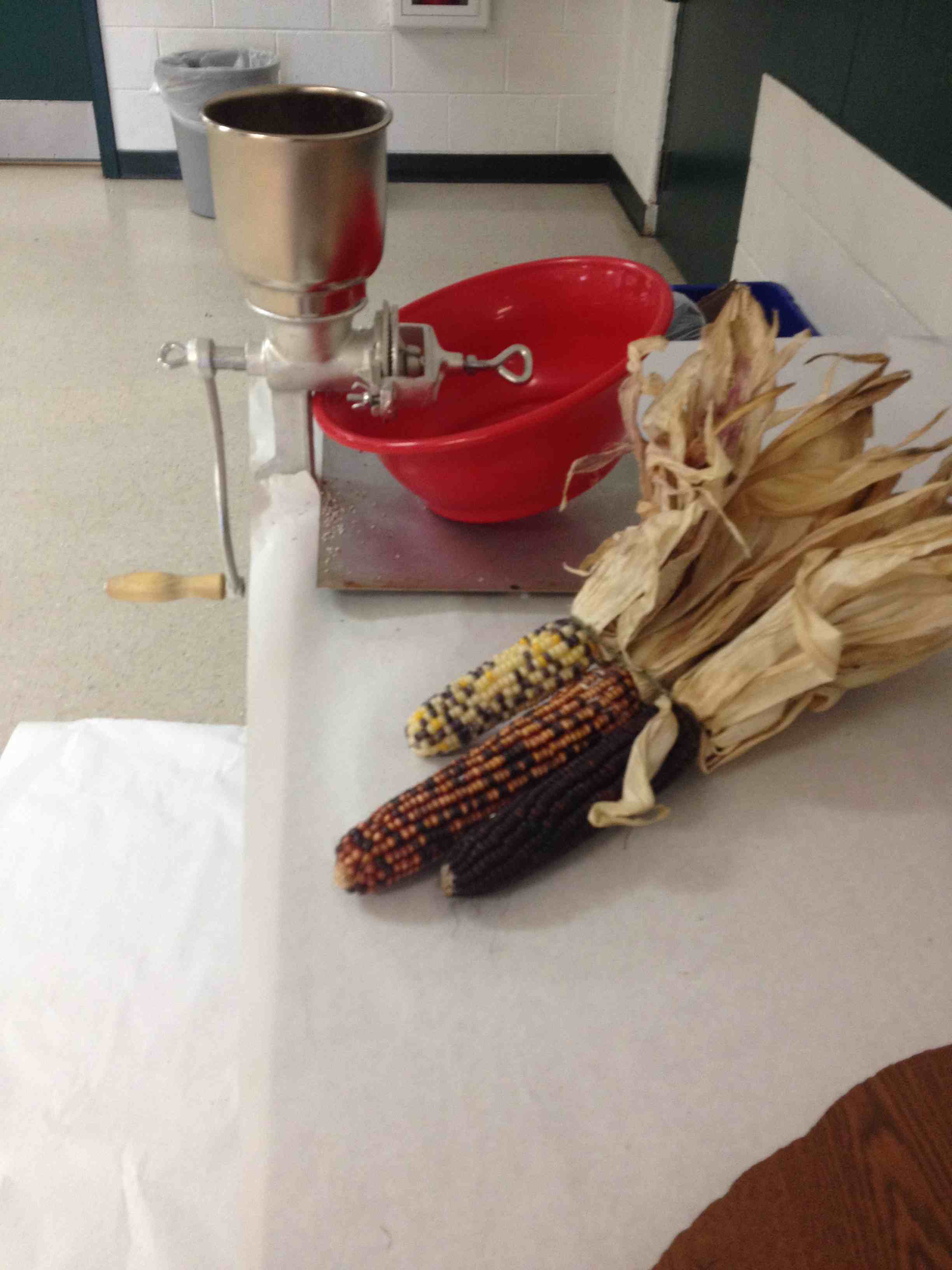
flint corn before grinding

flint corn before grinding


Last spring the fourth graders planted a Three Sisters’ Garden. (See June entries from 2013). In the fall as fifth graders, they harvested their crop of flint corn, a variety of corn with a hard kernel that you’ve seen sold as hanging ornaments. They tied the corn and hung it in their classrooms to dry over the winter. Flint  corn was one of the few early crops that native Americans could process into food during the long winter. It took a lot of hard work to grow, harvest, dry and finally grind their corn into meal.  These fifth graders learned that survival wasn’t easy in our country 200 years ago.

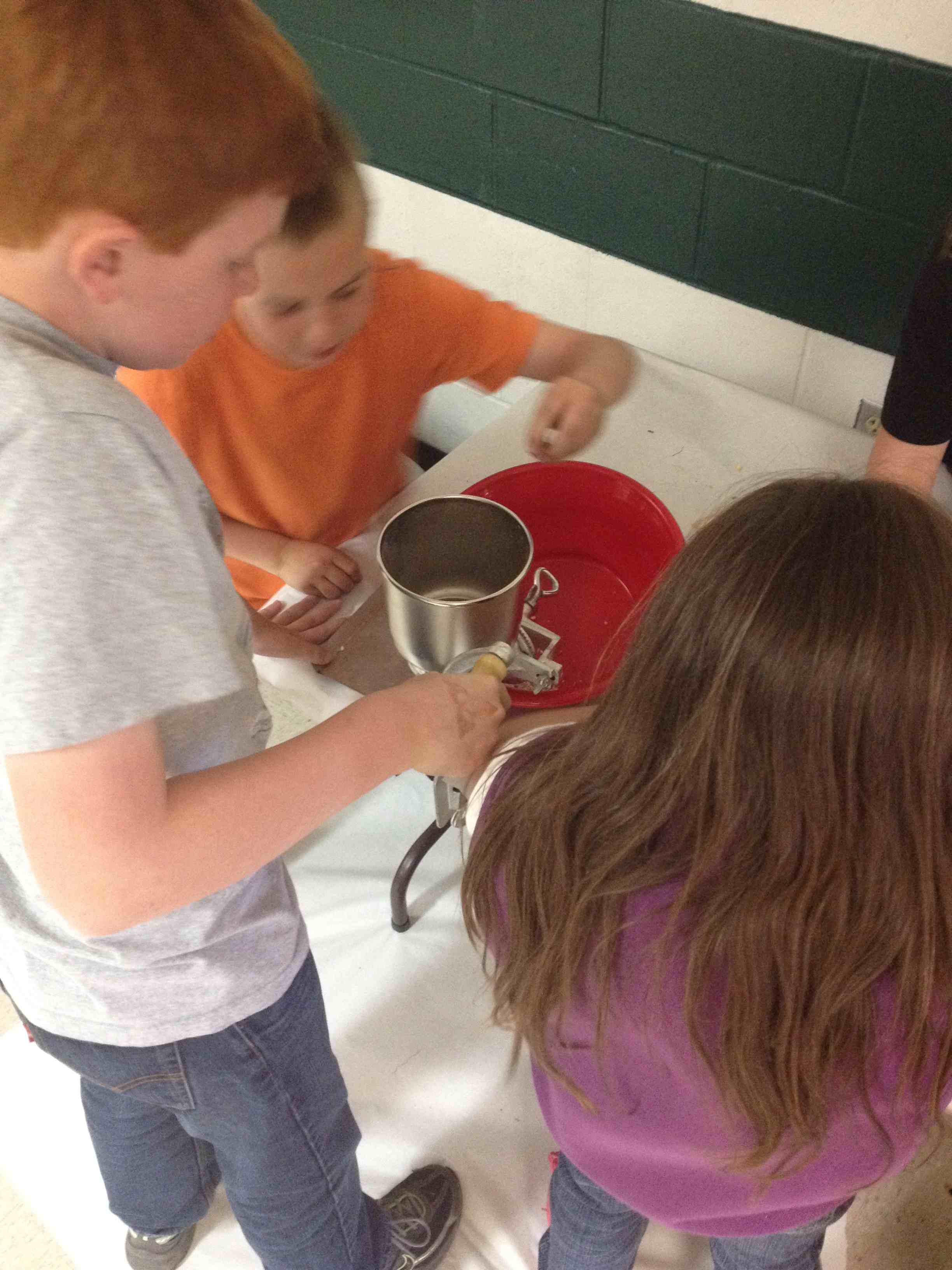
milling corn

milling corn


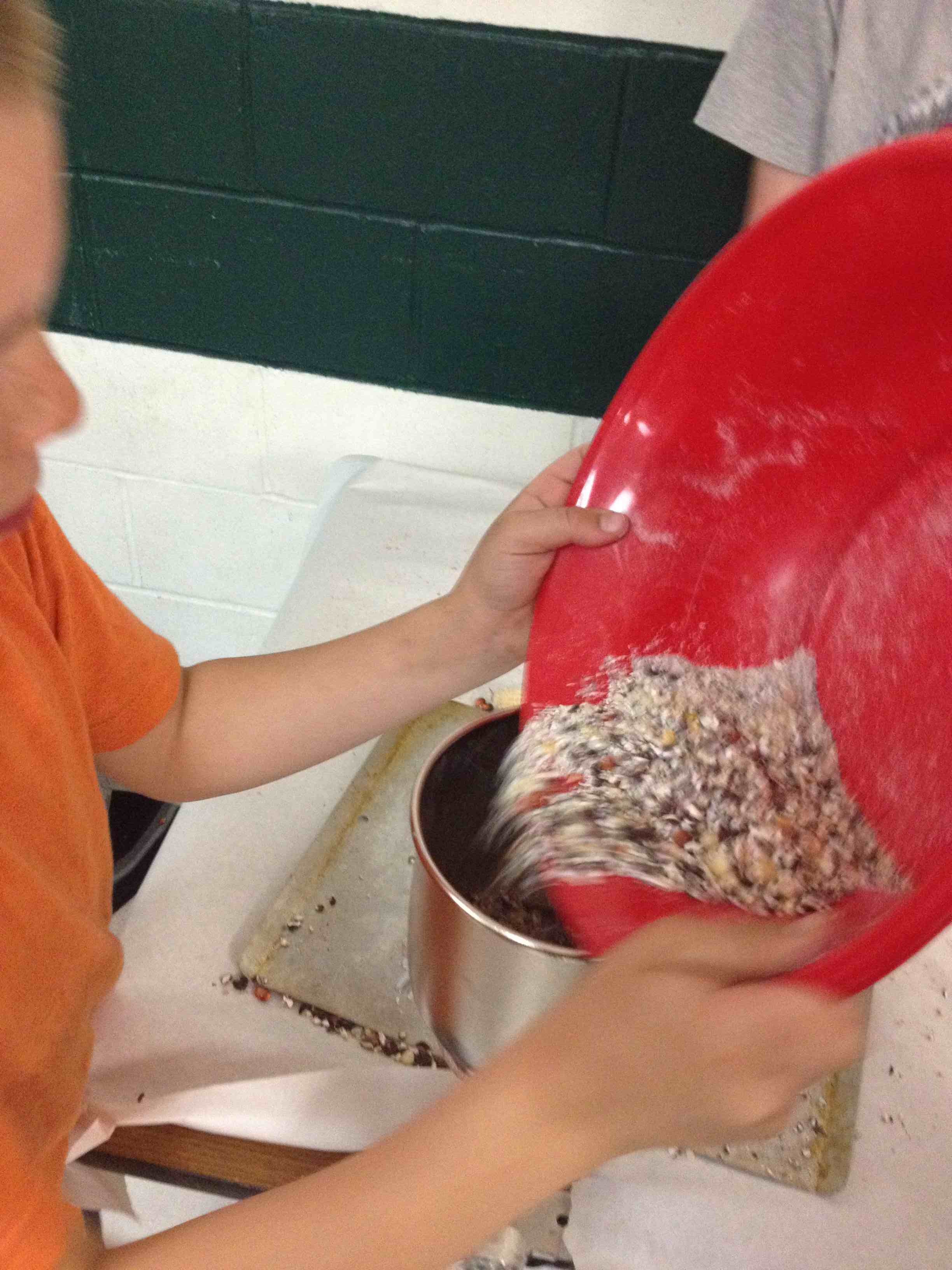
regrinding


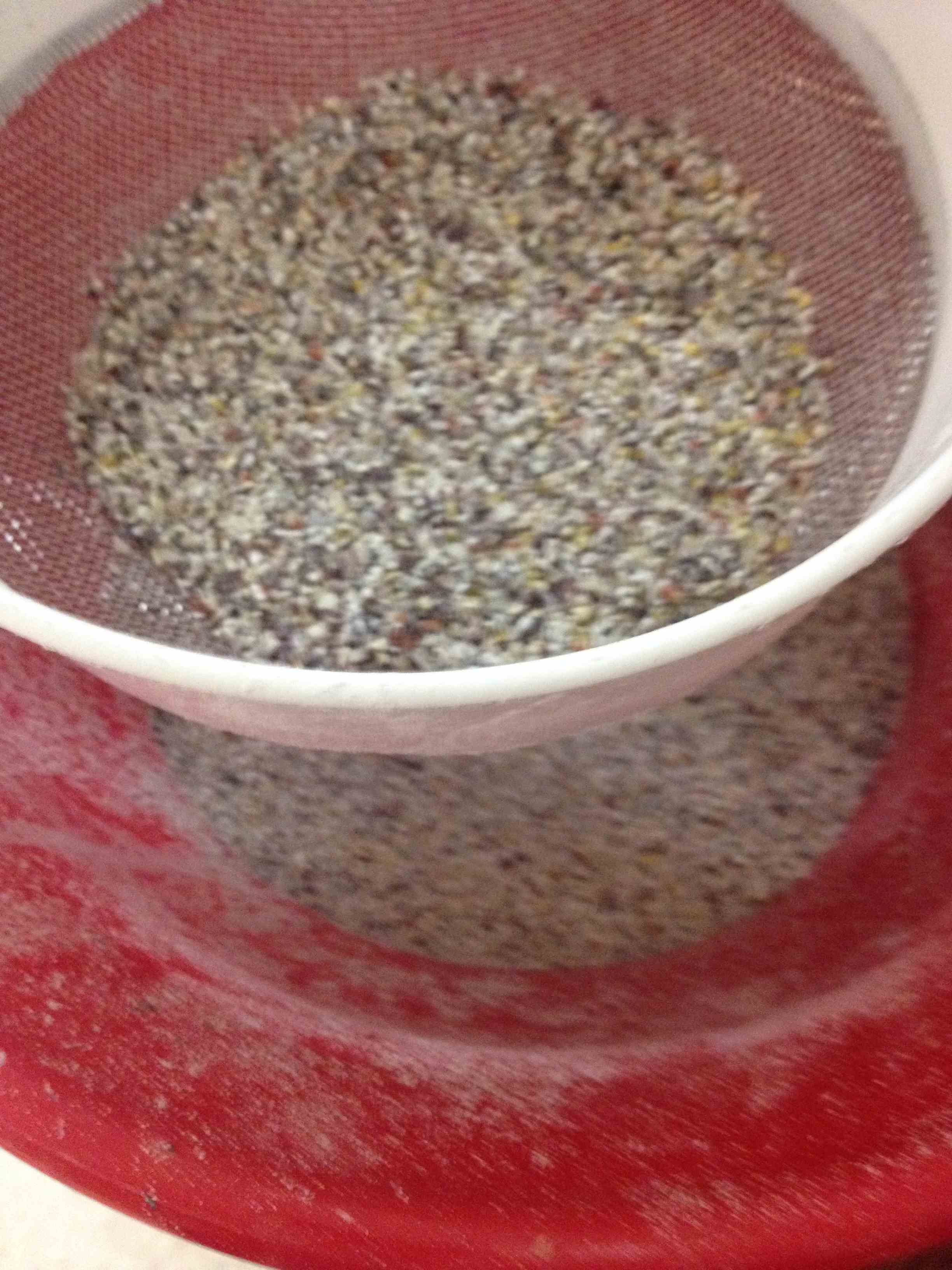
sifting meal

sifting meal


Final sift

Final sift


I found a grain mill through Amazon manufactured by the Great Northern Popcorn Company. It’s durable enough to handle grinding hard flinty corn. The moveable parts have value as a  tool for teaching physics concepts. Students can see how the auger sends the corn through to be ground while they’re using the mill. They compared it to other time they’d seen augers (for instance, ice fishing). They observed the plates grinding against each other and they tightened and loosened them as the they passed the ground corn through a few times to create a finer meal. What provided the energy for grinding this corn? The breakfast they ate earlier in the morning!


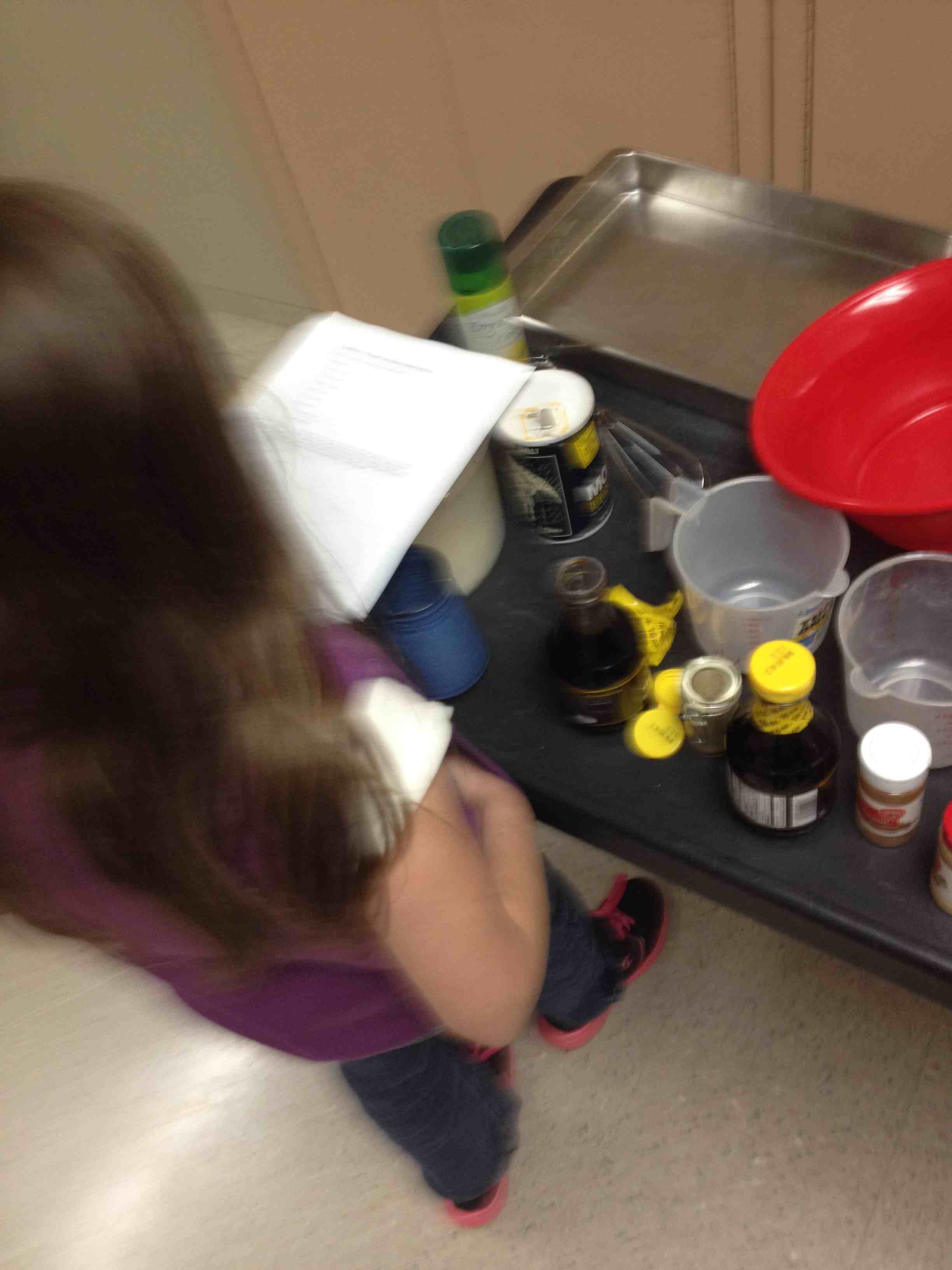
reading recipe lining up ingredients

reading recipe lining up ingredients


stirring cornmeal into hot milk

stirring cornmeal into hot milk

After regrinding the corn, we sifted it and saved the coarser meal for another project. Then we followed an old New England recipe for baked corn pudding. It worked! I introduced the class to the aromas and tastes of nutmeg and molasses before we began  baking. This prepared them to enjoy those ingredients later in the pudding.


Leave a comment

Bread from Around the World

Where in the World is Foccacia Made??

CLICK HERE: 2 quick  bread recipes

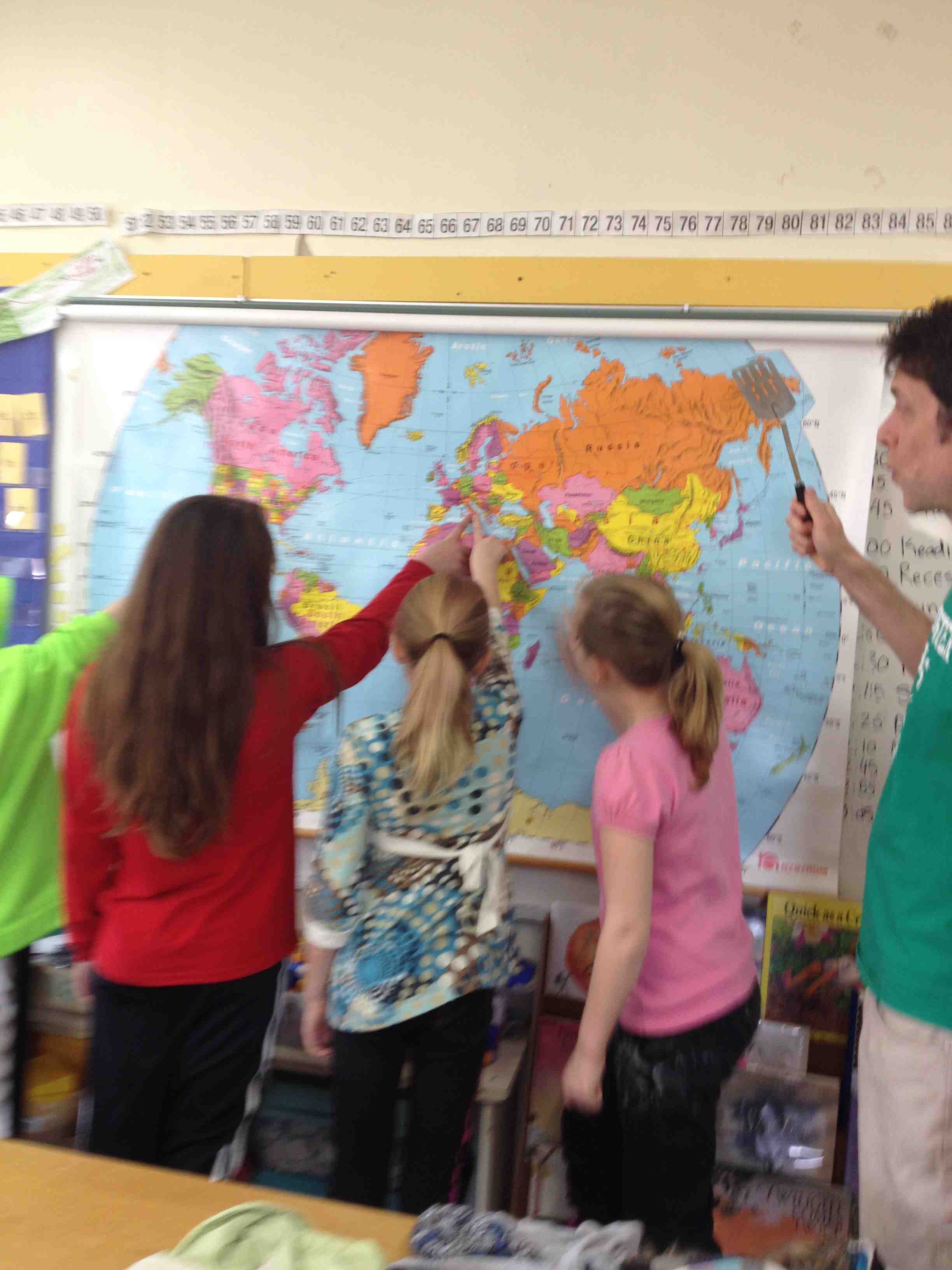
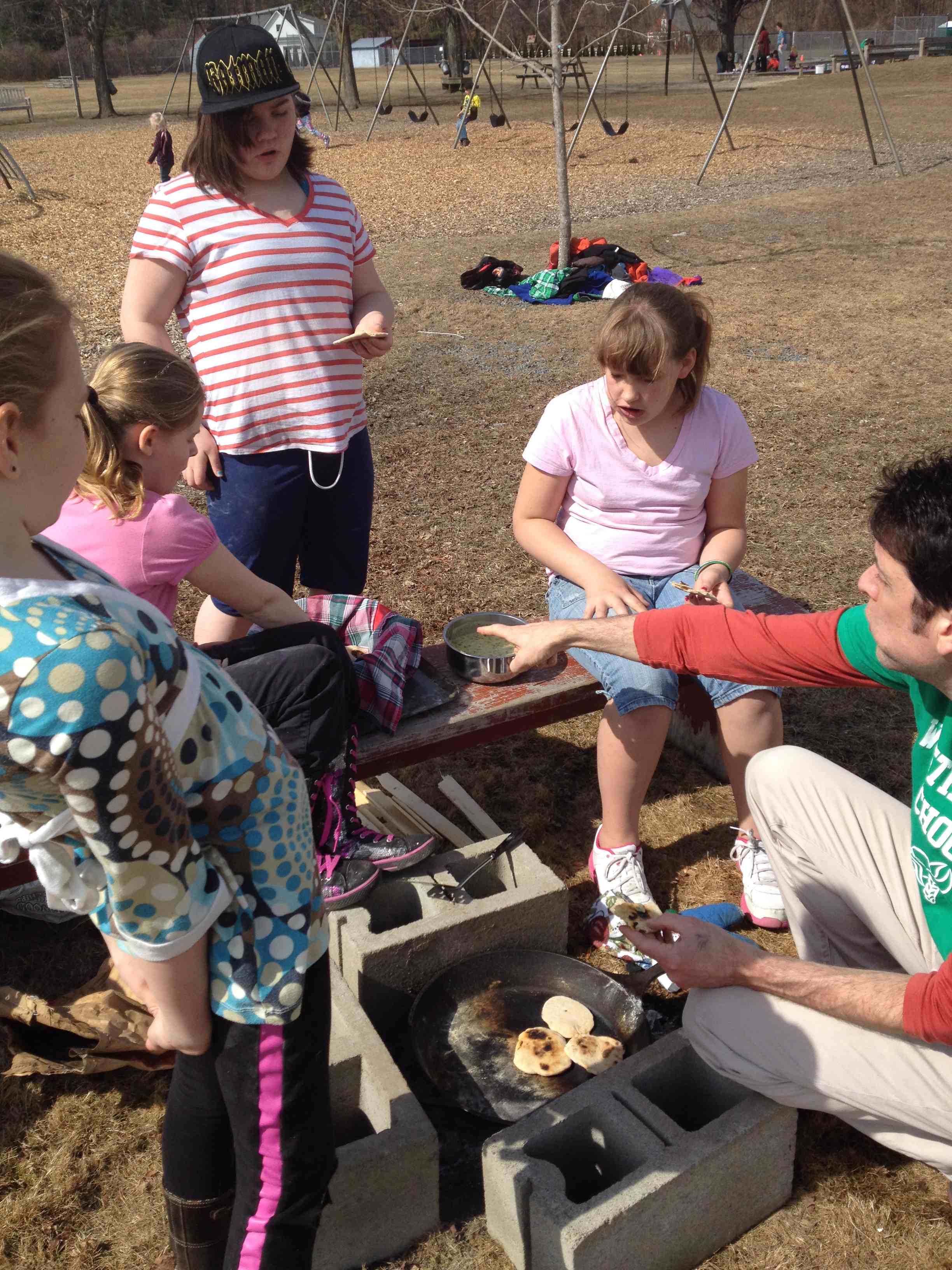
Where in the world is foccacia made? Just before April vacation, these students tracked down the origin of two flat bread recipes and then followed recipes to recreate them in their classroom. As they followed the recipe for foccacia, which takes time to rise, their teacher started an outdoor fire pit for the chapati they would also be baking.

stirring batter

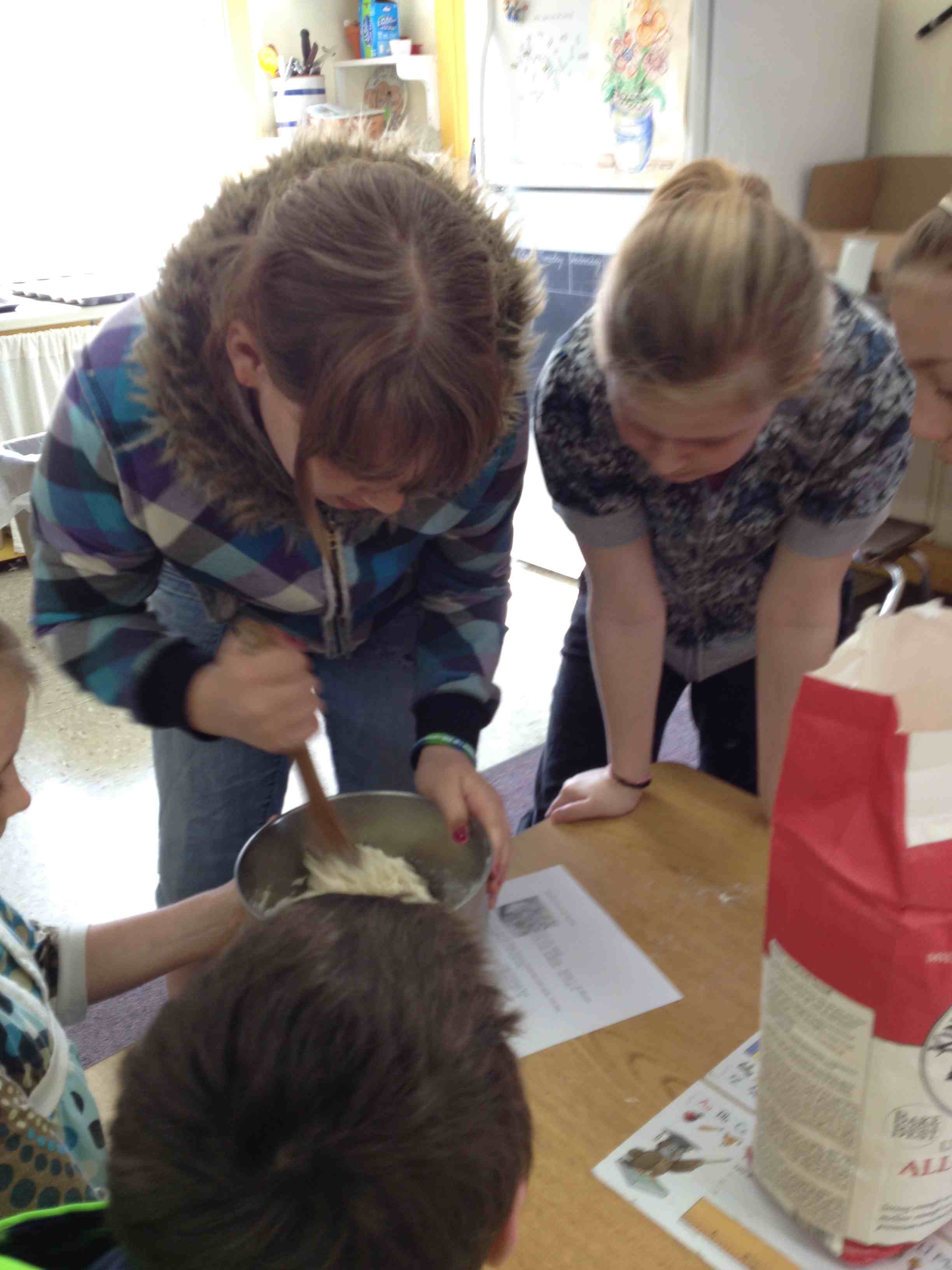
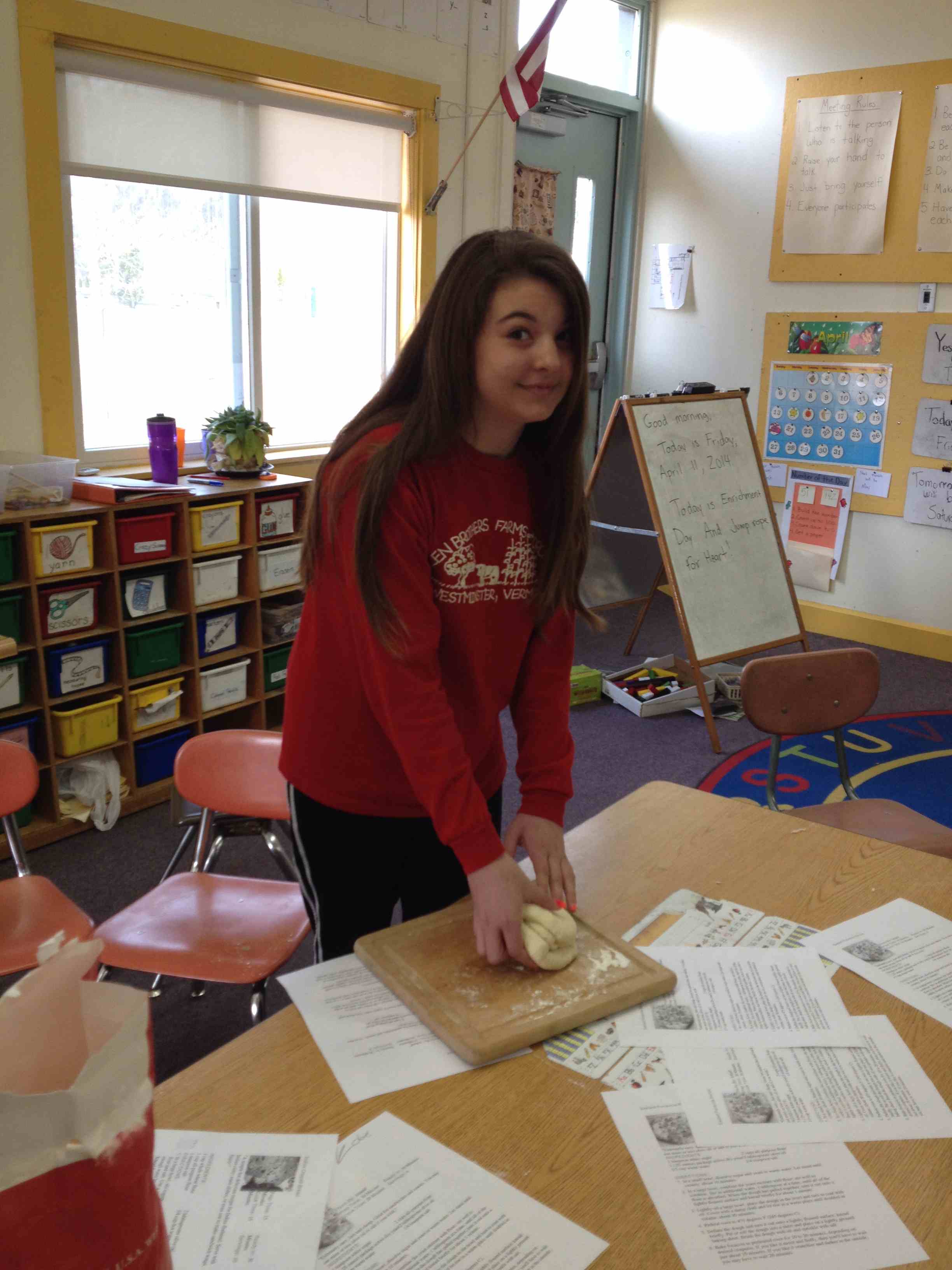
kneading dough

kneading dough

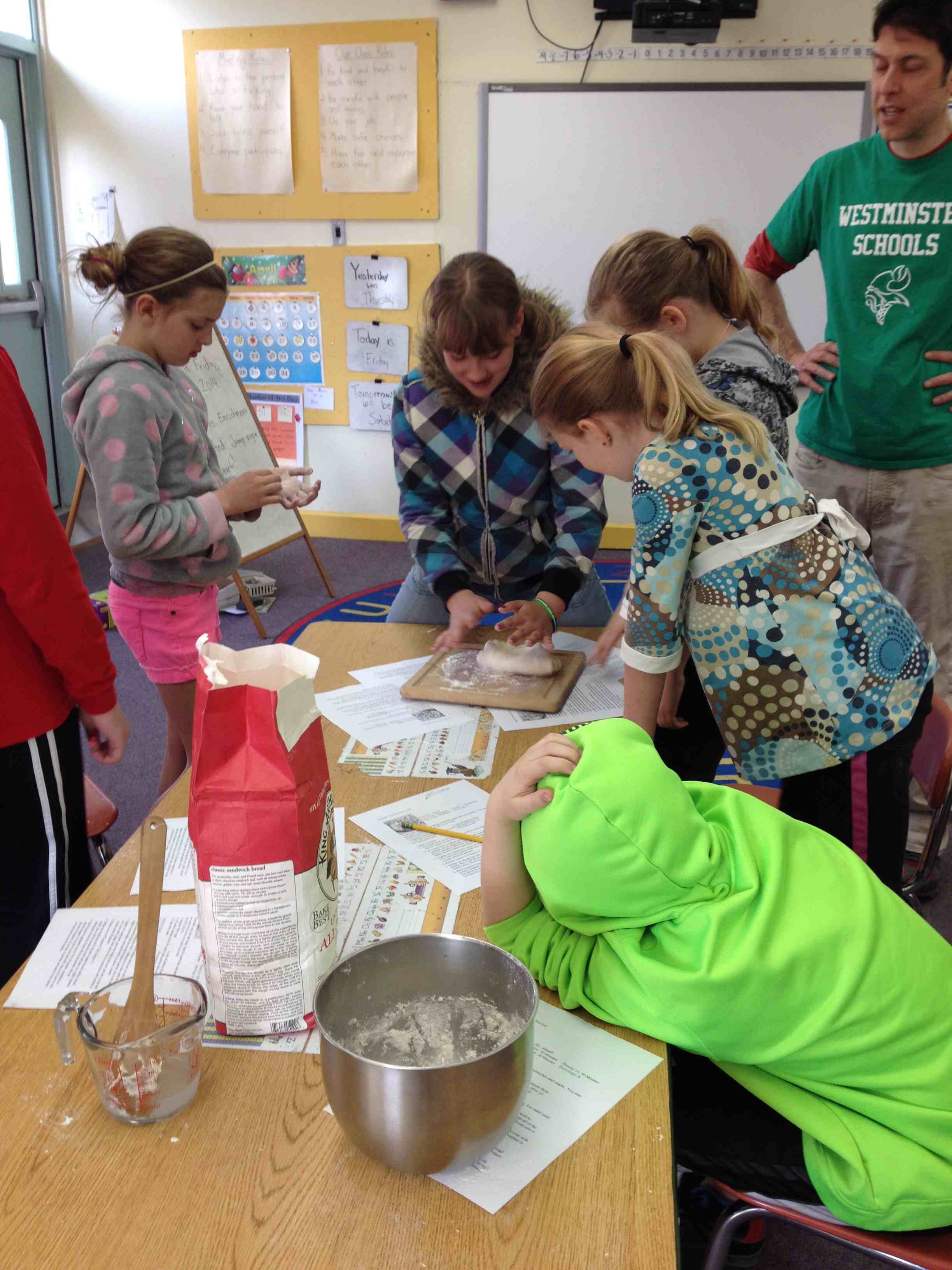
taking turns kneading

taking turns kneading


Students learned a lot about the process of creating one of the most universal of dietary staples. While reading  and adding ingredients, they worked together to interpret the recipes they were following. It turned out that kneading bread required much more muscle work than they had anticipated. Chapati, made without yeast can be prepared in just a few minutes once there are coals on the fire. This bread is common throughout central Asian countries. The focaccia recipe doesn’t take much more time to create. Both breads were baked and eaten in the 2 hours we had to learn about them.

forming chapatis

forming chapatis


outdoor cooking- Chapatis

outdoor cooking- Chapatis

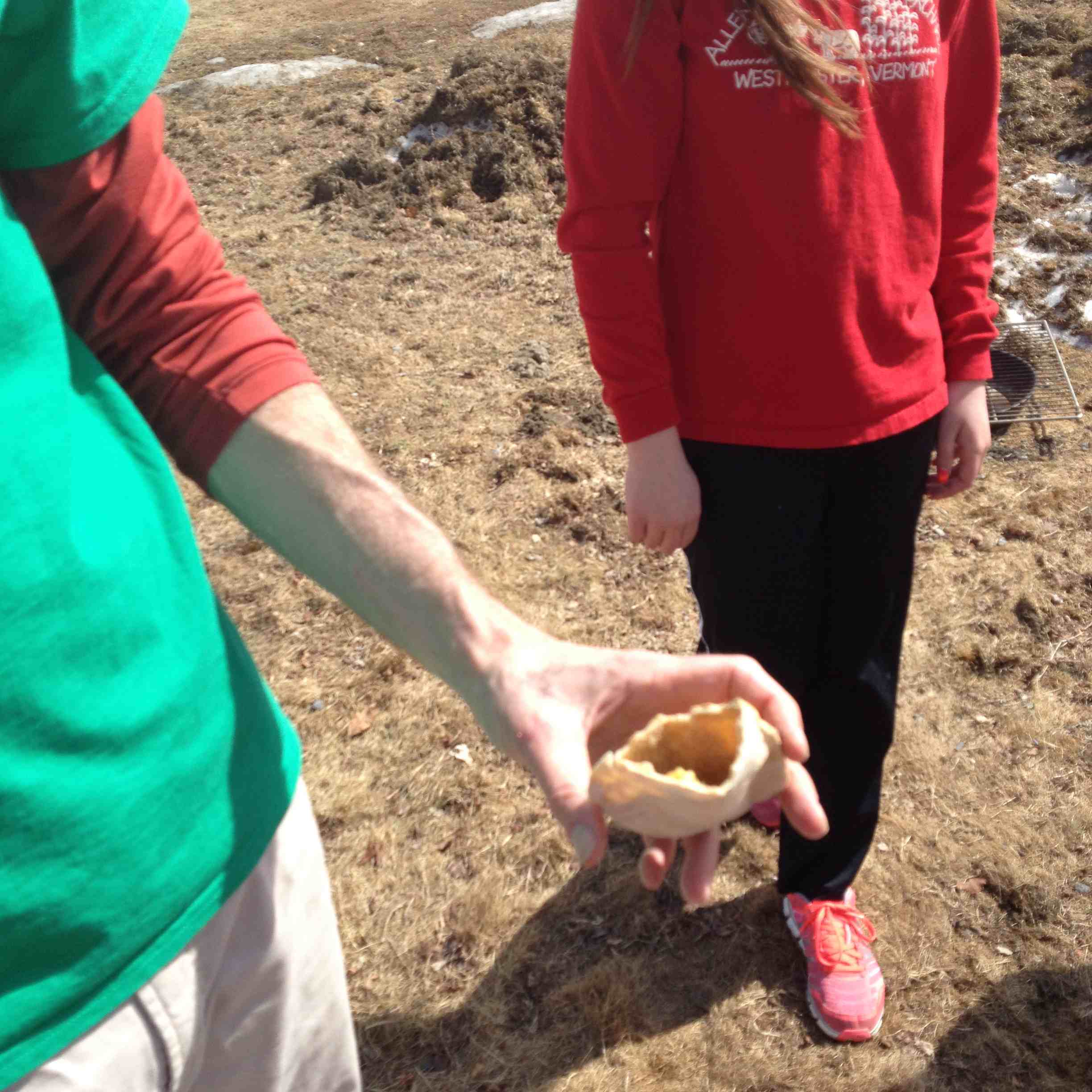
real pocket bread!

real pocket bread!


kneading- Iit's hard work

kneading- it’s hard work

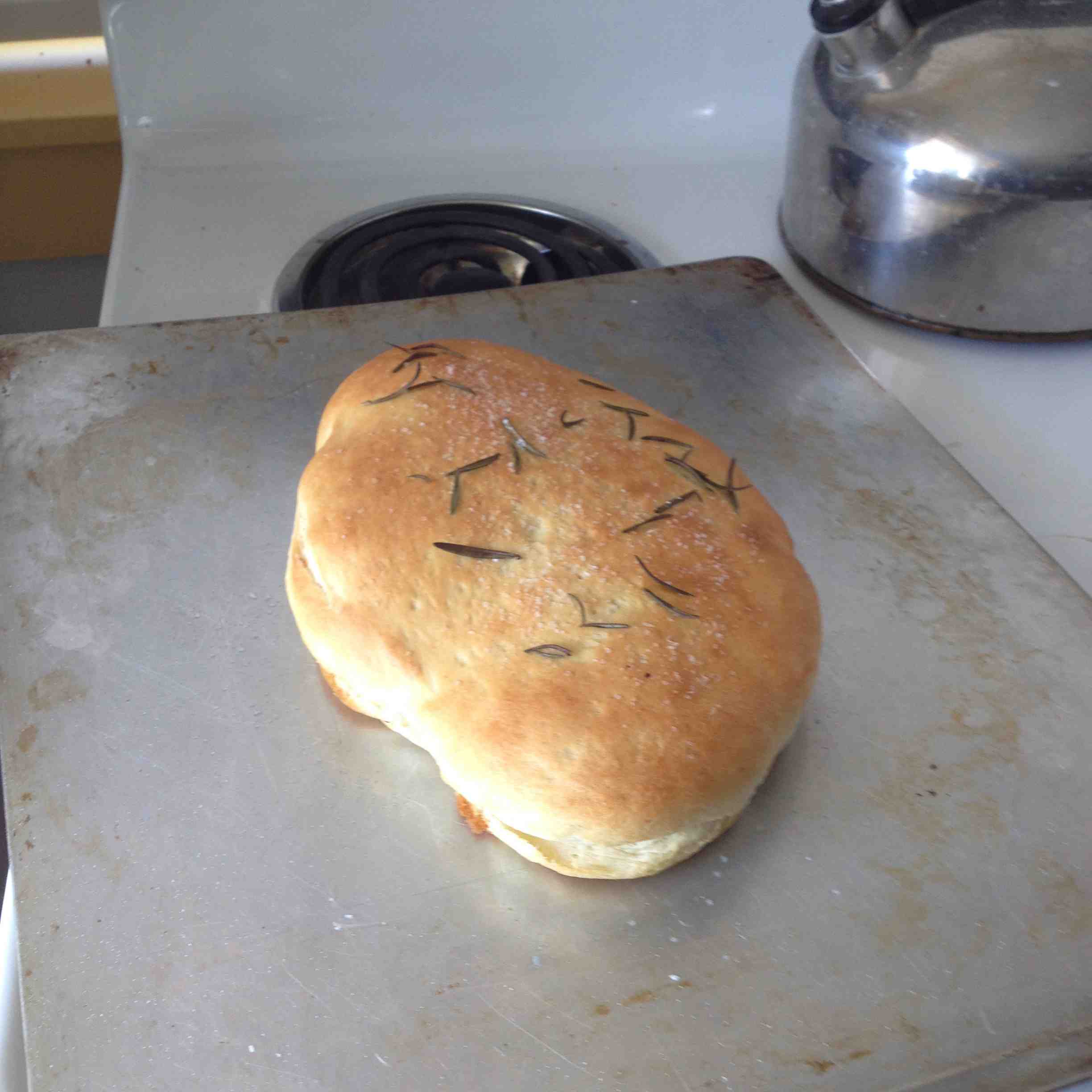
baked focaccia

baked focaccia


Leave a comment

No Bowls to Wash Banana Muffins!


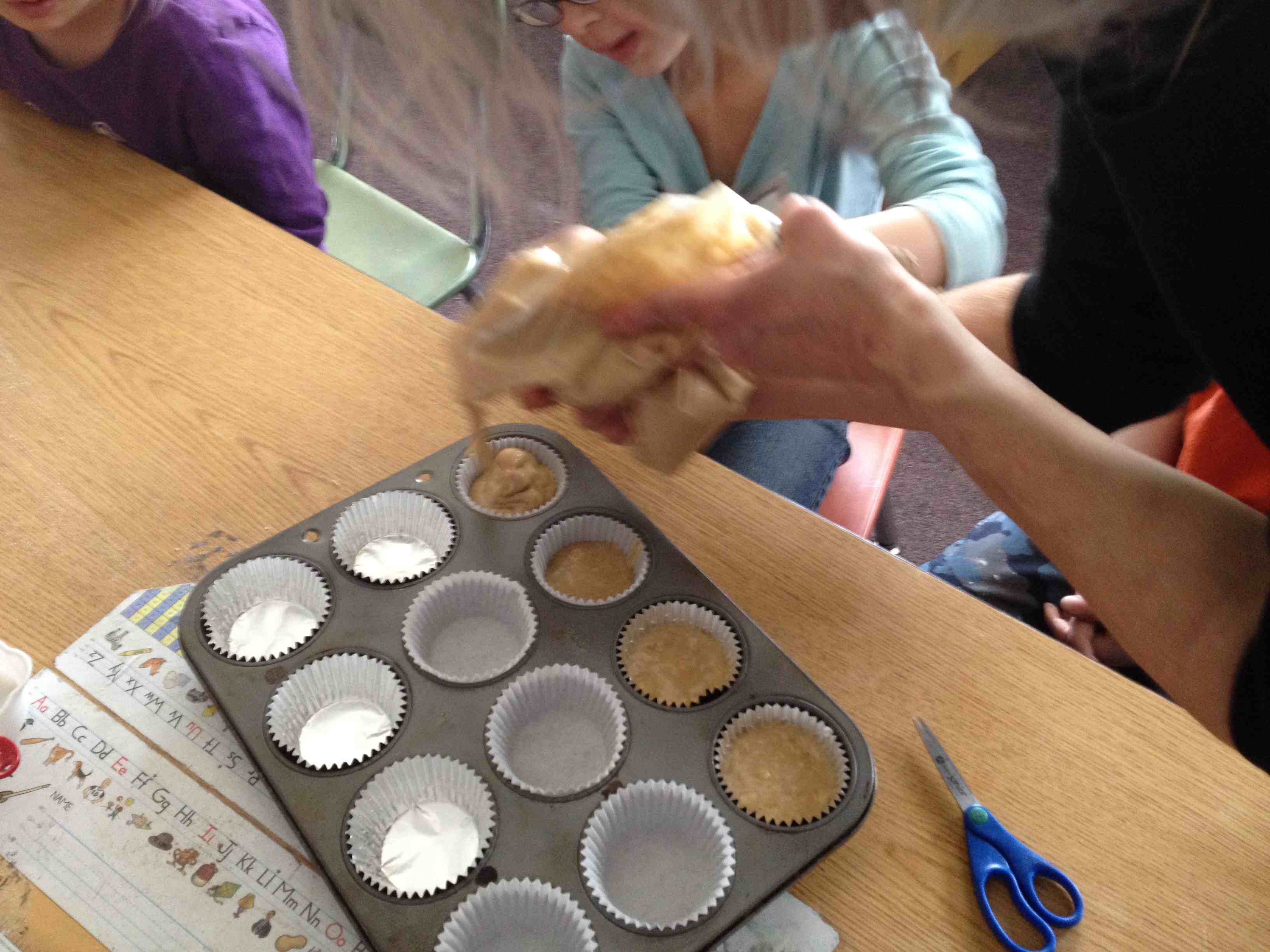
pouring out the batter

pouring out the batter


My daughter sent me this recipe for easy cleanup banana muffins. She had recently made them with her daughter. My toddler grand daughter, Avery,  is featured in the banana bread recipe posted on January 28. This banana muffin recipe is a lot easier on the ‘dishpan hands.’ All ingredients are added to a quart sized zip-lock bag! Then children can have fun mashing them together. (Warning: parental guidance necessary :-))

RECIPE (adapted from Yammie’s Noshery):

No Bowl Banana Muffins


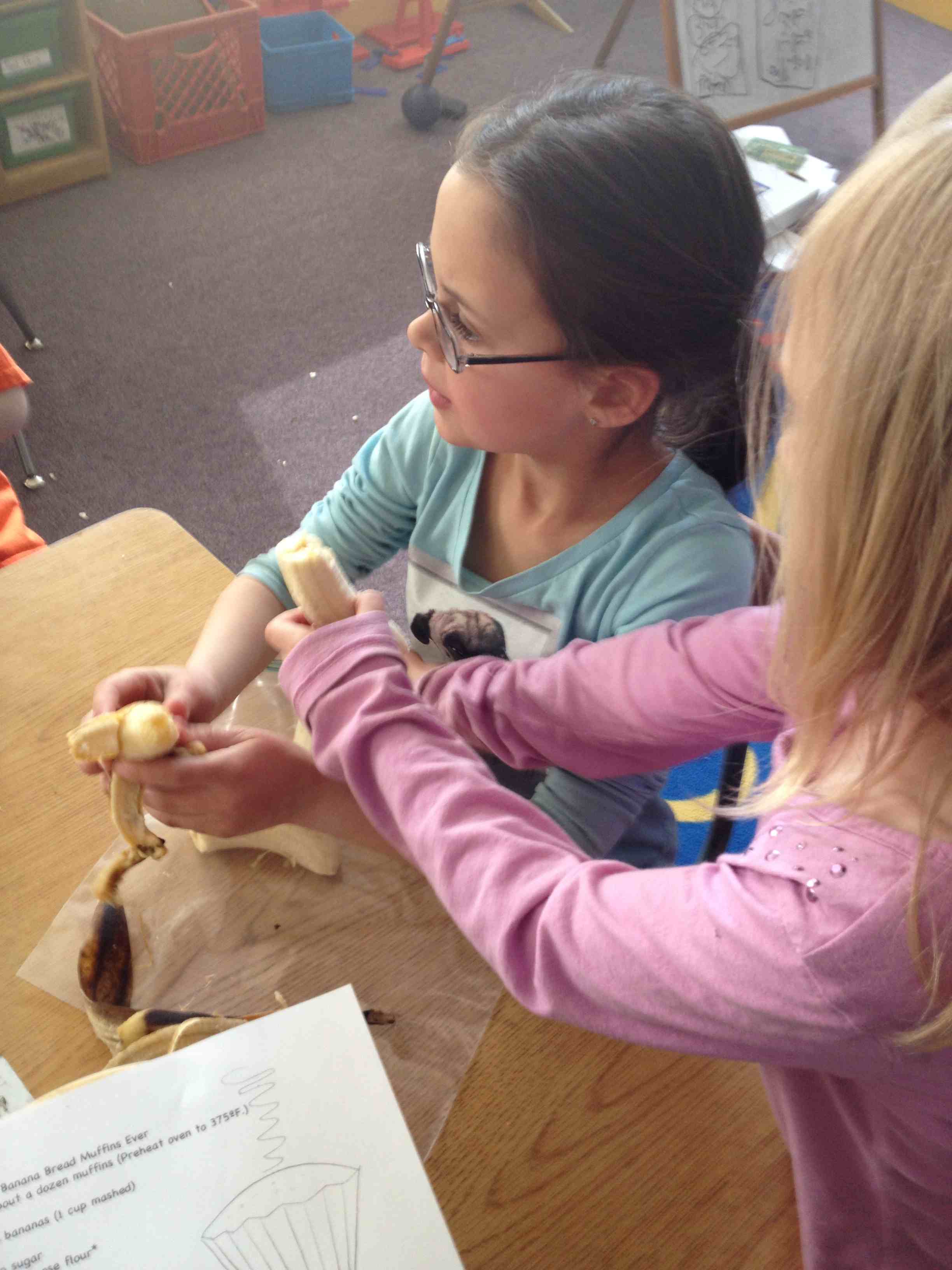
peeling bananas

peeling bananas

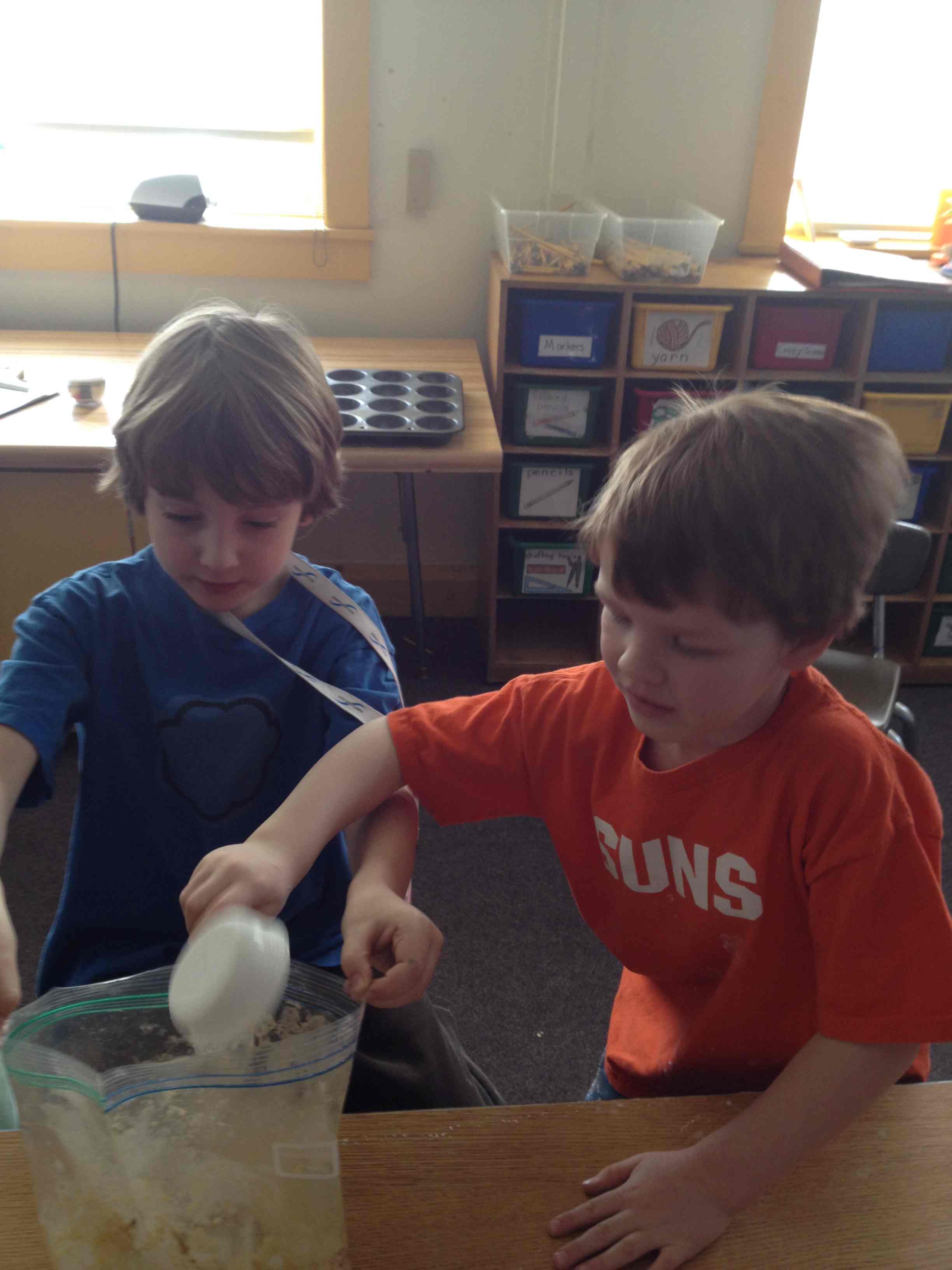
measuring and adding ingredients

measuring and adding ingredients


mixing ingredients

mixing ingredients


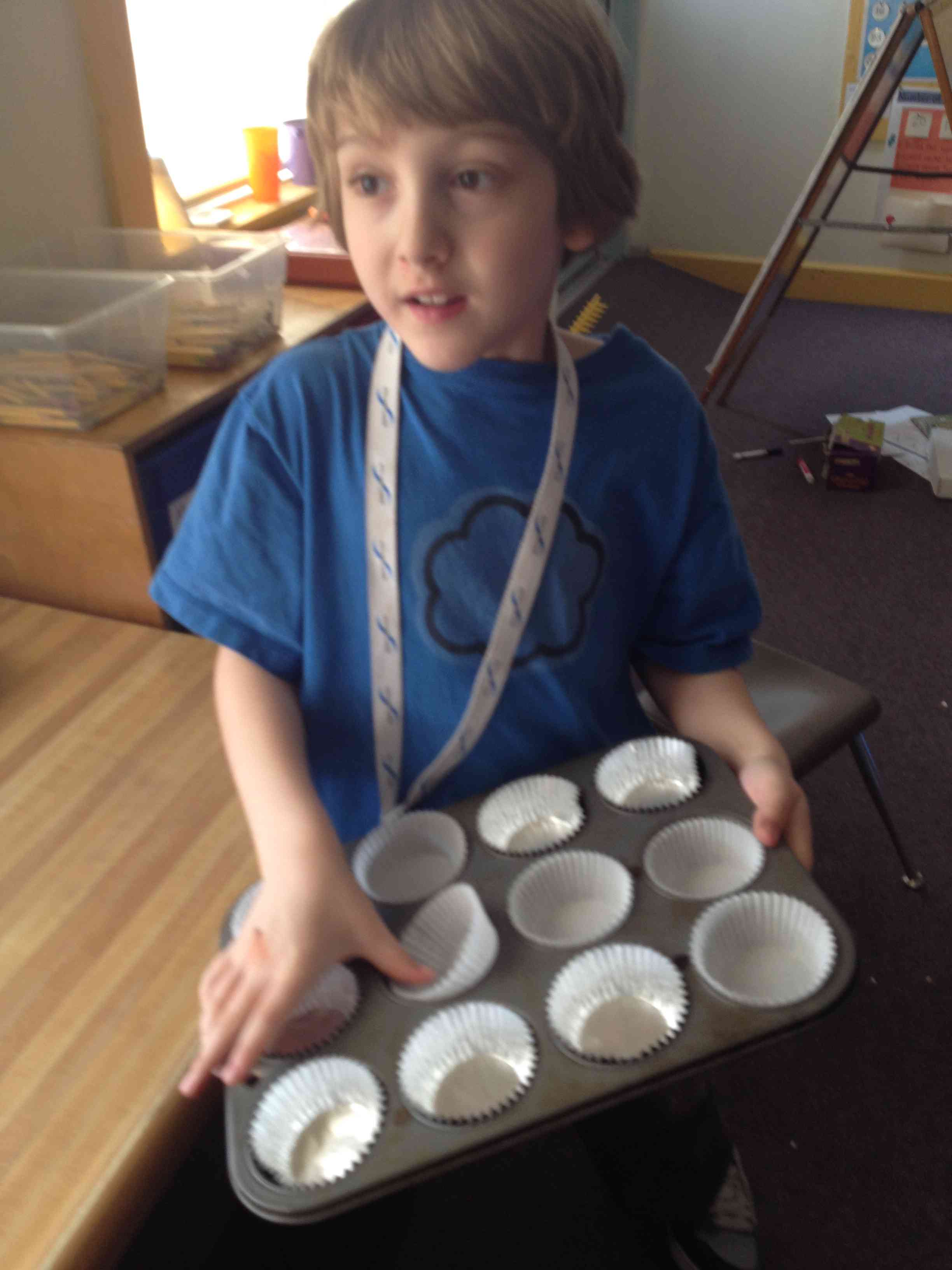
This little one remembered that earlier in the day he had learned 8 plus 4 equal 12. It was such fun to hear  him make the math  connection!

counting on muffin tins

counting on muffin tins


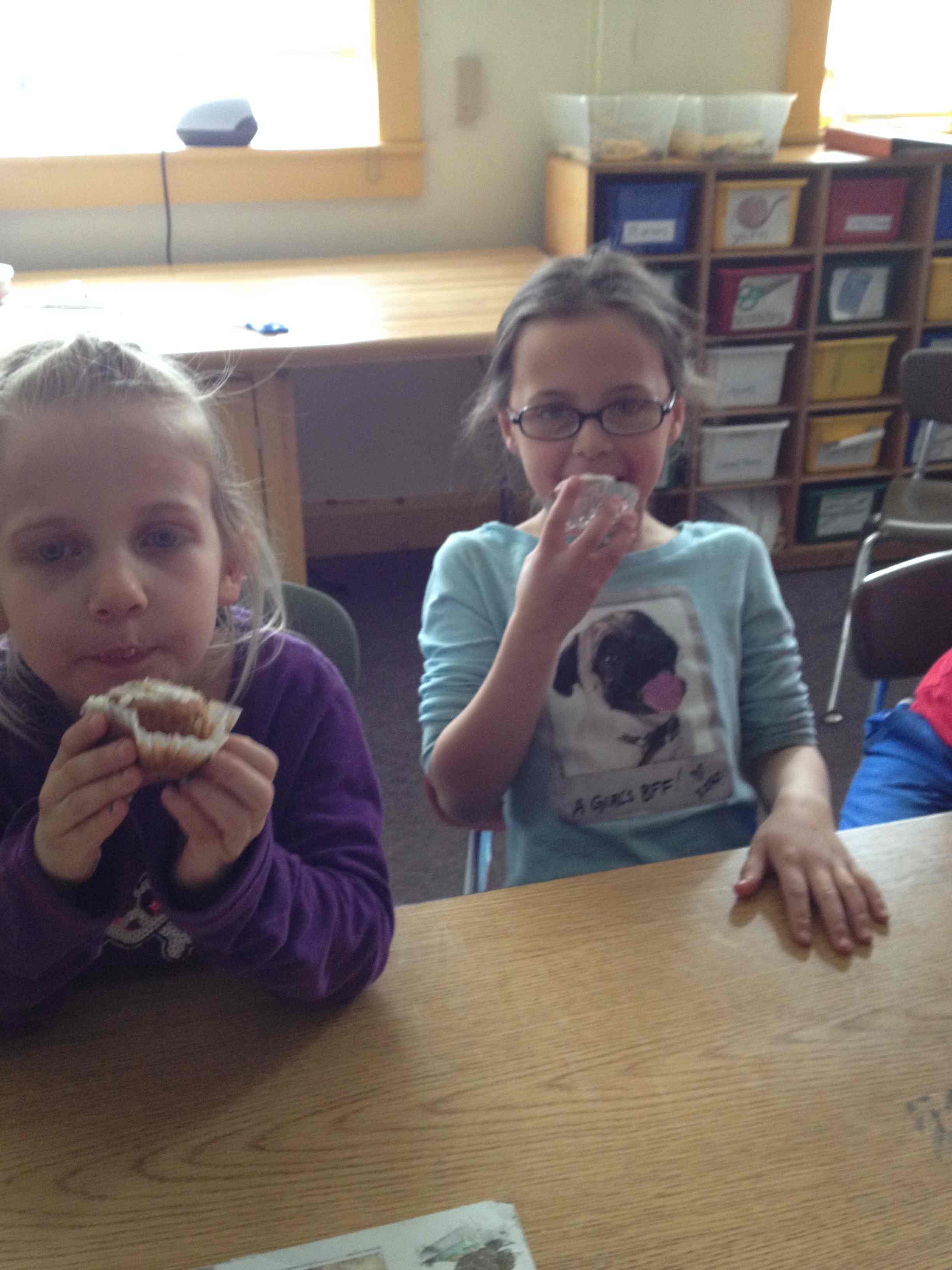
enjoying banana mufins

enjoying banana muffins


All in all, a recipe that makes everyone happy!


Leave a comment

One More Hearty Soup Recipe: Kale Potato

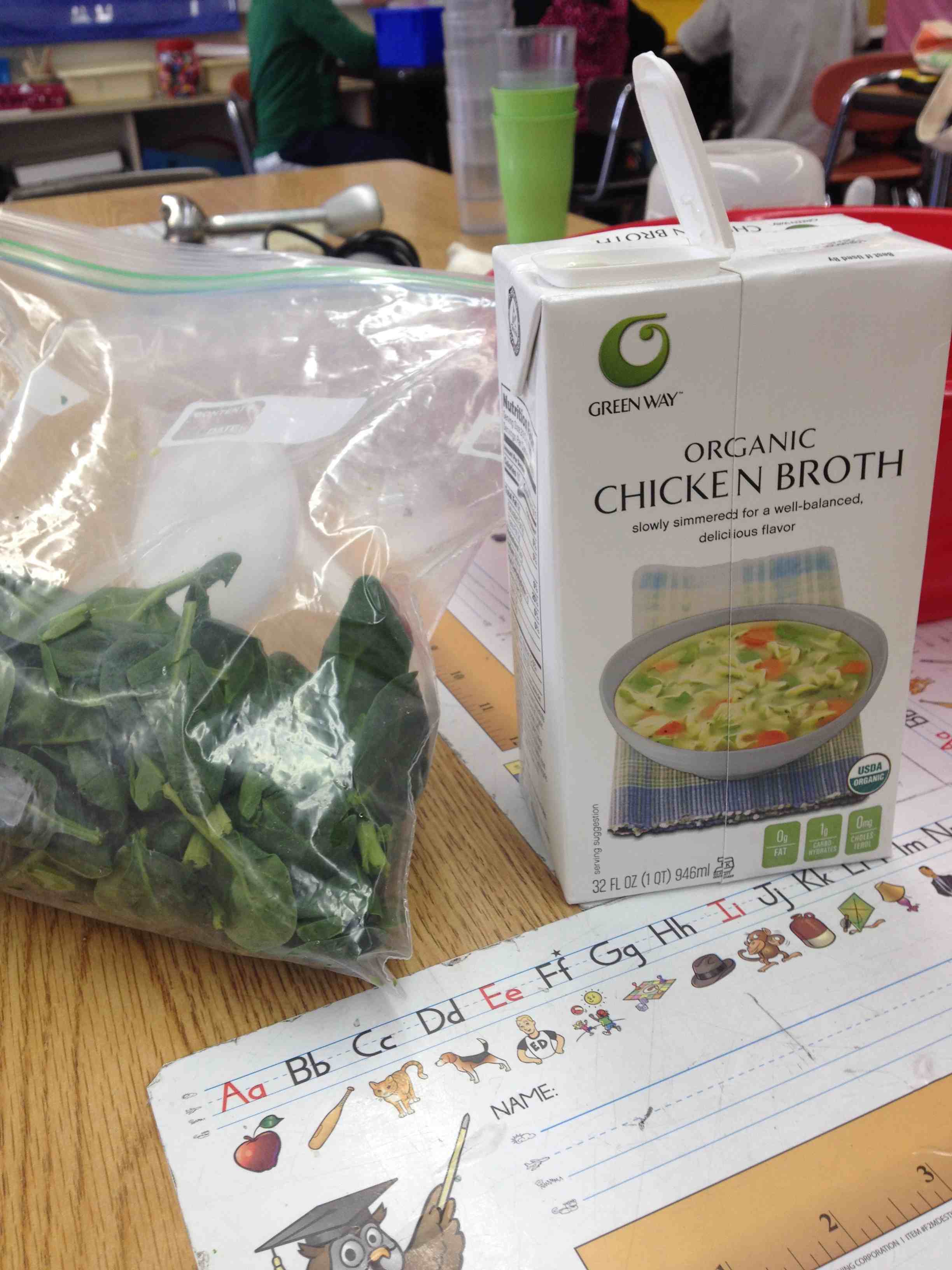
frozen kale leaves

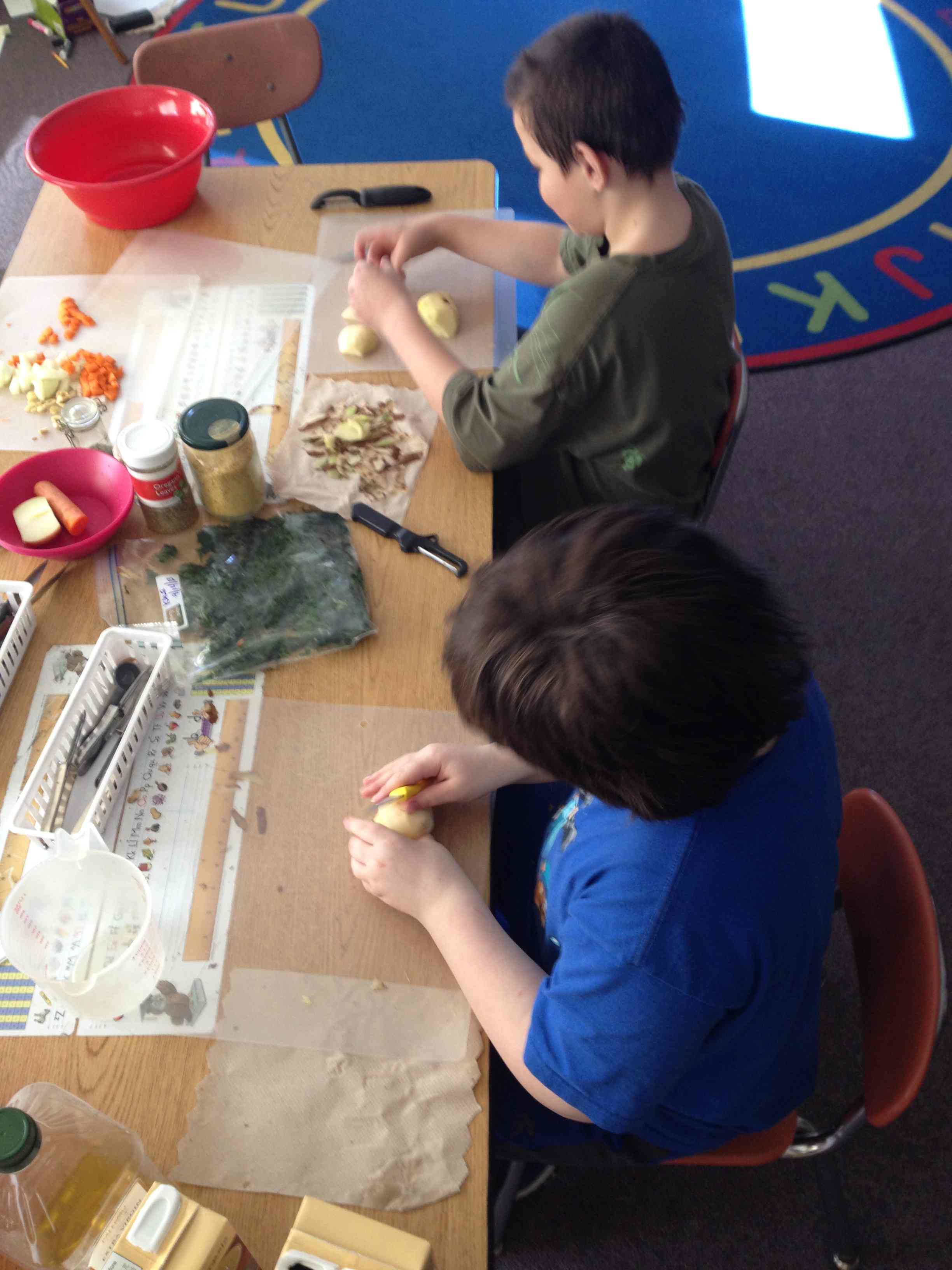
This is one of the tastier soups we’ve turned out at Westminster School. The ‘yum’ factor may be the addition of a cup of nutritional yeast. It’s not only good for you as the name implies; it adds a creamy buttery dimension to this hearty recipe. This was my first introduction to nutritional yeast in soup; it’s surprisingly good! The boys who prepared it each ate three bowlfuls. The rest went to teachers, drawn to our kitchen by the aromas permeating the school hallways.

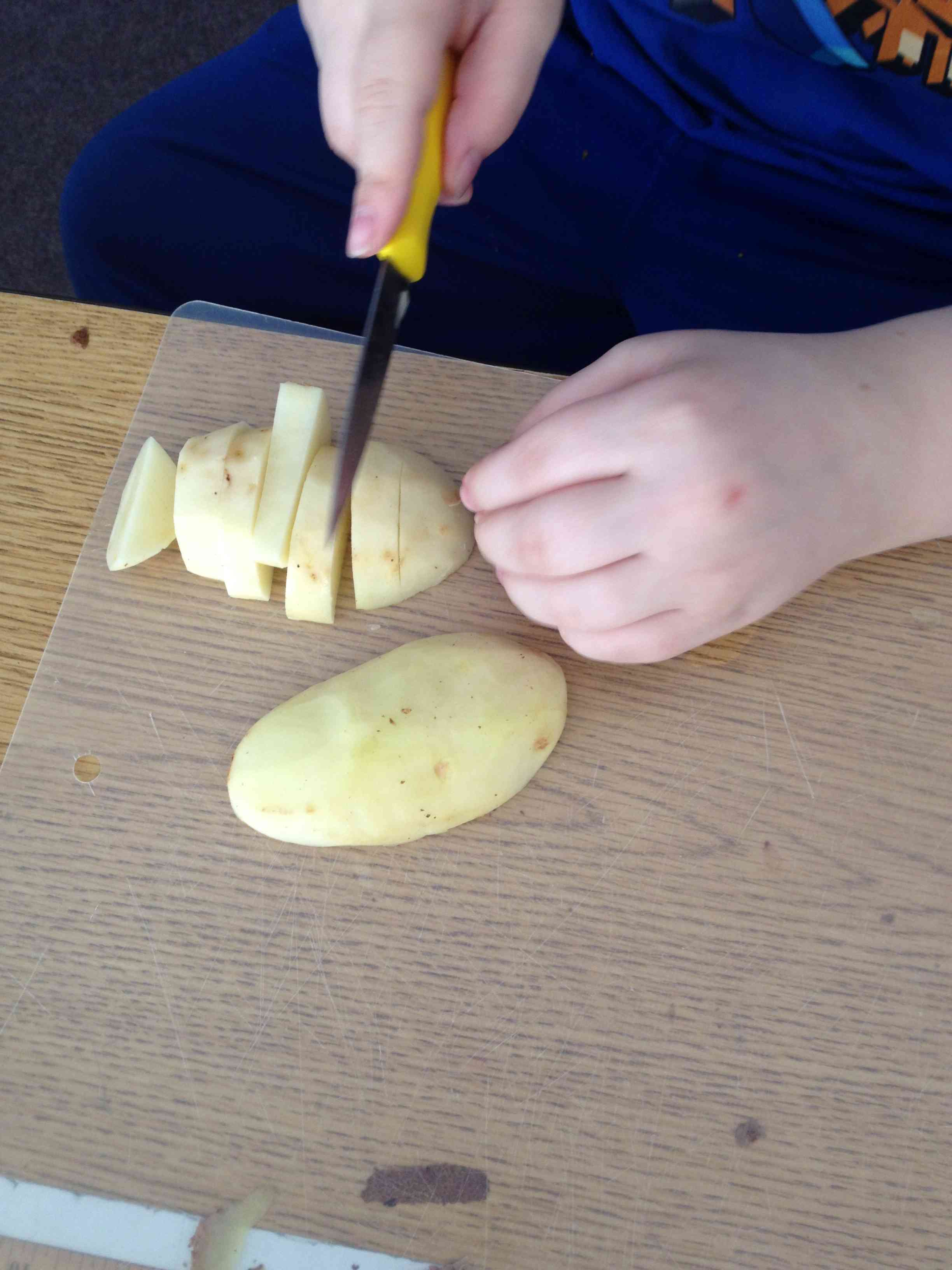
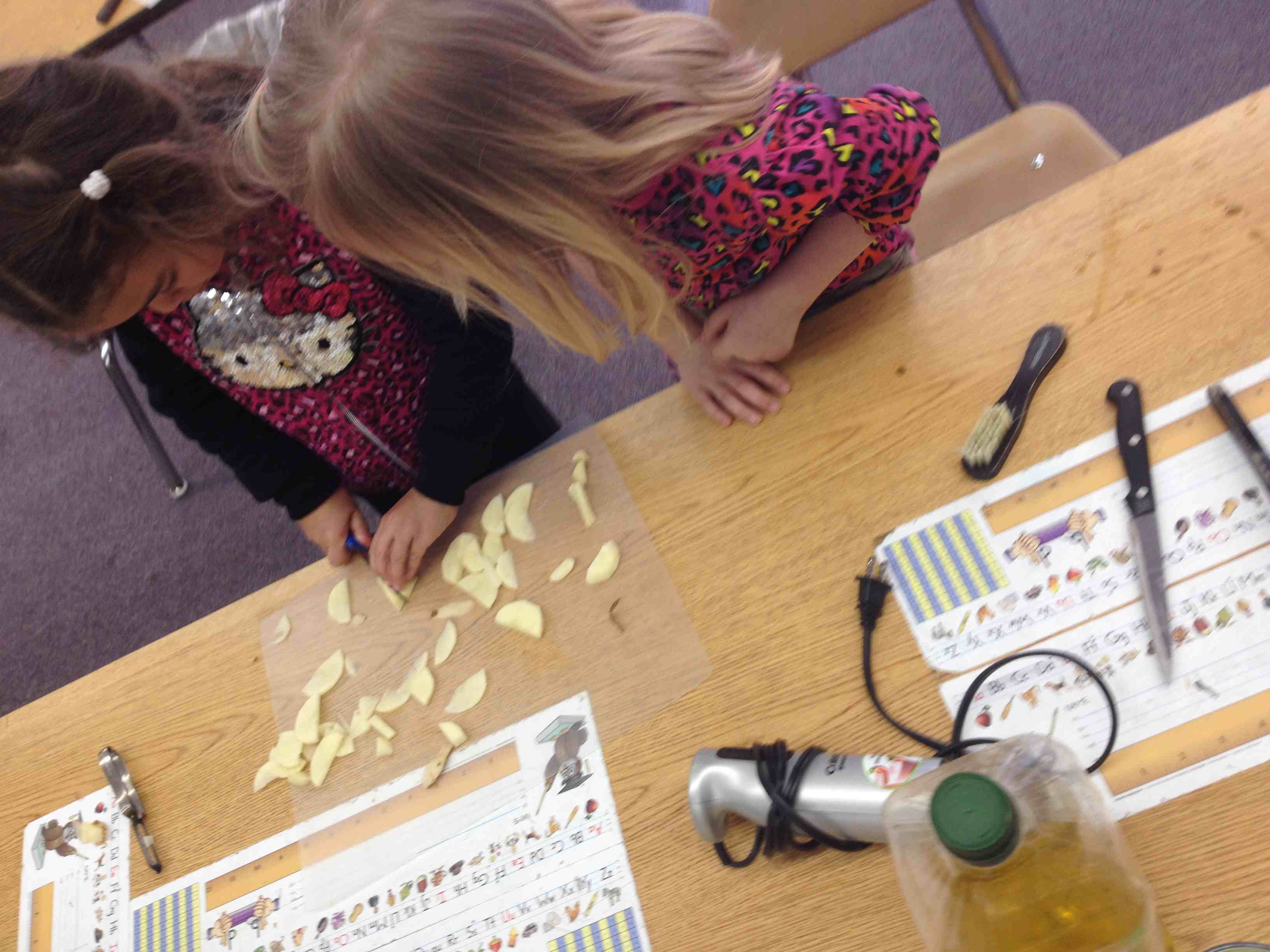
dicing potatoes

dicing potatoes


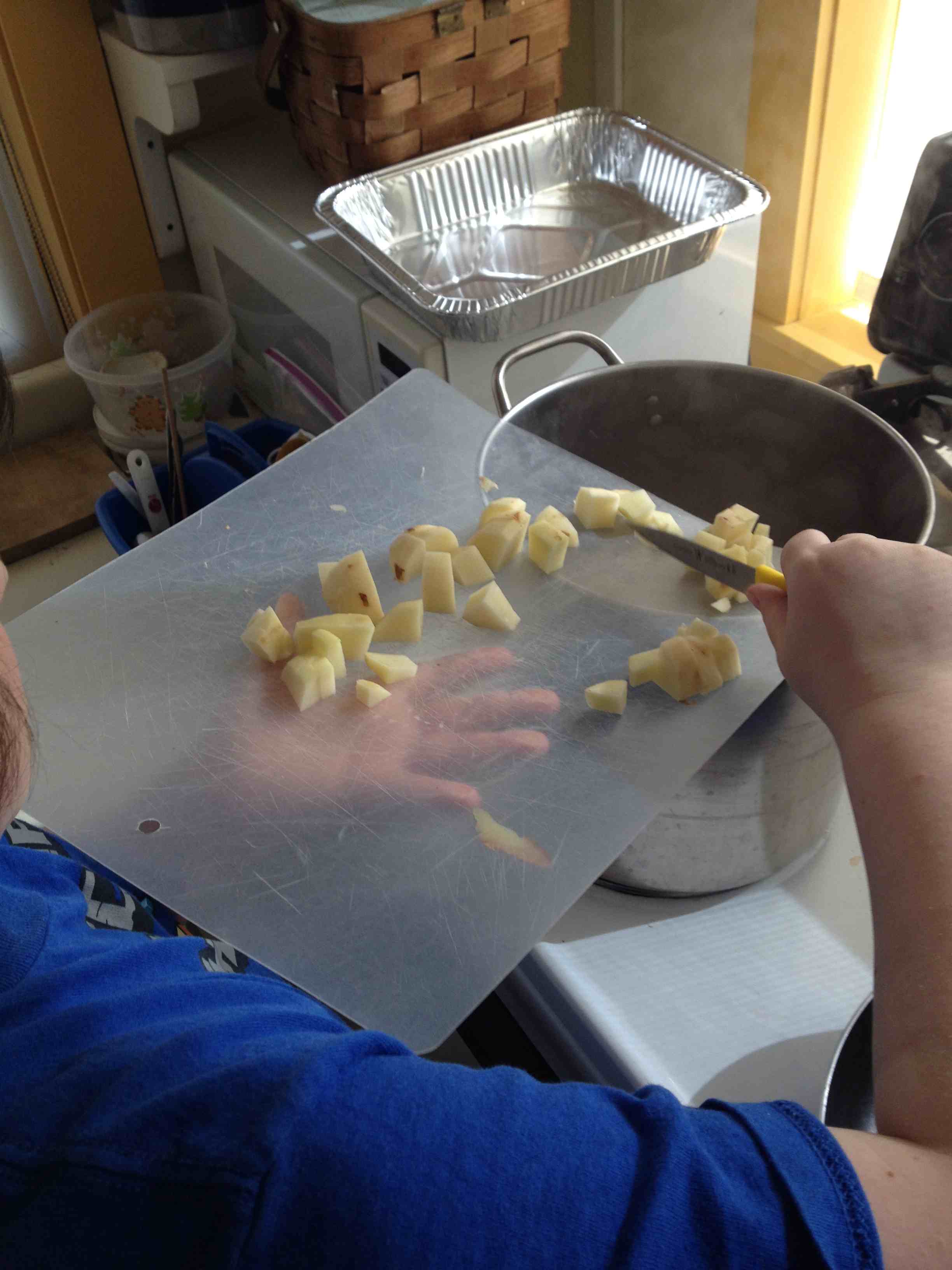
adding potatoes

adding potatoes

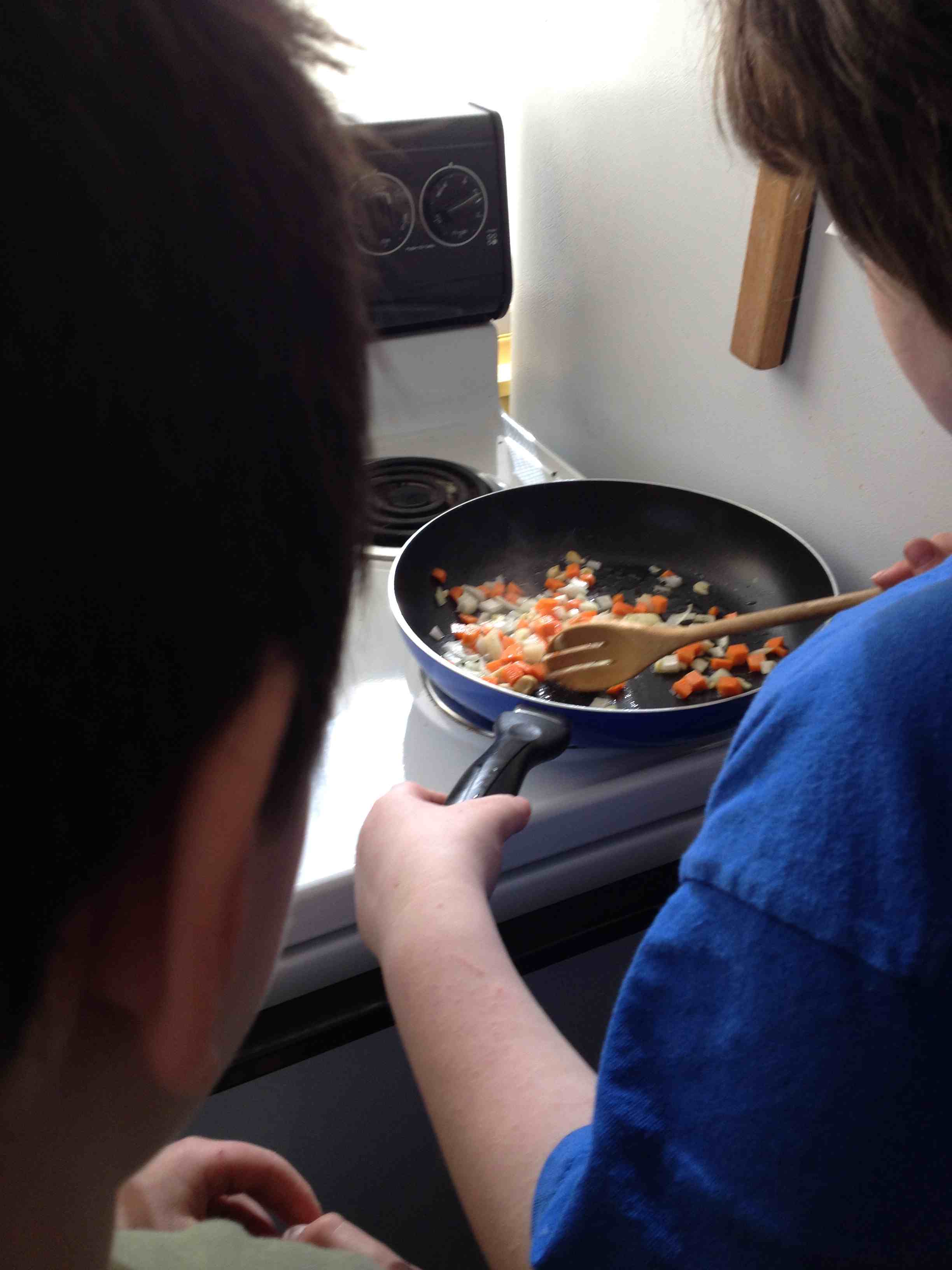
sauteeing carrots, onions

Recipe:

Creamy Potato Kale Soup


We used kale from our garden. Last fall, children had  had torn it into bite sized pieces after de-ribbing it. The pieces were sealed into quart zip-lock bags with the air pressed out of them Many months later the kale retains it’s emerald green color as well as its vitamin and fiber content. Our potato crop has been stored at temperatures that have kept it intact right through March. With the addition of some veggies from the store and a bit of chicken broth (you can substitute vegetable broth) kale potato soup is a nutritious and comforting soup for a cold rainy March day! Serves it with crusty bread or toasted grilled cheese sandwiches.

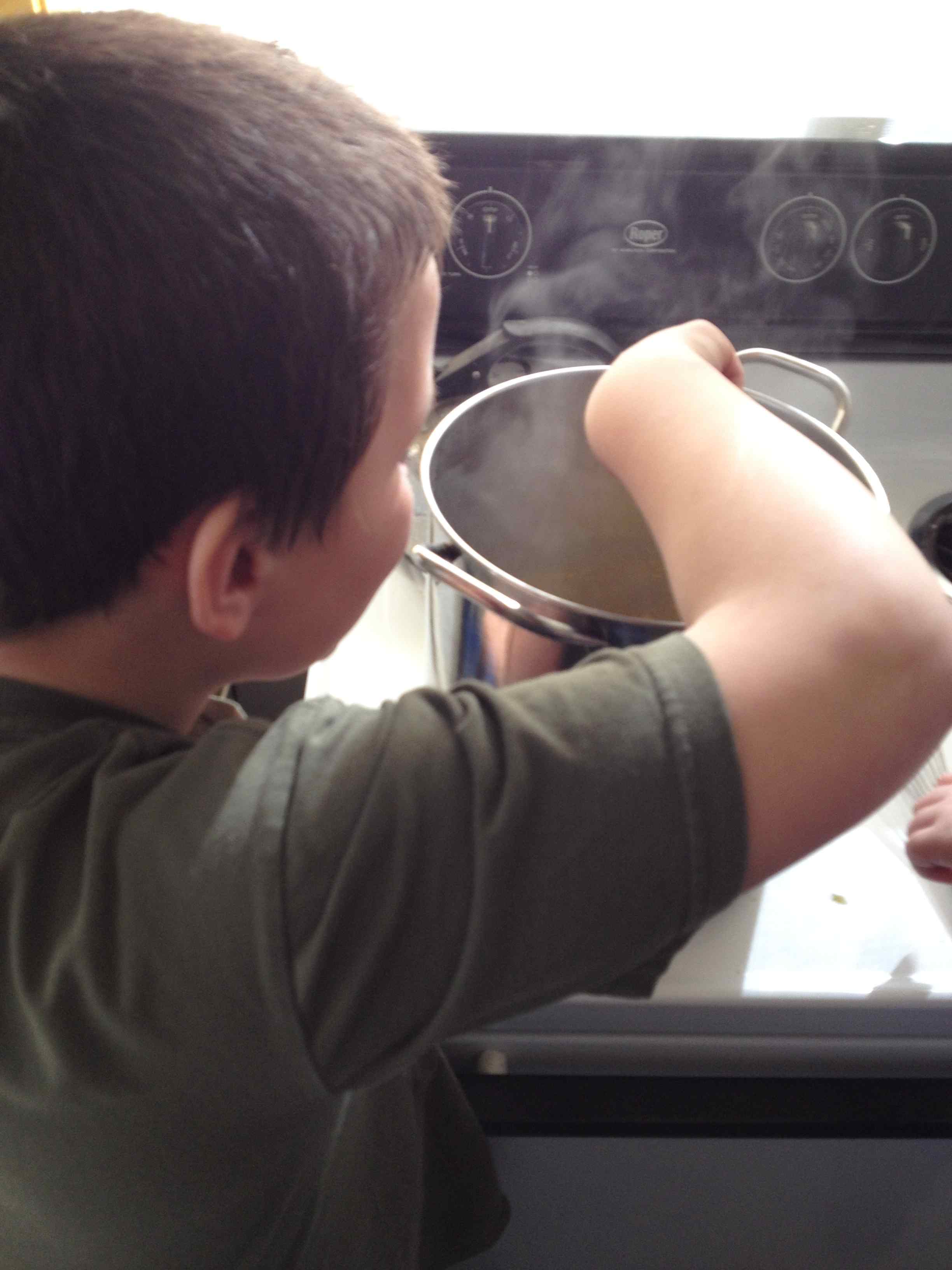
stirring the yeast into the soup

stirring the yeast into the soup


Leave a comment

More Green for March: Spinach Potato Soup

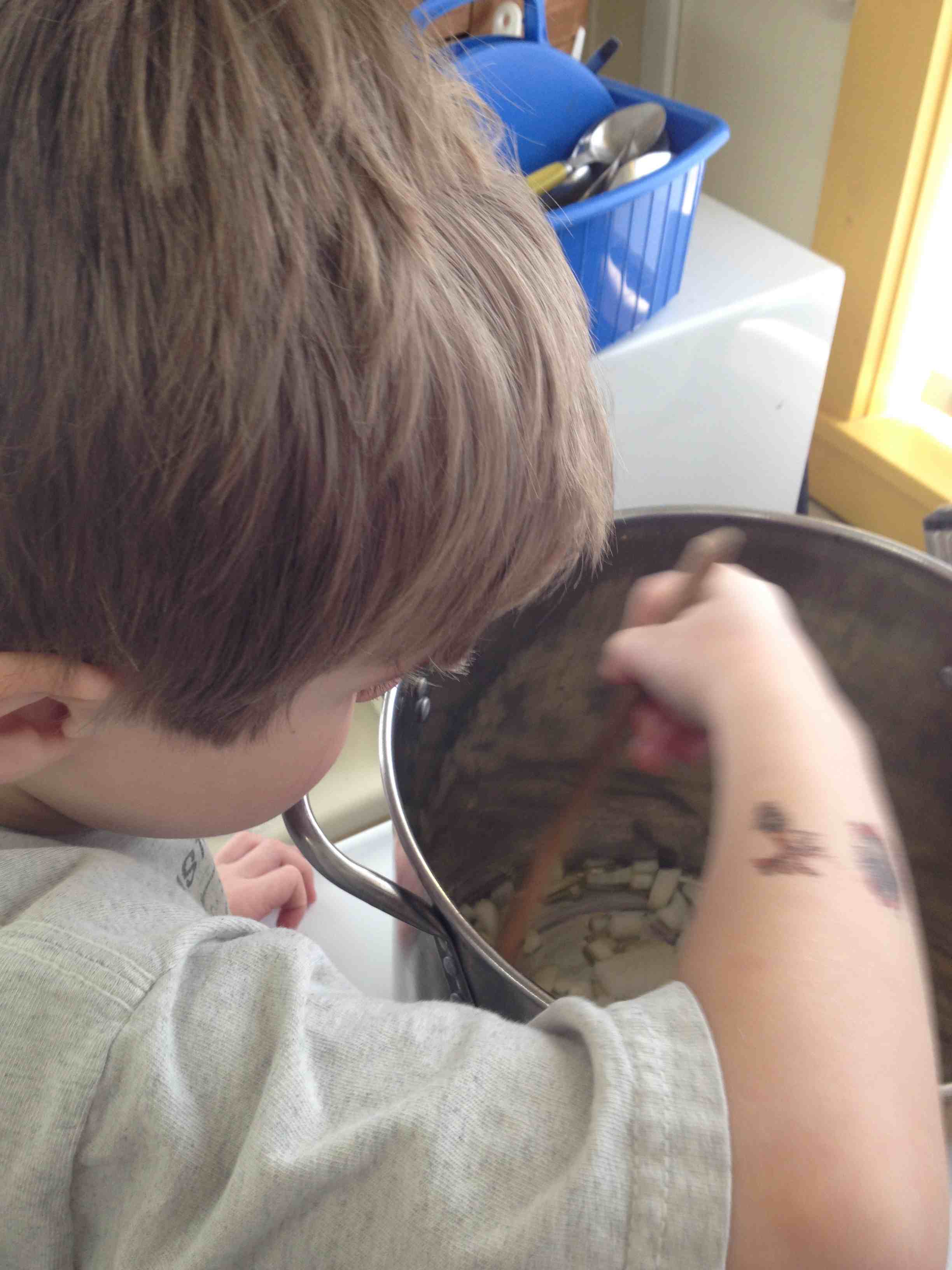
Stirring spinach potato soup

Stirring spinach potato soup

RECIPE: Spinach Potato Soup

cutting potatoes

cutting potatoes

ingredients

cutting potatoes

cutting potatoes

We hope to extend the growing season of our school garden next year. If we do, we may be able to grown our own spinach for this hearty delicious soup. It was made by the youngest children in the After School Program with a little help from older students. Children at any school age LOVE the responsibility of using a sharp knife. It really helps them to keep focused on their job. These youngsters are cutting up our school garden potatoes from last summer.

They’re adding them to some ‘sweated’ onions. Then, with the magic of heat and a bit of chicken broth to cover, the potatoes soften in no time.

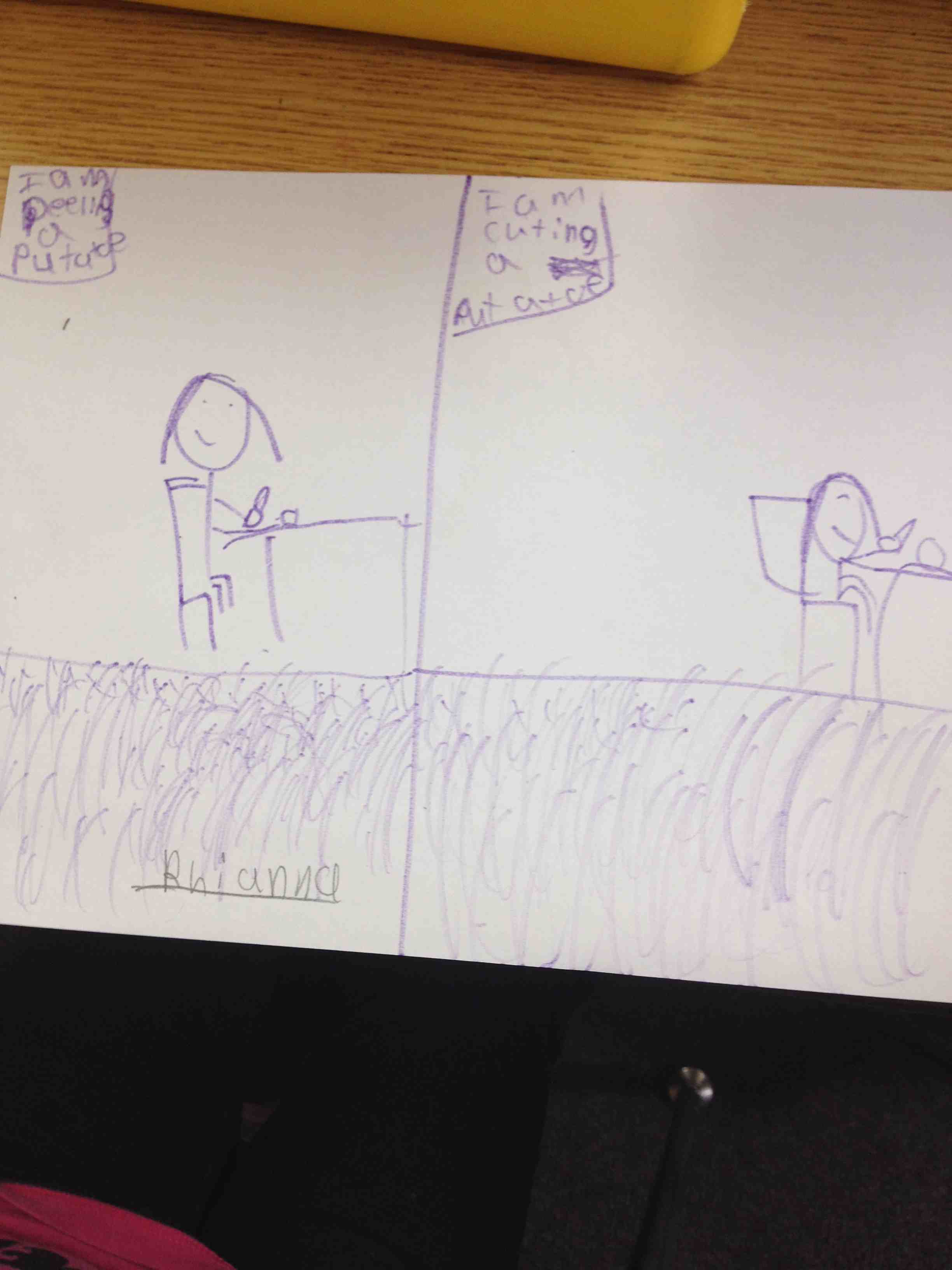
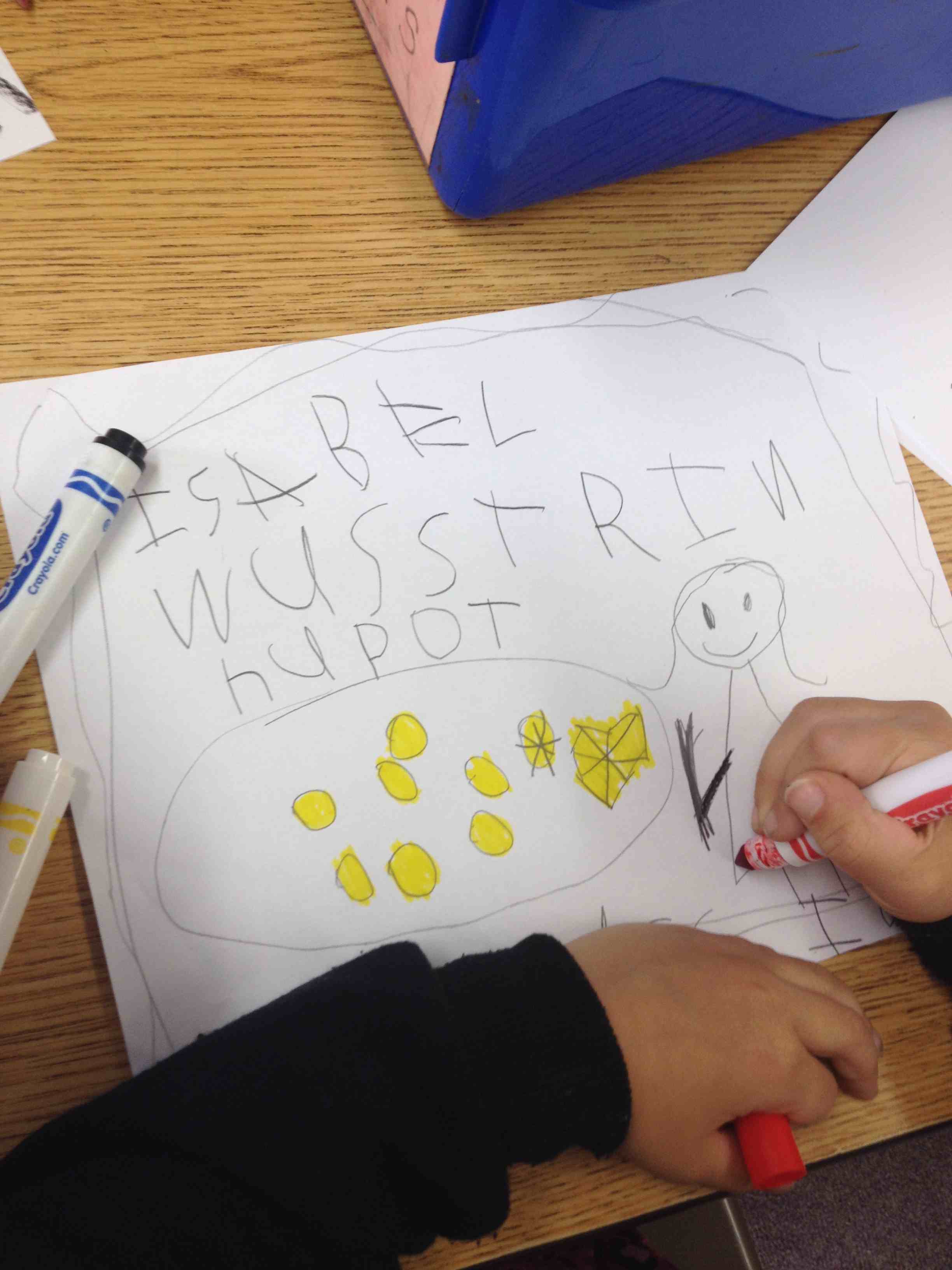
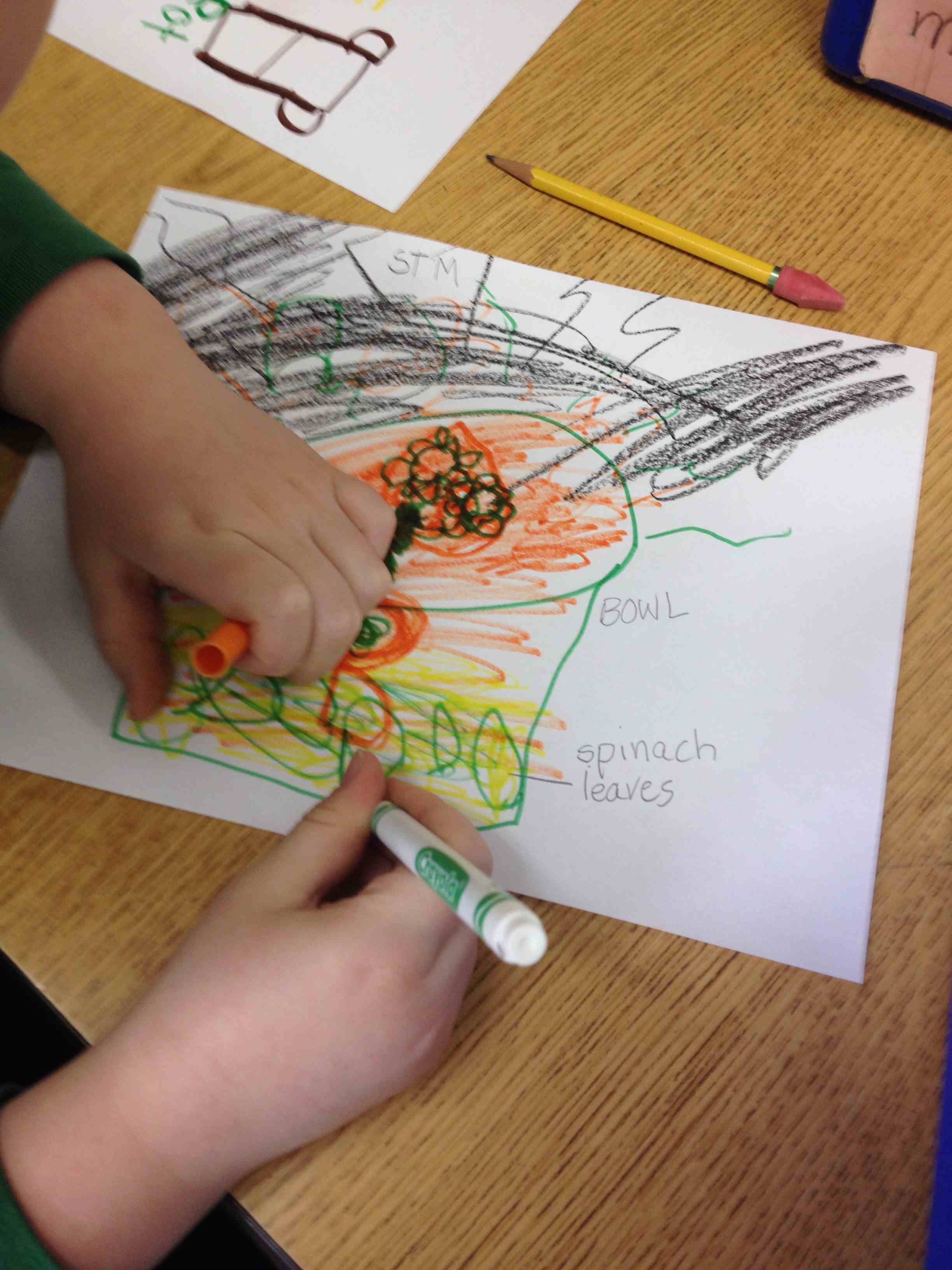
While the soup boiled, children wrote their own stories about how the soup was made…the beginnings of labeled drawings are emerging as you can see. Each child has his/her own way of expressing the magical transformation from potatoes, spinach and chicken broth to soup. (Click on any photo to enlarge.) We blended the ingredients with a wand. Next, just a touch of heavy cream and….yum! Students slurped up their nutritious snack. Full recipe above!

labeled drawing

labeled drawing

Isabel was stirring the pot

Isabel was stirring the pot

labeled diagram (note the word 'steam' at the top)

labeled diagram (note the word ‘steam’ at the top)


Leave a comment

The Wearin’ of the Green

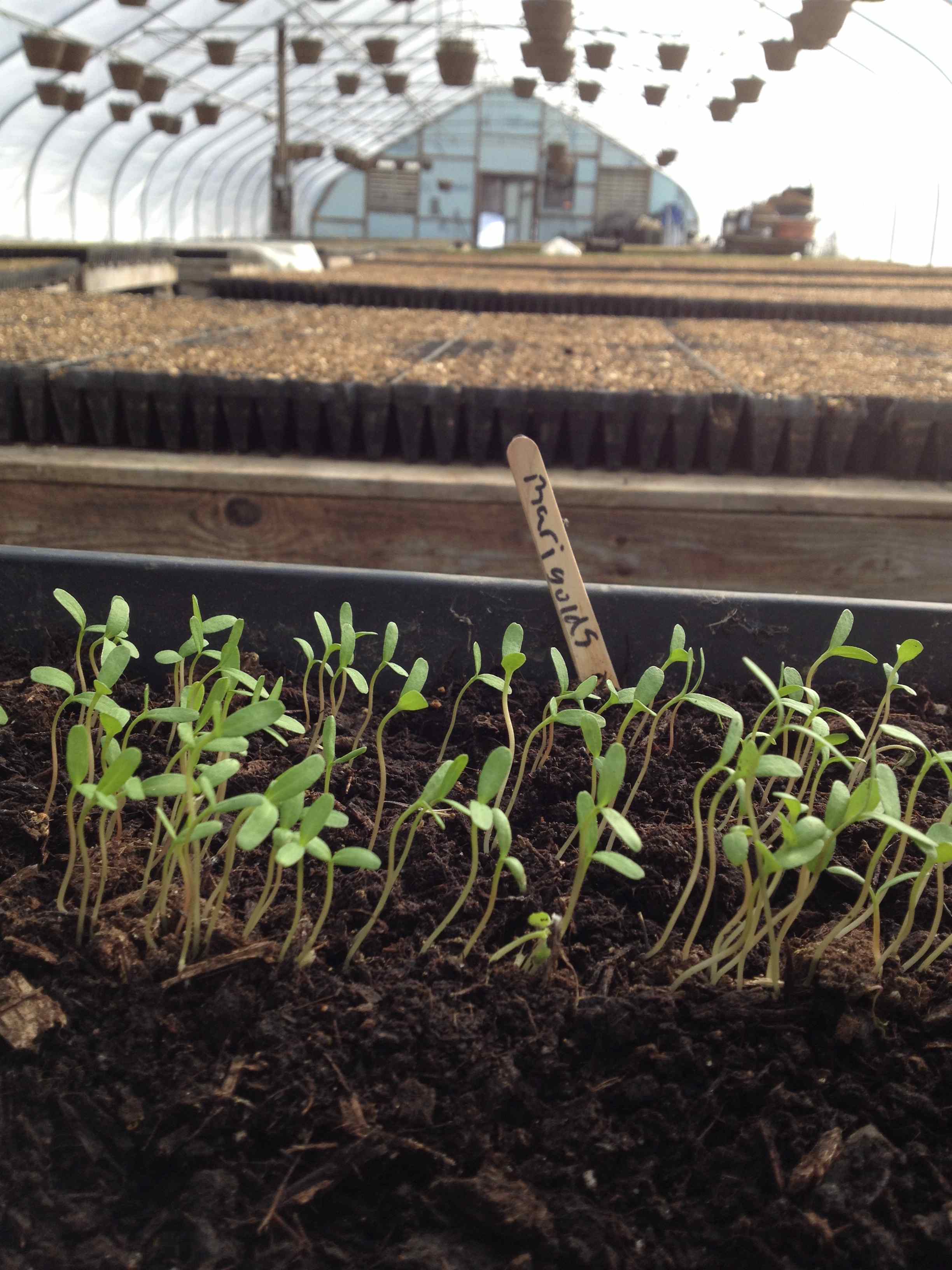
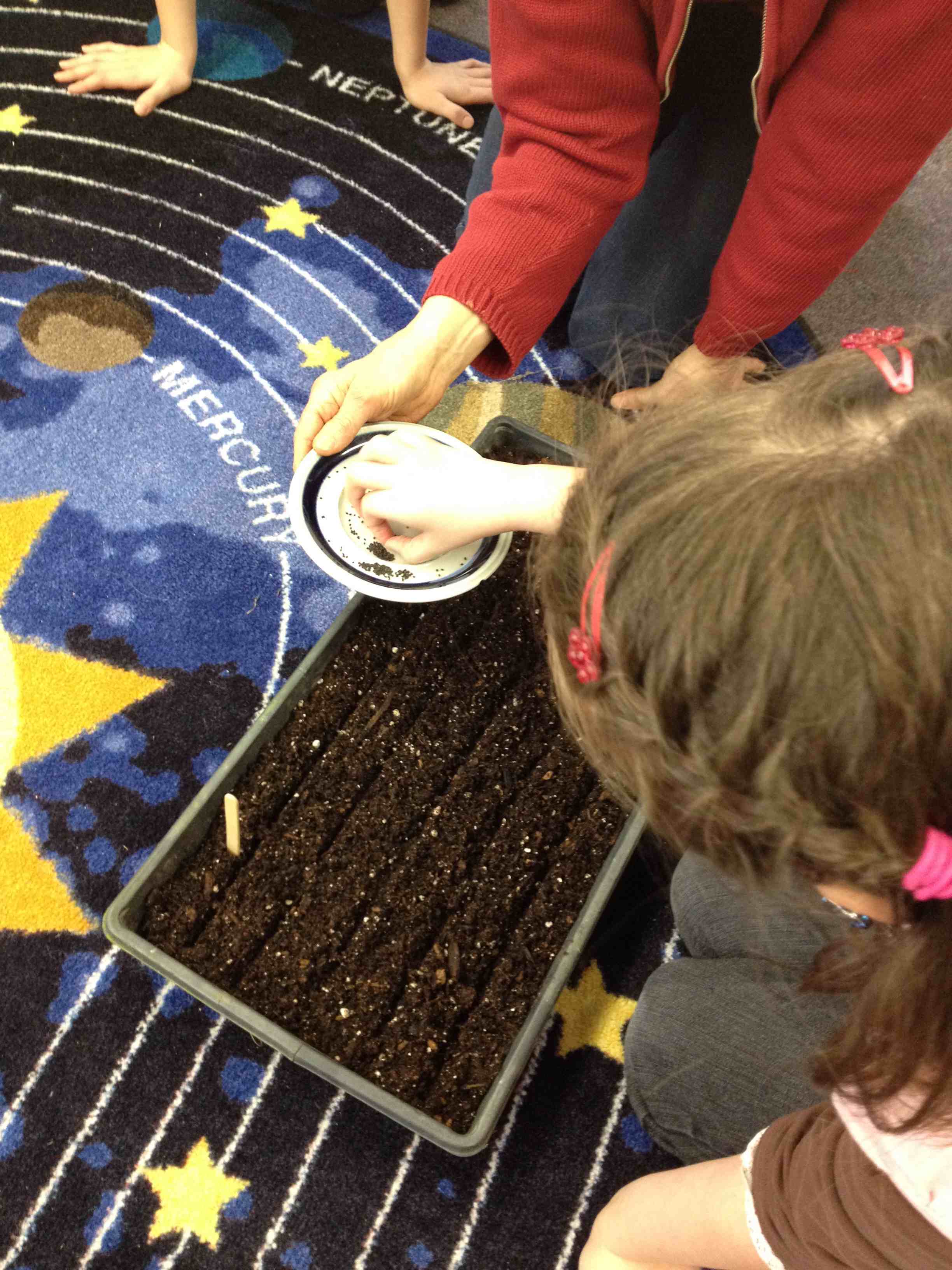
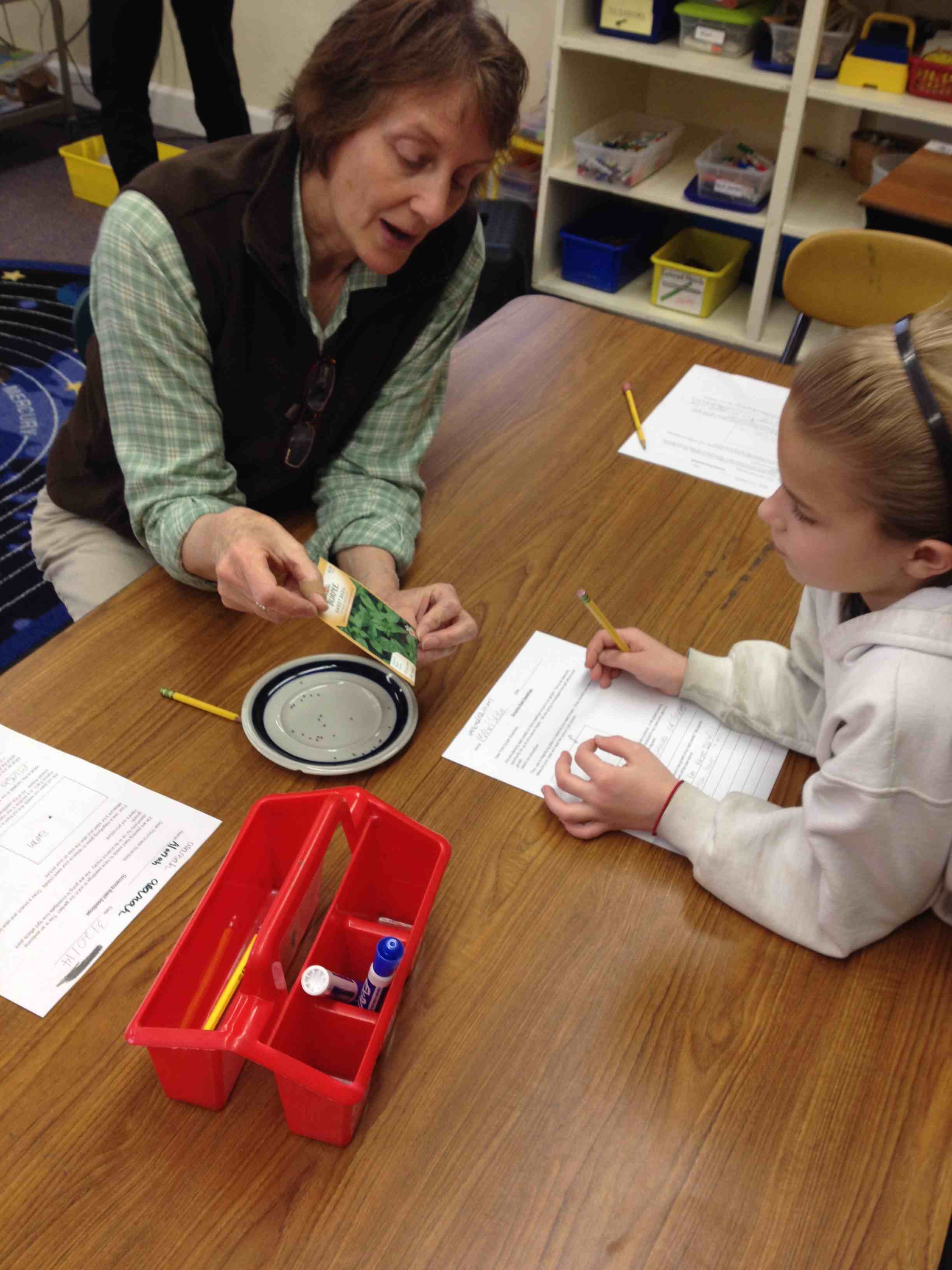
Marigolds to GreenhouseThird Graders planted a flat of basil seeds to send to our  farmer, Paul Harlow’s greenhouse. That flat will soon join the marigold seedlings that After School Program brought to the greenhouse last week (see above). Extended periods of warmth and sunlight aren’t really the order of the day right now in a typical Vermont environment. We’re grateful for the space provided at Harlow Farm. The third graders are about to test out their theories of where seedlings will grow best. Basil seedlings are so tiny they’re almost the size of a typed period. Students got a closer look at them with magnifying glasses. Planted seeds will spend the weekend germinating in a dark place in the classroom. Then on Monday, the experiment will begin. (Click on photos to enlarge.)

Planting basil seeds

Planting basil seeds

√

Predicting with a variable

writing predictions

writing predictions


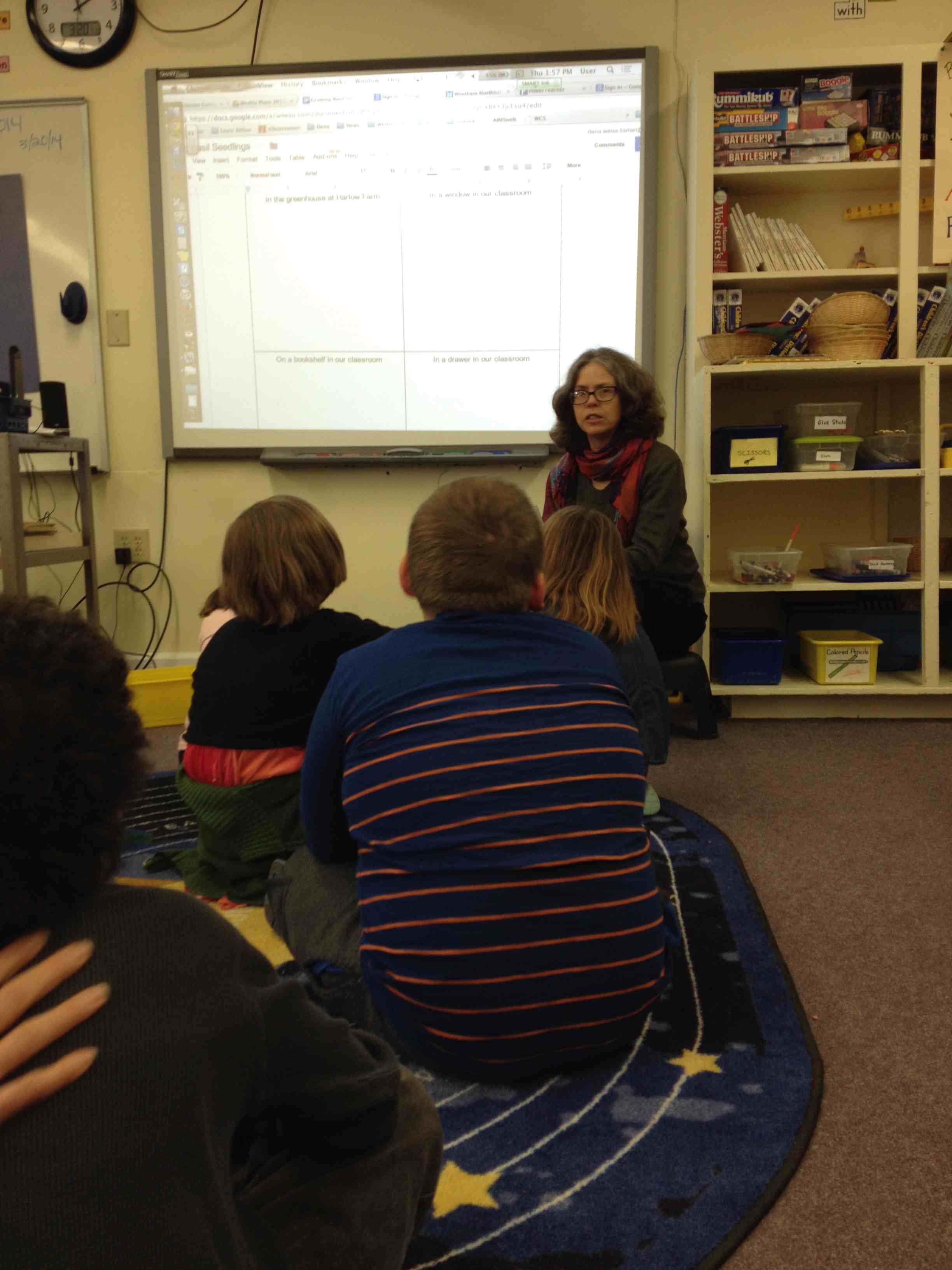
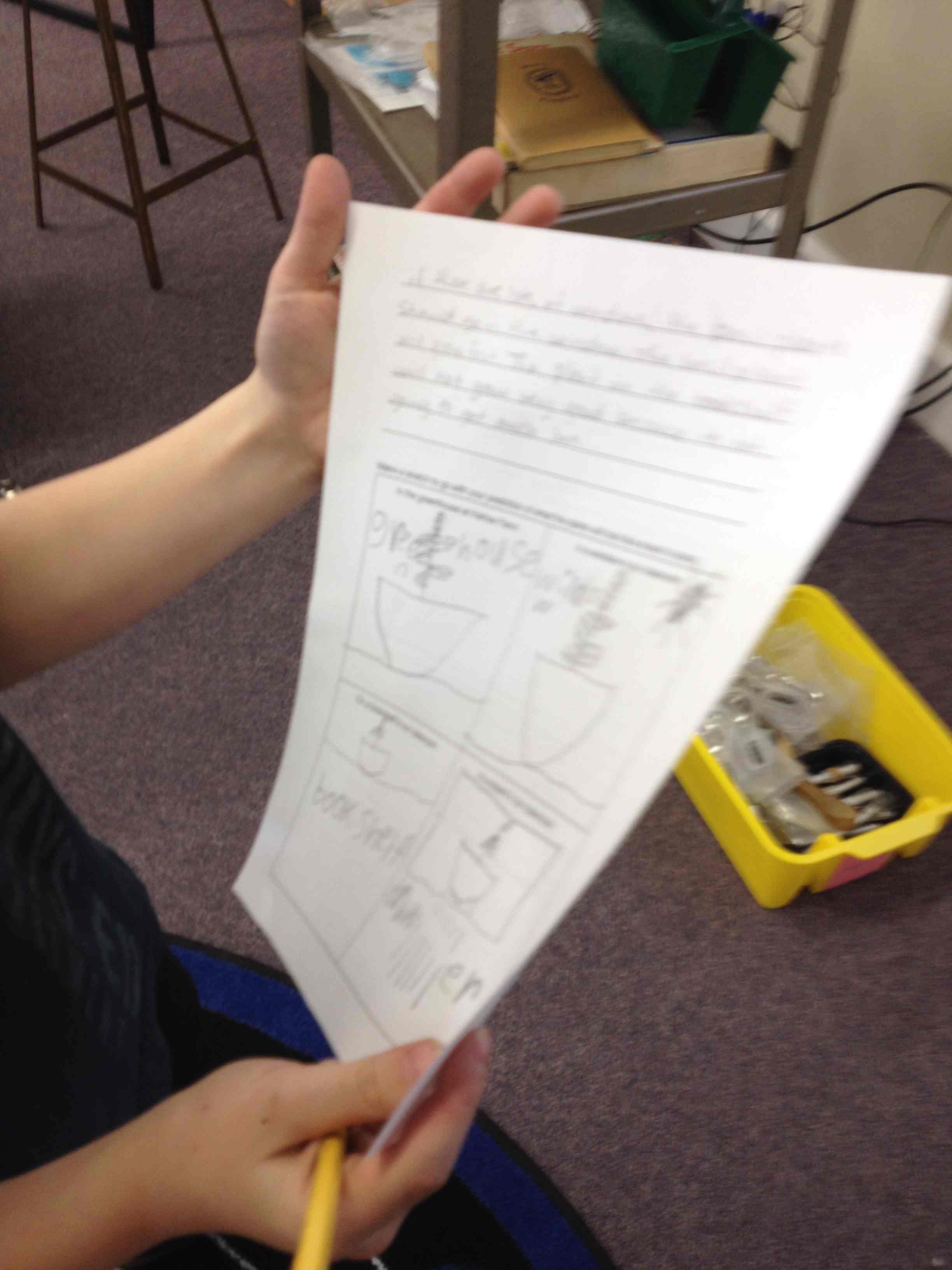
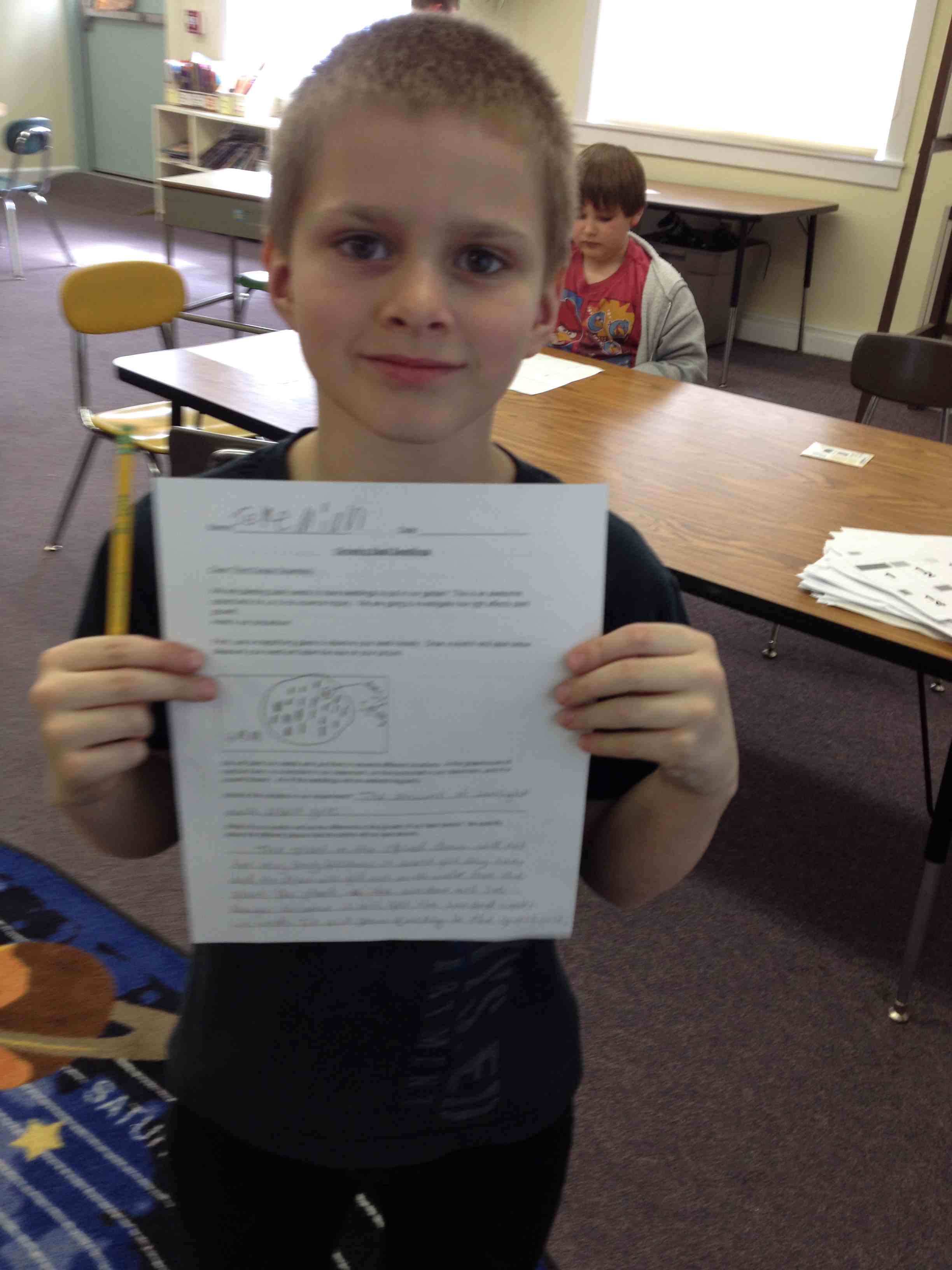
With their teacher, Dena, students chose a few places in their classroom to care for seedlings. One group put theirs in a drawer, another on the window sill and another on the book shelf. They will monitor and care for the growth of their basil seedlings daily. Students worked hard at writing predictions for how each seedling group will fare. Labeled diagrams were exceptional in their detail.

labeled drawing grade 3

labeled drawing grade 3

labeled drawing and prediction

labeled drawing and prediction

I will keep the class  posted on the progress of the flat that goes to the greenhouse via emailed photos.

These basil seedlings will be big enough to be transplanted within a month. Students will plant them into small recycled school milk cartons. Some will be sold. Others will grow in our garden. We use basil for making pesto and for cooking projects….especially pizza sauce!


2 Comments

Testing This Year’s Popcorn

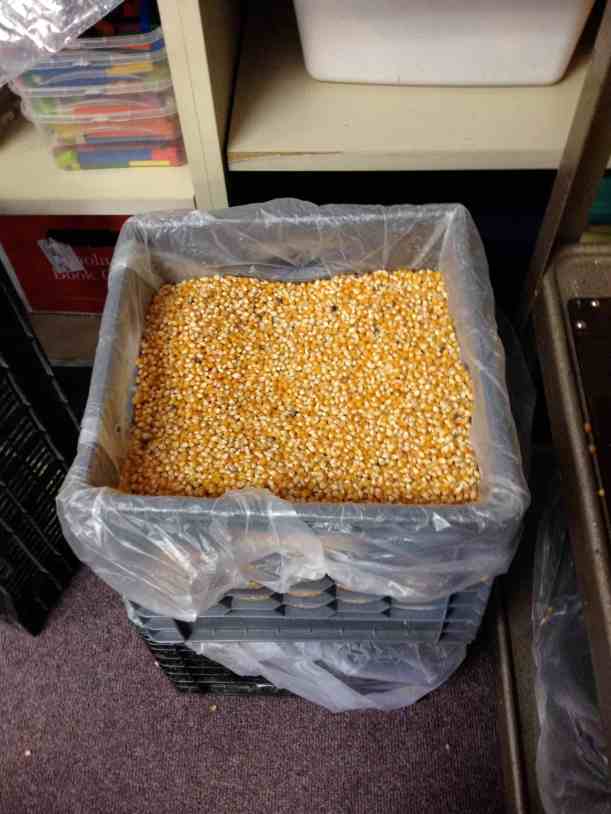
2013 Popcorn Harvest

2013 Popcorn Harvest

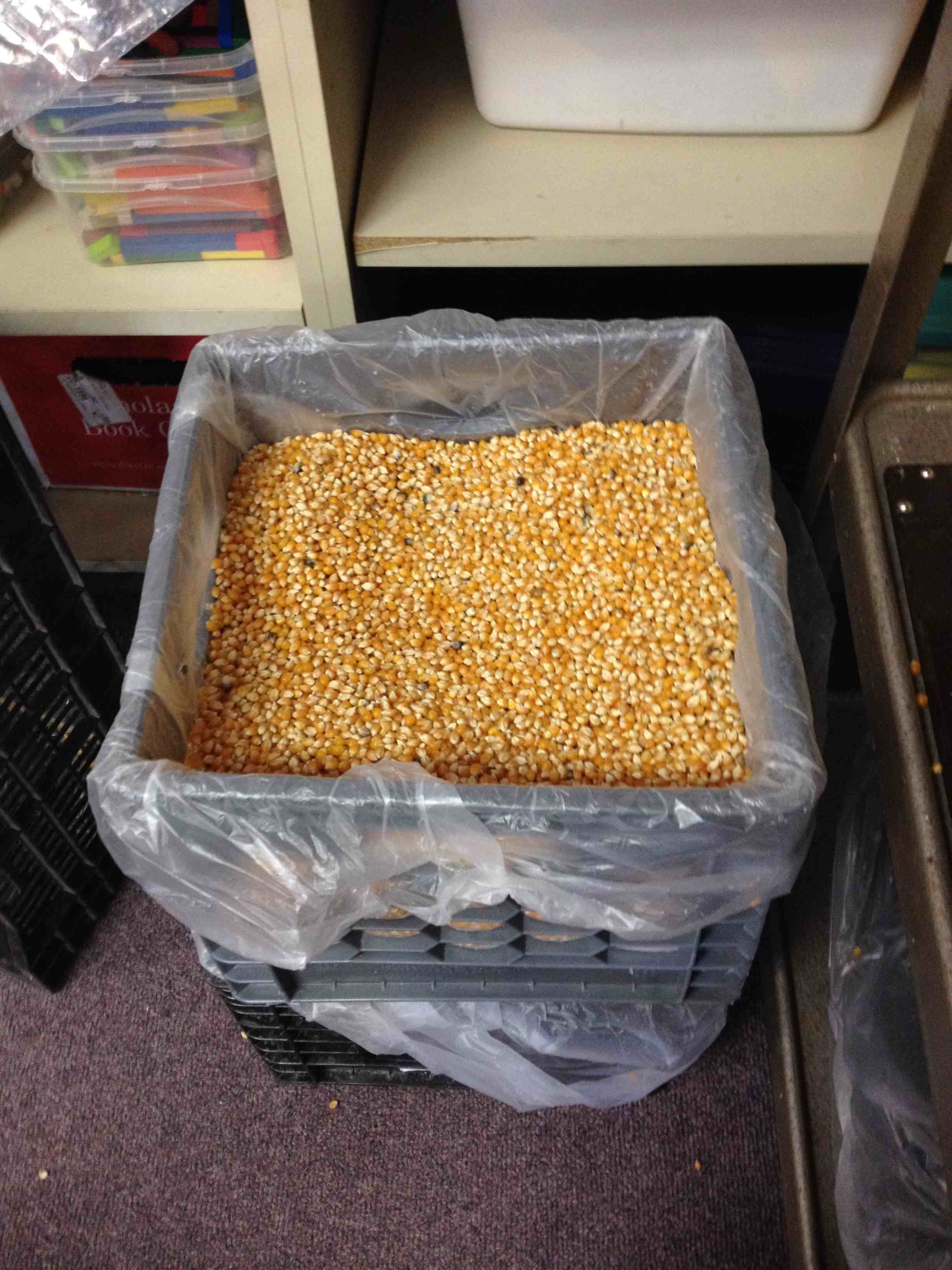
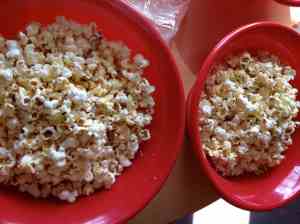
Just look at this beautiful yield of popcorn! Our fourth grade students worked hard to plant, harvest and process it! Now, if only we can get it to pop into light fluffy kernels like Orville Redenbacher or Pop Secret. What is their secret? Armed with some knowledge about what makes popcorn pop, 4th grade scientists thought that putting popcorn in a freezer or submerging it in boiling water might make it pop. This seemed to make sense considering that a tiny drop of water must explode inside each kernel to produce the crunchy light popcorn we all love. Water expands when it freezes, right? And however we heat up the kernels, will the  droplet explode? I hope that students can find time to  test out their hypotheses. There is a budding scientist in every one of them.

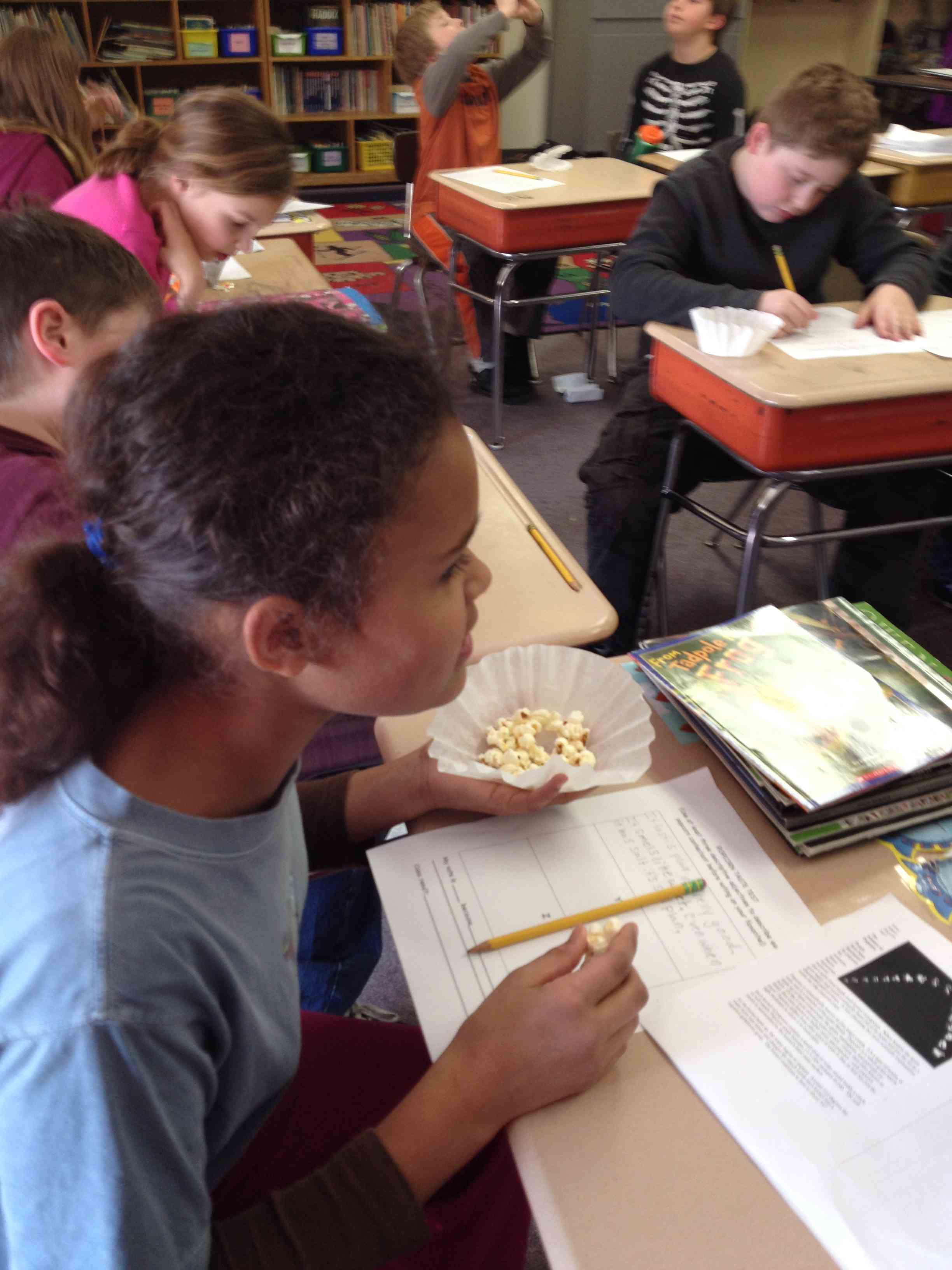
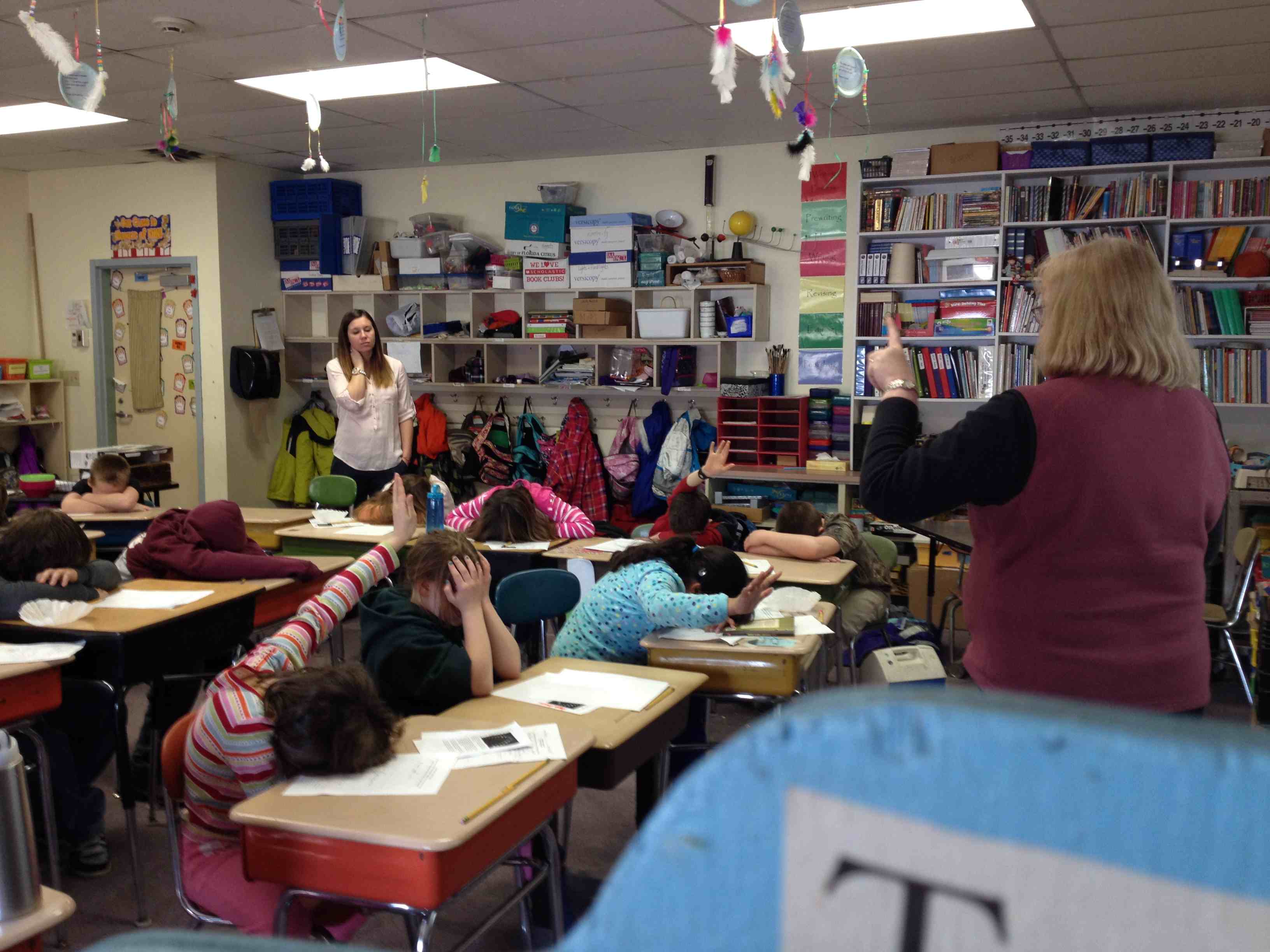
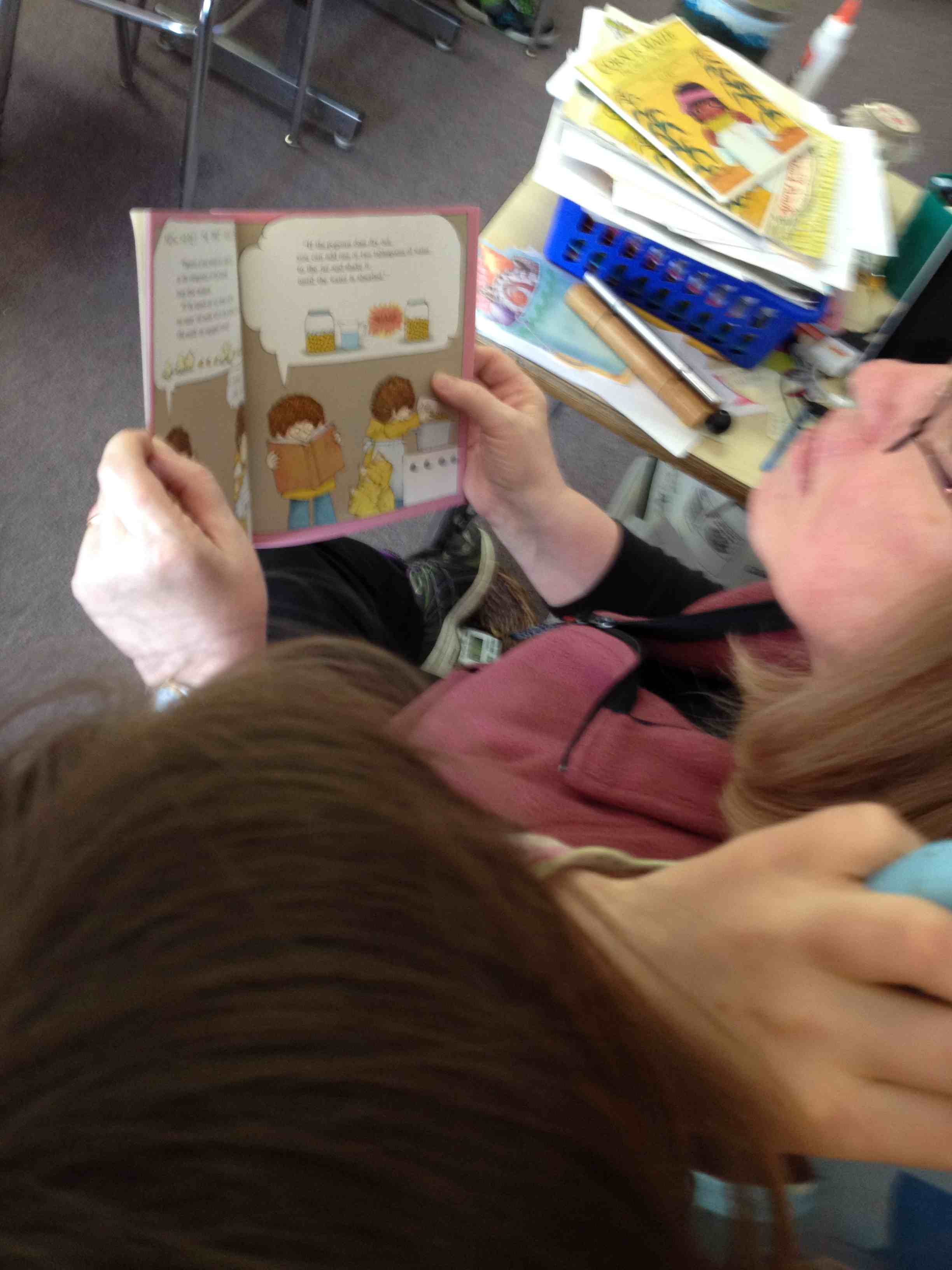
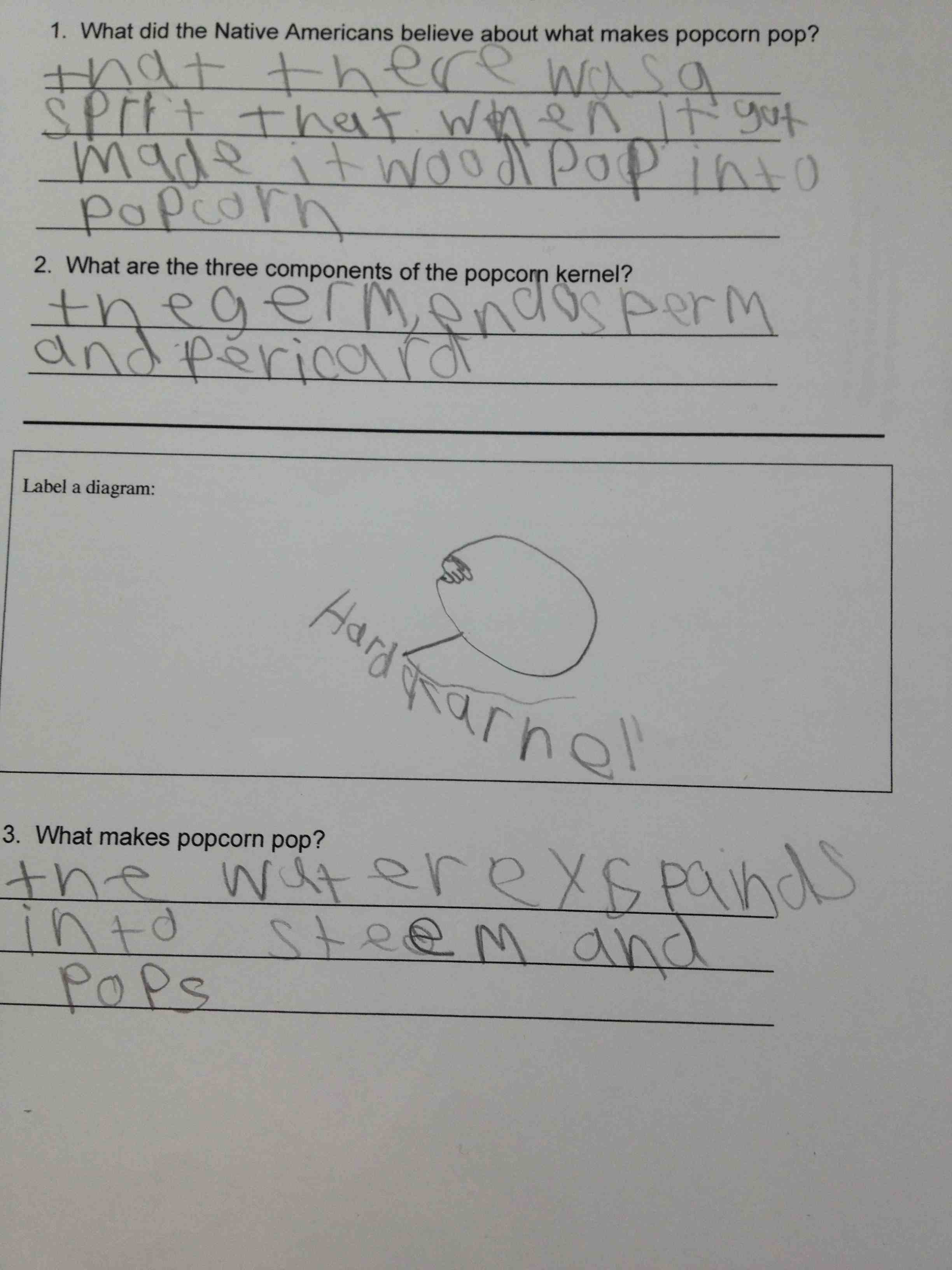
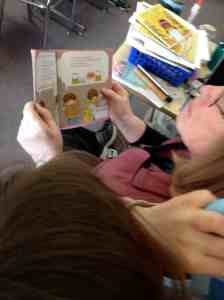
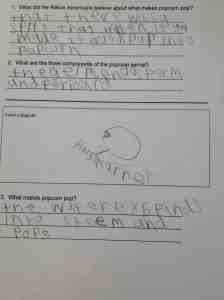
In the meantime, we tried popping our stored popcorn from 2012 and 2013. Then we tasted the results in a blind taste test alongside Orville’s and Pop Secret. Students had to describe each taste sample using three or more adjectives. Their teacher, Ms. Nancy, recorded the descriptions of each. Votes were tallied. Our own popcorn did not get the recognition it deserved. It didn’t pop well. Most of the kernels just did a slow burn. It turns out that popcorn kernels can be over dried, losing that critical droplet of moisture in each kernel. As the students read and recorded their findings, their teacher showcased a few good books about popcorn for future reading. One was a book entitled, “The Popcorn Book,” by Tomi DePaola. In this book advice is given for popcorn that won’t pop………simply add water and keep in a sealed jar in the refrigerator. Our next experiment is taking shape. We’ll keep you posted on results. We can’t wait to enjoy our own popcorn. Thank you, Tomi!
2013 popcorn harvest
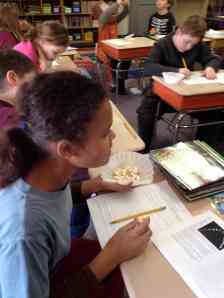
2013 popcorn harvest

tasting and describing
tasting and describing

Popped popcorn

Popped popcorn

descriptions of 3 types popcorn

descriptions of 3 types popcorn

voting literally blind taste test
voting literally blind taste test

Tomi DePaola Popcorn Book
Tomi DePaola Popcorn Book

response sheet

response sheet

Leave a comment

Pumpkin Pancakes and Math Lessons

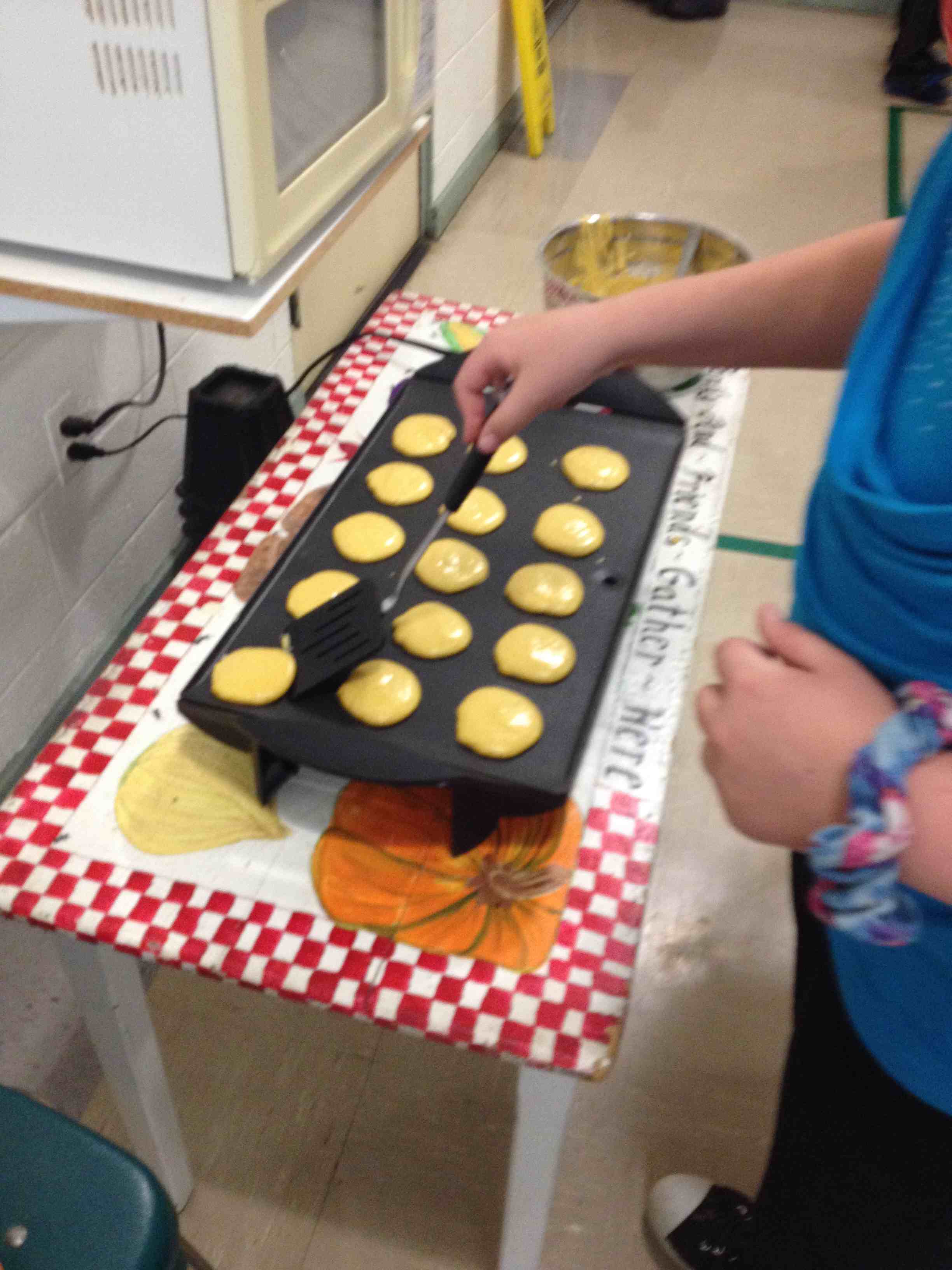
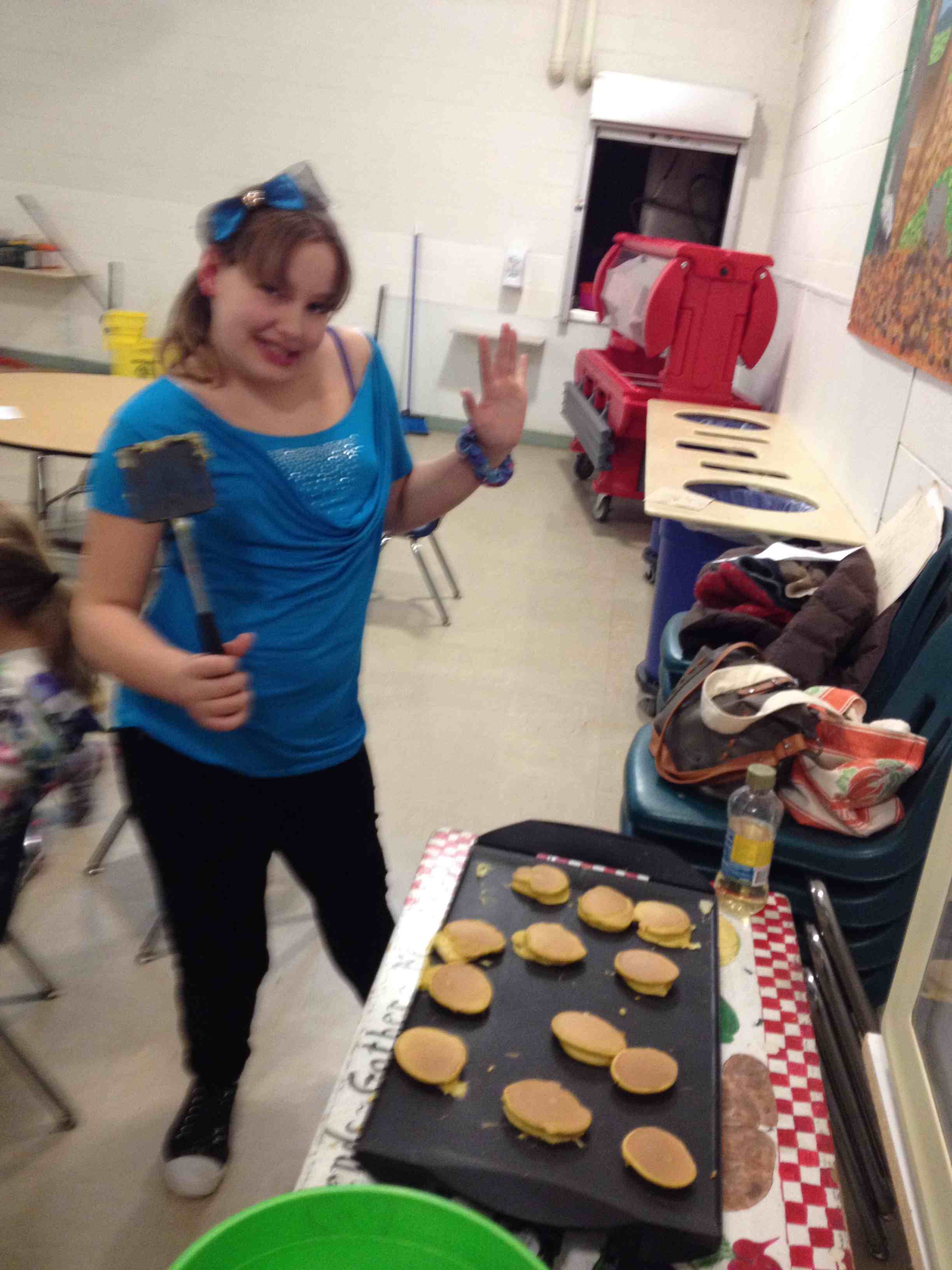
pancake array

pancake array

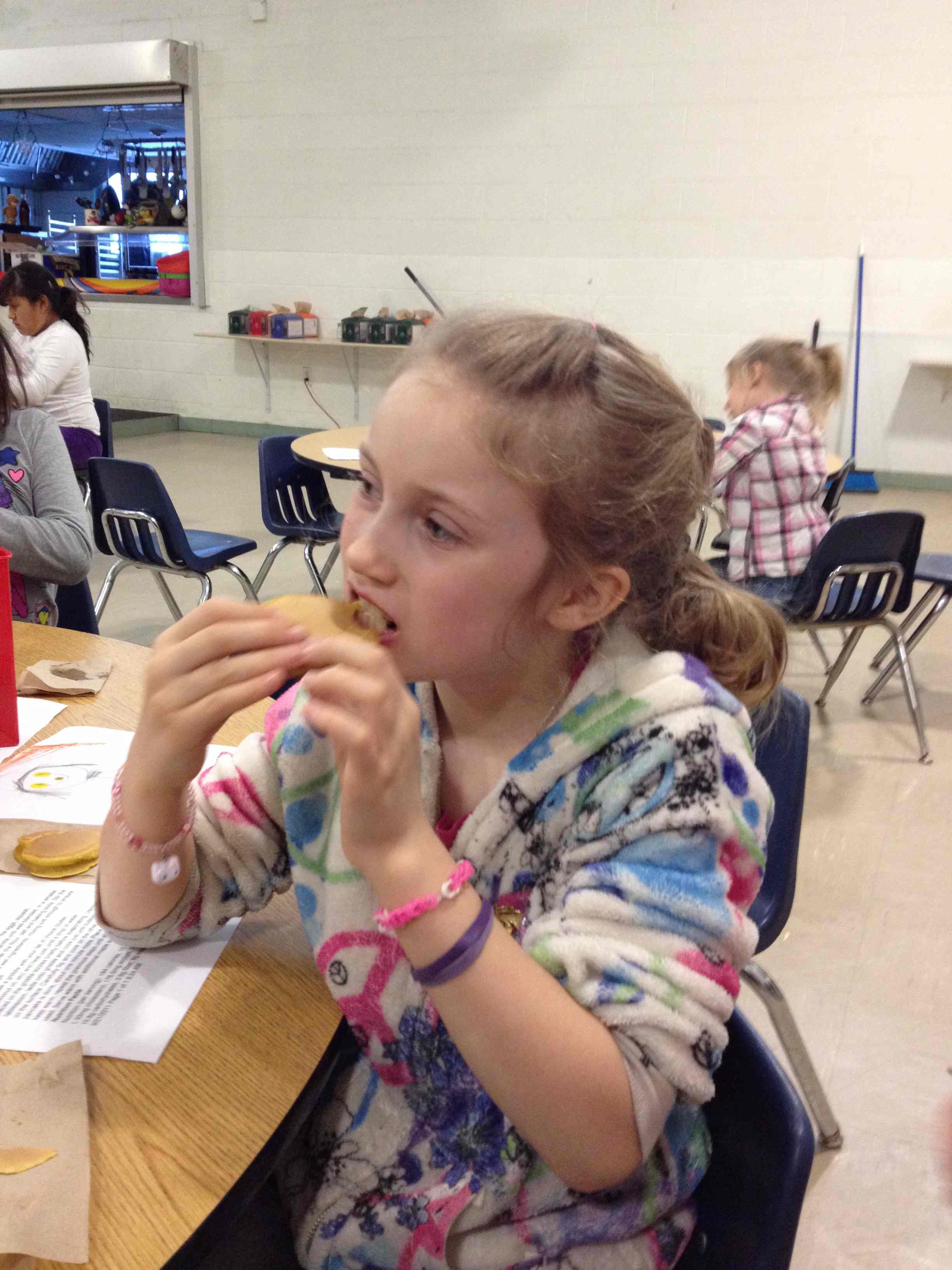
Nothing is yummier than pancakes with this year’s maple syrup and last year’s pumpkin or squash puree. We baked halves of pumpkin on a cookie sheet in a 350 oven after removing the seeds. (Adding a little water helps to steam the pumpkins quickly.) Remove when they’re fork tender and allow to cool. Then you can scoop out the pumpkin, mash it and store it away in the freezer until the day before you need it. For these children, that freezer bag of pumpkin contains all the memories of last summer’s garden. It also adds vitamin A and fiber to their diets!
pancake eating YUM!

pancake eating YUM!

This is an easy recipe to put together and it has lots of opportunities to access math skills for all ages. We doubled the recipe so we doubled fractional amounts, like 1/4 plus 1/4. We set the pancakes in an array as they cooked, calling attention to the multiplication fact you can see in the photo above: 3 rows of 5 or 5 rows of 3 = 15 pancakes…..hardly enough  for this hungry group of After School kids, so we made another 15. How many was that? How many did each of us get to eat?
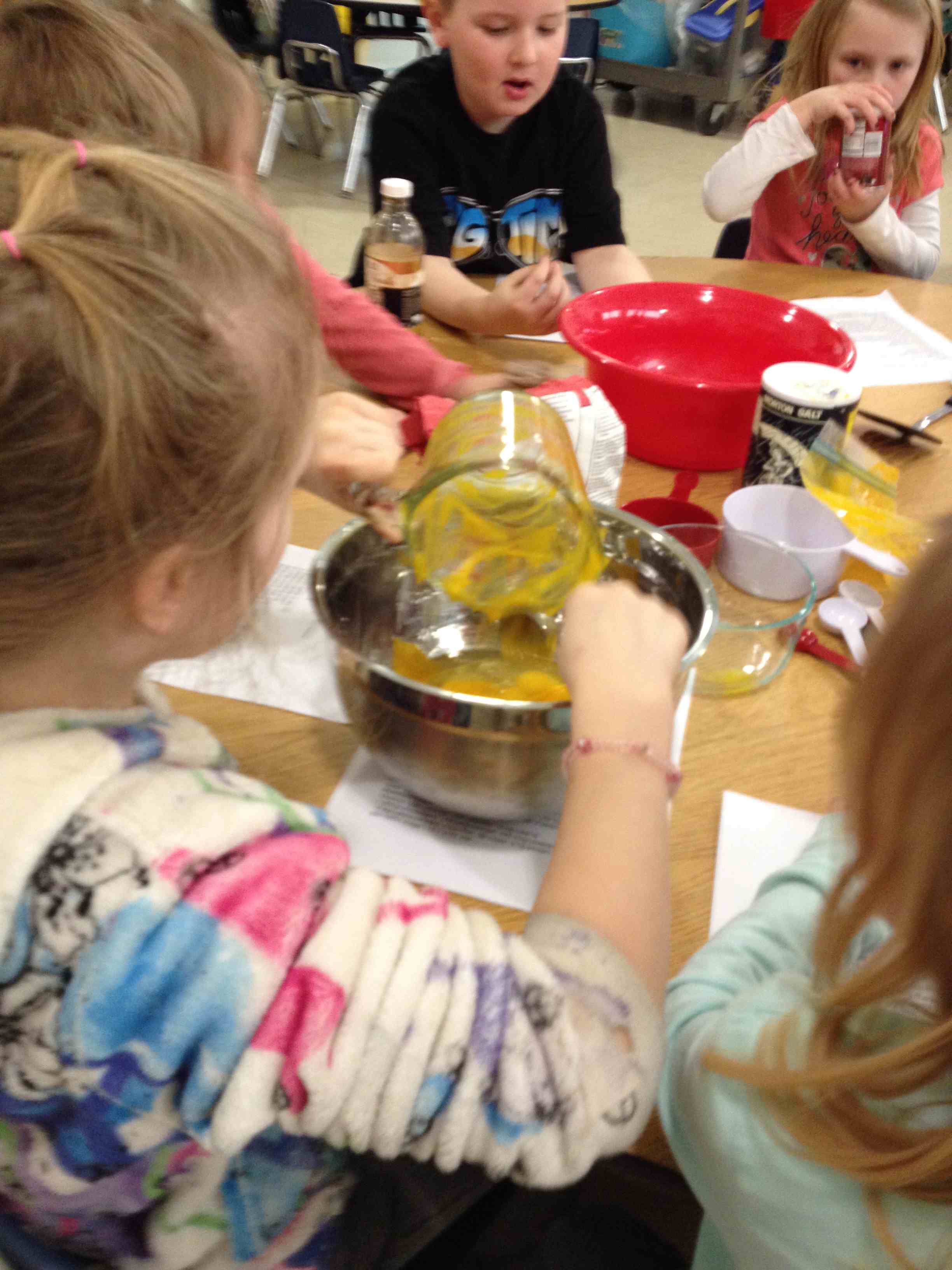
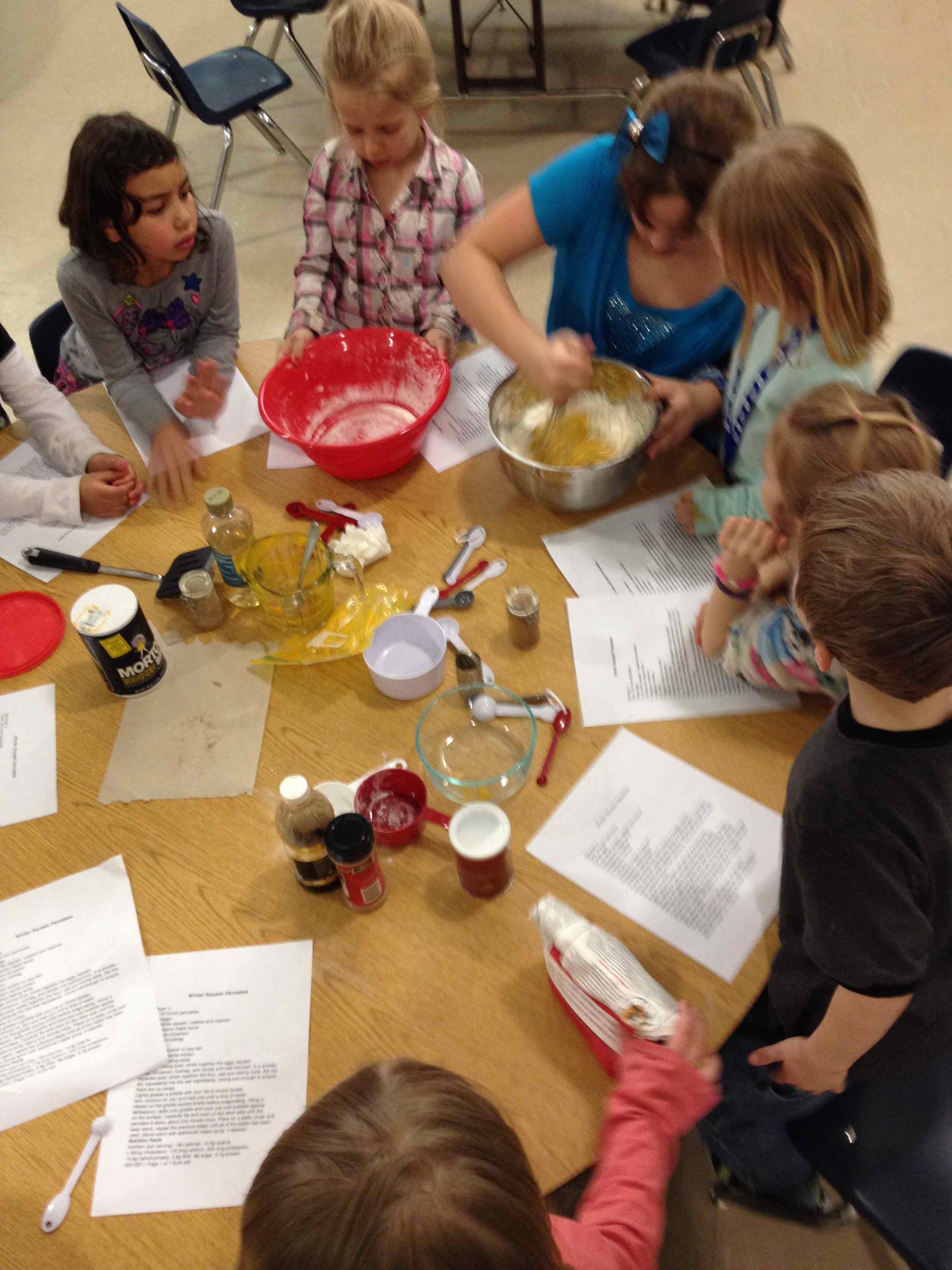
Each child took turns adding ingredients. Everyone had a chance to smell or taste the ingredients as they practiced new words, like “nutmeg” or “vanilla”.

Everyone took a recipe home to try recreating pancakes with their families. You can click on the recipe below!

following a recipe

following a recipe

reading a recipe

reading a recipe

cooking pride

cooking pride


Click on recipe:  Pumpkin Pancakes


Leave a comment

Cooking With Toddlers: Easy Banana Bread

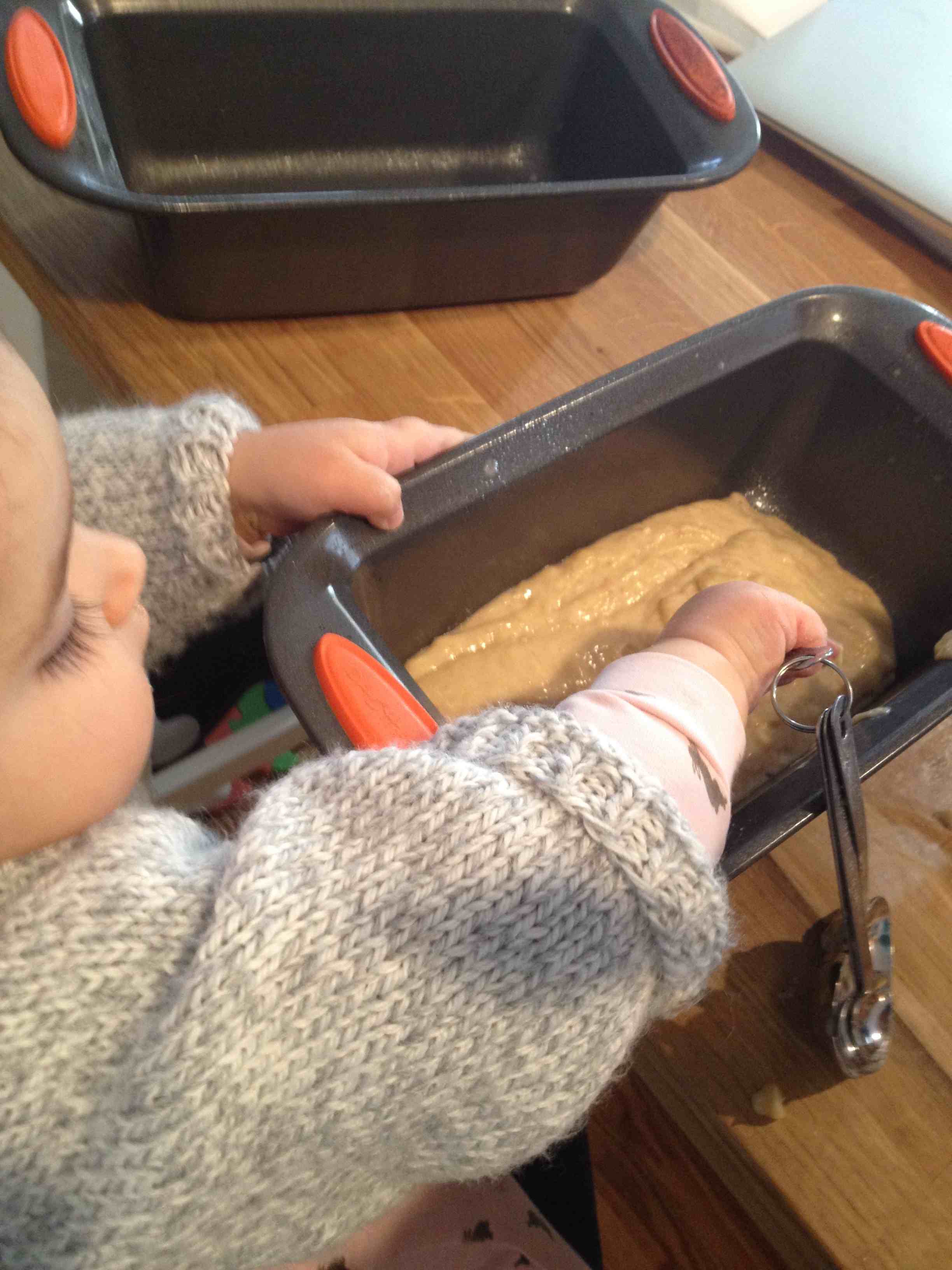
playing with the batter

playing with the batter

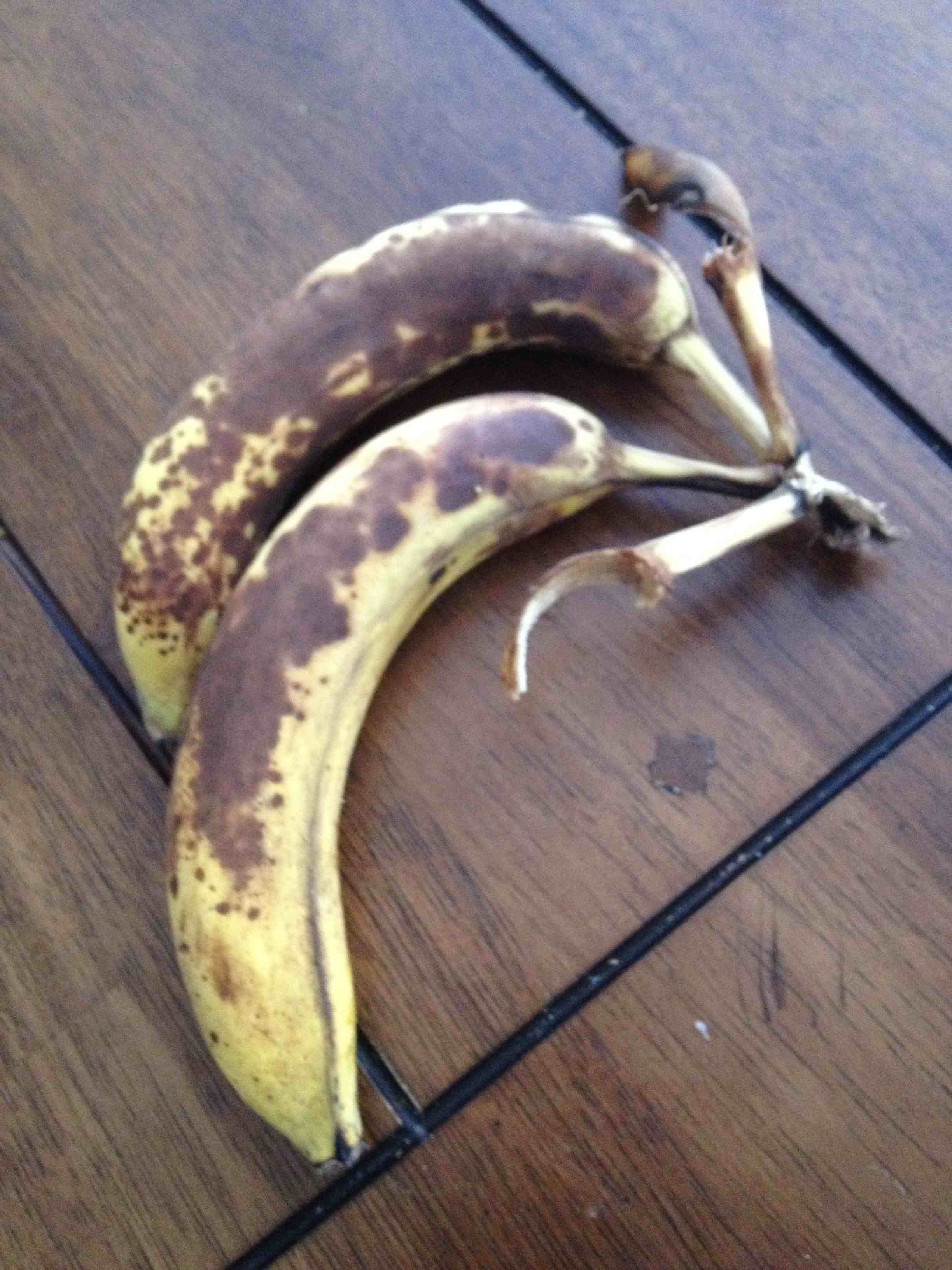
You’ve all had bananas sitting on your counter that look as if they’re ready for the trash bin. But, not so fast. It’s January in Vermont and you’re stuck indoors with a bored toddler. Here’s what you can do: make banana bread. Be sure to have all of your ingredients ready, and then follow the simple recipe below. You can decrease the sugar by half and still have a yummy snack. (We put one loaf in the freezer and then gobbled up the other one.)

Download: Banana Bread Recipe

those overripe bananas

those overripe bananas

mashing babanas

mashing babanas

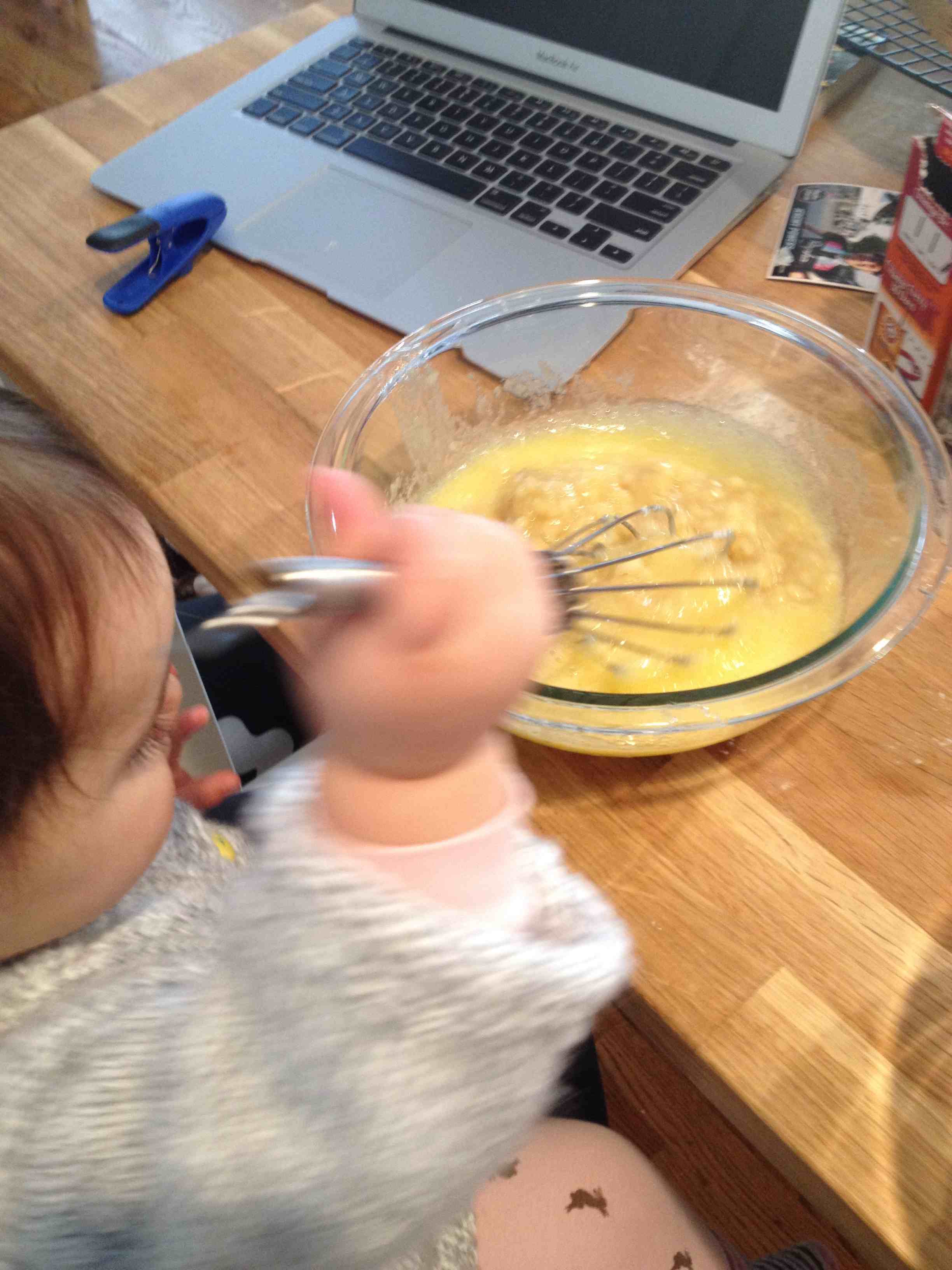
mixing eggs, oil, sugar and bananas

mixing eggs, oil, sugar and bananas


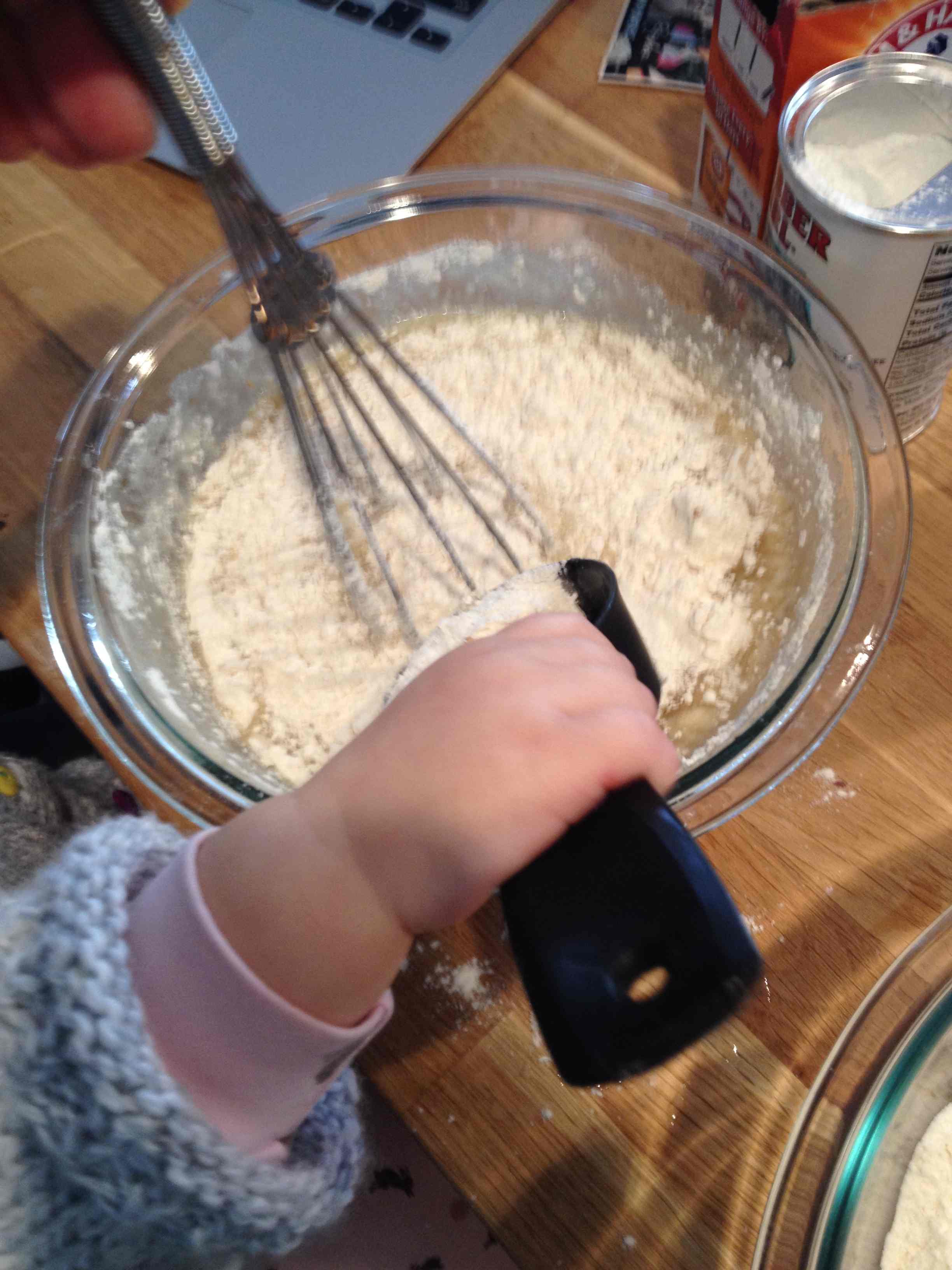
measuring dry ingredients

measuring dry ingredients

adding dry ingredients to wet

adding dry ingredients to wet

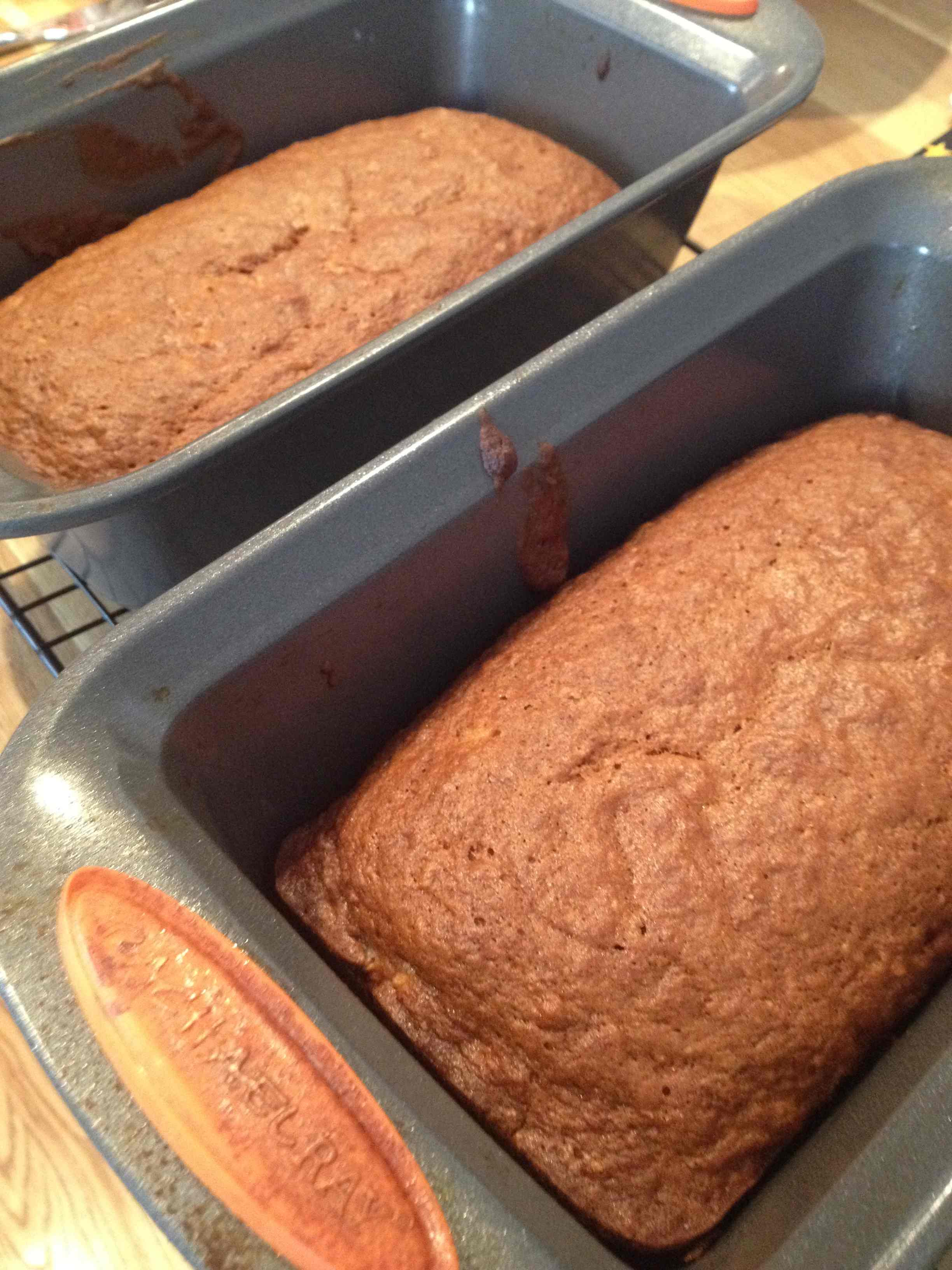
finished banana bread

finished banana bread