Vermont School Garden

A visit to a Vermont public school garden through the seasons.


Leave a comment

Cooking Fun and Marketing Skills 101

commercial for pumpkin choco-chip cookies

commercial for pumpkin choco-chip cookies

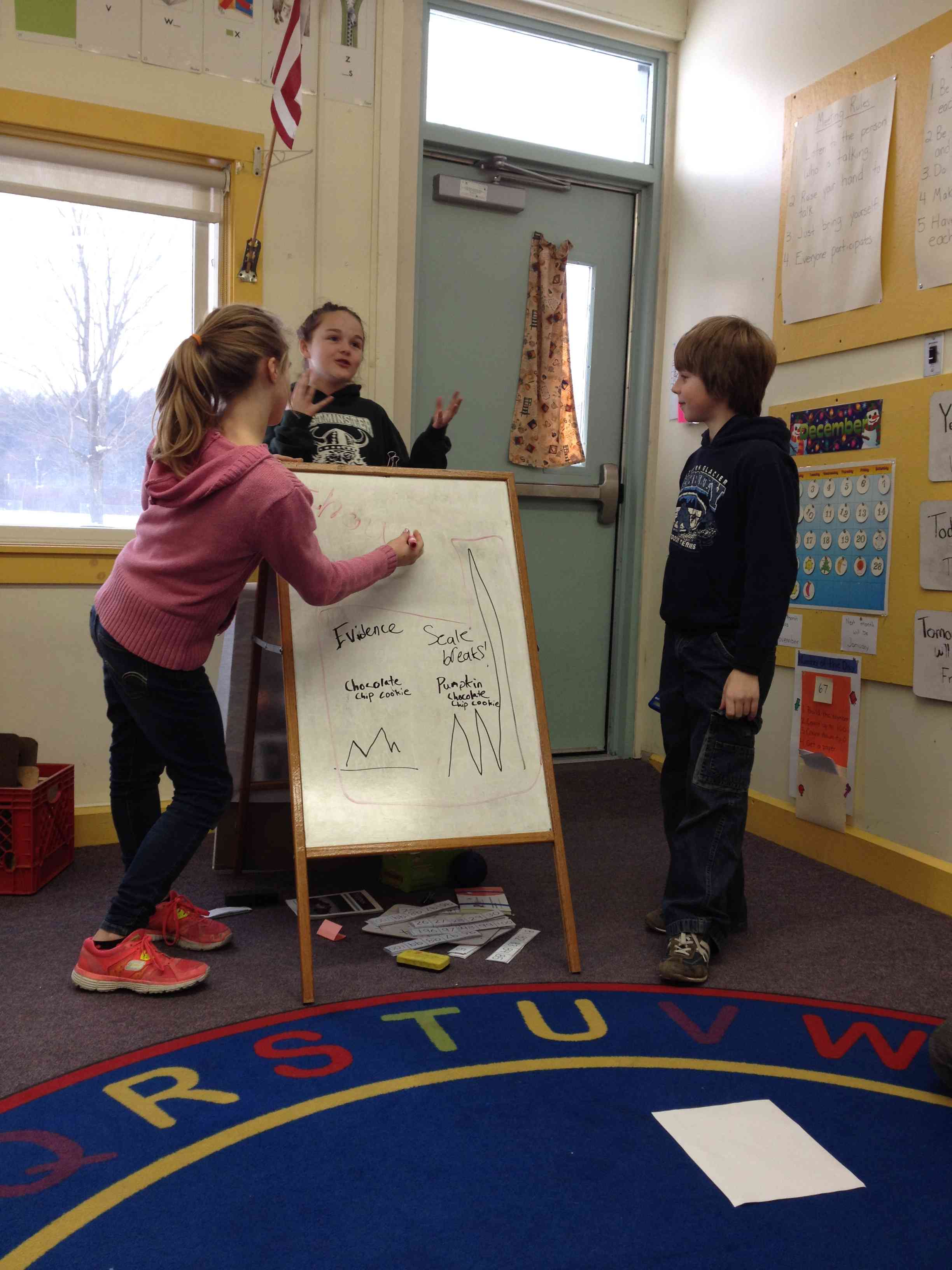
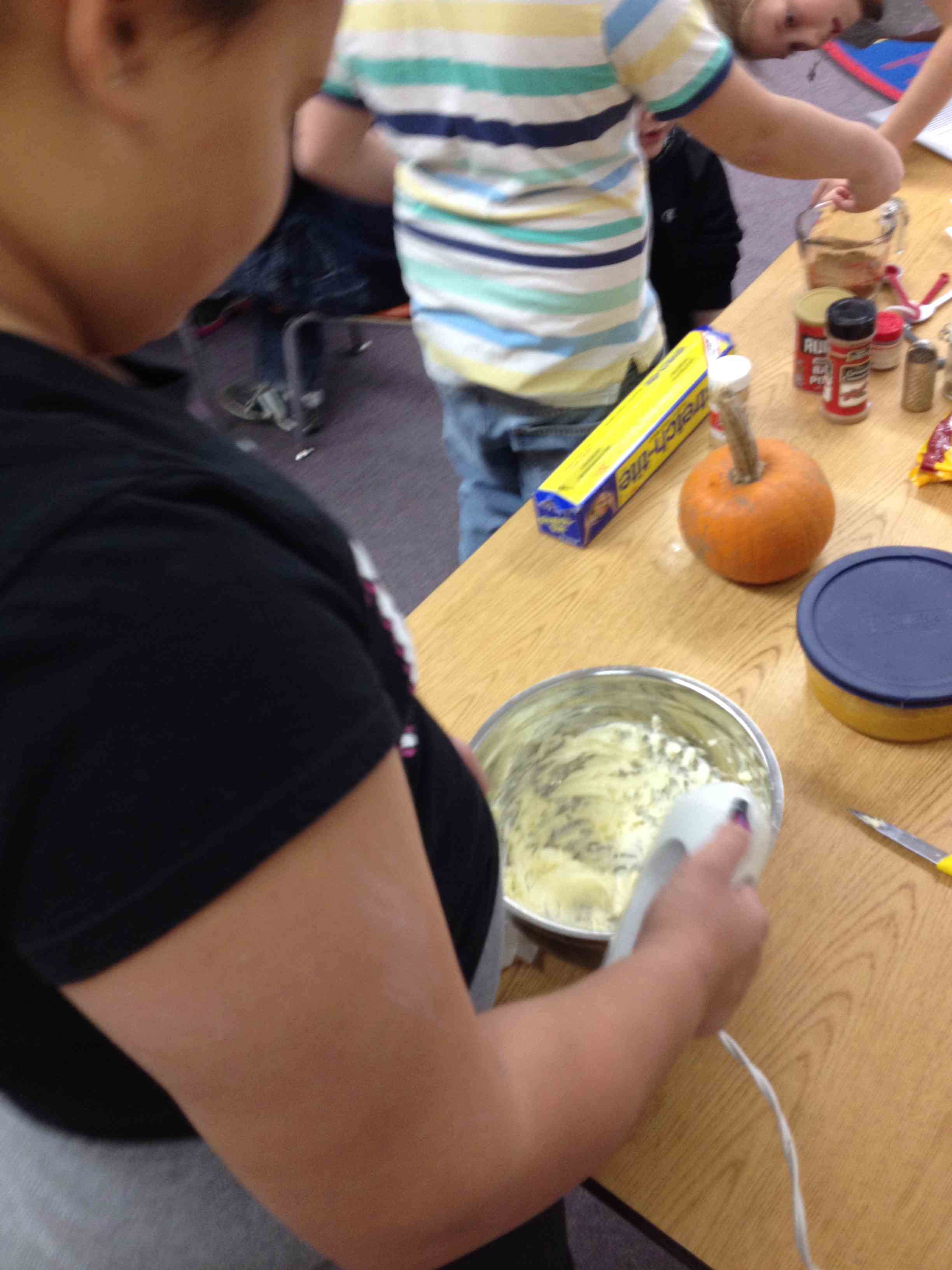
How would you market pumpkin chocolate chip cookies? Fifth and Sixth graders had a chance to team up and show off their advertising skills when we made chocolate chip pumpkin cookies in December. Students in this class had chosen cooking as a pre-vacation activity. We did plenty of cooking and while the oven baked our fries and cookies, we cooked up some enticing ads for our edible products.

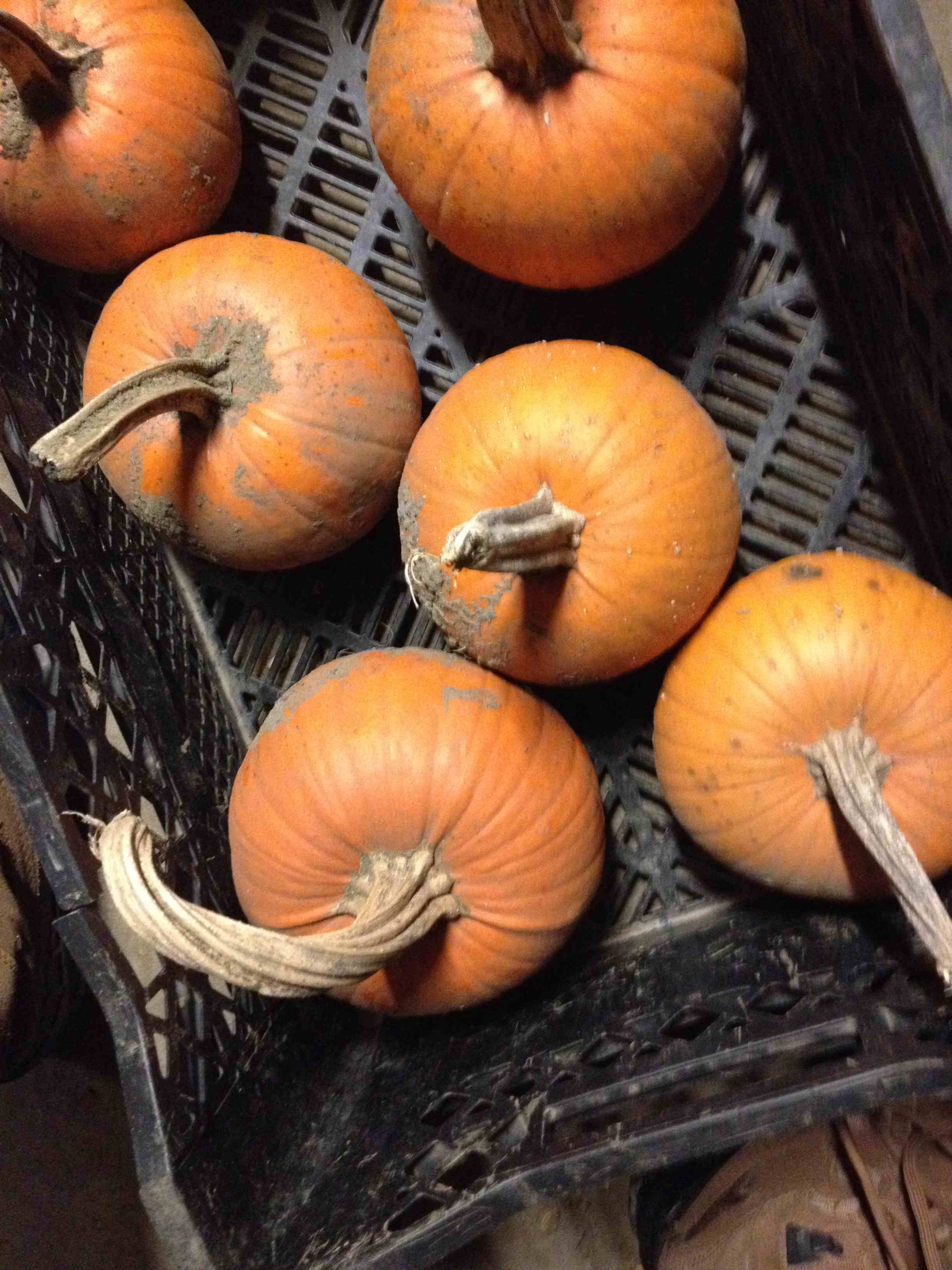
The pumpkin cookies featured the last of our garden pumpkins. They weren’t doing very well in cold storage by the end of December, so I cooked them down in a 350 degree oven. First I cut them in half and removed the seeds. Then I lined a cookie sheet with foil and added 1/2 cup of water. The pumpkin halves, placed upside down, steam in their skins. After about 40 minutes or when tender to the touch, remove pumpkins from the oven. Let them cool a bit and scrape out the pulp. It can easily be mashed and stored in plastic bags in the freezer for future use in any recipe calling for mashed/canned pumpkin. Recipe: Pumpkin Chocolate Chip Cookies

checking measurements
checking measurements

checking measurements

beating butter

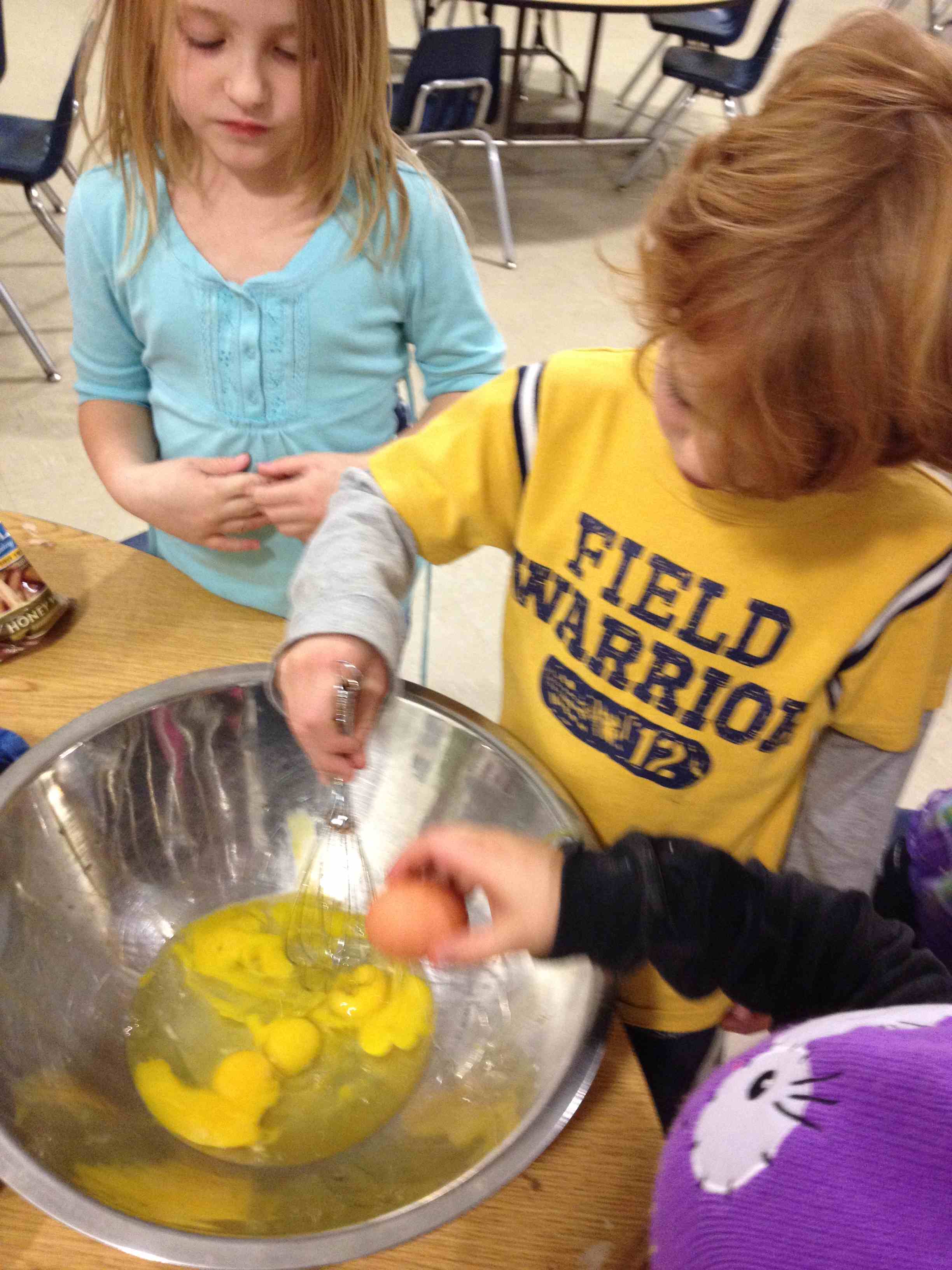
even older kids are cautious when cracking eggs

even older kids are cautious when cracking eggs

stored pumpkins over time
stored pumpkins over time

salvaged pumpkins

salvaged pumpkins

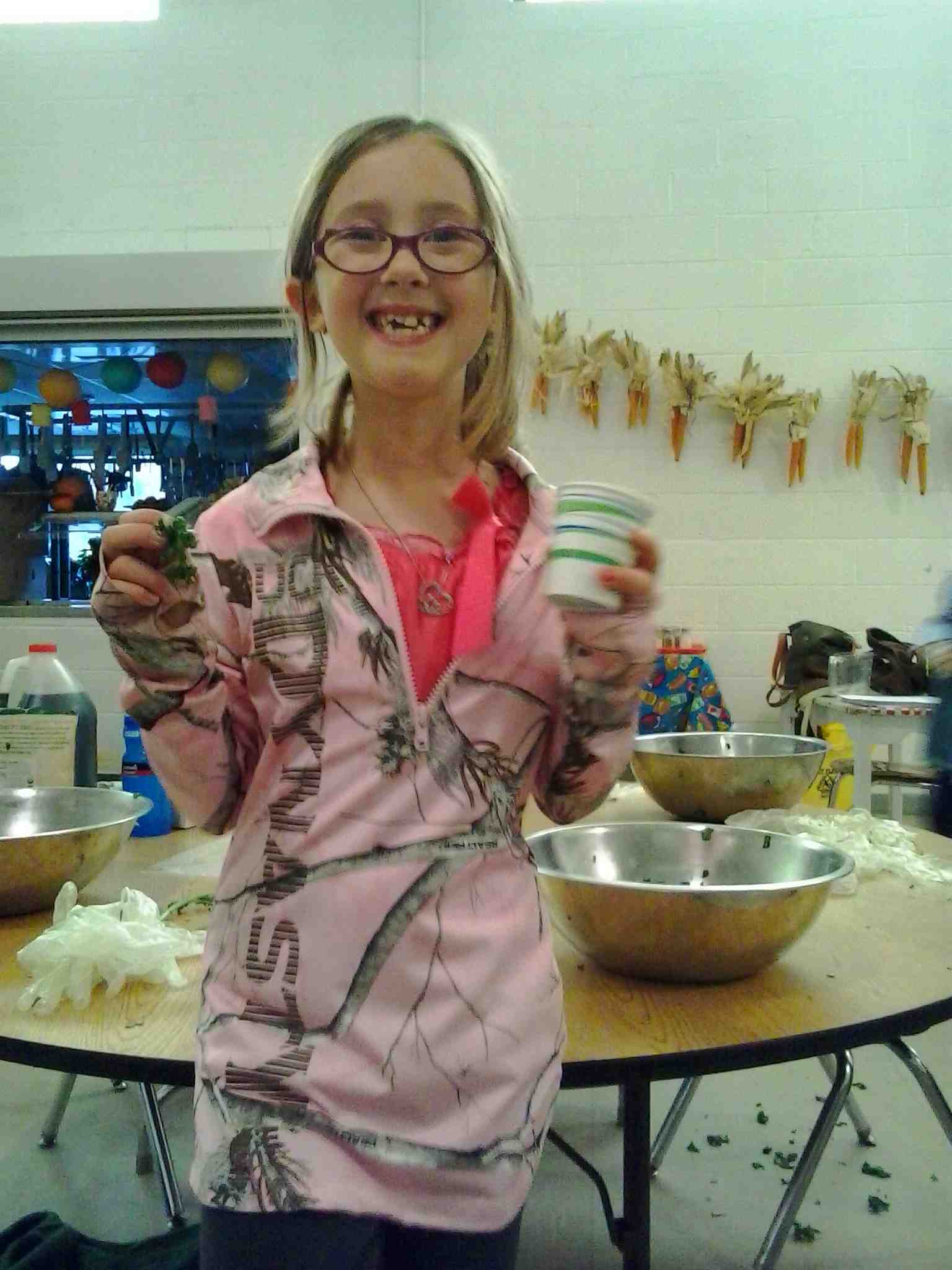
sharing our "Life of Potato" stories

sharing our “Life of Potato” stories

Leave a comment

Diggin’ Potatoes

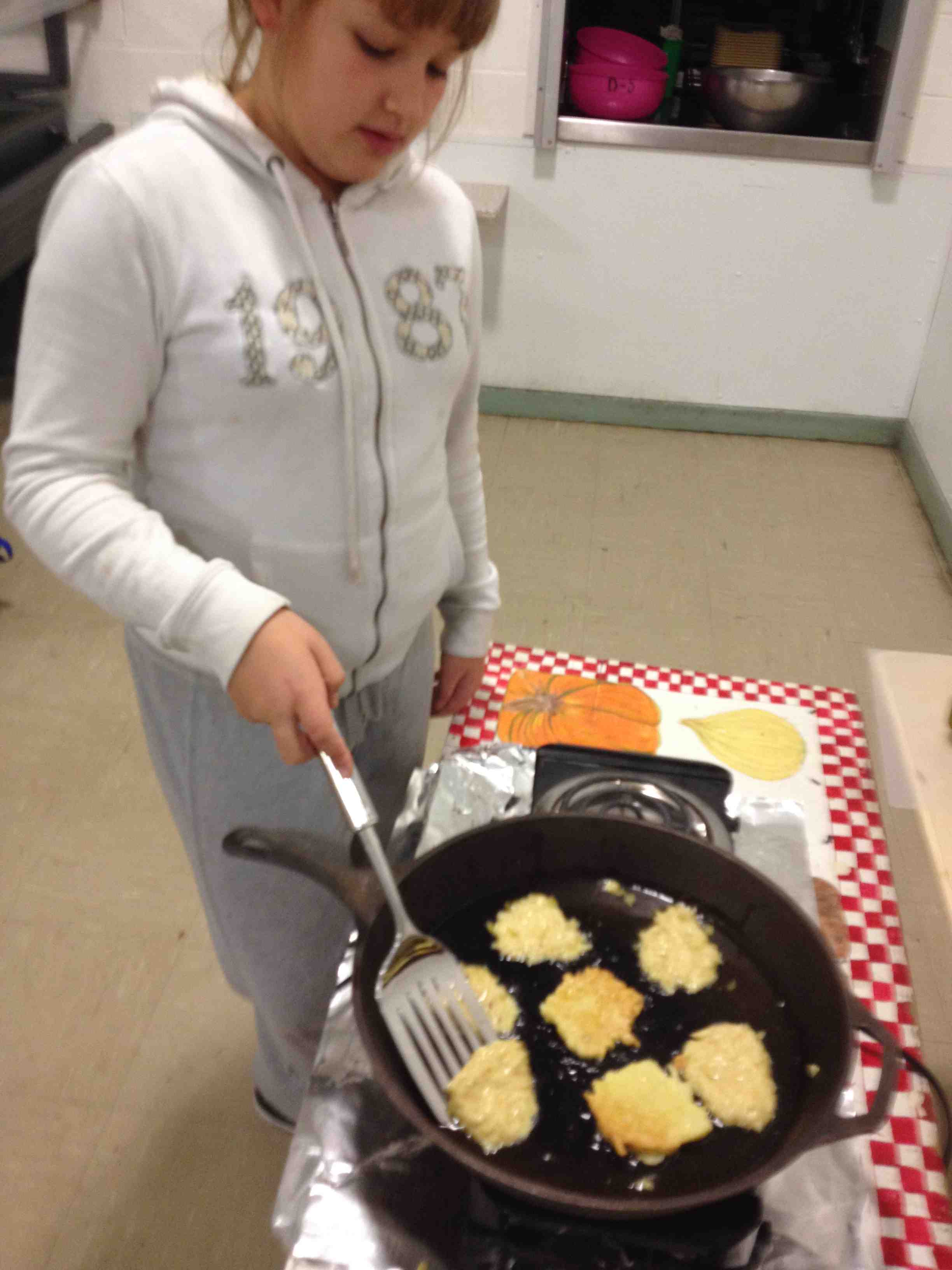
Potato Latkesfrying latkes

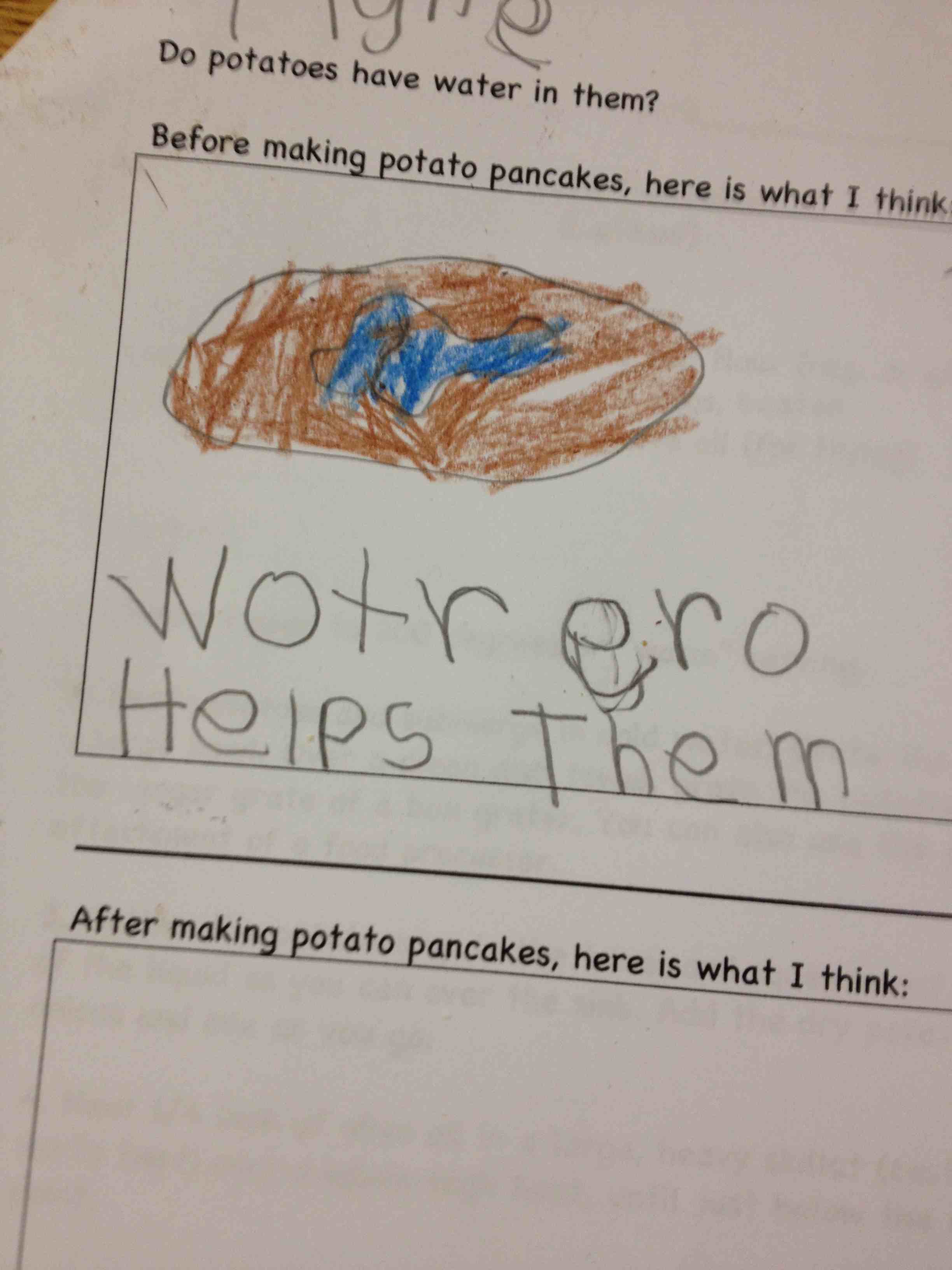
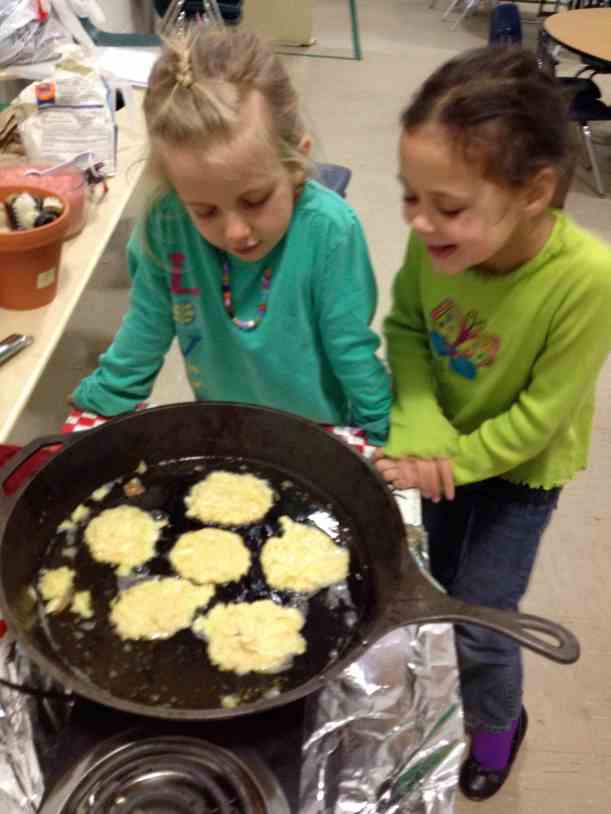
We still have lots of potatoes stored at Harlow Farm and they’re a great source for scientific theory. Our question for this class of “Science You Can Eat,” was: “Do you think potatoes have water in them and why or why not?” This is a question loaded with potential for empirical response especially among the six and seven year olds. response potato questonsOne response: Yes because they need water to grow. Here is an opportunity to record and test out theory for perhaps one of the first times.

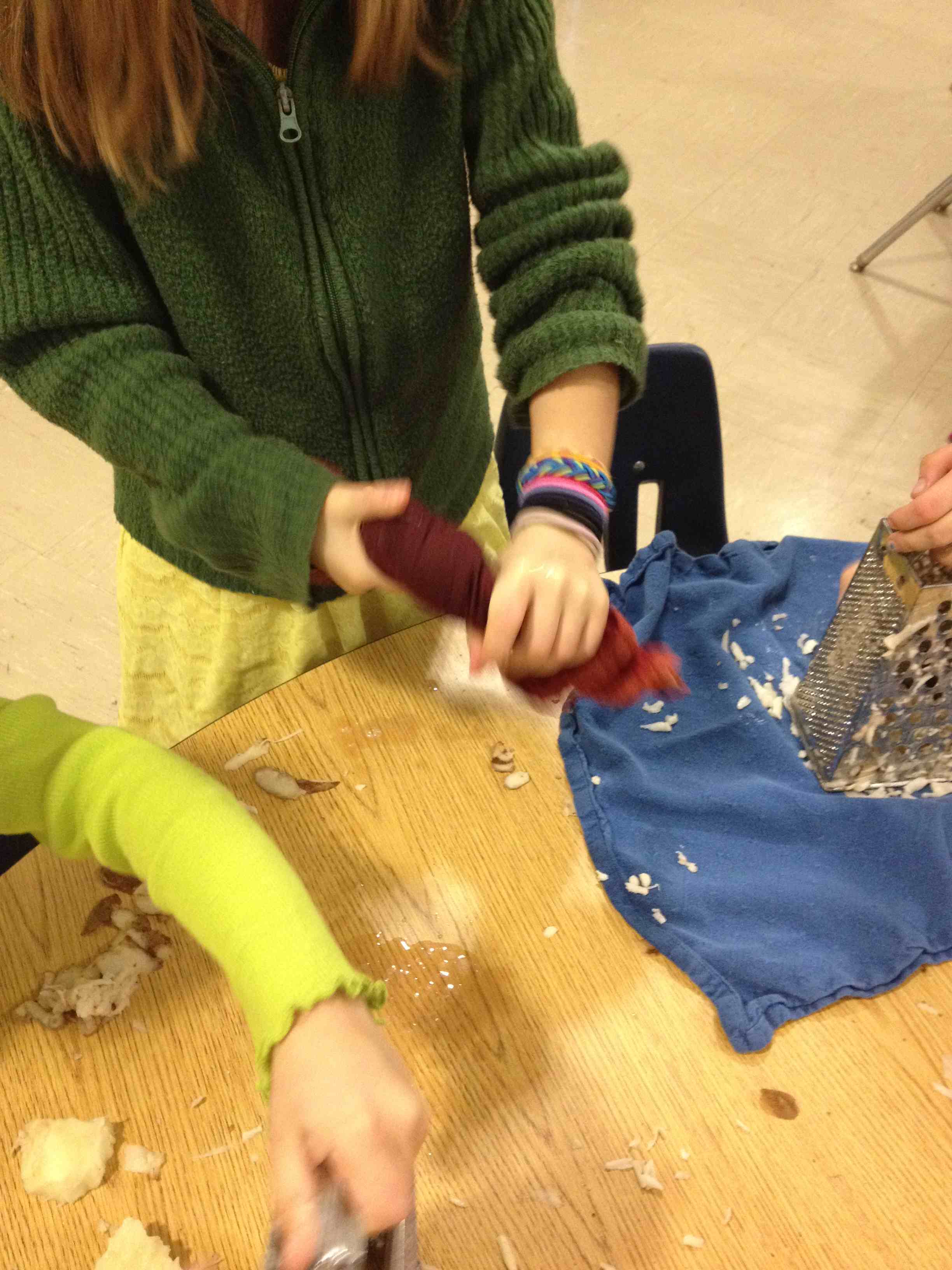
By the way, many potatoes are 80% water! We peeled and grated our potatoes. Then we spread them on a clean cloth napkin and sprinkled them with salt. The salt draws the water from the potatoes. We then rolled the napkins tight and squeezed out the water. Magic! All that water from summer growth was indeed stored inside the potatoes. The rest of the potato is mostly starch, though I’m guessing you knew that already. The average potato also contains small amounts of simple sugars, which are important for developing the golden-brown color of fried and roasted potatoes. Overall, a potato has a lower carbohydrate content than other roots and tubers and a plain boiled potato has less calories than the equivalent weight of plain boiled rice, pasta or bread.  It’s said that when men were dying from scurvy during the Klondike Gold Rush, potatoes were sold for their weight in gold. This is because potatoes were, and are, a very good source of vitamin C. 1/4 lb. of freshly harvested spuds, boiled in their skins, gives about 50% of an adult’s typical recommended daily intake.
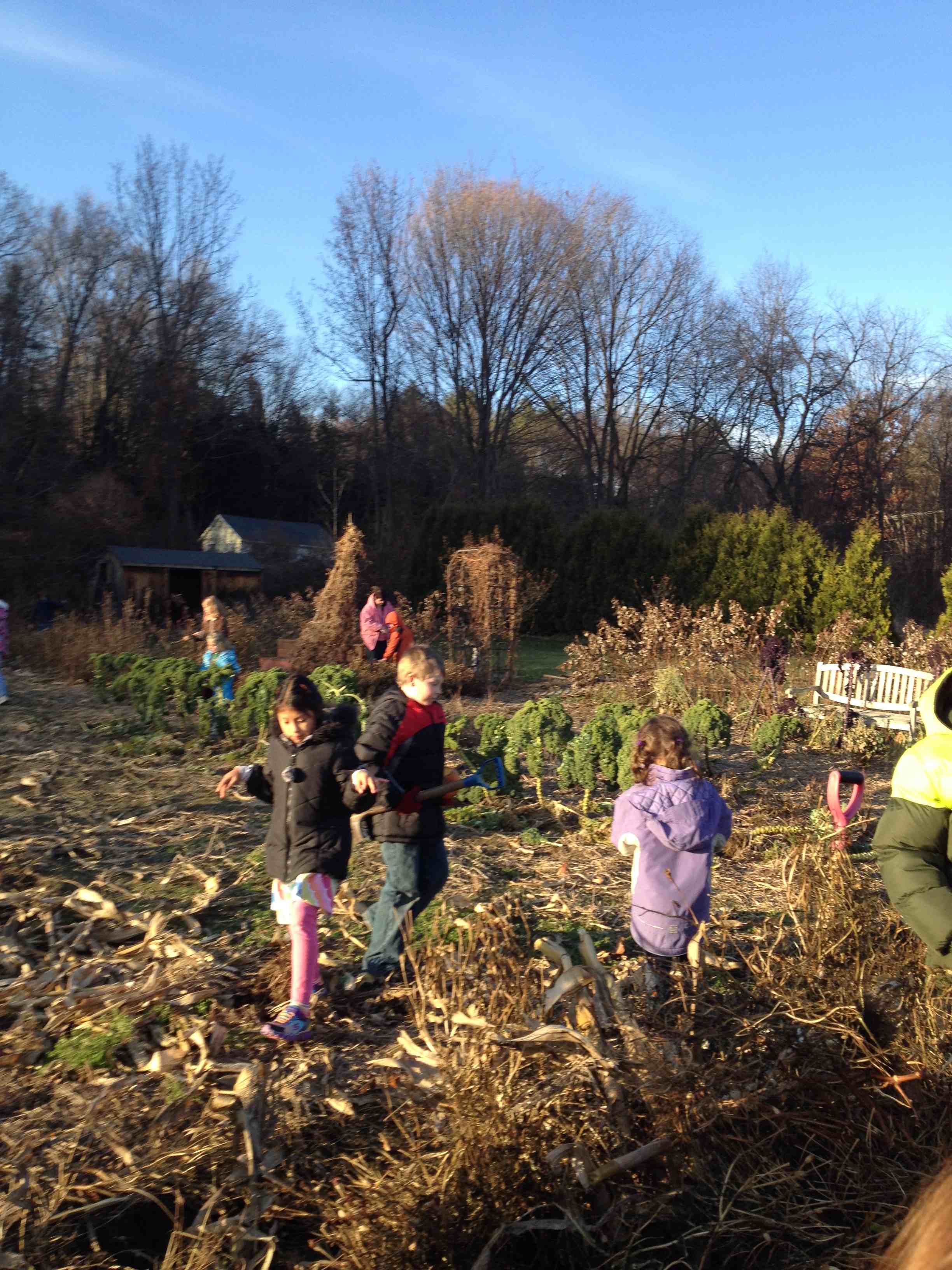
After School Cooks then combined the grated potatoes with flour, eggs, onion and other ingredients to make potato pancakes.

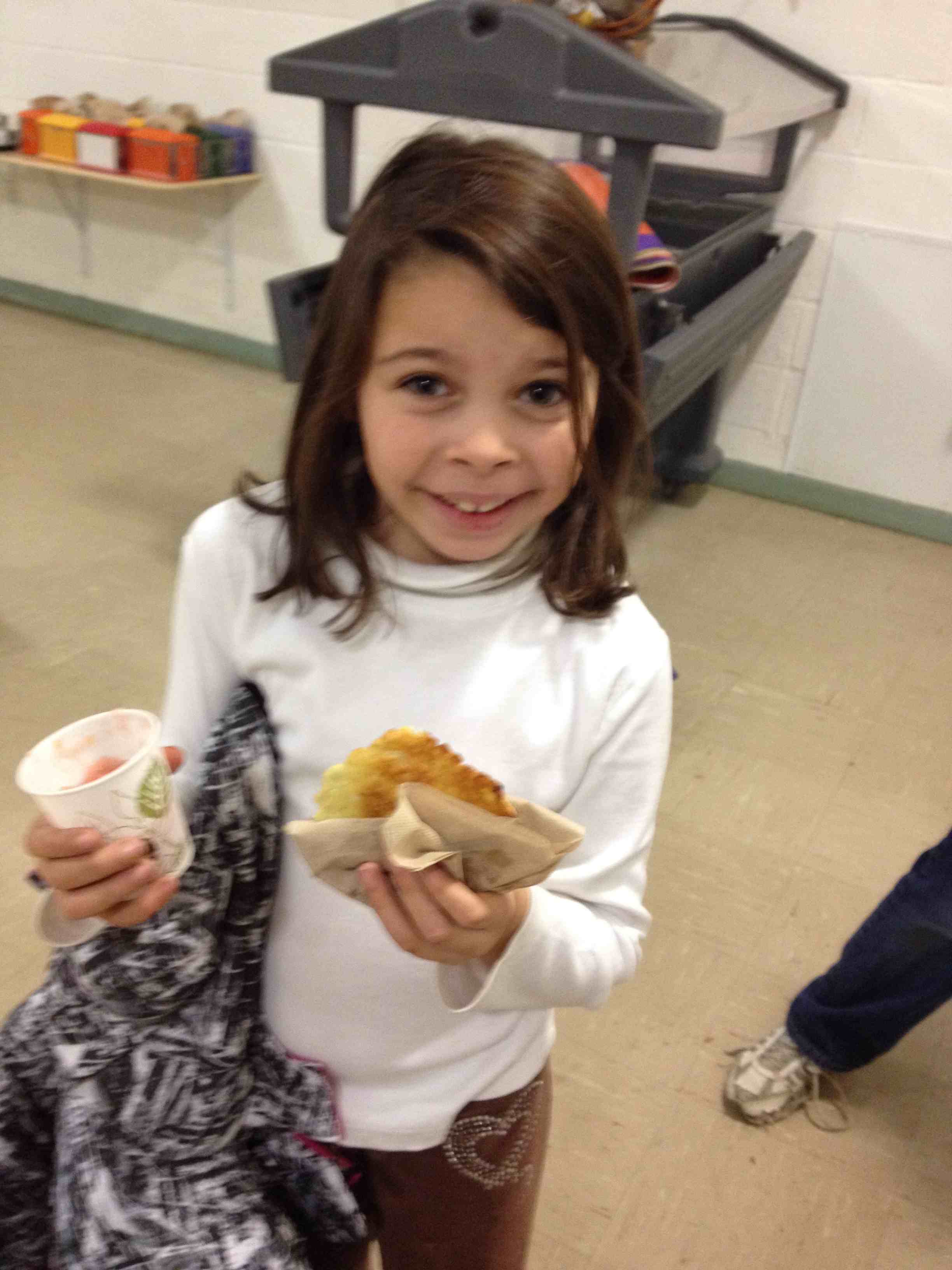
We ate our pancakes with homemade applesauce. No one could eat enough of these yummy treats. The recipe is at the bottom of this post.

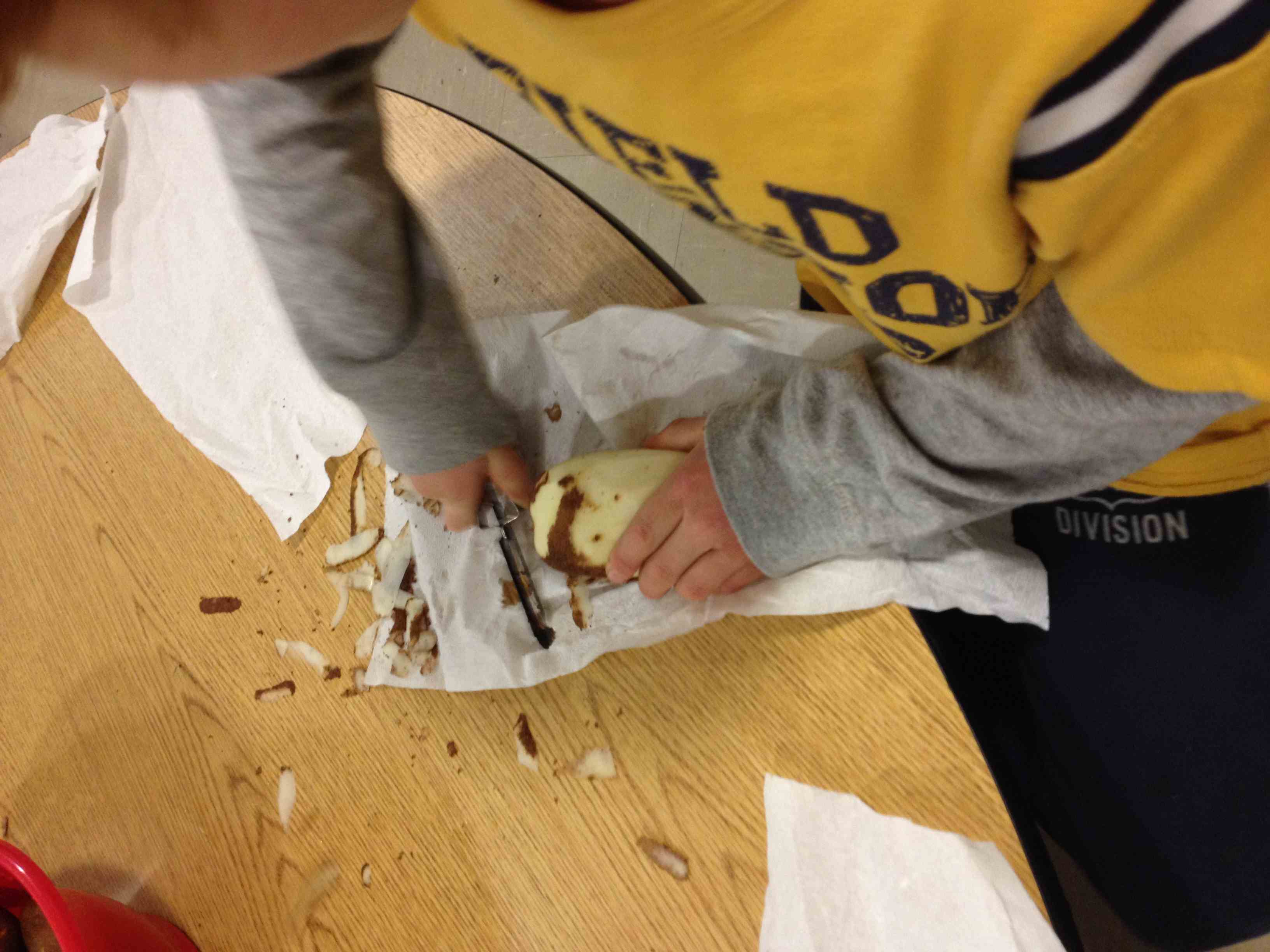
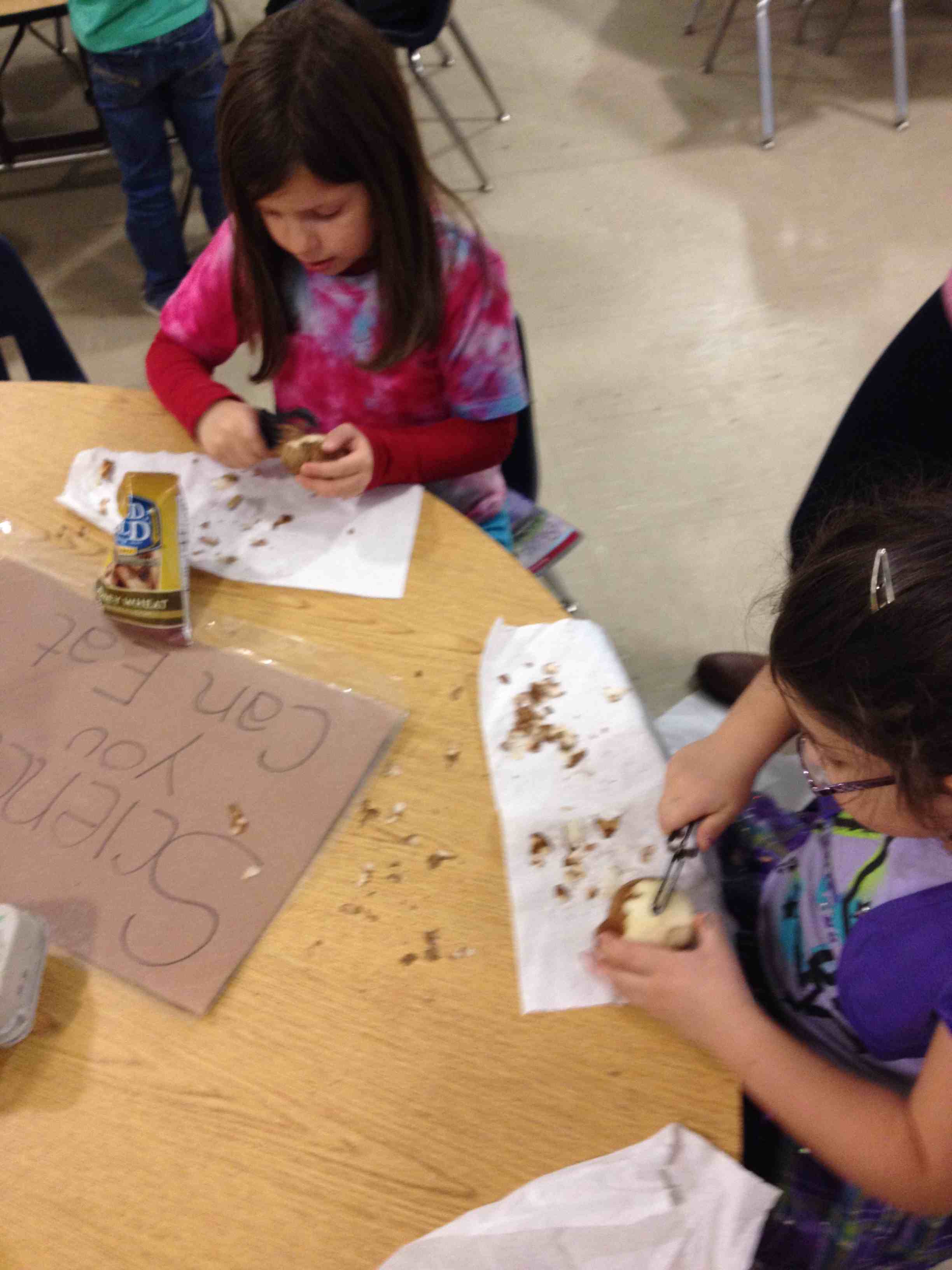
using a peelergrating teamusing peelers

testing out water in potato theory

testing out water in potato theory

learning to crack eggsoldest get to cook

apple sauce and latkesRecipe: Potato Latkes


Leave a comment

Giving Thanks for our Community

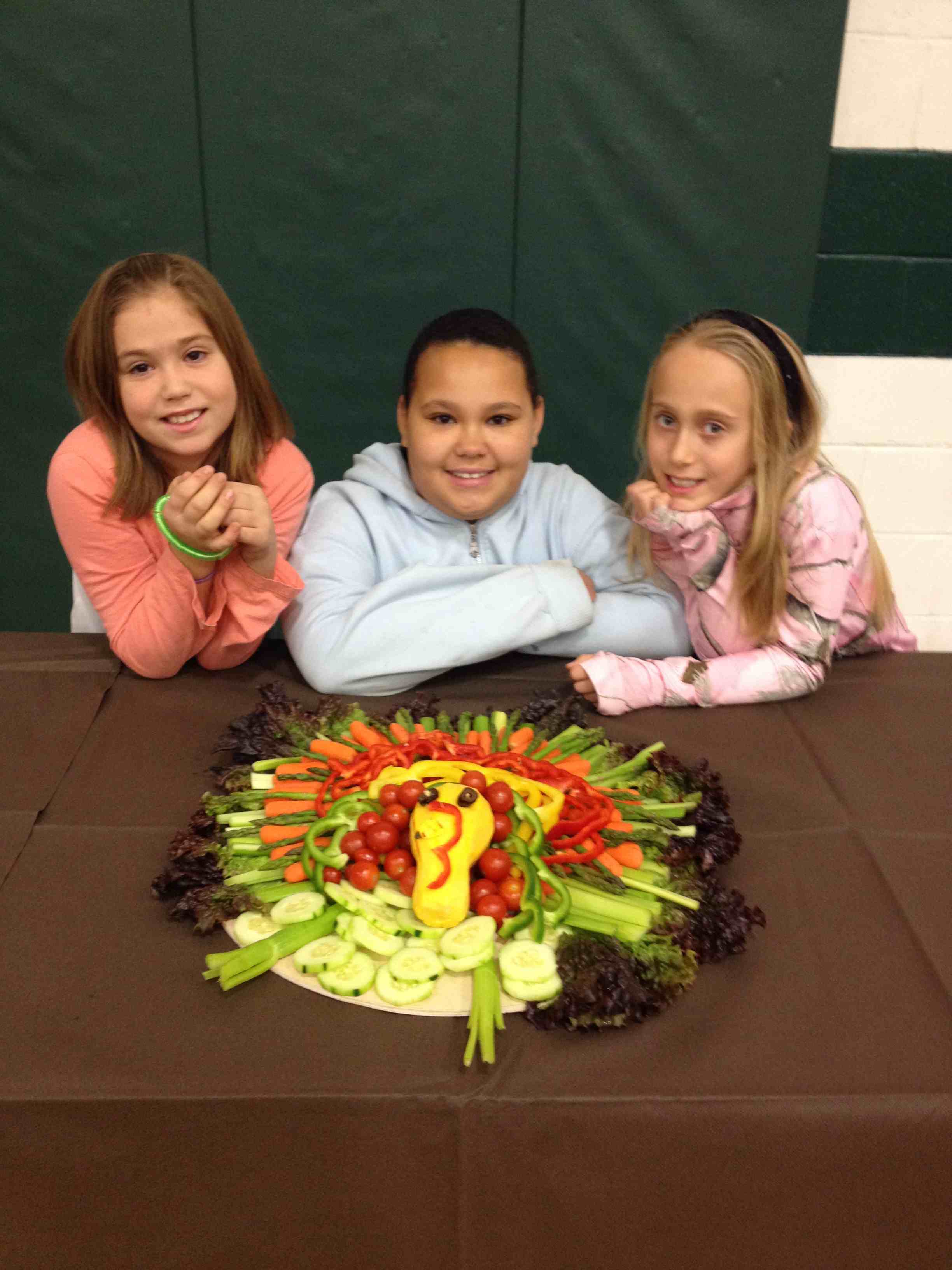
Crudite turkey chefsThese fifth grade chefs contributed to their school’s Thanksgiving Community Feast.

       This year and every year for  a long time, our school has  invited parents and community members to join them for a celebratory feast just before the November Thanksgiving holidays. Parent volunteers and students set up tables for 500 participants and a full Thanksgiving dinner is served. Parents contribute desserts for the masses. Much of the produce is donated by area farmers. Part of the dinner is prepared by our own kitchen staff. Part is prepped ahead of time by volunteer parents (who set tables in the dark on Sunday night due to a power outage!). Part of the dinner is cooked by our neighboring school, Kurn Hattin Homes. So many people benefit from this amazing gathering of resources.

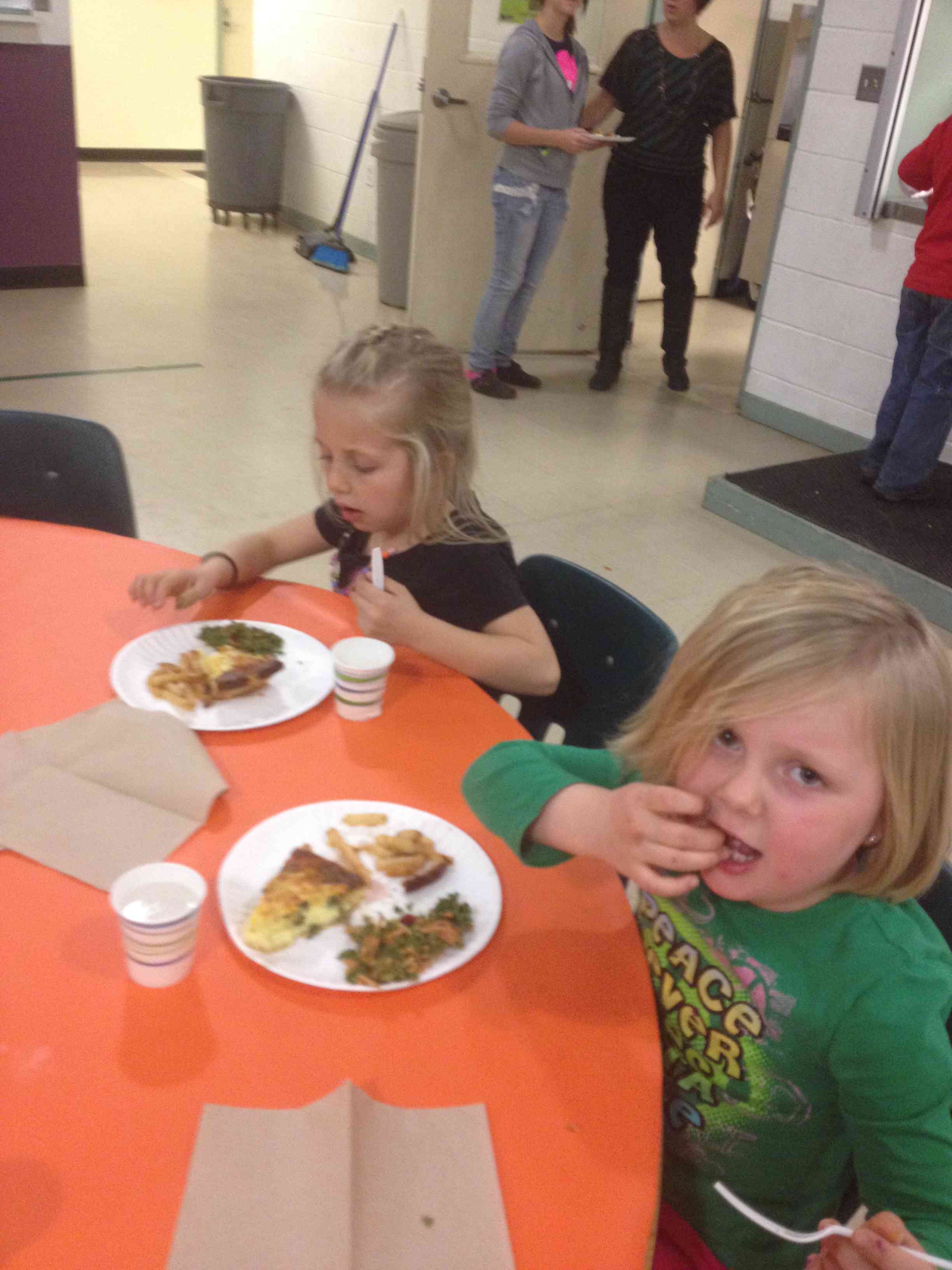
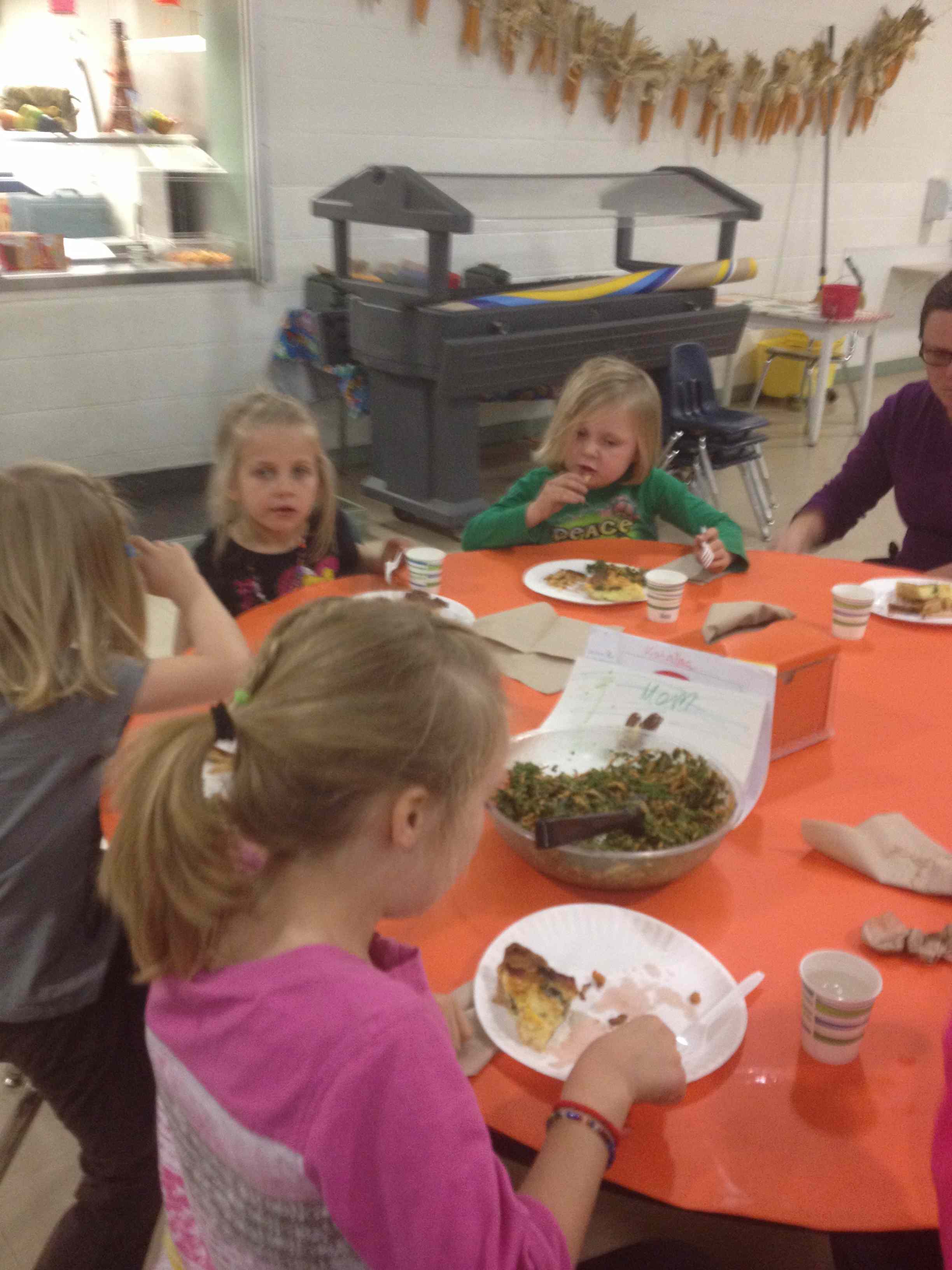
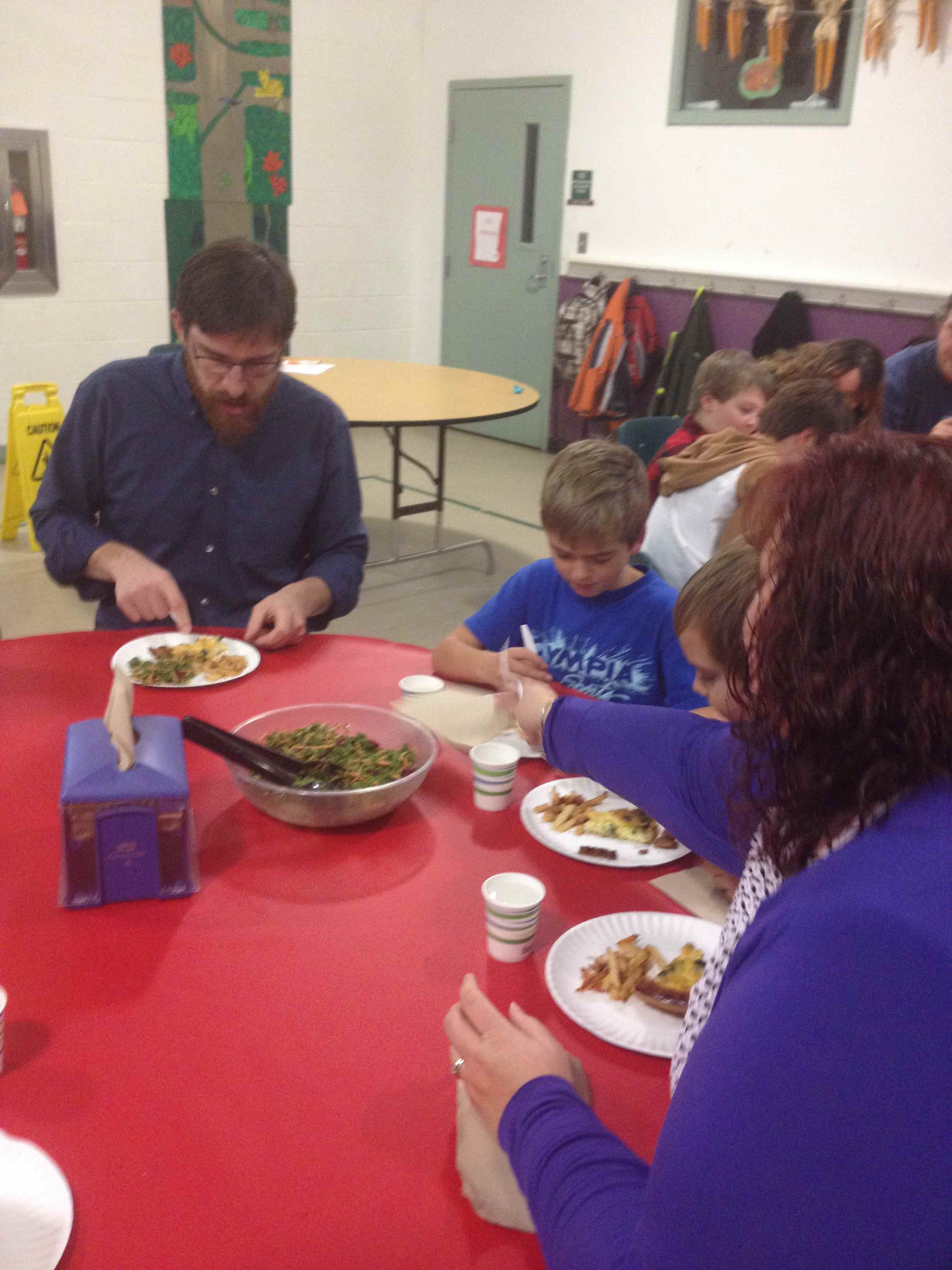
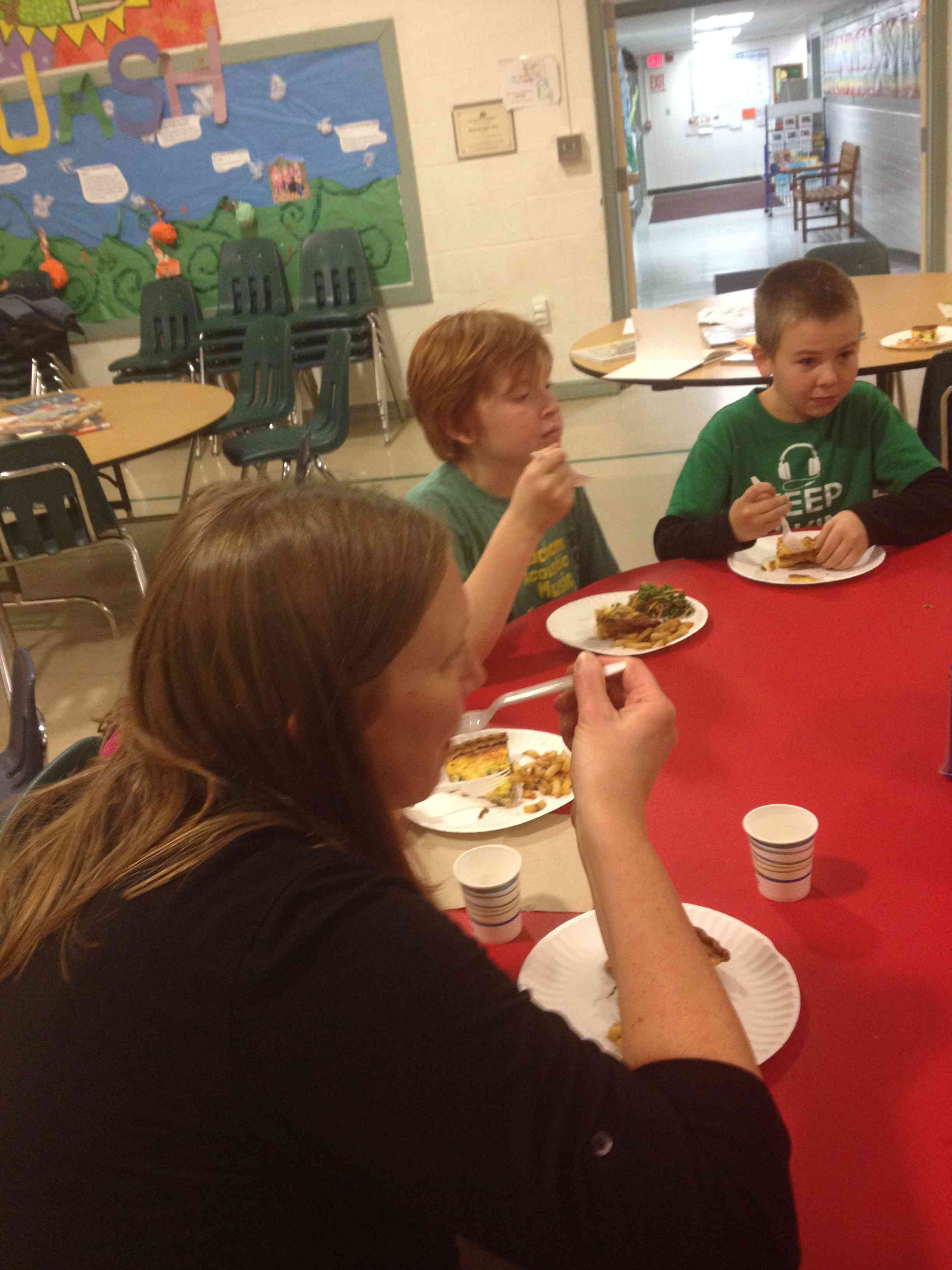
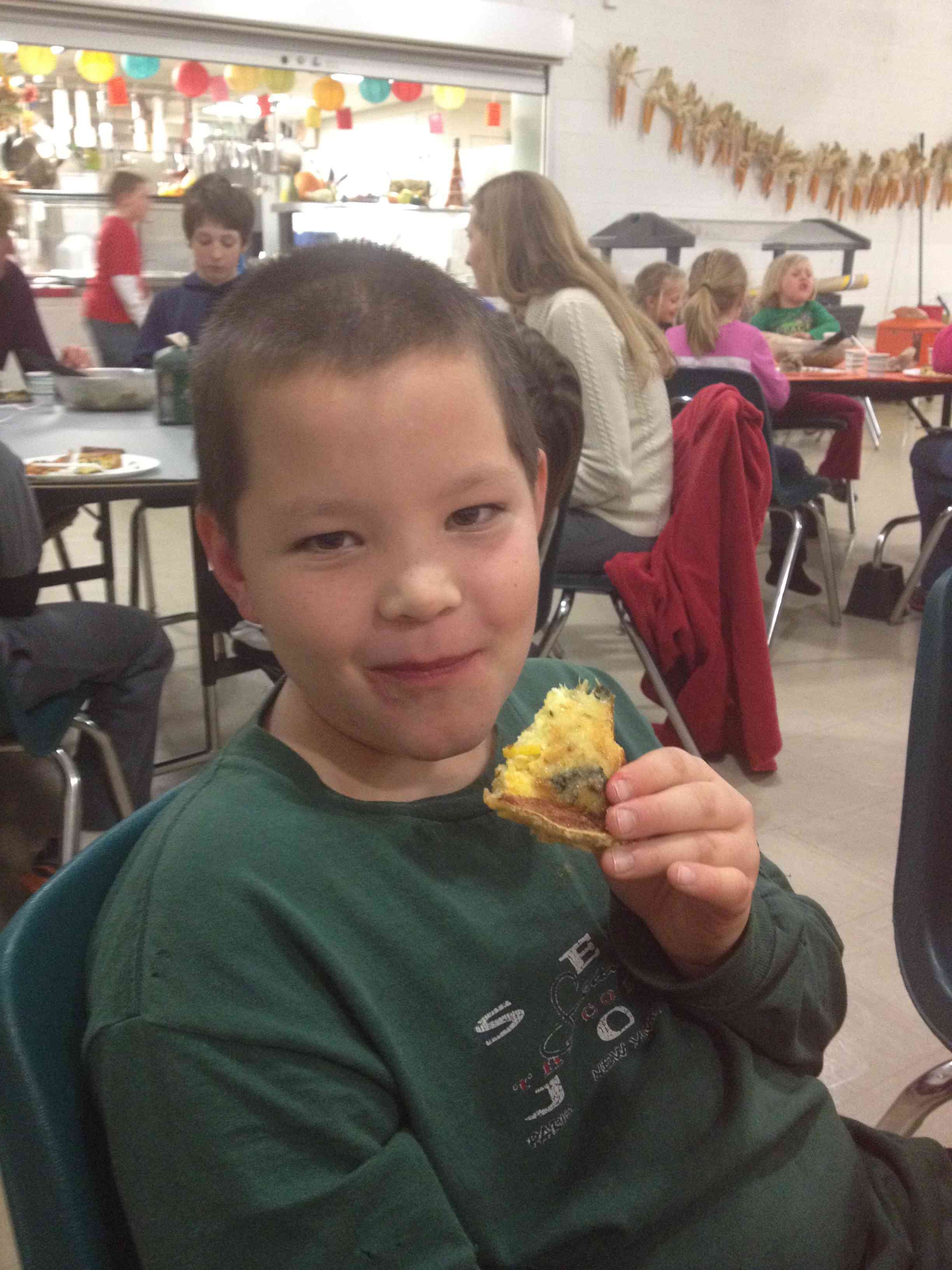
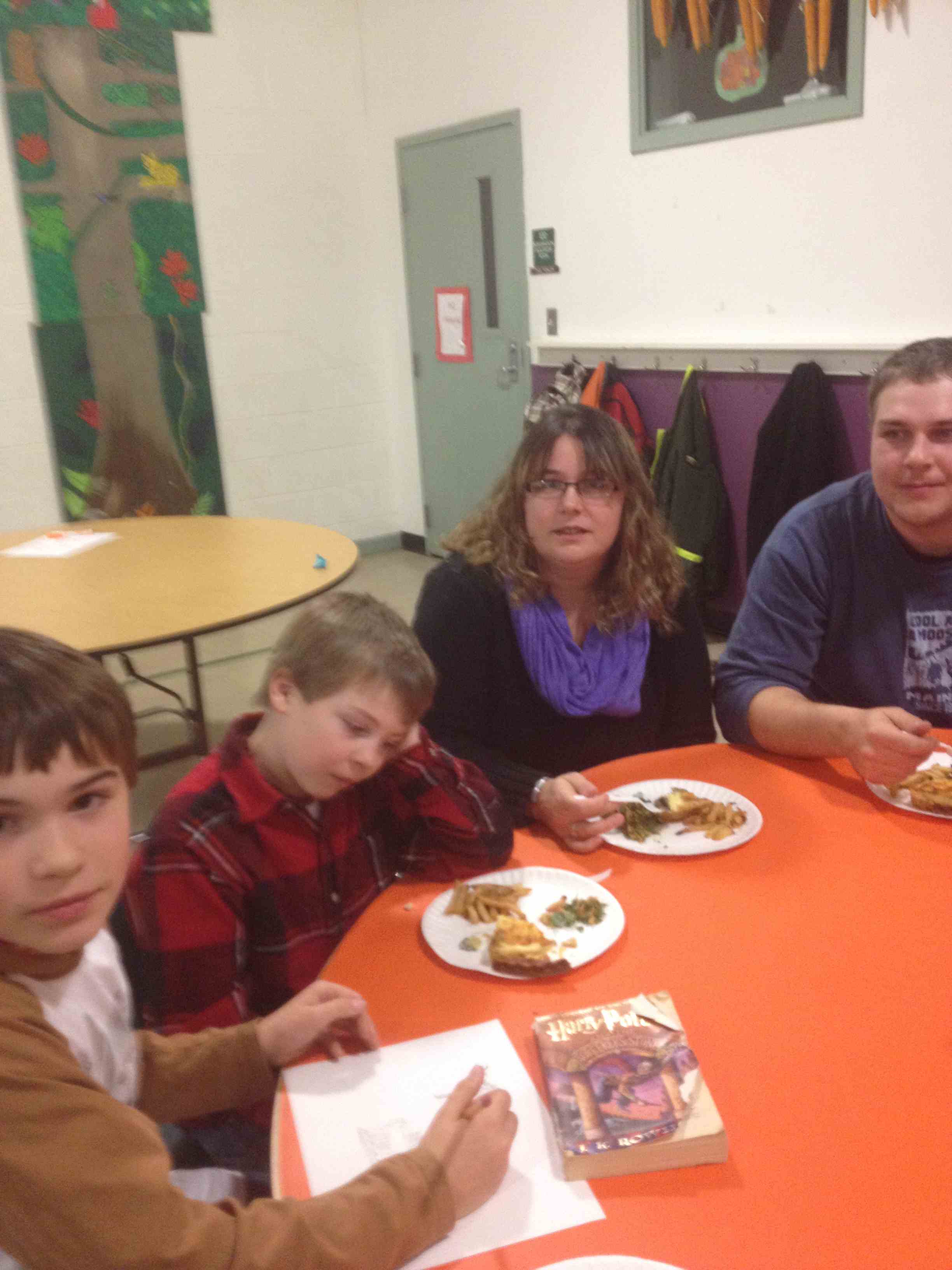
         This November we also hosted an After School Program dinner for parents and children. Forty family members enjoyed vegetable quiche and kale slaw, followed by applesauce for dessert. The applesauce was made by the children in the After School Program. Apples were donated by Russell Allen of Connecticut Valley Orchards. While students made dessert, their parents participated in a discussion on techniques for getting reluctant eaters to try new foods. Everyone had a great family strategy or story to contribute. We all came away with a few new ideas for getting  children to make healthy food choices. Some ideas: Each child is different in temperament, affecting his or her willingness to take risks. Be patient, but be persistent. Sometimes it take four to sixteen attempts before a child is ready to accept a new food. Some children have sensory issues and don’t for instance enjoy any foods that seem lumpy or crunchy. Often if a child participates in the creation of the dish, it is more likely that s/he will eat it.

Each family brought home a box with recipes and all ingredients for quiche and kale slaw. Many thanks for contributions from Russell Allen and from Westminster Organics at Harlow Farm.

Take a look at some of the happy diners below! The recipes for kale slaw and quiche follow. Just click on them to open. Click on any photo to enlarge.

ASP Nov. dinner @   ASP Nov. Dinner 1ASP Nov. dinner 3

Nov. dinner 4Nov. dinner 5Nov. dinner 6

Nov. dinner 9

KALE SLAW(1)SPINACH QUICHE #2


Leave a comment

Meet Cory Walker, Westminster Farmer

Meet Cory WalkerCory Walker is a young farmer in Westminster. In the short time that he’s been farming here, he’s met with his share of misfortune. Hurricane Irene flooded his fields and he and his family suffered tremendous losses. Cory fits right in with the tenacious farmers in Westminster. One of his fields can be seen right off Route 5 as you’re leaving town. Its unmistakable blend of beautiful flowers and crops is enough to make you veer off the road as you pass by.

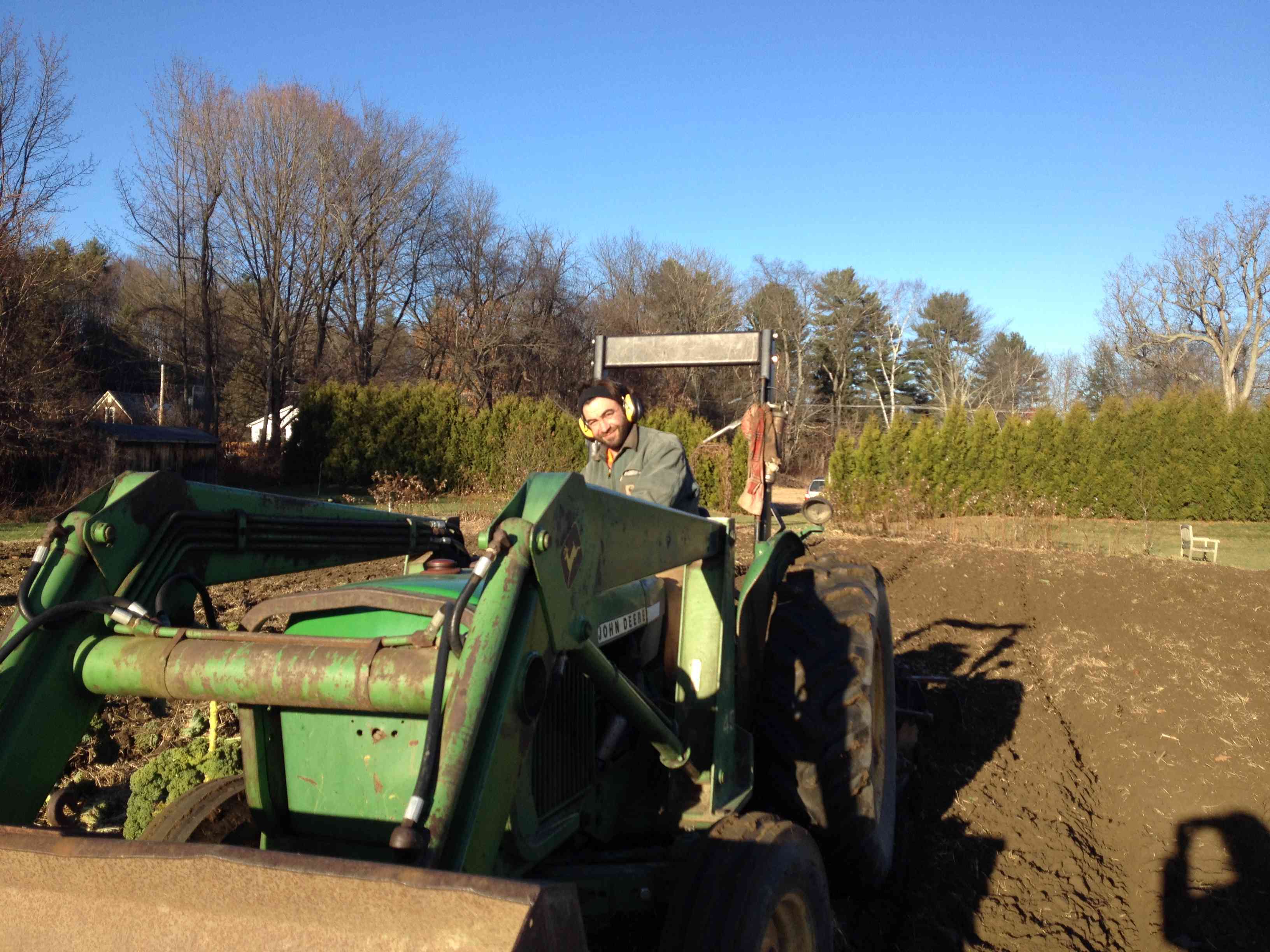
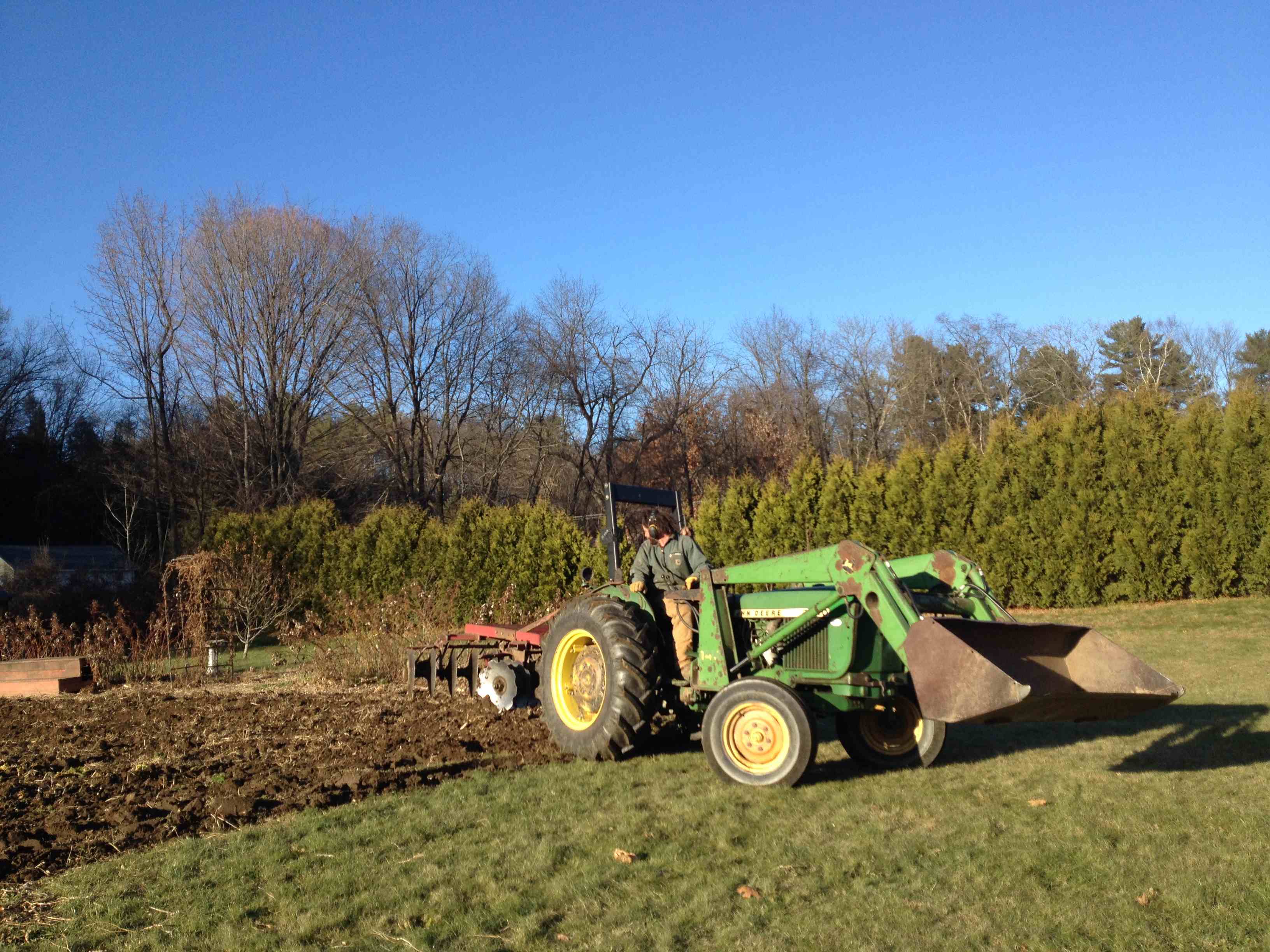
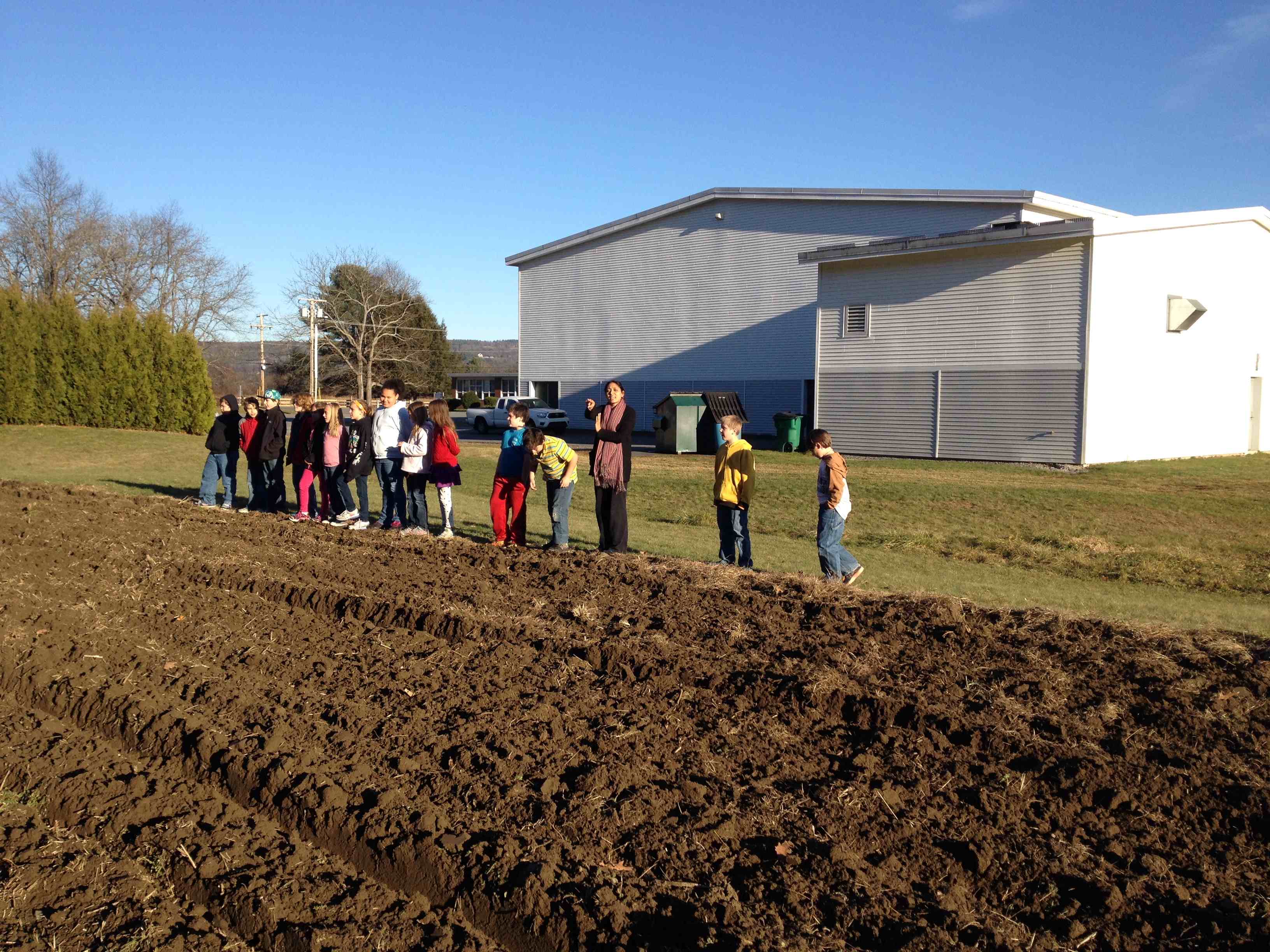
Cory and his wife have a little girl, Estella. She’s only two years old, but maybe one day she’ll join the students at Westminster Community Schools. When I asked Cory if he had time to help til our garden for the winter, he simply said, “When do you want me to come by?” This spirit of community service, passed down from generation to generation, is what makes our school garden flourish. What a wonderful real world learning experience for our children. Thank you Cory. You can find Cory’s produce, holiday offerings and flowers at Hope Roots Farm Stand on Sundays from 12 to 3:00 until the end of 2013. Friend him on facebook: Guerrilla Grown Produce.

Younger classes watch tillingCory tilling NovembeOlder classes watch tillingWatching Cory til in November…..


Leave a comment

One More Planting Before Winter Sets In—GARLIC

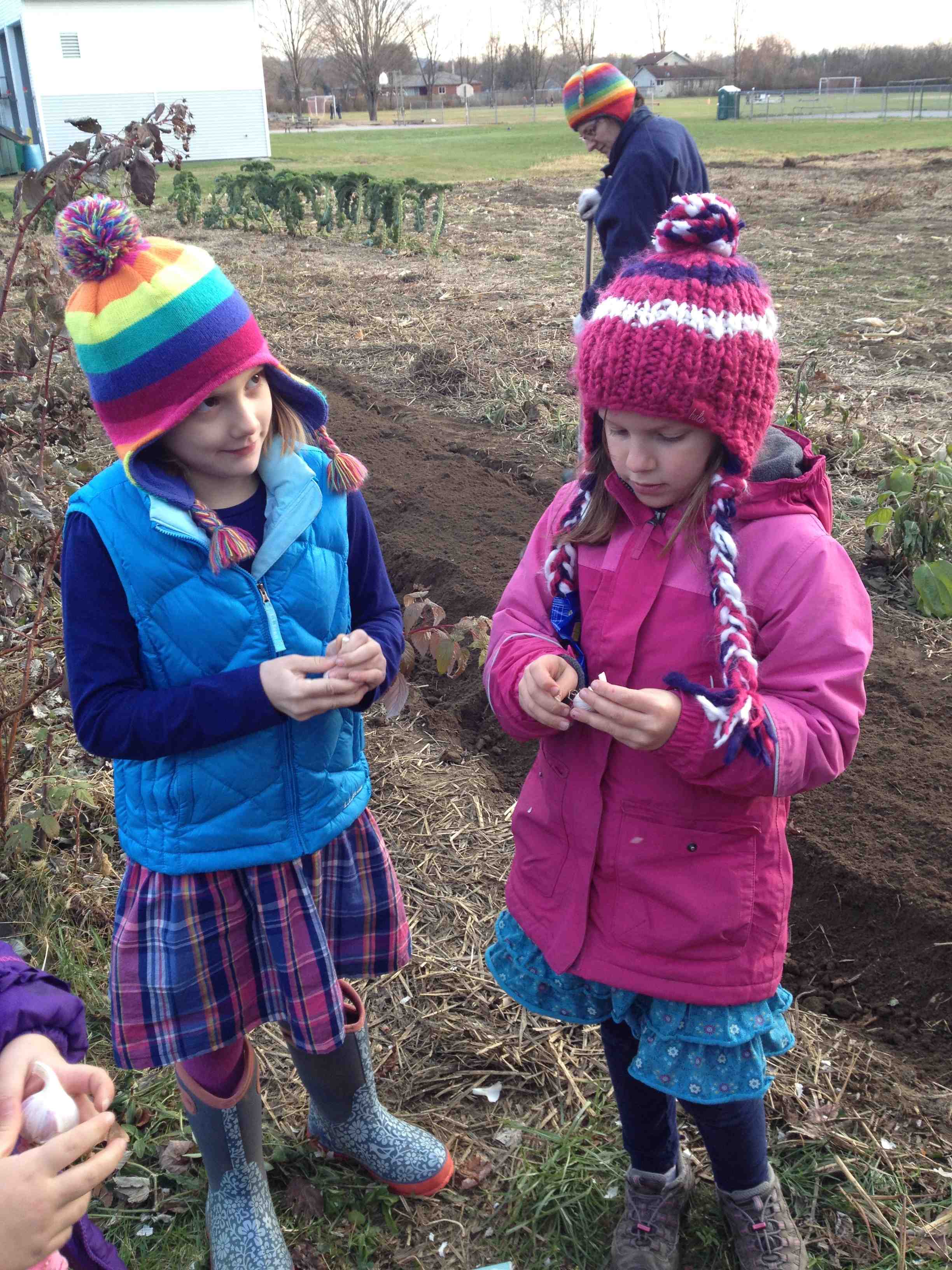
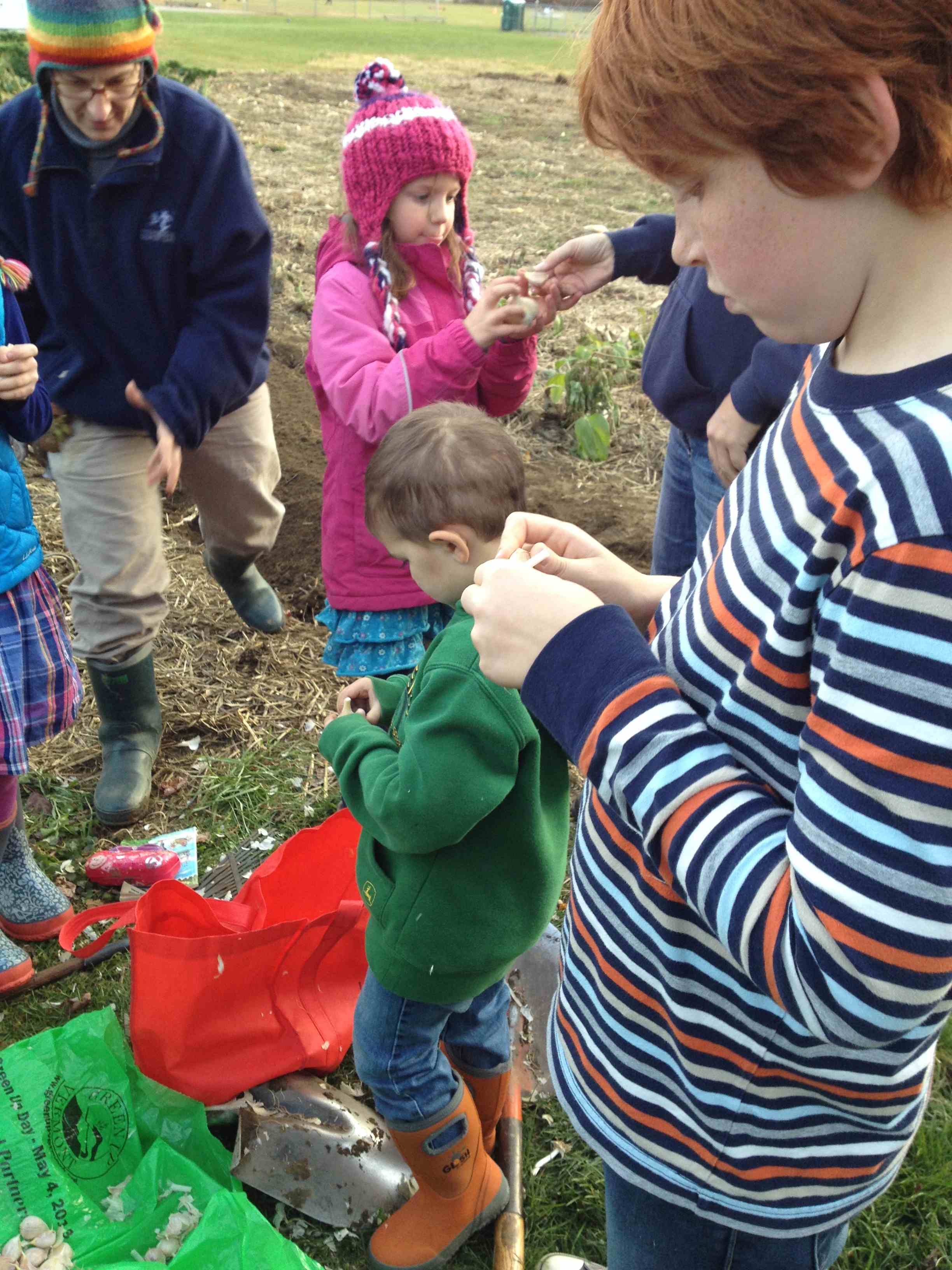
friends working together                                                                                    Nola and Maya separating garlic cloves.Garlic is inWe raked the straw that was still on our garden paths and recycled it to cover the garlic bed. We decided the straw was like the sheet for the winter and snow, soon to follow would be the ‘comforter’ for the garlic cloves sleeping under it. We’ll harvest the garlic in mid July.

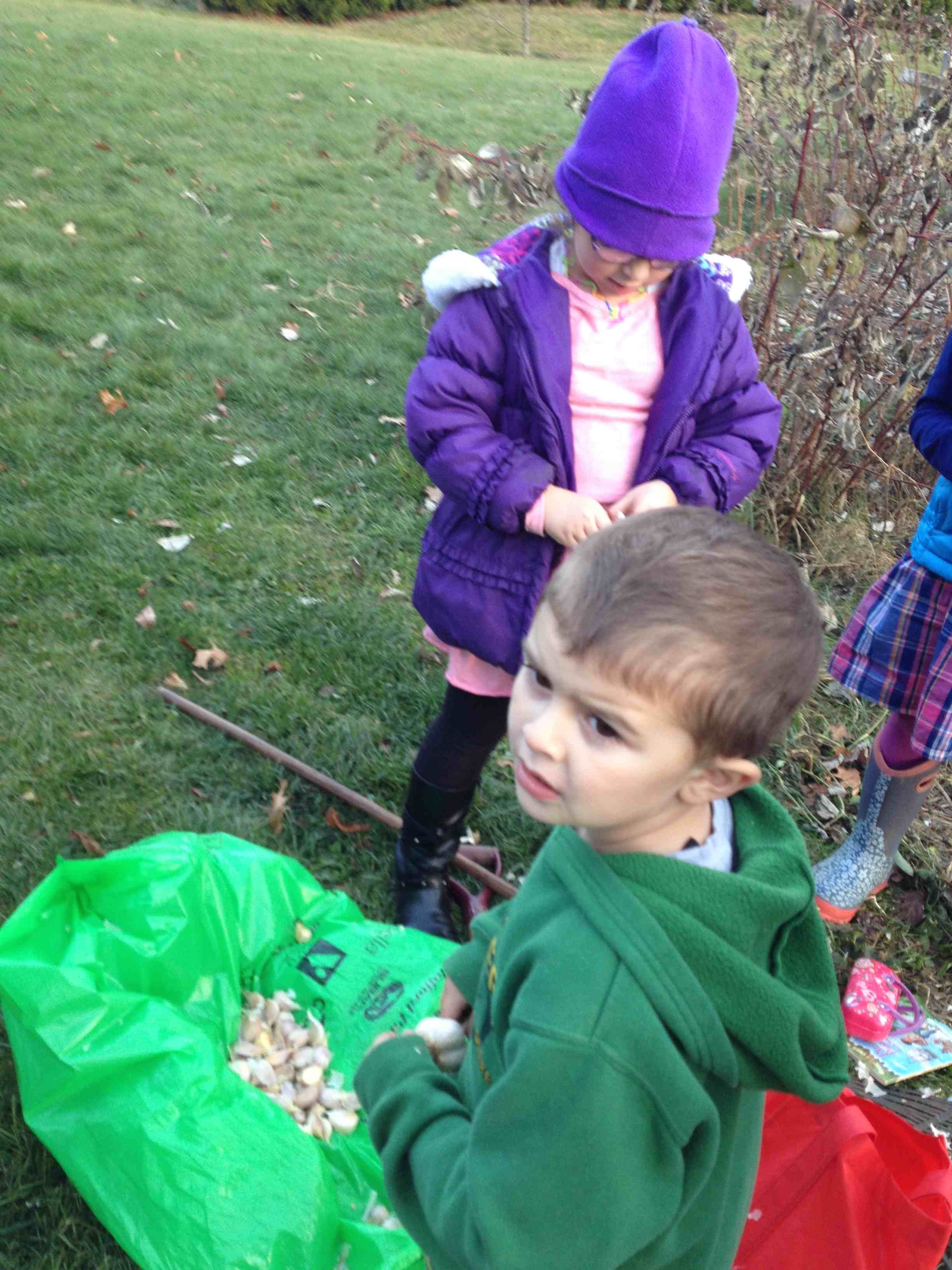
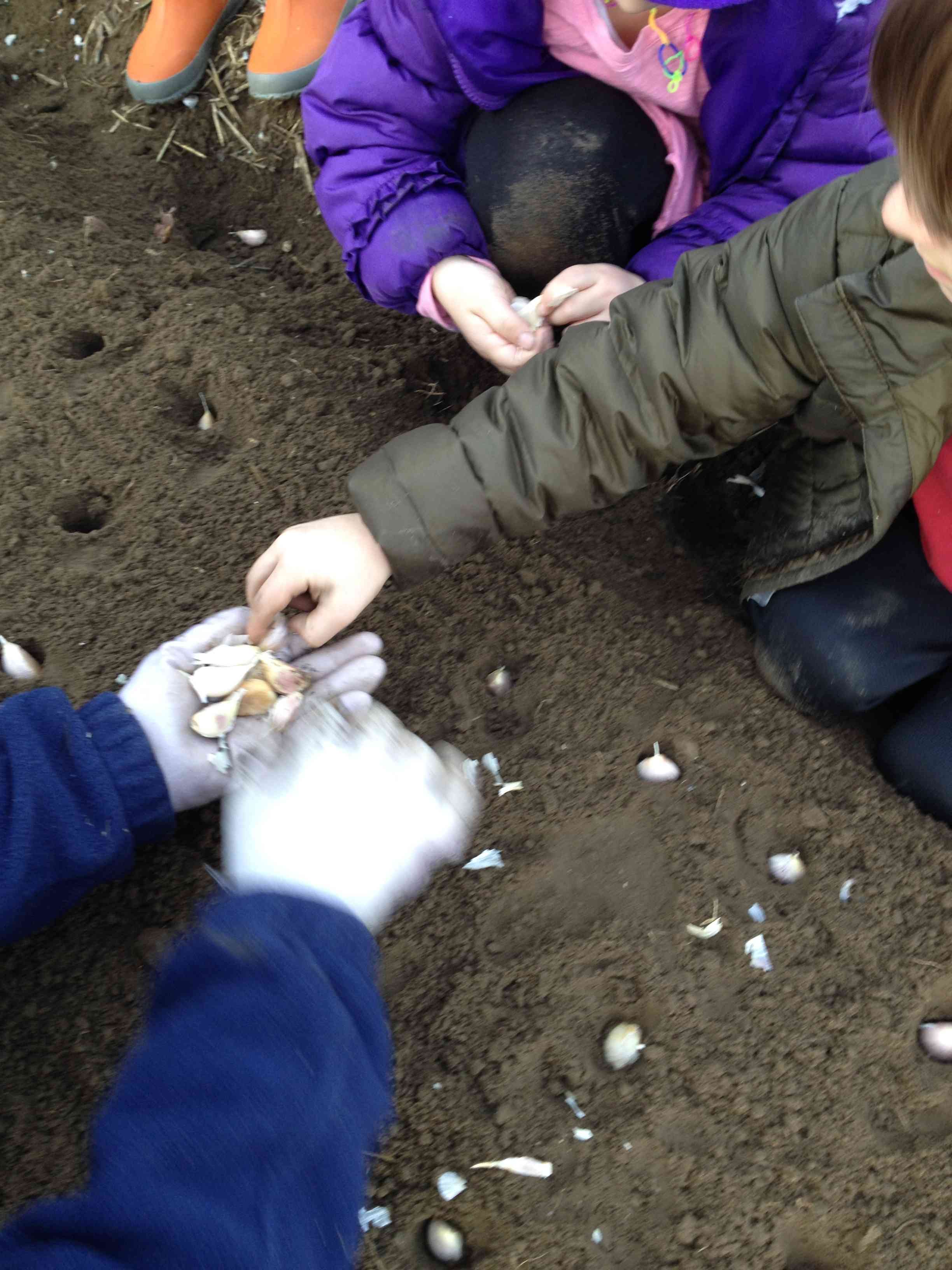
The first trick learned when planting garlic is how to separate those little cloves from the “momma” bulb.  A supportive friend is helpful. But if you’re a budding farmer like Sabin, not yet five, you can figure this out in a snap! Sabin’s mom, Amy Rice Sciacca, has really given us support for next year’s garlic crop. First she bagged up 25 gallons of her horse manure. Then she and her kids  gave up a horse ride on a beautiful fall day and, instead came over to help us plant!

Sabin separating cloves

Sabin separating cloves

planting together 2

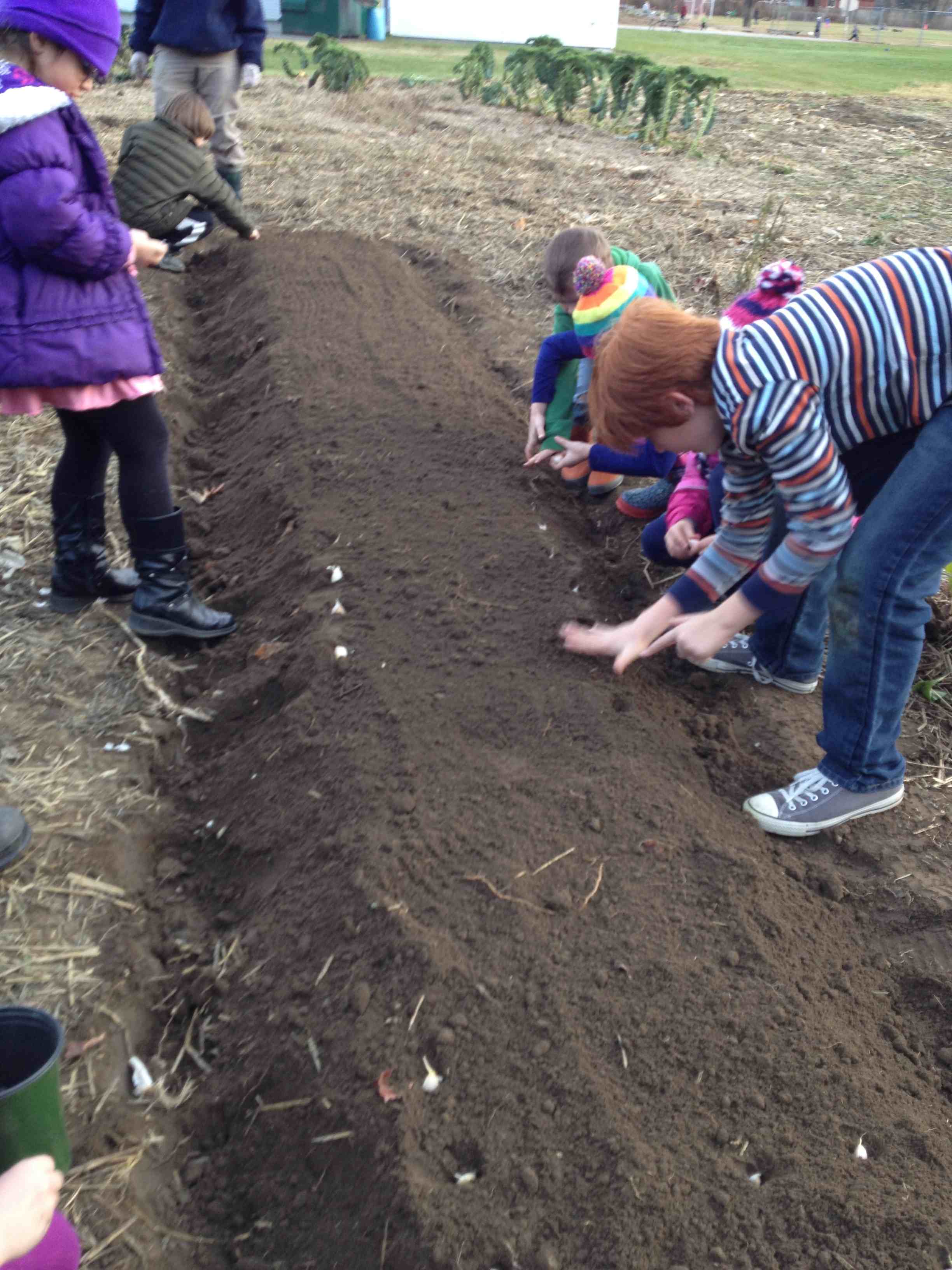
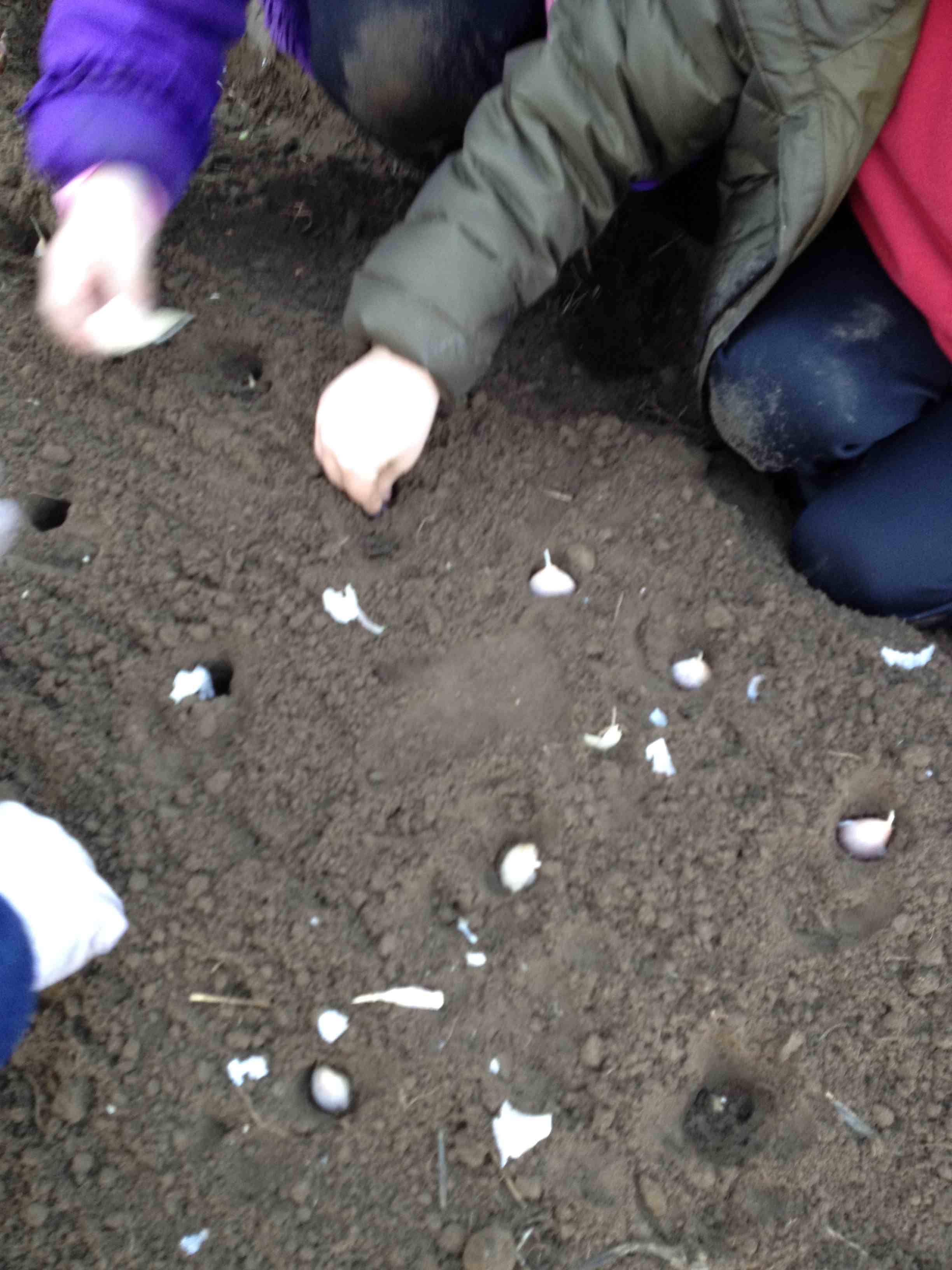
As our dear friend, Claudia McCarthy  taught us years ago, horse manure and a nice raised bed that looks a lot like a chocolate cake are the best ingredients for growing a good crop of garlic.  After planting cloves about 6 inches apart and covering them  over with soil, she always spread a thin cover of mulch straw. Her methods have never failed us.

planting together

a hand span apart

don't cover yet

now you can cover


Leave a comment

Putting Our Garden to Bed for the Winter

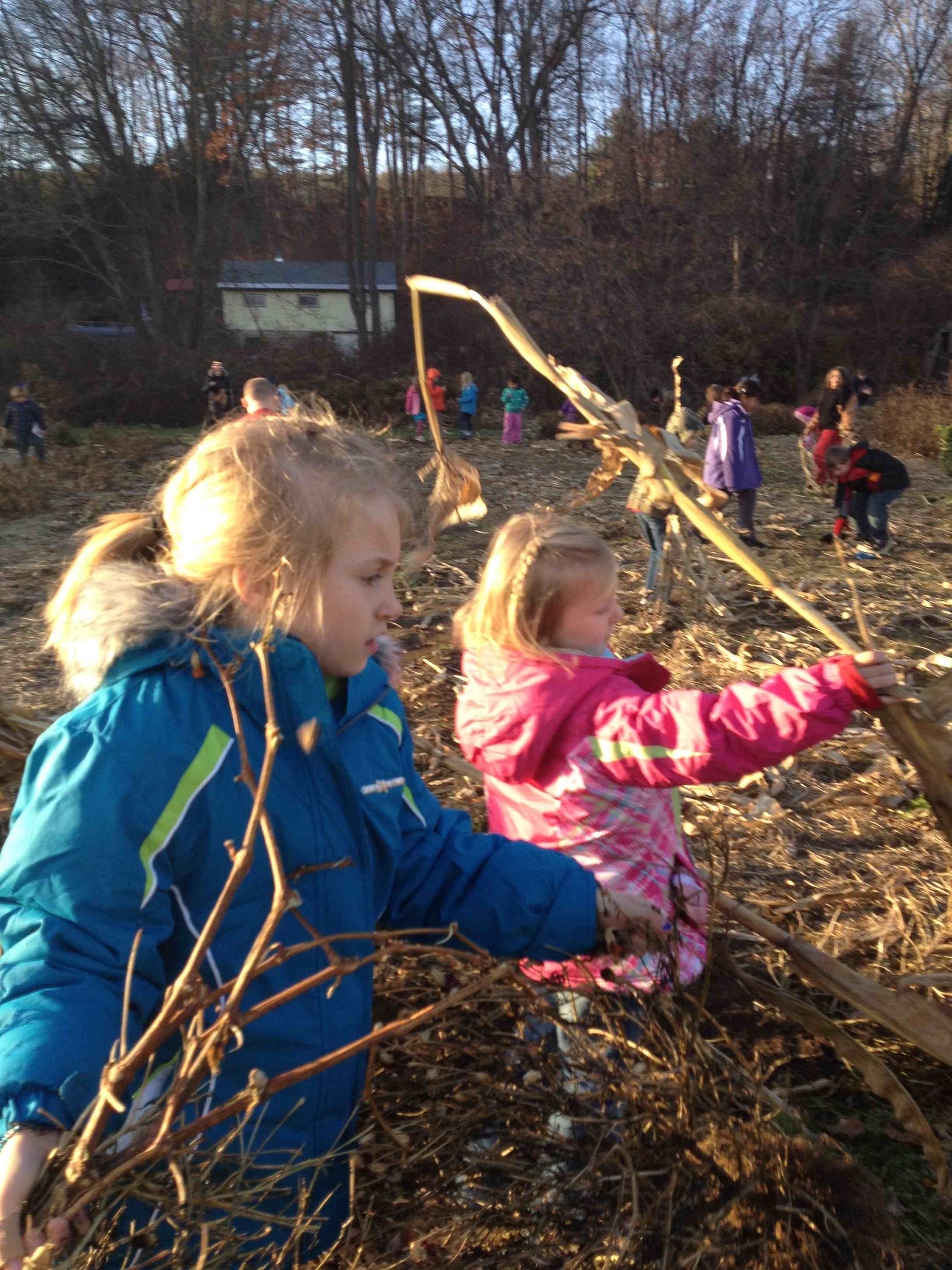
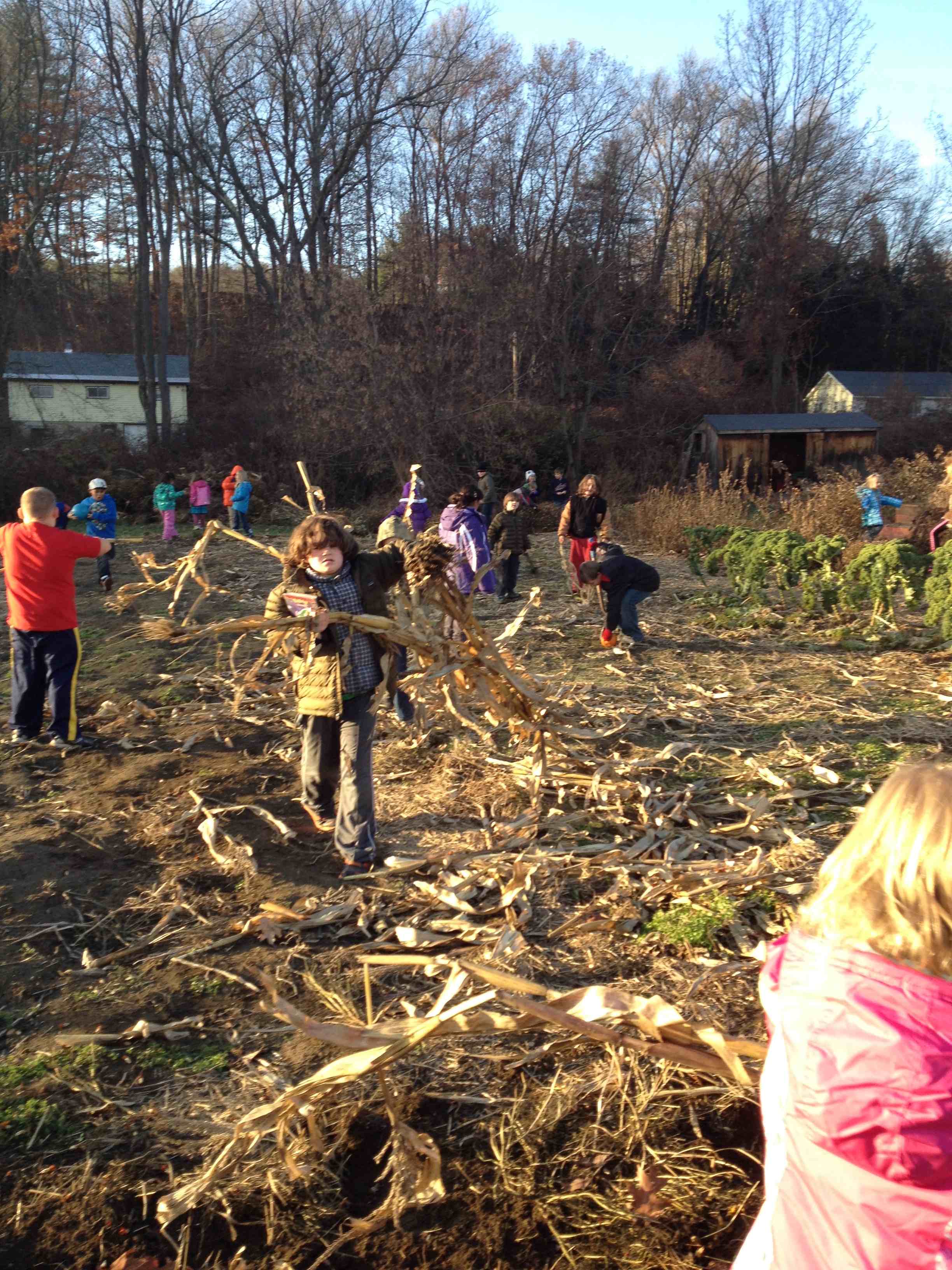
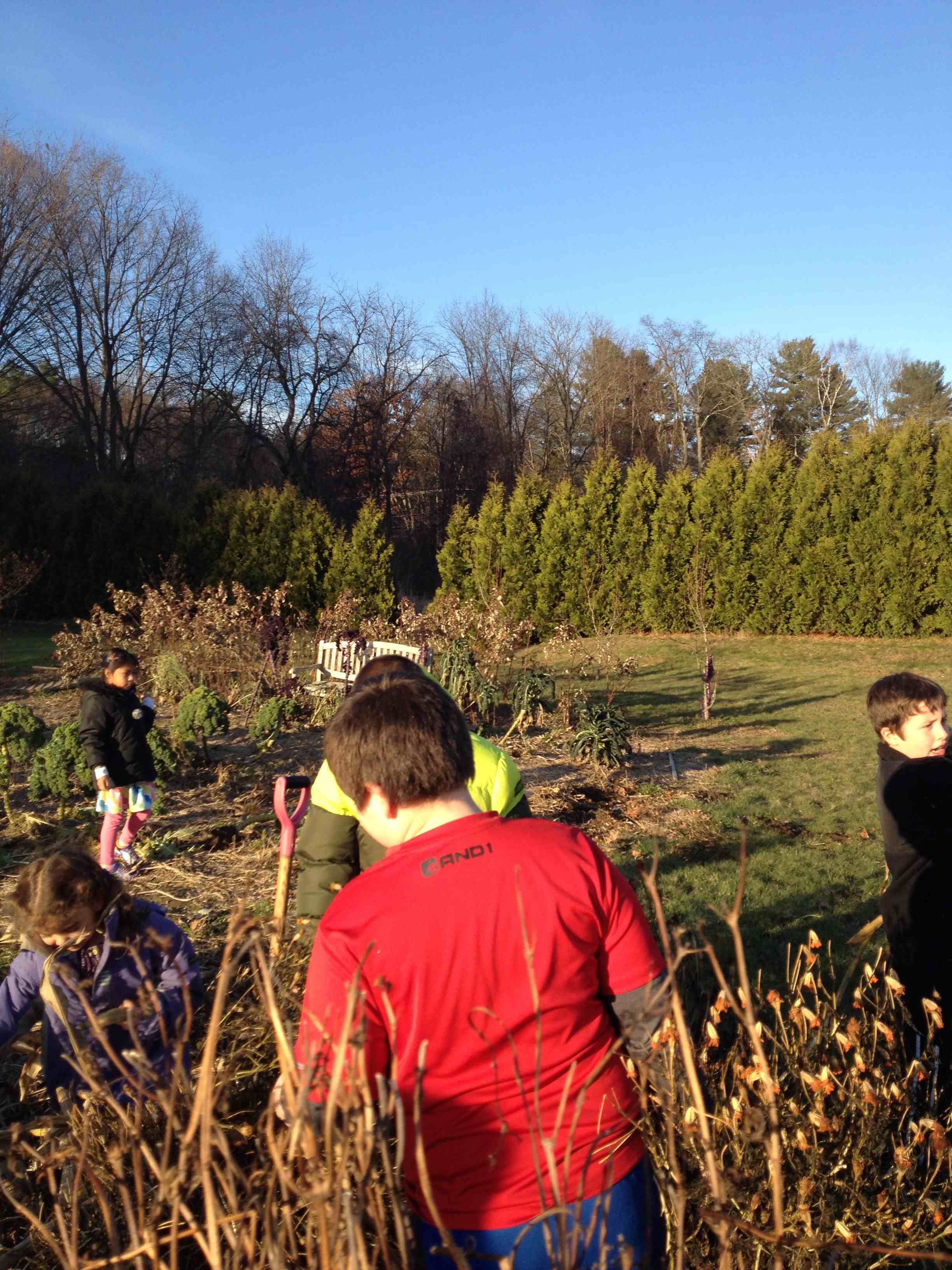
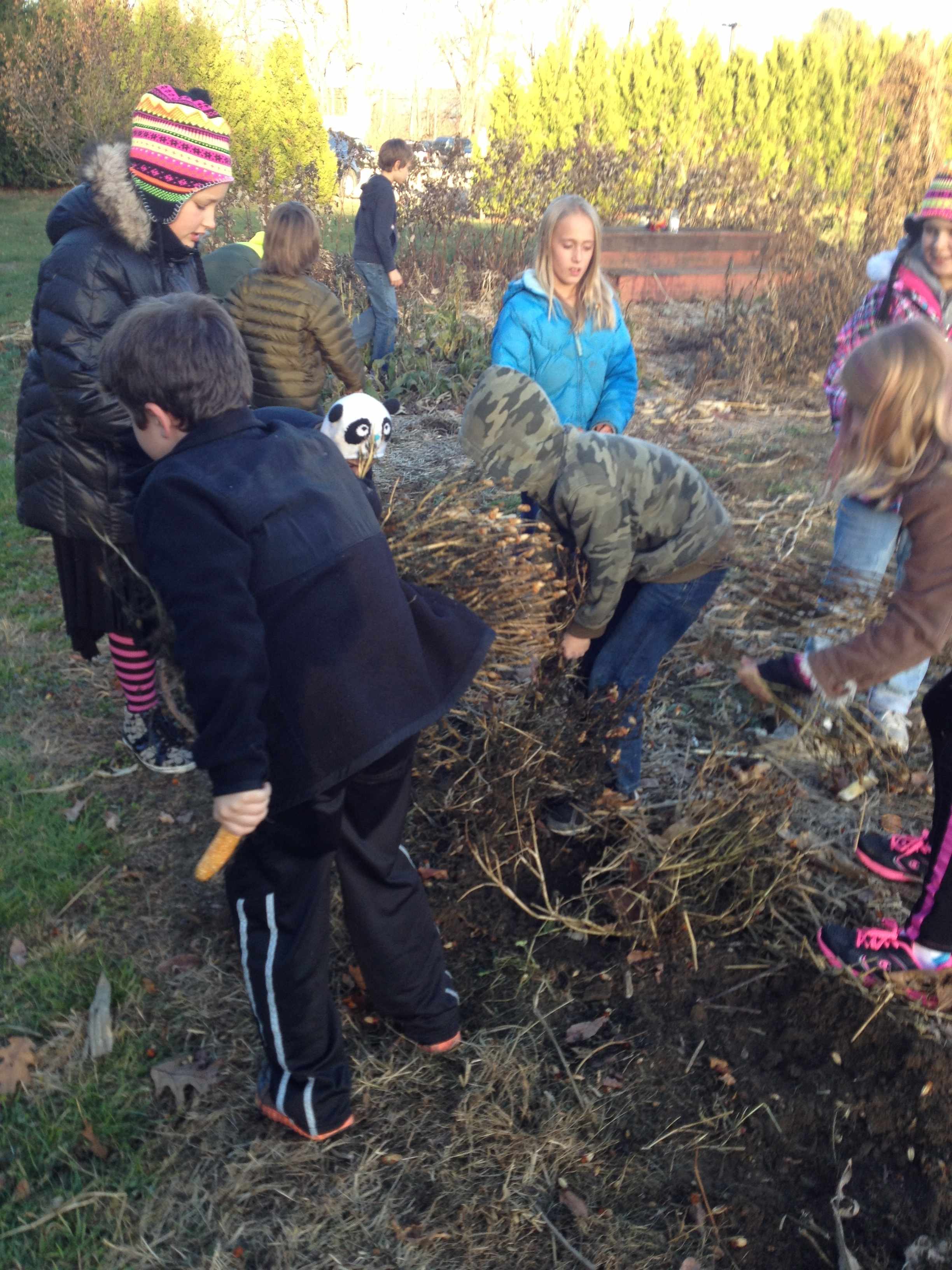
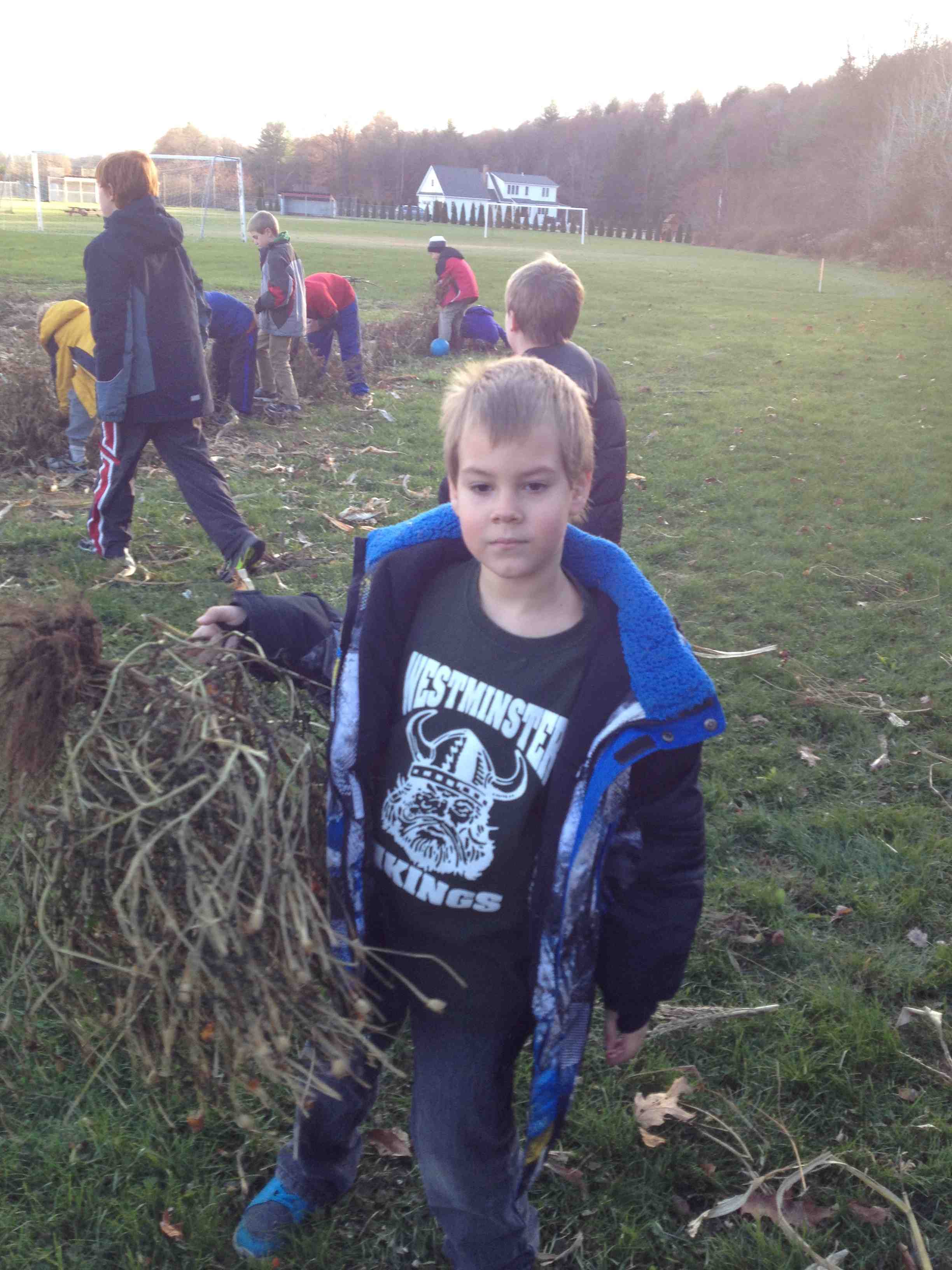
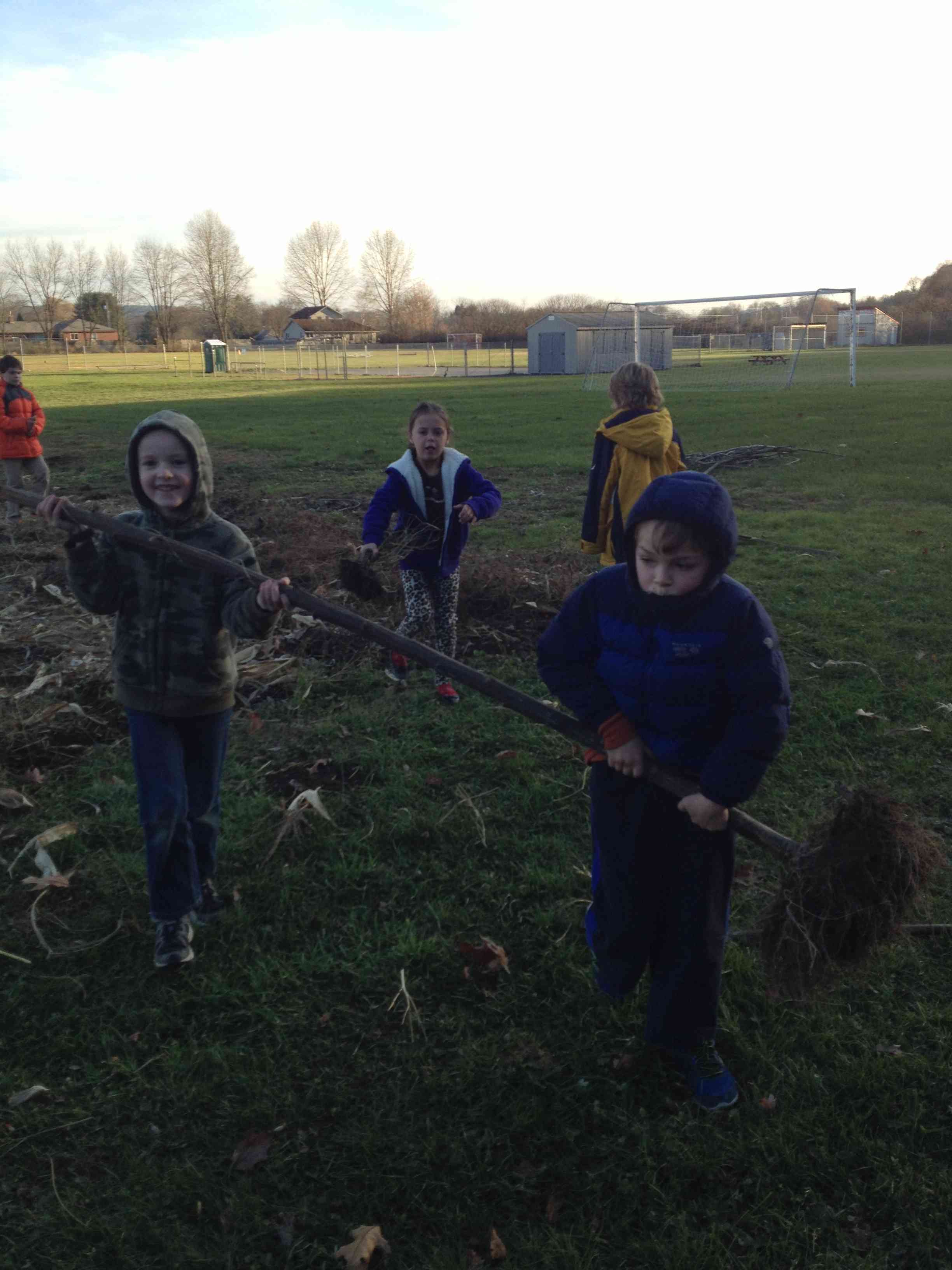
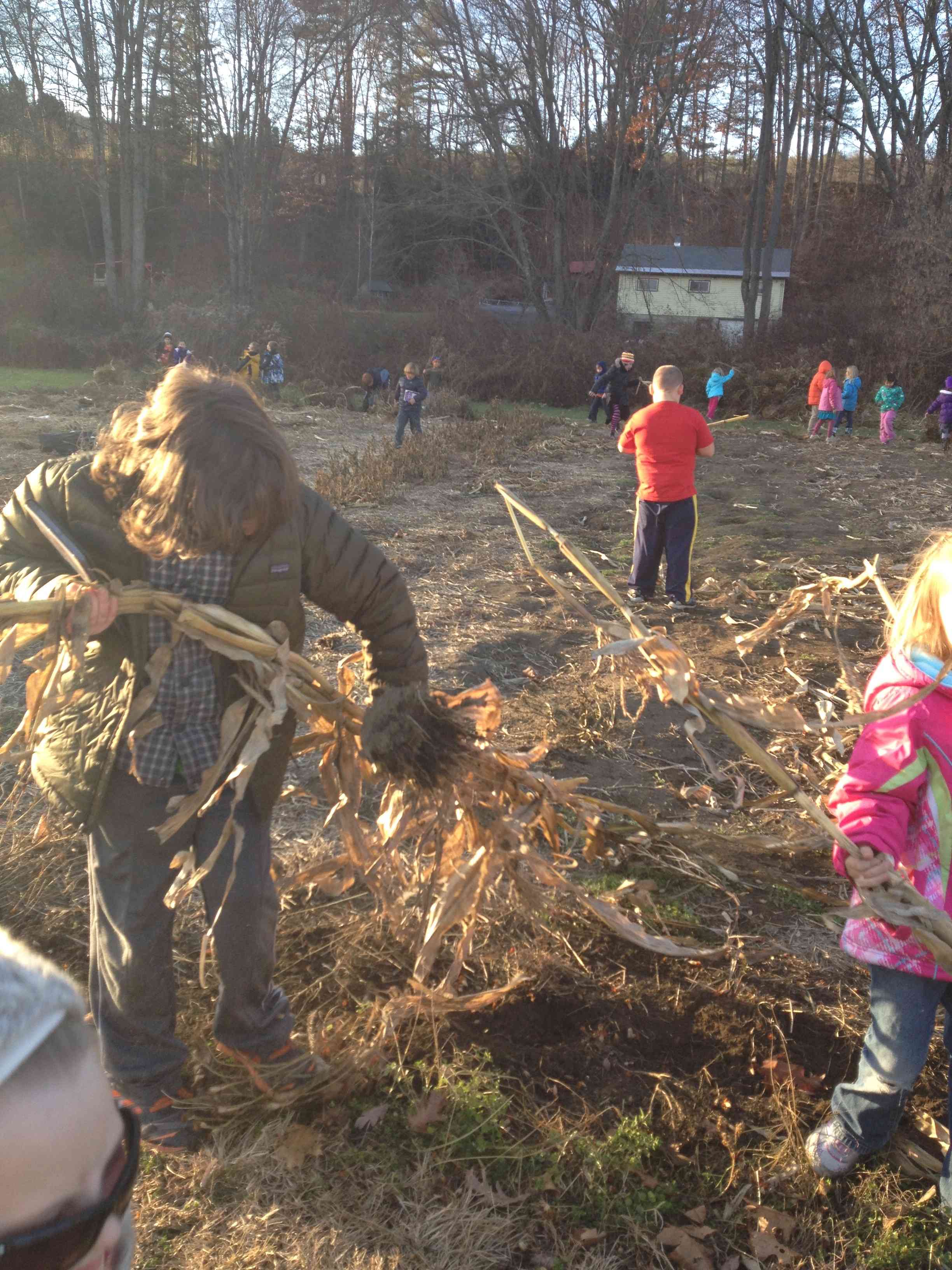
garden to bed 11We grew some mighty bigarden to bed 4g sunflowers this year. They were tough to haul over to the compost pile, but the After School Program kids had a blast helping to clear the garden for tilling next week. They were asked to pull up as many plants as they were old, but most stayed on for the joy of running around in our garden! Look at their earnest hard working expressions.

garden to bed 1      garden to bed 3

garden to bed 7garden to bed 6garden to bed 9


garden to bed 10


Getting darker now……..but still hard at work!

garden to bed 12


grden to bed 5       sleep well garden

Sleep well, garden.


Leave a comment

Roasting Our Fall, 2013 Potatoes with Grade 2

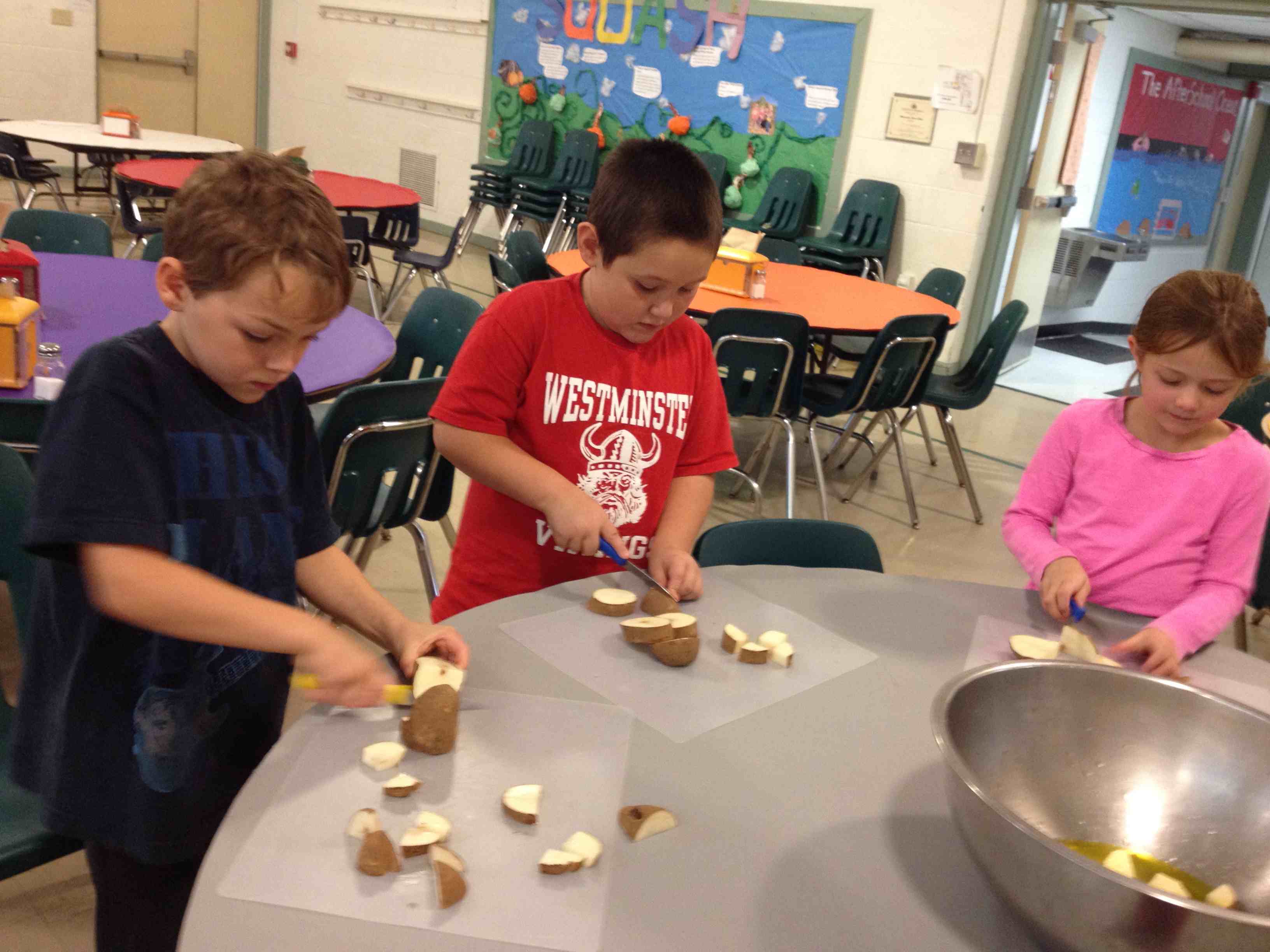
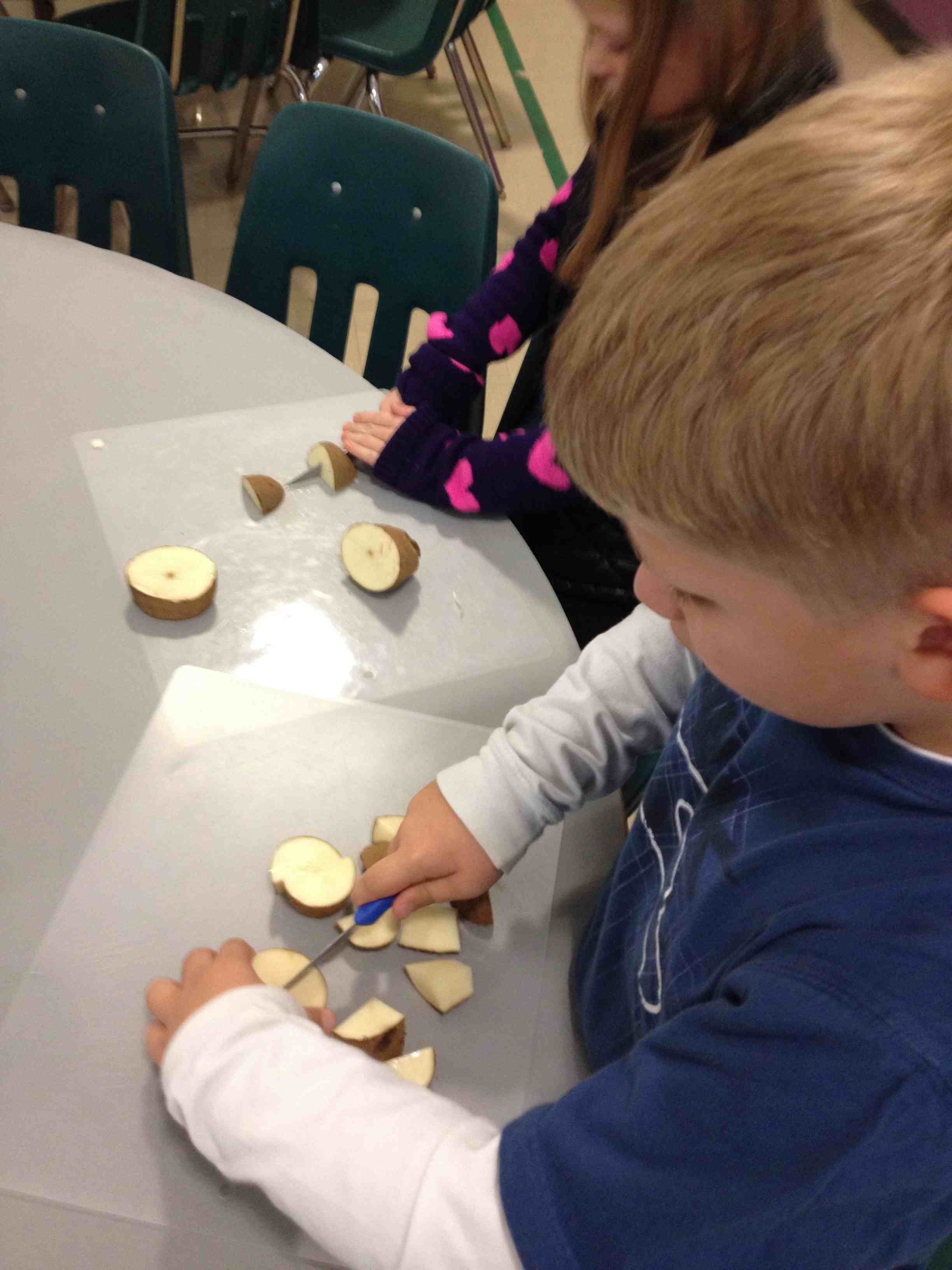
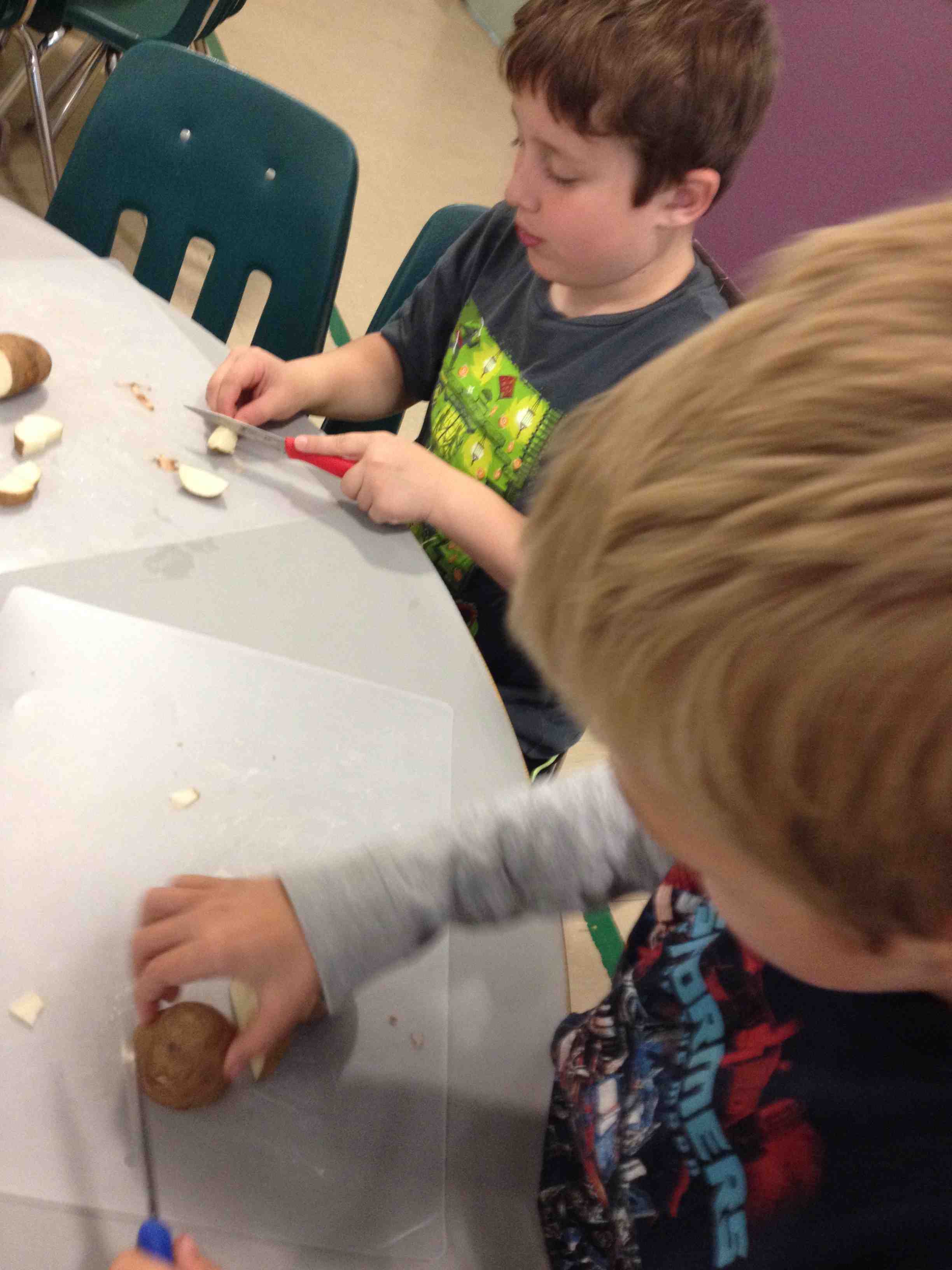
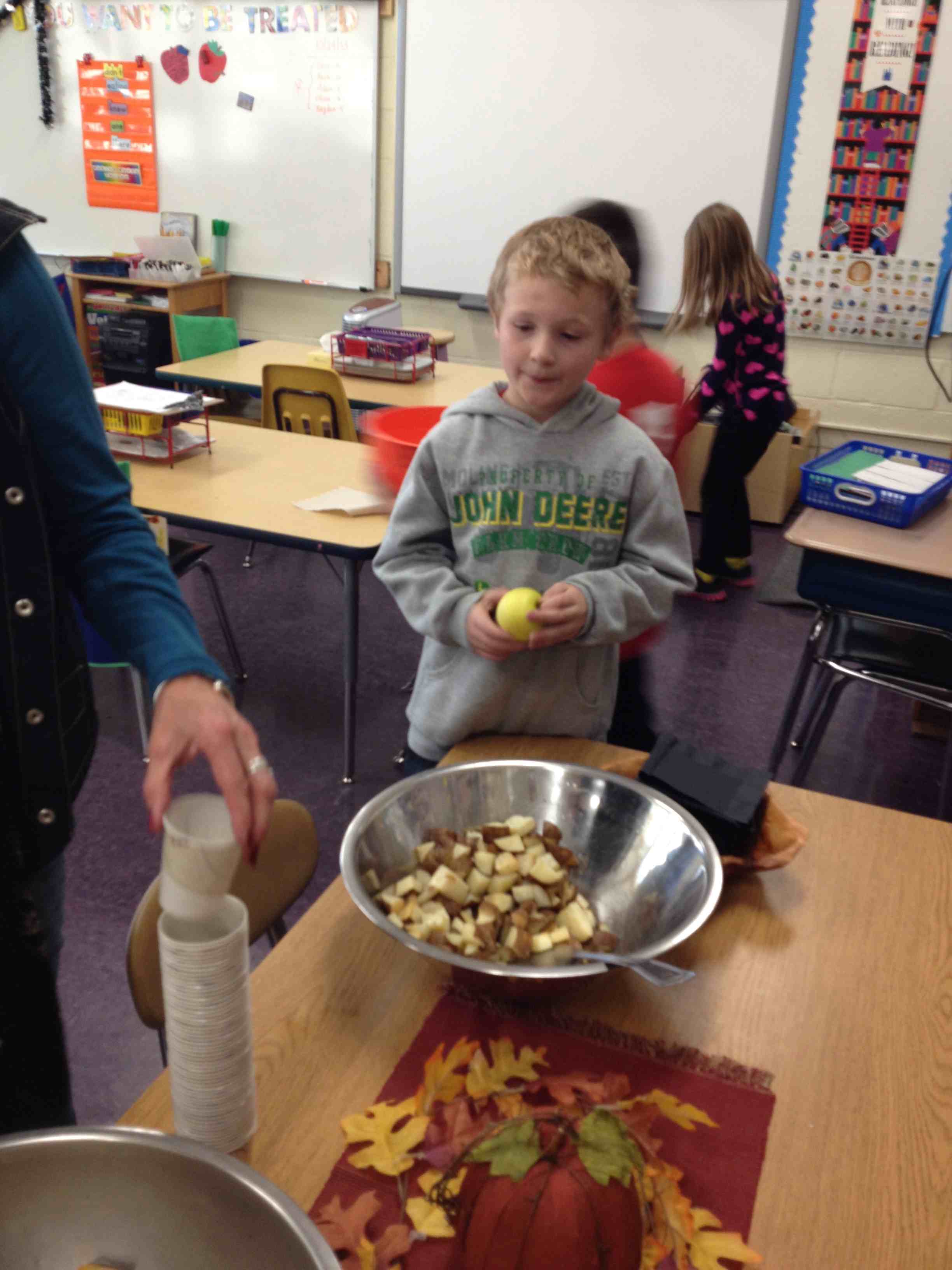
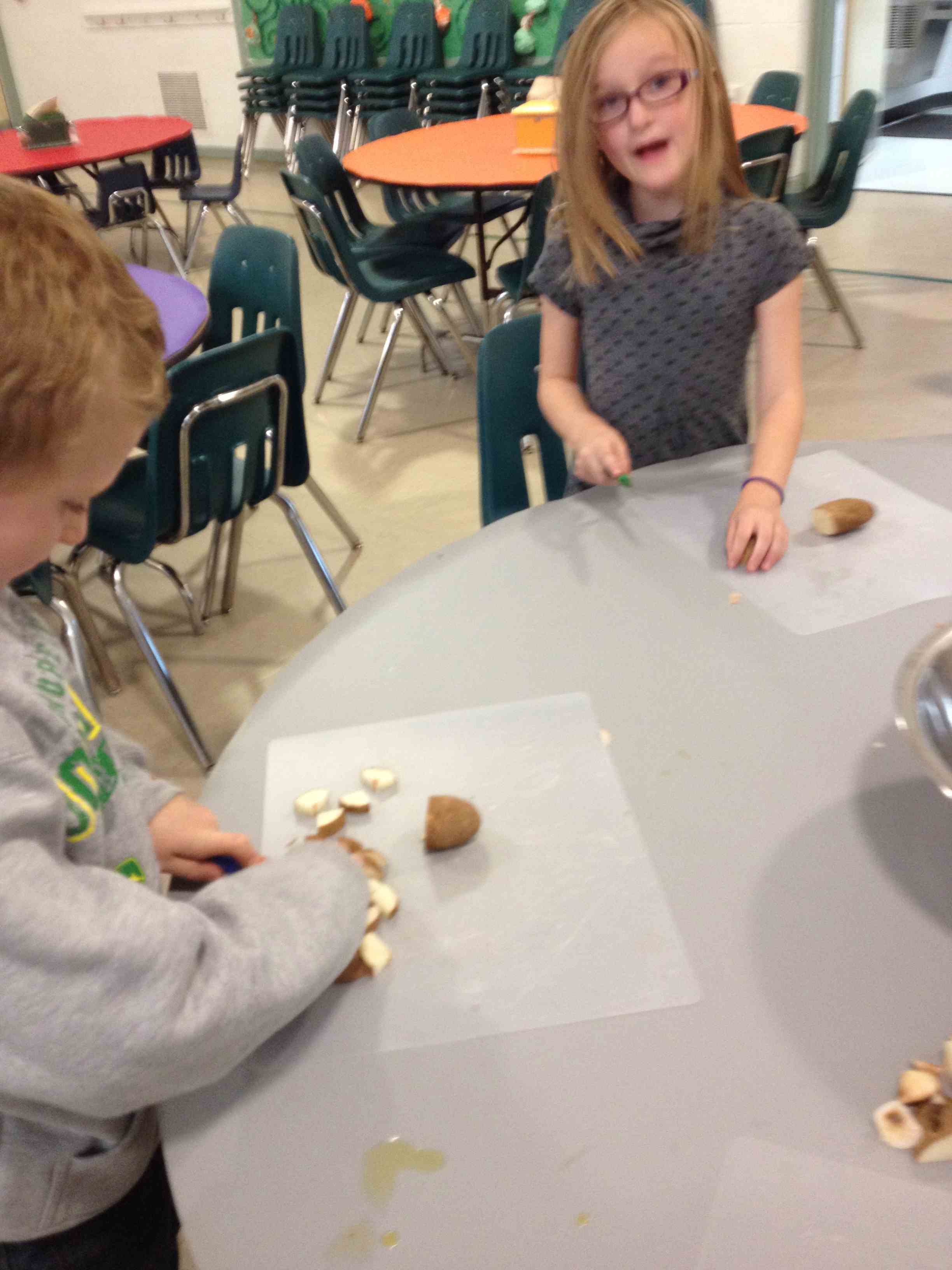
cutting potatoes 2Do you remember planting these potatoes last May? Can you explain the life cycle of a potato? How do you think these potatoes will change when we put them in the oven to roast? These were some of the concepts second grade students were mulling over as they focused all of their visual attention on the sharp knives they were permitted to use for  cooking chemistry class. Just before the potatoes went into the oven, students discussed how they thought the baking would change the potatoes. One student’s idea was that the heat would turn them into a regular french fry shape. Why not?

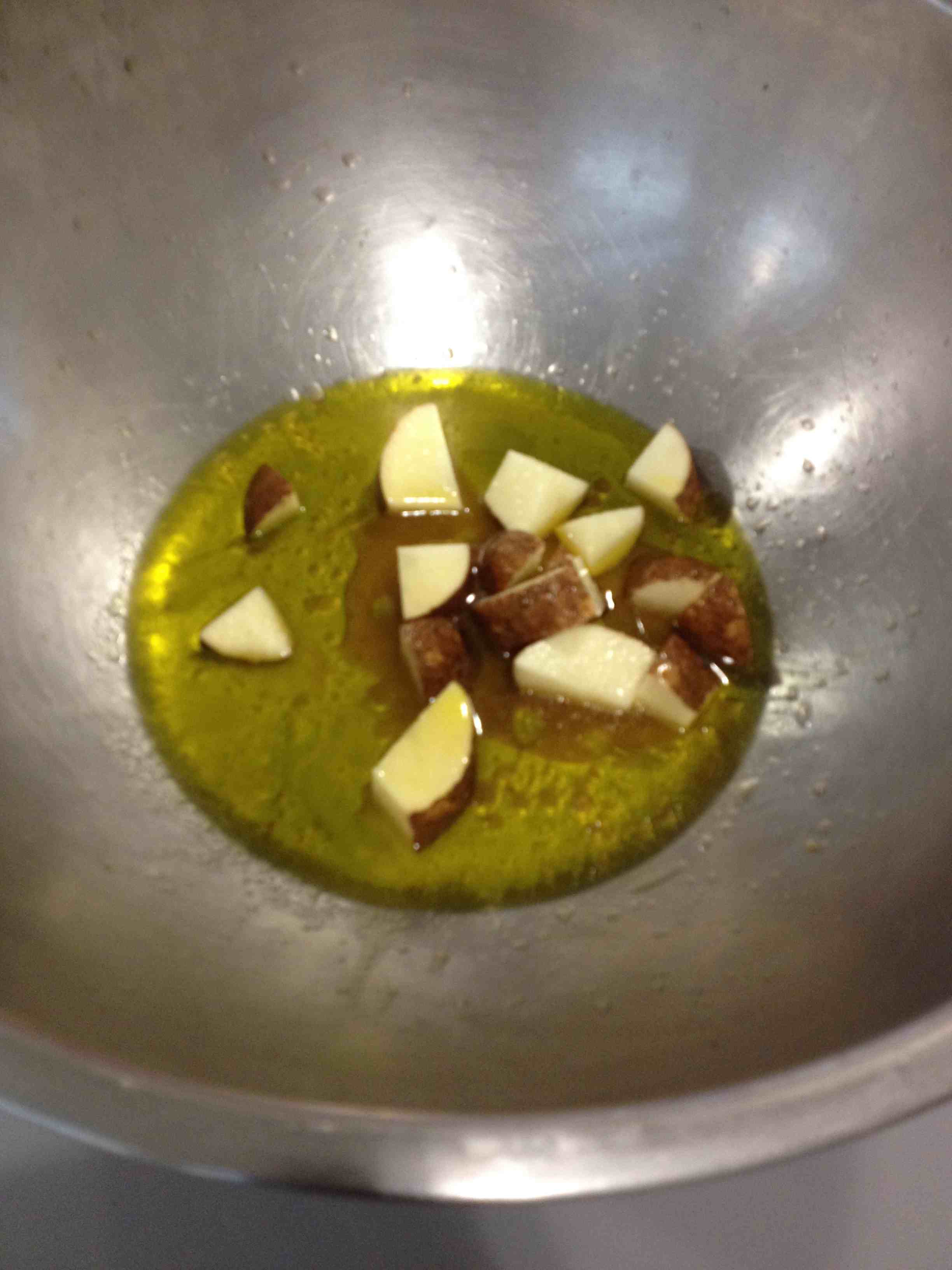
After the diced potatoes were dipped in  olive oil, salt and vinegar, they were roasted briefly at a 450 degrees. Very soon (15 minutes, tops) they were ready to take out of the oven. Students gobbled them up for snack without one speck of ketchup. When I brought the roasted potatoes to class from the kitchen, their teacher, Ms. Beaudry-Torrey was showing a very cool kids’ website  on the smartboard. You may want to look it over at http://www.thepotatostory.co.uk

cutting potatoescarefully cutting


taste testone of two potatoes to try

one of two marinades


look at what you're cutting

responding to cooking potatoes

POTATO response sheet


Leave a comment

Kale is King…….or Queen of November

Our kitchen chef, Kim Kinney, using frosted celery in soups.

Our kitchen chef, Kim Kinney, using frosted celery in soups.

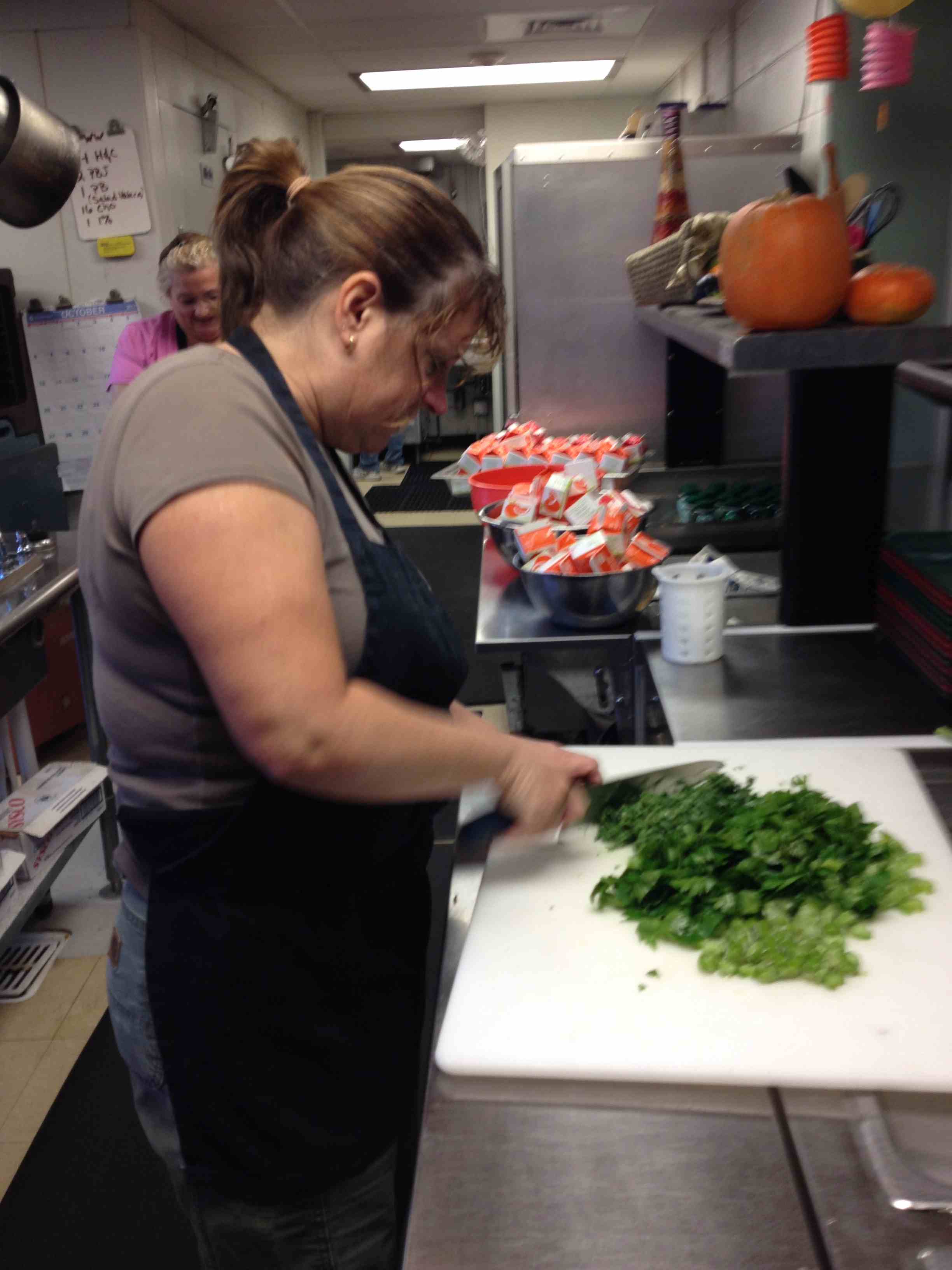
Our 150 feet of beautiful celery was used for all school snacks until recently. One brisk sunny morning chef, Kim Kinney, took a walk out to the garden after a hard frost and harvested what was left to flavor soup for lunchtime…….terrific display of Yankee Ingenuity! “No one will know it was frozen when I put it in the soup,” she said, matter-of-factly.

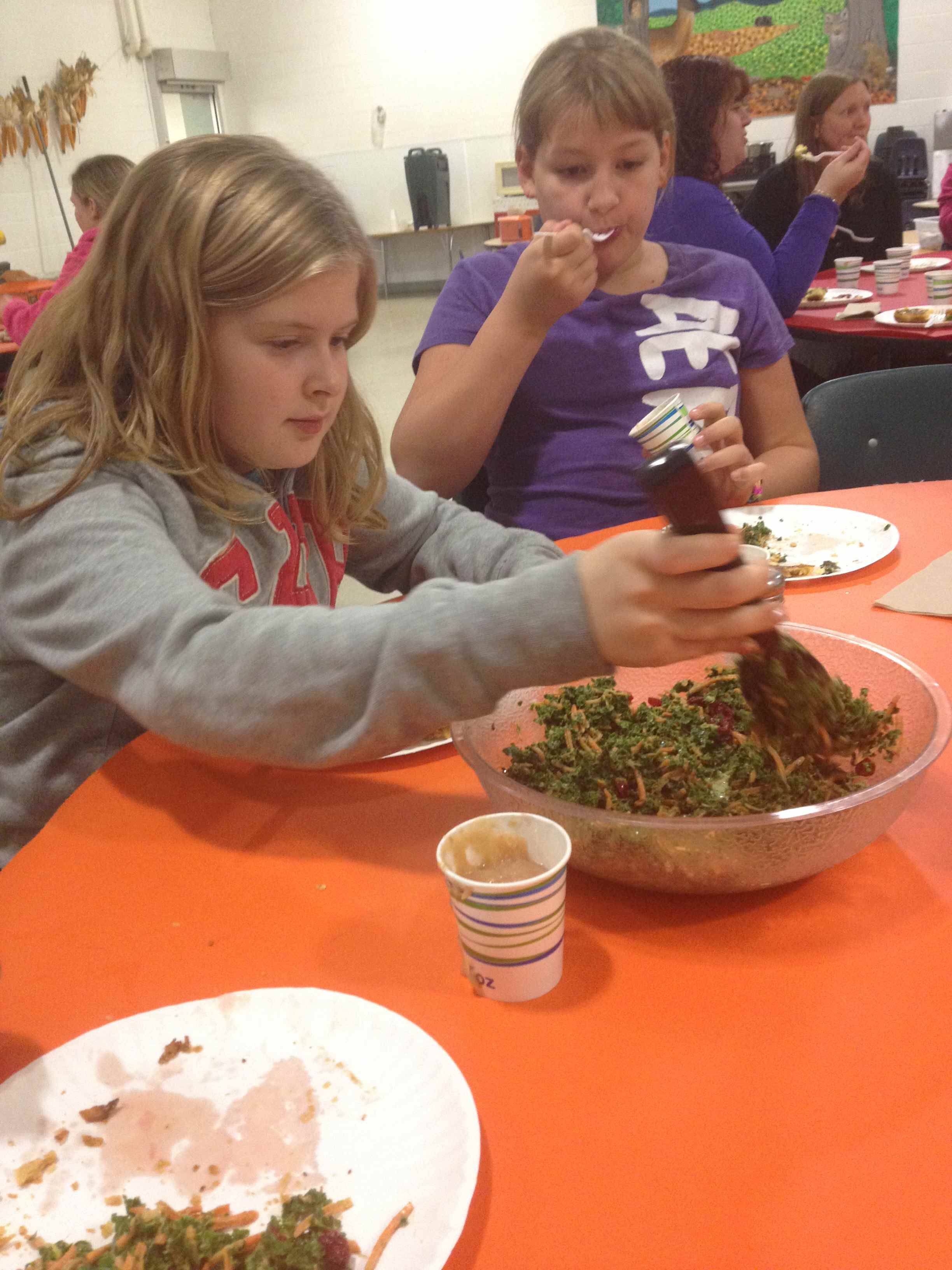
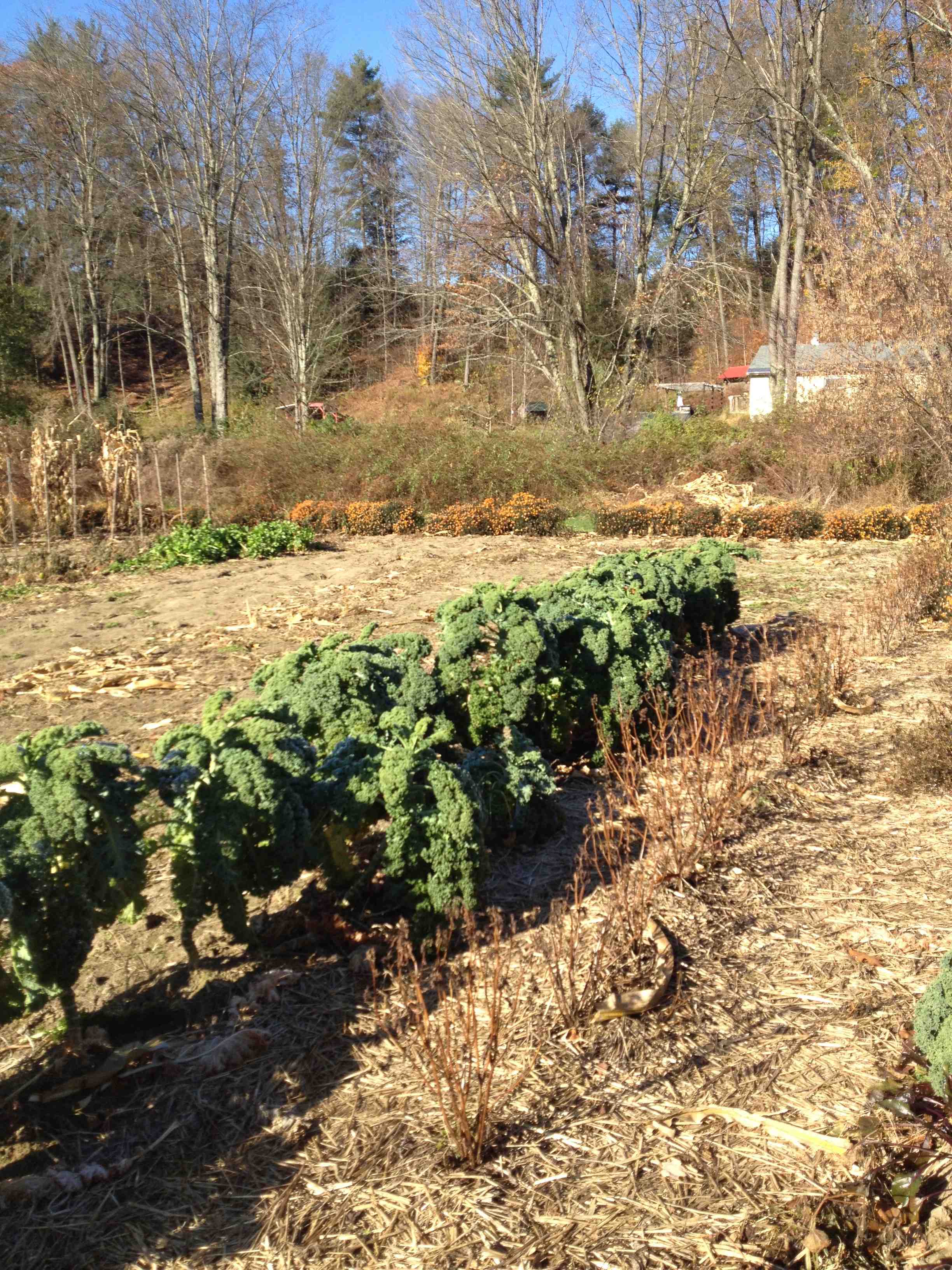
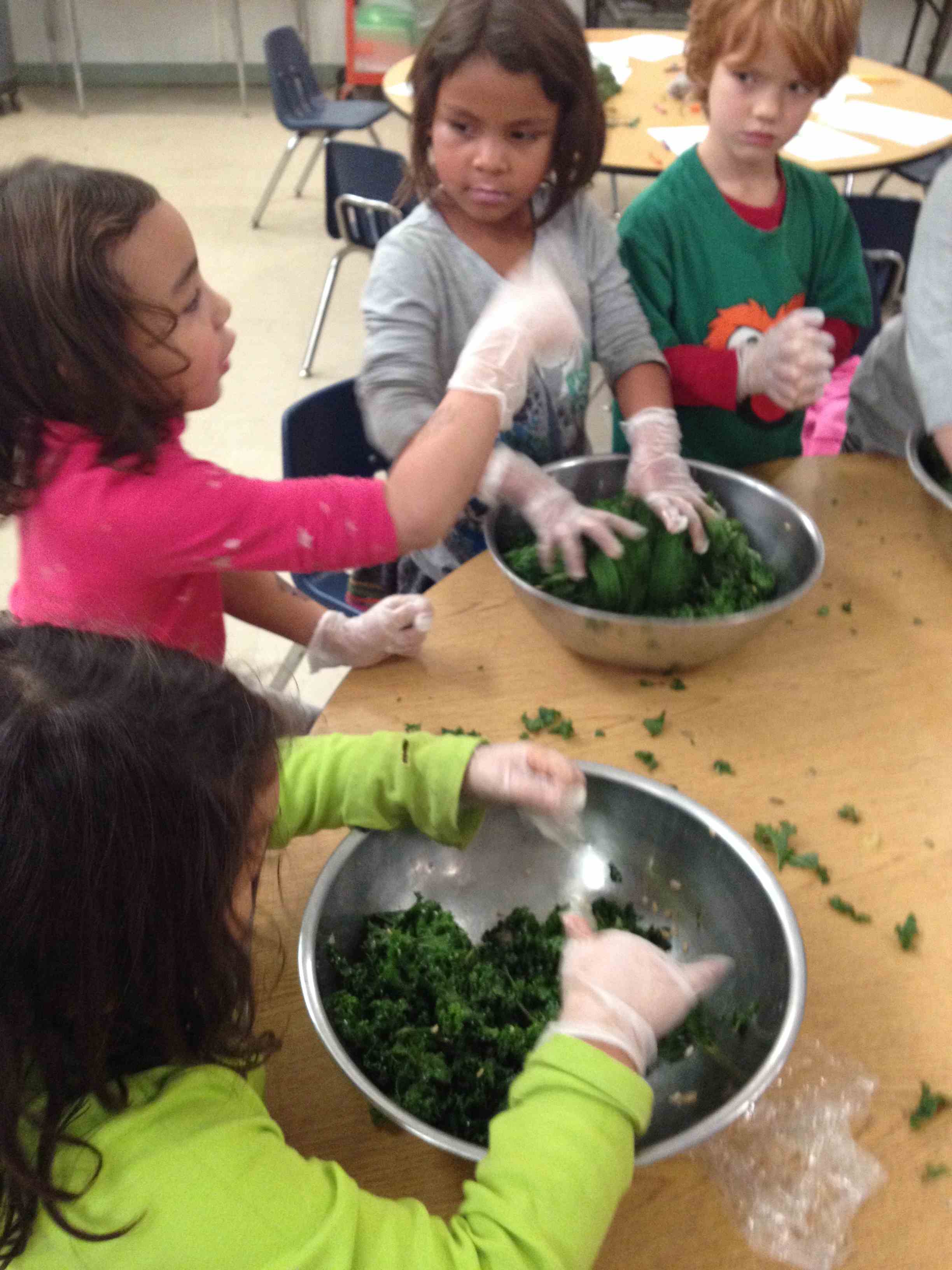
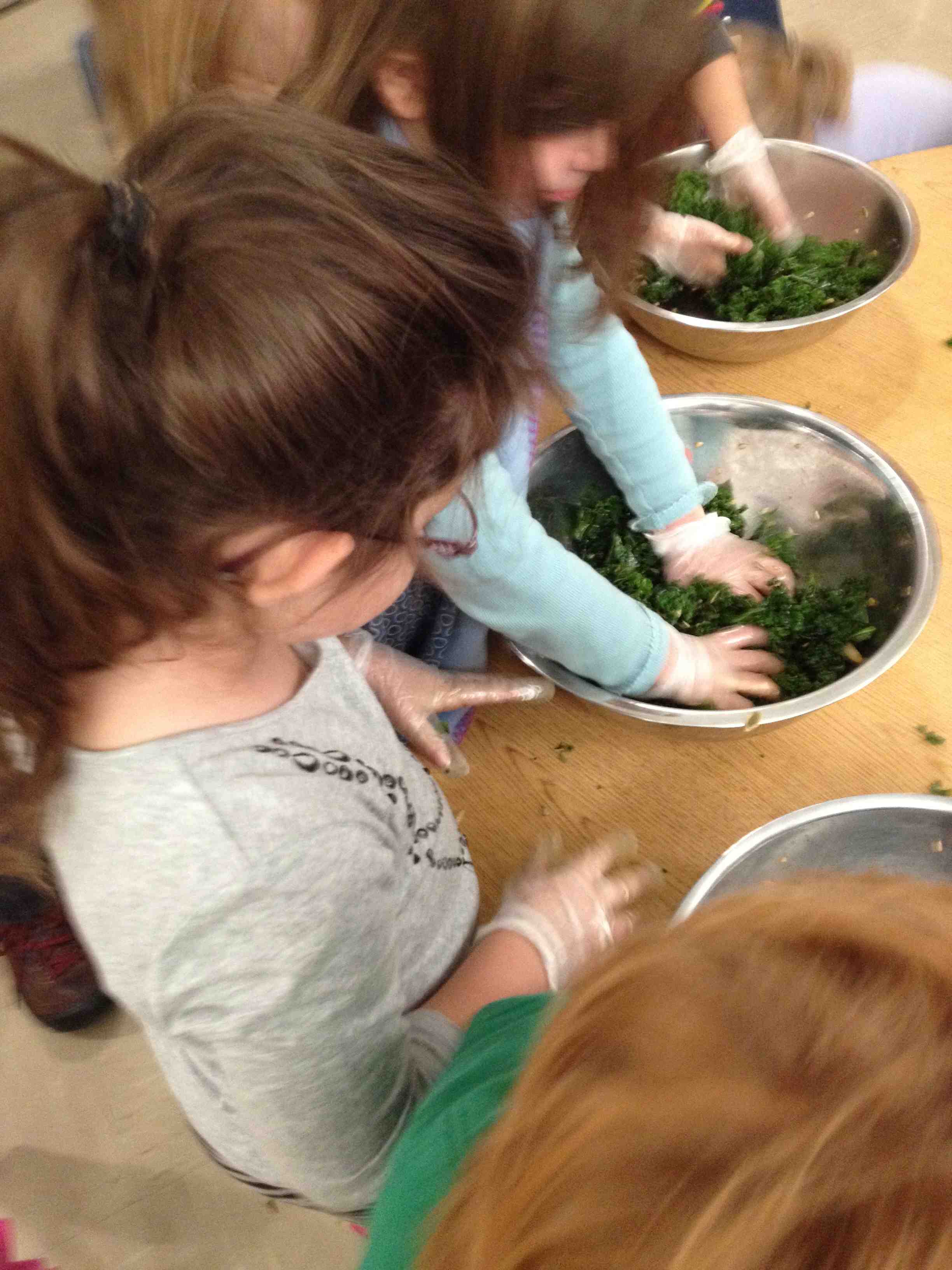
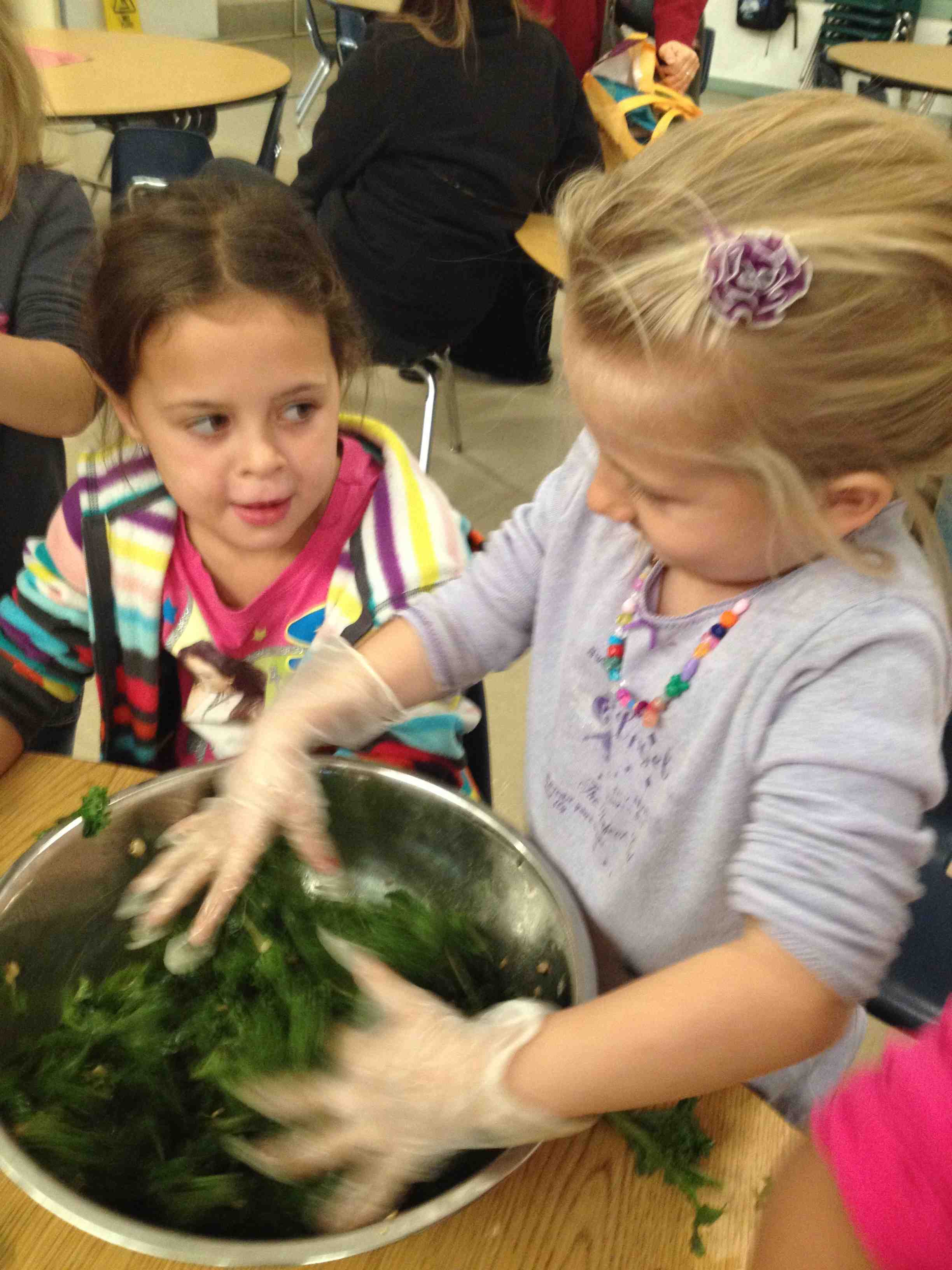
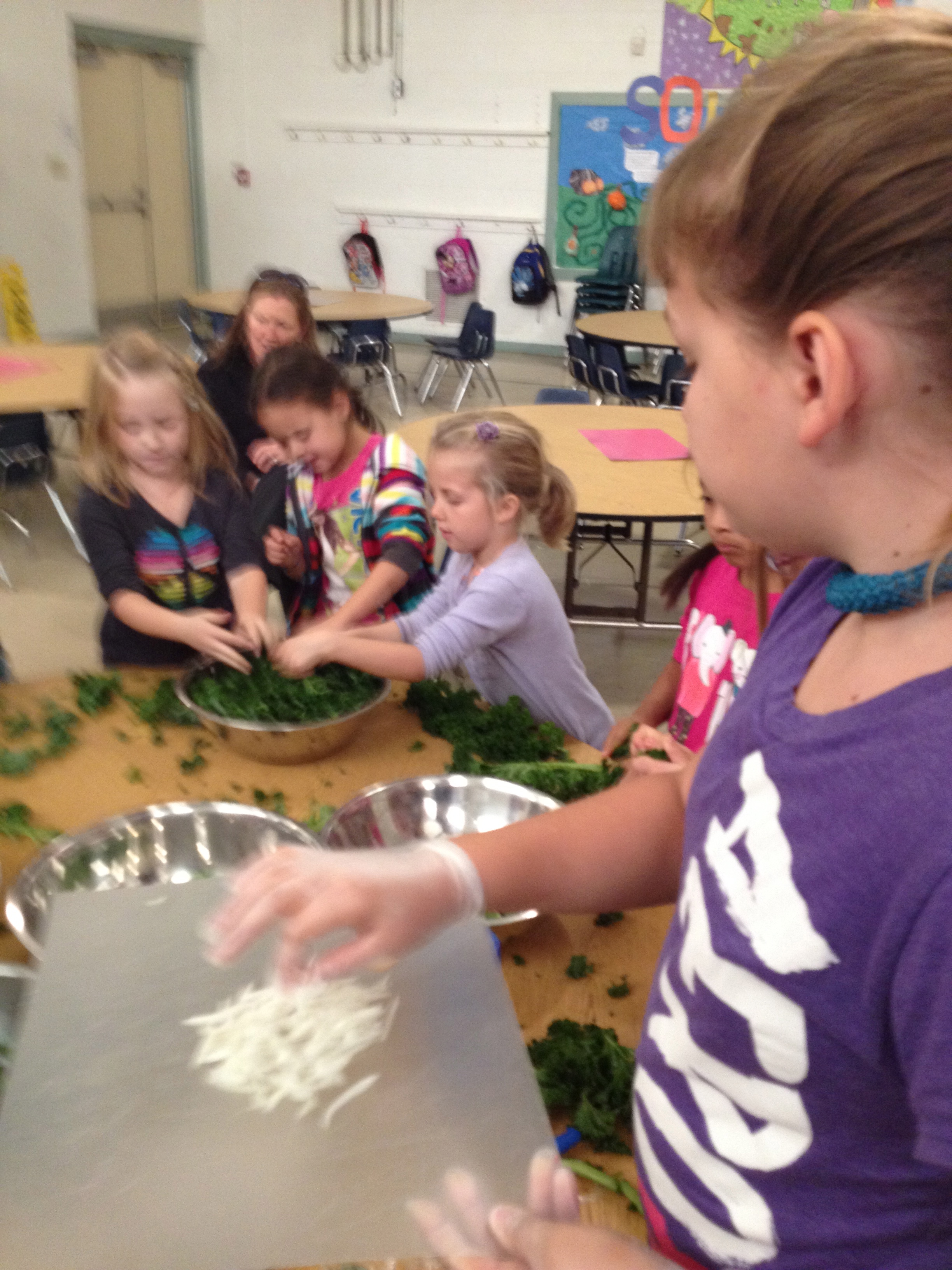
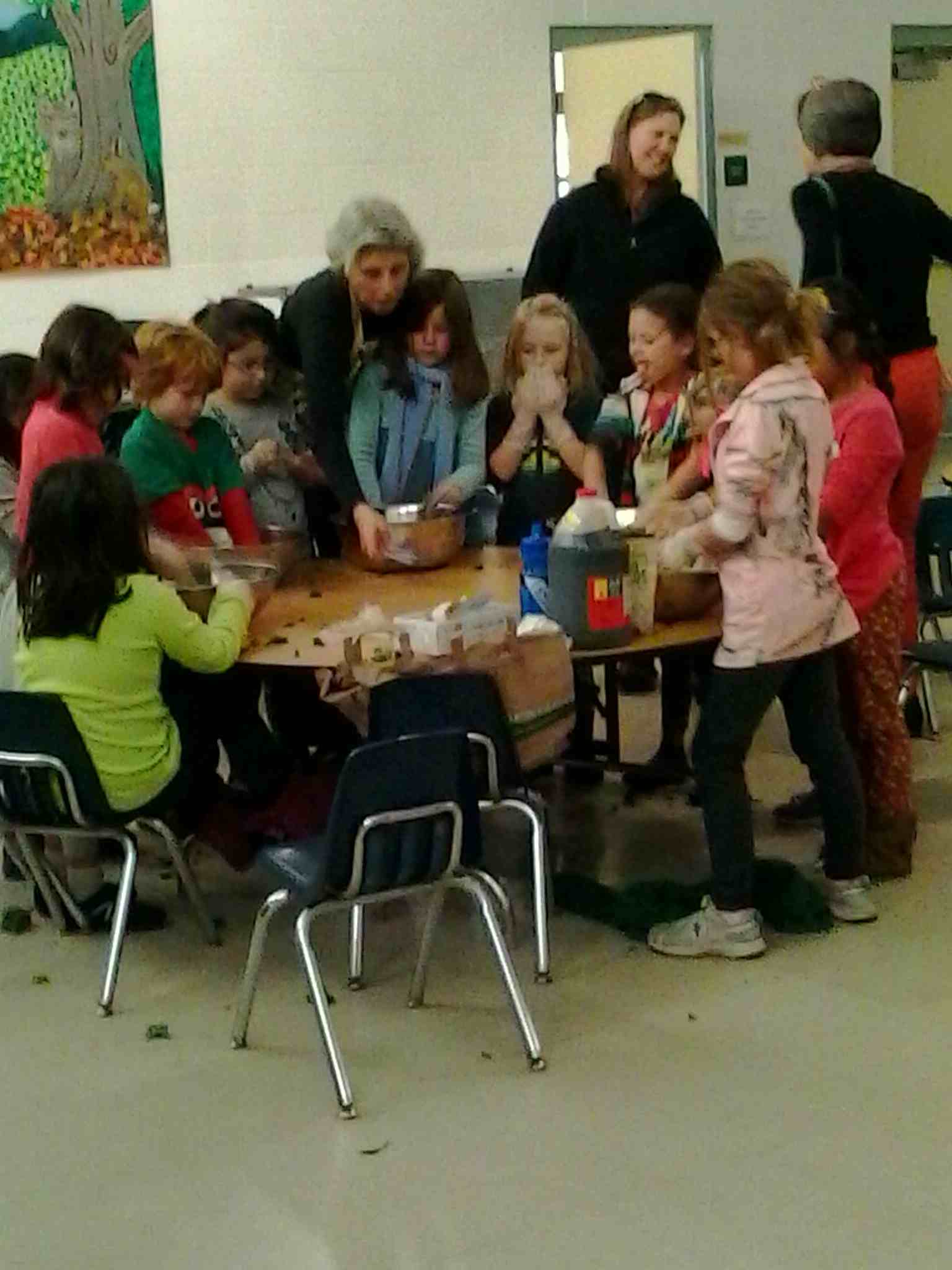
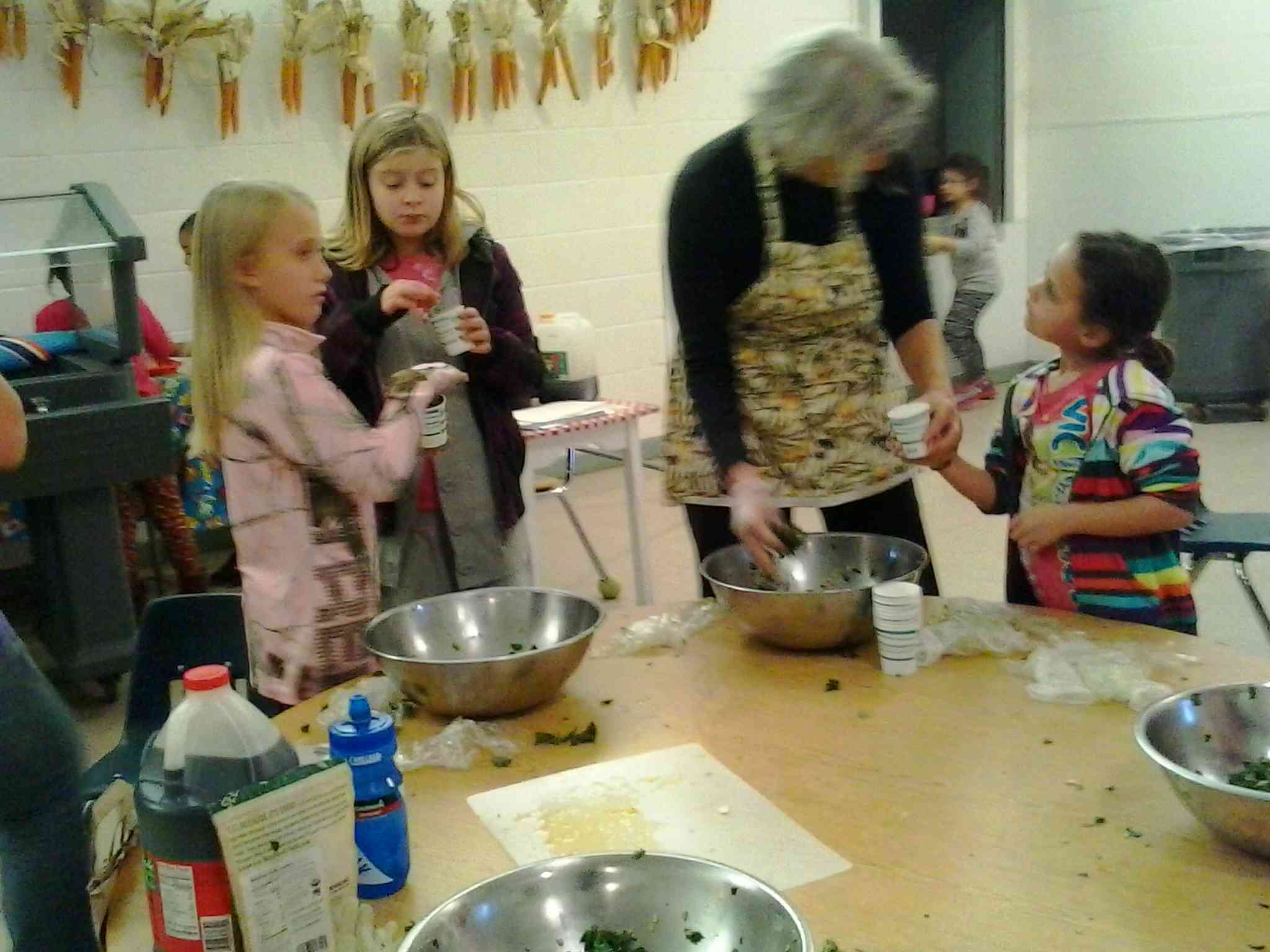
Later that day a group of After School “chefs” created a massaged kale salad. Kale is the only crop still happily growing in our school garden this late in the season. We hope to continue harvesting it for a few more weeks. This group was happy to get going, de-ribbing the kale and tearing the leaves into bite sized pieces. They shared bowls for massaging the fibers of the kale into an edible salad. The addition of lemon juice also helps to break down fibers. With a bit of olive oil, soy sauce, some sunflower seeds, chunks of fresh orange and a little finely sliced onion this recipe becomes a yummy nutritious salad. (See recipe below.)

After School students (even the ones not cooking) helped devour as much as we made! Click on any image to enlarge.

Kale still growing oct.massaging kale saladteamworkgloves for massagingtimed turnsolder diced onionsgroup kale effort

Giving out kale saladnot so bad taste testI love kale salad

MASSAGED KALE SALAD RECIPE
1 lb. kale (de-ribbed and cut into 1” sq. bits)
Roast or Raw:
¼ c. raw sunflower seeds
¼ c. raw sesame seeds
¼ c. raw pumpkin seeds (Irene left out the pepitos)
Slice and Measure:
½ med.red onion sliced thinly
1/6 c. Braggs or soy
1/3 c. lemon
1/3 c. olive oil
Combine and massage above ingred. for 10 min.
Add any:
avocado chunks
pomegranate seeds
fennel slices
clementines or orange chunks


Leave a comment

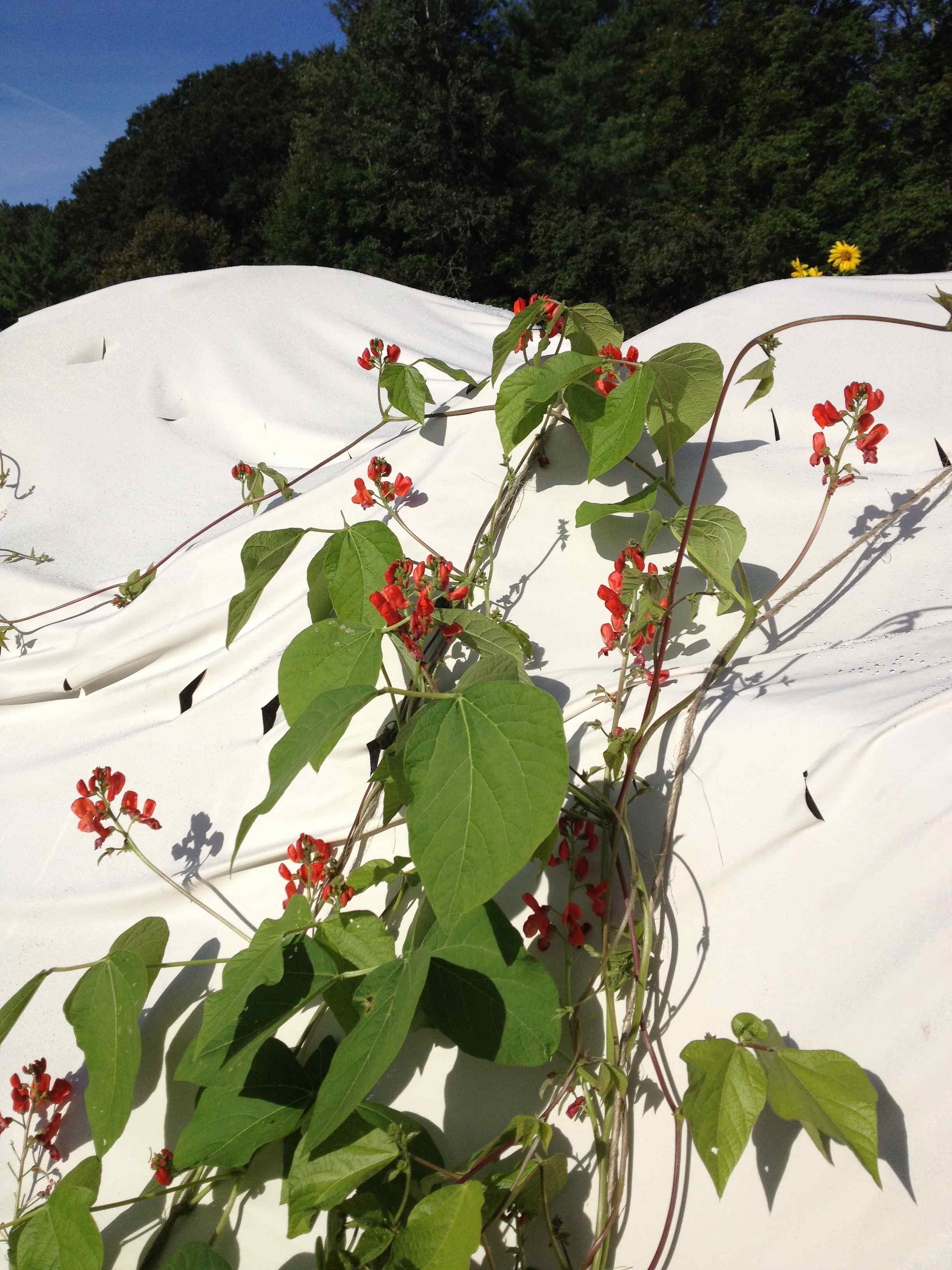
Scarlet Runner Beans

Elizabeths photo

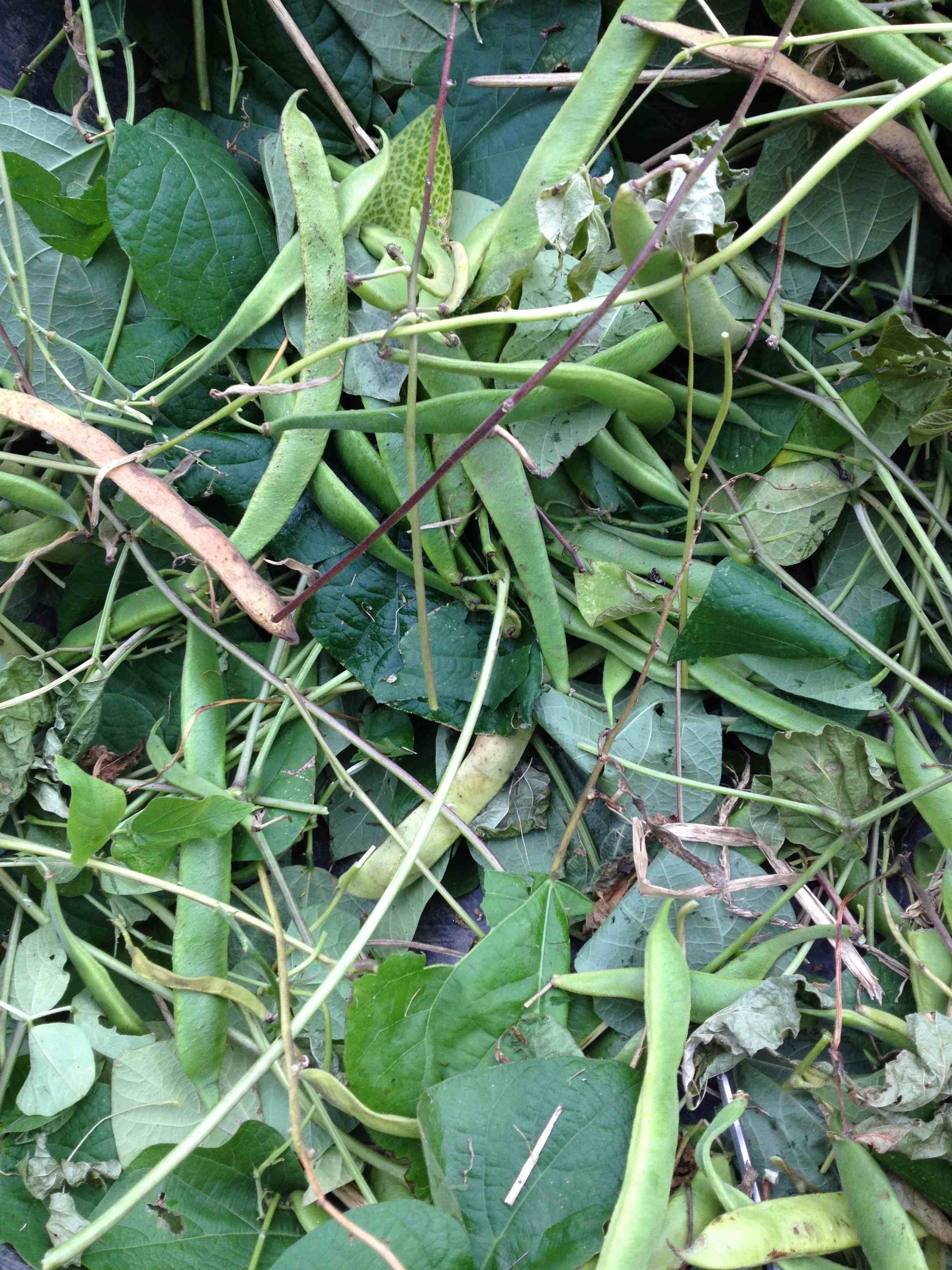
These magic beans will be dried and added to soups during the winter. If you saw an earlier post, they were shown in their blossom stage, winding their way around the shade house. This is my first year growing scarlet runners so I hope I’m drying them them the right way. I was given the starter beans by Marissa Miller, a young farmer who lives down the road from me. She recommended pulling the plants up by the roots in the fall before frost and hanging them upside down to dry.  My plants were so strongly entwined with the shade house saplings that I had to perform major surgery to cut them free.

Then, through a series of trial and error, I cut them free of moisture producing leaves and I found seedling tray supports to lay the beans in. The trays fit perfectly in the rafters of the tool shed. Now, if the mice don’t get them first, maybe they’ll dry there for a few months. Then the fifth graders can shell them and cook them with the other “three sisters.”
scarlet runner bean blossoms

scarlet runner bean blossoms

harvest

harvest

drying tray

drying tray

drying in the rafters

drying in the rafters


UPDATE ON THE SCARLET RUNNERS: This shed wasn’t a great place to keep the beans for drying. The onesthat hadn’t already dried on their vines got frosted and began to rot. Next year we’ll have to try a warmer storage place. it’s tricky knowing when to take in the beans here in Vermont where the temps can dip below freezing in late September. We’ll shell those that were spared and buy more from Marissa Miller, the local farmer who gave us the beans to plant last spring.


Leave a comment

October Fun Run

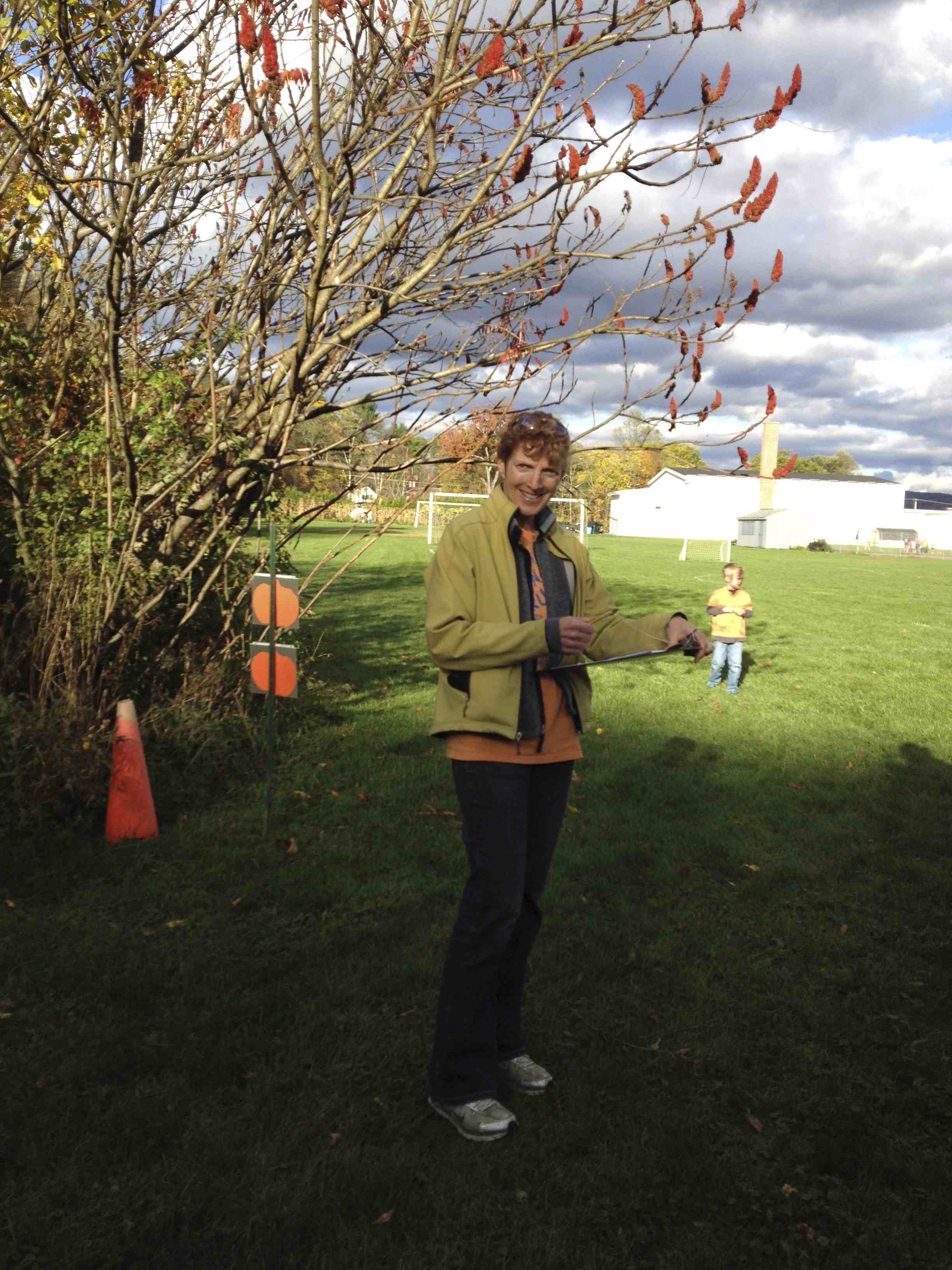
Elaine checking woods runners

Elaine checking woods runners

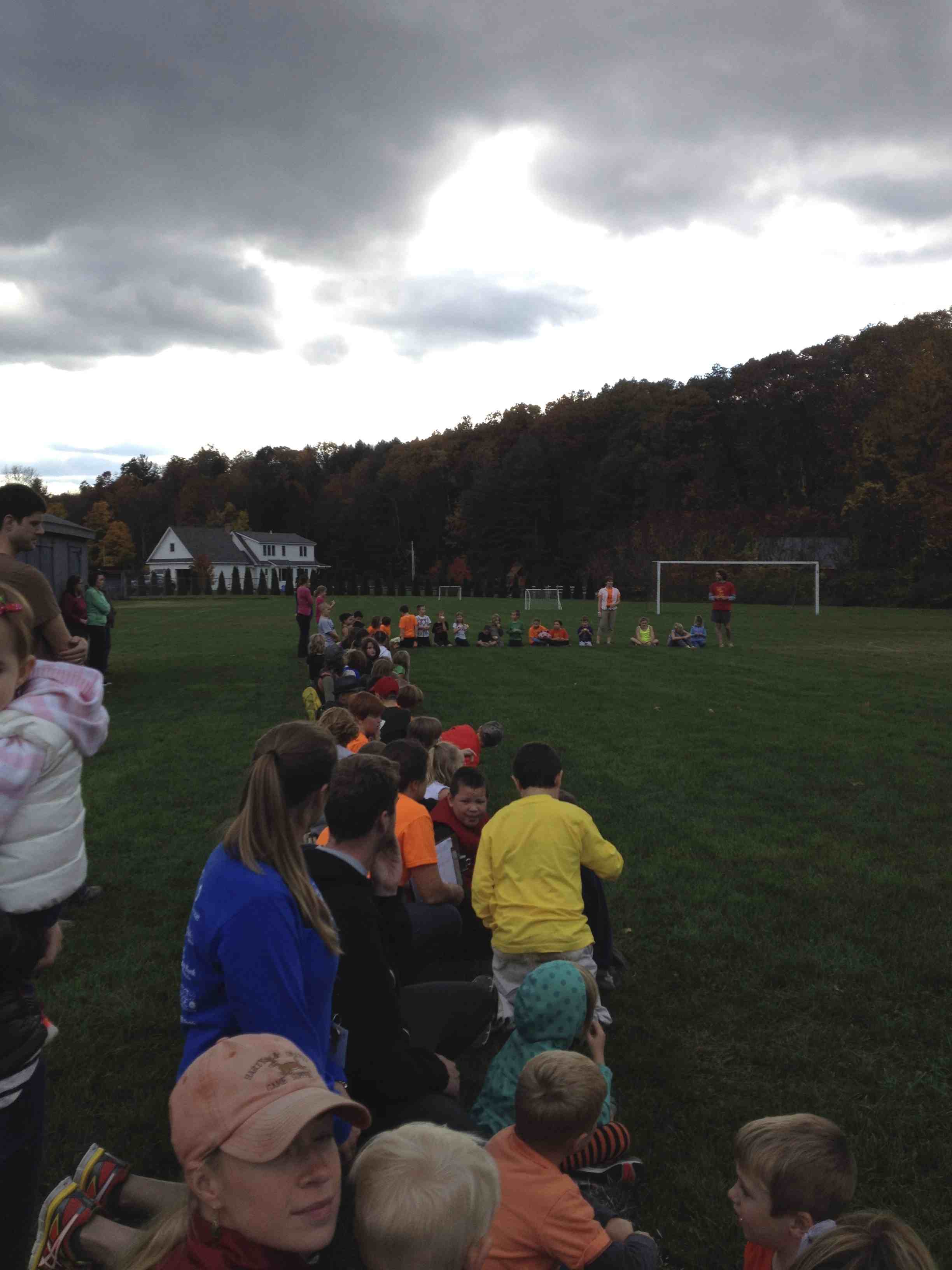
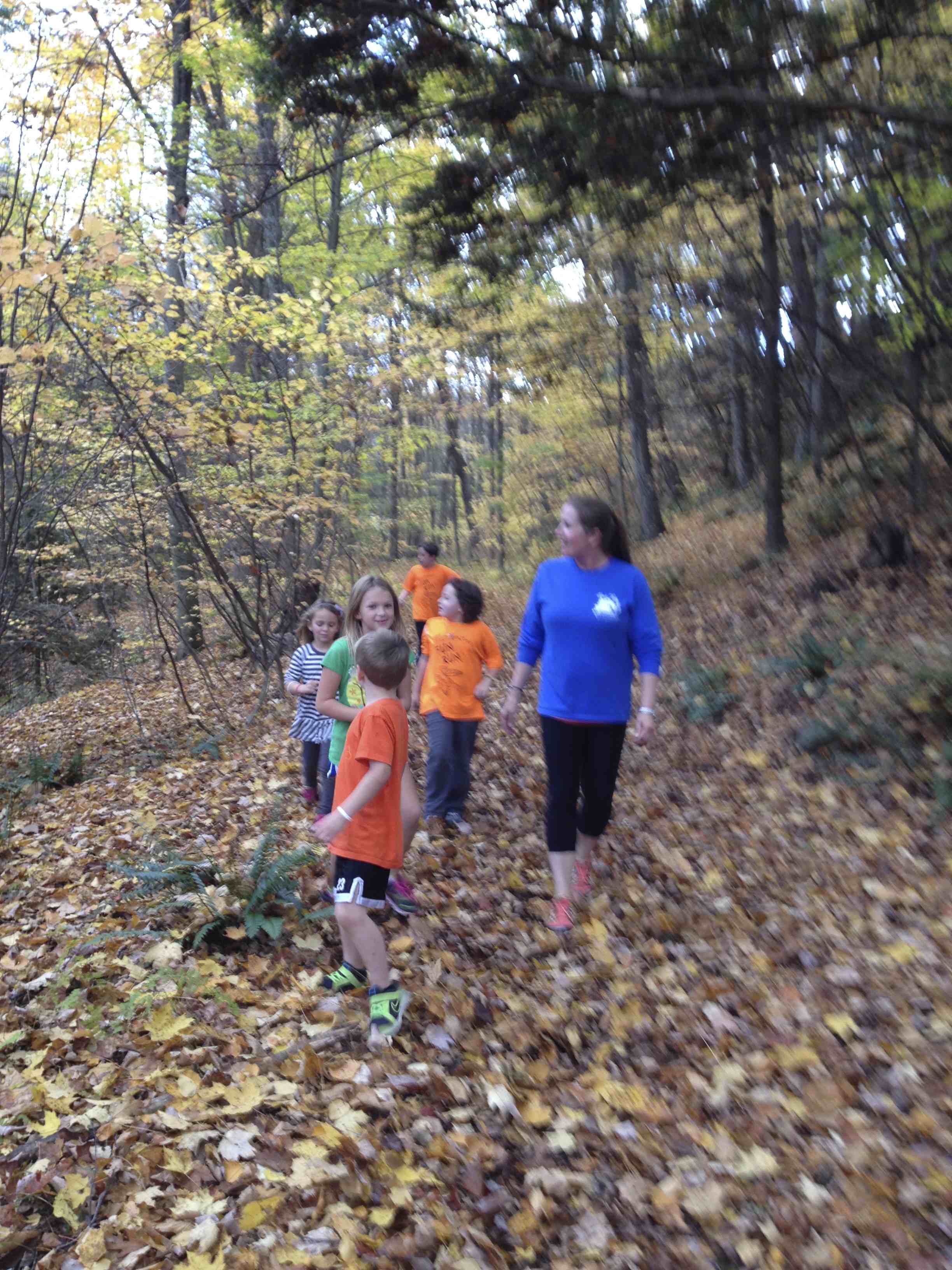
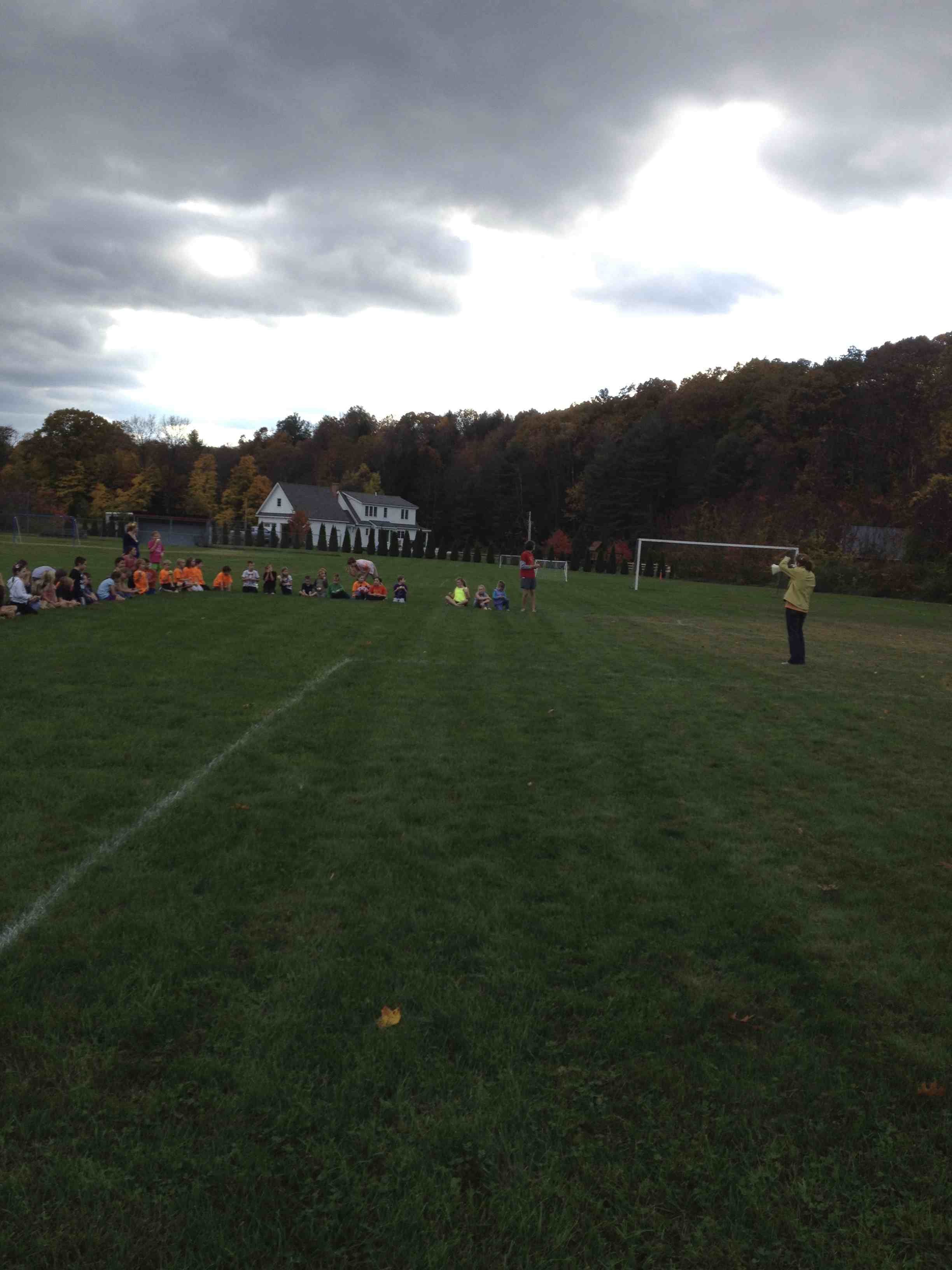
Elaine Gordon has been the inspiration behind seven years of a series of Fun Run celebrations at the Westminster Schools. An athlete and a firm believer in the benefits of exercise for students and adults, Elaine works tirelessly to inspire the community to get out and run during these events. A rainbow array of free T-shirts have marked past Fun Runs. Students wear their shirts proudly throughout the year. Many parents and staff members contribute to the success of our Fun Run tradition, now officially organized by parent, Stacie Illingworth. There are ‘toe rings’ awarded to all runners each time they complete a quarter mile circuit (which includes our school garden). Even the Kindergarteners can be heard adding quarter miles to come up with the mile or two they’ve run! Brave trail runners are allowed to cross our neighboring property and do a 2.5 mile circuit in nearby Evan’s Woods.
Line up before run

Line up before run

Jennie Perry chaperoning trail run

Jennie Perry chaperoning trail run

Russell Williams and Elaine leading warmup

Russell Williams and Elaine leading warmup