Vermont School Garden

A visit to a Vermont public school garden through the seasons.


Leave a comment

PLANTING DAY! MAY 31ST 2013

planting squash 3 sisters

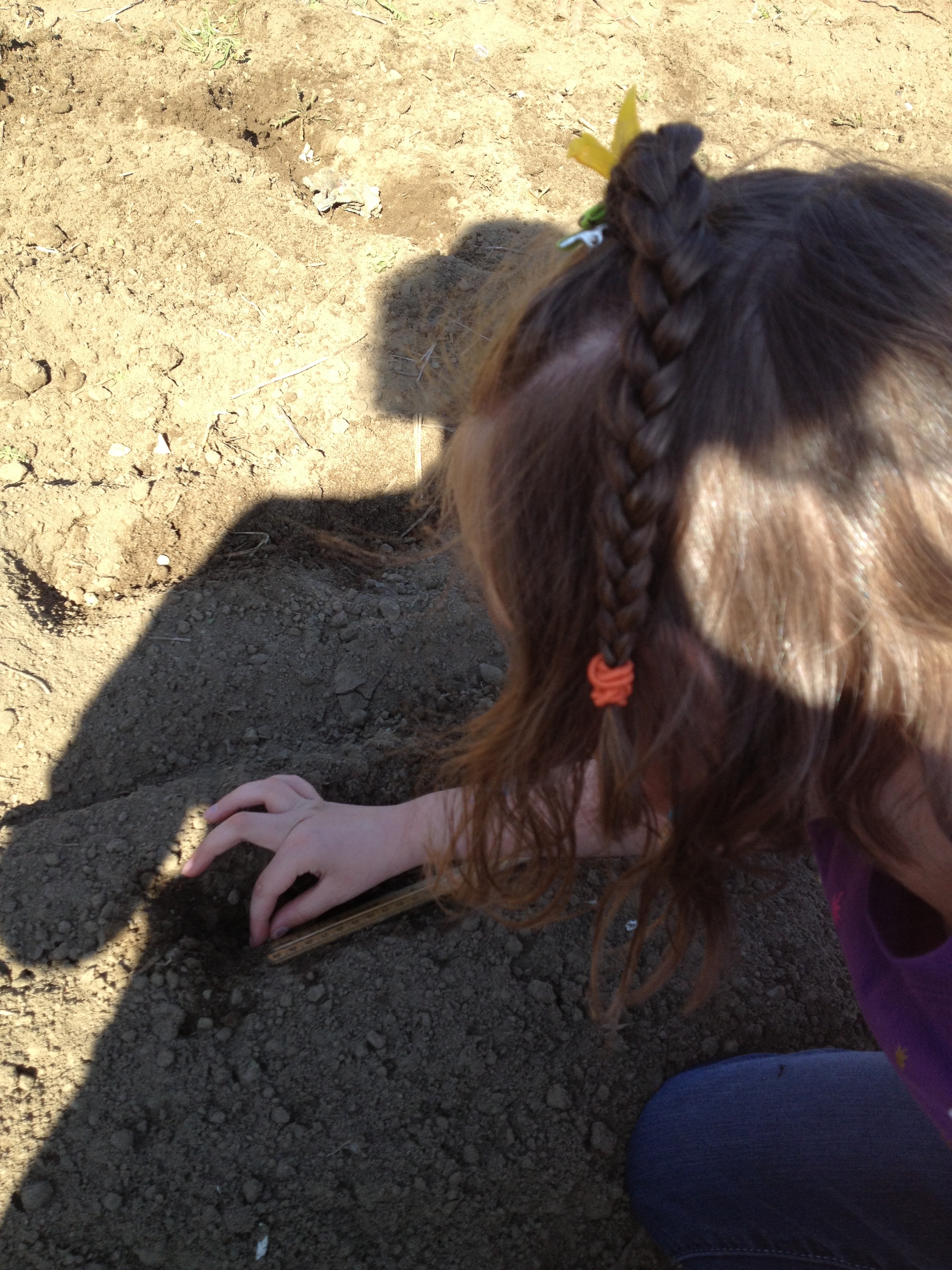
The fourth graders got an early start to planting their fall crop last week. They met their new teachers and they laid the groundwork for a study of the native american three sisters garden. Teamwork will be one of the important curriculum umbrellas for their fifth grade teachers next year and interdependence is one of the overriding themes of ‘ three sisters” growing practices. In three rows with nine hills in each row, teams of students planted corn, squash and beans. Next year they’ll discover the relevance of this planting and perhaps see it as a metaphor for learning together! In the meantime, we have to keep the weeds from overtaking the new corn bean and squash plants.
Planting celery gr 5

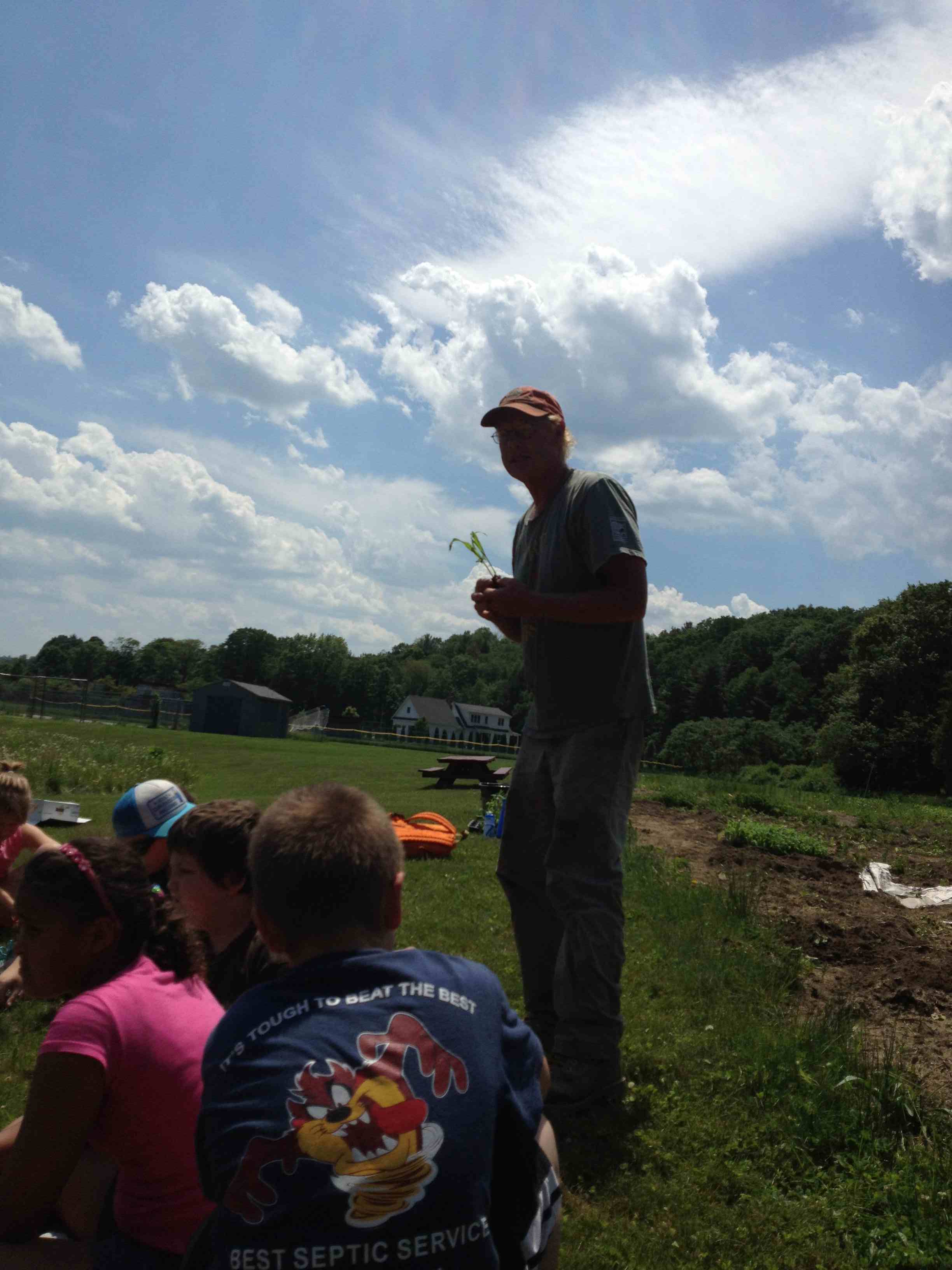
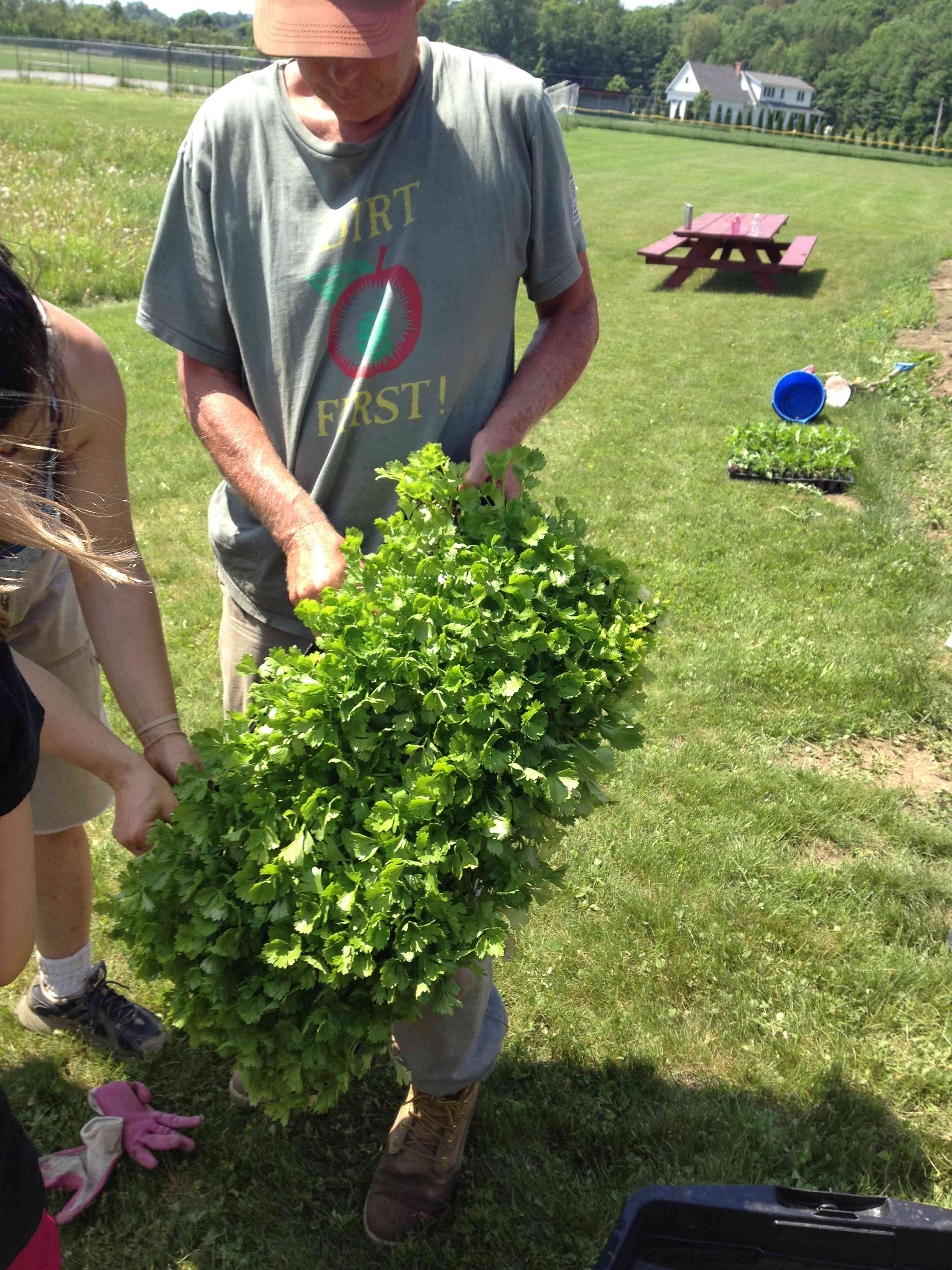
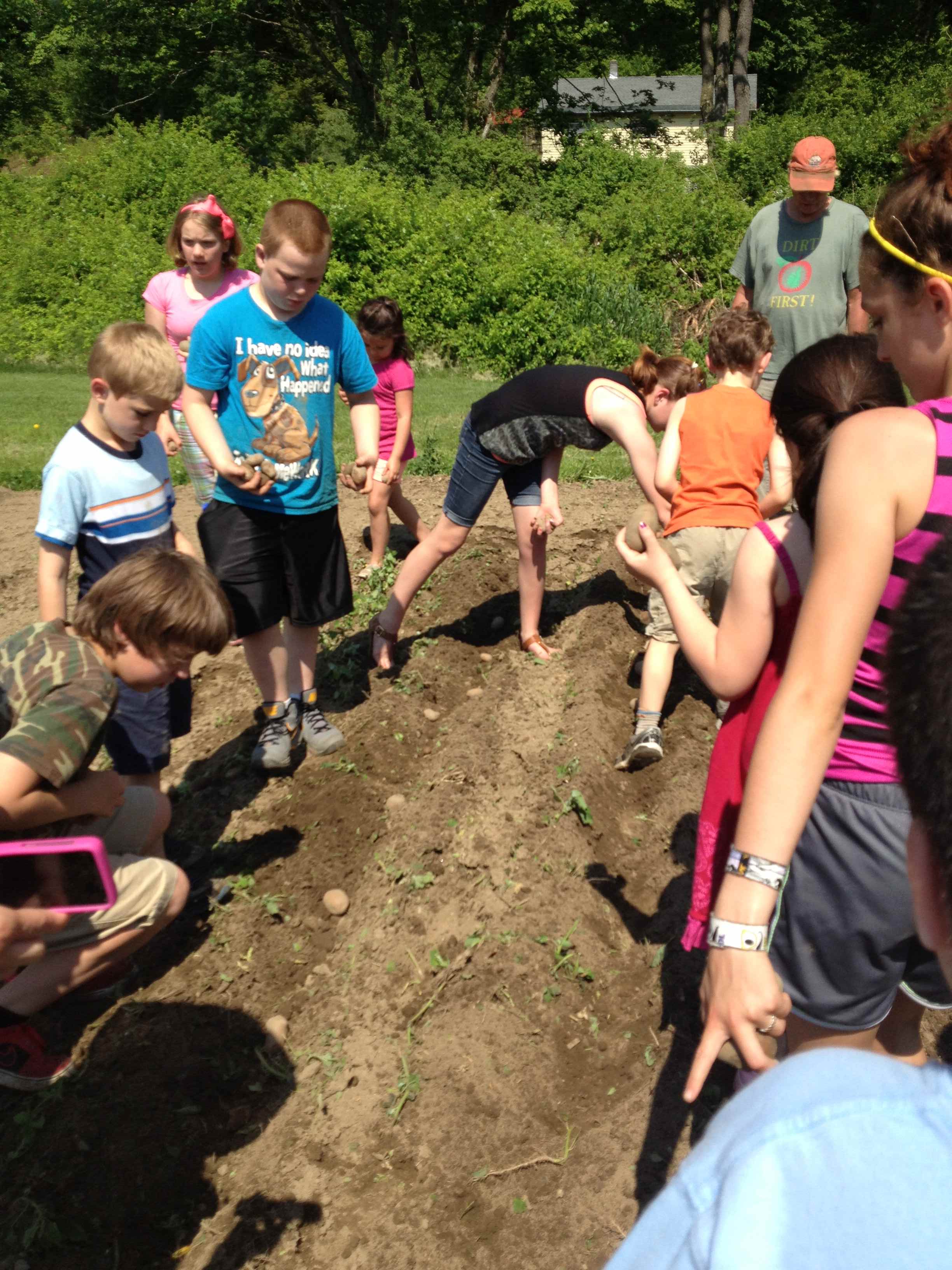
grade 1 and 6 plant potatoesK hands planting squashThe entire Westminster Center School came out to plant their crop for next year on May 31st. Each class got a lesson from our incredible sponsor farmer, Paul Harlow, who has led this planting day ritual for 25 years! He often interjected a math problem for students to solve. In this case, there were 150 celery plants in the tray he was holding. If each row were 75 feet long and the plants needed to be spaced 12 inches apart, how many rows could be planted from that tray of celery plants? Each time a problem was posed, a hush fell on the circle of students. You could almost hear them computing. If they weren’t the ones who came up with the correct answer, students definitely got a good sense of how much math computation is involved in farming. Squash needed to be planted 2 feet apart. How many inches was that? Show an approximate foot with your hands. How can you measure eight inches with your hand span?

Sixth grade students will not be harvesting next fall. We’ll miss them as they go on to middle school elsewhere. They helped the first graders plant a crop of potatoes. I want to give the sixth graders an opportunity to leave behind a memory of the garden written on flags that will fly from our tomato stakes this summer. Many of these students have been cultivating our garden since they were in Kindergarten.

The basil that was started from seed in our After School Program and transplanted into recycled milk containers by our fourth grade was planted by fourth graders in our kitchen garden.

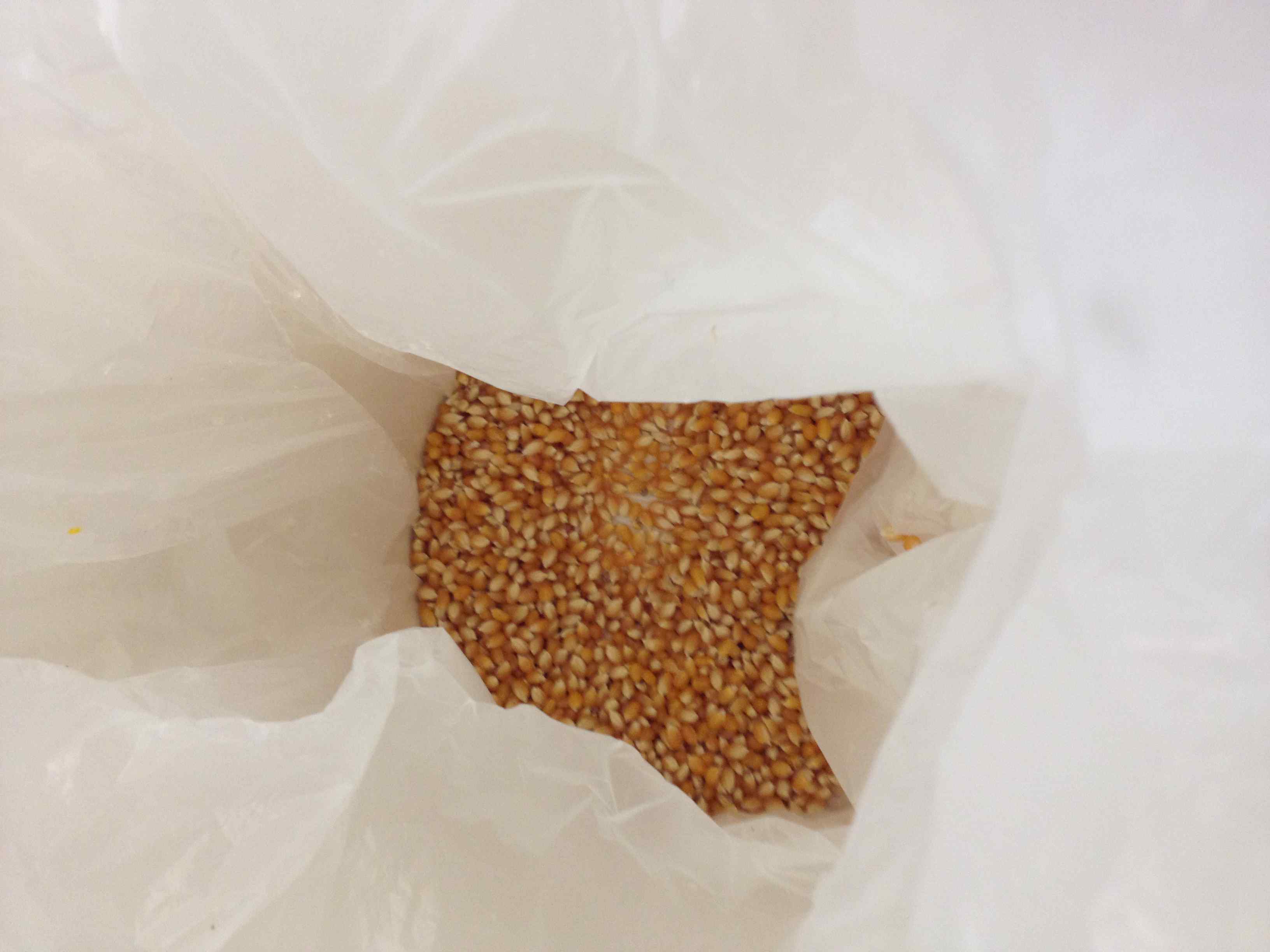
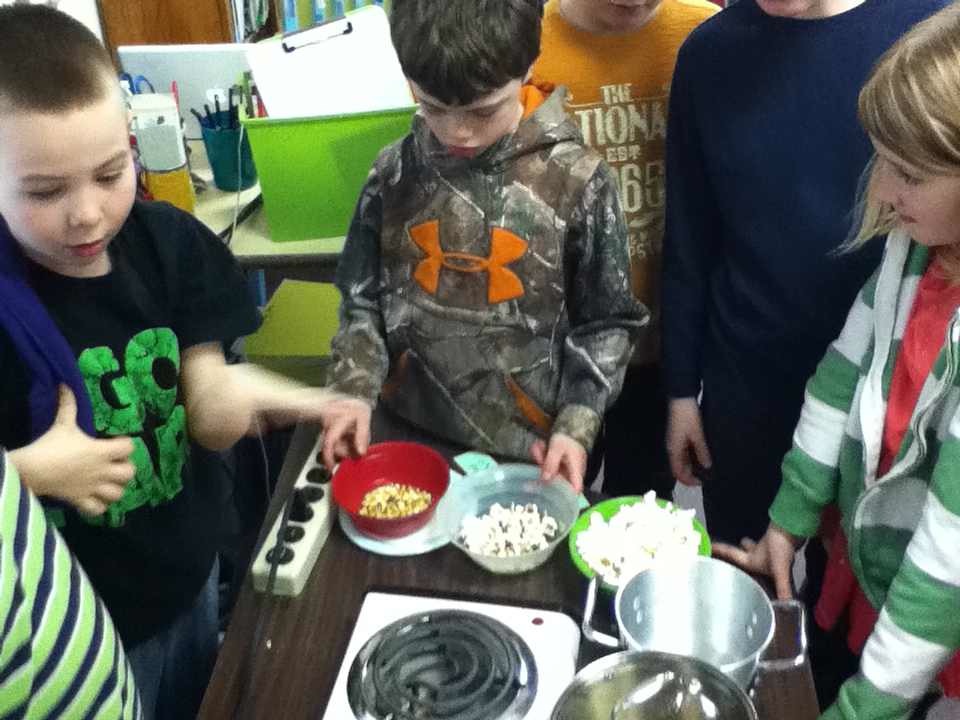
Popcorn will again  be on the weekly school snack menu next year, thanks to plantings done with the third grade class on planting day! Second graders planted tomatoes. Some will be used in our salad bar at lunchtime next fall. Roma tomatoes will be used to make sauce for science/cooking classes.

Early in  the day, one of our wonderful Kindergarten teachers, Valerie Kosednar, led us in the traditional song, ” Oats Peas Beans and Barley Grow.” Do you or I or anyone know how oats, peas, beans and barley grow?
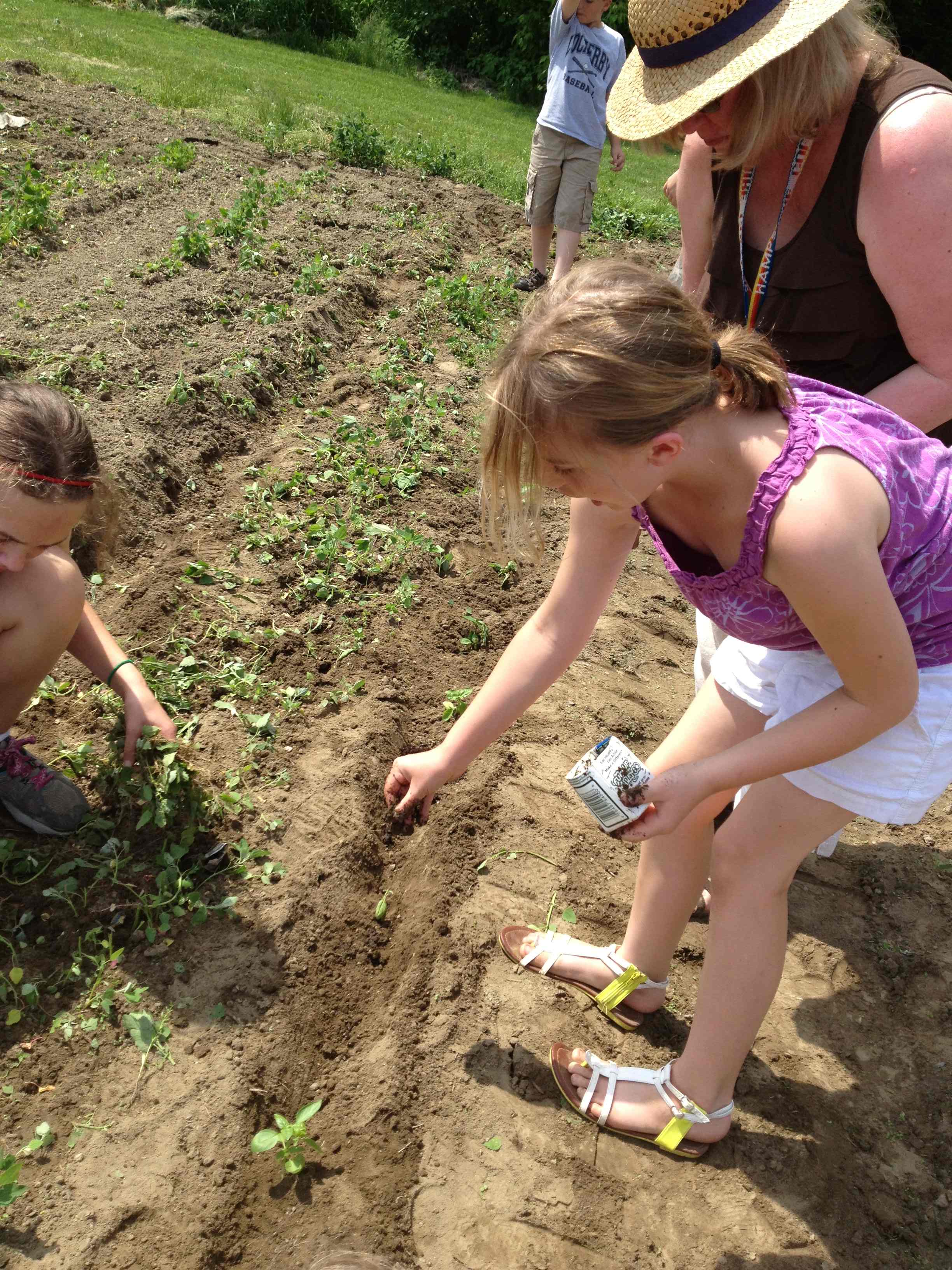
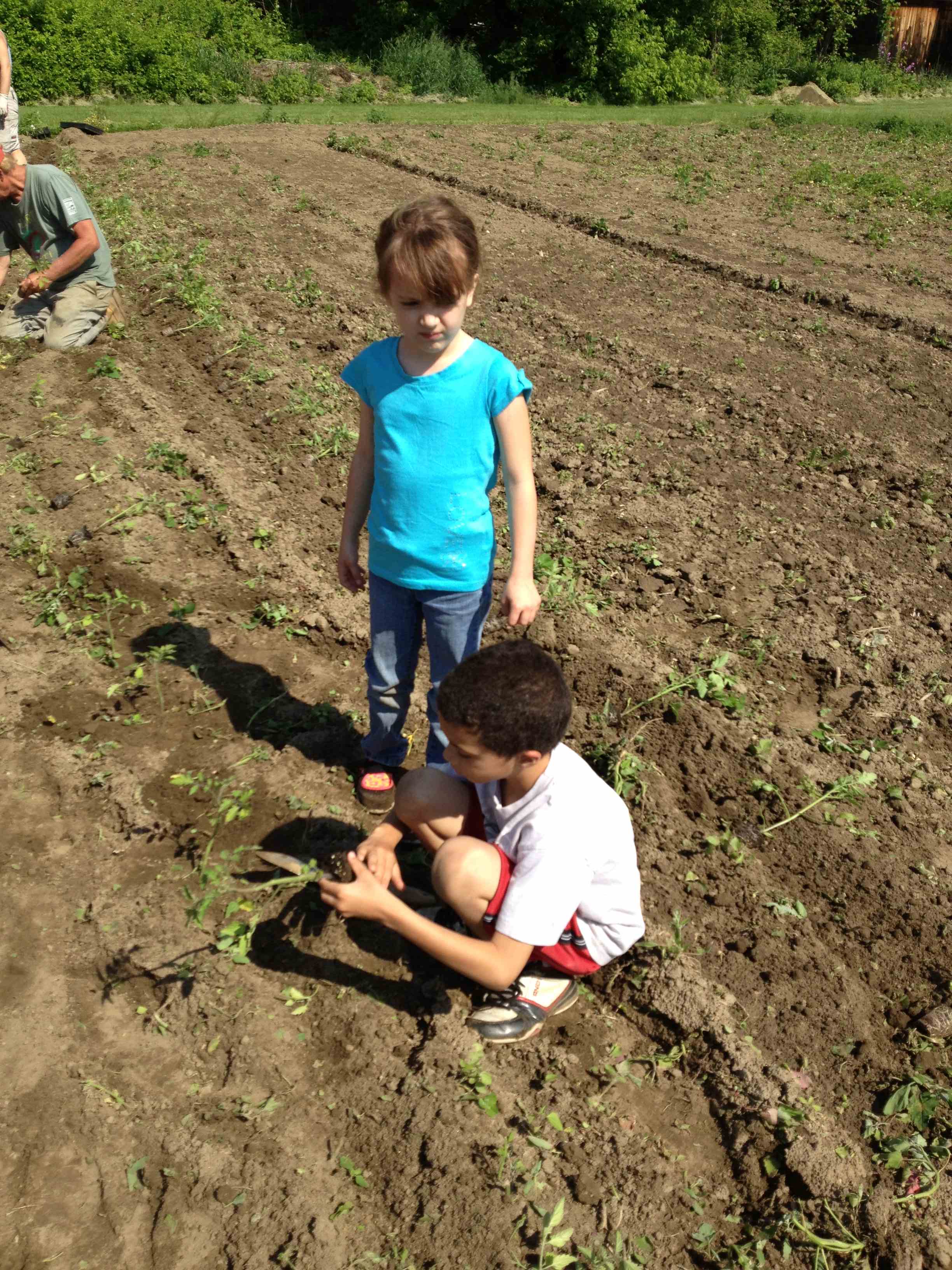
Planting basil grade 42nd plant tomatoes

Popcorn planting lesson


2 Comments

Third Graders Dive into Good Gardening Practices

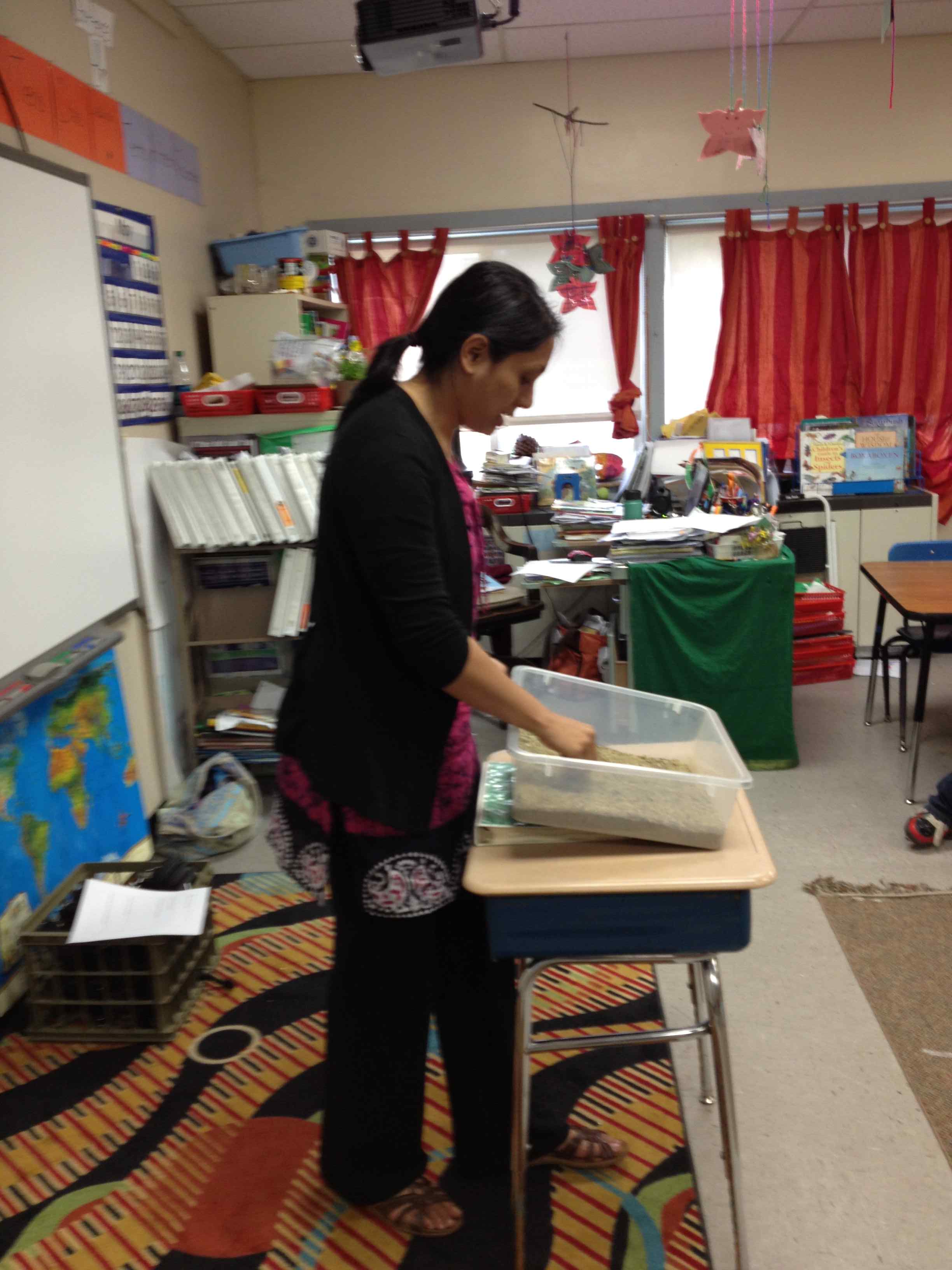
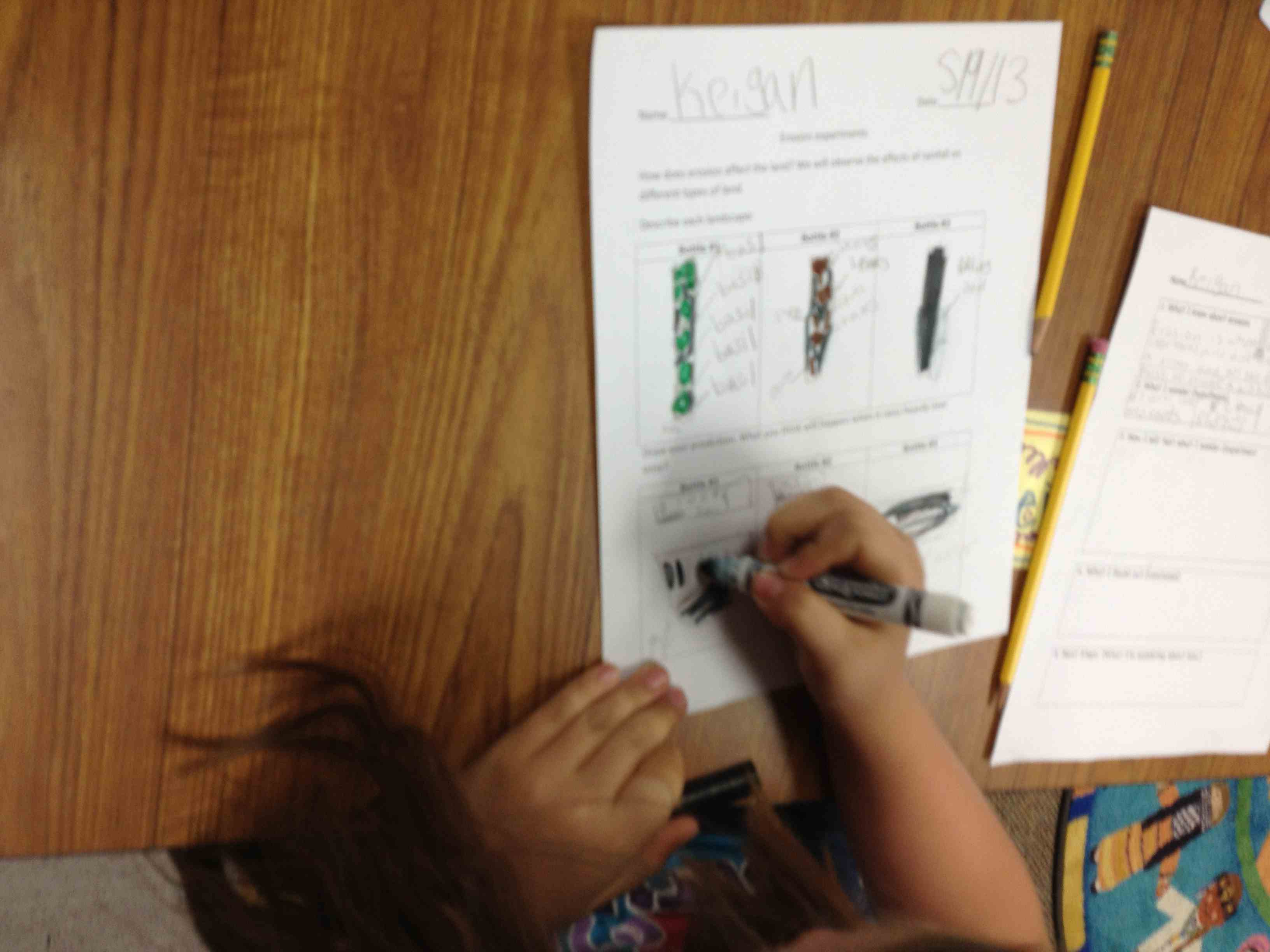
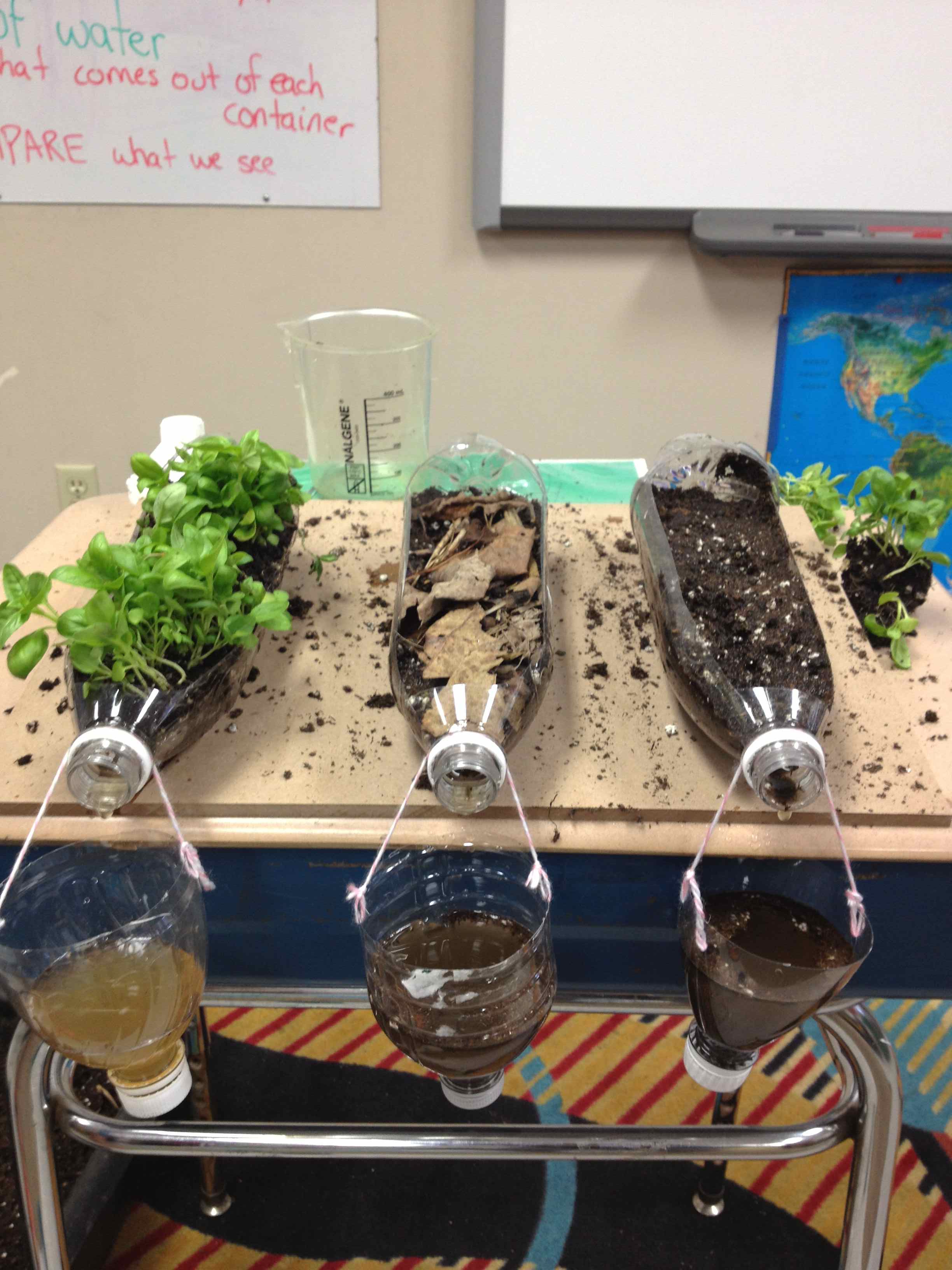
This month the third graders studied the effects of erosion by observing it under three different mini environmental conditions. They had had an introduction to the concept of different forms of erosion earlier in the week. Their teacher, Atasi Das, reviewed their observations of the effects of wind and water on sand. Then we began a new experiment, using three cutoff  clear plastic bottles and the tops of three other bottles.


atasi demonstrating review of erosion


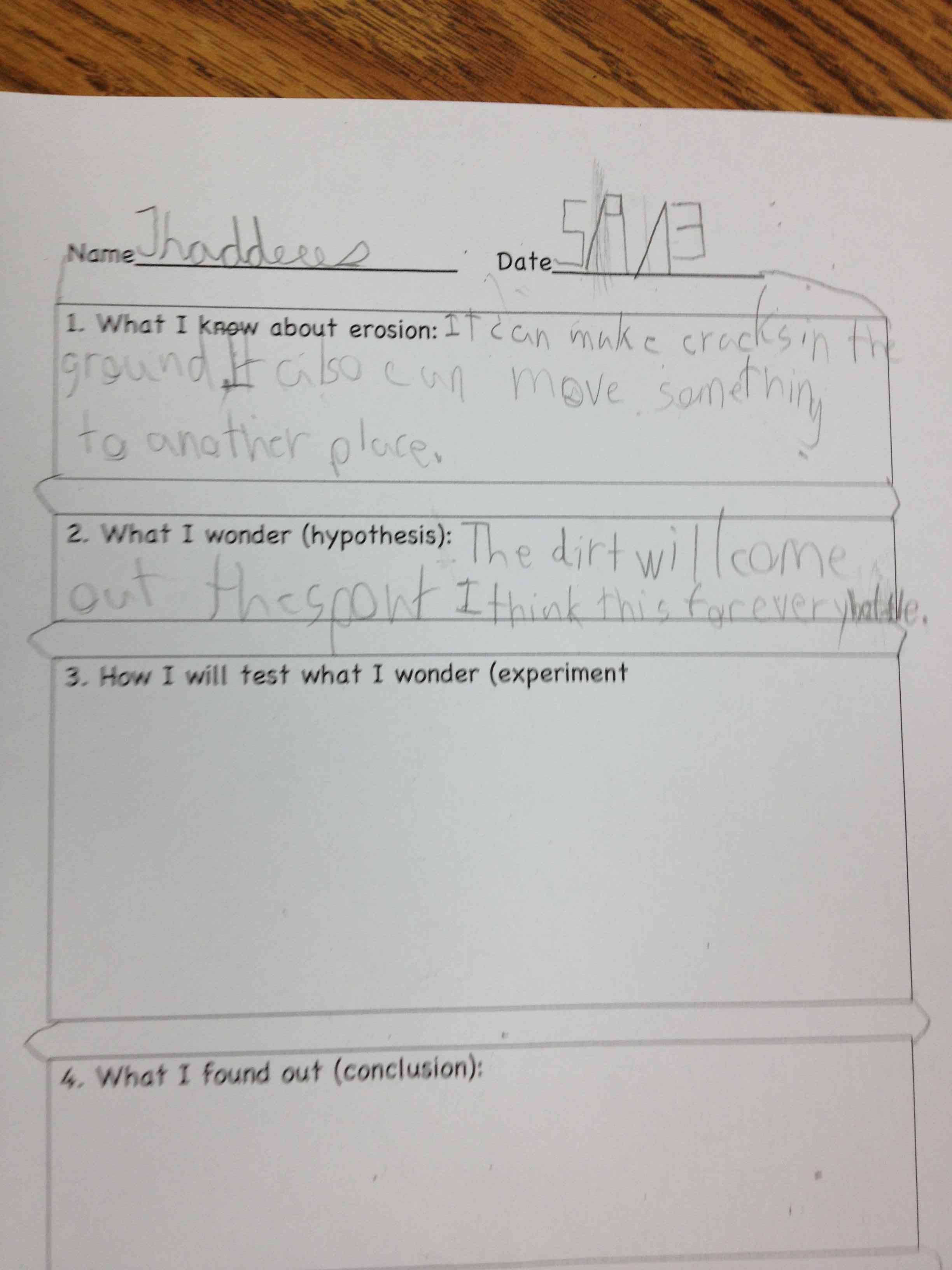
what I know about eroeion, what I wonderobserving different runoff


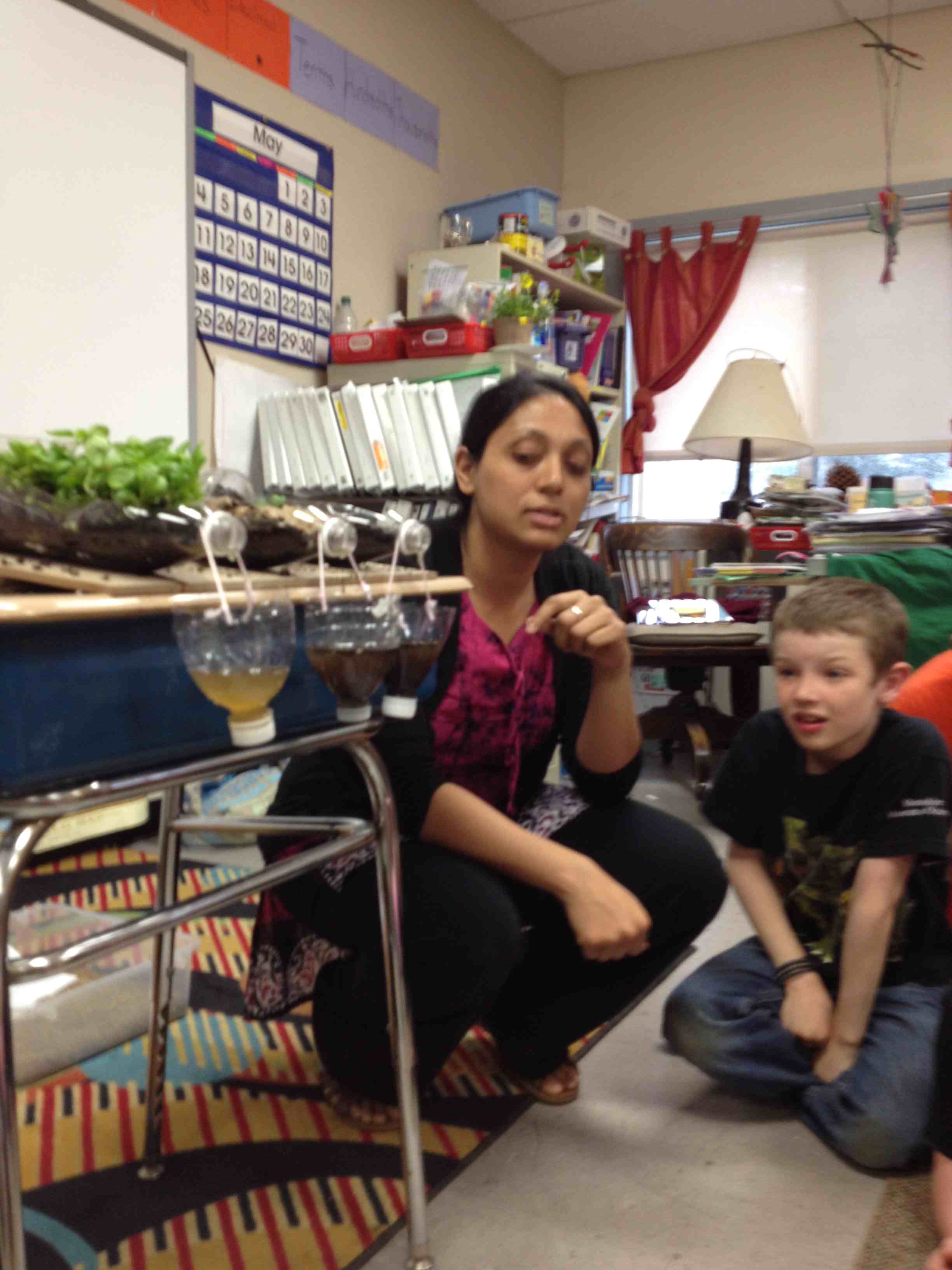
A small group of growing basil plants was fit into the first bottle. In the second bottle, forest floor matter was spread on top of potting soil. The third bottle contained only potting soil. Students were asked to discuss what they thought would happen if an equal amount of water were poured through each environment. They wrote about what they knew and what they wondered about this activity. They predicted what they thought they might observe when the water drained off.

Then their teacher, Atasi, poured water into each environment. You can see the results in the bottle tops that caught the ‘runoff.’ Students formed their conclusions about how to protect earth from water erosion.

recording observations erosion experiment

final results

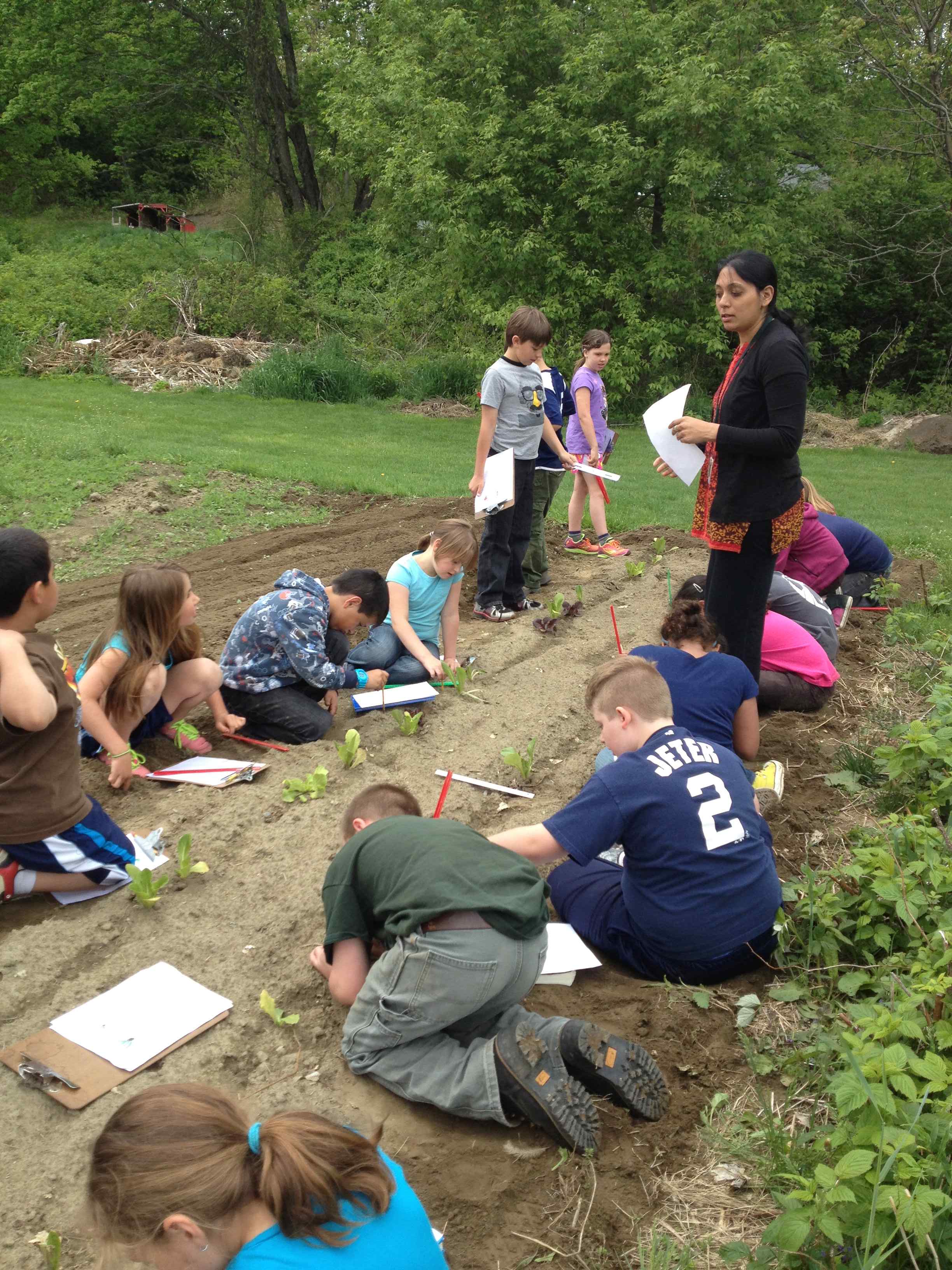
These curious and thoughtful students are also running an experiment in lettuce growing. Each student has adopted two lettuce plants: one that was started at Harlow Farm and one plant that was started by the After School Program. At least once a week they walk out to the school garden to measure and record changes in their plants. One student noticed that his plant had grown from 3 3/4 inches to 4 1/4 inches tall. He computed the amount of growth that had occurred in a week.

measuring lettuce


recording data lettuce growth


Leave a comment

BLIND TASTE TEST

shaws brand

Westminster Organics

Westminster Organics

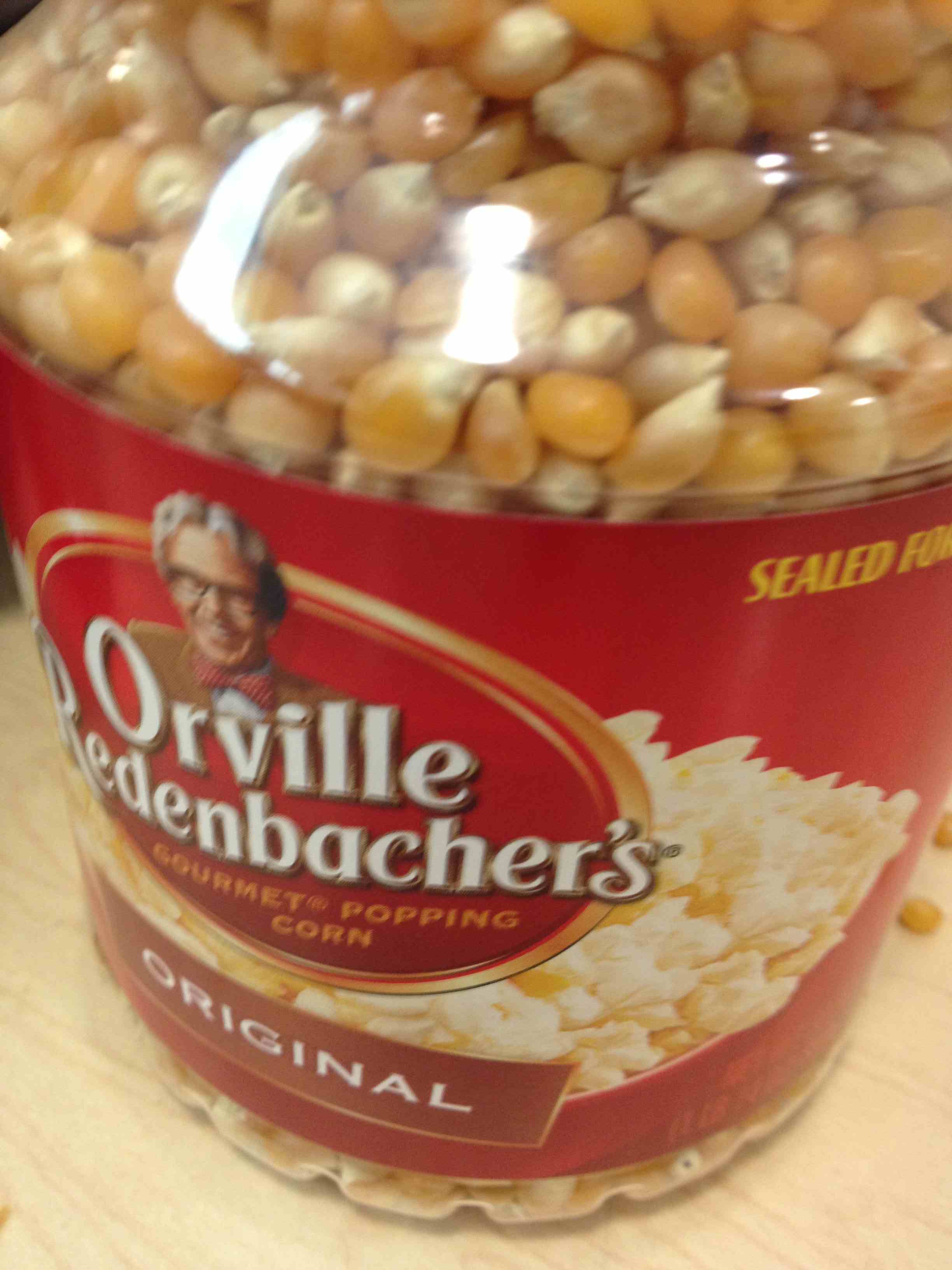
Orvilles brand

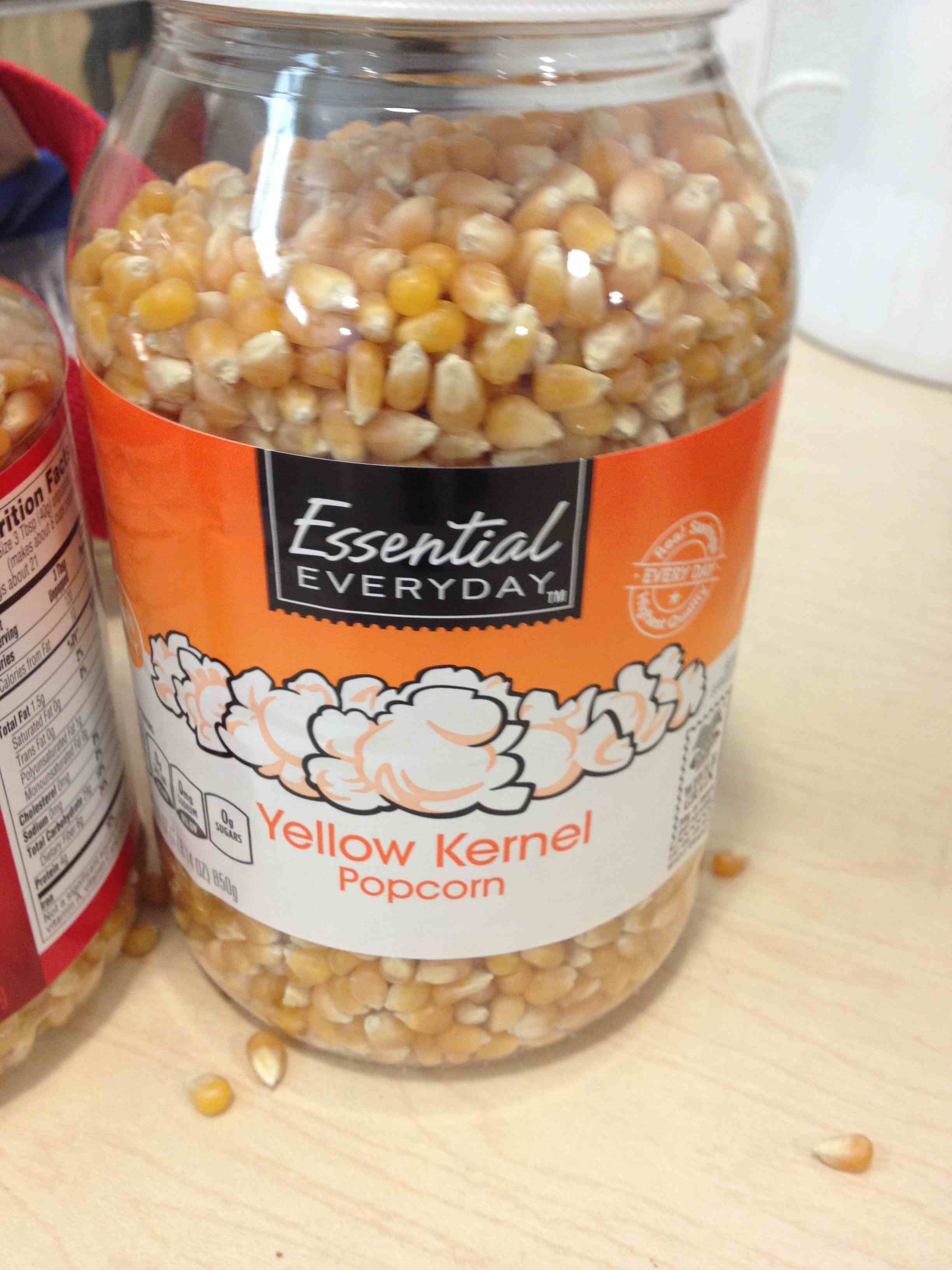
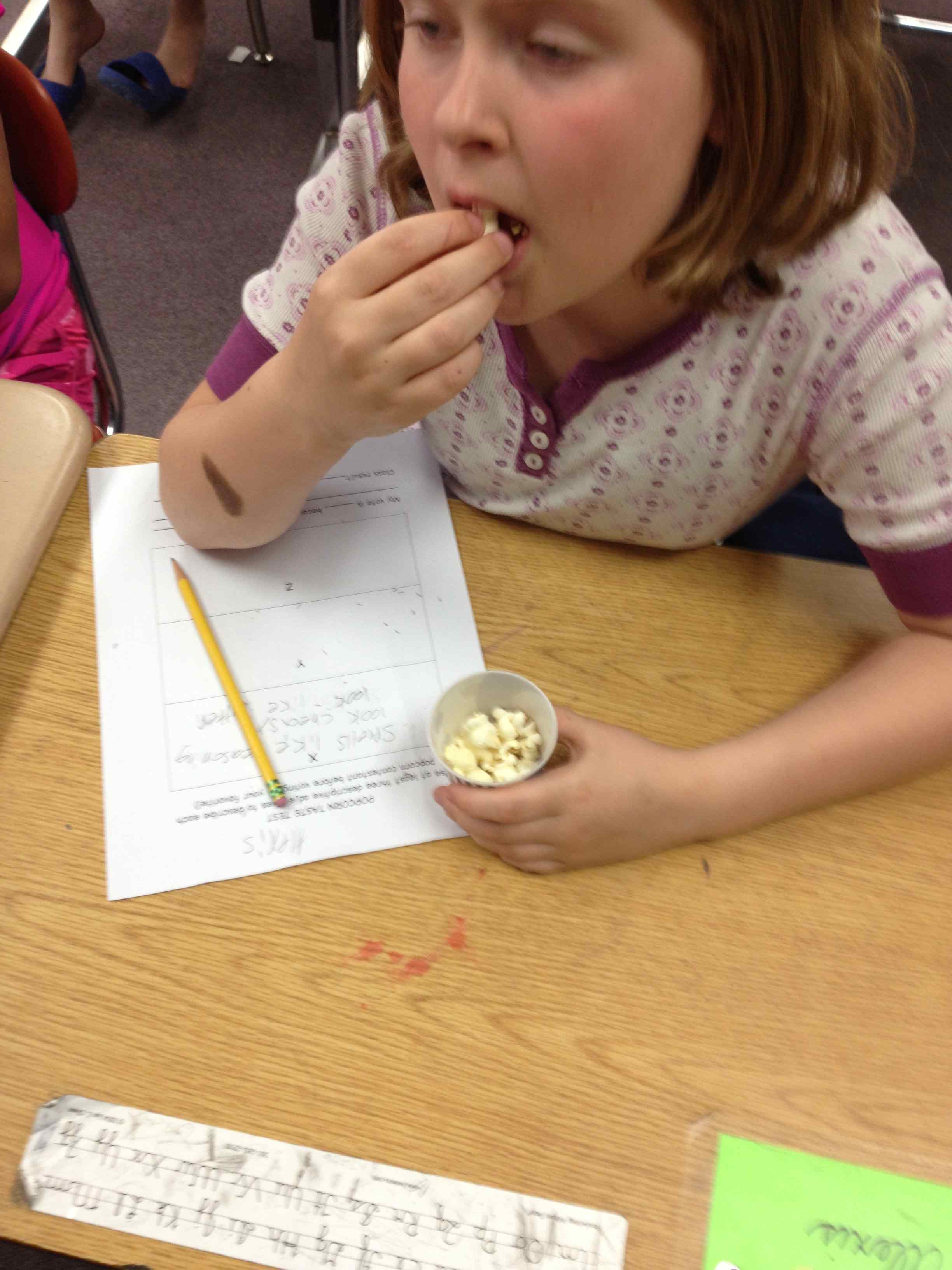
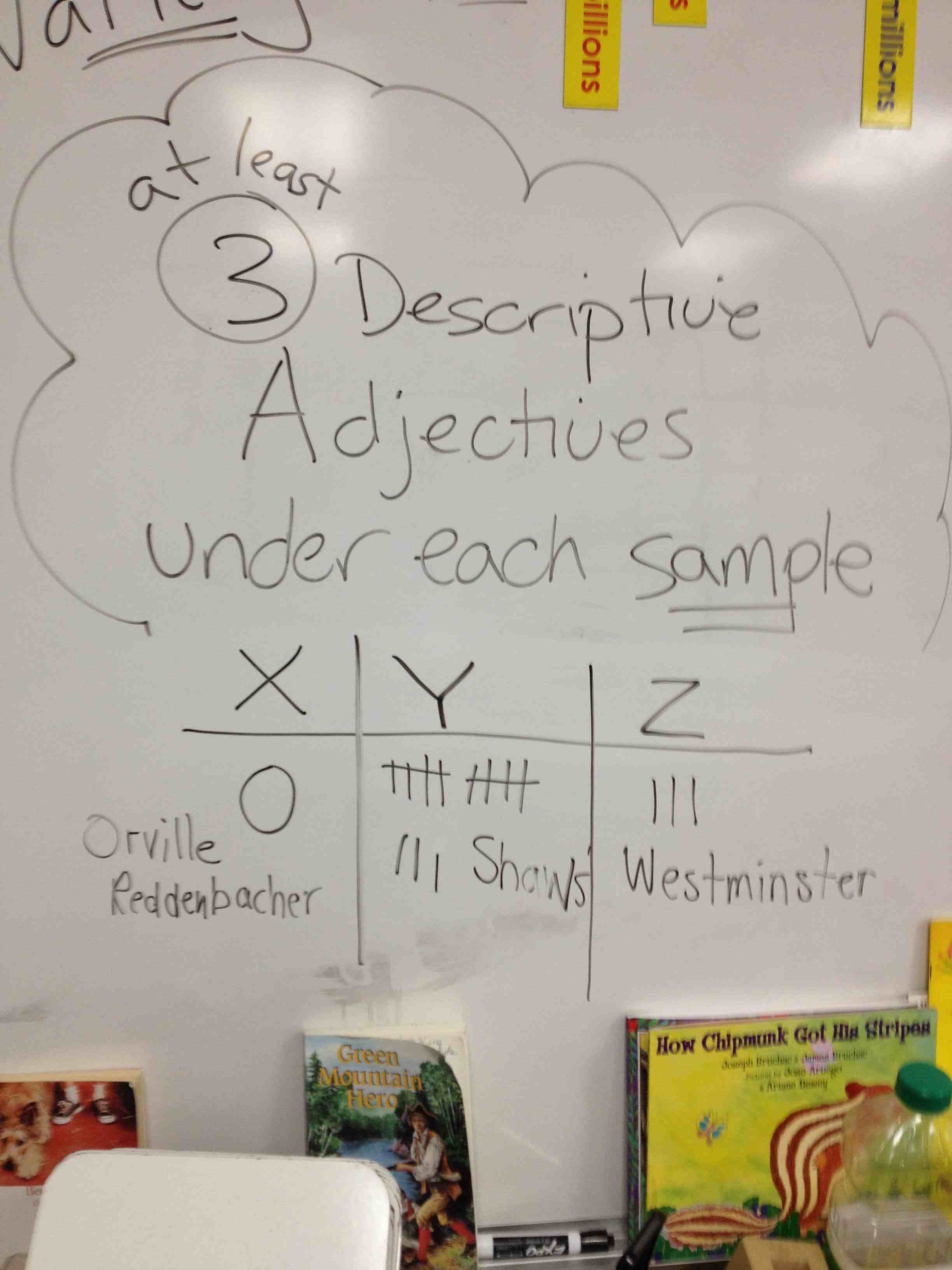
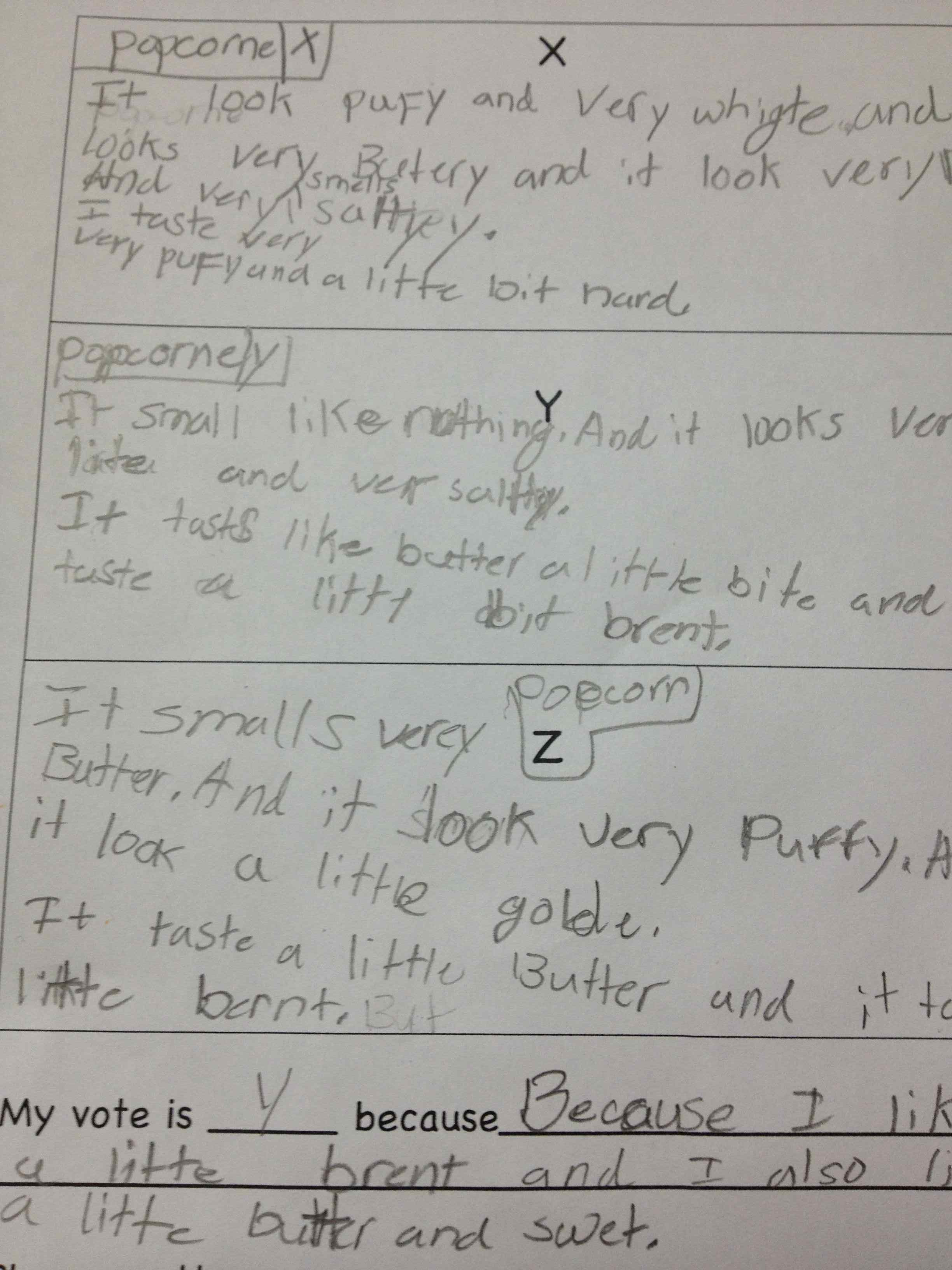
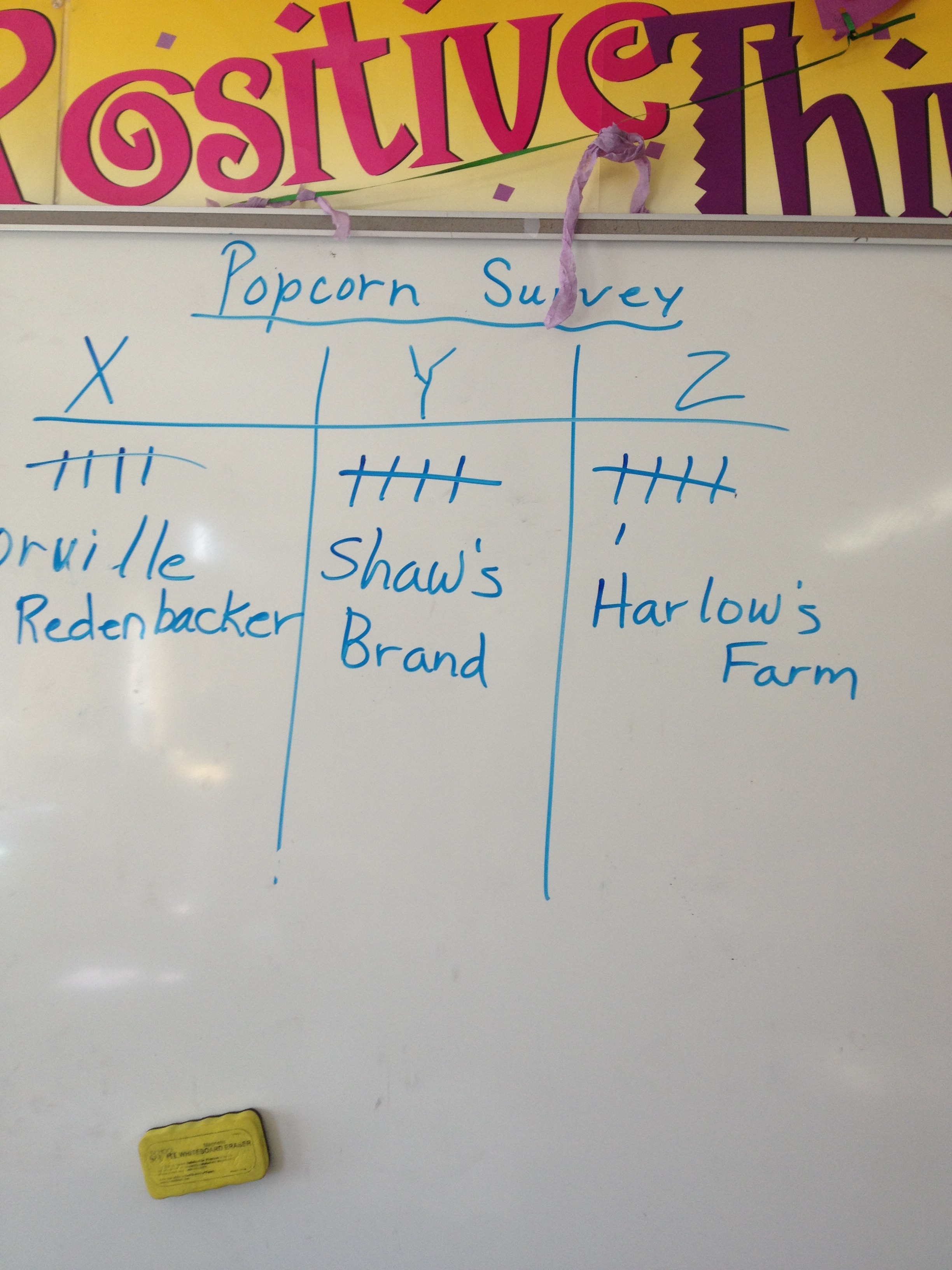
Where does your popcorn come from and does that make a difference? The fourth grade scientists were at it again last week. They conducted a blind taste test of three varieties of popcorn. Westminster Organics was matched against the great Orville Redenbacher and Shaw Supermarket’s finest. Without knowing which was which, students had to use at least three descriptive adjectives in their written  observations. Then they tried each for taste and texture……warm overtones of earthiness, anyone? After testing all three, each student voted on his/her own favorite popcorn. The results of each class are listed below. In one class Shaw’s was the top choice; in the other fourth grade, Harlow’s Organic popcorn won by a whisker! This is a fun experiment to try with your family.

tasting popcorn

Class results #2

student response popcorn taste testClass blind test vote results


Leave a comment

POPCORN STORAGE AT WESTMINSTER SCHOOL

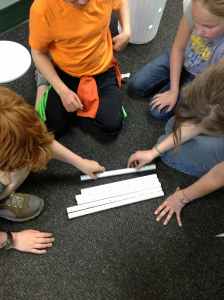
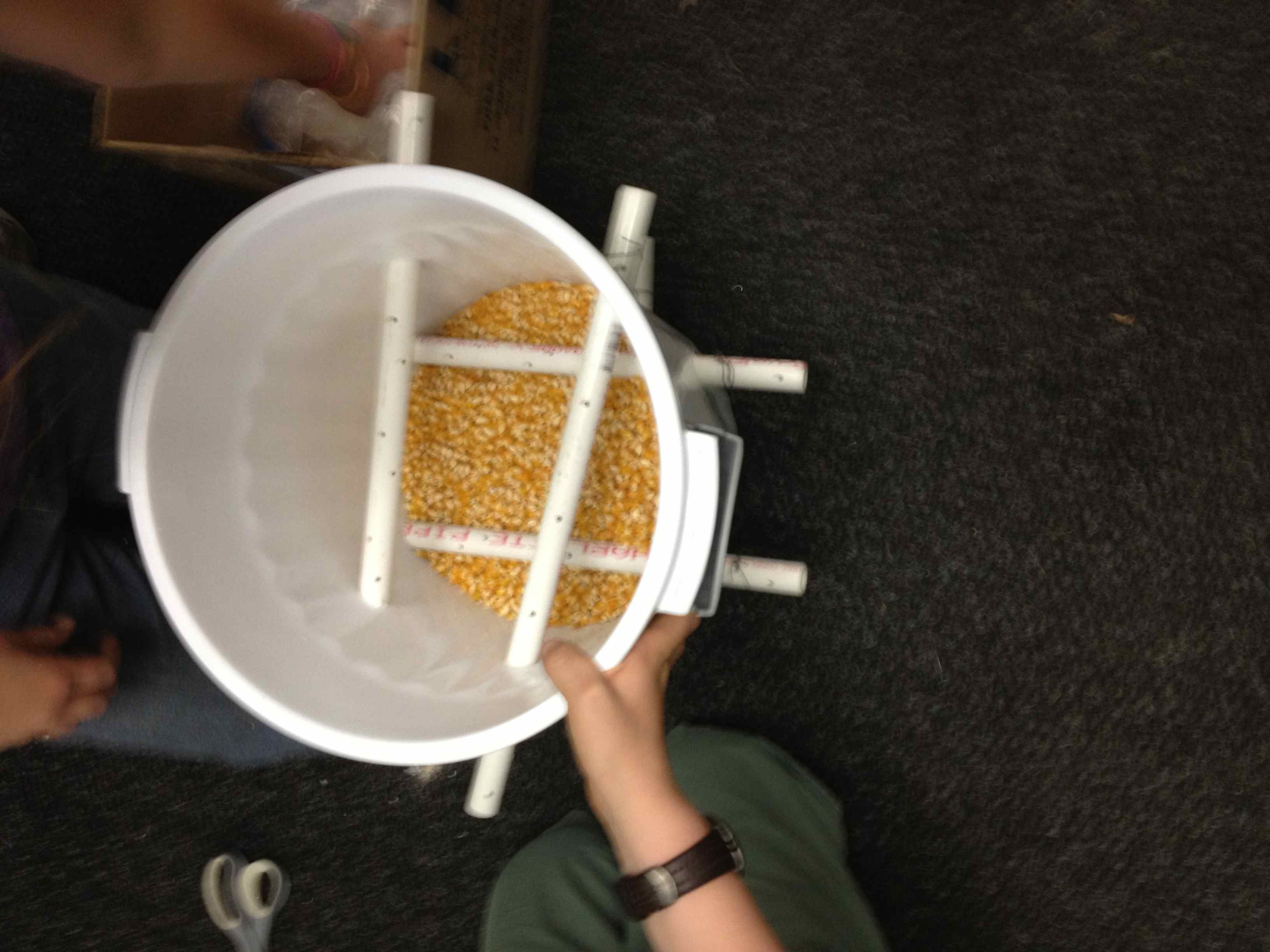
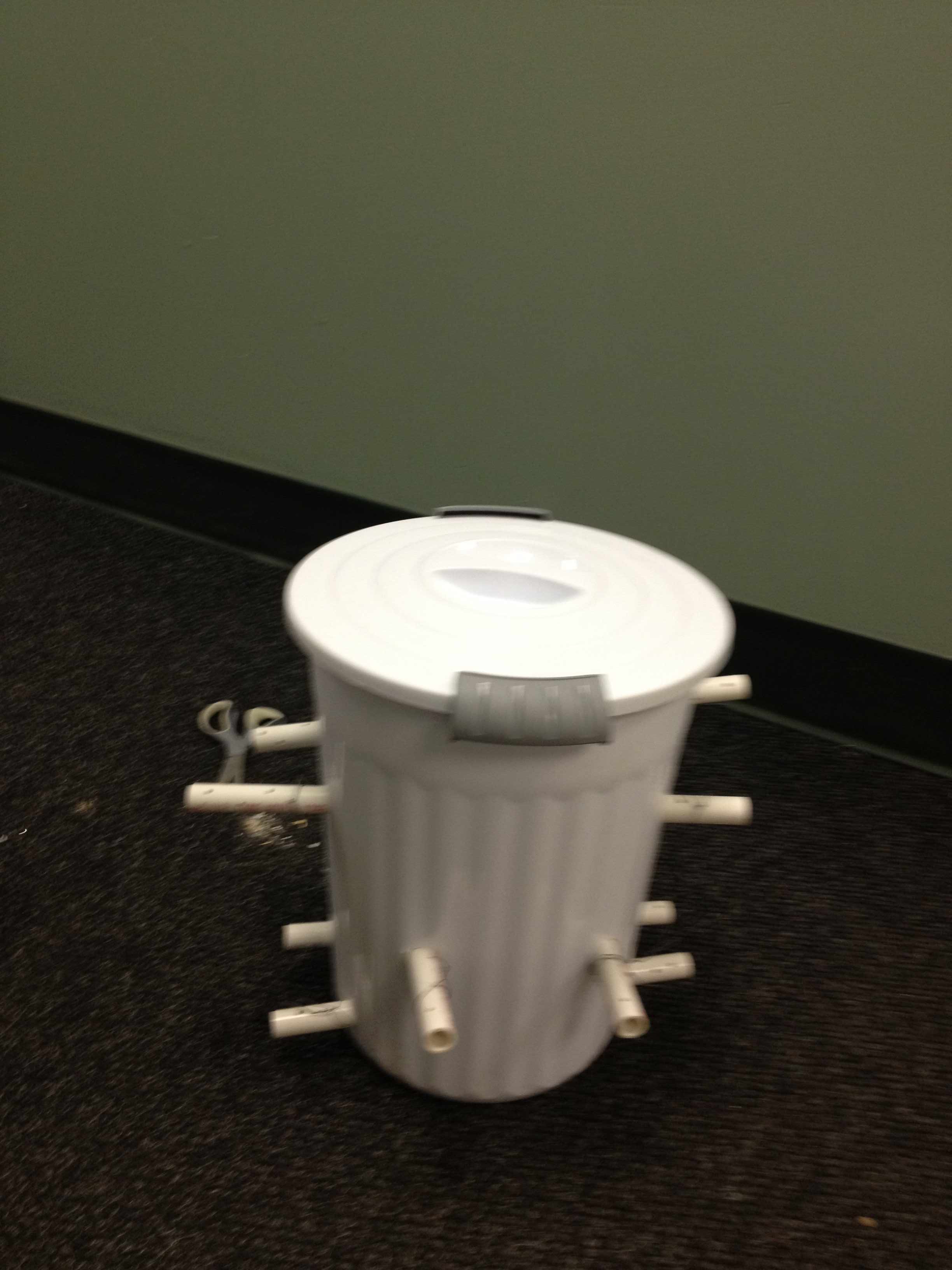
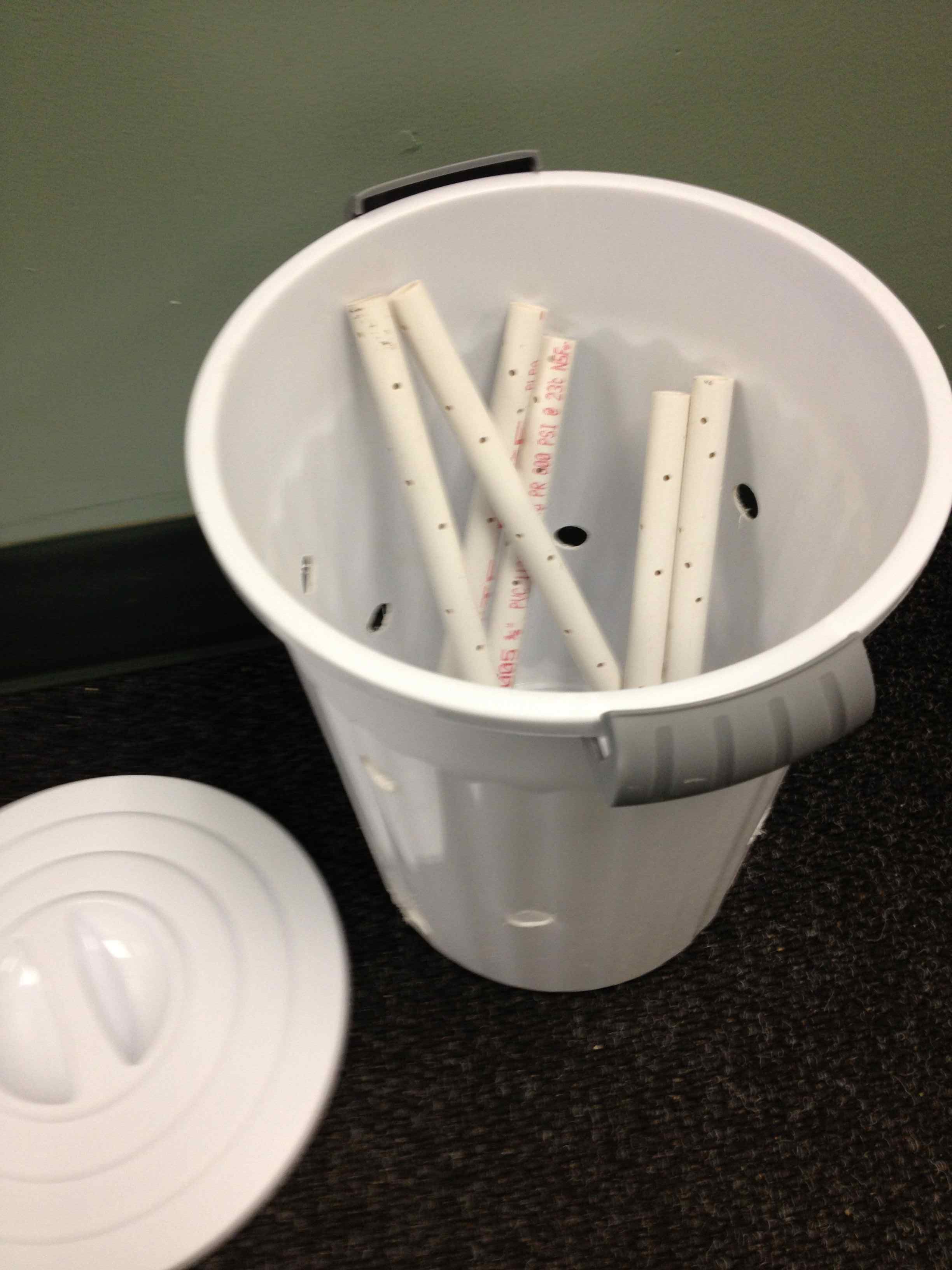
In an earlier post, our fourth graders took a spring field trip to the Harlow Farm. They saw an antique popcorn kernel remover, still in operation. They also saw an innovative way of storing popcorn in a ‘sealed’ container that allowed for the airflow that popcorn kernels need for curing. We went back to school and tried to replicate this storage design. I predrilled holes in the PVC pipes after precutting them. I also drilled holes  the mini rubber trash container. A team of fourth graders put their heads together to figure out assembly of our own school popcorn storage unit. The way they worked together was impressive!team workpopcorn stored
assembled cntainerunassembled container


Leave a comment

April Gardening at School

Garden spring cleaningJourney North tulips

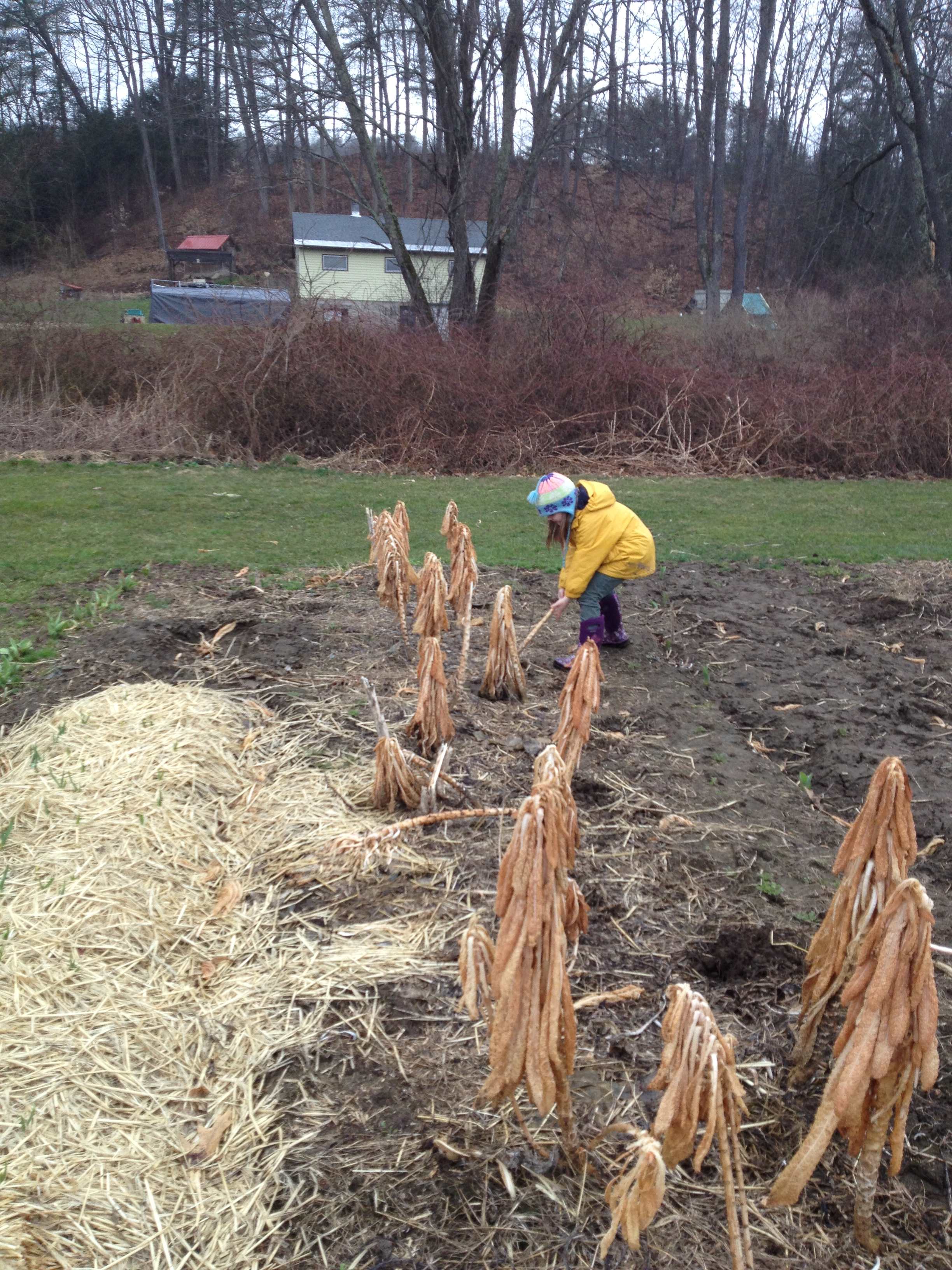
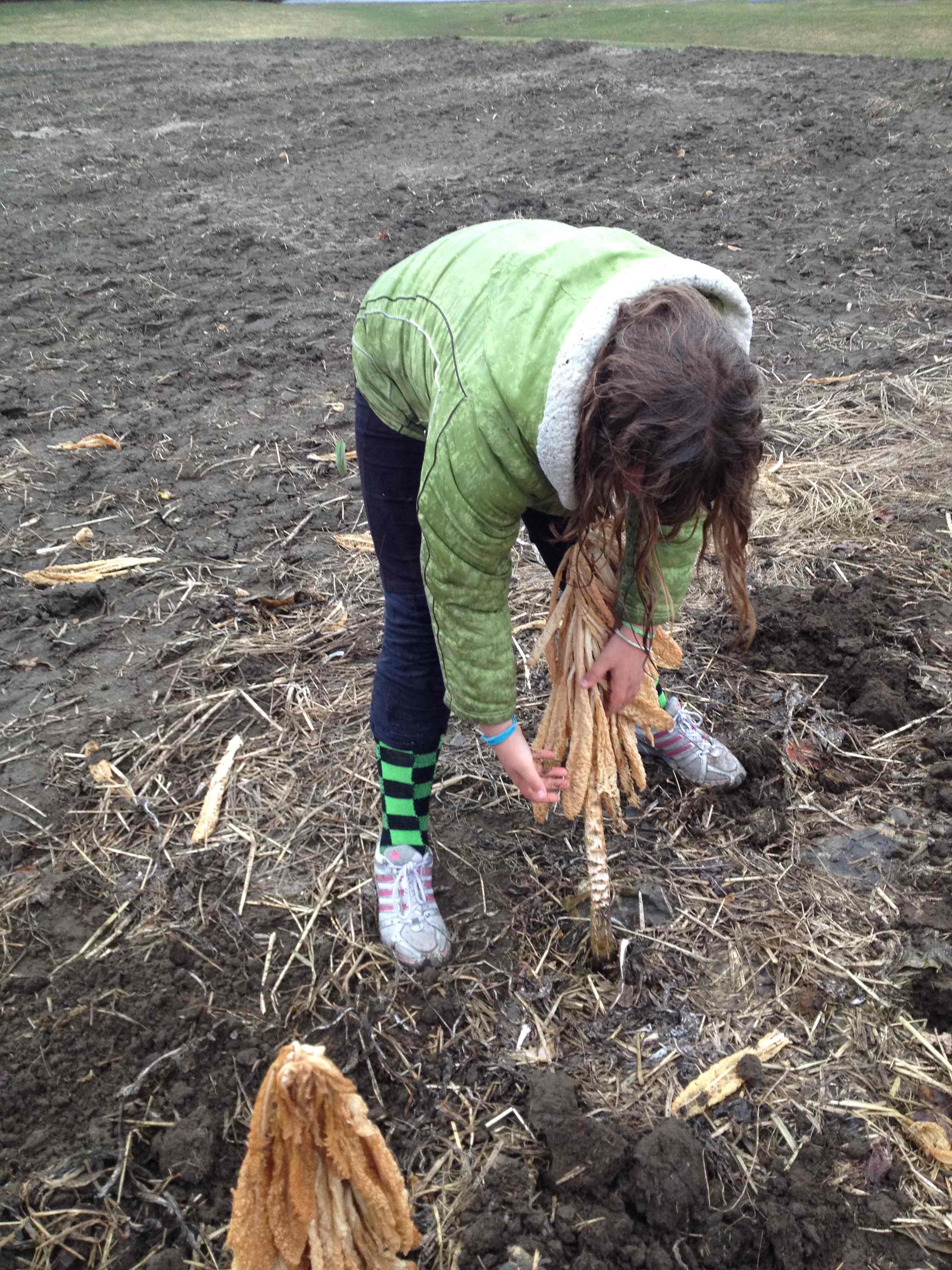
We’re getting our garden ready for some early additions to the salad bar at school! The other day a team of first and fourth graders cleared away the old kale. Can you see the garlic sprouting up from under the straw? Journey North tulips are adding their crimson touch to our garden palette.
Children planted sugar snap peas. These were direct sown, 2 inches apart, into the warm soil I tilled up last week. This week lettuce and maybe baby kale will be added.

pulling up old kale

planting sugar snaps

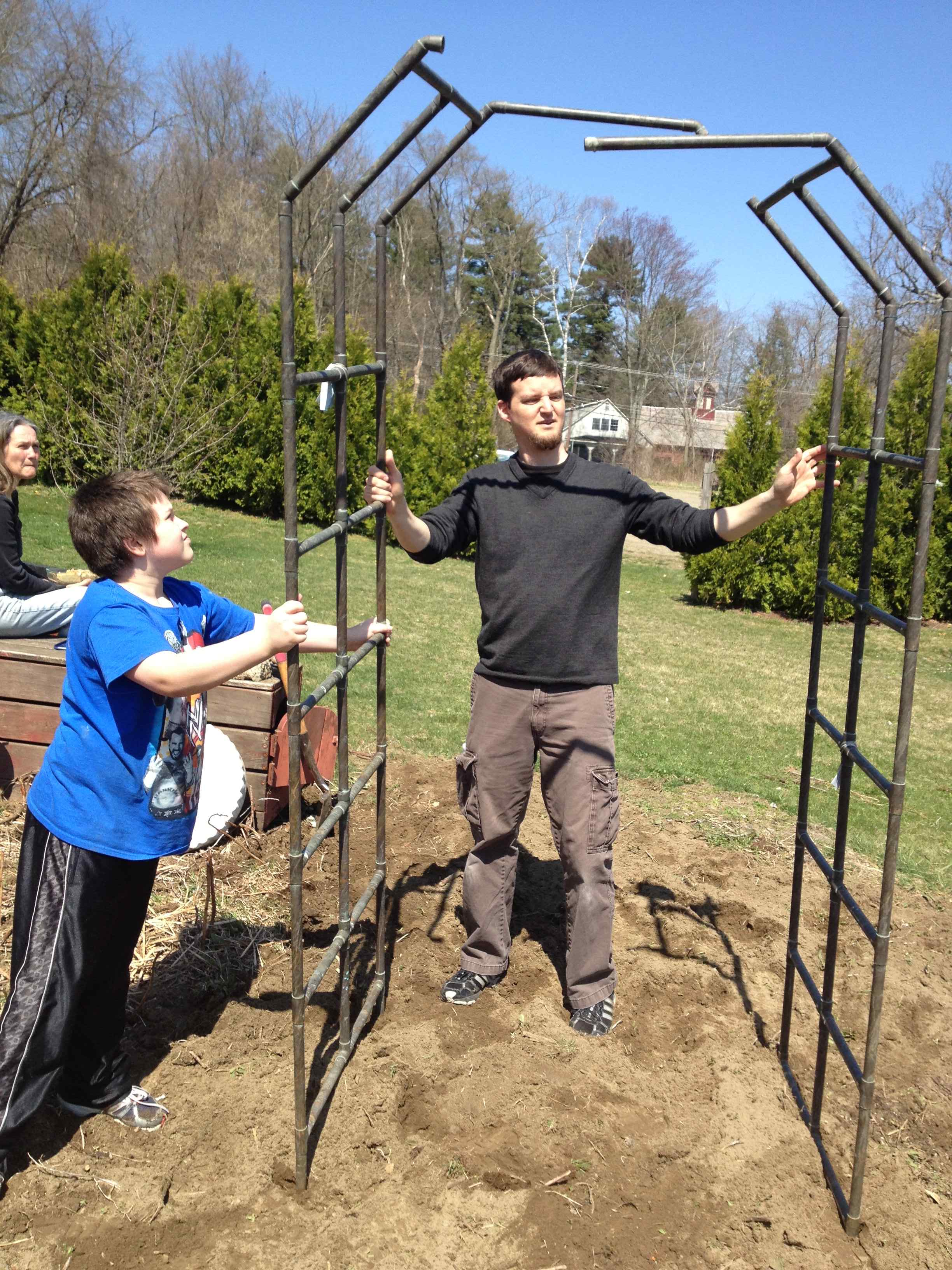
Paul and Ron put up the arbor

Two friends wandered out from school just when the arbor needed to be put into place! We’ll try planting sweet peas (the flowering non-edible kind) around the arbor this year. It’s so wonderful to imagine the beginnings of a new growing space each year. Students in the After School Program are working on their dream garden designs.

We’re also preparing seedlings for the garden by starting them at school and giving them a boost at Harlow Farm greenhouse. So far we have mustard, basil, and lettuce seedlings, as well as the start of a butterfly garden (echinacea, zinnia, marigold and sweet peas). We’re loving this warm sunny weather…more to come!

mustard basil seedlings


Leave a comment

MAKING MOMOS: DUMPLINGS FROM TIBET AND NEPAL

sealing dumplings

sealing dumplings 2

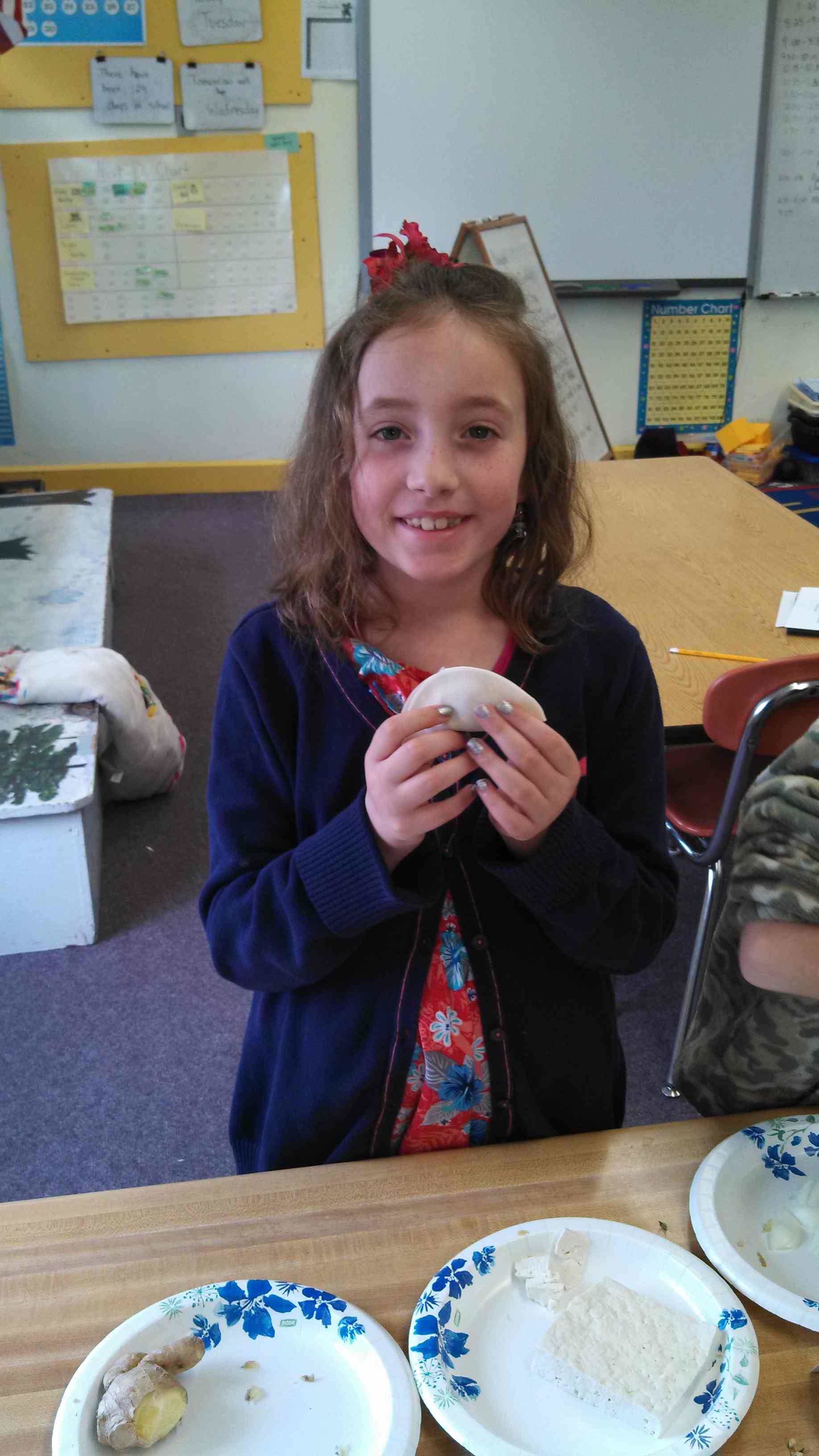
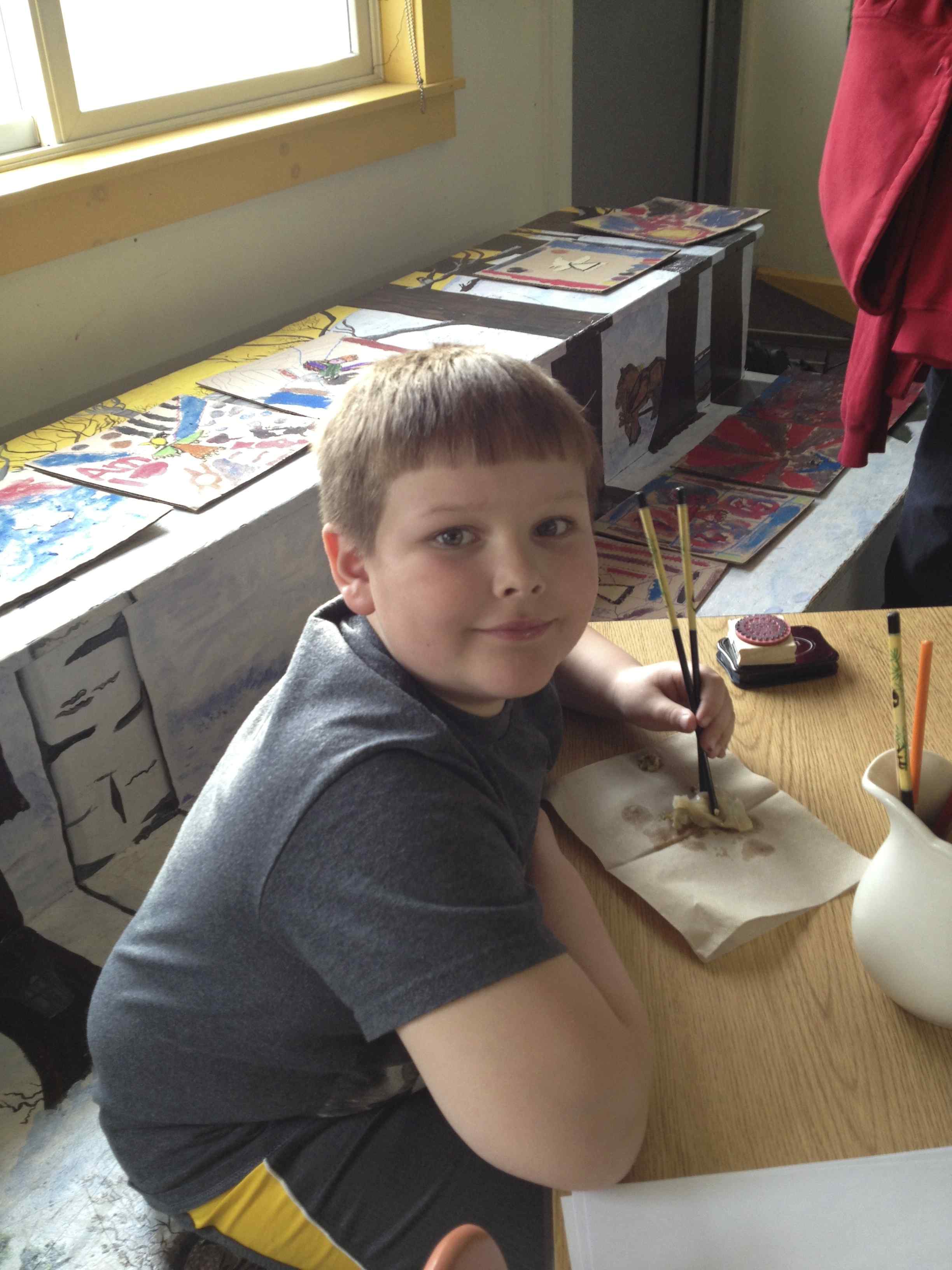
happy dumpling chef


The third graders were working hard to finish their research reports on Nepal, beloved country of their teacher, Ian Levy. He  spent a year living there before coming to Westminster. I learned a lot just peering over their shoulders as the students were working.  There was an incredible slideshow of his adventures running on the smart board screen as the students worked.

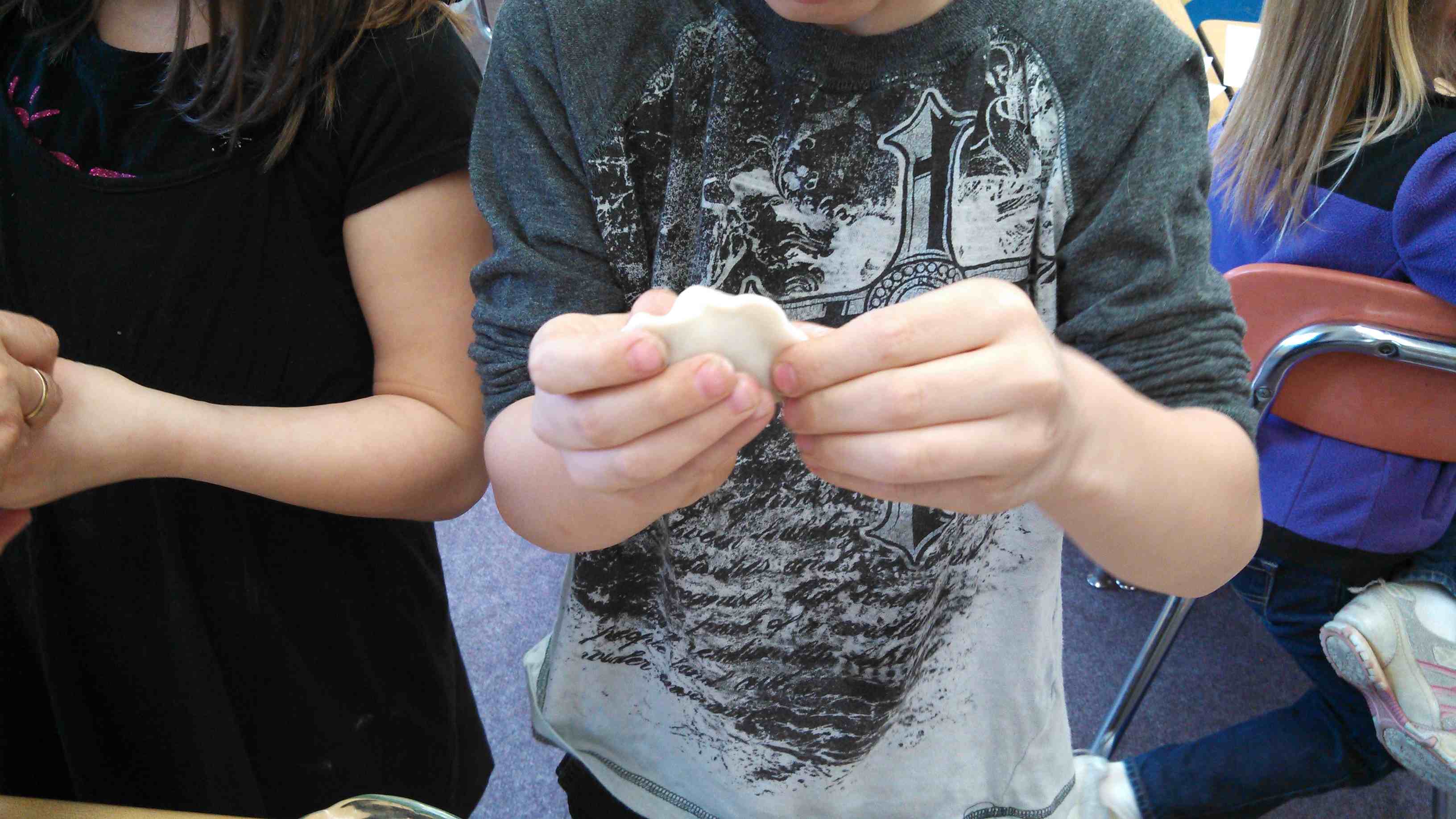
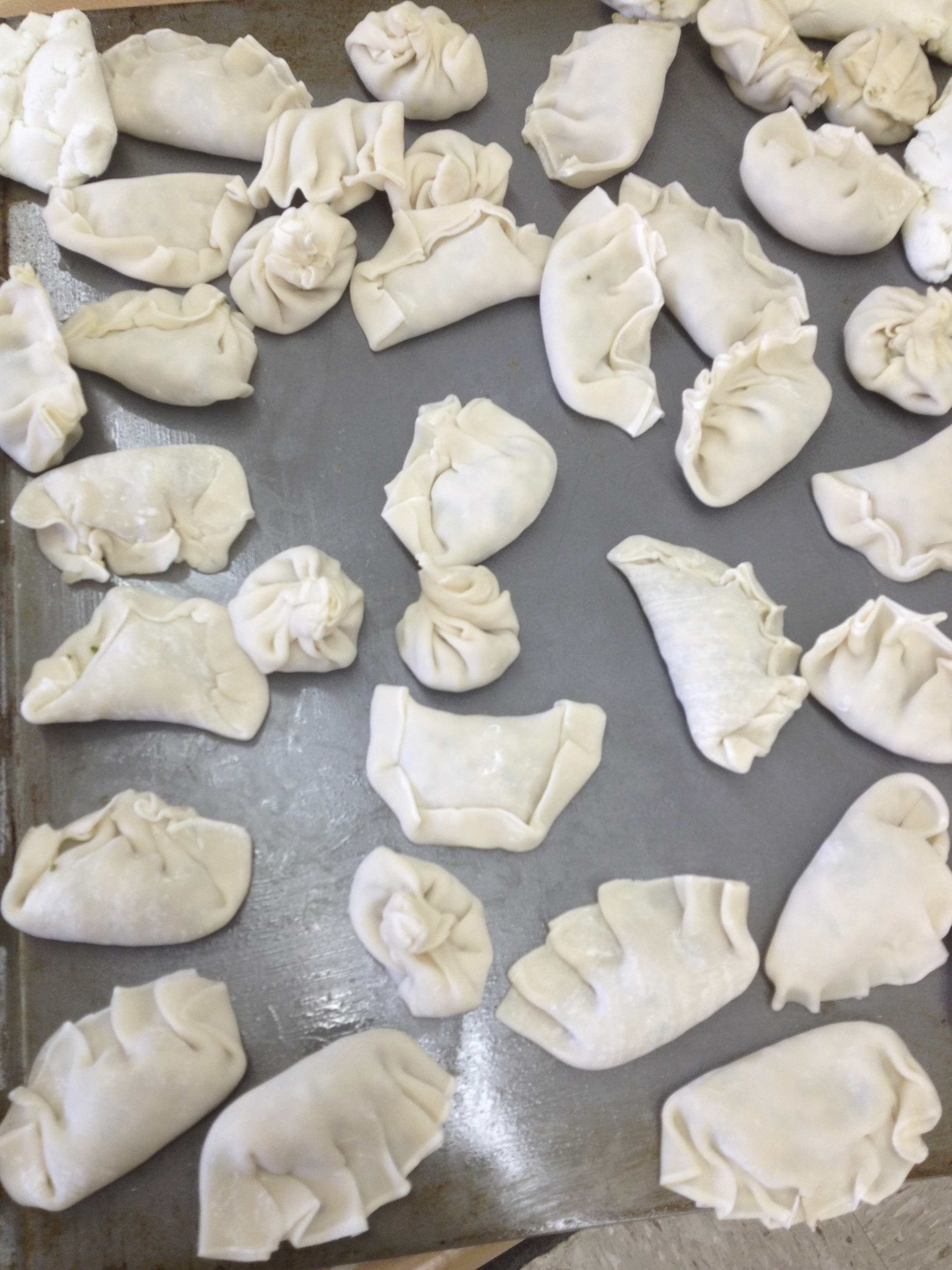
I called  few at a time to the classroom kitchen to learn with me about  how to make a favorite food served in Nepal: momos! These are steamed dumplings filled with vegetables and yak meat. Since we didn’t have a source for fresh yak, we substituted tofu. Steamed dumplings and accompanying dipping sauces are ubiquitous in Asian countries. I had learned from a Chinese visitor to my classroom years ago, how to press paper thin rounds of dough into moon shaped dumplings. She might have been skeptical about the skills of eight year olds. I was not, and the students rose to the occasion. You can find dumpling wrappers in most supermarkets. If you’re lucky enough to have an Asian market nearby, you’re sure to find a large variety of wrappers.

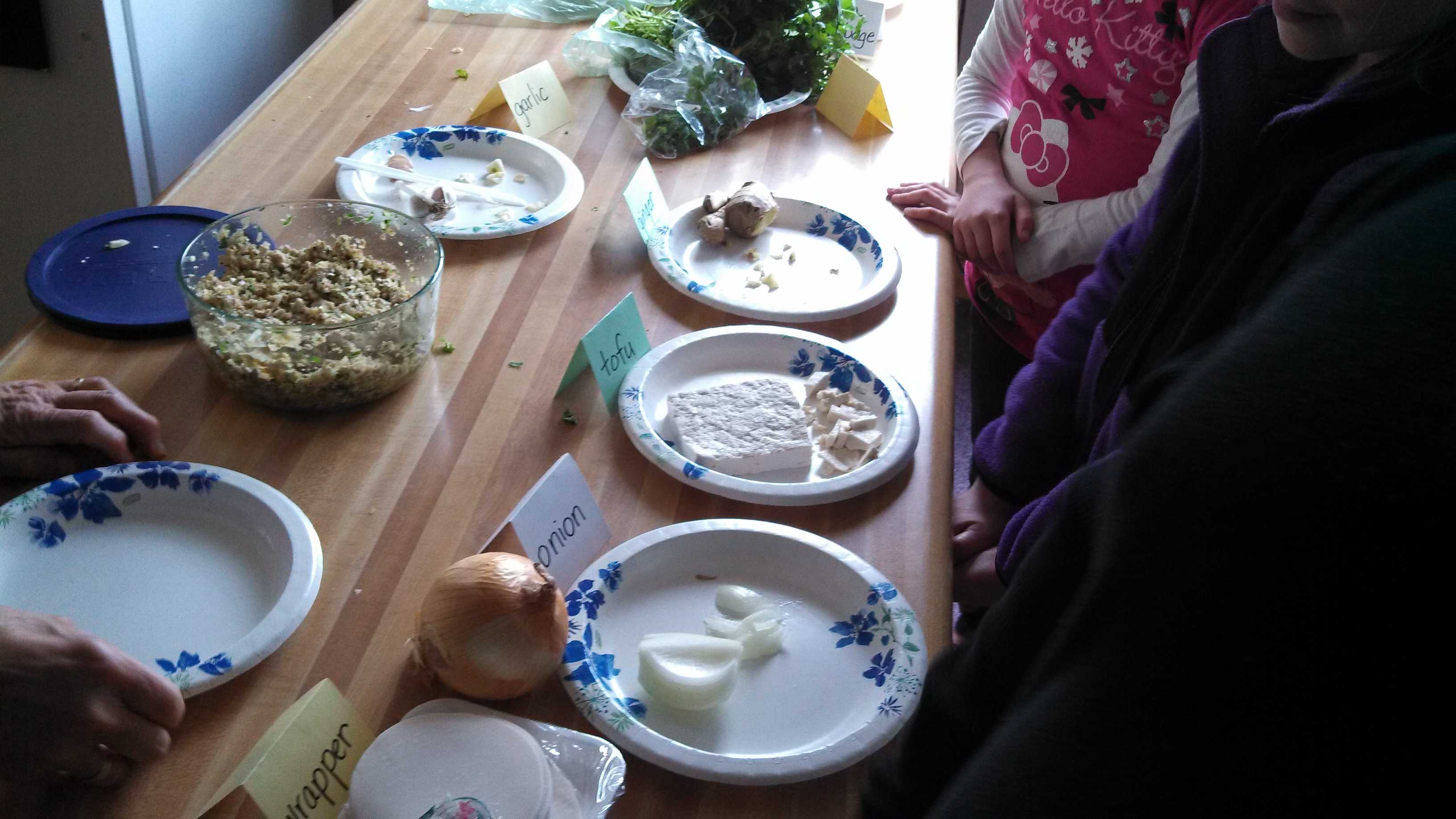
Students  observed, sketched and taste tested the  fresh ingredients that had been finely diced and combined to make the filling. They then graded ingredients by flavor. Reactions were mixed, but most students were game for learning about tastes foreign to their palates. I am a firm believer that food preparation is one of the best ways to gain an early appreciation for diversity.

ingredients

waiting for wrappers

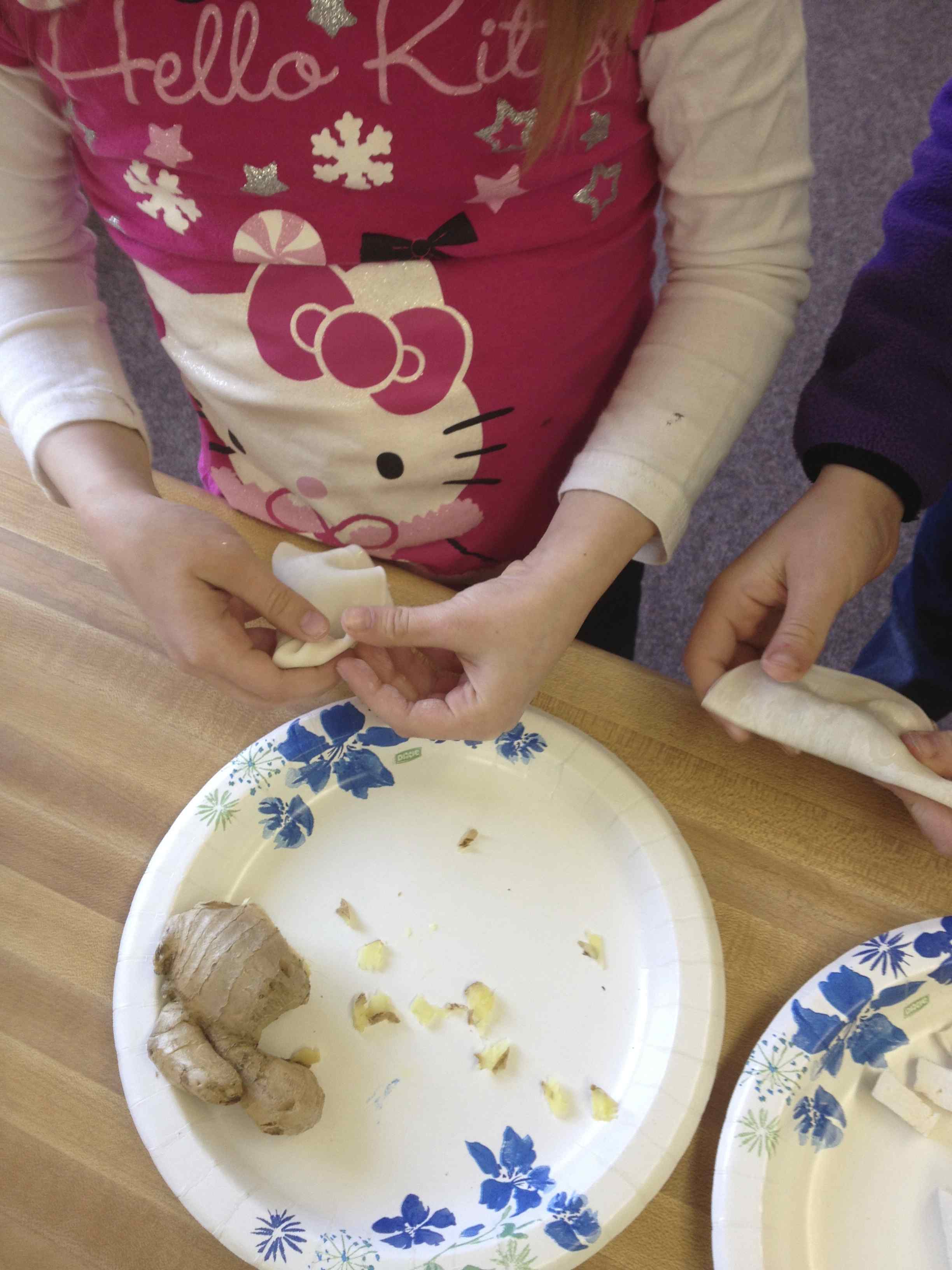
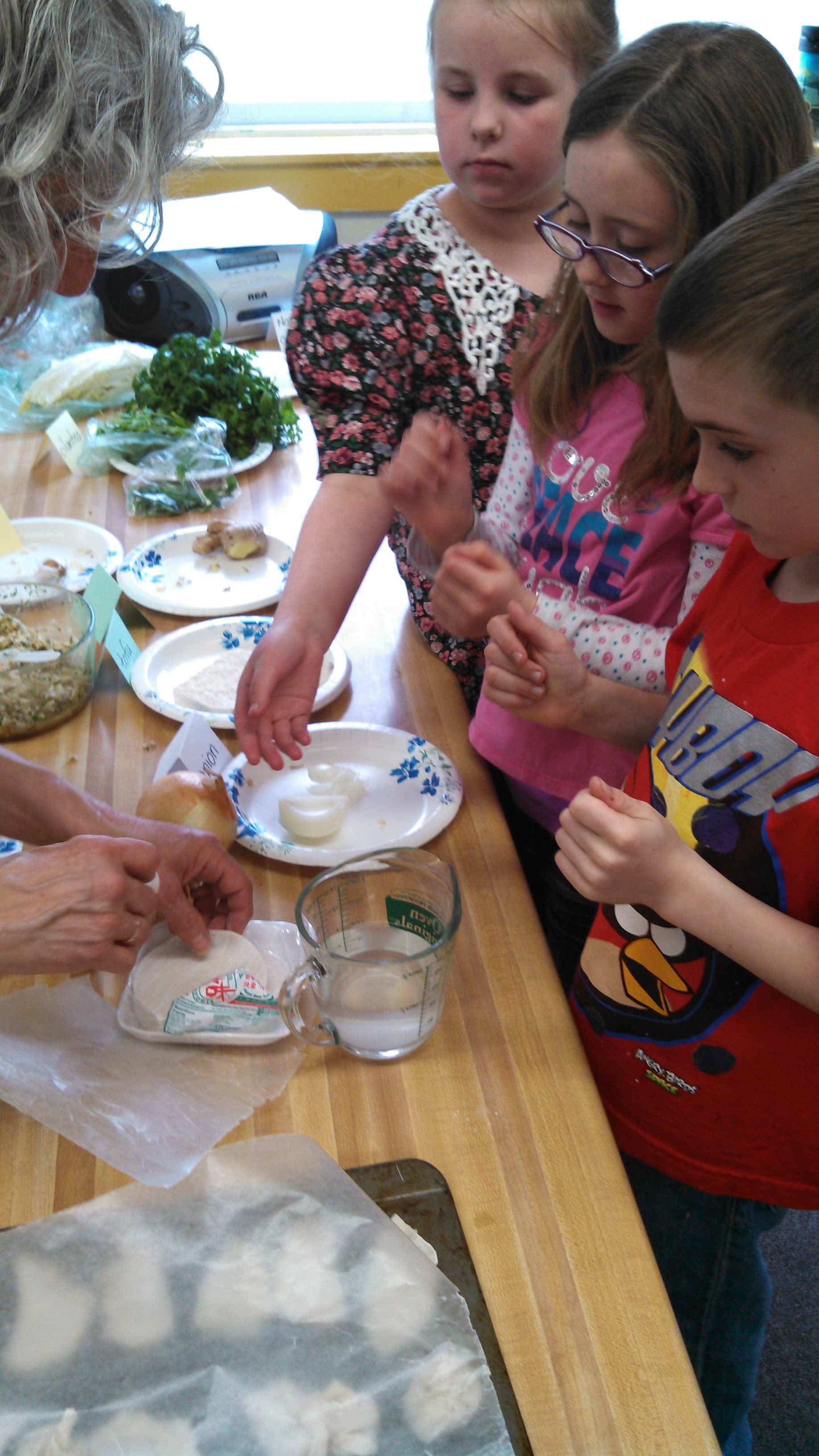
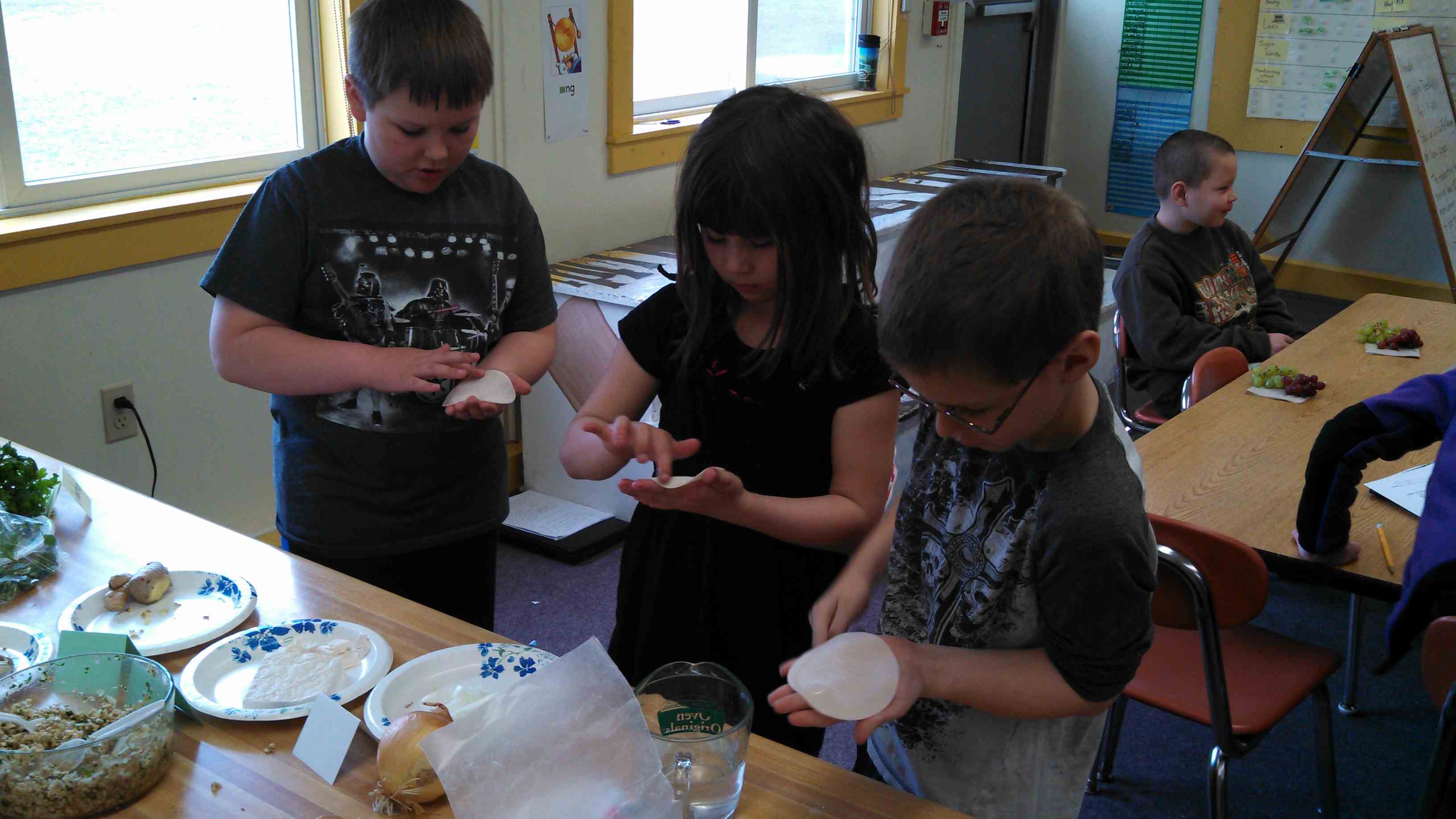
Each dumpling wrapper had to have its perimeter dabbed with water to allow the dumpling to hold together. Then, the outer edge of the filled half-moons were carefully crimped. Dumplings were placed on an oiled cookie sheet and covered with plastic wrap until we were ready to steam them.

wetting wrappers

tray of finished dumplings

We steamed the dumplings in a stainless steel steamer over a large frying pan filled with boiling water. We put a lid on the steamer. There are a variety of steamers available at Asian markets. Bamboo steamers are my favorites. You can oil a vegetable steamer and use that to steam your dumplings if that is all you have available.

testing the final product

The dumplingwere ready to eat after about 15 minutes of steaming. They tasted especially yummy when they were dipped in a sauce that was  a combination of soy sauce, apple cider vinegar to taste and just a bit of sesame oil (vegetable oil will do). A few slivers of scallion and fresh ginger  were added to the dipping sauce.

Momo Recipe:  Tibetan Momo


Leave a comment

BEST PLACE TO CURE POPCORN

discussion ensues

After visiting the farm and checking out their popcorn, fourth grade students used some of their own crop of popcorn to run some experiments.
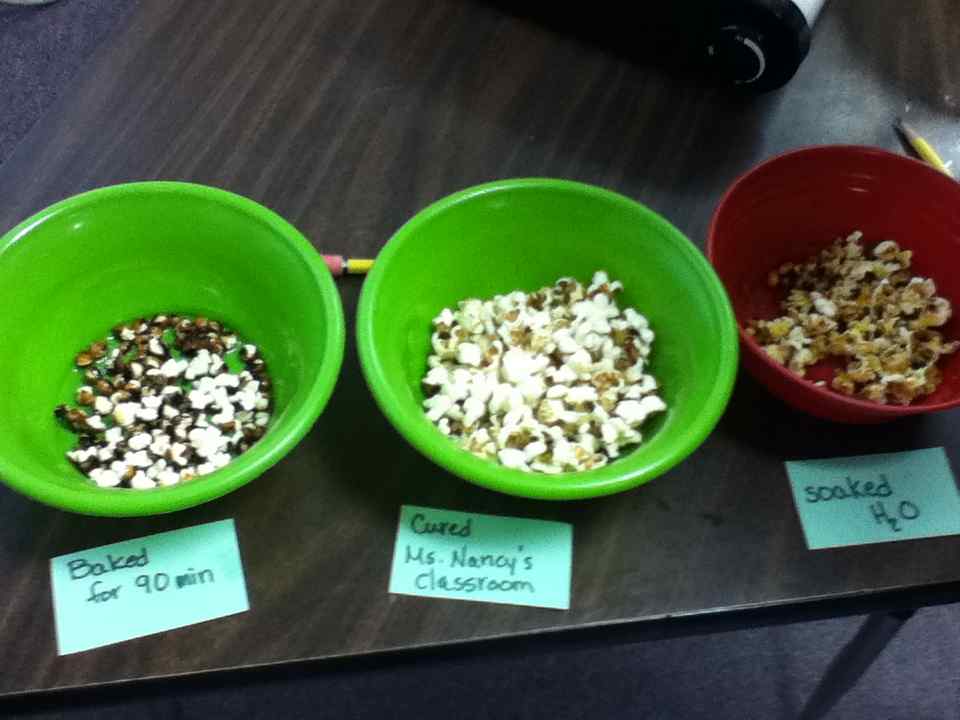
In teams, their jobs were to determine a few things about what makes a good batch of popped corn. One of their teachers, Nancy Bladyka, baked some of the kernels in a 200 degree F. oven for 90 minutes. She soaked another batch in water overnight. She used popcorn from two storage areas: the fourth grade classroom at Westminster and the unheated greenhouse at Harlow Farm.
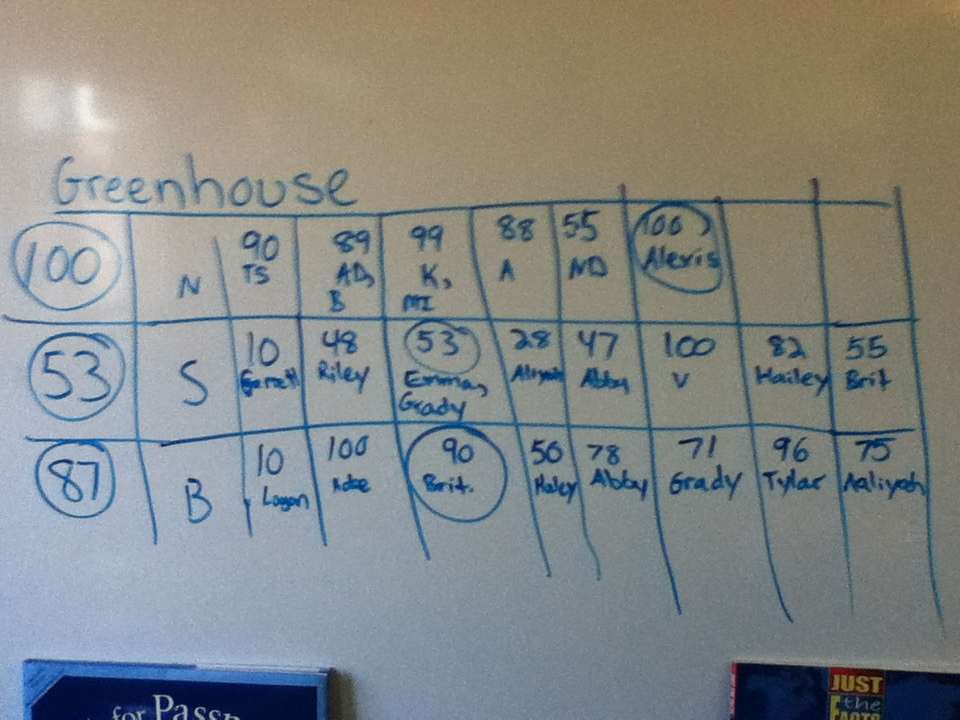
Students were asked to estimate how many kernels out of 100 would pop under each of the six conditions. If we were to run this experiment again, we would narrow down our list of variables. For now though, this is an example of how the class estimate fell out: (N:nothing S:soaked and B:baked)

Greenhouse estimates

labeled popcorn results

When the estimates were recorded and the three types of popcorn from  two locations were popped, students viewed the results. A lot of good discussion ensued.

viewing popcorn results  Popcorn experiment #1

What could we generalize from our results? The untreated popcorn stored at Harlow Farm’s unheated greenhouse over the winter popped the best. Soaking and baking also affected the quality of the popped corn as you can see in the pictures. In the near future, we’ll be doing a blind test of  three different popcorns: Orville Redenbacher, Newman’s Own and Westminster School’s Own! We’ll let you know the results!

Leave a comment

What’s Going on at Westminster Organics in the Spring?

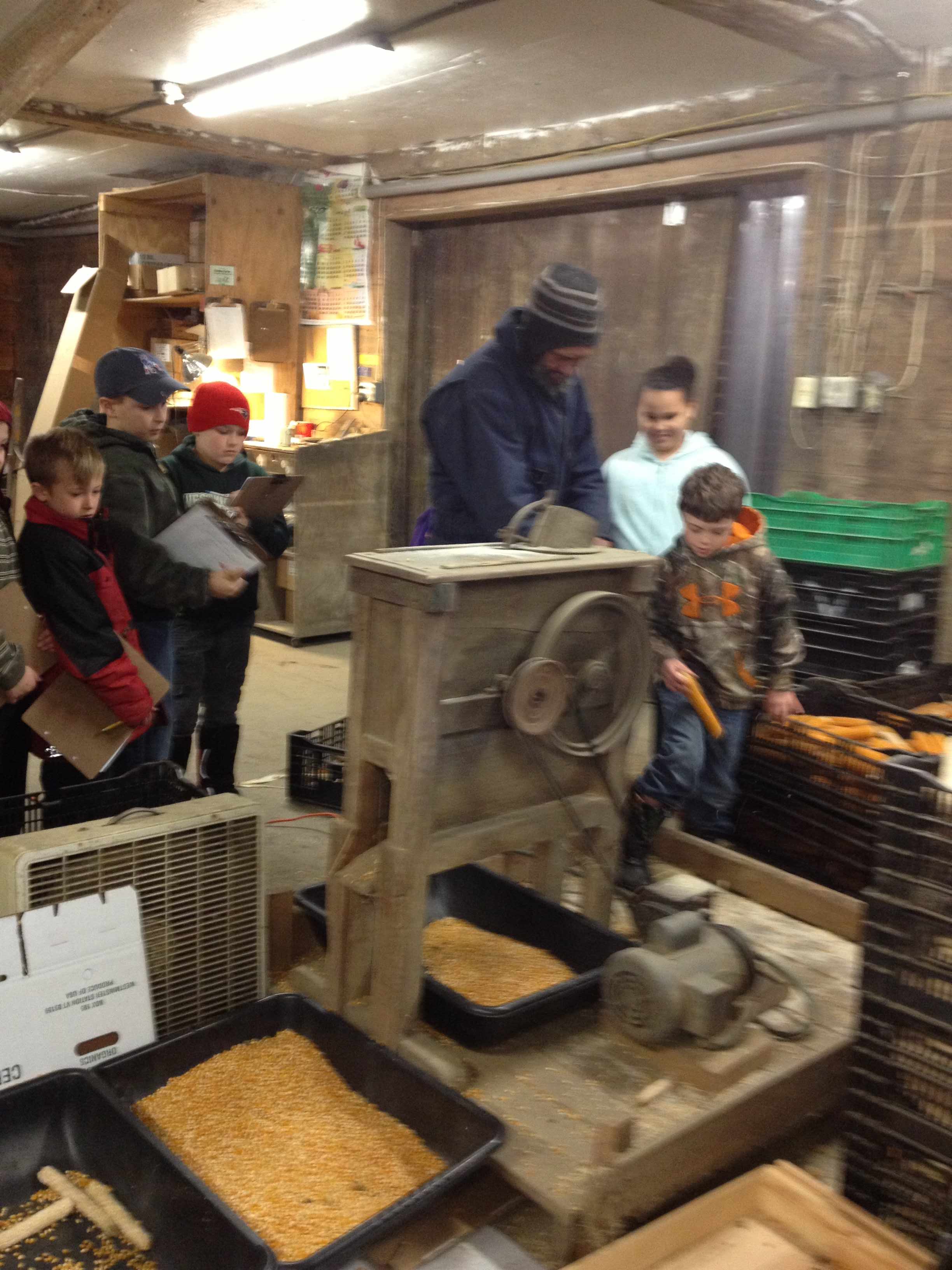
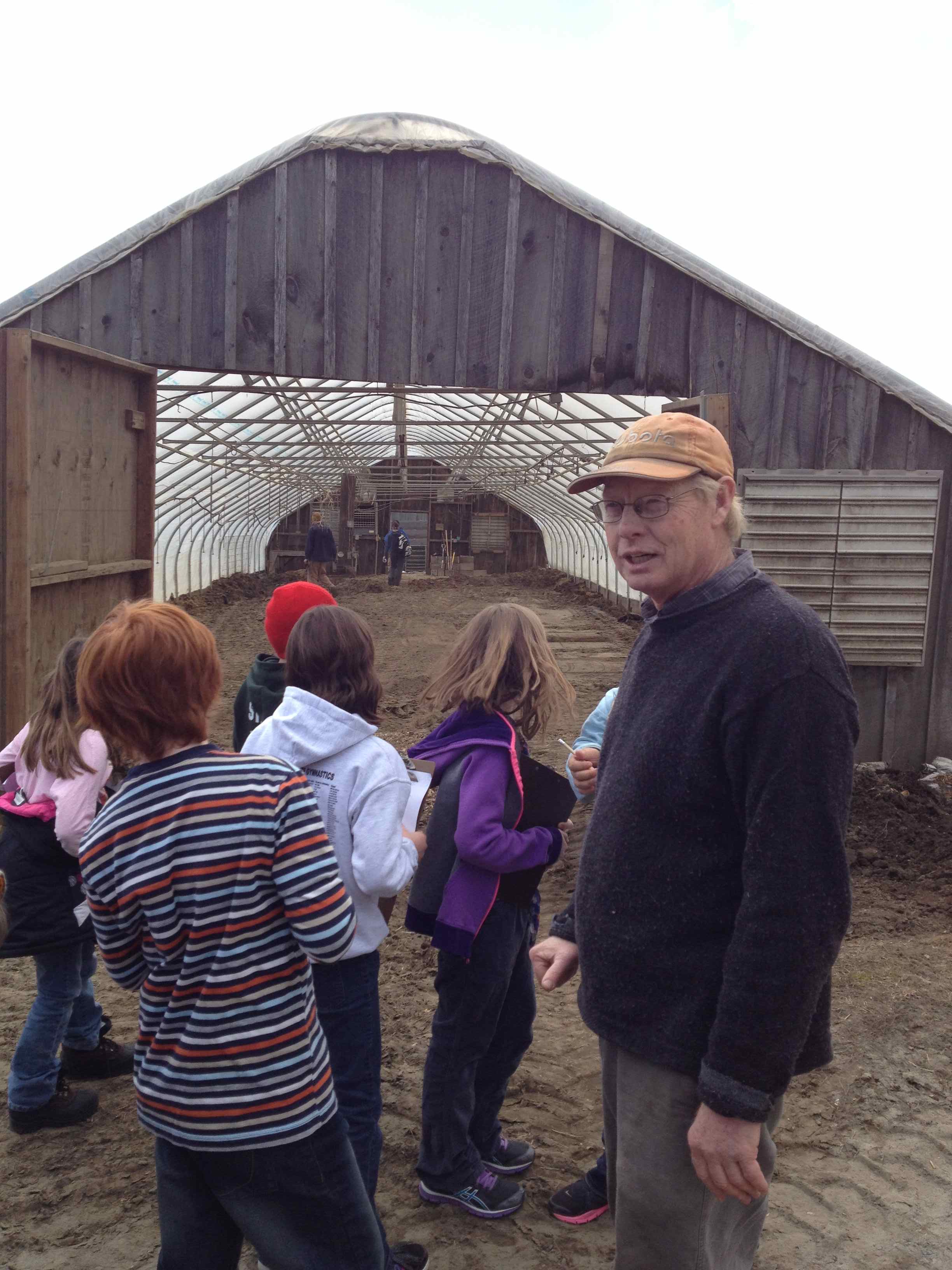
Last week the Fourth grade classes hopped on a school bus for a ten minute ride to Paul Harlow’s farm. He was waiting to show them where their popcorn had been curing over the winter. They also got to see Marcus, a Harlow farm icon, demonstrate an antique machine made for removing the kernels from ears of popcorn.

Corn kernel remover

Paul chicken greenhouse

One of the farmers, Brandon Allen, invented a device for storing popcorn kernels. It will take another few months of air drying for the popcorn to pop into clouds of fluffy white deliciousness. Brandon’s storage unit is a model of Yankee ingenuity. A large plastic trash can and PVC pipe are wedded together to create a rodent-free container that allows air to flow through to the kernels. We’re going to try to replicate his model on a smaller scale to store the fourth grade popcorn harvest back at school. Brandon  once attended Westminster Center School.

Future kale crop

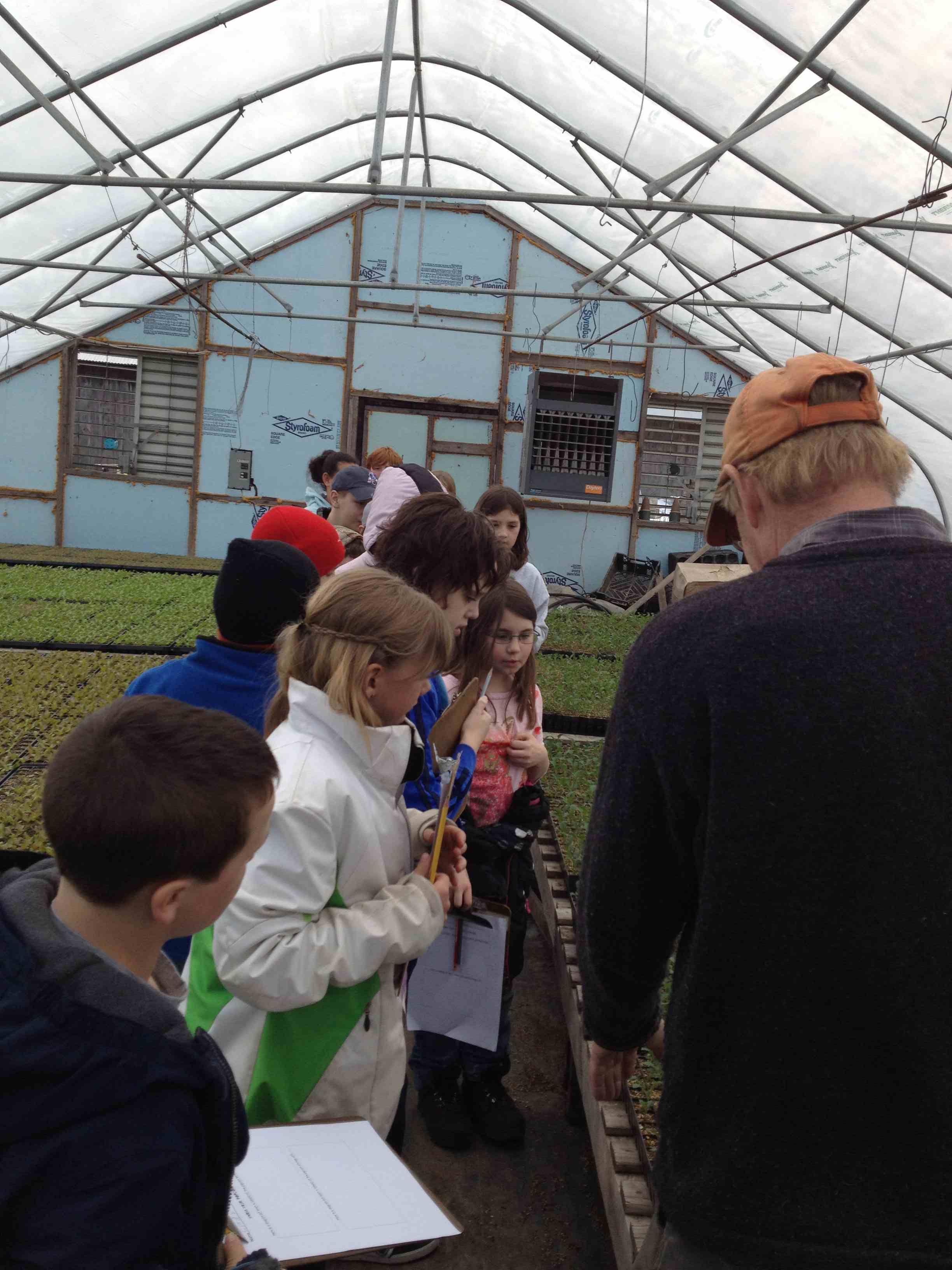
Paul also gave the students a tour of the greenhouses. They were already beginning to fill with flats of flower and vegetable seedlings. One student said, “this makes me wish it was summer,” as she emerged from the warm steamy space. “It even smells like summer in there.” Thousands of tiny kale plants had been seeded into flats. Paul challenged the class with complicated math problems. If one flat holds this many, then how many plants do you think are in this greenhouse? No doubt about the need for good math skills on a farm!

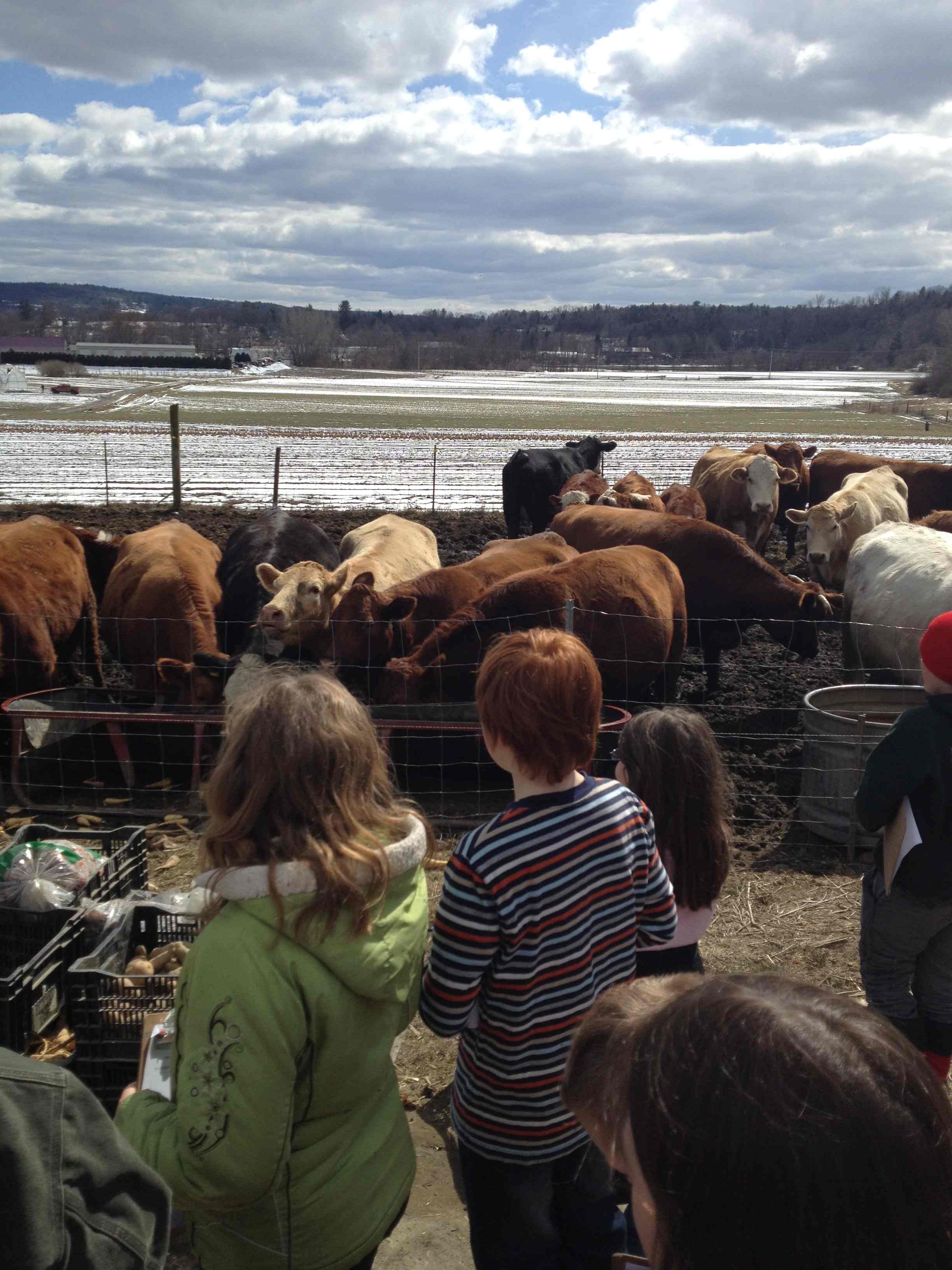
Finally the class got a peek at a new beef herd that had recently arrived. Many questions were raised and answered about beef cattle before it was time to head back to school.

new beef herd

Many thanks for a great trip, Paul and Westminster Organics!


Leave a comment

More on Maples….

With cold nights and warm days, our sugaring season has been bountiful this year. The third grade students were correct in their prediction that the sap would run faster on the sunnier side of the tree. They collected quite a bit of sap and boiled it down, once disastrously and another time successfully. The trick to boiling is to stay attentive, especially in the last few minutes. That’s why, at sugar houses across Vermont there are always lots of friends hanging out and keeping the sugar makers company….no leaving this project for very long. They may not see each other through the clouds of steam, but the conversation is lively and engaging. In the last few minutes of our sugaring off, the beautiful syrup was neglected momentarily. It boiled away to something that looked like black glass in the pot. We were undaunted but we owe our Kindergarten teacher, Paula, a new cooking pot! In a few days we collected enough sap to try boiling down again. This time we got a beautiful batch of maple butter…almost four cups! Multiply that by 40 to find out how many cups of sap we had to boil down. Many thanks go to third grade teacher, Atasi Das, and parent, Stacie Illingworth, for seeing this project through to the final sweet end.

Fourth grader, Tyler Stanley, was inspired to set a few buckets of his own. He and his dad collected the sap  from the trees at school and brought it  to their own backyard boiling set-up.

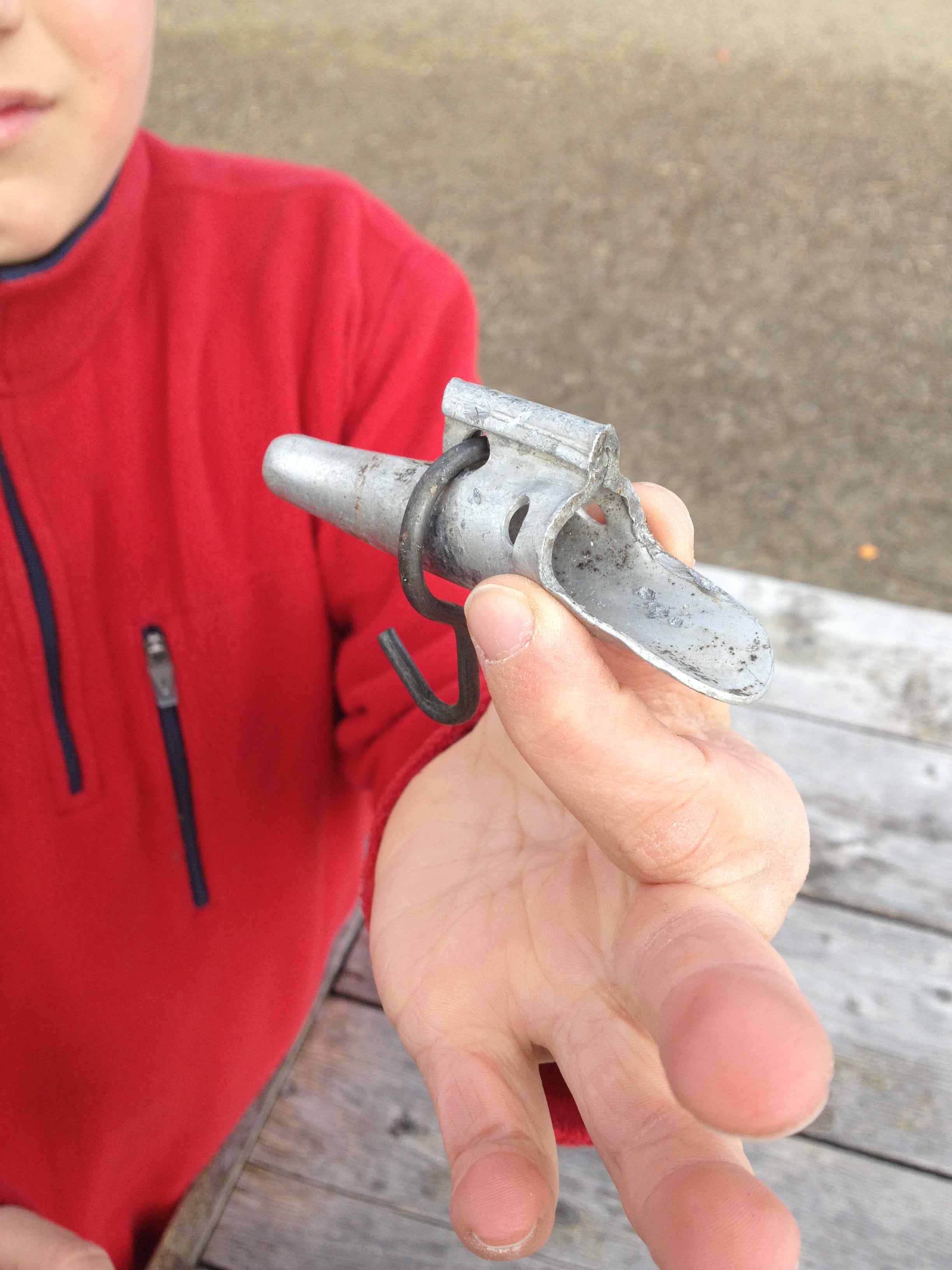
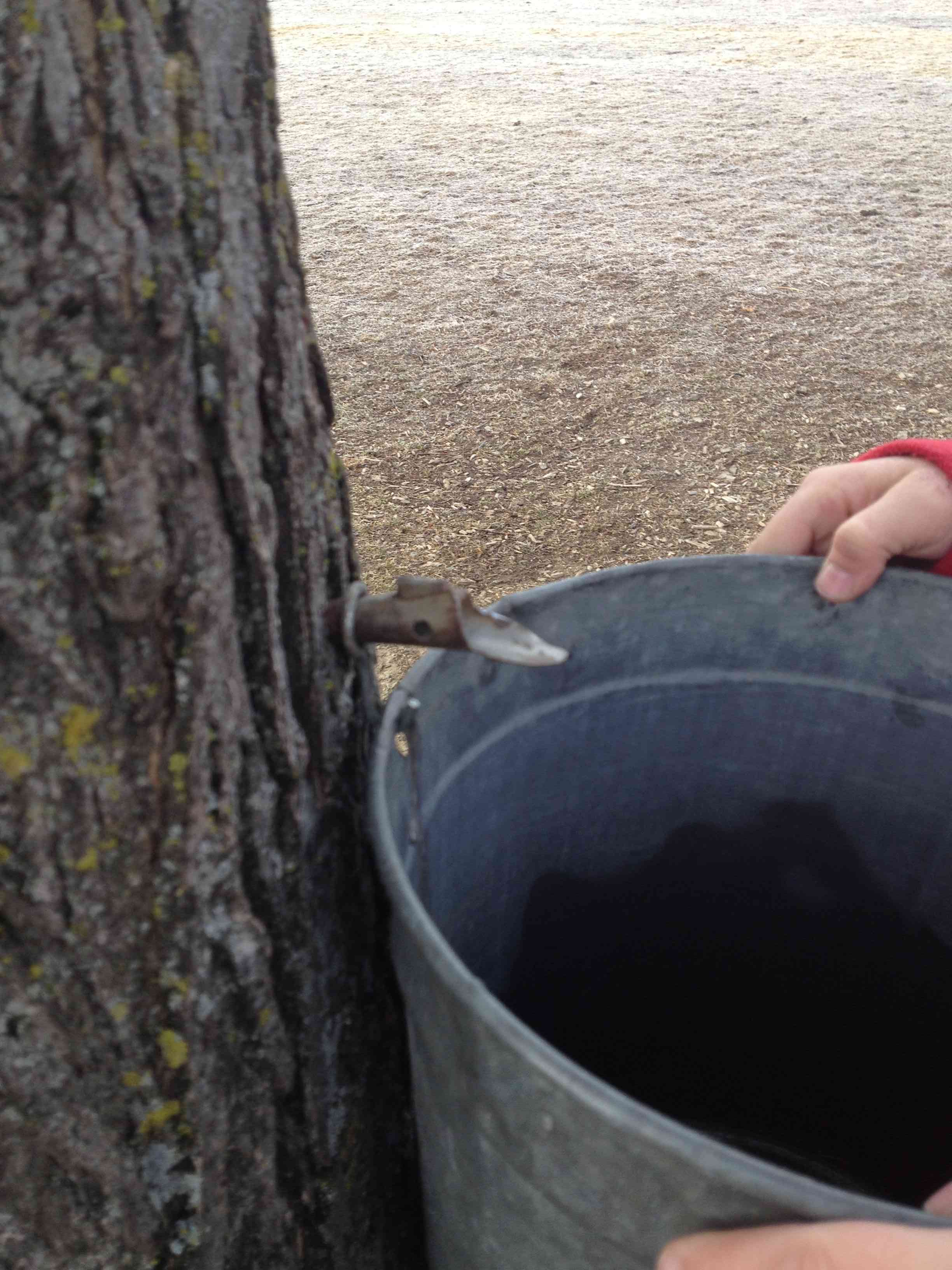
Tyler wanted to demonstrate some of the finer points of tapping trees.spiggot and hook closeup This is a type of spigot with a hole for a hook to hold the bucket once the spigot is in the tree.

After a 7/16″ hole is drilled into the tree the spigot is gently set.

hammering in spiggot

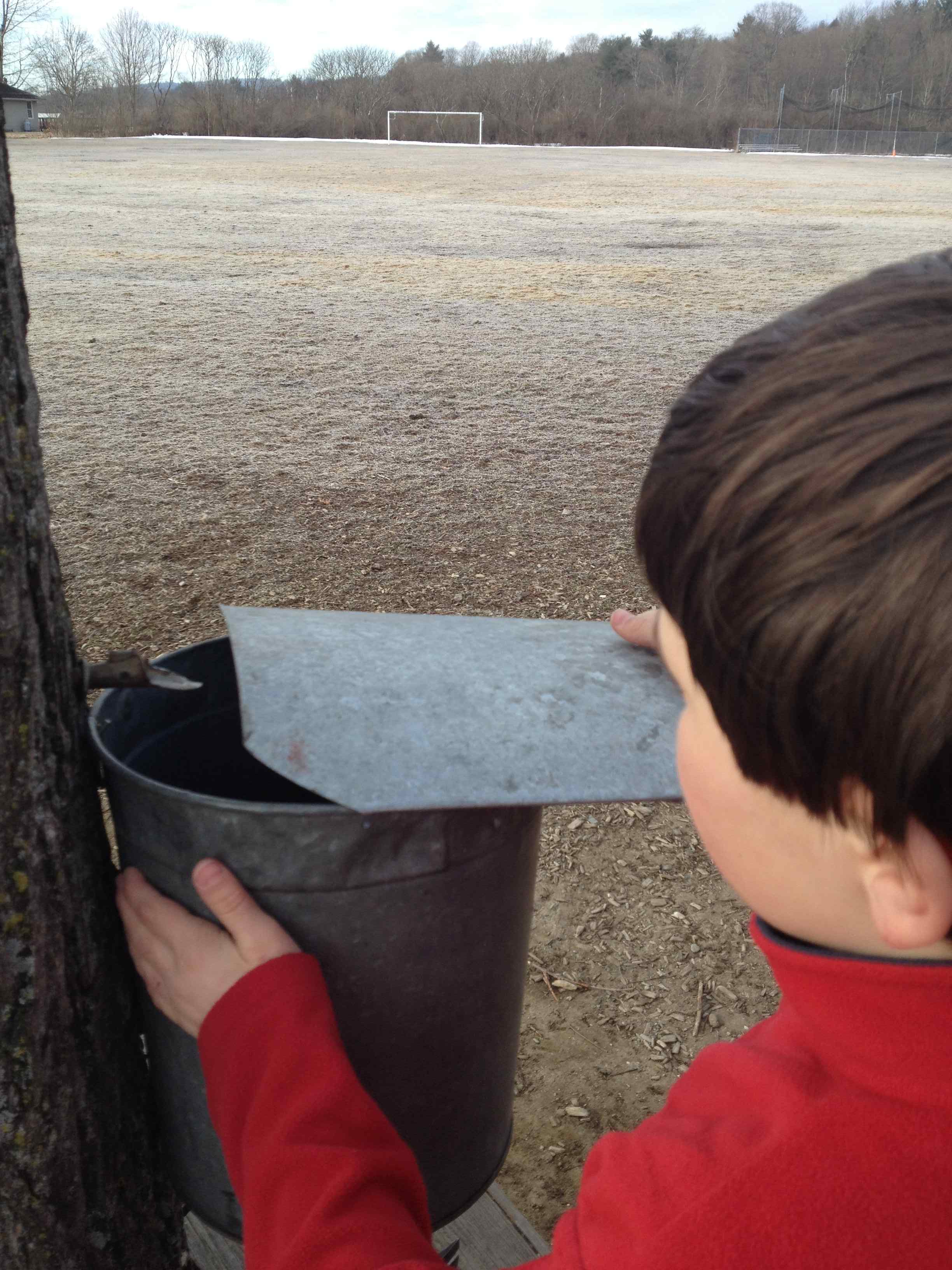
attaching bucketThe bucket is hung from the hook and a little roof is slipped onto the bucket to keep out the rain and snow.


Sliding roof on bucket


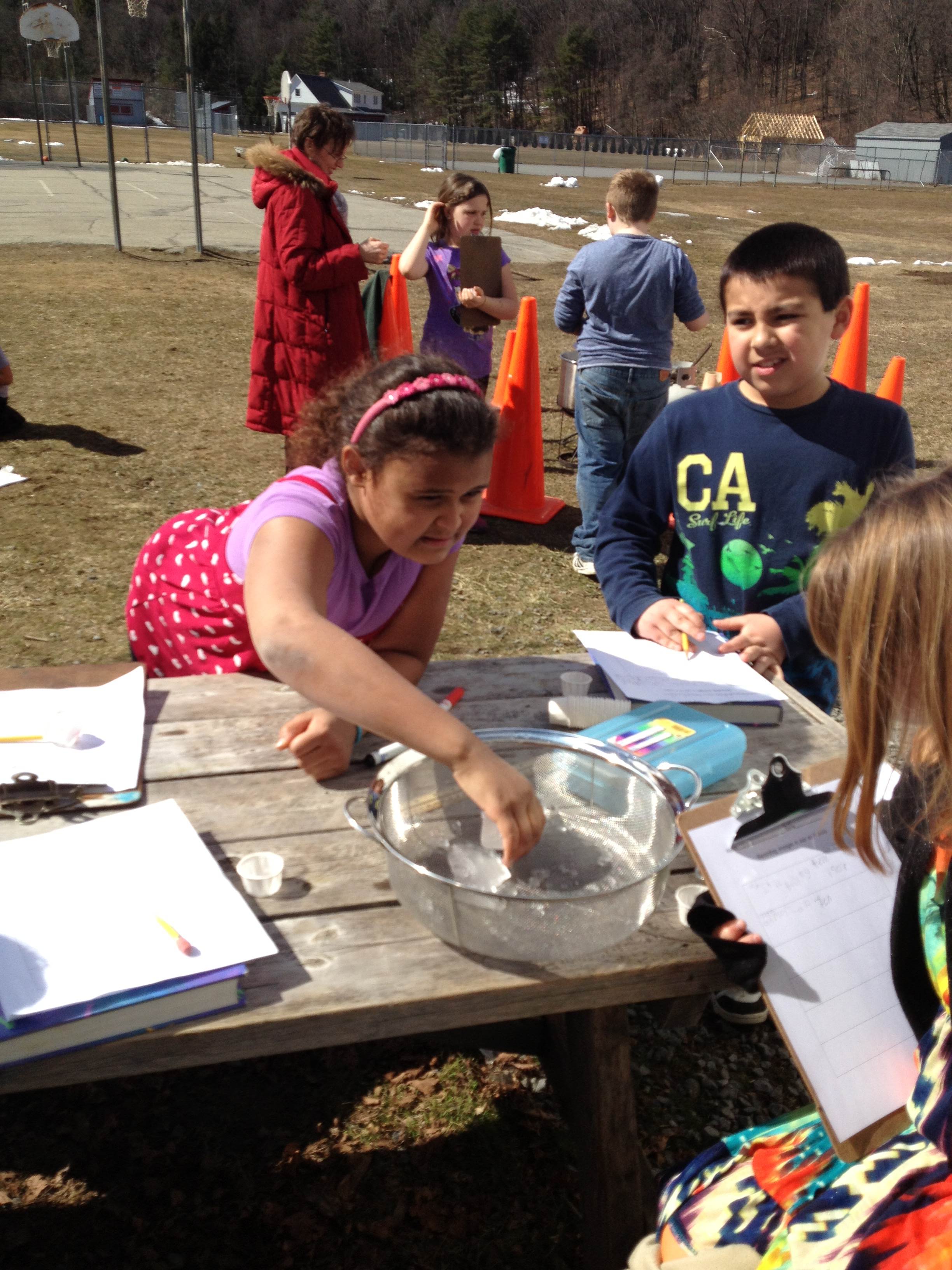
Ice from sap bucketThere was a lot of curiosity expressed in students’ written observations. They wondered how much time the sap would take to boil down, how many degrees the syrup would be when it was finished, whether the ice at the top of the sap buckets was as sweet as the sap below it. Many already had a working knowledge of evaporation even if they hadn’t all yet attached  a name to the process. One student said that the steam from the boiling sap was “just like the clouds in the sky.” The outdoor classroom was buzzing with good thinking on this warm March morning!