Vermont School Garden

A visit to a Vermont public school garden through the seasons.


2 Comments

Vermont Trees in Early Spring

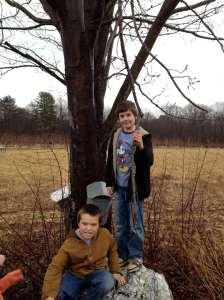
It’s finally springtime in Vermont! The third graders at Westminster Center School are betting that the maple tree in the school play yard will yield some sweet sap for boiling into maple syrup. We talked about what the kids already knew about ‘sugaring,’ a Vermont tradition….that Sugar Maples yield the sweetest sap, that sap runs best when the temperature at night is below freezing but in the day is above freezing, and that it takes approximately 40 gallons of sap to boil down to one gallon of maple syrup. Half of the class had already had some memories of sugaring, but no one knew that a group of maple trees connected by lines for sap collection is called a “sugar bush.”

We drilled a 7/16  inch hole in the tree and we ‘set’ our taps by hammering a spout and  a hook into the tree trunk. Sap came pouring out before we could even attach the bucket! The students put one bucket on the side of the tree that gets a lot of sun and one on the opposite side. They wanted to test out their theory that the sunny side of the tree would yield more sap. We’ve rigged up an outdoor boiler, with the assistance of our principal, Mr. Tullar. He brought in a deep fryer from home. The students will record the process of sugaring next week. (MORE SUGARING NEWS TO COME!)
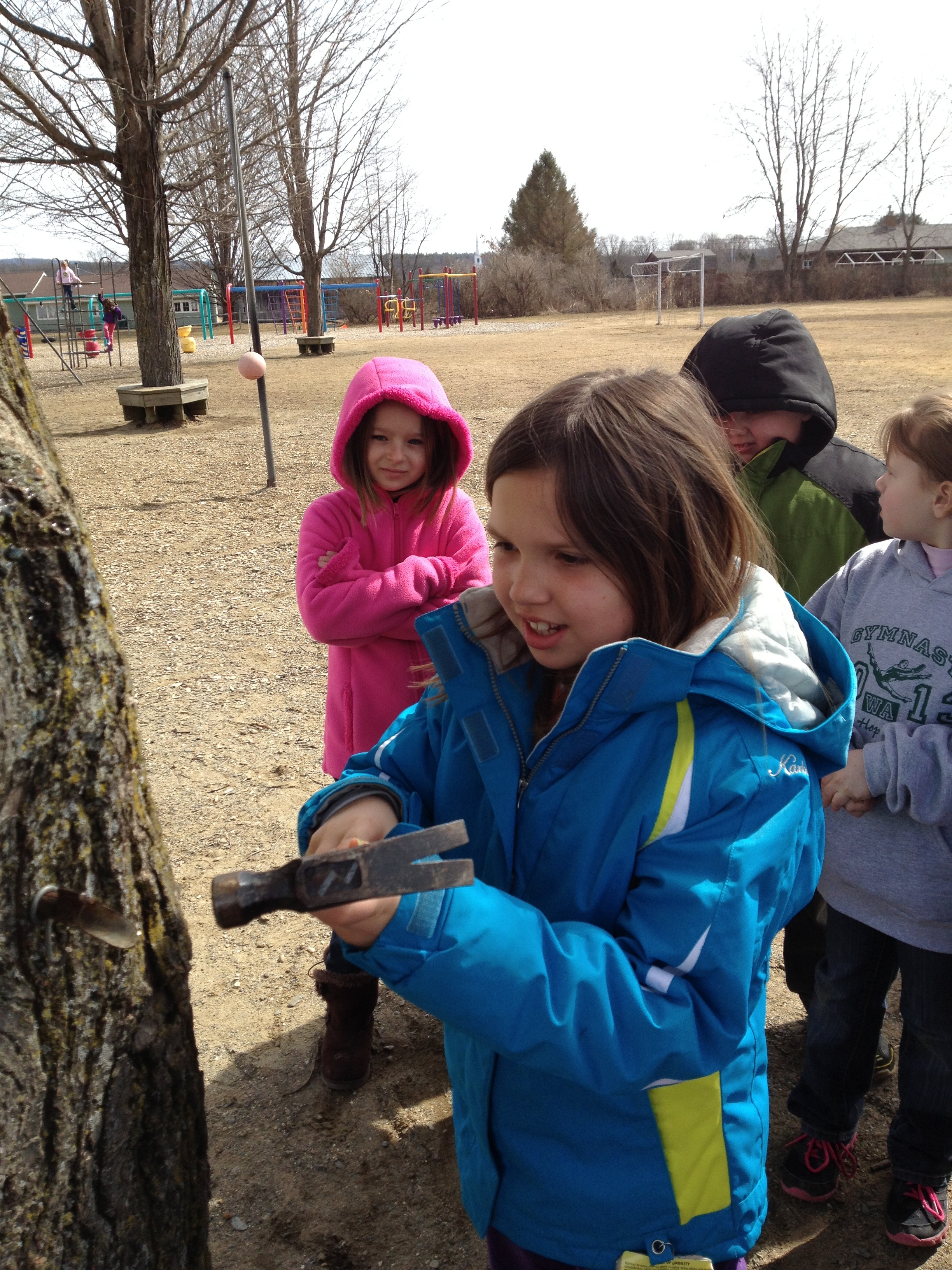
hammering tap

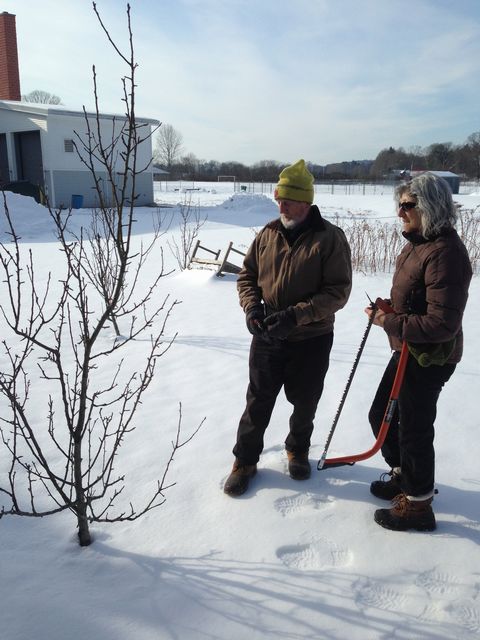
We have a true friend in Russell Allen, Orchardist at the Connecticut Valley Orchards  in Westminster. He regularly donates apples to our healthy snack program here at school. He has a grandson who attended school here and is now a Westminster farmer. This week Russell visited our garden to show me how to prune our apple and pear trees. He brought a small saw and some pruning sheers and a wealth of knowledge to impart about the care and nurturing of our small garden orchard. He is a born teacher.

He first drew an outline in the snow, the illustration of “a perfectly pruned tree. It looks somewhat like a Christmas tree………wide at the bottom and narrow at the top, with plenty of space between the branches,” he said. “But this is not a perfect world, so we’ll do what we can to make our trees look as close to this as possible.” The  trees were planted by a graduating sixth grade class about six years ago. To date they haven’t produced any fruit. Russell recommended that we fertilize some of them. Some trees didn’t need anything but pruning this year. Fruit trees  need a well balanced fertilizer,  primarily rich  in nitrogen. The ground around the trees needs to be fertilized as far out as the perimeter of the tree. I’ll get to that when the snow is gone. The tender trunks also need cuffs around them to protect them from gnawing rodents.

Russell left one Honey Crisp tree unpruned and pointed out that most of it had reverted to a wild state after years of neglect. There were about five main trunks in addition to the one that had been grafted to make the original Honey Crisp tree ( the scion).  “How can we make this wild tree into an example for the children to understand?” he wondered. “I know. Tell them that this is what would happen to you if you didn’t go to school to learn.”
IMG_0853IMG_0854


Leave a comment

Homemade Pizza in Kindergarten

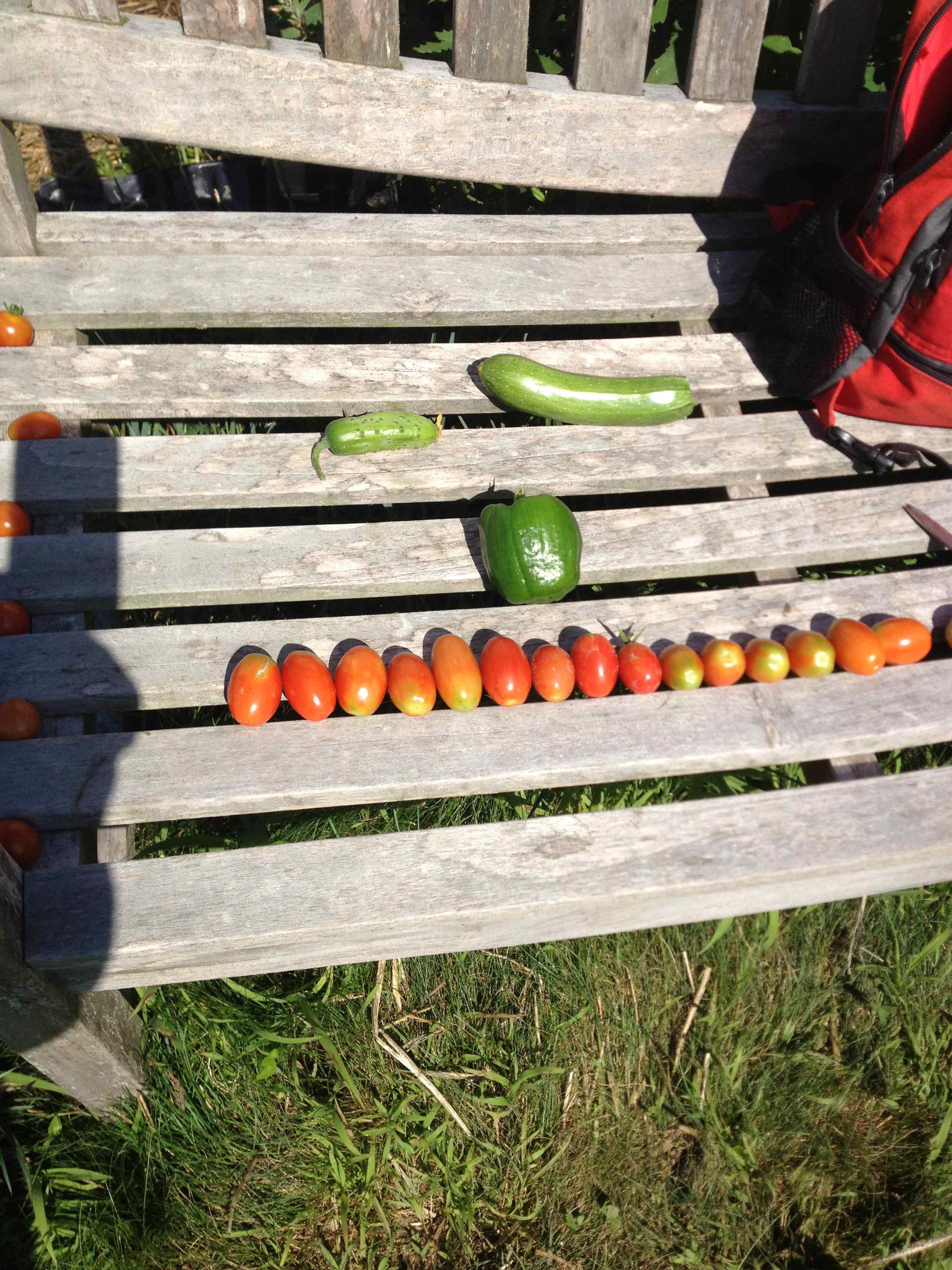
summer tomatoes

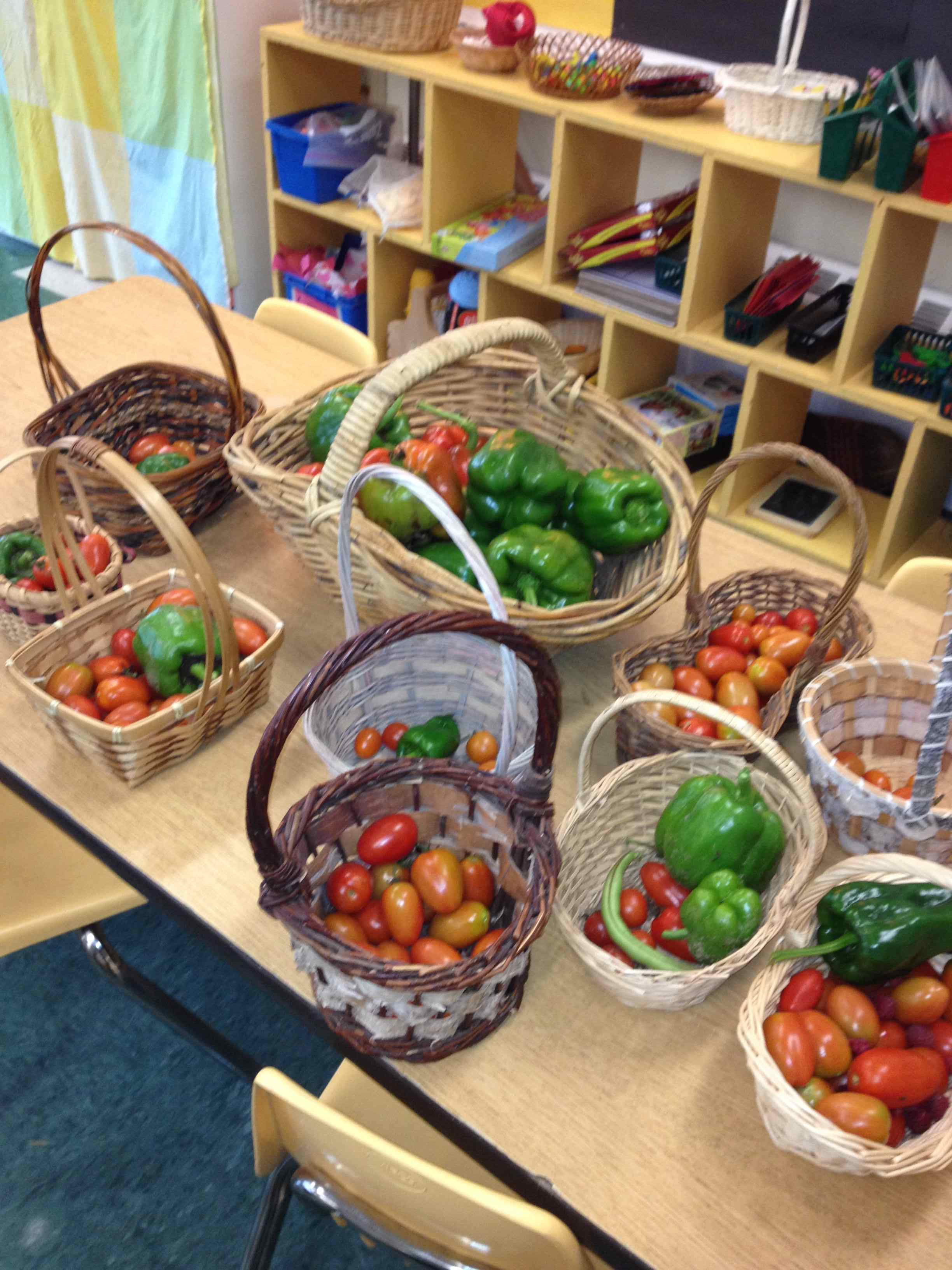
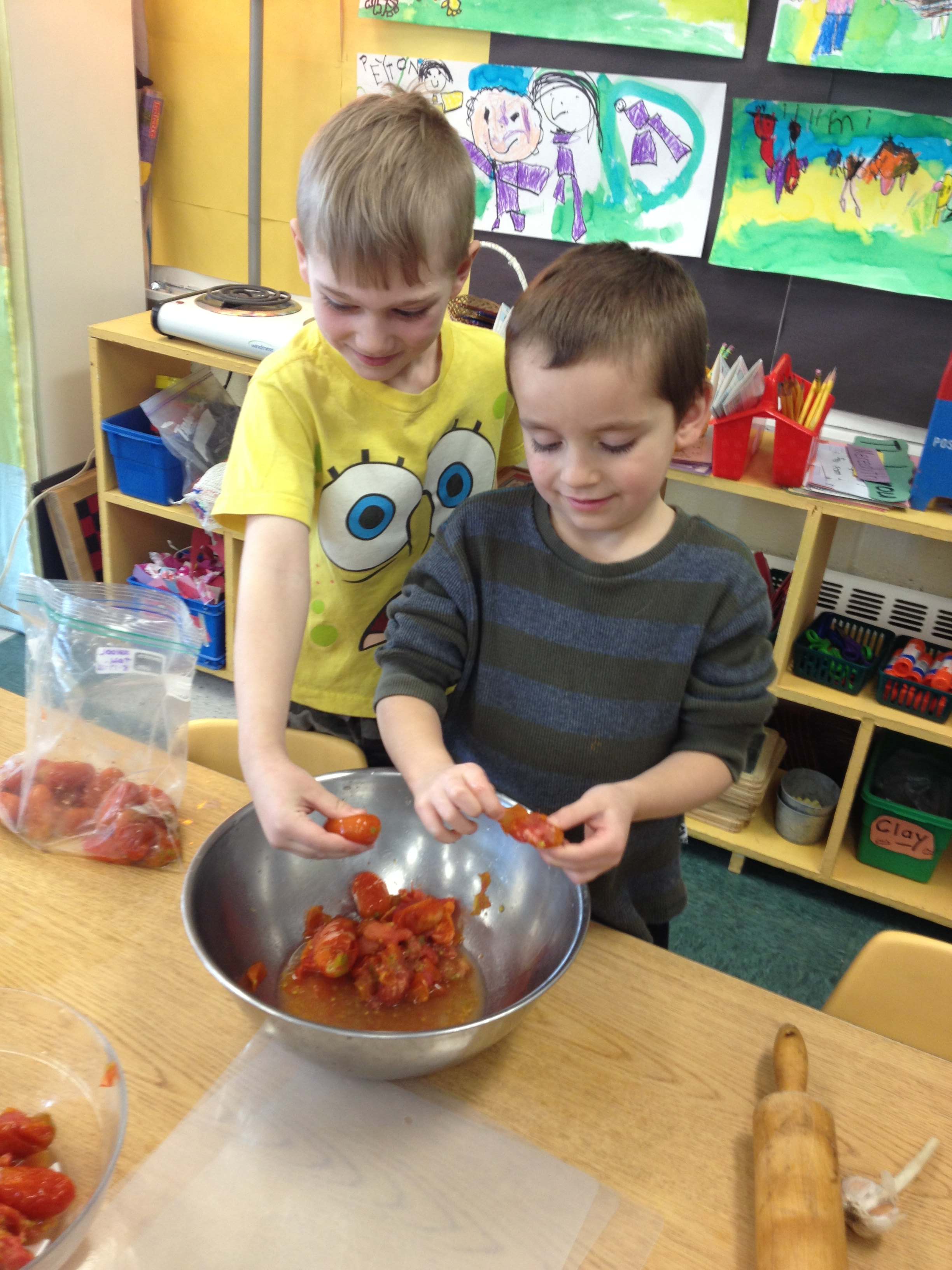
Kinderarten harvestLast summer’s Roma tomatoes spent the winter in my freezer after they were harvested by the Kindergarten students in Valerie’s room. This month, I thawed them, still whole and unprocessed. I brought them to school along with some pre made pizza dough and a few other ingredients that make pizza taste like the kind you get at your favorite local restaurant….oregano, cheese, garlic, peppers..

I experimented ahead of time with the tomatoes, squeezing 3 cups of them into mush by hand, pouring off a little of the water, and then adding them to a mixture of diced onion, garlic and oregano that I had sizzling in some olive oil in a medium sized frying pan. When the tomatoes had cooked down to a consistency that resembled sauce (about 15 minutes), I used a wand to puree the ingredients. Voila!…. a fine looking pizza sauce. You could  use a blender or food processor.

I  made the pizza dough ahead of time. The dough requires 2 hours in a warm place to rise. (Recipe is included in this article.) You can also find ready made pizza dough in most grocery stores. I’ve even seen ready made crusts….just add your favorite toppings and fire up the oven!

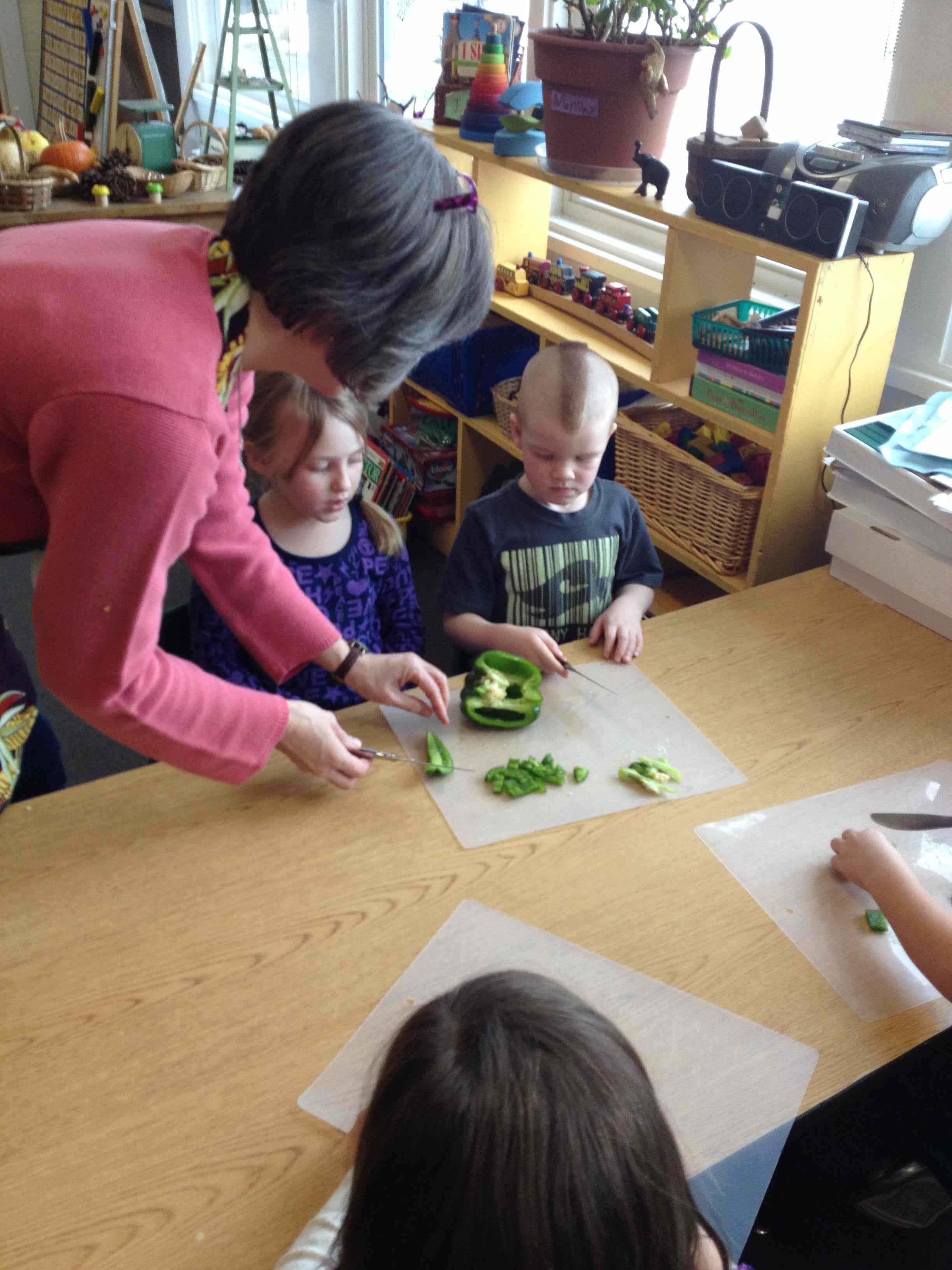
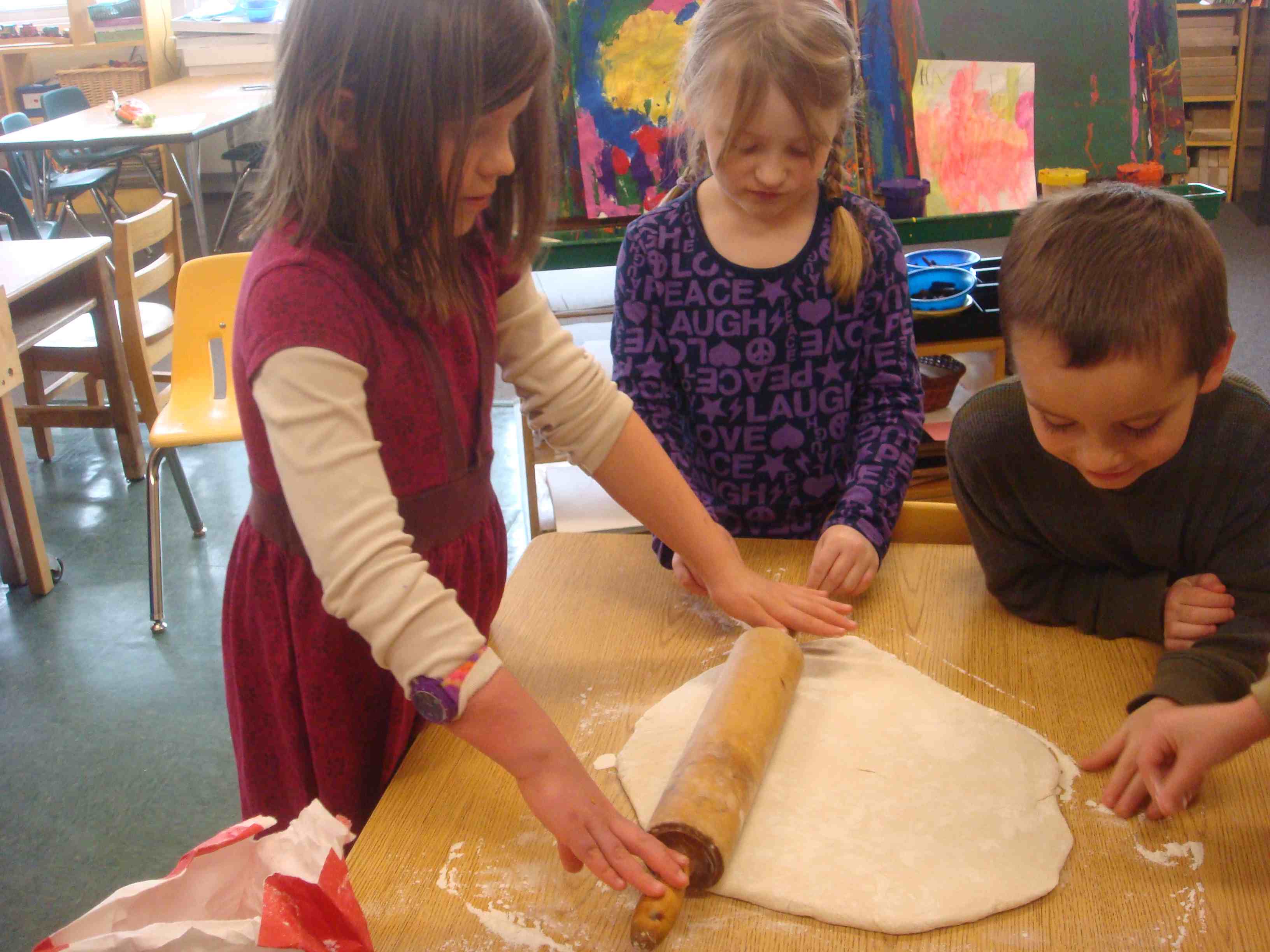
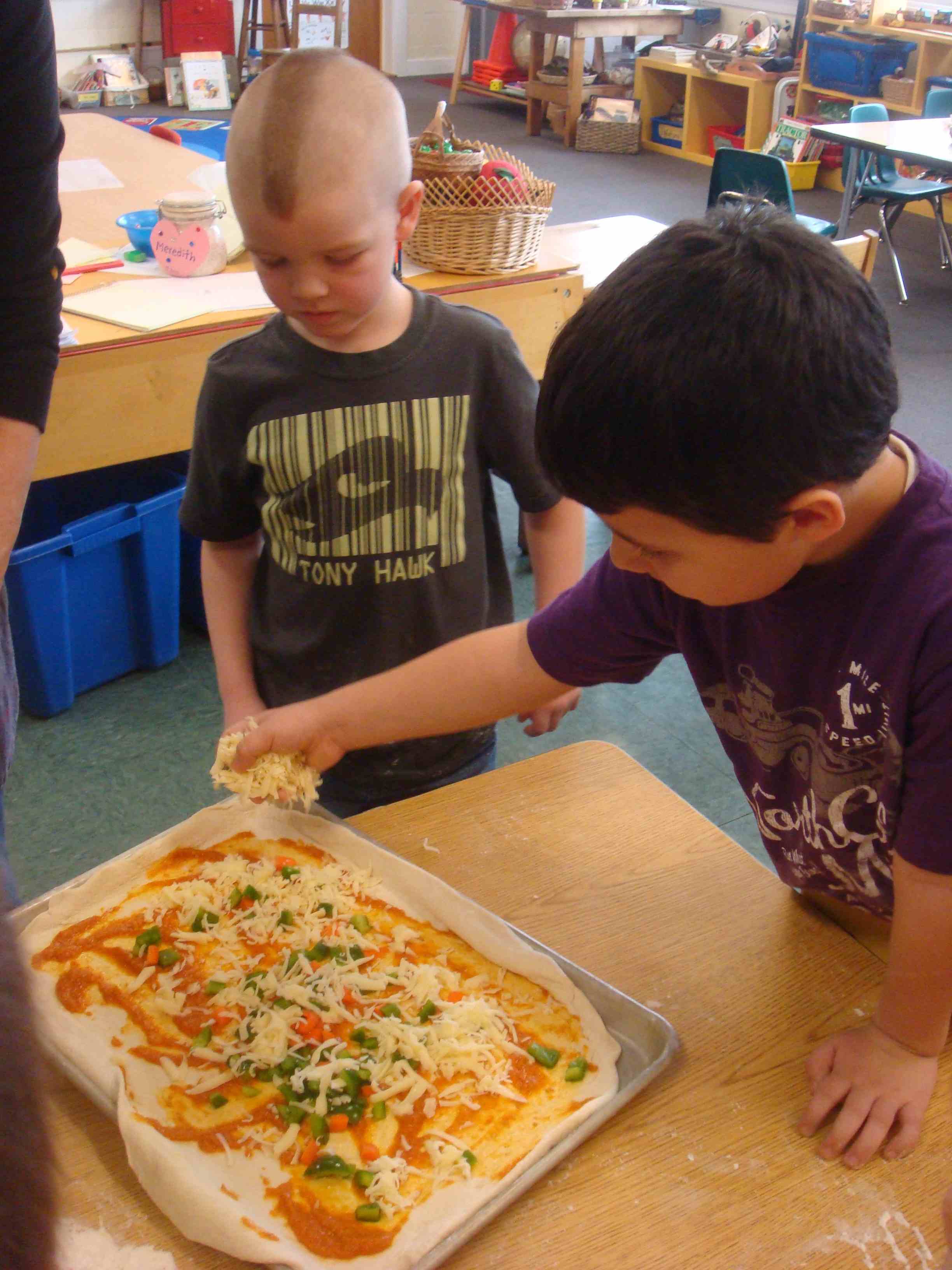
The kids rolled out the pizza dough, grated the mozzarella cheese and cut up a green pepper. Then it was time to put the pizzas together! While they were in Art class, the pizza baked in a preheated 475 degree oven for about 20 minutes. Good book to read together while you’re waiting: “Pete’s a Pizza” by William Steig!

Many thanks to Valerie Kosednar and her K’s.

Hadley squeezing tomatoes

cutting peppers Valerie, Christopher

Grating cheese Meredith Ty

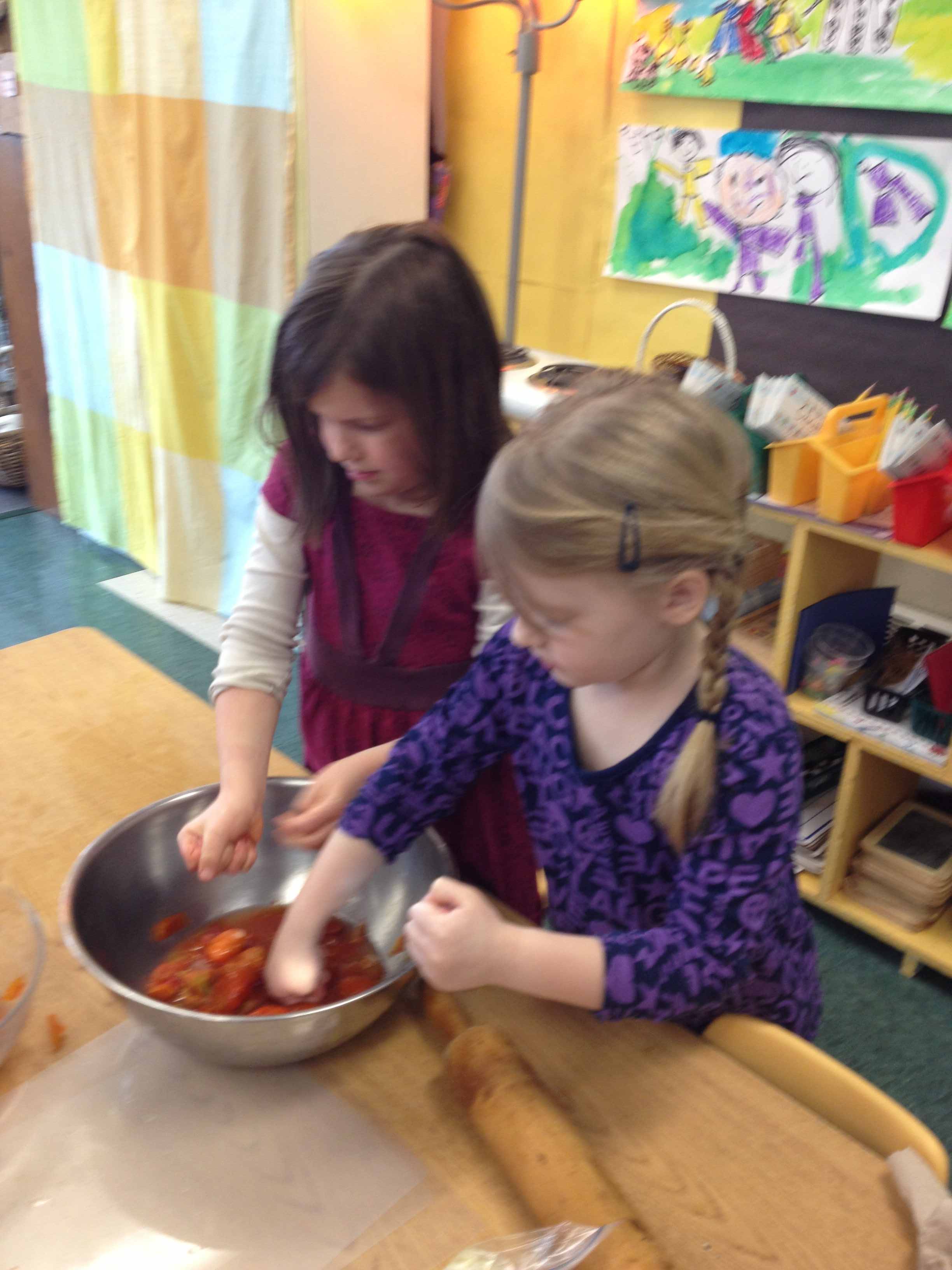
punching tomatoes Maya RhiannaJosh and Robert Kind. Tom.  sauce

assembled pizza

For a first hand experience, these Kindergartners made tomato sauce right in their classroom. Ooooh the giggles as they squished the tomatoes between their hands! I precut the onions and garlic. Those can be hard  for little ones to cut up. We cooked the sauce in a large pot on a hot plate, adding a little salt and oregano to taste. Then we froze it for a future cooking date. (Maybe spaghetti with our own garden tomato sauce?)

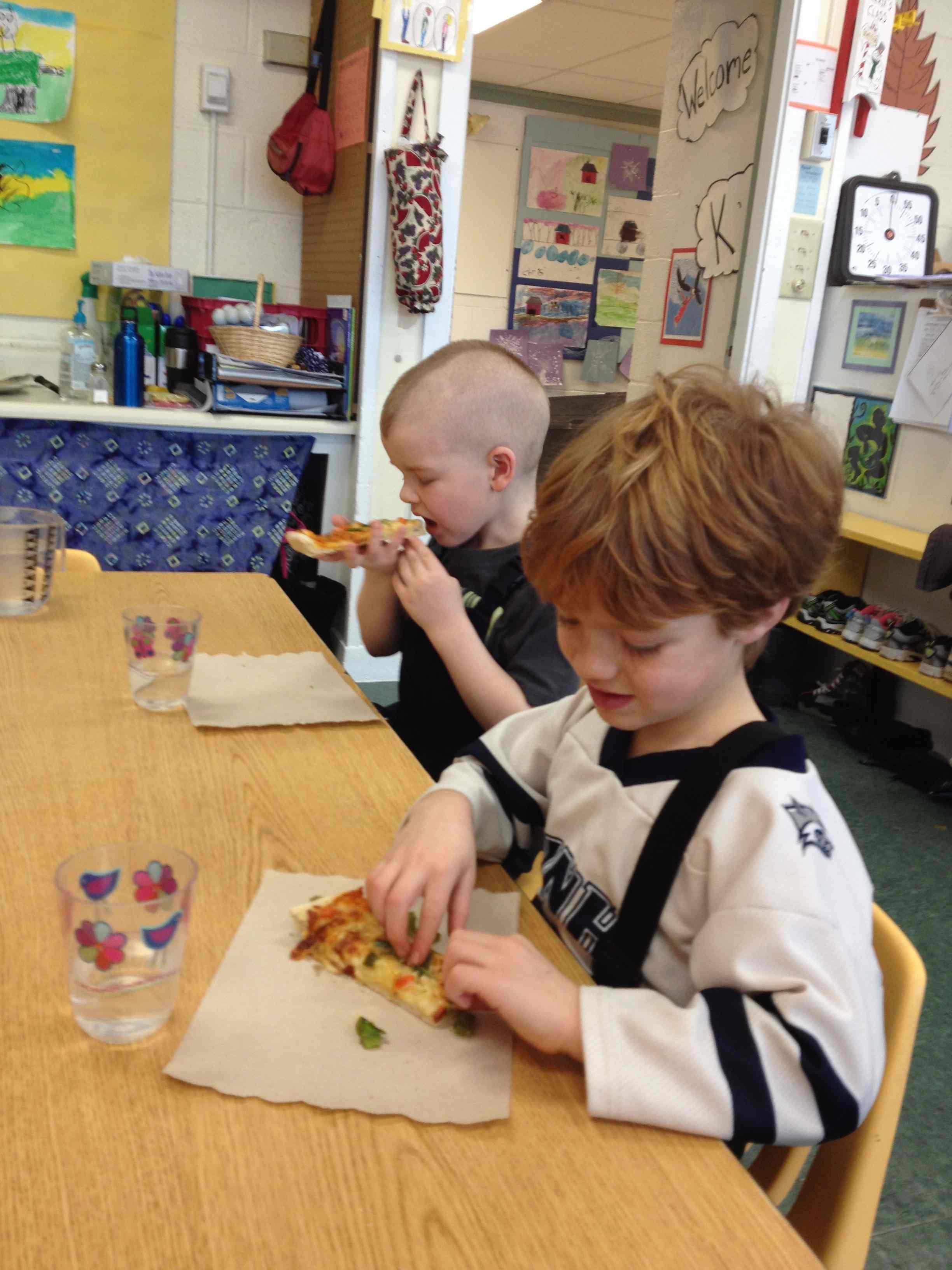
One Kindergartner’s reaction to our pizza: “Those peppers tasted so good they almost made me POP!”

It’s just about time to start tomato plants from seed for this summer’s tomato crop!

3 K's rolling dough for pizzacheese on pizza

Tighe and Christopher eating pizza copy

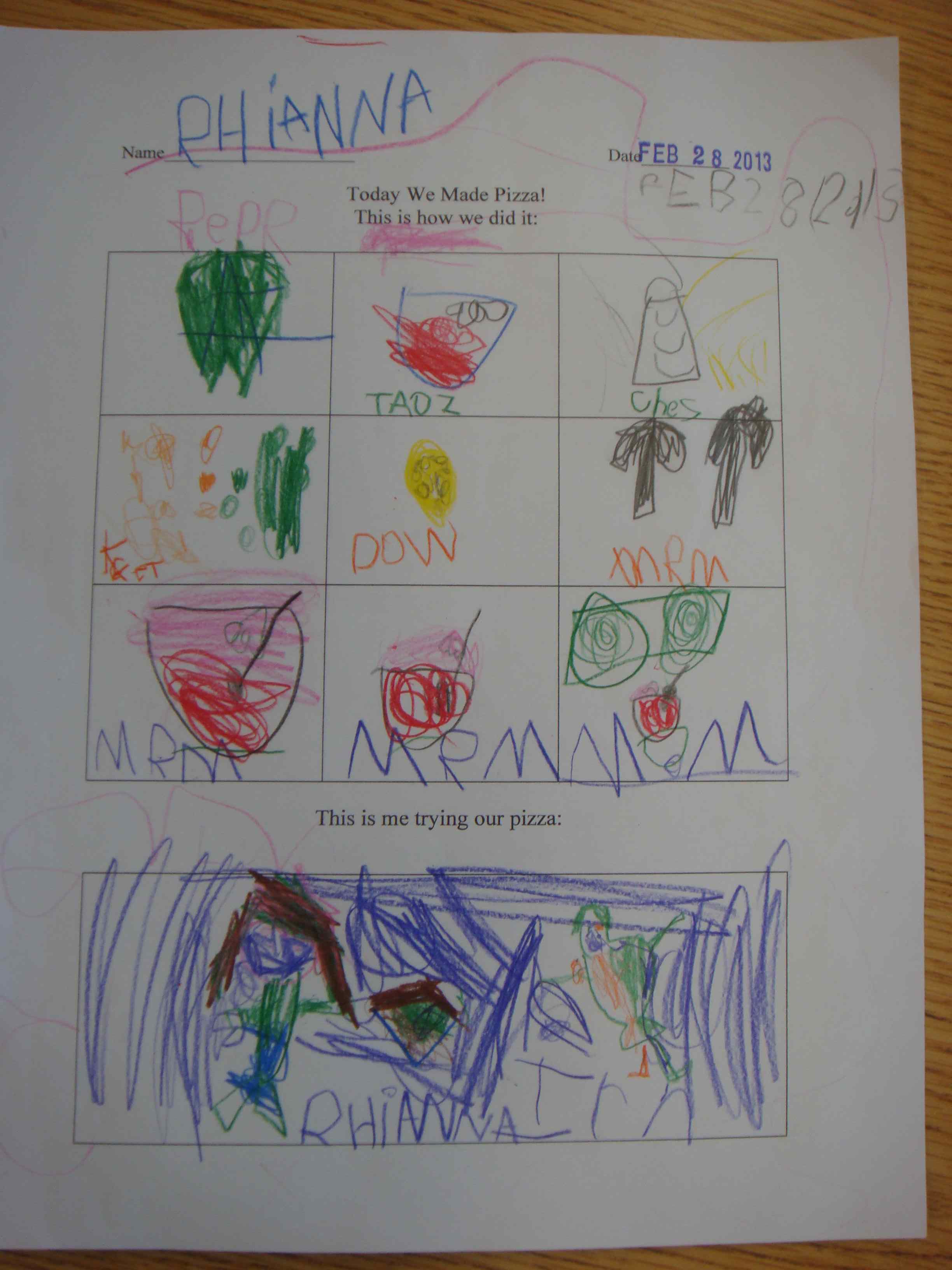
      pizza response paper

WHAT A SPRINGBOARD THIS LESSON WAS FOR ENCOURAGING KINDERGARTENERS TO WRITE! THEY WORKED HARD FOR TWO DAYS AT LABELING THEIR PICTURES WITH THE BEGINNING, ENDING AND MIDDLE SOUNDS THAT THEY COULD REMEMBER. THEY HELPED EACH OTHER WITH THIS WRITING ASSIGNMENT.

Homemade Pizza Dough Recipe

(makes one average-sized cookie sheet pizza)

4 cups flour                        1 Tablespoon yeast

1 1/3 cups warm water          1 teaspoon salt

2 Tablespoons olive oil           ¼ c. cornmeal

1.Dissolve yeast in water

2. Add salt, and olive oil and stir. Then slowly add flour until dough is soft but not sticky

3. Knead dough on a clean floured surface for 10 minutes.

4. Let dough rise in a warm place for about two hours.

5. Using more flour as needed, roll the dough out on a flat surface and fit it to the pan.

6. Oil pan and sprinkle with corn meal, then add dough, adjusting it to the edges of the pan

7. Add your favorite sauce and toppings.

8. Bake in a preheated 475 degree oven


Leave a comment

The Great January Potato Bake-Off

Last week those fifth graders who were pictured harvesting their potato crop in a fall blog entry became potato culinary experts. I brought them cleanly scrubbed potatoes…enough for the entire class. I would like them to experience the whole process of preparing potatoes harvested  from the garden, but most classrooms are not equipped with easy access to water. When I brought these potatoes from the farm to my sink at home, they were coated with  a dusting of the soil in which they grew. This helped to preserve them for the last few months. Our school chef, Kim Kinney, generously allowed us access to the kitchen oven during a slow time. We used the Dining Hall as a prep station.

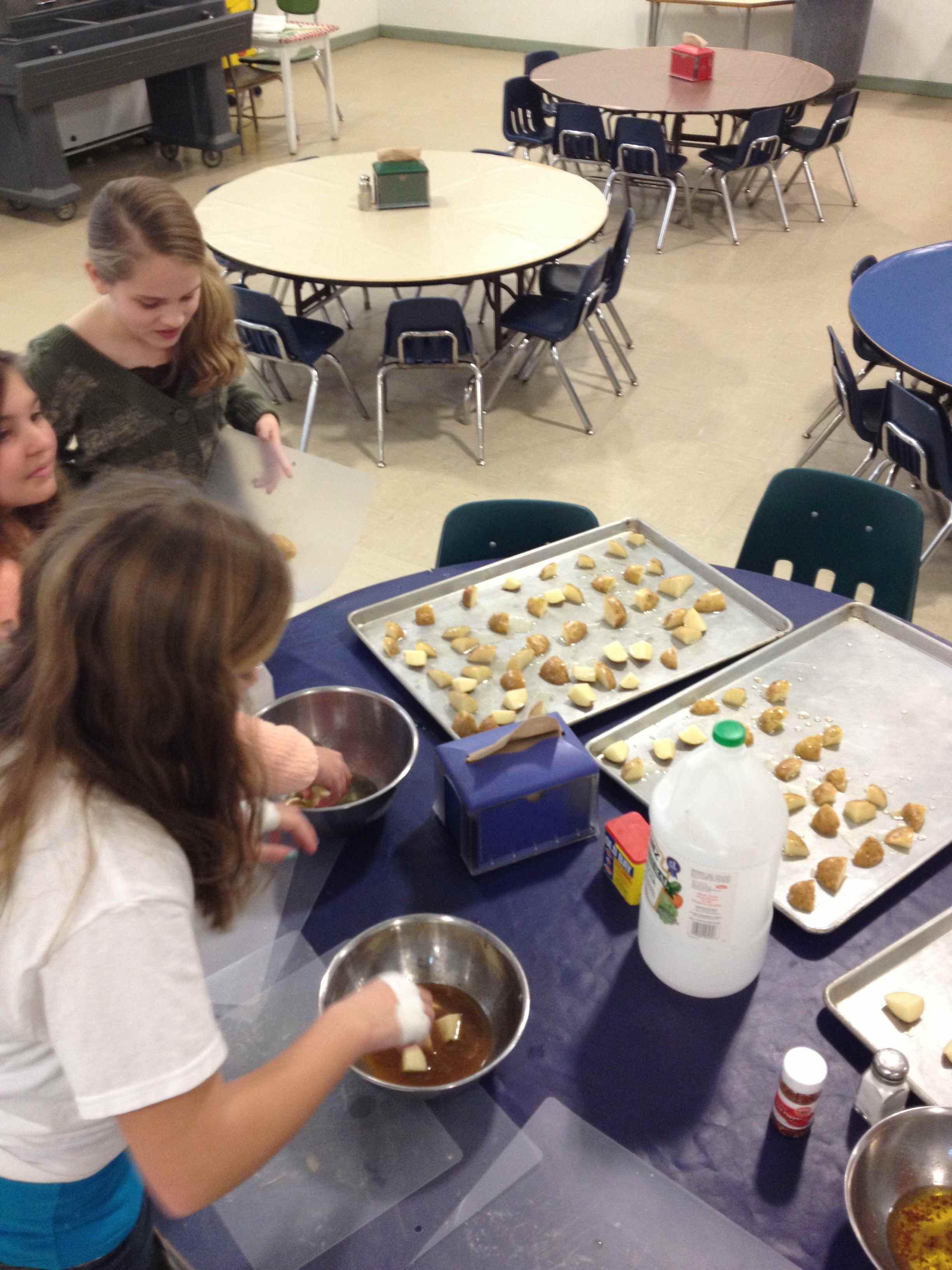
Students came from their classrooms in small group rotations. They got to work on their response sheets, choosing which type of marinade they preferred and then carefully slicing their potatoes into eights.

choosing marinades

choosing marinades

Some students needed to confirm their choices by smelling the marinades.

dipping potato wedges

dipping potato wedges

marinade scent test

marinade scent test

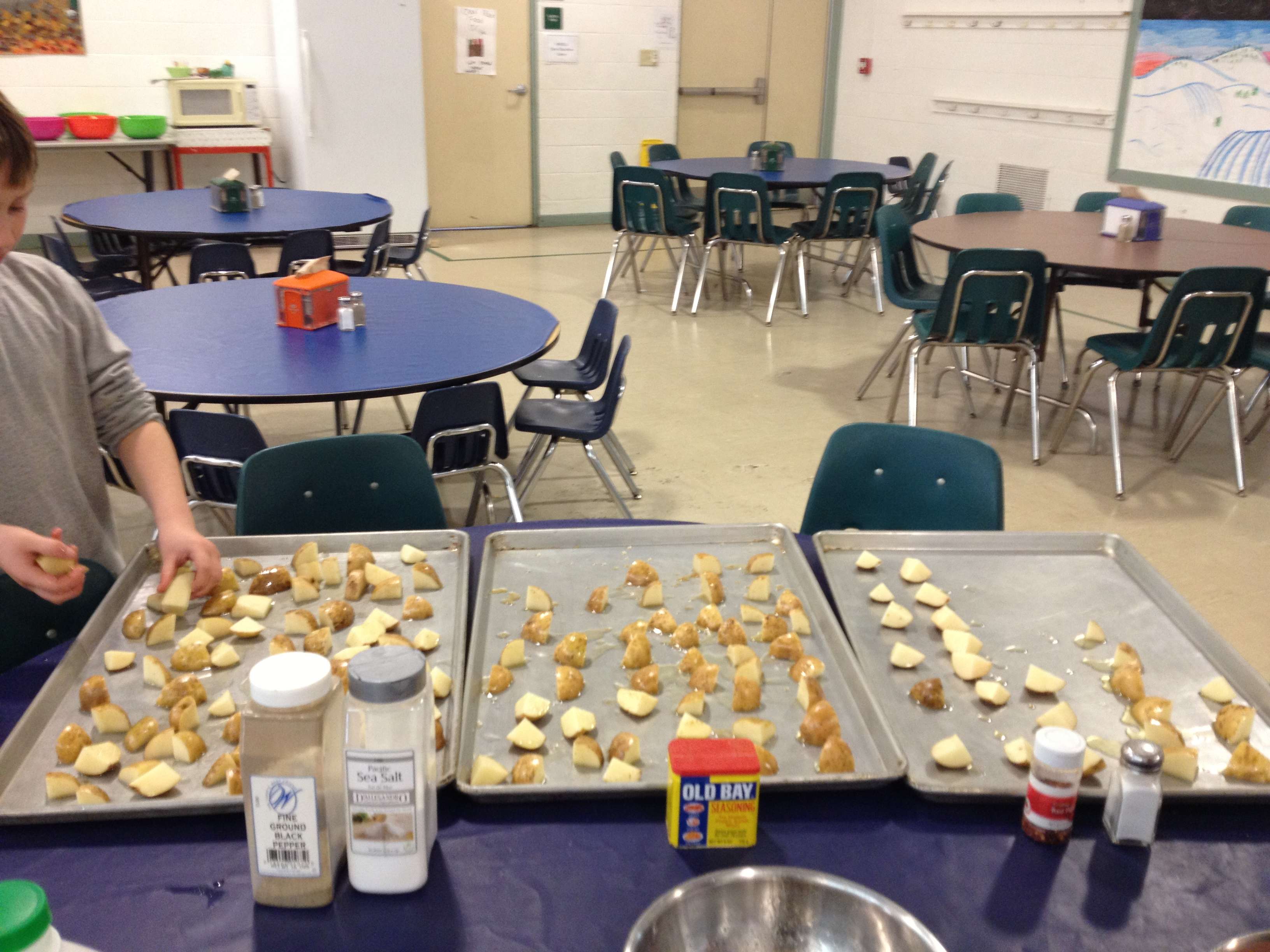
The three choices were 1. salt and pepper 2. vinegar and Old bay Spice 3. hot chili pepper flakes and salt. Each marinade also included about 1/2 cup of olive oil. The oil helps to distribute oven heat evenly and speeds up the baking.

There was an opportunity for a visual graph of initial student flavor choices. Each flavor potato had its own tray.

which choice was most popular?

which choice was most popular?

We baked our potaotes in a 350 degree convection oven for about 30 minutes.

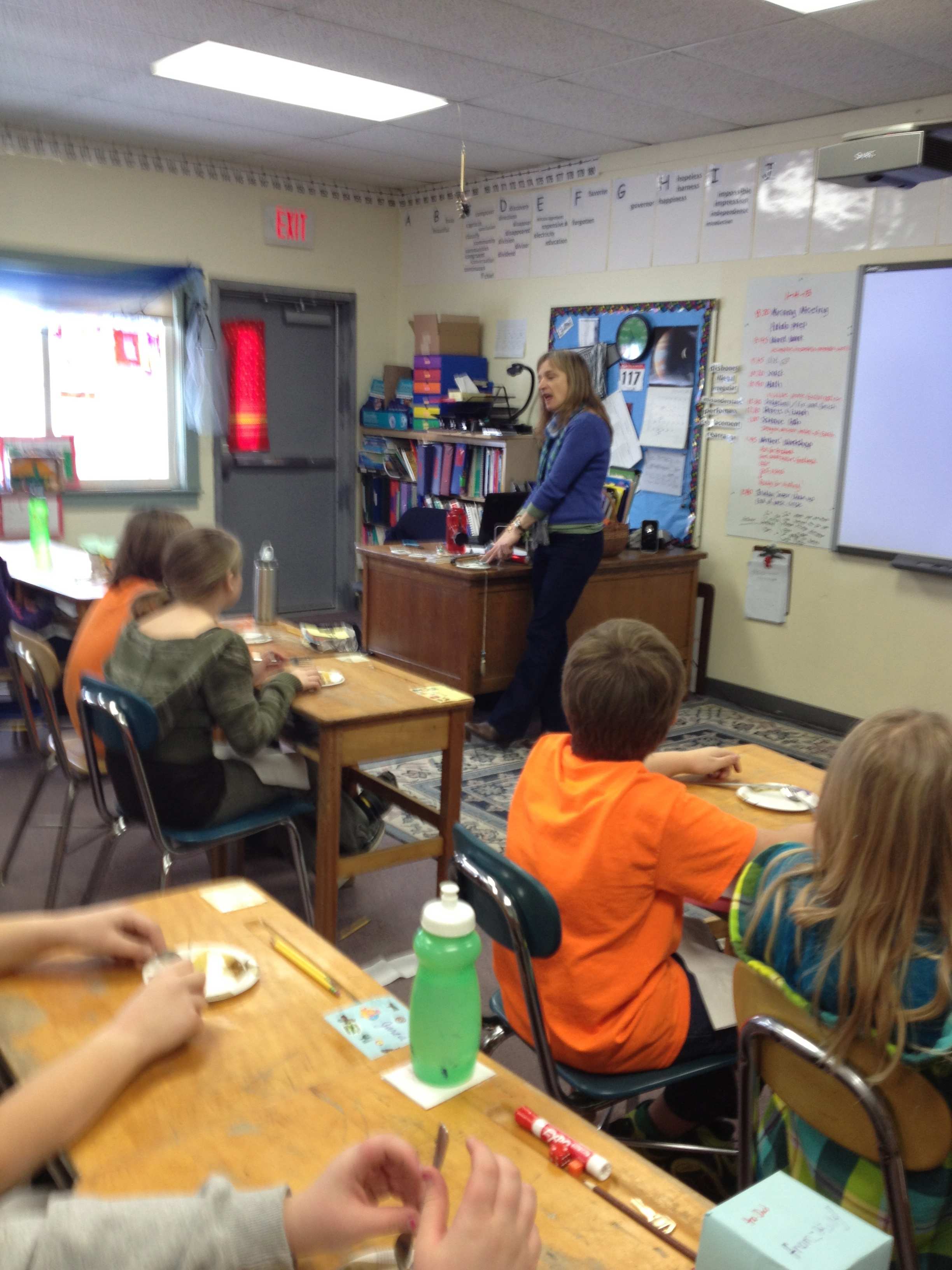
After baking and cooling, the potatoes were brought down to the fifth grade class for snack time. Each student was asked to try all three flavors of baked potato. They also recorded the texture and appearance of each type. I could hear many students exclaiming over how much these baked “fries” tasted like the real thing! (Don’t tell them that these ‘fries’ are a helthier choice:-)

Their fifth grade teacher, Ms. Cynda, is teaching them about the  correct use of fork and knife when dining, so this lesson offered many components!

correct use of cutlery

correct use of cutlery

Having tried all three choices, students were asked to write about whether they would still choose the marinade they had chosen originally. How many do you think changed their minds?  One student recorded their votes on the board. Stay with us for the class response………coming soon!!


Leave a comment

DECEMBER: ALSO TIME TO ENJOY MAPLE SYRUP ON PANCAKES

Yesterday, the fourth grade classes participated in making and eating pancakes.

stirring batter

stirring batter

cracking eggs into batter

cracking eggs into batter

flipping pancakes

flipping pancakes

This was not so special in and of itself. The special part was that THEY had made the maple syrup last spring as third graders.
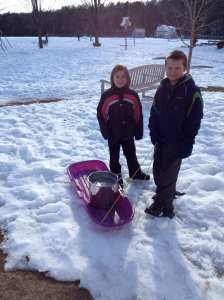
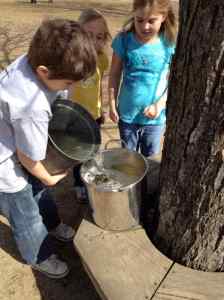
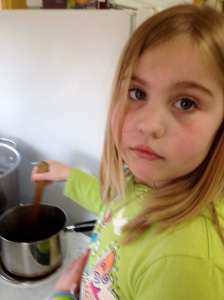
In Vermont, when the snow begins to melt and the nights are still freezing but the days are warm, students grow restless to be outdoors. What better way to welcome spring than to discover a few sugar maples on the playground whose circumference was big enough to accommodate some sap buckets? Students drilled holes for the taps, hung the buckets and checked each morning to see whether those buckets were filling with sap. Cold nights and warm days encourage the best sap runs. These lucky third graders had a cook stove in their classroom. While they did their math and reading lessons, the sap boiled merrily on the stove, sending the sweet smell of syrup throughout the school. They hypothesized about the cause and effect of evaporation and sweeter syrup. Did you know that it takes approximately 40 gallons of sap to make one gallon of maple syrup? YIKES, no wonder real maple syrup is so expensive!

sap buckets

sap buckets

first sap

first sap

gathering sap

gathering sap

The thermometer was the final determiner of our finished syrup. These industrious children boiled quite a bit of sap down to syrup. We sent some extra sap home with our principal, Mr. Tullar, who has a sugaring operation of his own at home. He brought us back a couple of more quarts of beautiful maple syrup.
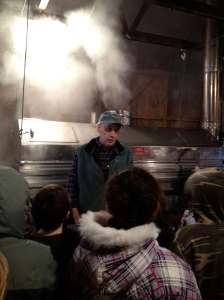
Children also learned how to make maple sugar candy, a tradition that’s been handed down from our Native American forebears here in Vermont. We had a more recent teacher: Doug Harlow from Harlow’s Sugar House.

making maple candy

making maple candy

visiting  Harlow's Sugar House

visiting Harlow’s Sugar House

Hooray for a look back on a full year of cooking and learning!


Leave a comment

DECEMBER: TIME FOR POTATO PANCAKES

GLUTENFREE POTATO LATKES RECIPE HERE

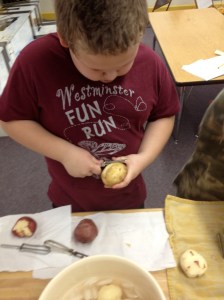
peeling potatoes

peeling potatoes

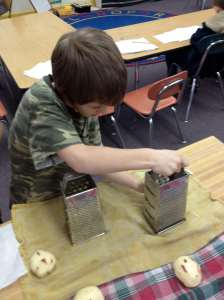
Grating potatoes

Grating potatoes

Grated potatoes~use them quickly or they'll turn brown or grey!

Grated potatoes~use them quickly or they’ll turn brown or grey!

Measuring and mixing.

Measuring and mixing.

Sizzling potato pancakes

Sizzling potato pancakes

Mr Levy’s class made potato pancake (latkes) this morning, but with a new twist. They were gluten free!

The students listened as their teacher read an Irish folktale by Tomie  Depaola about a character who tricks a giant into thinking he’s squeezing water from a stone. The students later discovered that, although their garden potatoes appeared to be as hard as stones, they actually contained quite a bit of water.

Each child participated in the steps to making one of the best treats of the season: crispy fried potato pancakes with apple sauce and sour cream. Mastery of the peeler and the grater was shared among those who were experienced and those who needed coaching.

The children promised to let me know what the leftover uncooked potato mixture would look like by the end of the day. Mr. Levy set it on top of the refrigerator. Their predictions were interesting.

Measuring and predicting conversations abounded. As part of their diversity unit, students heard the story of the symbolic importance of lights and latkes to Jewish people world-wide at this time of year. While the latkes fried, their golden color helped us all to connect to memories of longer sunnier days.


Leave a comment

PUMPKIN PIE TARTLETS

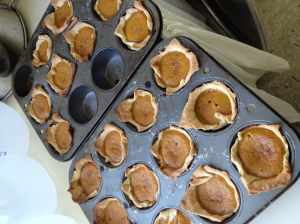
On Monday Mrs. Perry’s first graders made pumpkin tartlets in cupcake tins.
They used the pumpkin that they had cooked down earlier in the fall…the
same pumpkins that they harvested from our school garden back in October! (See November blog entry.)
In teams, the students followed the recipe for the tartlets.

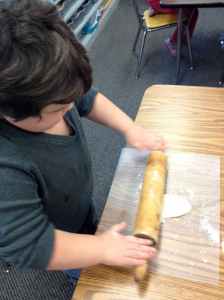
rolling pie dough

rolling pie dough

They carefully
rolled out the pie dough and added the filling.

pricking pie dough

pricking pie dough

If you would like to try our
recipe for pumpkin tartlets look below !

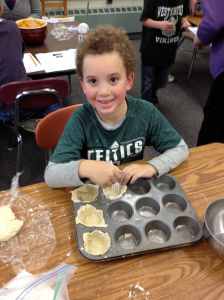
finished pumpkin tarts

finished pumpkin tarts

PUMPKN PIE TARTLET RECIPE


1 Comment

Giving Thanks

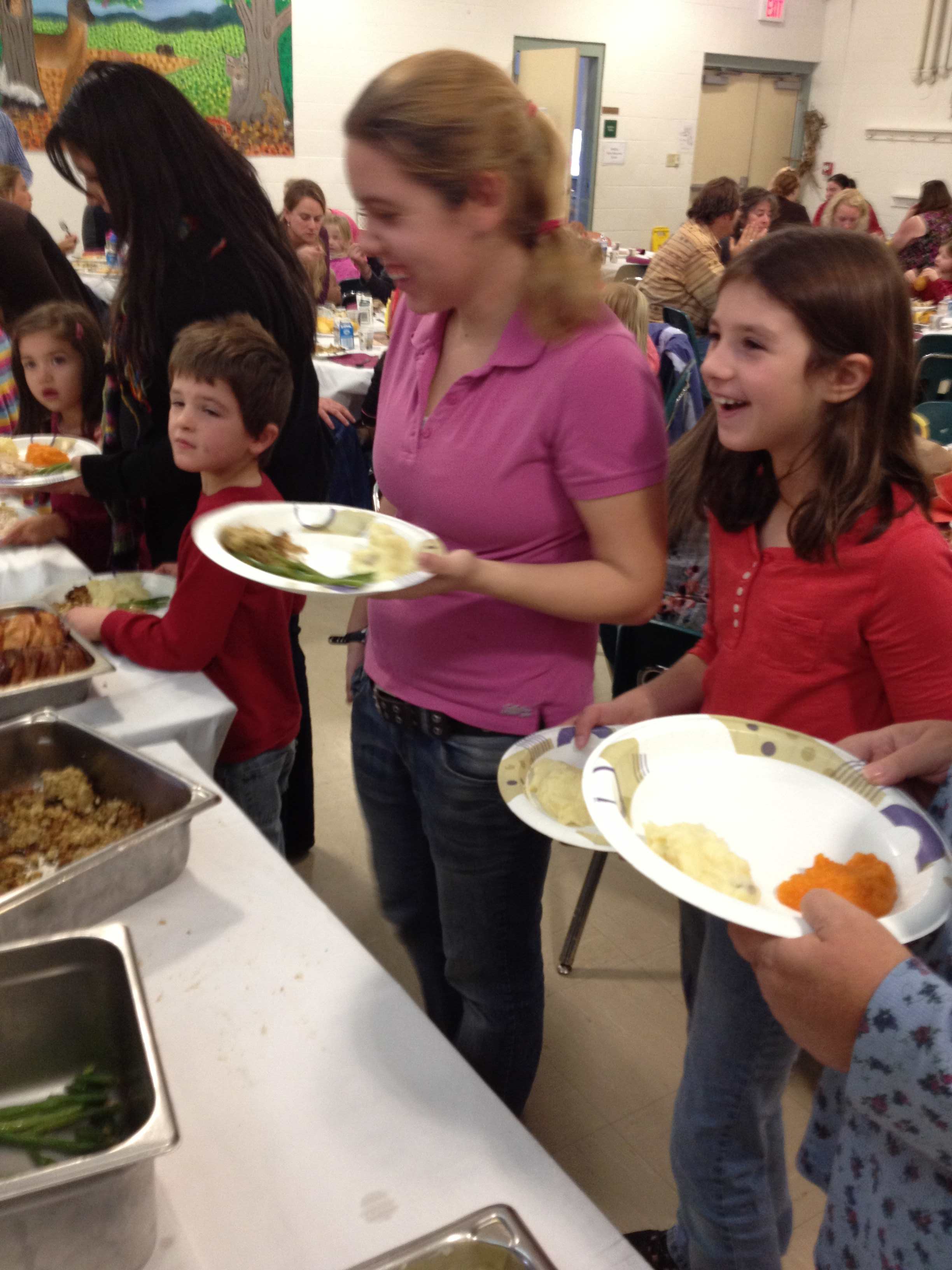
Our Westminster Schools Thanksgiving Feast has, over the years, grown to colossal proportions. This year  we were expecting 400 to 600 attendees. I was in charge of the butternut squash (200 cups, please.) Our generous community farmers and friends at the Kurn Hattin School donated the milk, potatoes, butter and squash for these minions. Many thanks to them!

A powerful group of TEAM parents, led by the intrepid Molly Banik, provided the expertise, energy and initiative to get the monstrous undertaking off the ground.

Cheryl Rounds, former staff member and great grandma, and Molly Banik, feast coordinator and parent.

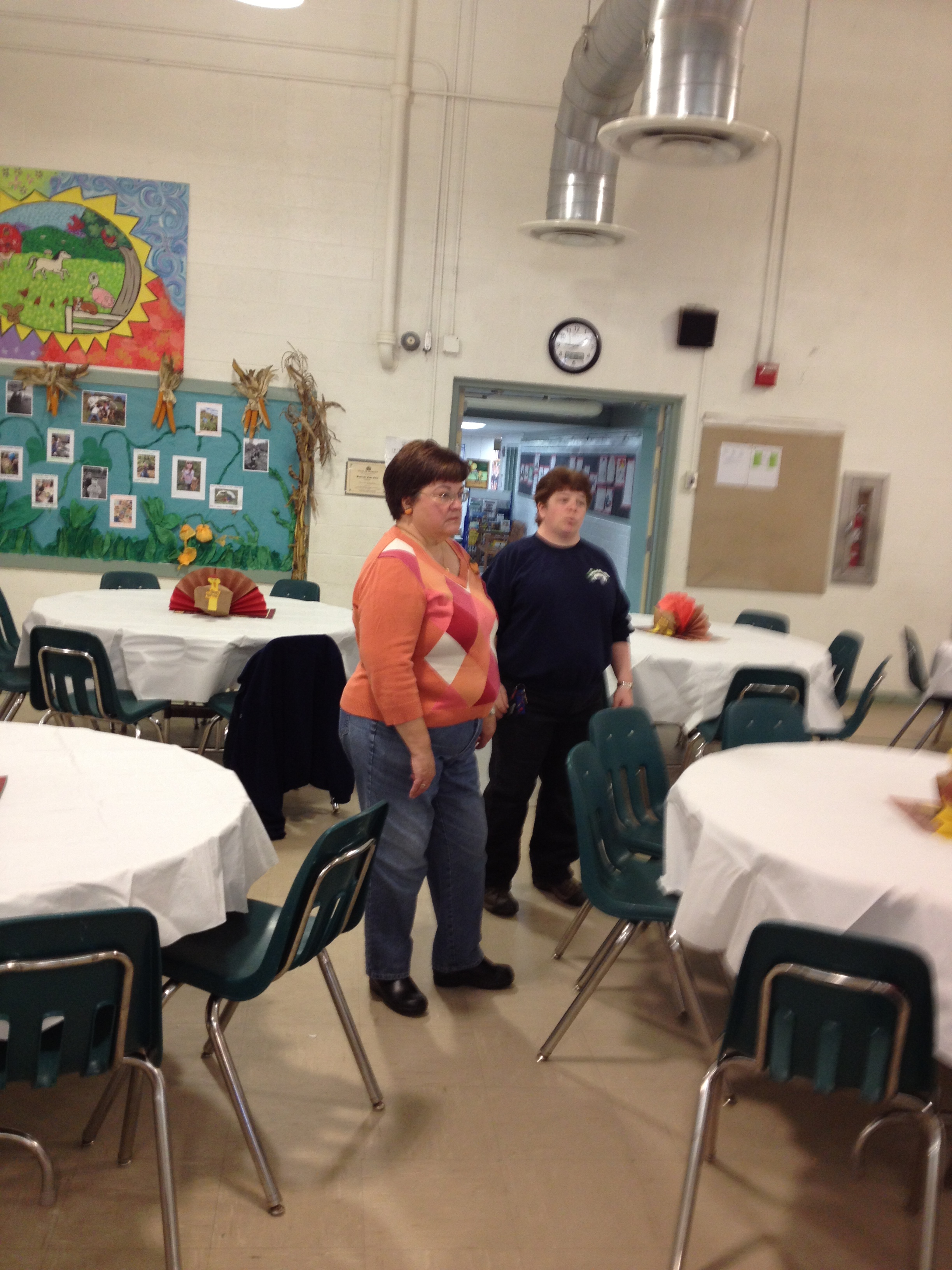
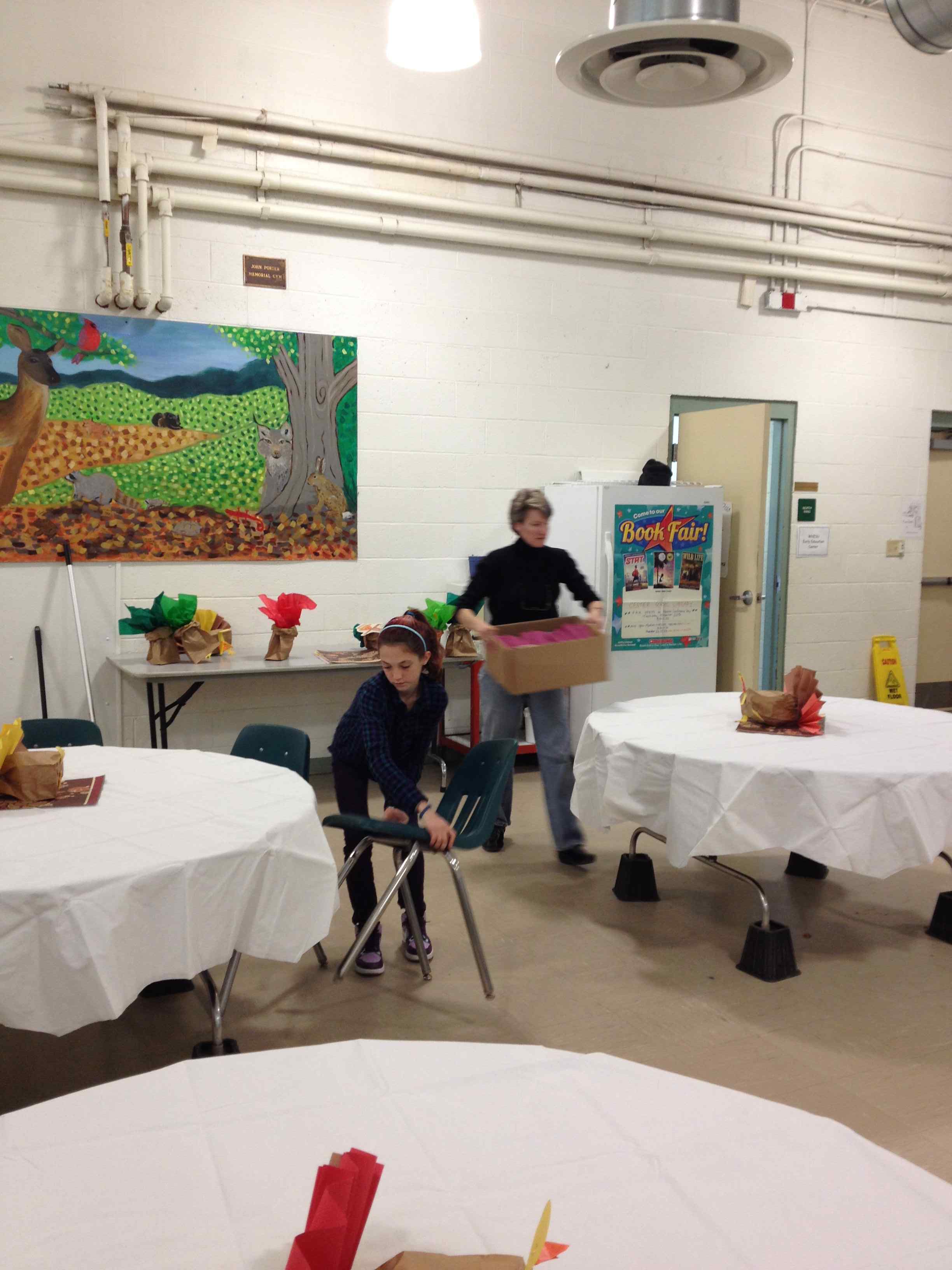
The sixth graders were on hand early in the morning for lessons on how to serve. Both the cavernous gymnasium and the dining hall were set up restaurant style with white table cloths and burgundy napkins. ‘Feasters’ would eat with their families and other families at tables of eight. Our principal, Steve Tullar, was on hand to welcome parents to the tables. Centerpieces were made by students and our talented Art teacher, Colleen Grout. Songs were sung by all 600 of us, under the direction of  Ashley Pane our Music teacher.

Setting up for the “Feast.”

Before 8 a.m., parents and students were at the ready, peeling an extra 50 lbs. of potatoes. (Our neighboring school, Kurn Hattin, helped with     cooking support…..so thankful that they’re just down the road!) Peter Terrell, our custodian, drove the huge pot of peeled potatoes, sloshing in icy water  to the Kurn Hattin School to be cooked. We welcomed someof their students and staff to the feast. Each Westminster student was responsible for providing a specific family contribution, such as bread or salad.

Kim Kinney, our chef, commandeered our own kitchen staff while stirring the enormous pot of turkey gravy. At the last minute someone donated 10 whole turkeys!! As you can see the spirit of  “giving” was the most important part of “giving thanks” this year at our school.

Thanksgiving buffet.

Ending  our feast, leftovers were made into dinners for hungry families. Any other leftovers were taken to the Bellows Falls Stone Church soup kitchen. (Mondays happen to be the days that they’re open for business.)

…………so thankful for the community energy that flows through this school!


Leave a comment

Pre Thanks

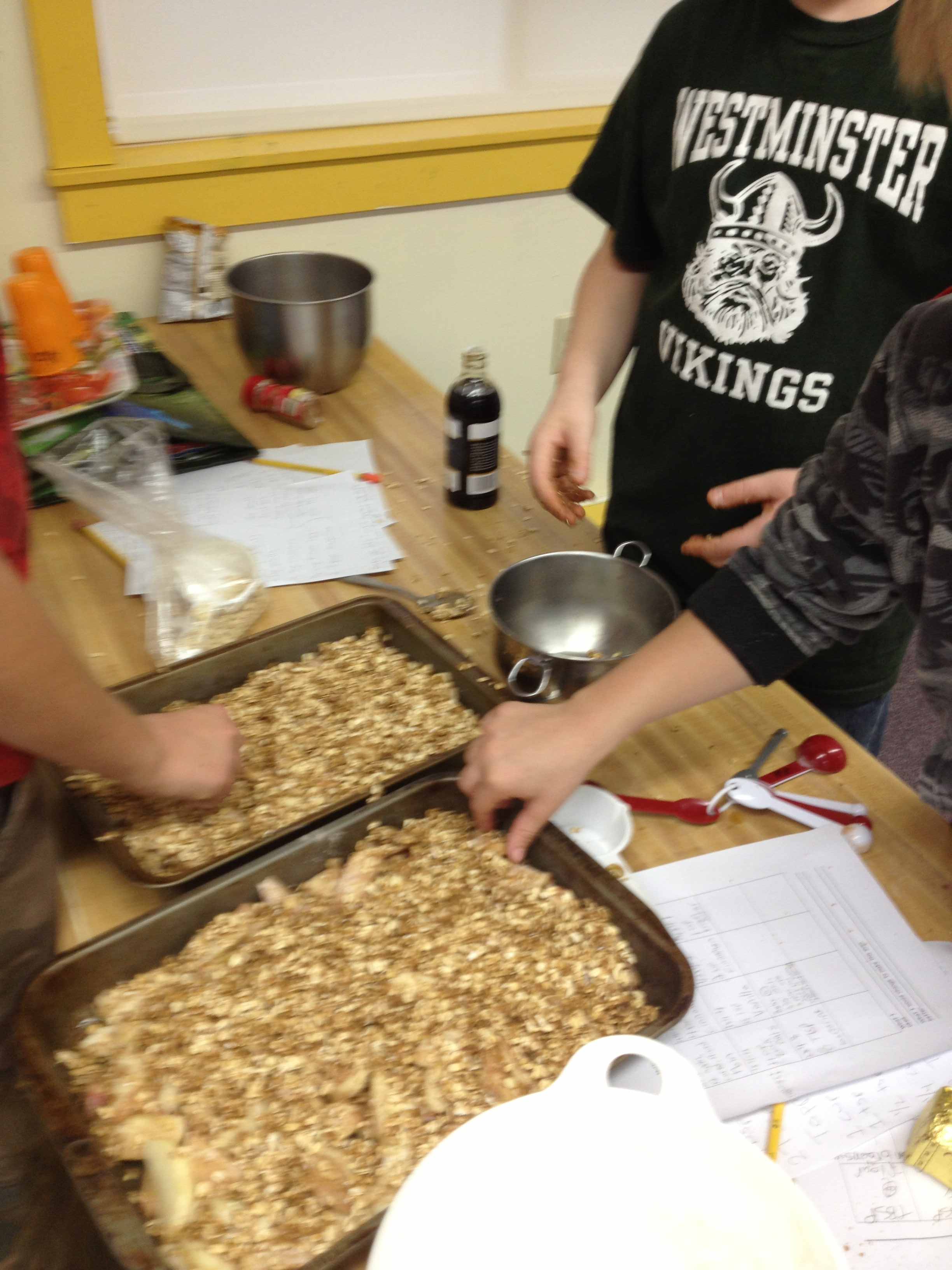
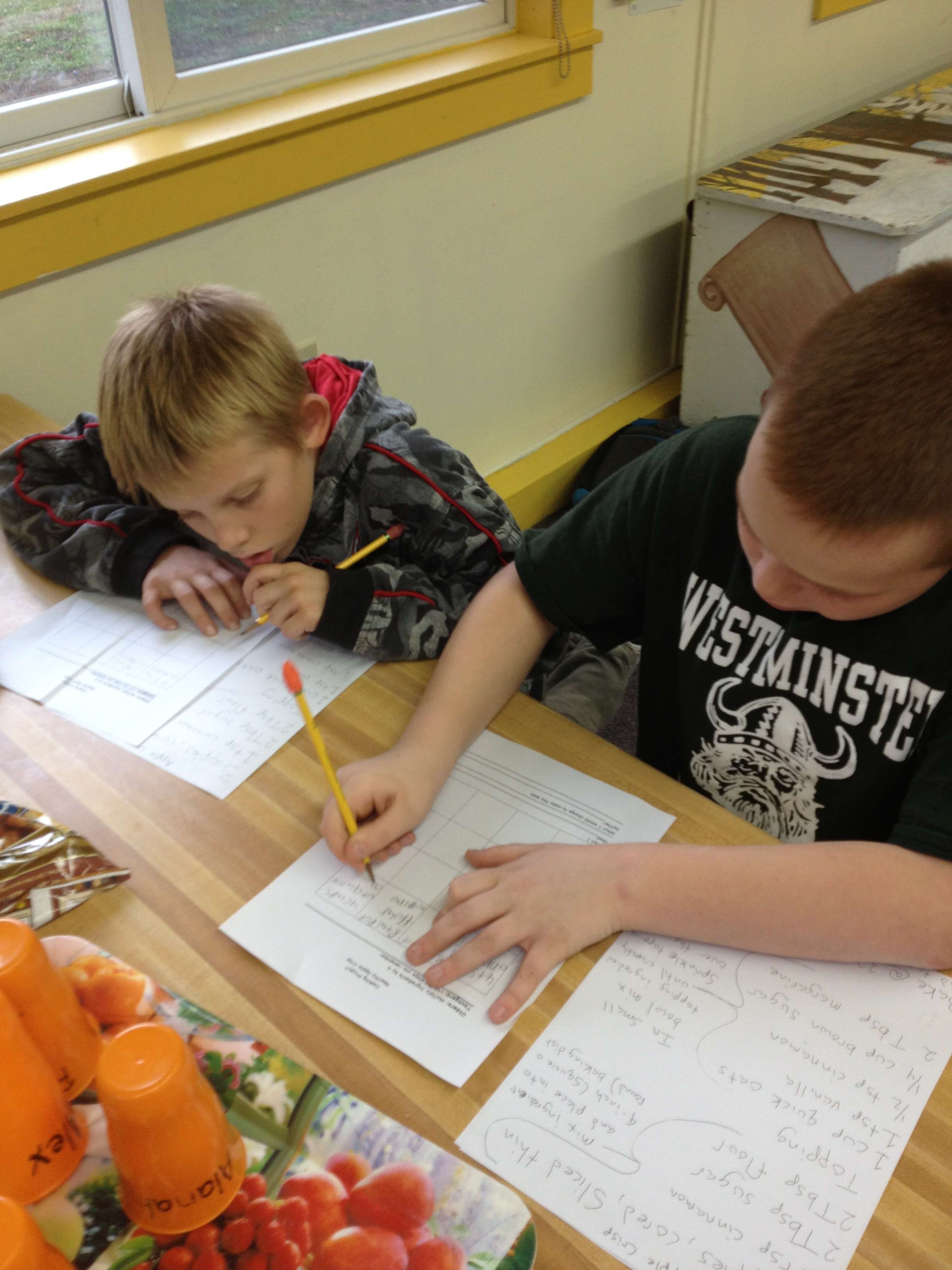
The After School class used local apples to make a healthy version of apple crisp last week. The older students quadrupled the recipe (no help with fractions; sorry kids!) while the younger ones learned apple peeling and coring skills. Those tricky older students joined forces to help each other multiply.

Multiplying ingredients by 4.

Math work in cooking.

They were done faster than you can say, “light the oven.” Next they mixed the dry ingredients together while the youngers continued to unravel the mysteries of the peeler. One student said, “I like my apples like they are, raw. Can’t we just eat them now?” “Of course!”
By the way, some children as well as adults have a hard time time managing the texture of cooked apples with skins on them because they aren’t used to the sensation. New food textures need promotional time just as  new food tastes do.

Assembling the apple crisp

After a little time to play outdoors while the apple crisp cooled, there were some happy chefs to gobble down one pan of apple crisp. The other pan went into the freezer, our contribution to the all school Thanksgiving Feast on the following Monday. The recipe for this low sugar apple crisp is just below this post. Enjoy!

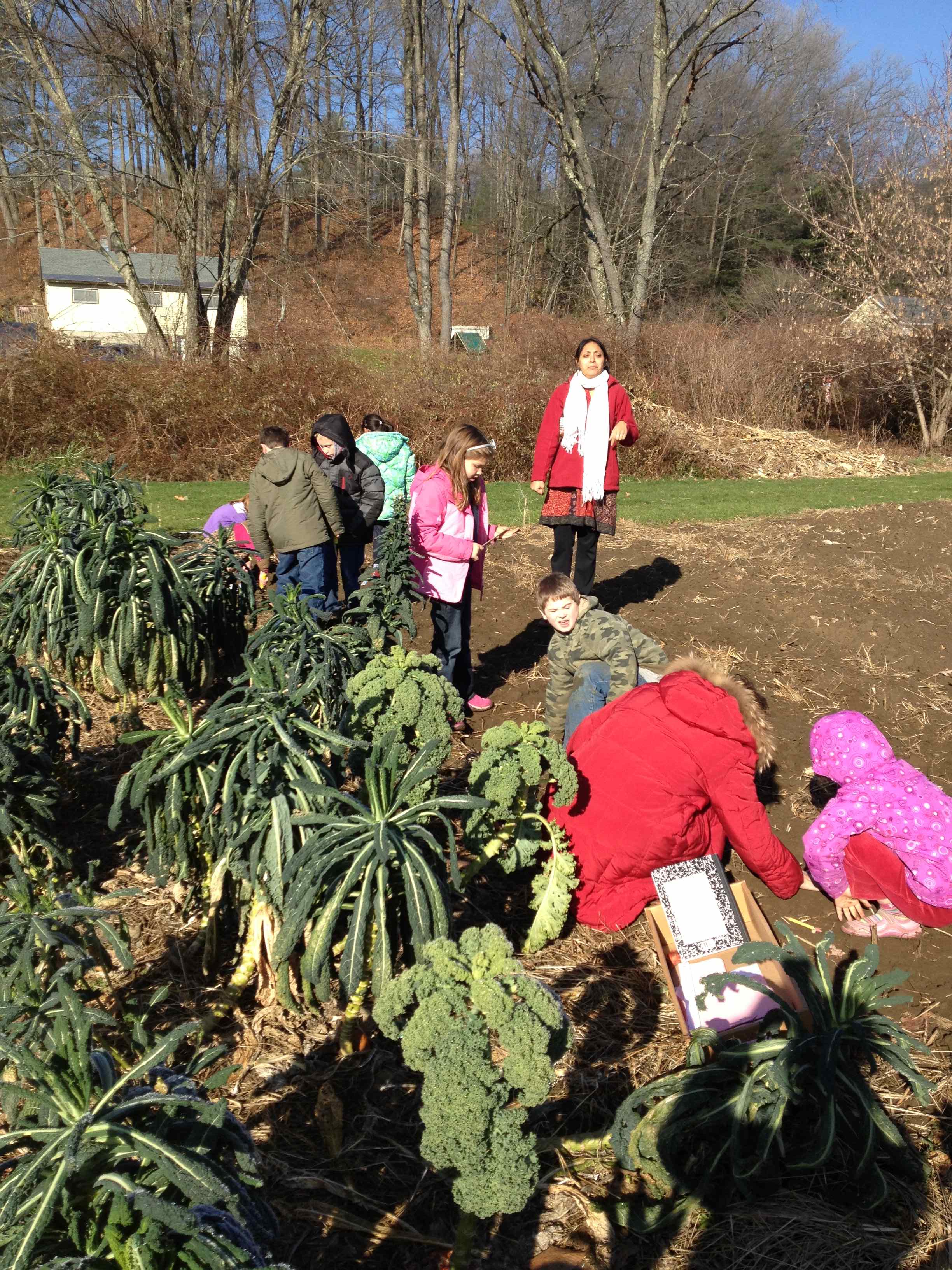
When I got to school last Monday, to help set up for the Thanksgiving Feast, I saw students heading out to the garden. I had to walk out to see what they were up to.

Journey North Science experiment Gr. 3.

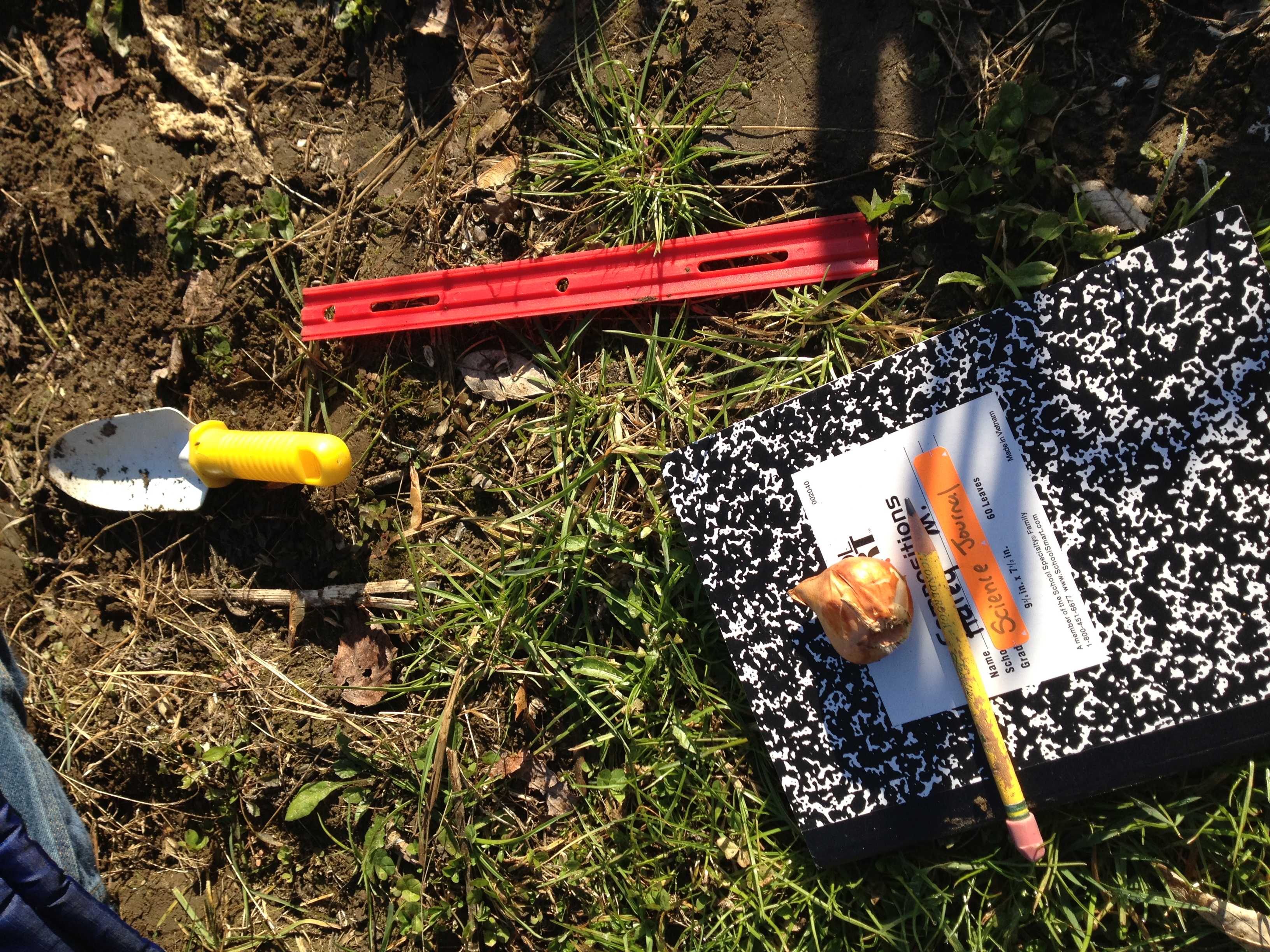
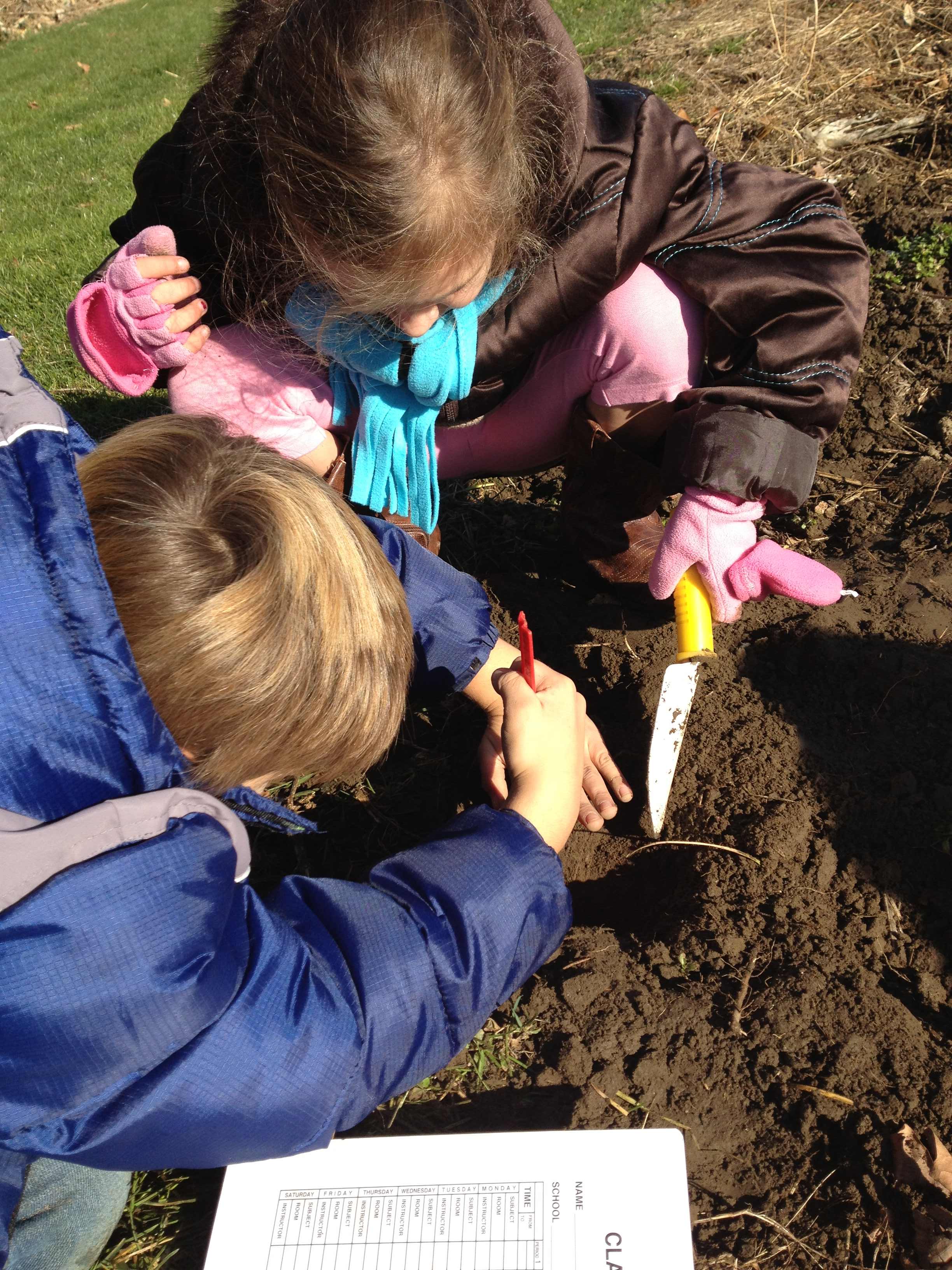
The 3rd grade was out in full force digging up the frozen earth to plant tulip bulbs.

measuring depth together

They explained that when they could see the bulbs sprouting up from the ground, they would know it was spring. I showed them the garlic bed that the After School students had planted the week before. Now they know about two bulbs that need to winter over before flowering. In pairs, these students and their teacher were breaking up the frozen earth and measuring to the exact 1/8th of an inch, the depth of their holes. Each has a science journal to record the procedure followed. Students were buzzing with interesting questions and hypotheses.

Third graders and their teacher, Atasi Das.

I think they’ll compare their data with other participating schools across the U.S.A.
Healthy Apple Crisp


Leave a comment

Planting a Crop in November? Yes; Garlic!

Claudia McCarthy is the former Westminster Center School parent I think of when it’s time to plant garlic. I learned about this time honored planting tradition from her. I hope I haven’t made too many mistakes. (It’s been a few years since her sons were part of our garden program. They’re in college and beyond now.) Claudia and her husband, Ian Conway, hosted great garlic festivals at their home every fall. The price of admission was a garlic dish. I remember that garlic ice cream was a big hit one year.

When Claudia came to plant garlic with my class, she requested 25 gallons of composted horse manure. There is less seed (weed) potential in horse manure; I’ve learned since then that rabbit is the optimal manure for growing garlic…..no seed at all in pellet fed rabbit poop. There are plenty of horse owners in our area who LOVE to have someone cart away a few bags of old horse manure.

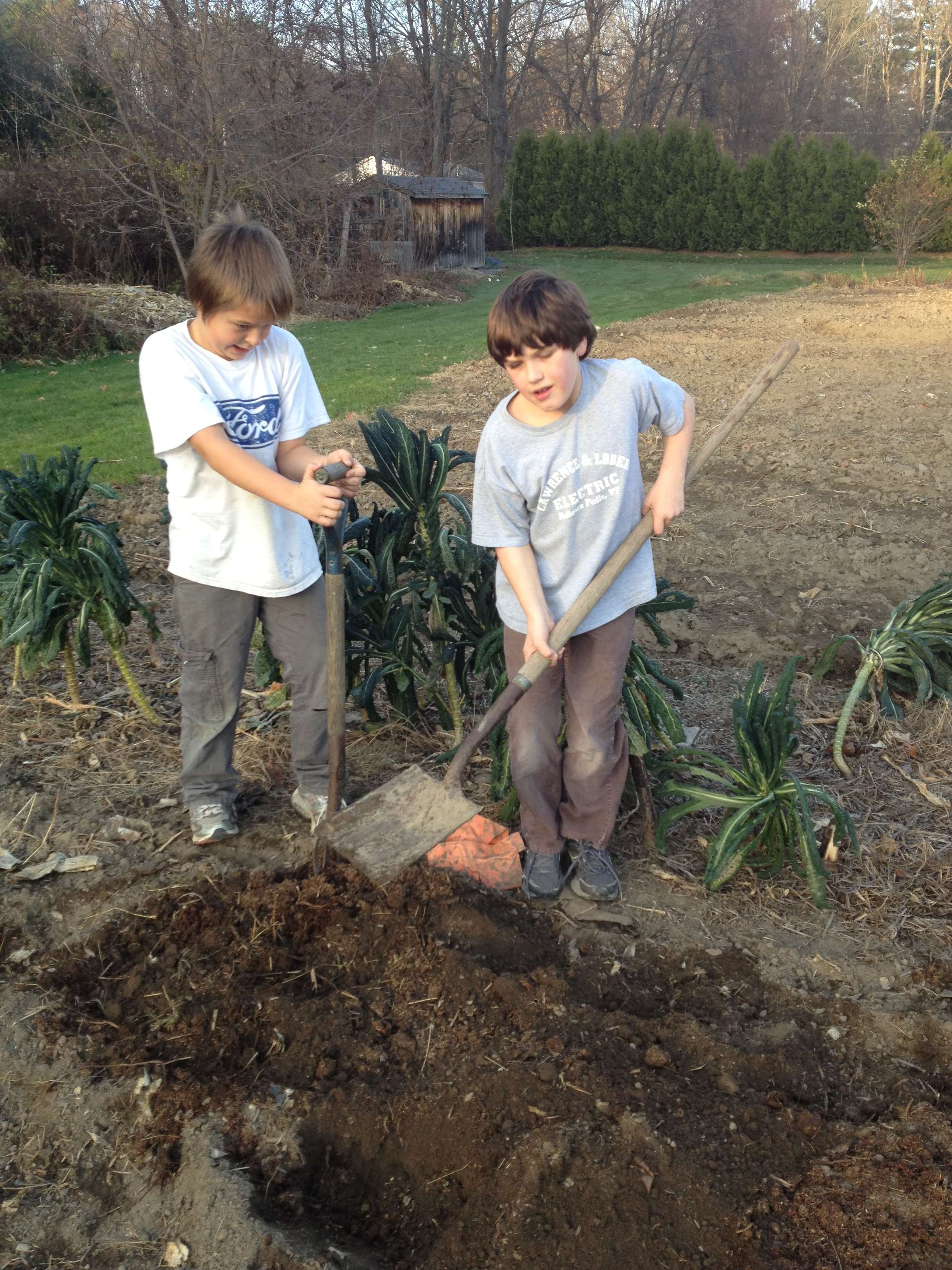
Claudia would bring five or six students at a time out to the garlic bed site. The first group would turn over the soil with pitchforks and shovels.

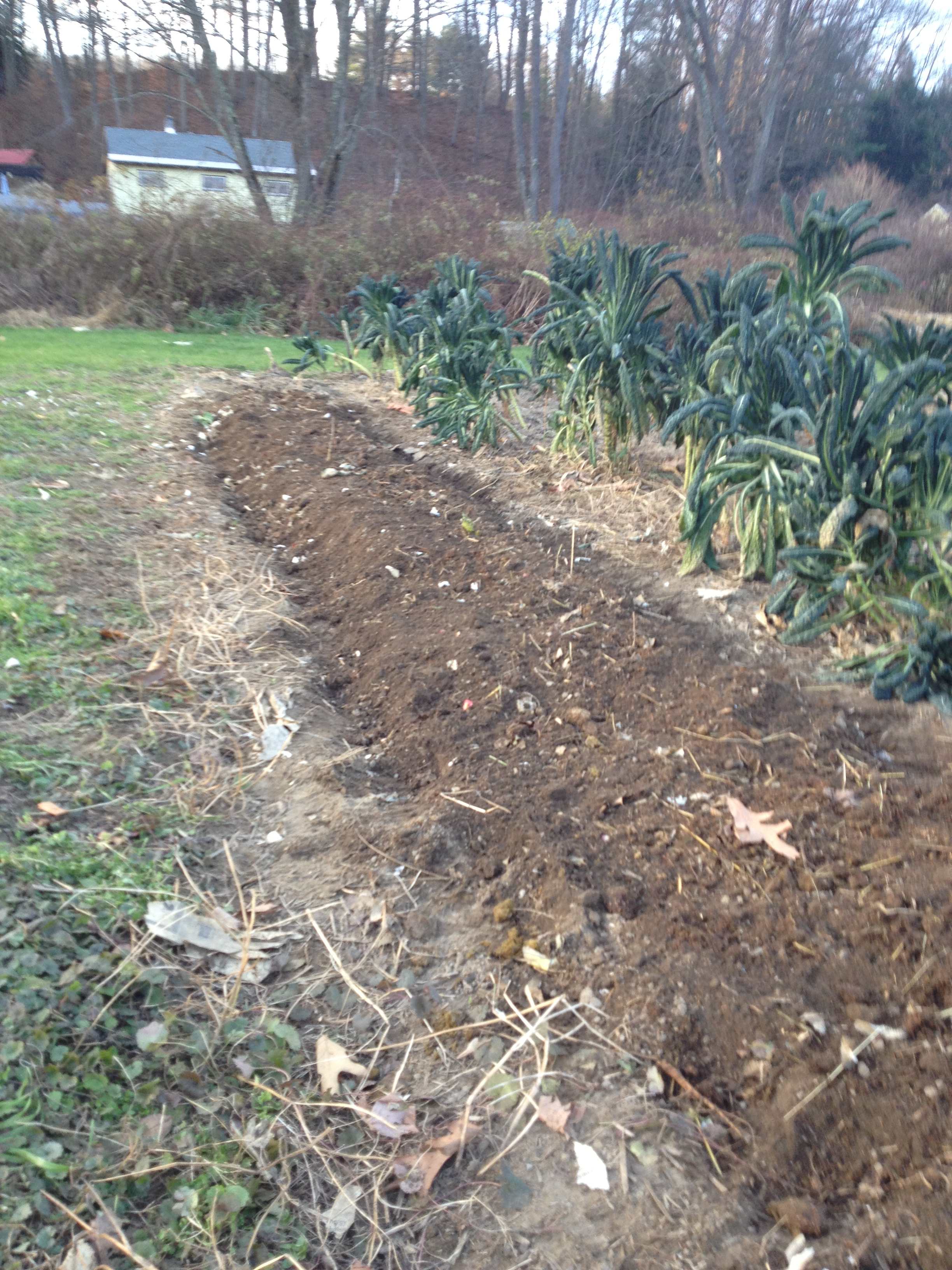
The next group would scatter the manure over a 20 x 4 foot bed. After the manure was turned into the soil, the children made a “chocolate cake’ out of the bed, building up the sides and making a little plateau on the top.  Here are some of my After School Program students doing the same thing a few days ago:

Turning composted horse manure under.

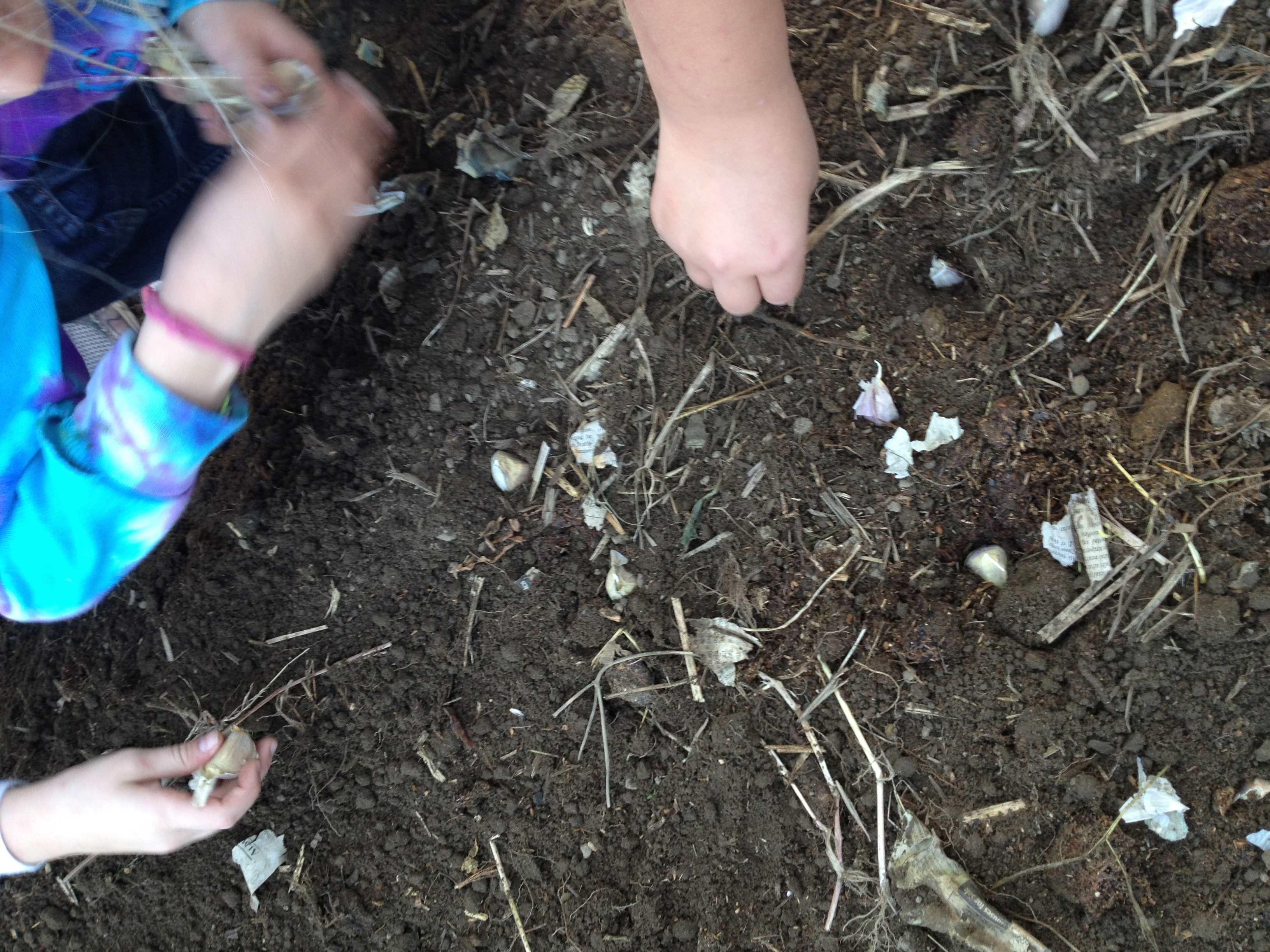
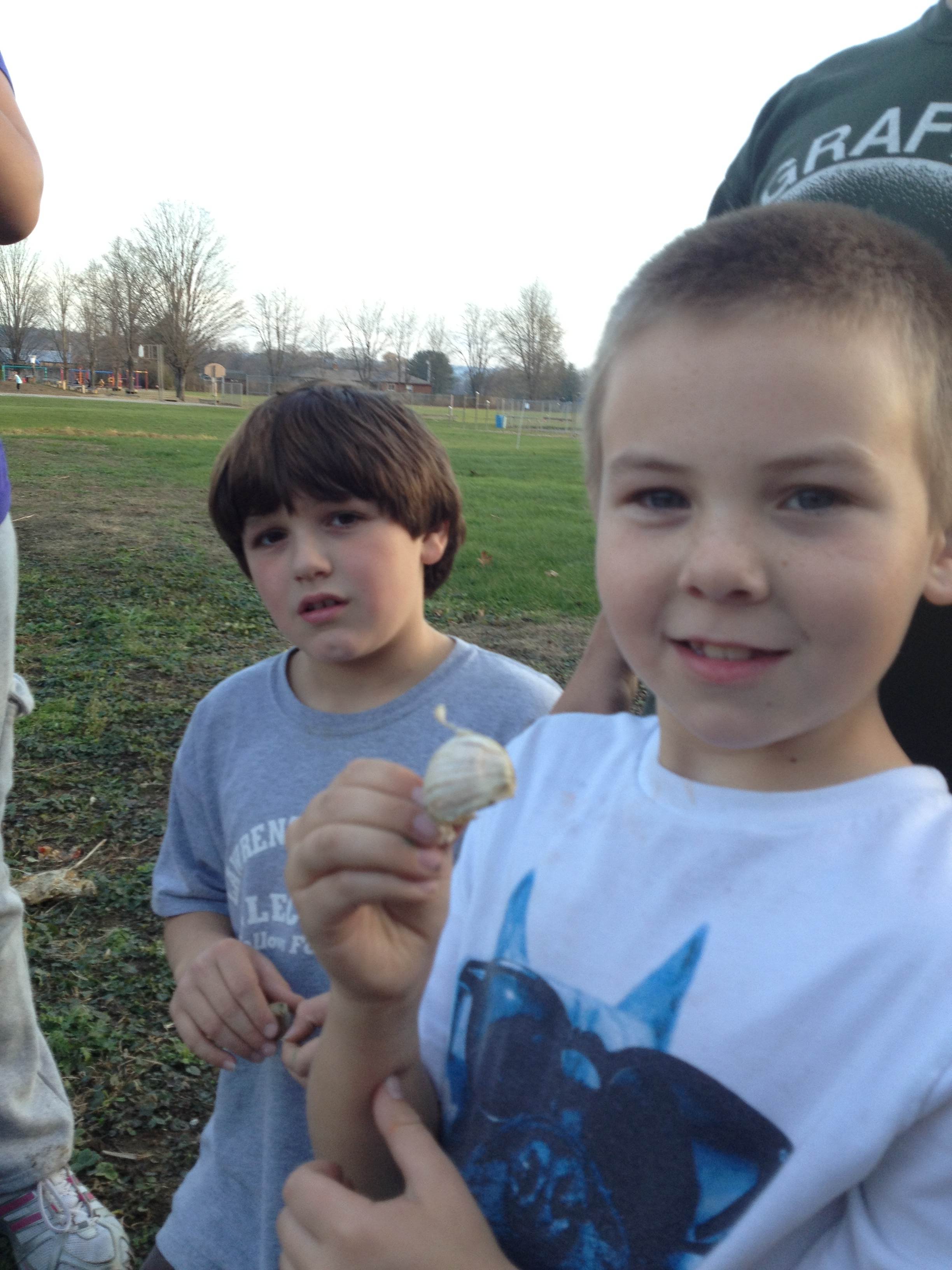
What is a garlic clove? It’s one section of the bulb of garlic that you buy from the market. Bulbs must be separated and each clove is planted individually, 6 inches from the others. We leave ours uncovered in the earth until all the cloves are planted so we don’t miss any spaces.

Planting cloves.

Plant cloves six inches apart.

Get your garlic for planting from someone who has a few bulbs left over from their own successful garlic crop OR find a commercial source.

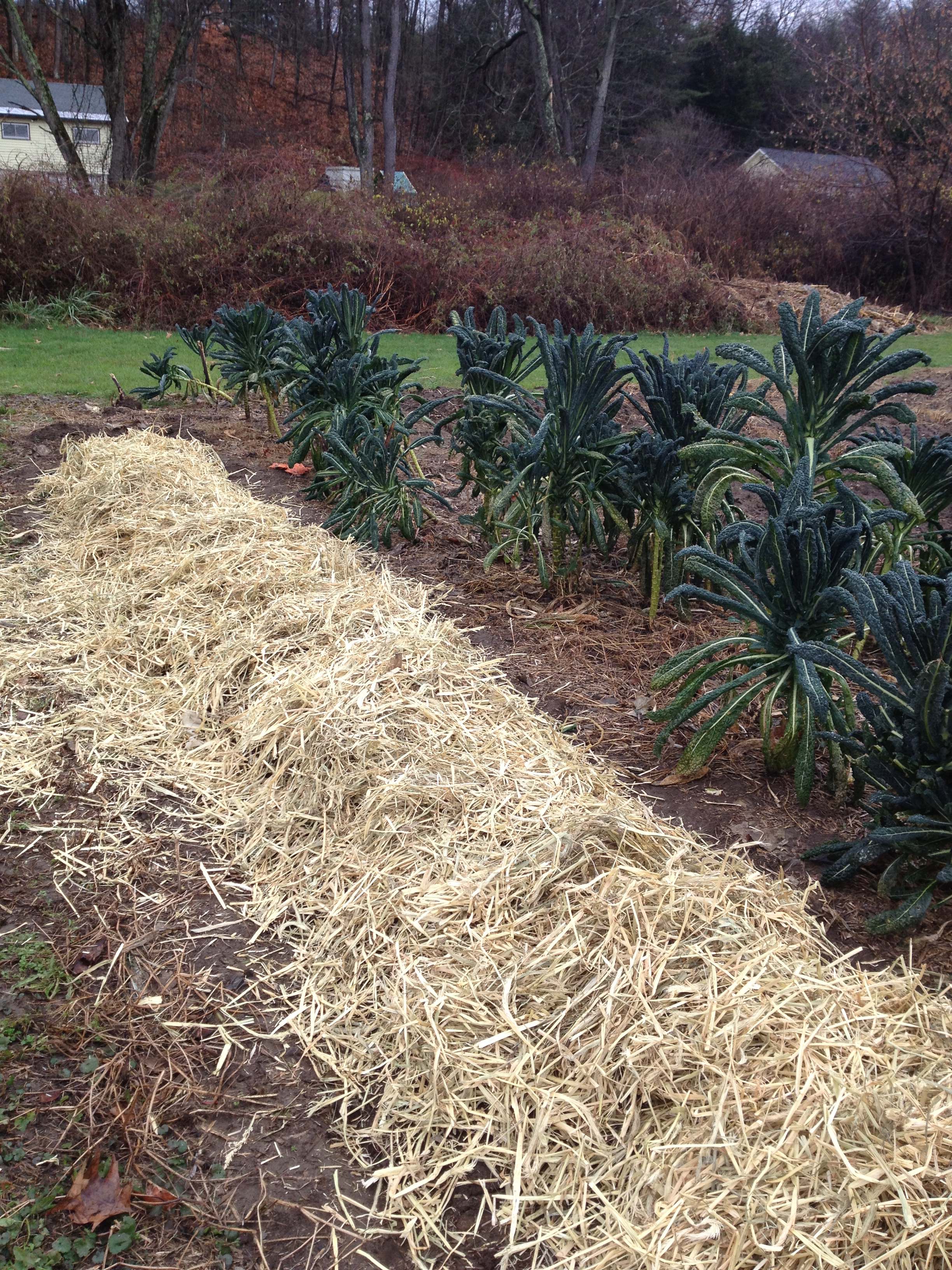
Once the cloves are planted and covered with soil, a thin layer of mulch straw (not hay; there are fewer seeds in straw) is scattered on the “chocolate plateau cake.” I know our bed doesn’t begin to look like Claudia’s did many years ago, but we’re hoping for a good crop next July.
After straw mulch.

“Chocolate cake plateau,” after planting.
Garlic is one of those bulb crops that needs to overwinter. It may begin to show a few green shoots before the snow flies. I hope not. It’s better off snoozing for a while under the snow and then sprouting in the spring. When it first sends curly flower buds (scapes) into the air, cut them off and make your first pesto with them and a little olive oil! This pruning will give energy back to the growing bulbs. The bulbs will be ready to harvest in mid-July. I hope these same children will harvest them with me during Westminster Summer Camp….more about garlic harvest next July!


Leave a comment

Putting the Garden to Bed for the Winter

I don’t know who thought of the phrase, “putting the garden to bed,” but for me it conjures up memories of settling in with my class, or my own small children for the long dark winter months, reading lots of great fairytale picture books and knowing that our garden is sleeping safely under a deep blanket of Vermont snow. It’s a time for completing the traditions of the growing cycle and reflecting back on the great times we’ve had in this garden through the seasons.

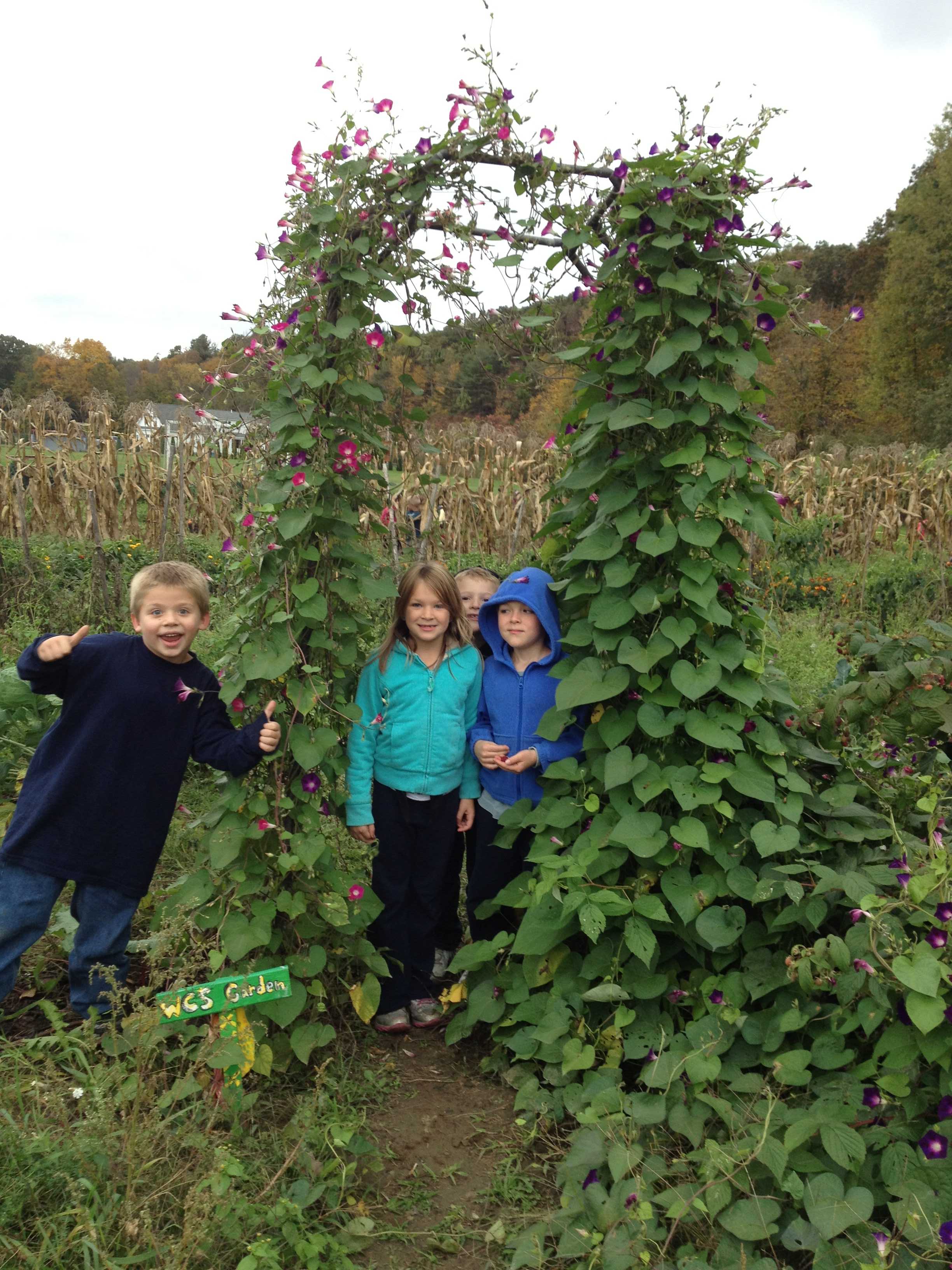
First graders under the morning glory arbor in October.

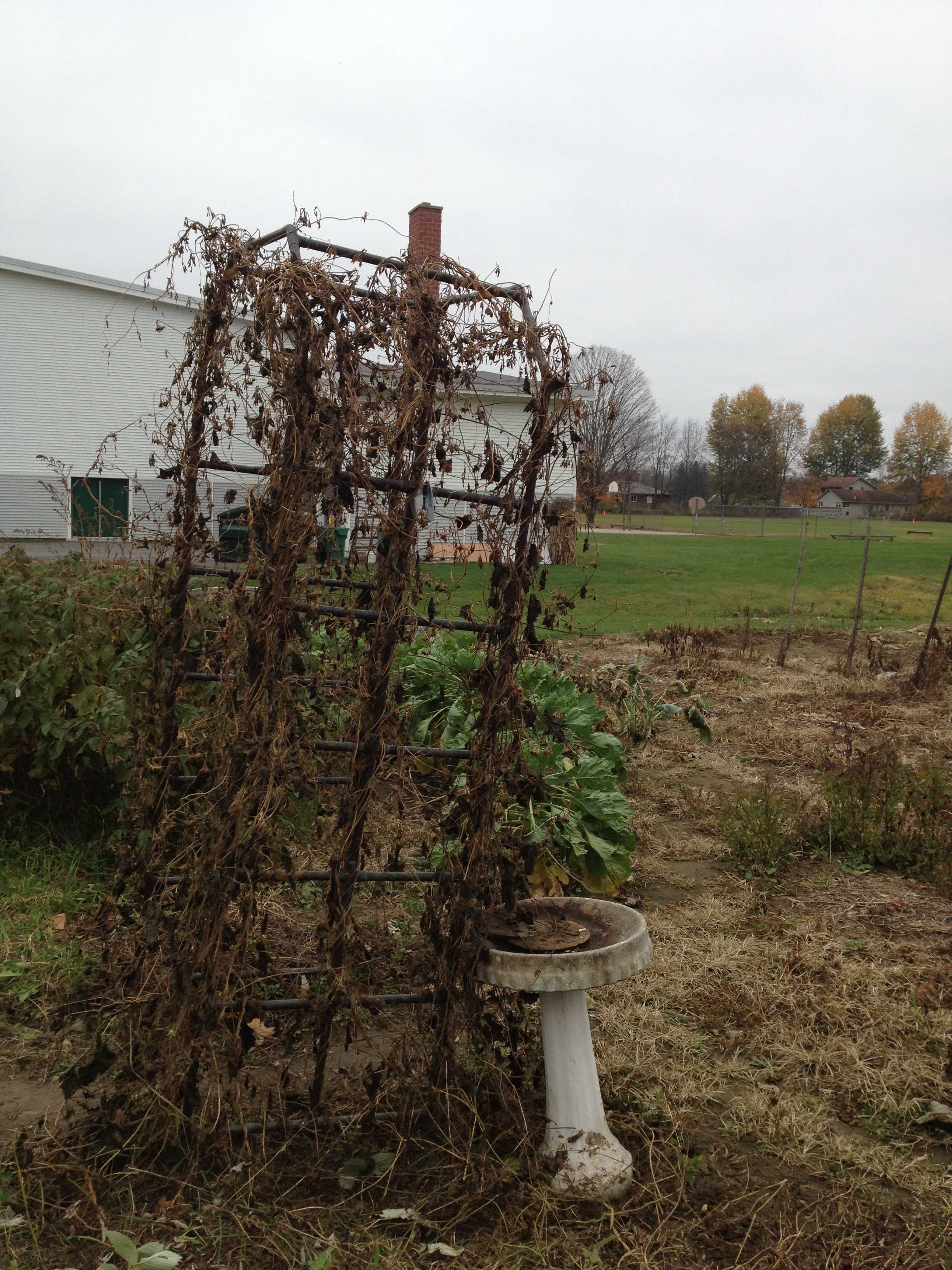
I thought a few photos of our arbor in summer and after the first frost would help to illustrate how a garden can encourage children to consider change over time.

Arbor, post frost.


Is it time to mourn the memories of brilliant marigolds or time to accept their inevitable decay and rebirth?

Cleaning up the marigold row.

First grade friends.

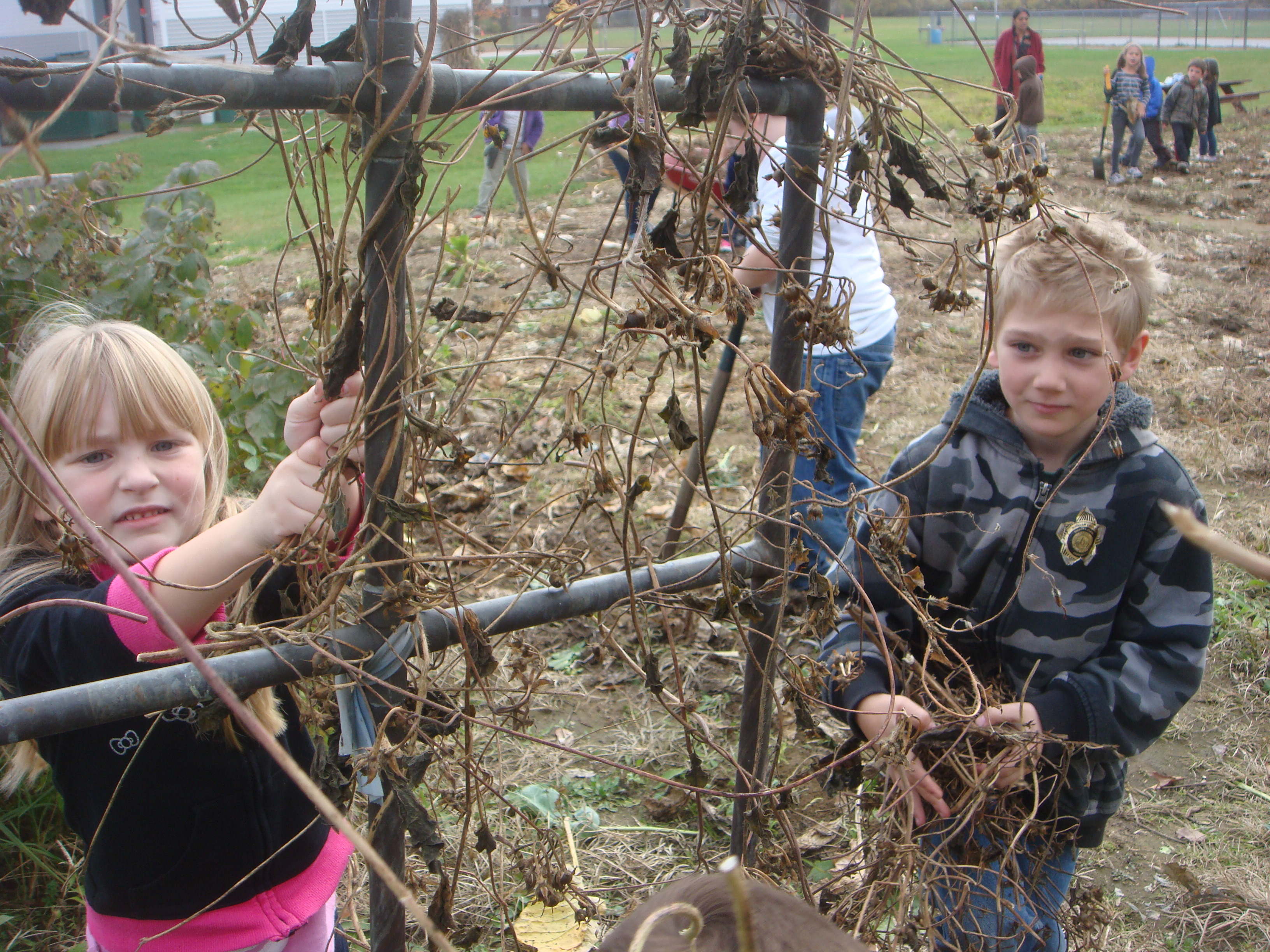
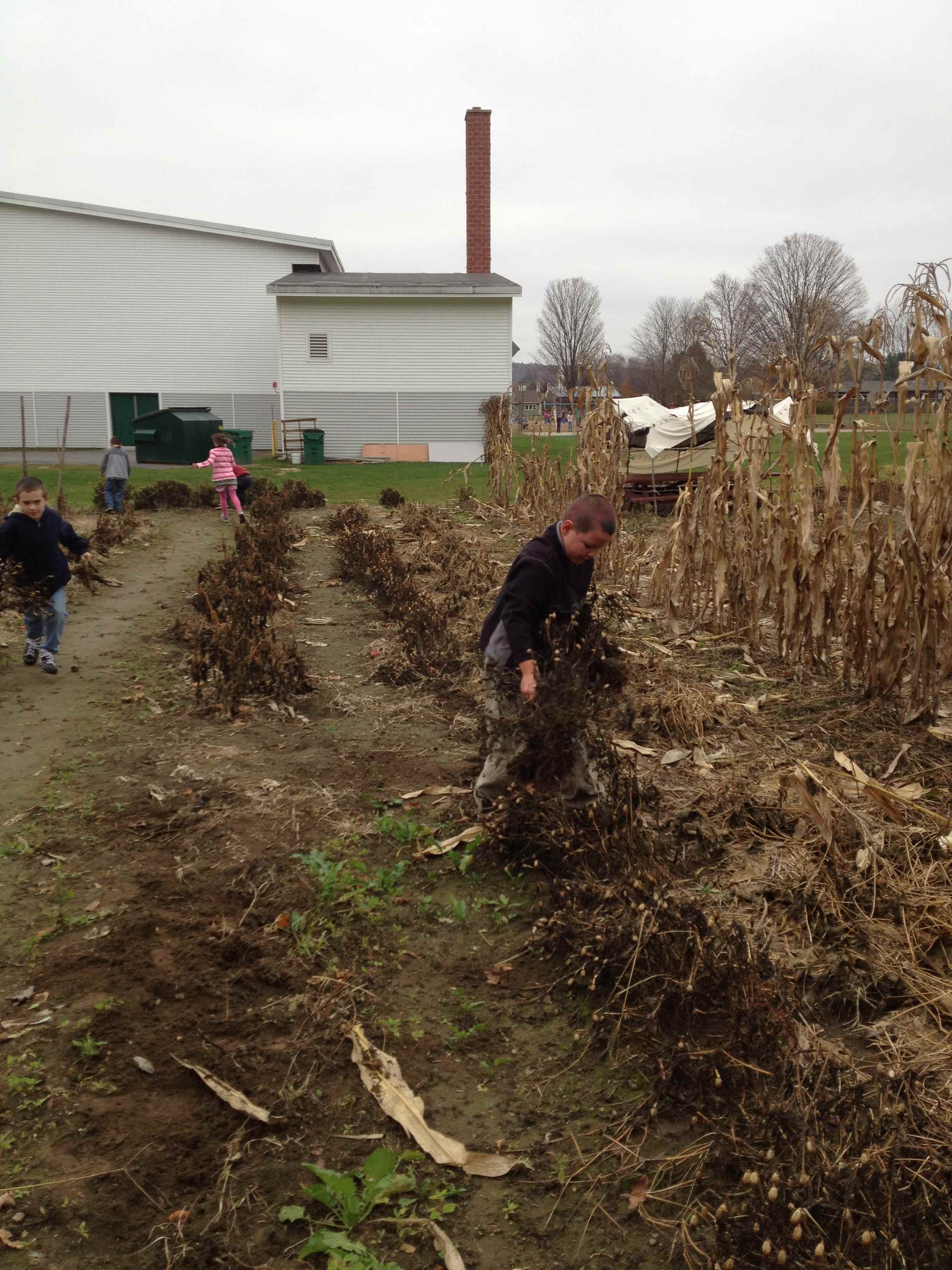
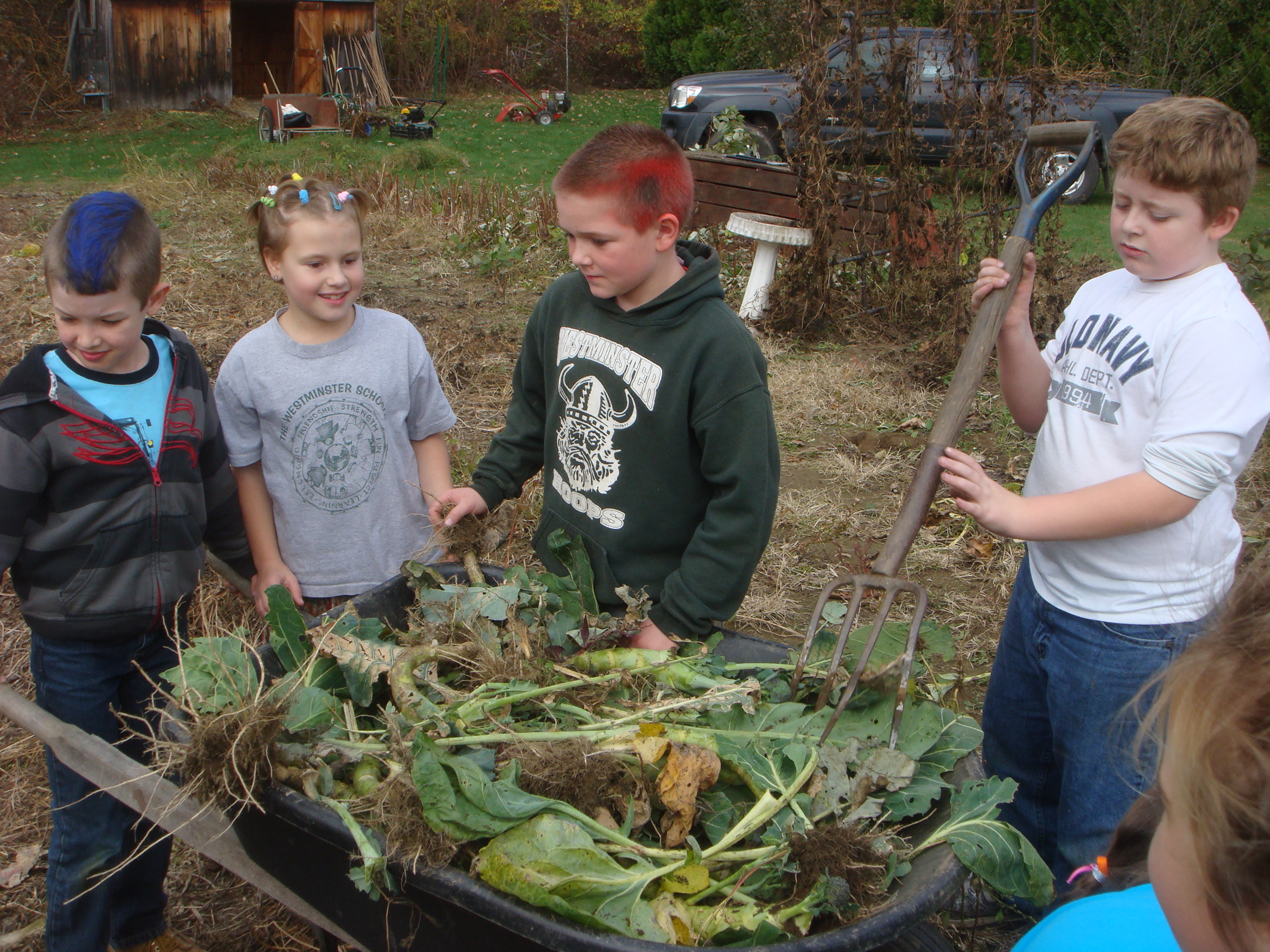
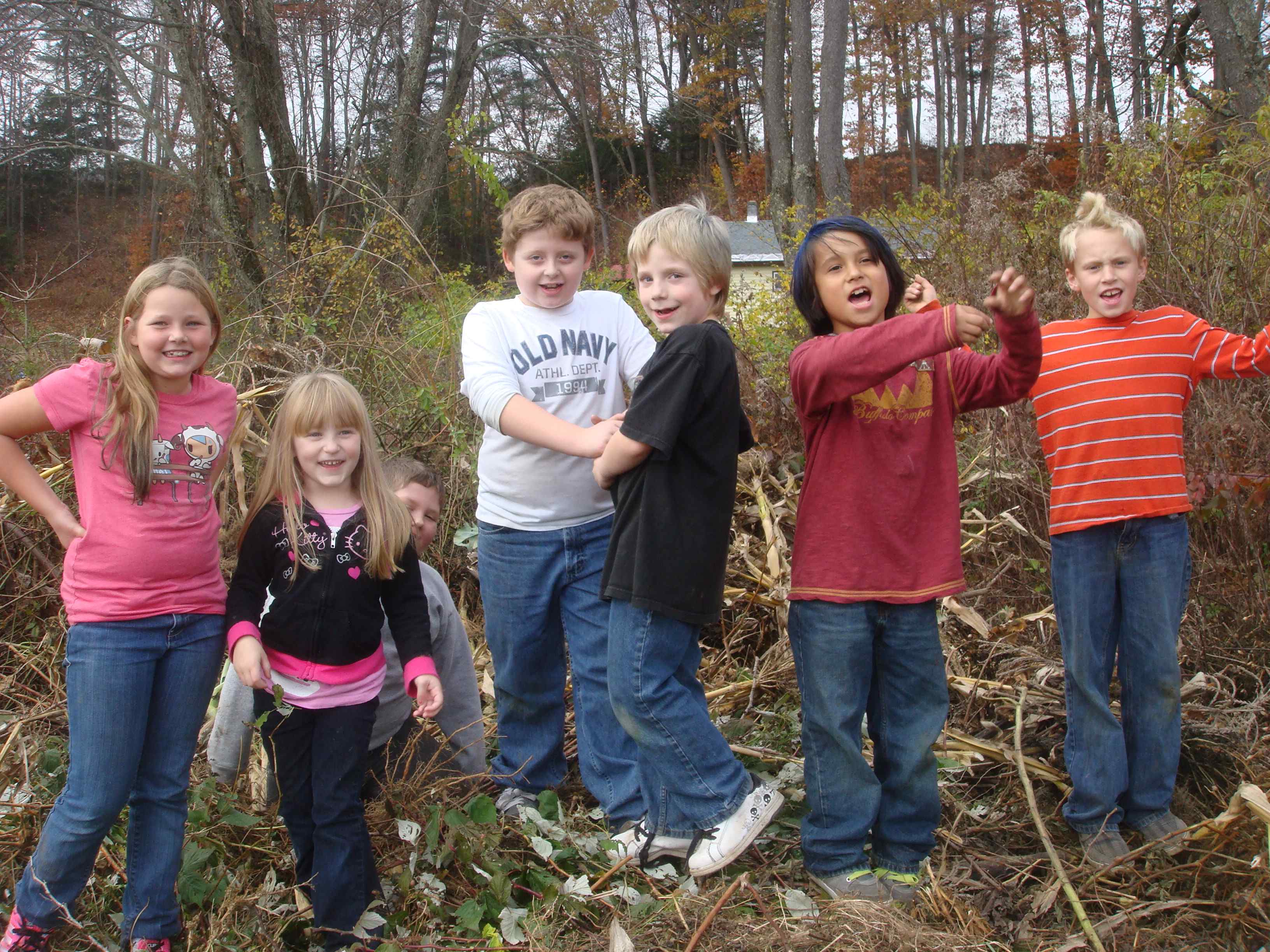
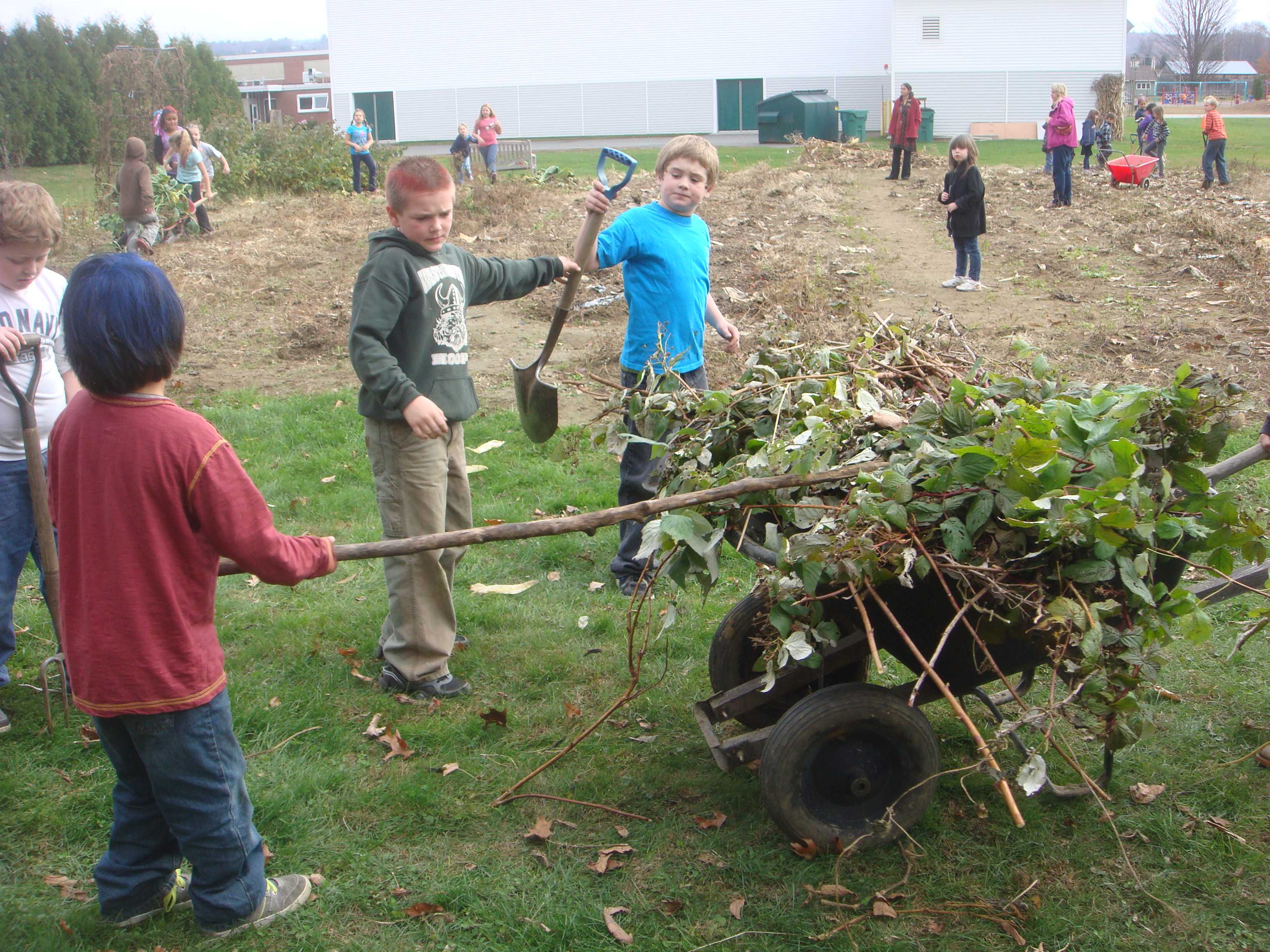
Students from Kindergarten to fifth grade participated in  clearing dead vines and tough root systems. They piled wheelbarrows high with decaying matter for our compost pile. Third graders and Kindergartners worked and played together on this warm fall “Garden to Bed Day.”

Multi-grade teamwork.

Good-bye sunflowers!

Earlier in the morning, I cut back half of the raspberries. The students carted them off to the compost pile. We’ll see if that side yields a better crop next June.

Happiness is dancing on a compost pile!

Clearing raspberry canes.

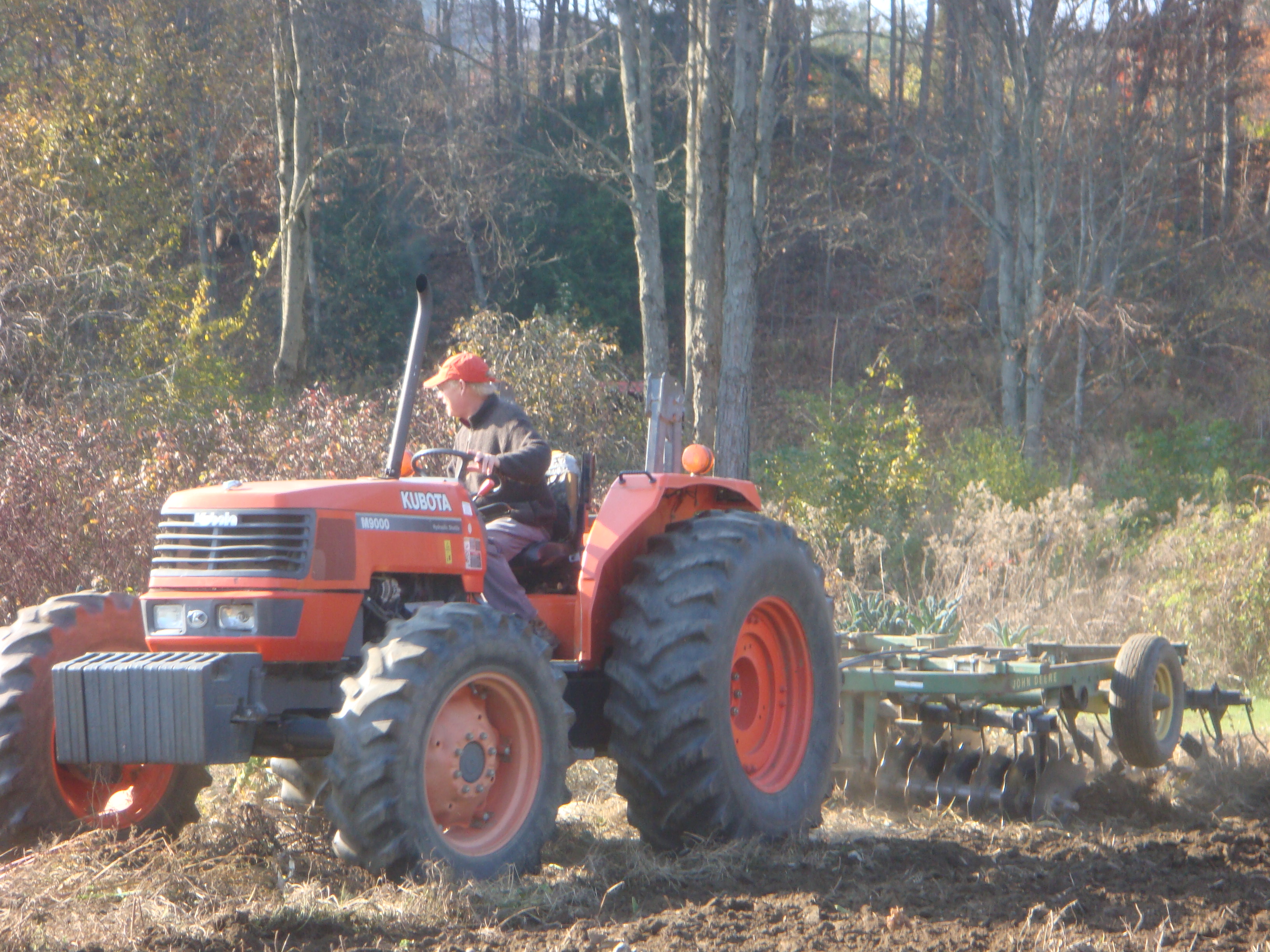
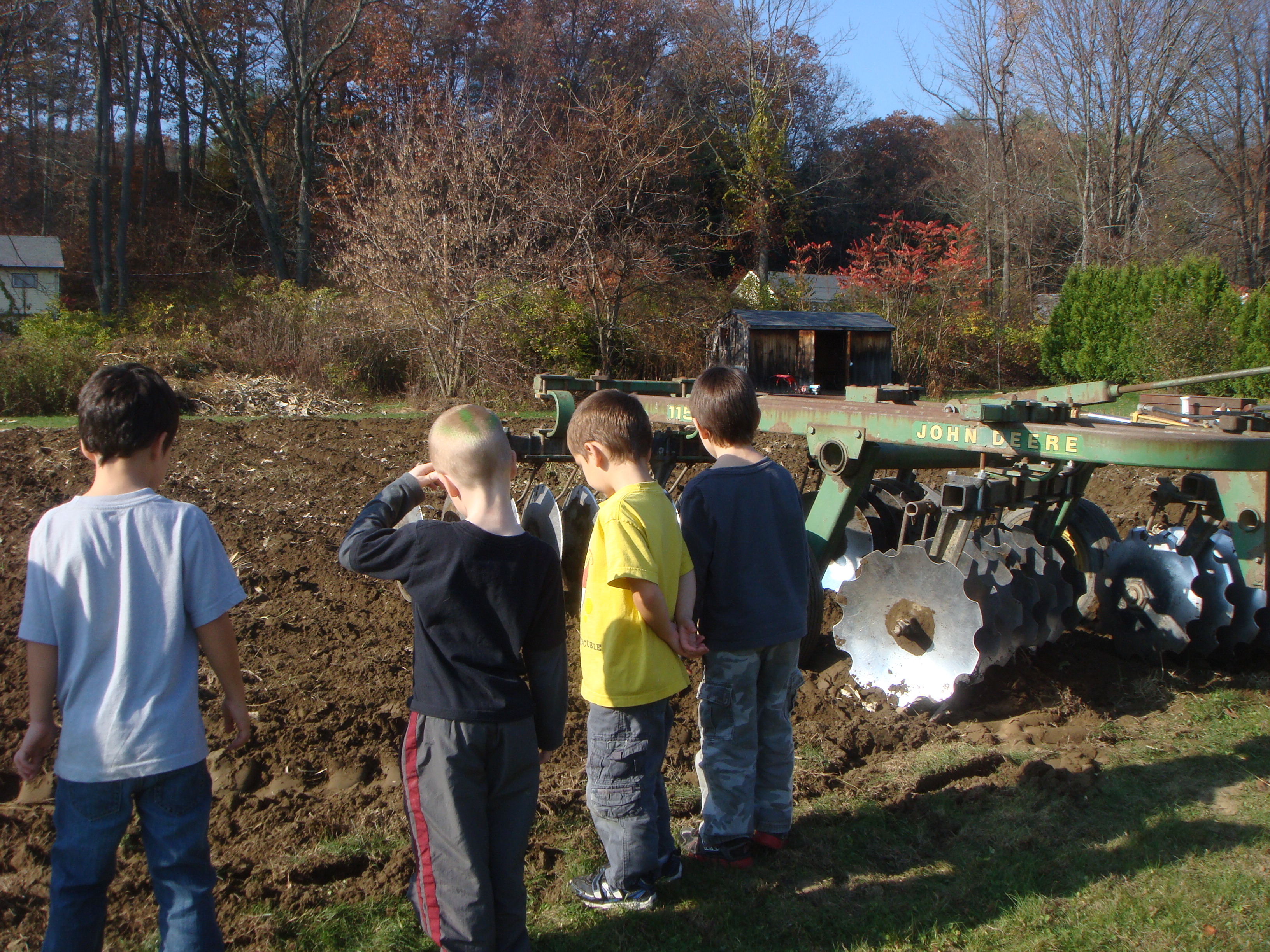
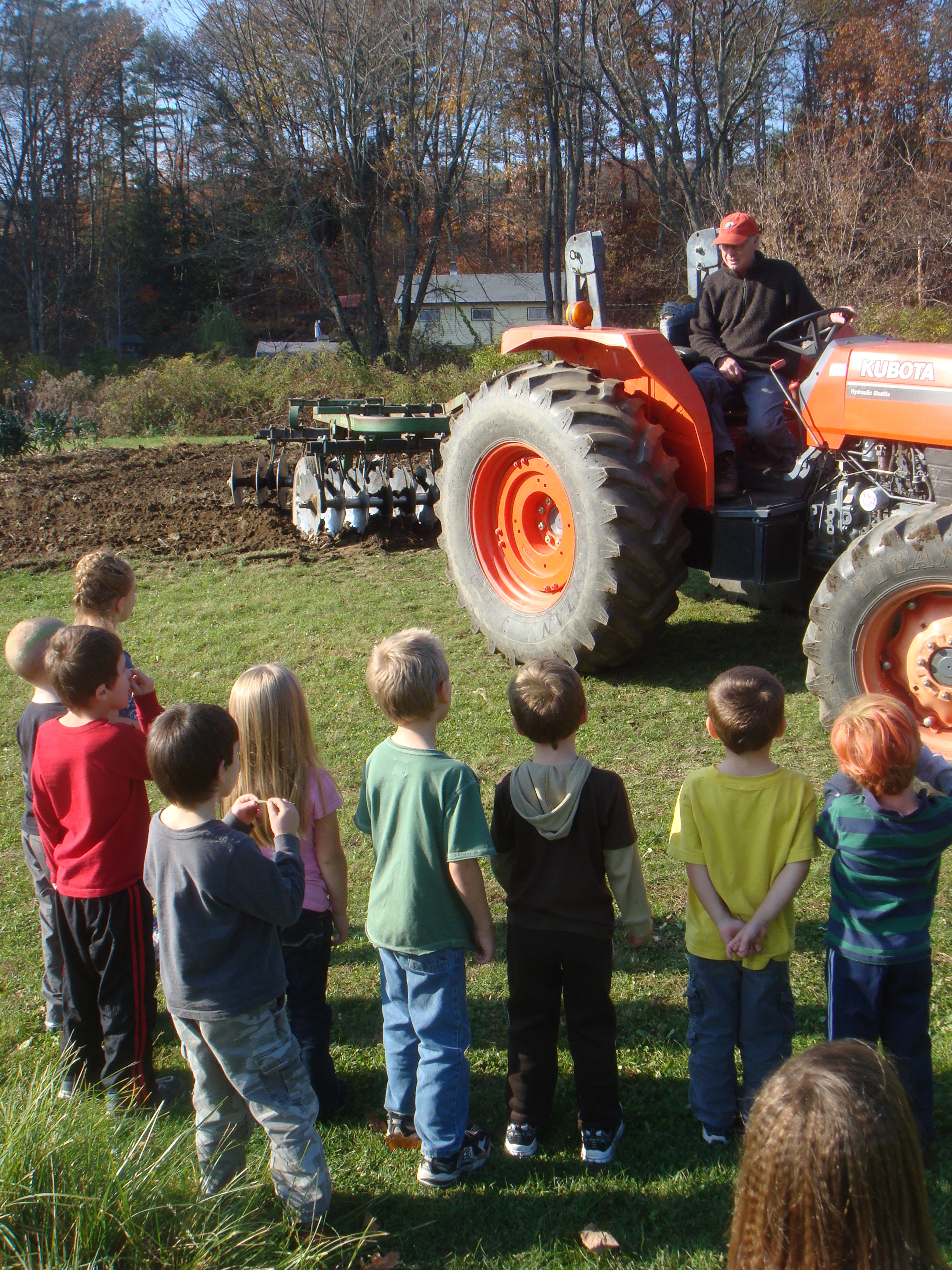
The great surprise at the end of their workday was the arrival of our local organic farmer Paul Harlow and his tractor tiller. The tiller is an impressive piece of machinery,  especially if you’re 3 feet tall. One Kindergartner waxed poetic at the sight of the gleaming disks. “Hey, those look like the cymbals we play in Music class!” Another pointed to the letters on the side of the tractor and carefully spelled aloud the word, ” KUBOTA.” Paul kindly fielded questions from his rapt young audience. Watching the earth  being turned over in preparation for winter is a time honored ritual in this town with its deep agricultural history.

Tilling the garden after clean-up.

Guest speaker, garden classroom.