Vermont School Garden

A visit to a Vermont public school garden through the seasons.


1 Comment

September Celery Harvesting

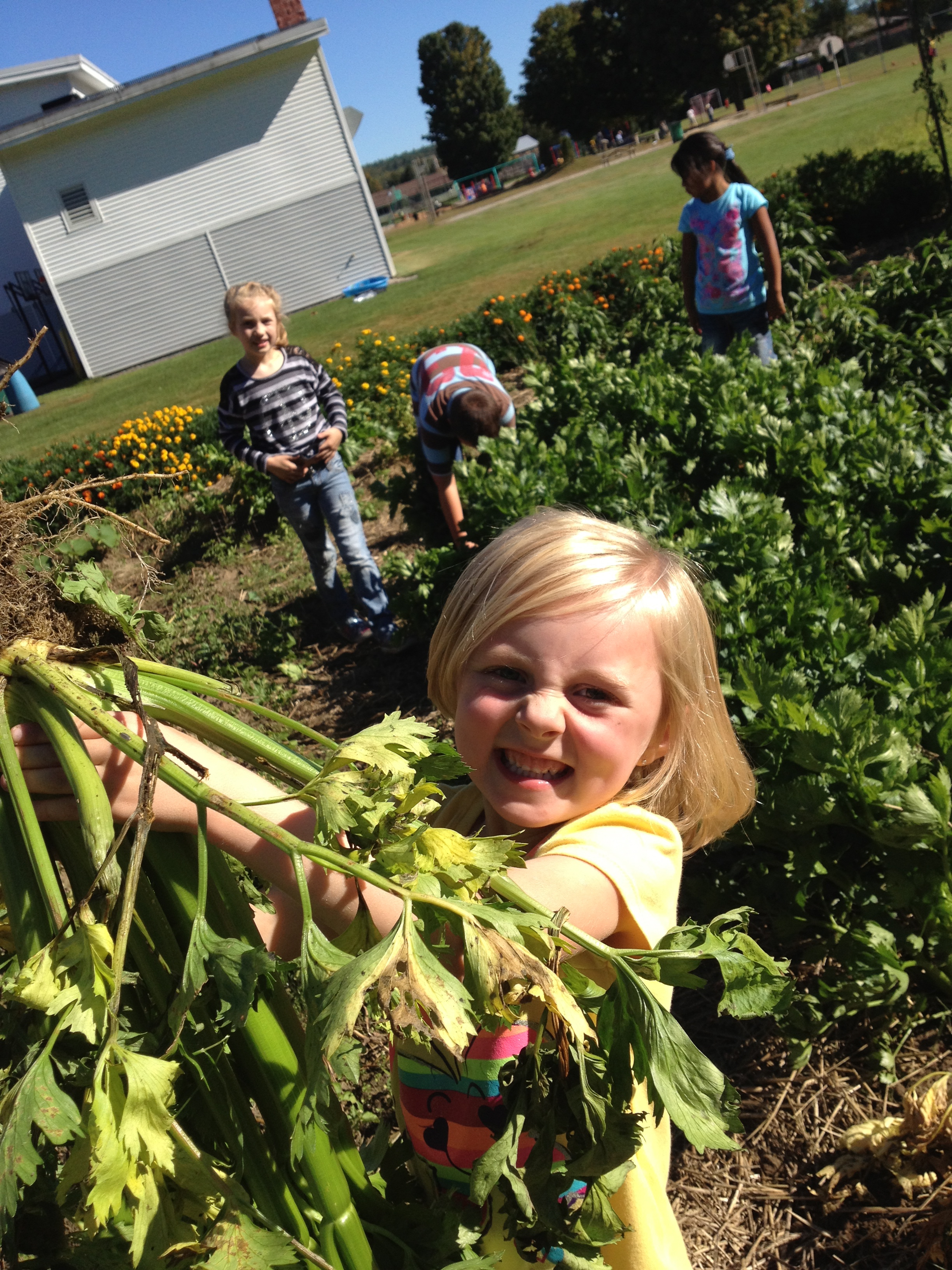
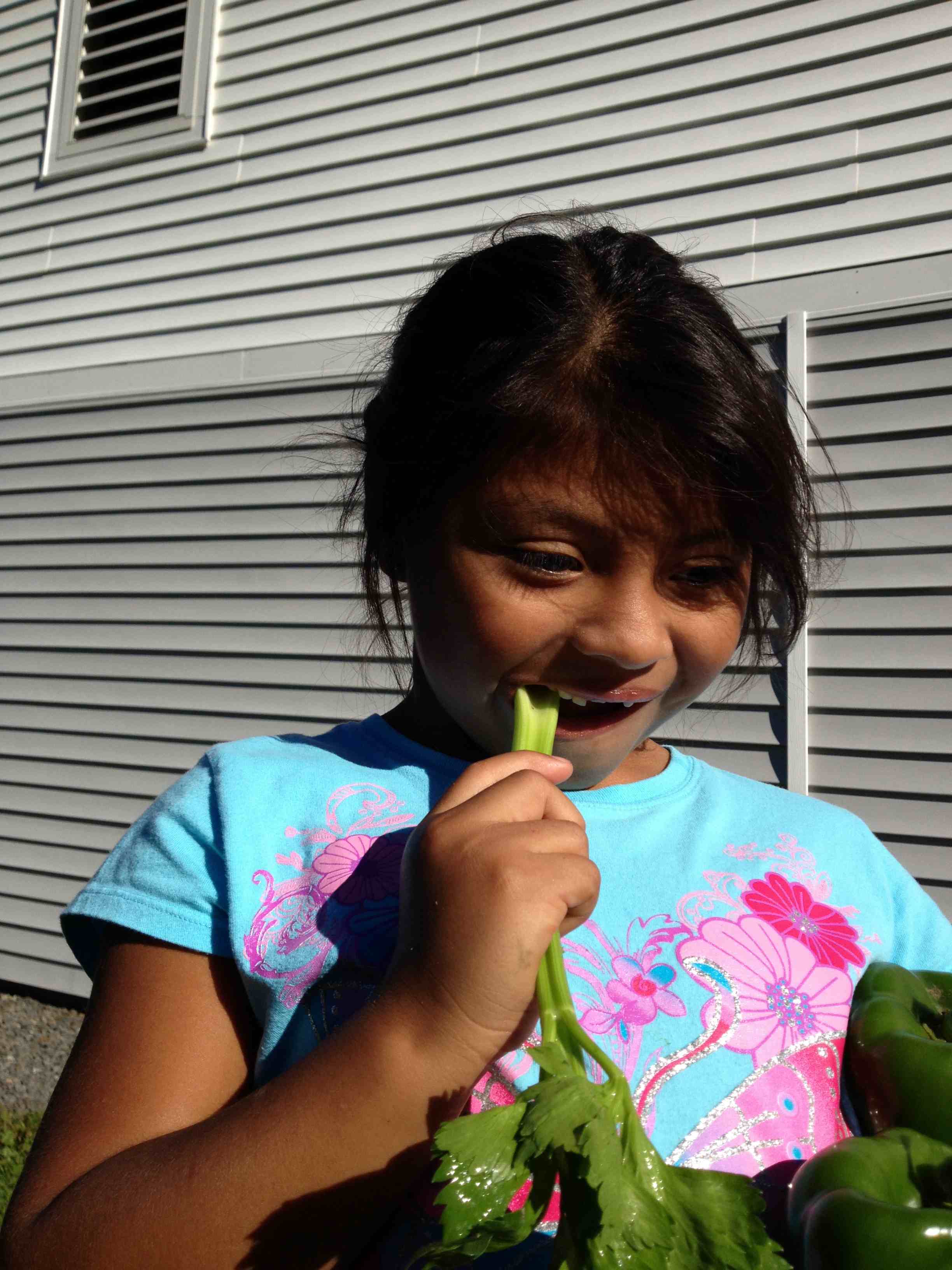
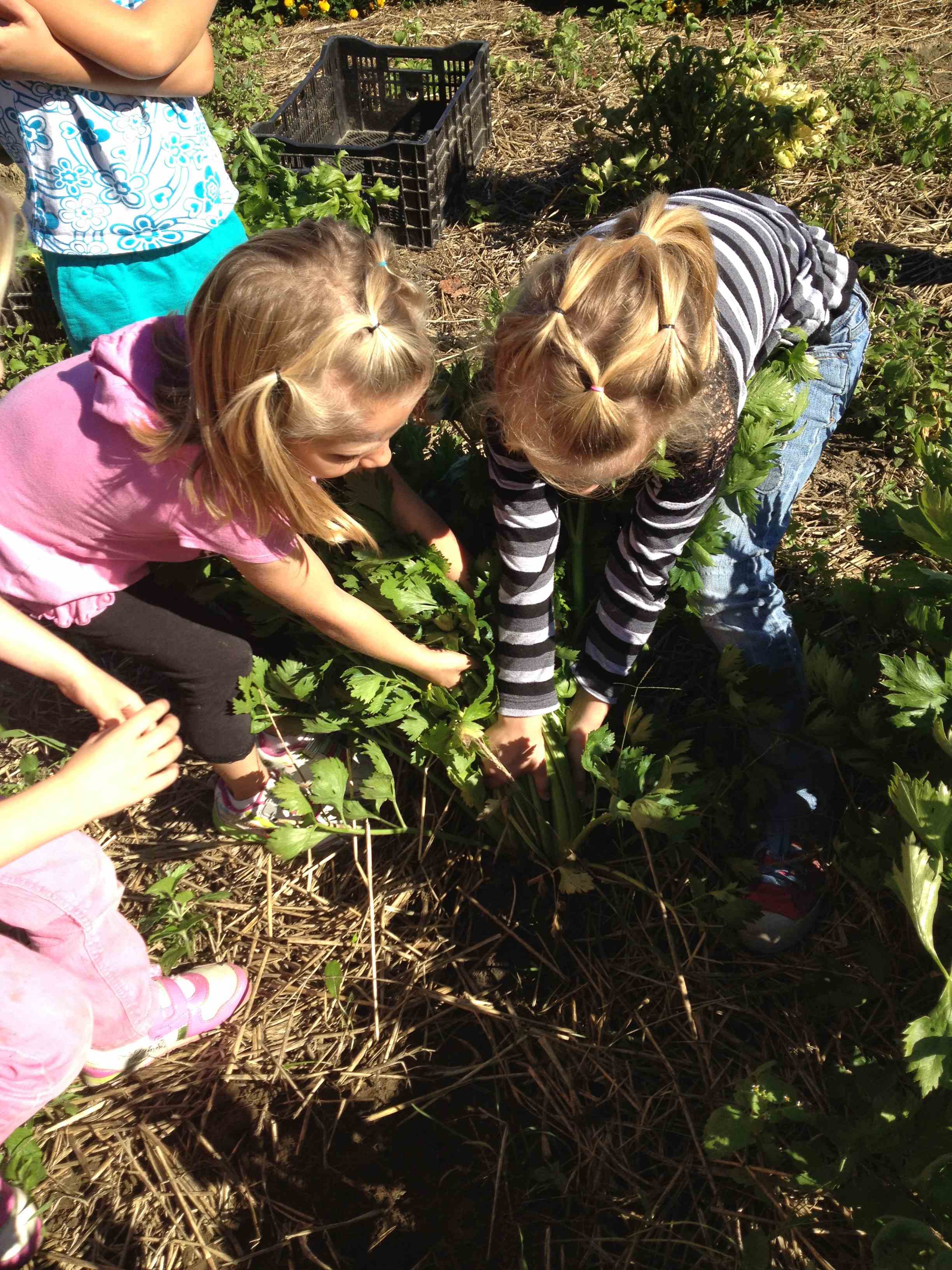
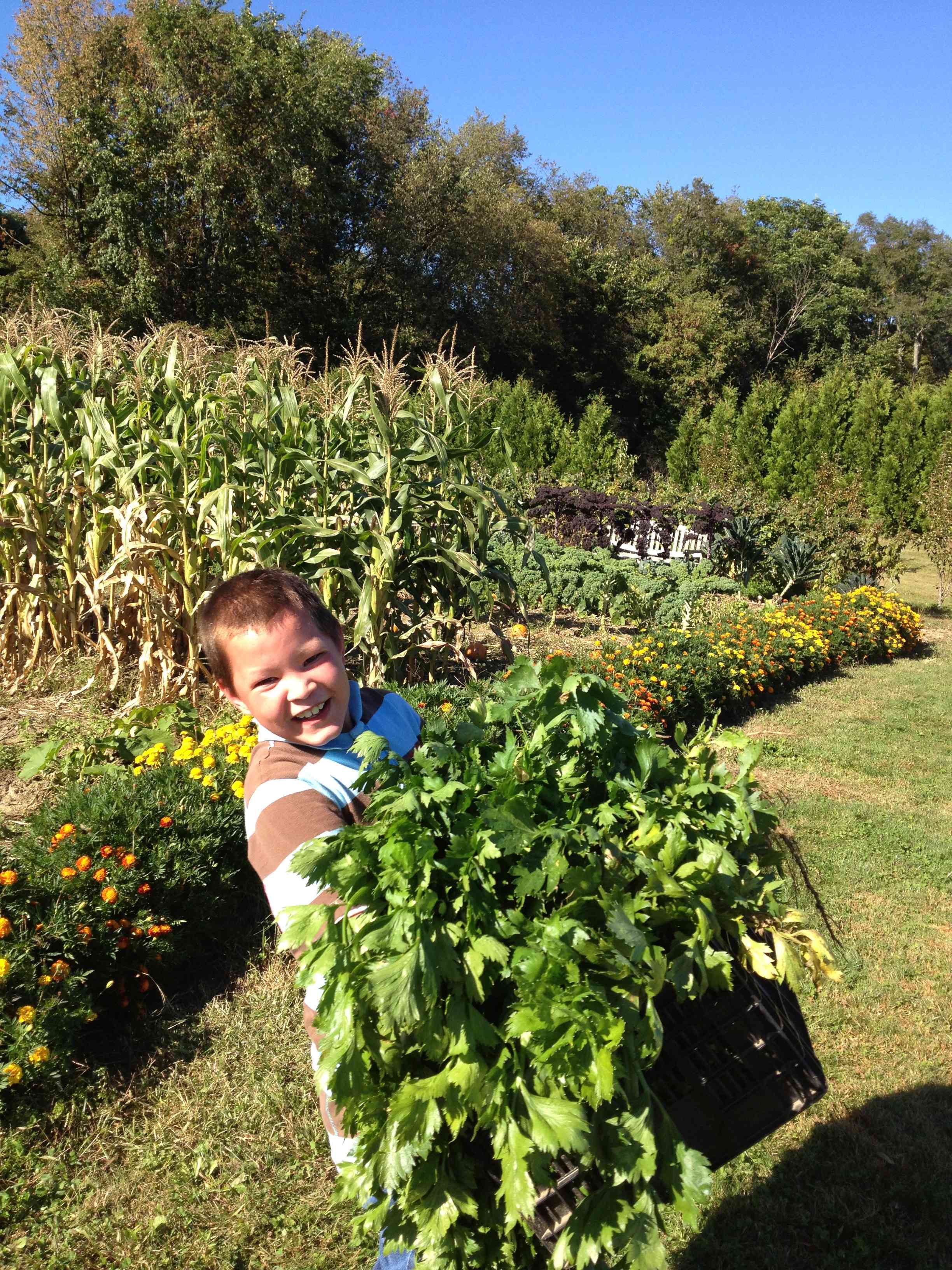
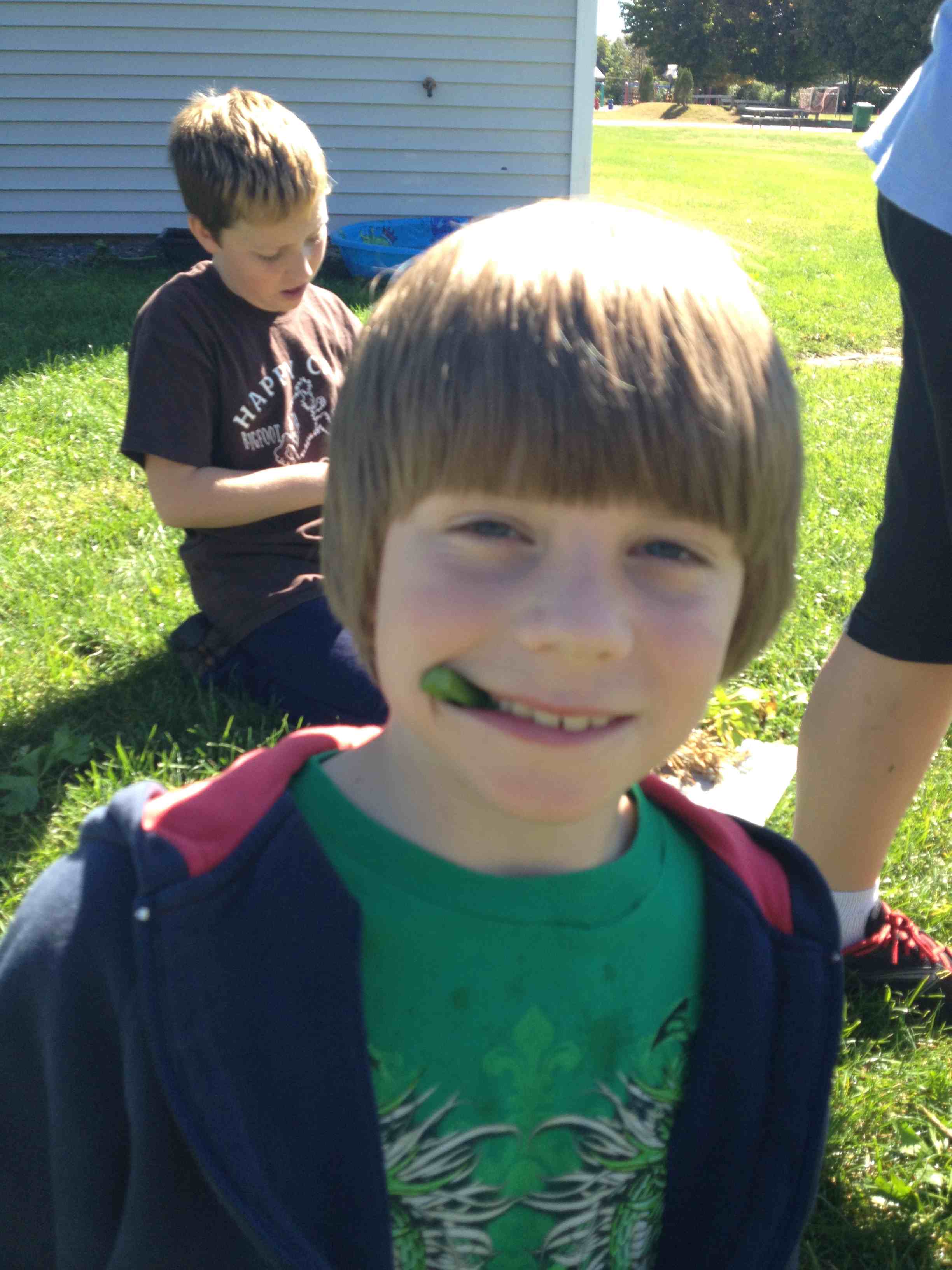
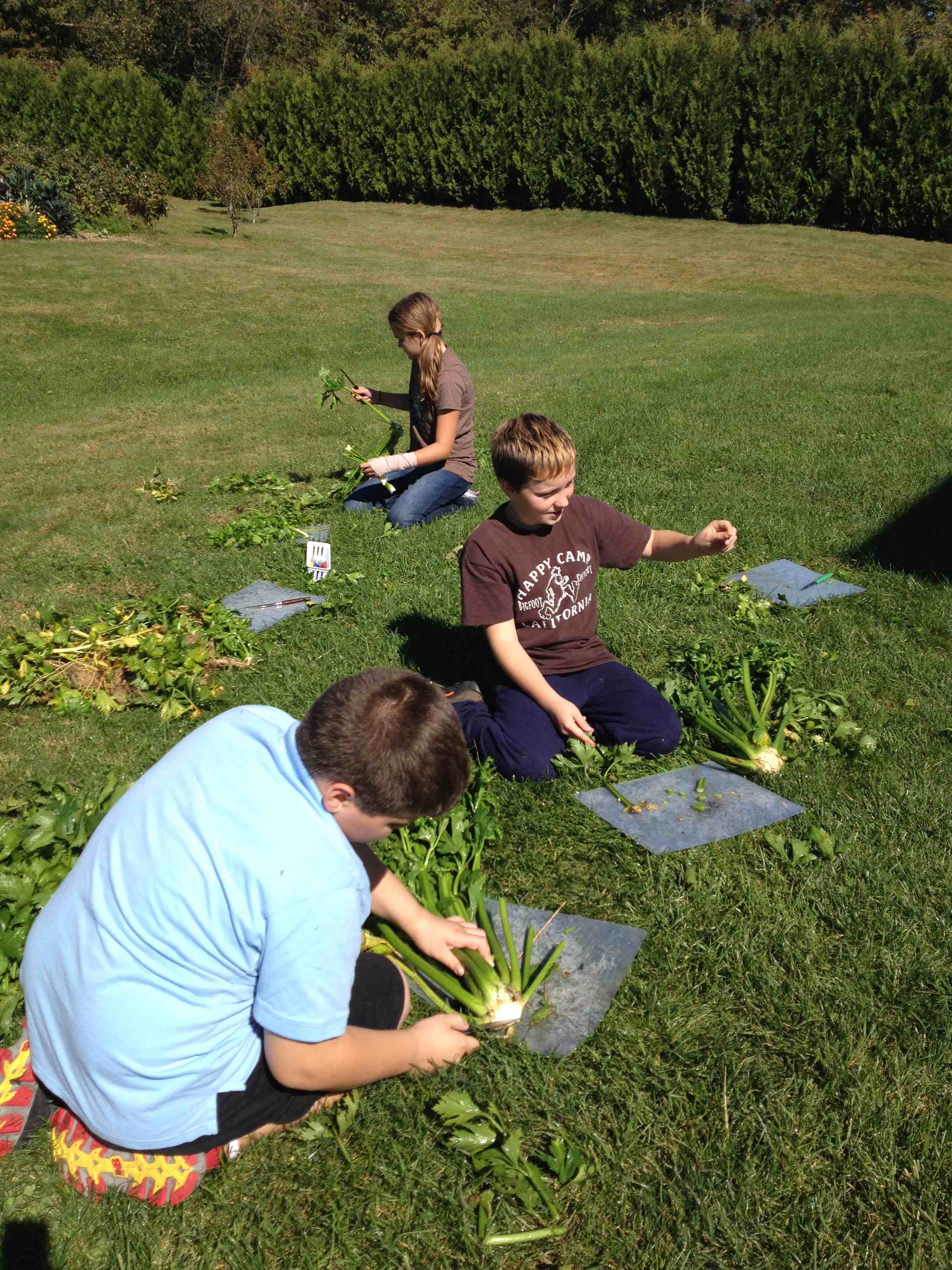
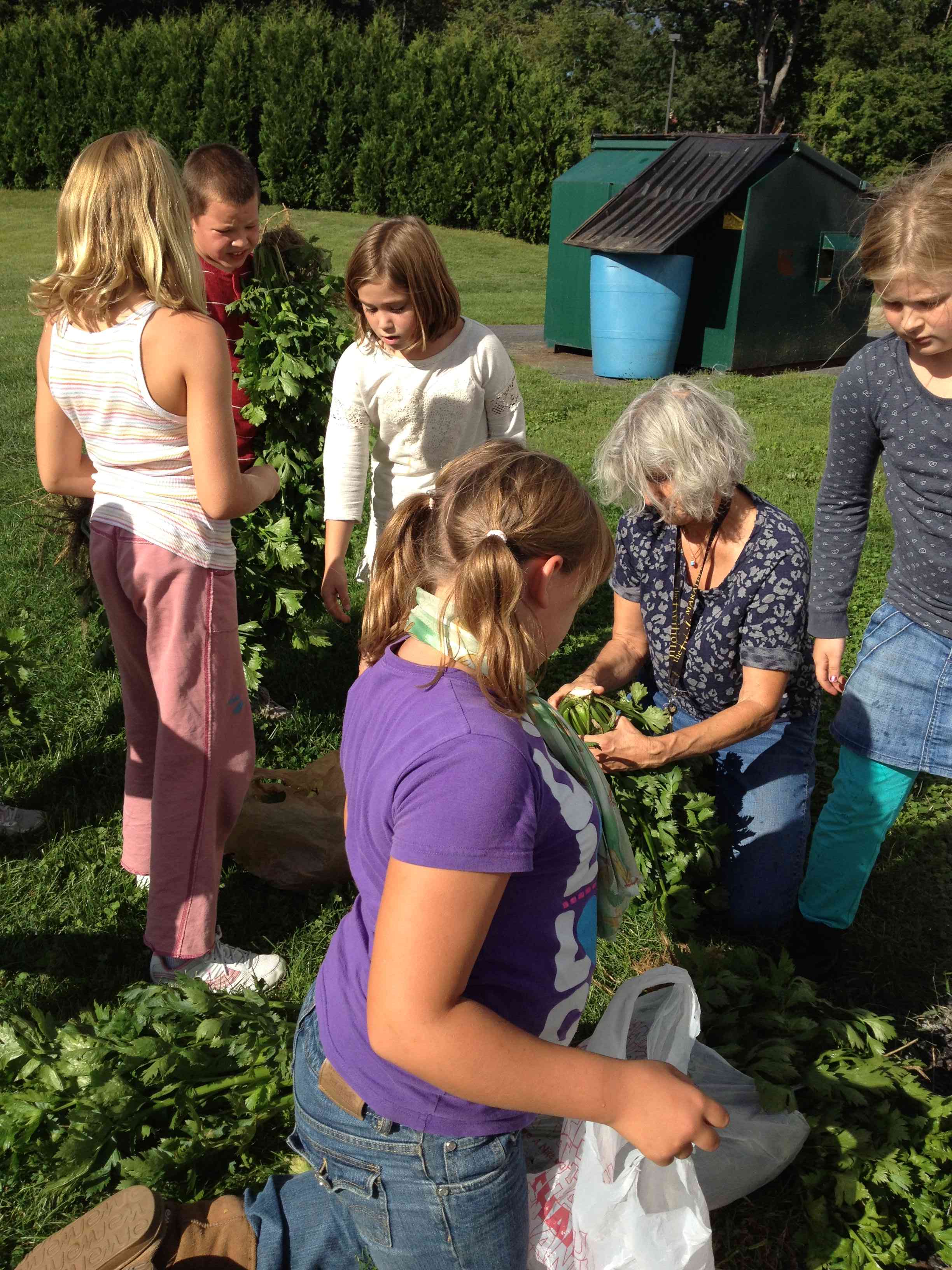
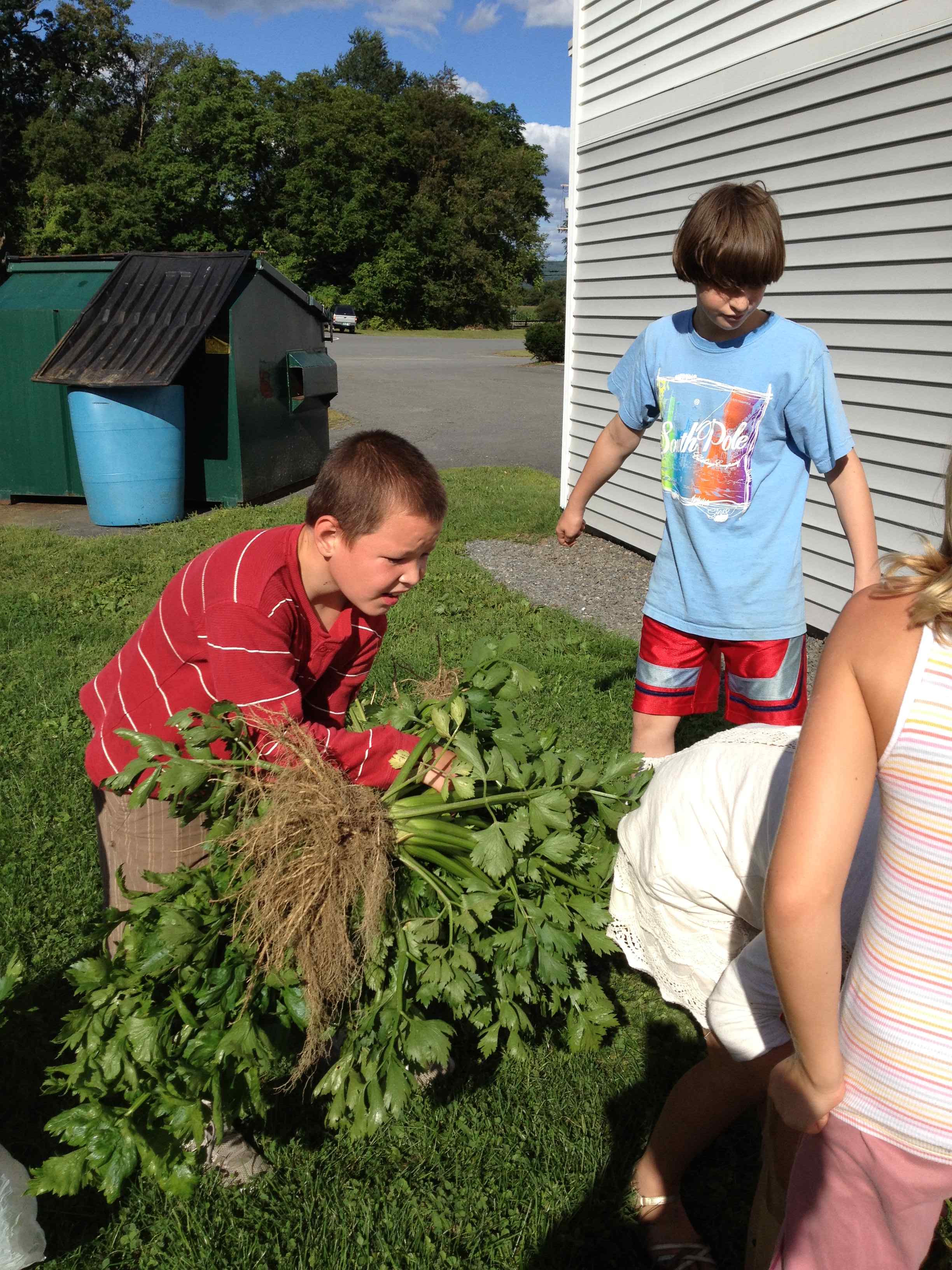
Abby's harvestAbby, a sixth grader, and I harvested celery for the entire school last week. You can see it in the background. She wanted her flowers and raspberries front and center for this photo. Our celery is feeding the entire school at snack time once a week. The kitchen supplies raisins and peanut butter or cream cheese for ‘ants on a log.’ This past week, a crew of K through third graders harvested our all school Thursday celery snack. They had a good time as you can see below:

ASP celery harvest

Happy muncherpulling up celery

Jays celery

Can we eat this celery now?

Can we eat this celery now?

6th grade celery harvest

6th grade celery harvest


Leave a comment

First Graders Visit the September Garden

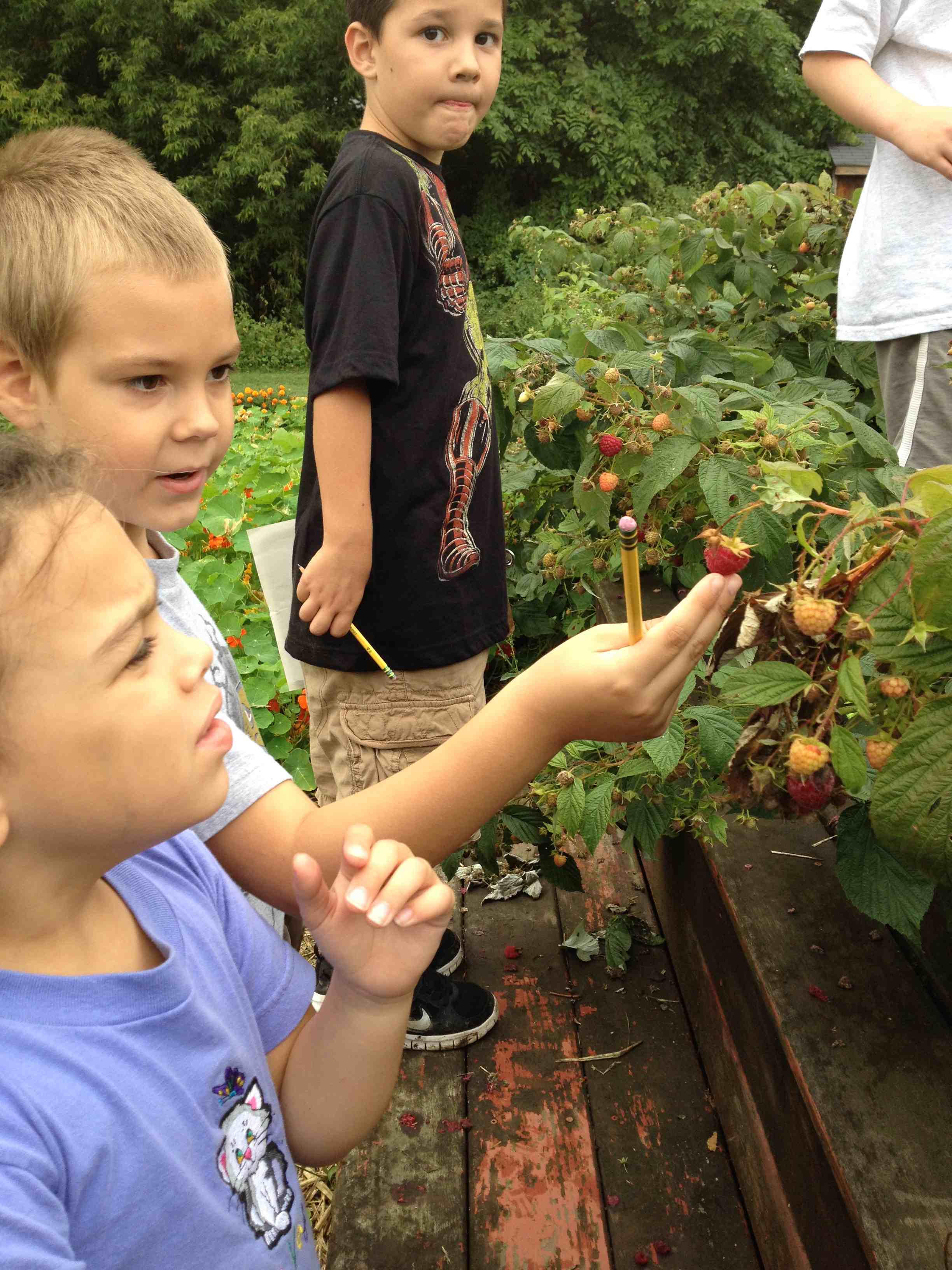
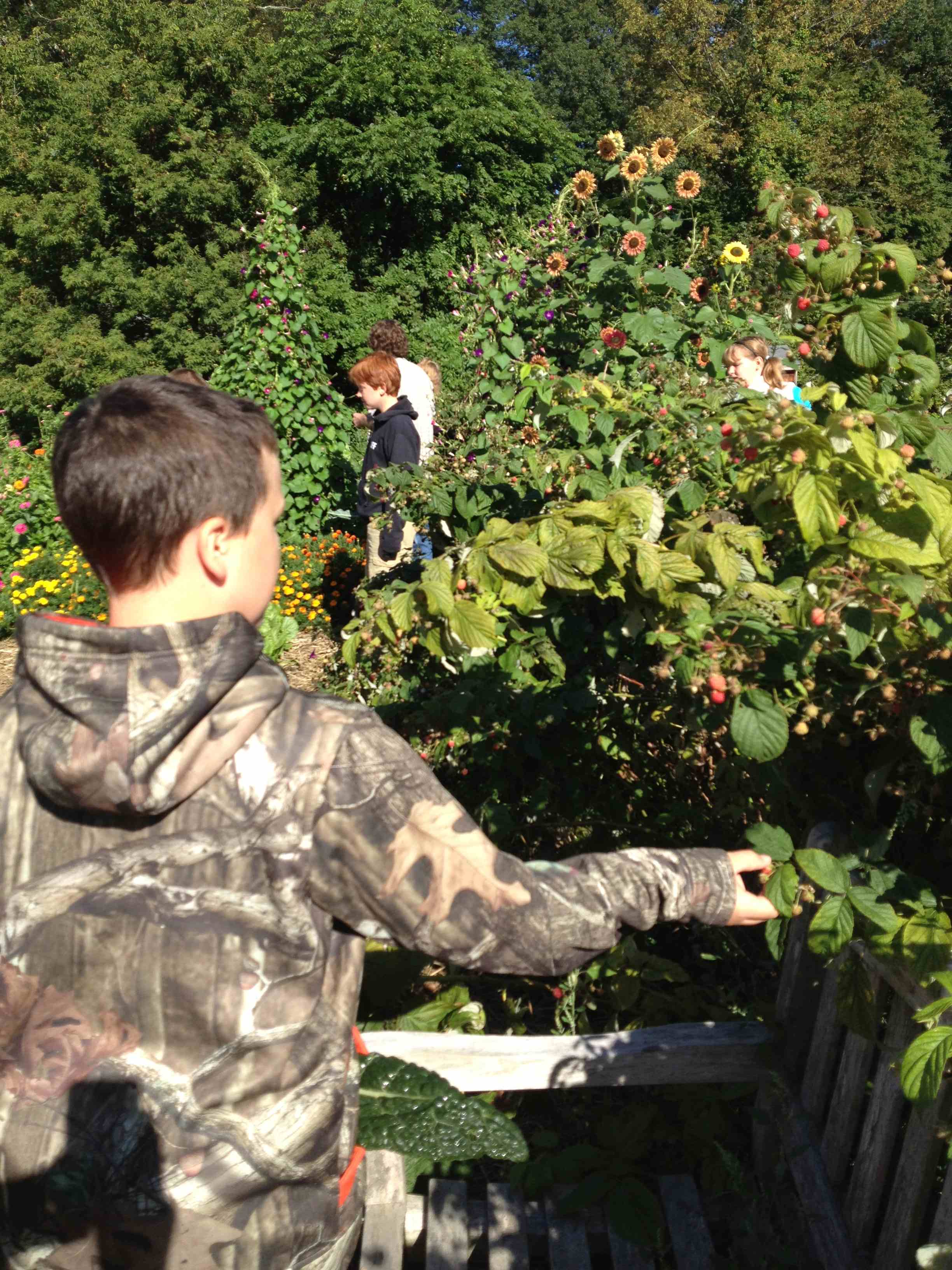
discovering raspberries

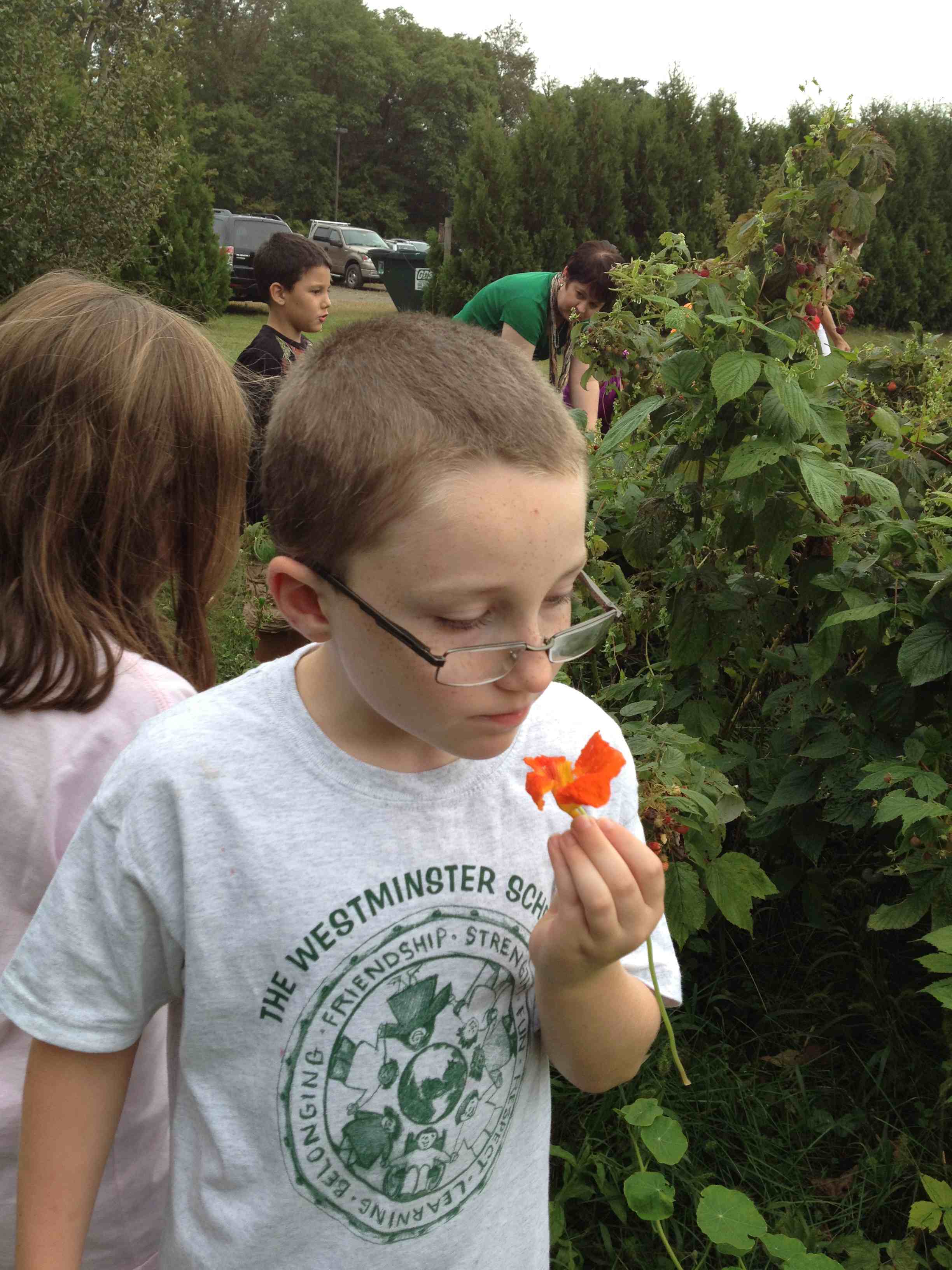
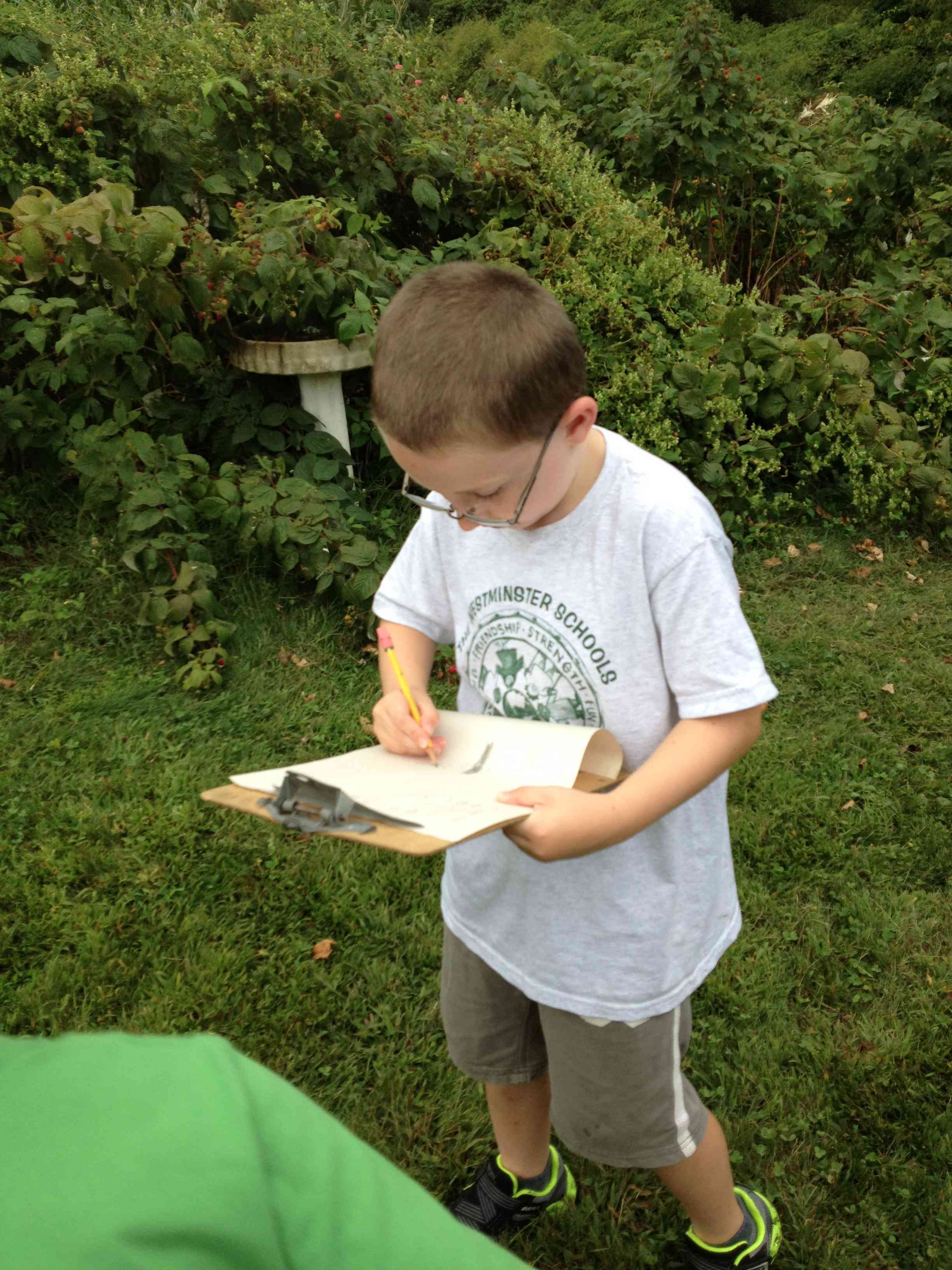
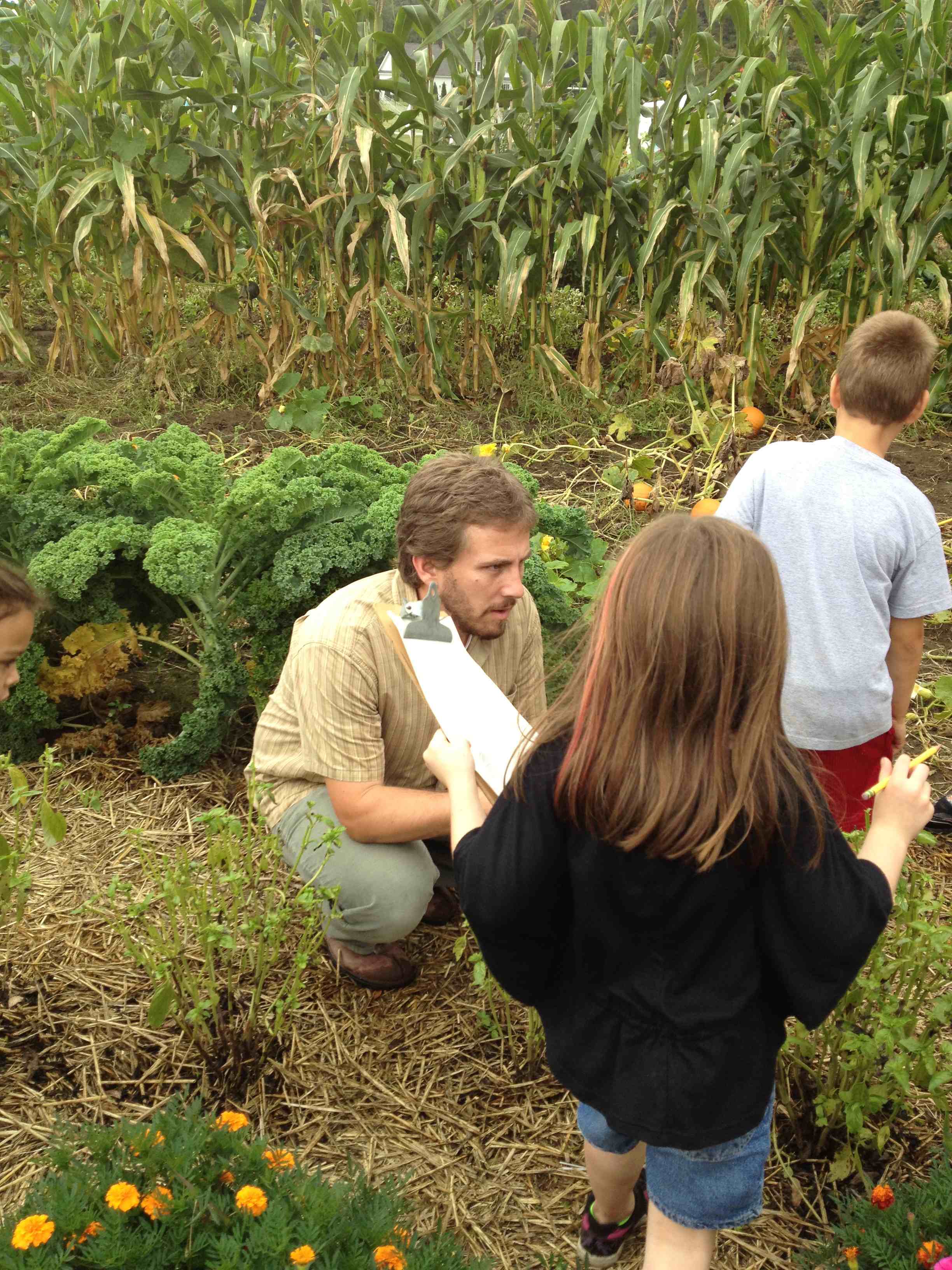
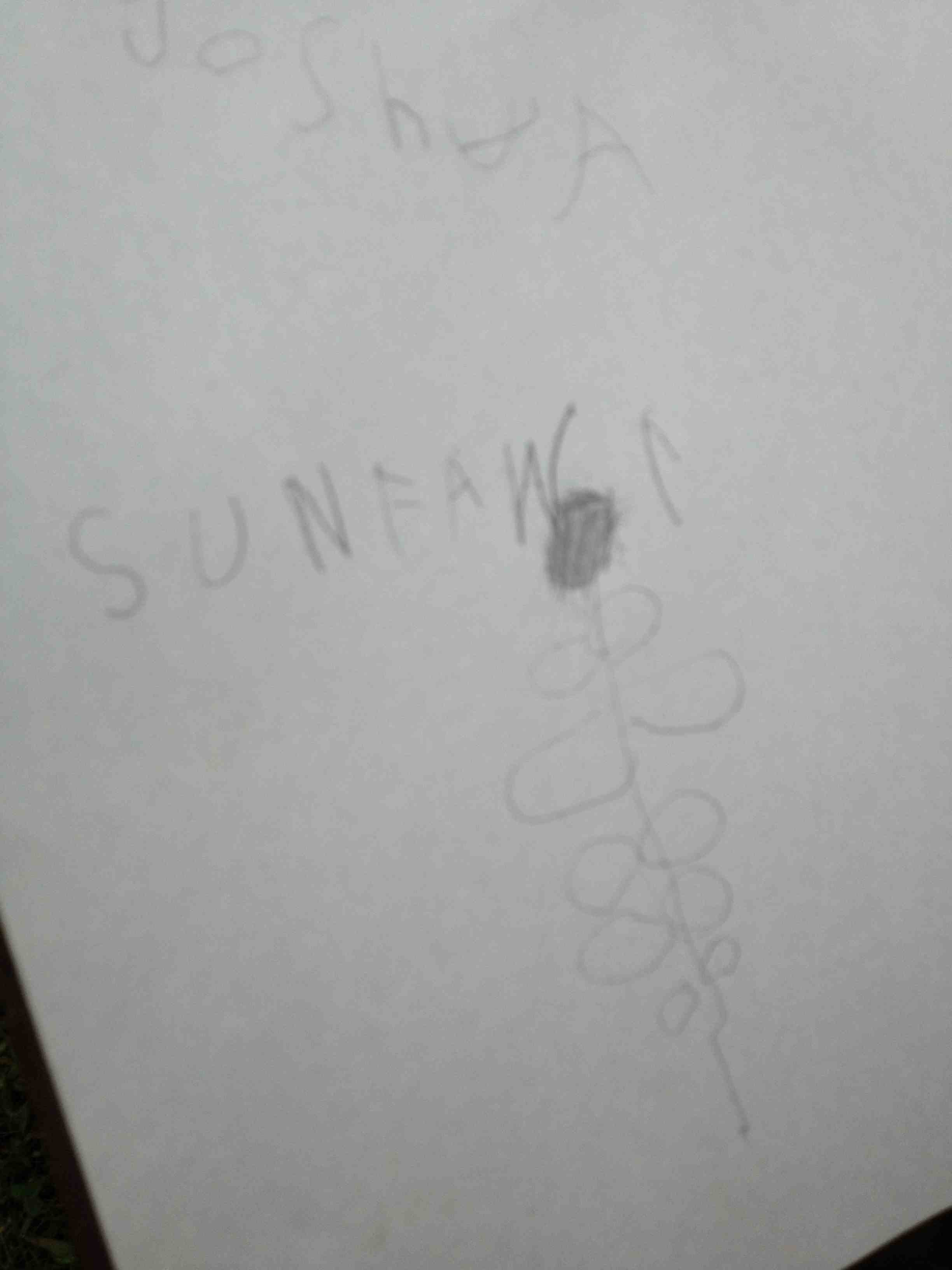
First graders were busily observing and recording their impressions of our garden yesterday afternoon. Armed with clipboards and pencils they were milling about everywhere and taking big risks, learning about edible flowers, vegetables and fruits. They were so proud of their first attempts at creating a symbolic record of what they saw. I wonder how many of them might one day become scientists…..or writers!

eatng a nasturtiumNote taking grade 1Proud first grade writerswith IanGrade 1 writing

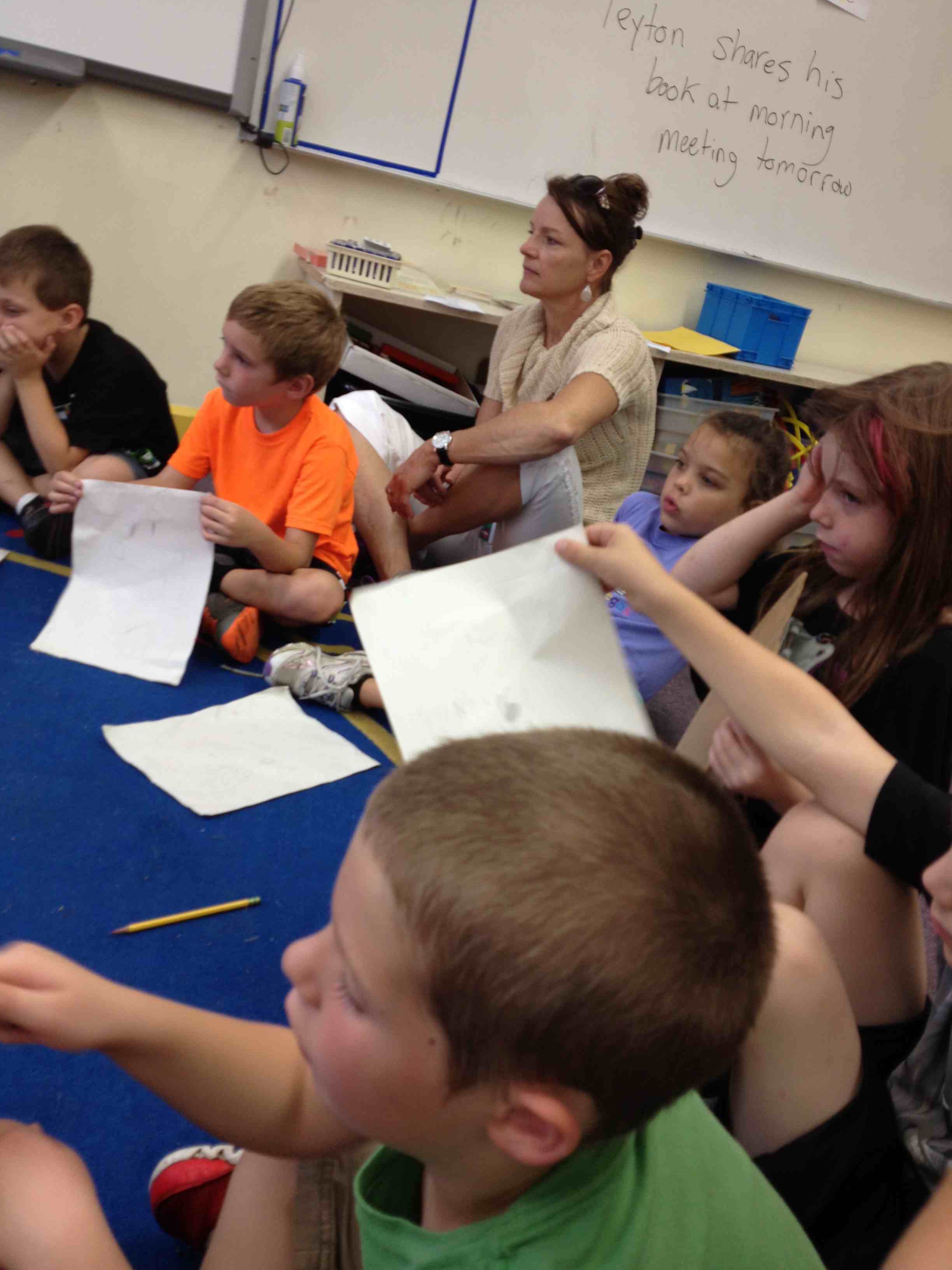
sharing observations at meeting

sharing observations at meeting


Leave a comment

Fifth Graders Revisit the All School Garden

Using all of their senses to explore and remember.

Using all of their senses to explore and remember.

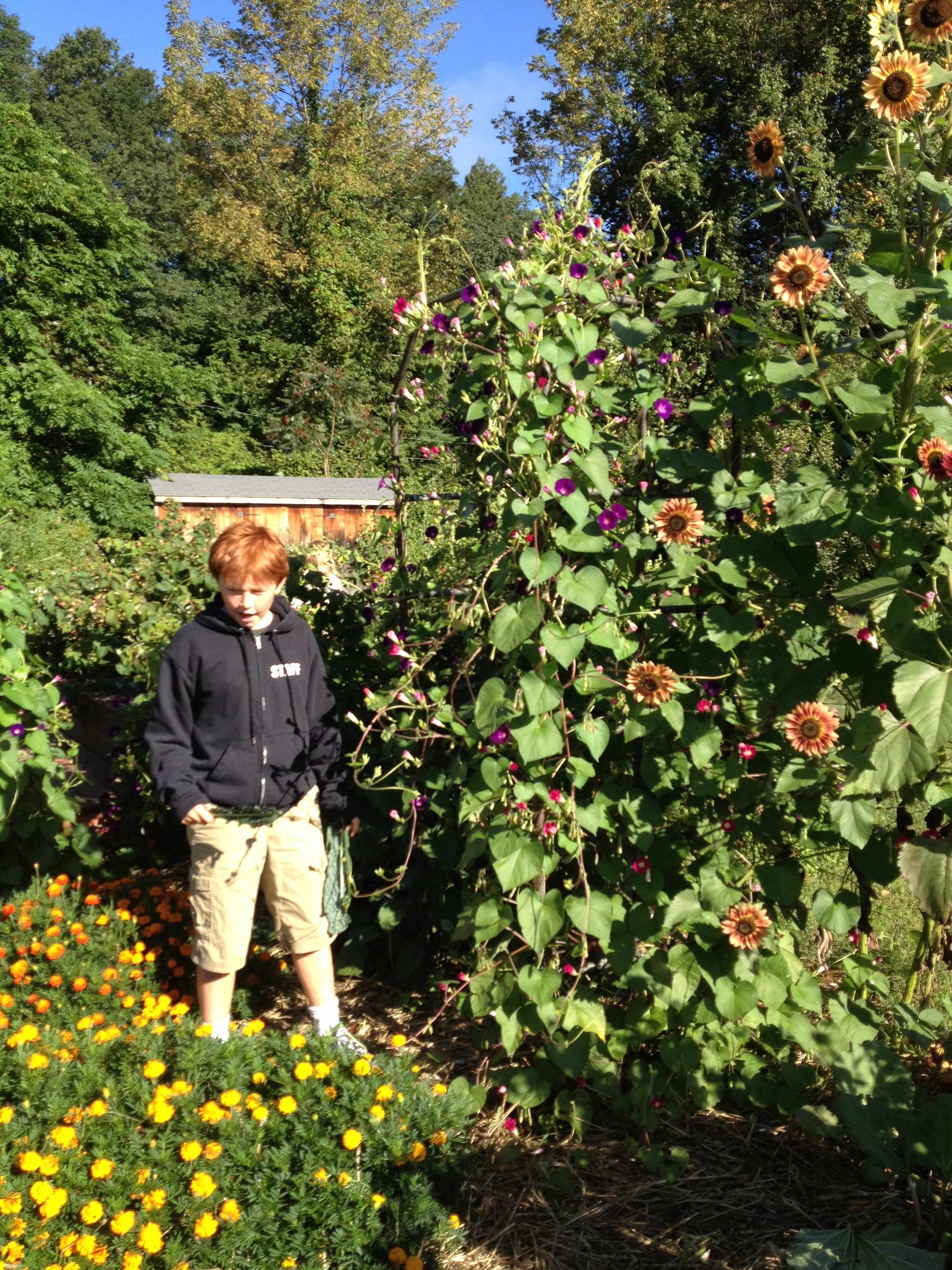
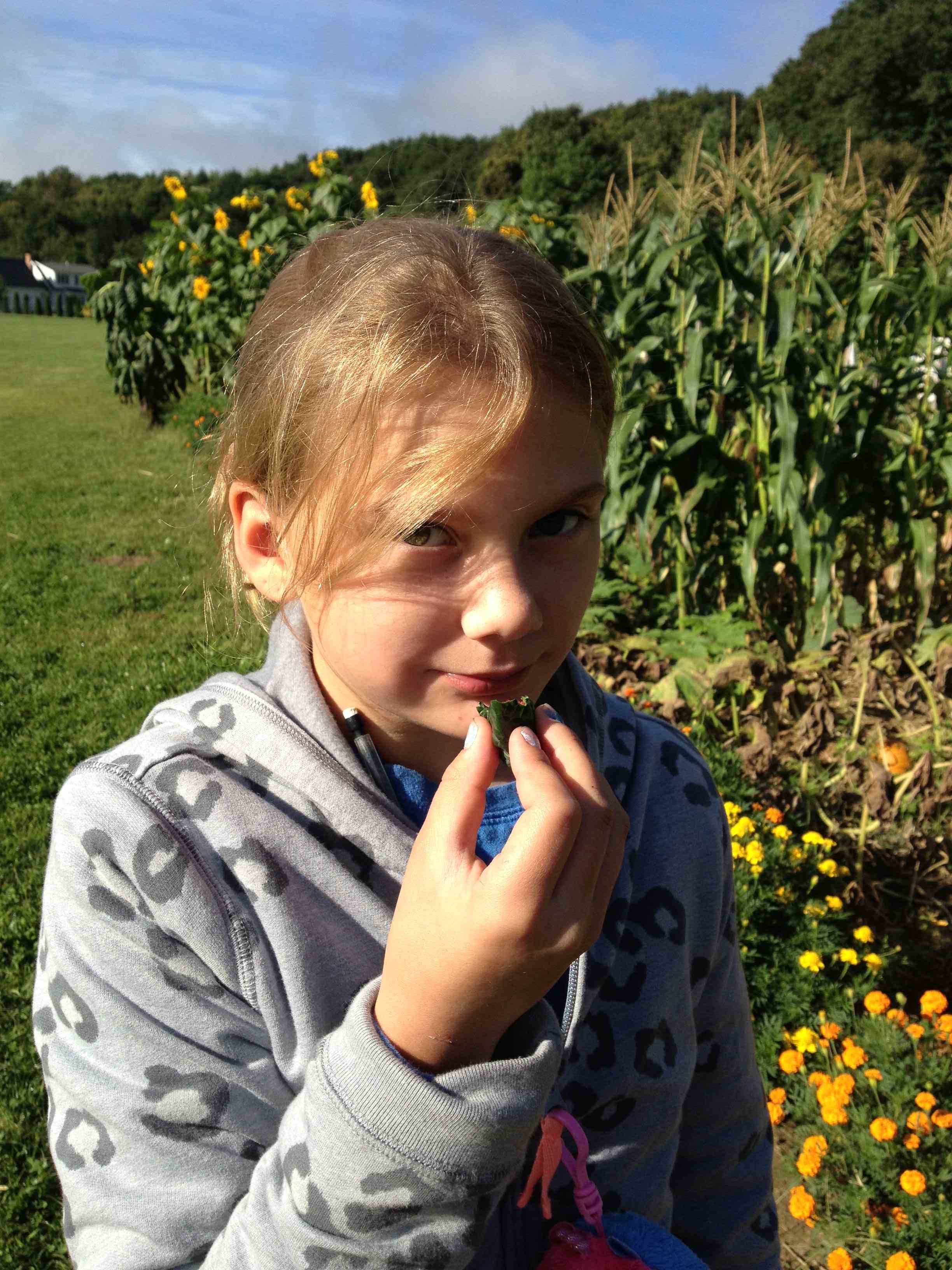
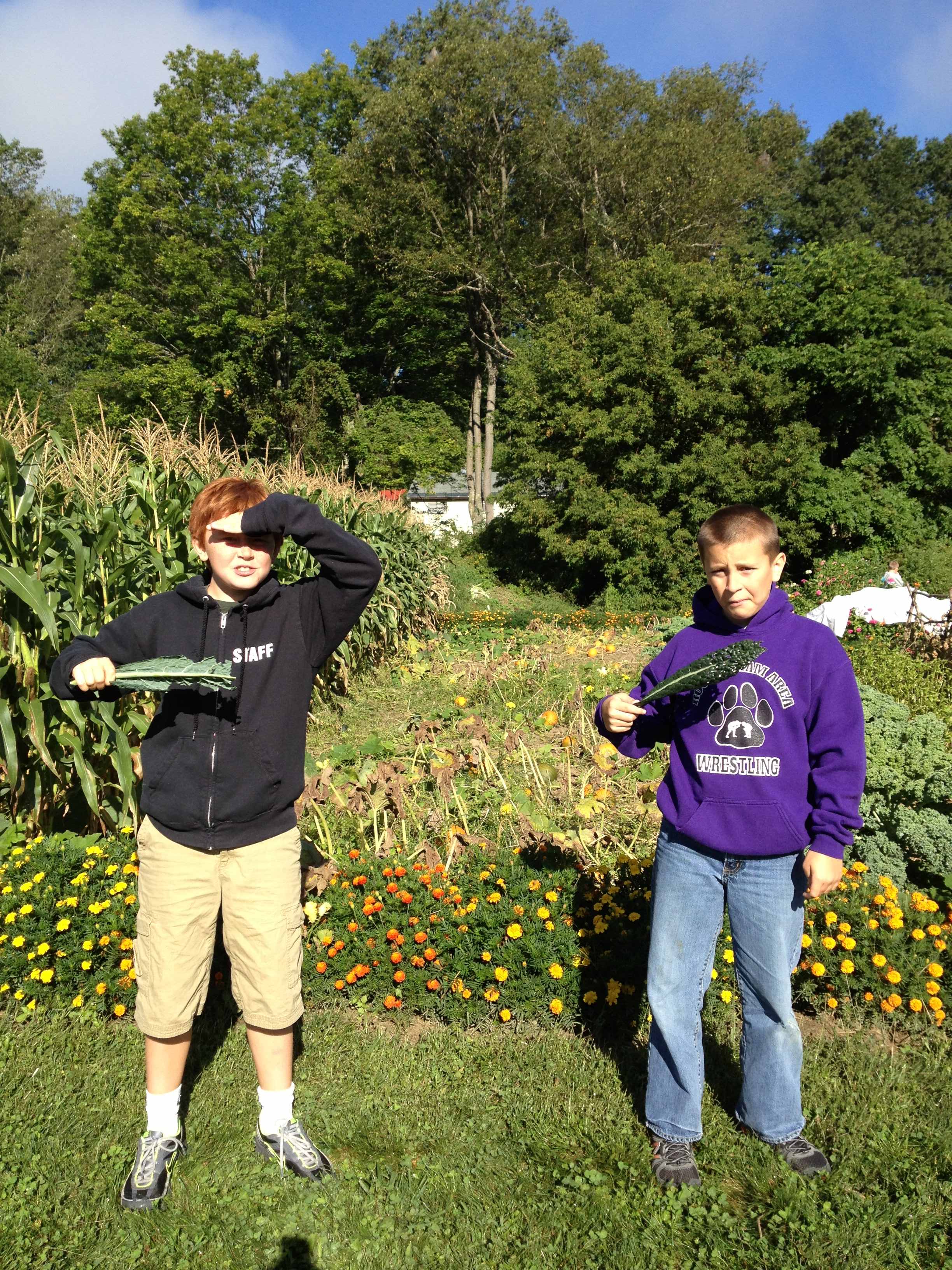
We met indoors during morning greeting and shared what we thought we might find in the garden now that we were back in school. I asked students to use as many of their senses as possible to explore when we moved from the indoor to the outdoor classroom. There was so much to discover: the crunch of fresh kale when you bite into it, the prickliness of cucumber leaves, the yellows and oranges, purples and reds of the flowers, the yummy combination of flavors when you make a raspberry-kale wrap, the whispered secrets of the leaves when the wind moves through them, the smell of green!

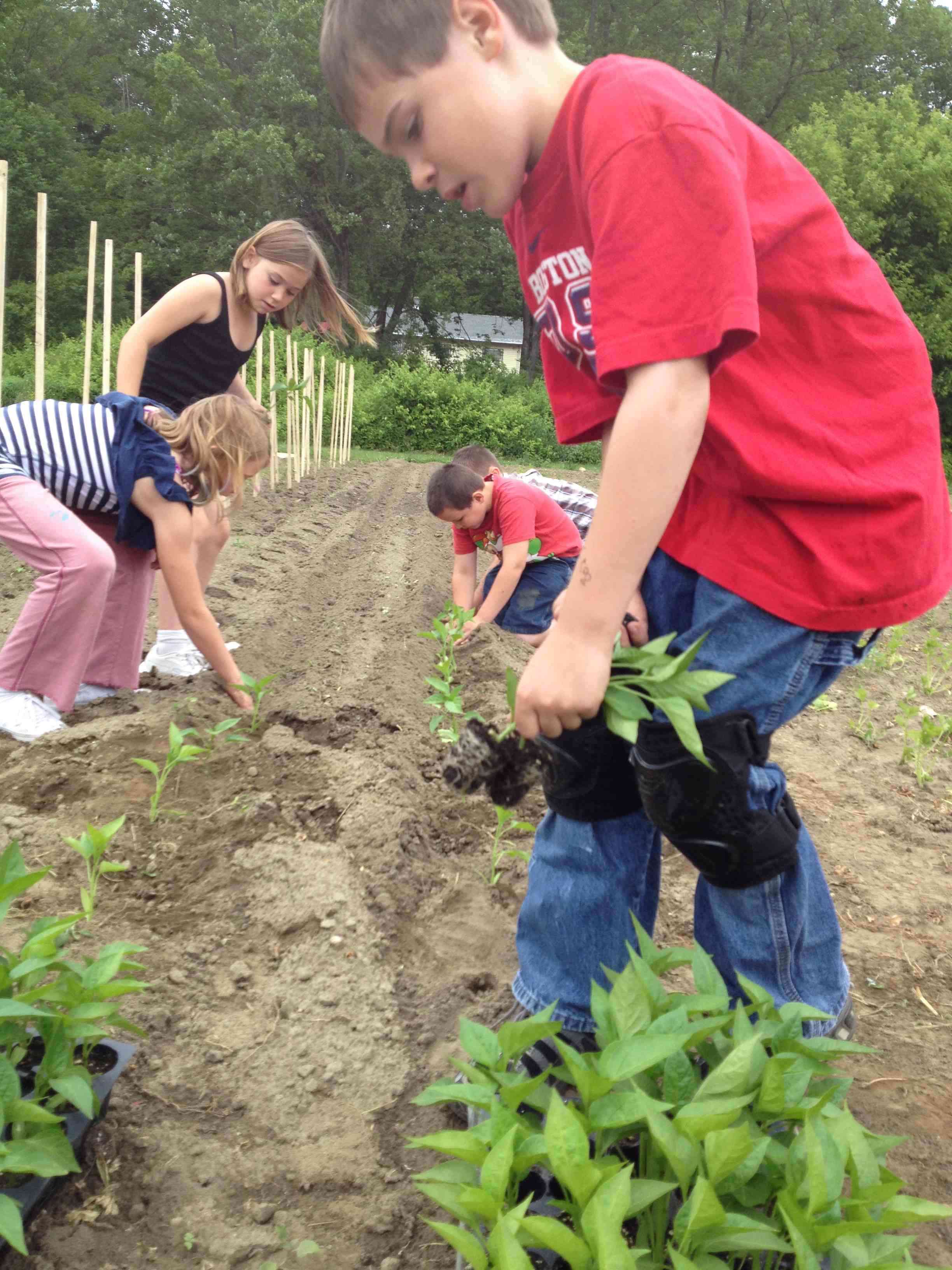
sharing what we noticed in the gardenpepper planters in June

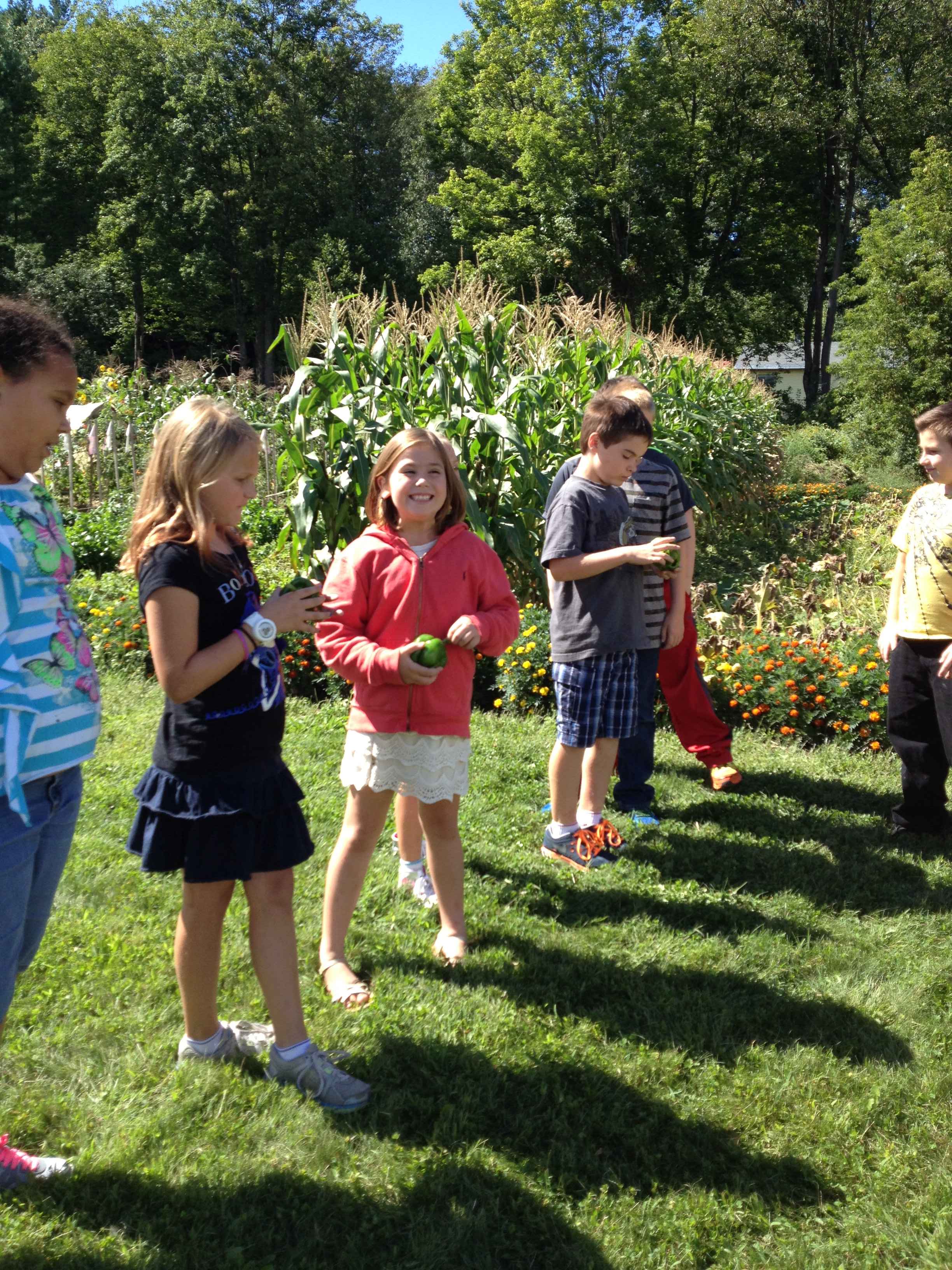
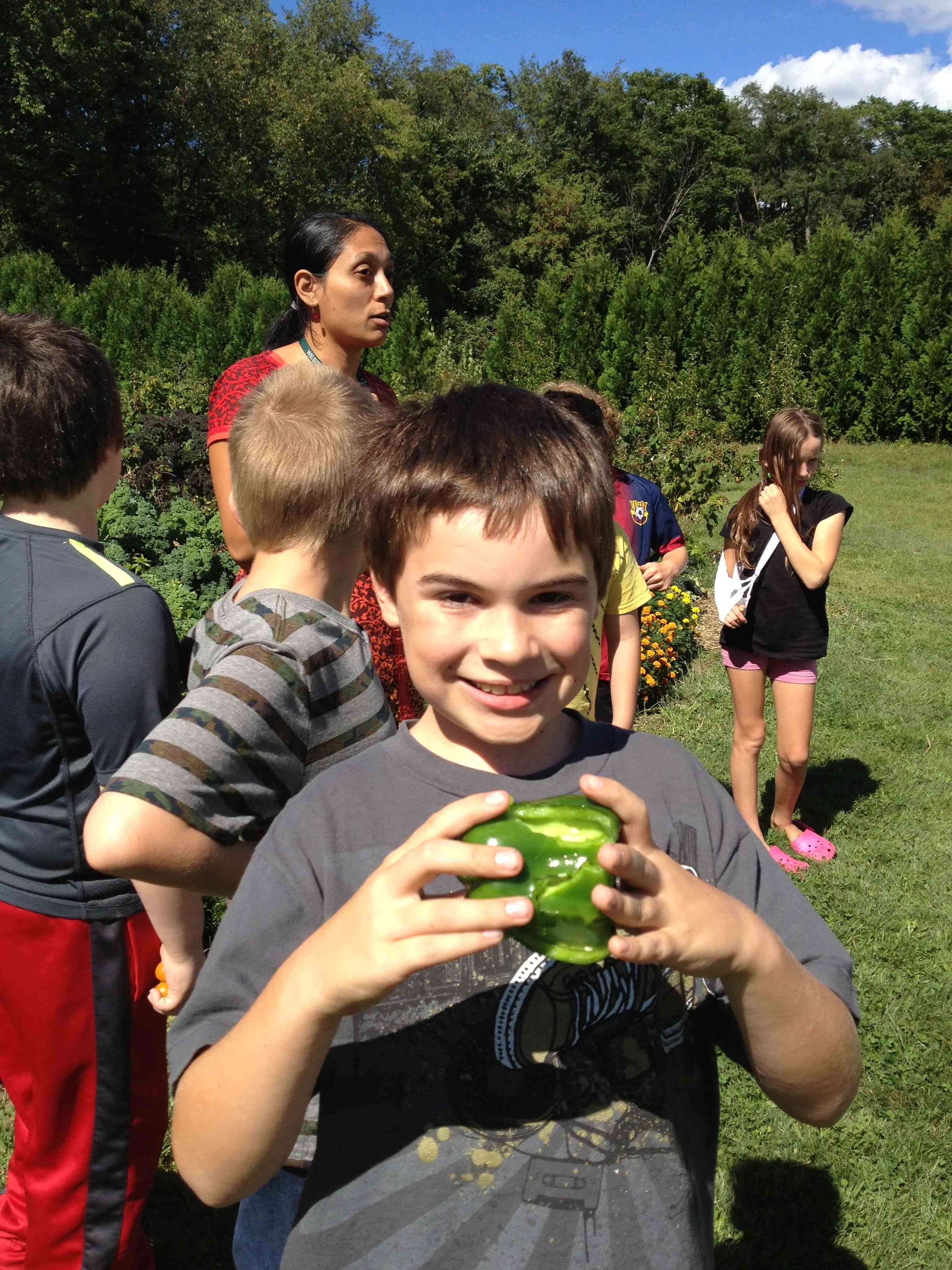
Pepper munchers in September. Pepper planters in June.

pepper munchers in September

butterfly garden

butterfly garden

checking out the butterfly garden

checking out the butterfly garden

Raspberry kale wrap

Raspberry kale wrap

Three kinds of kale

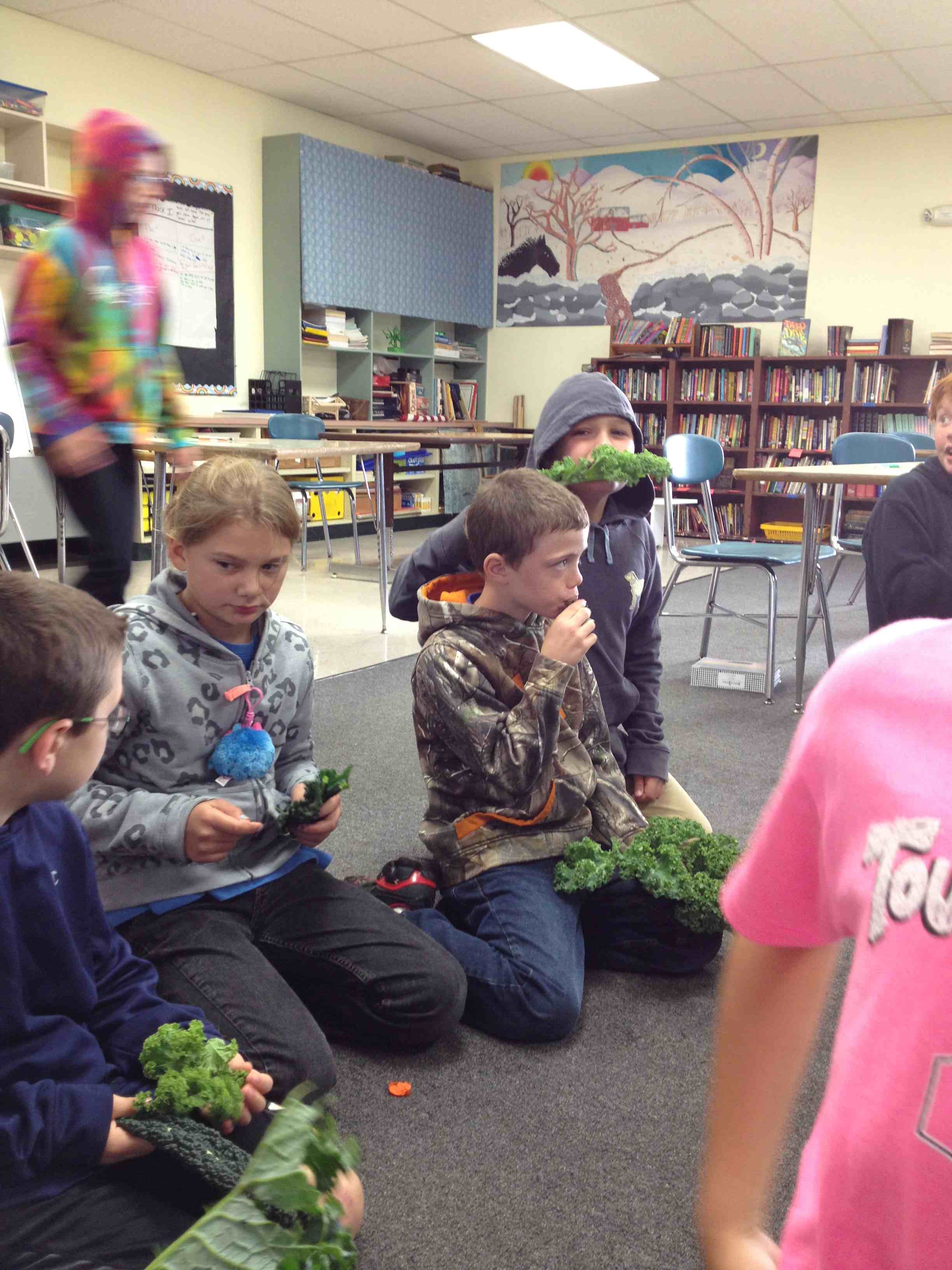
Who woulda thought most of this class needed to munch on fresh kale while debriefing?

Who woulda thought most of this class needed to munch on fresh kale while debriefing?


Leave a comment

Getting Snack Ready for the Whole School

Bagging hte washed celeryLast week a team of After School  students harvested celery for our all school healthy snack program. Usually our daily fruit and veggie snacks are purchased, but we have enough beautiful celery in our garden to feed the whole student body this fall. Were planning to harvest and serve it once a week until we run out. Celery tops are great additions to homemade broth. Notice the teamwork among this great group of kids!

bringing in the celery harvest

bringing in the celery harvest

washing celery

washing celery

cutting off celery tops

cutting off celery tops

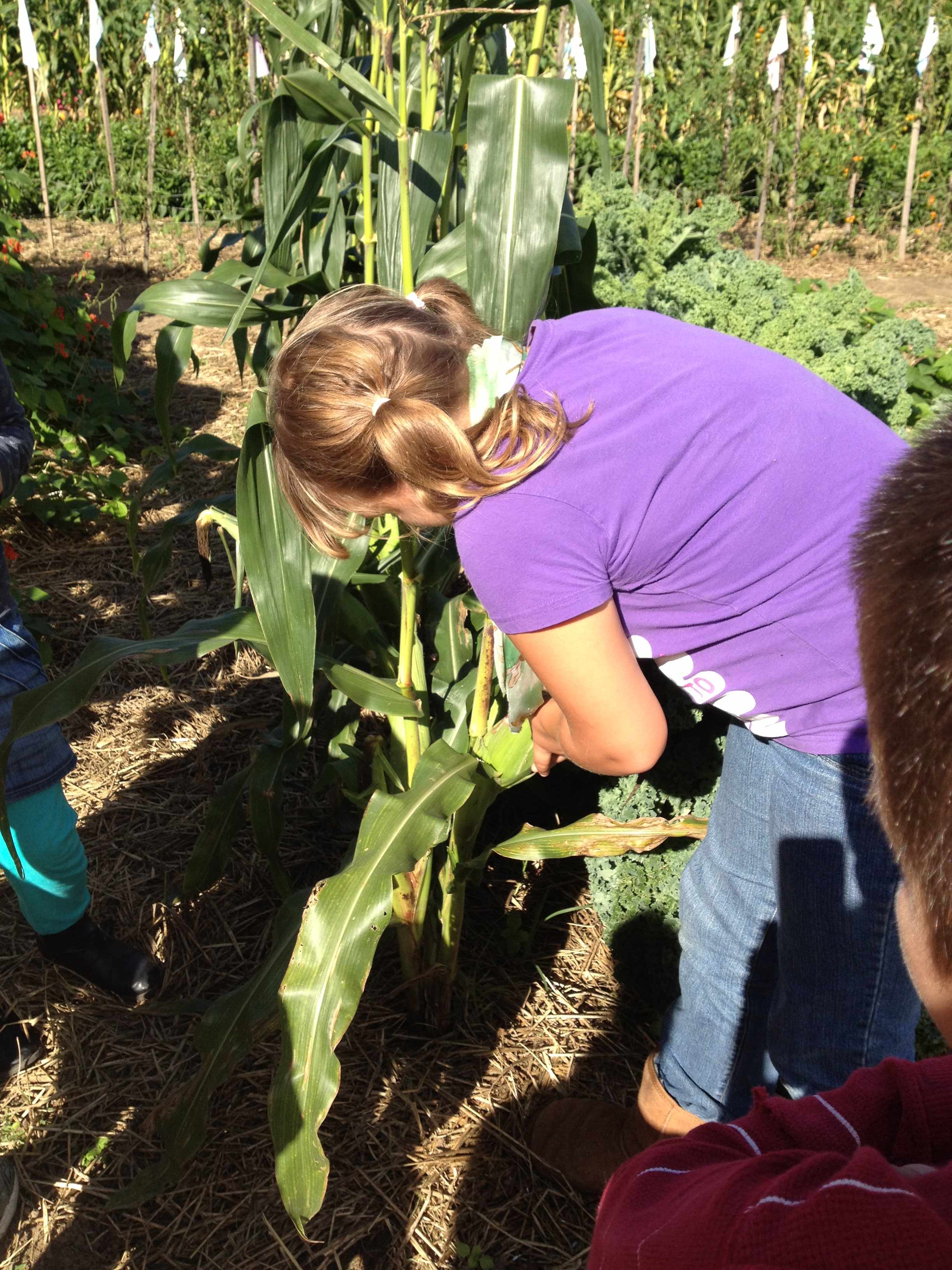
harvesting corn

harvesting corn

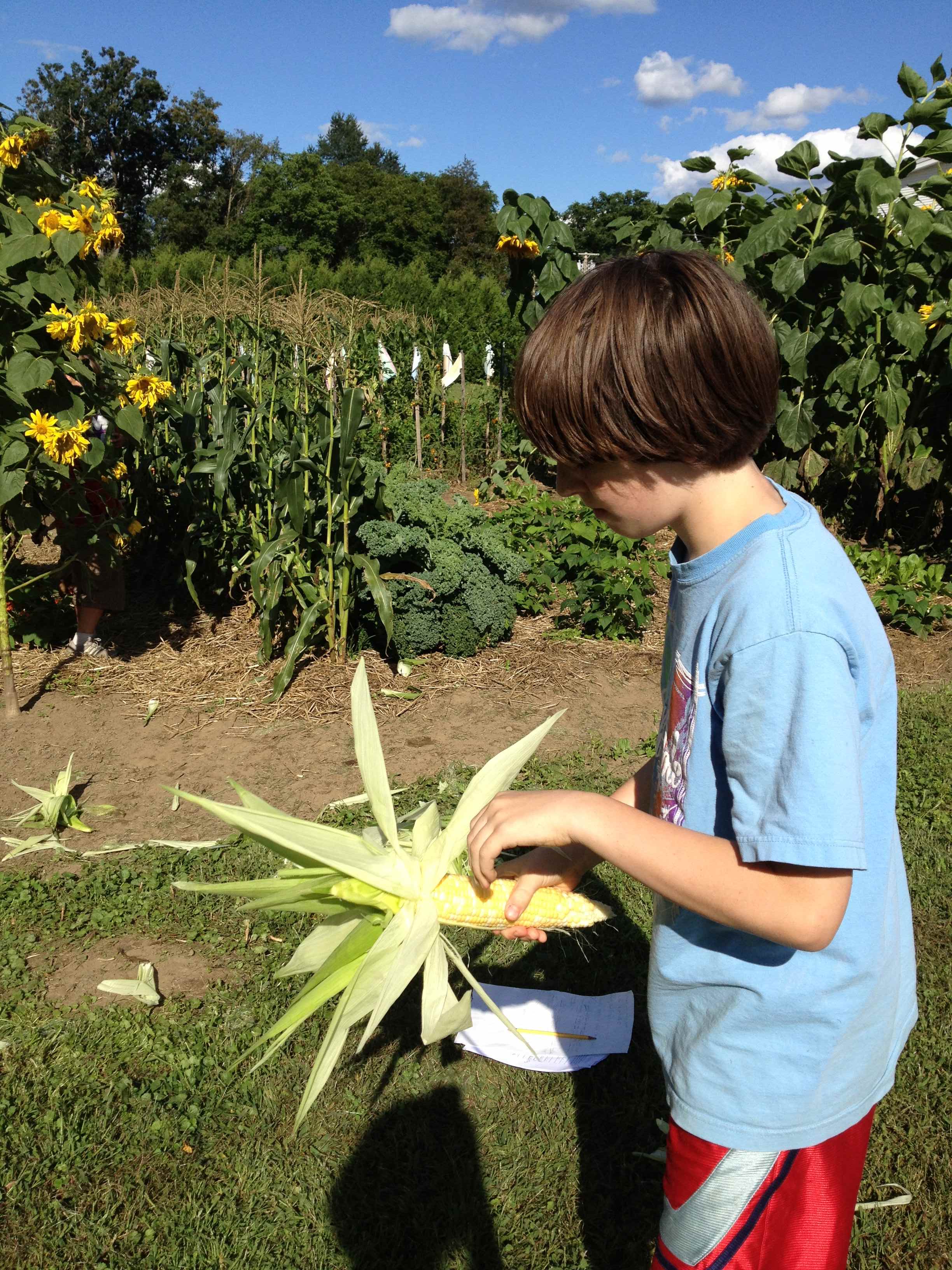
shucking ears

shucking ears

sweet corn ready for snack

sweet corn ready for snack


Leave a comment

POPCORN STORAGE AT WESTMINSTER SCHOOL

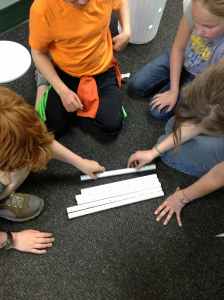
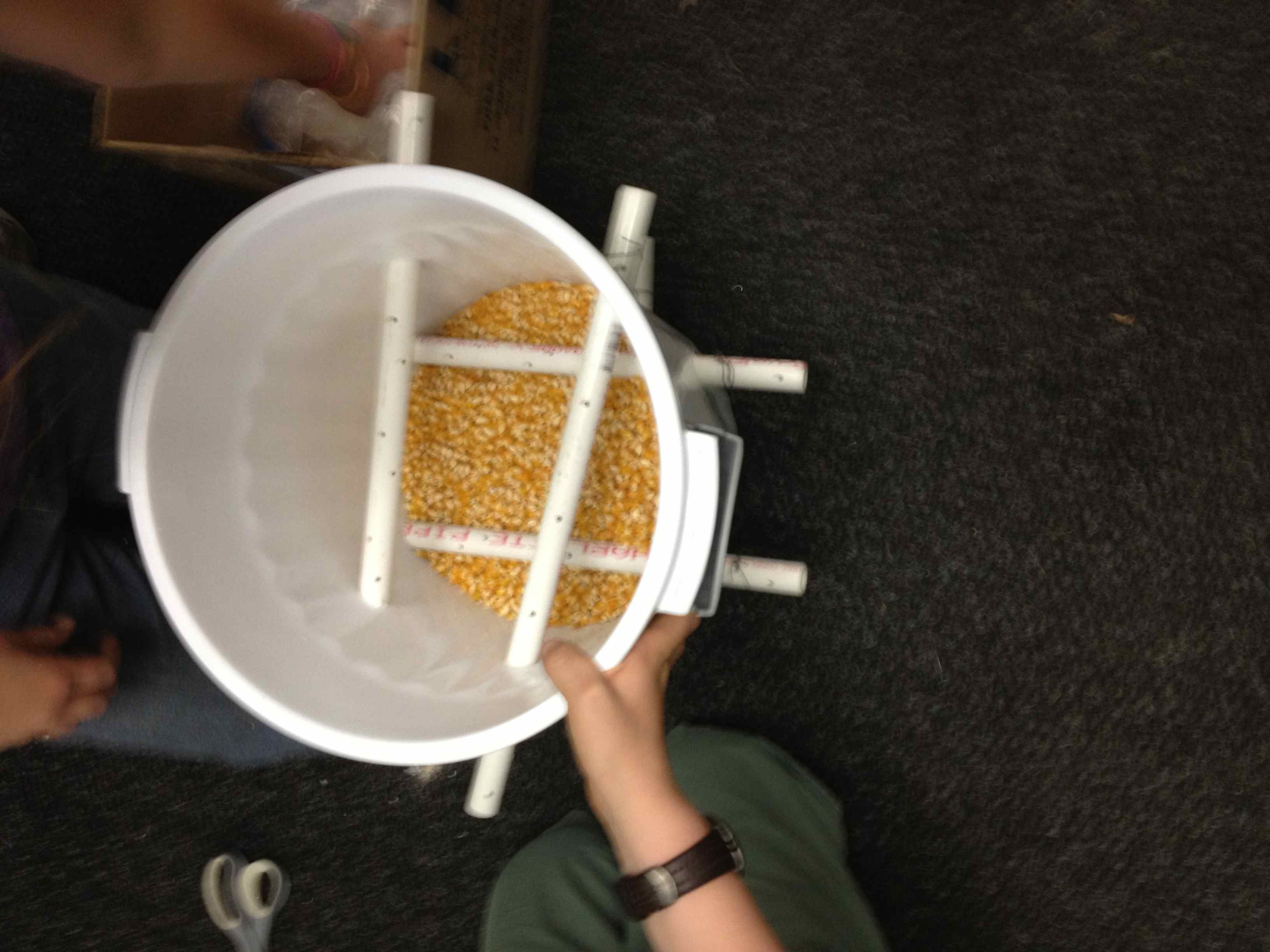
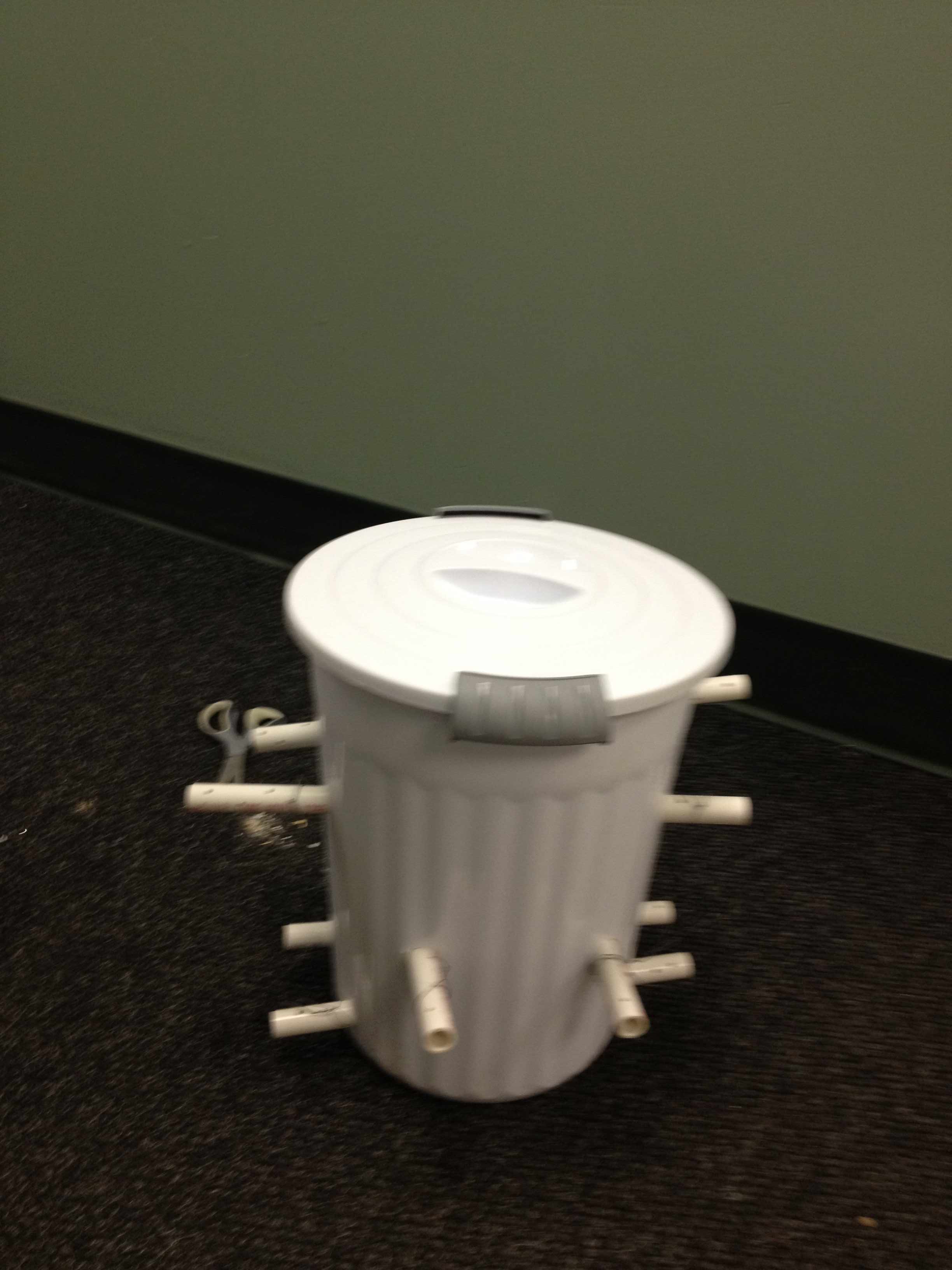
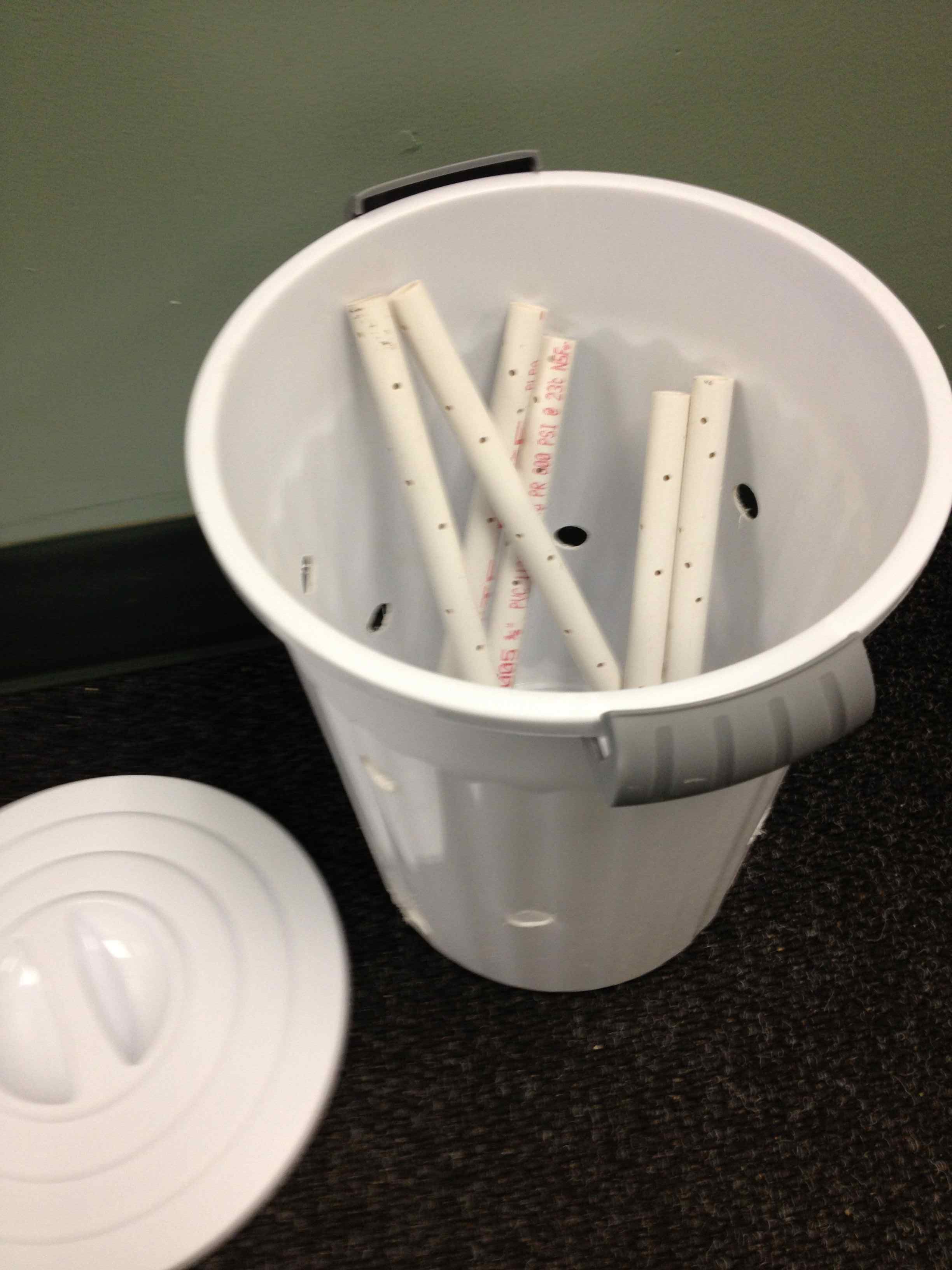
In an earlier post, our fourth graders took a spring field trip to the Harlow Farm. They saw an antique popcorn kernel remover, still in operation. They also saw an innovative way of storing popcorn in a ‘sealed’ container that allowed for the airflow that popcorn kernels need for curing. We went back to school and tried to replicate this storage design. I predrilled holes in the PVC pipes after precutting them. I also drilled holes  the mini rubber trash container. A team of fourth graders put their heads together to figure out assembly of our own school popcorn storage unit. The way they worked together was impressive!team workpopcorn stored
assembled cntainerunassembled container


Leave a comment

BEST PLACE TO CURE POPCORN

discussion ensues

After visiting the farm and checking out their popcorn, fourth grade students used some of their own crop of popcorn to run some experiments.
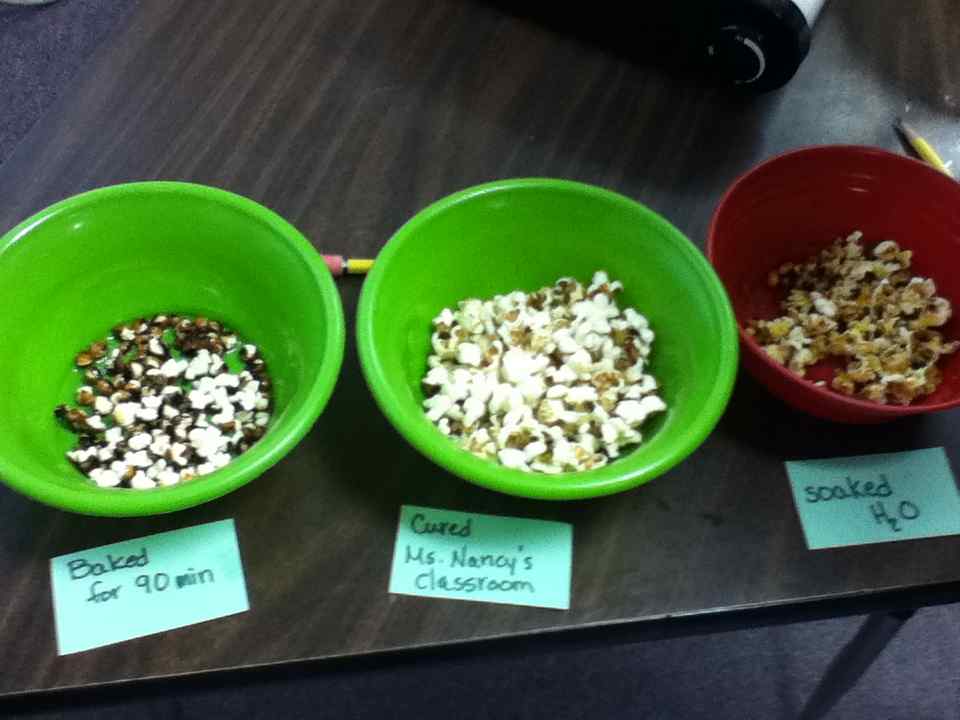
In teams, their jobs were to determine a few things about what makes a good batch of popped corn. One of their teachers, Nancy Bladyka, baked some of the kernels in a 200 degree F. oven for 90 minutes. She soaked another batch in water overnight. She used popcorn from two storage areas: the fourth grade classroom at Westminster and the unheated greenhouse at Harlow Farm.
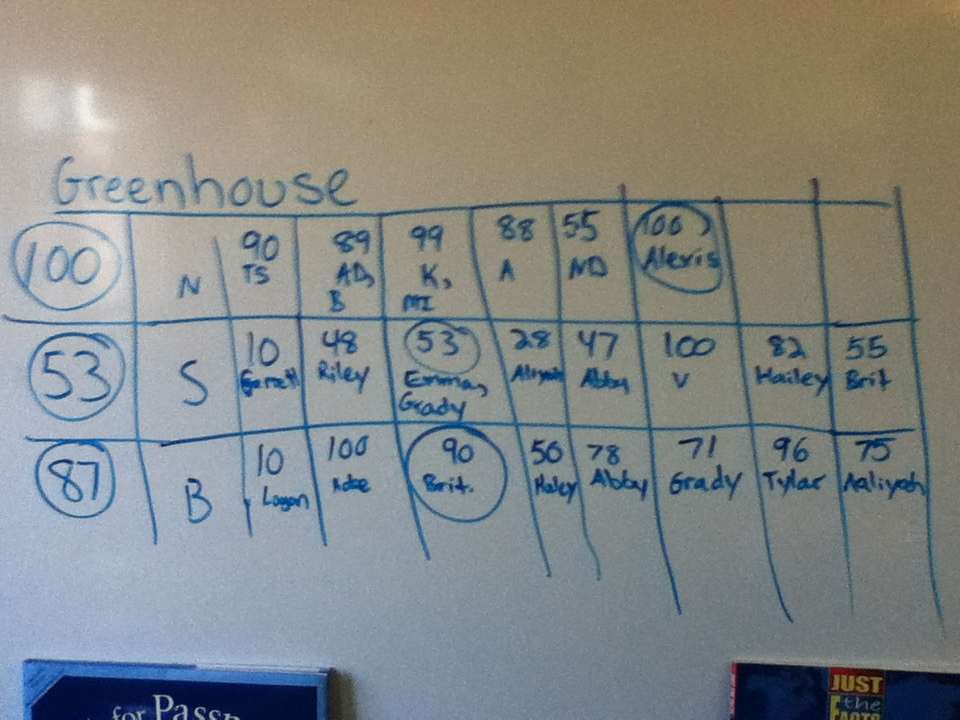
Students were asked to estimate how many kernels out of 100 would pop under each of the six conditions. If we were to run this experiment again, we would narrow down our list of variables. For now though, this is an example of how the class estimate fell out: (N:nothing S:soaked and B:baked)

Greenhouse estimates

labeled popcorn results

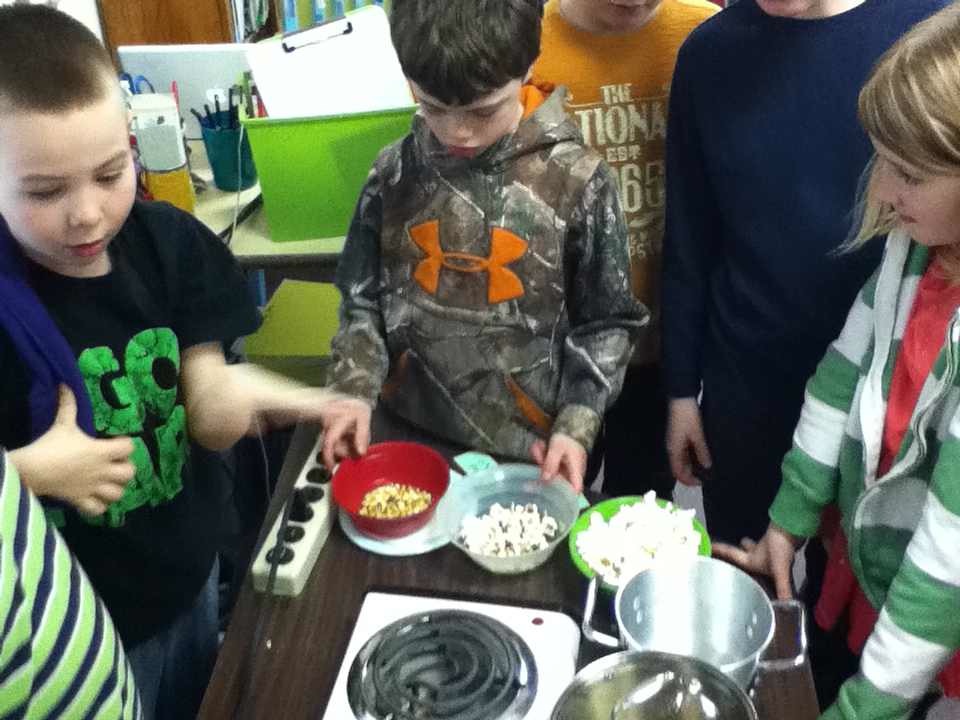
When the estimates were recorded and the three types of popcorn from  two locations were popped, students viewed the results. A lot of good discussion ensued.

viewing popcorn results  Popcorn experiment #1

What could we generalize from our results? The untreated popcorn stored at Harlow Farm’s unheated greenhouse over the winter popped the best. Soaking and baking also affected the quality of the popped corn as you can see in the pictures. In the near future, we’ll be doing a blind test of  three different popcorns: Orville Redenbacher, Newman’s Own and Westminster School’s Own! We’ll let you know the results!


Leave a comment

Homemade Pizza in Kindergarten

summer tomatoes

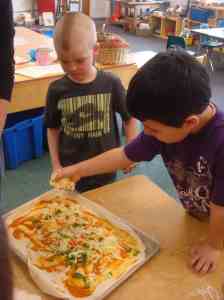
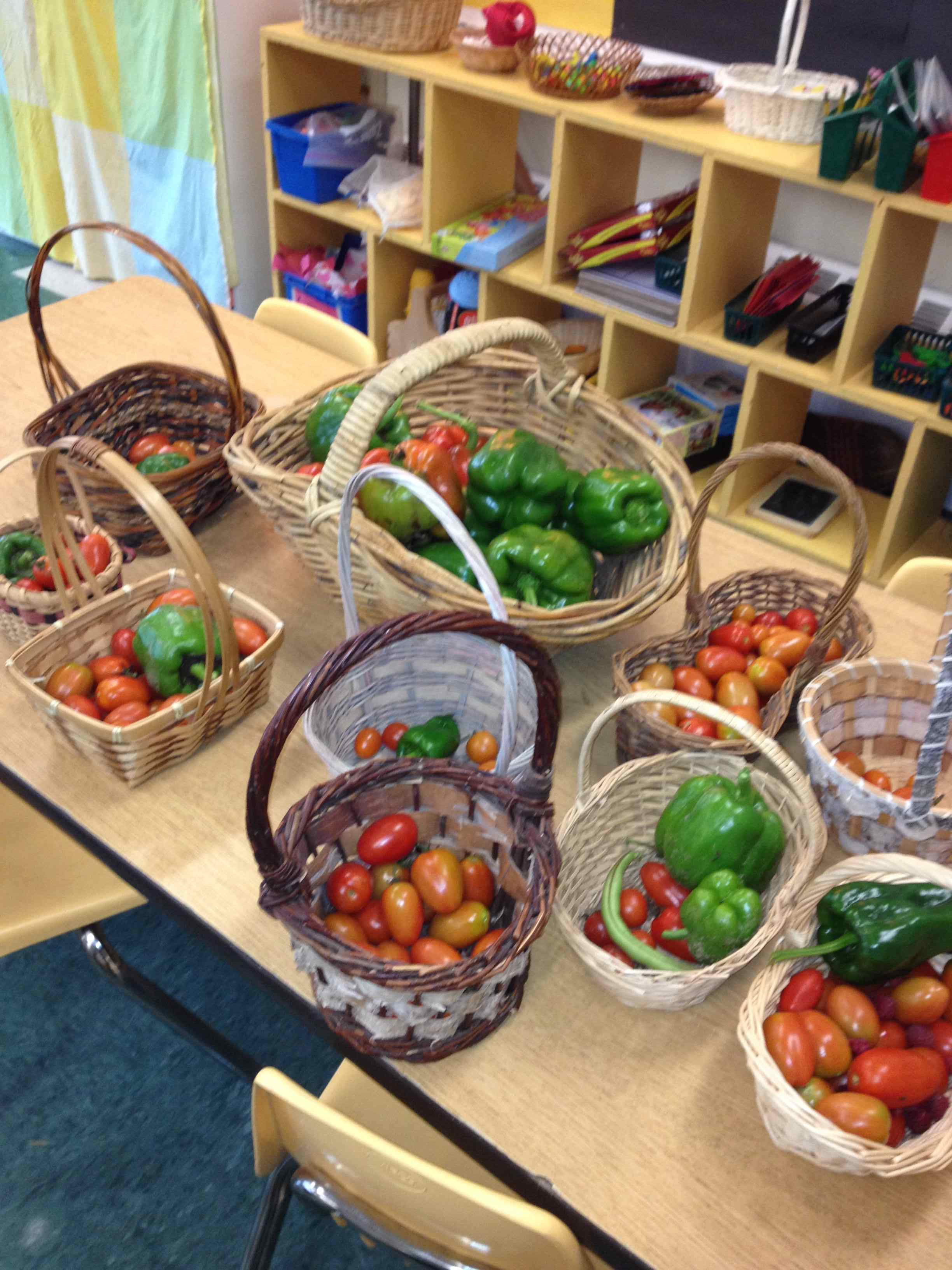
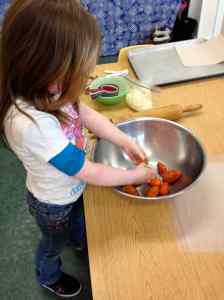
Kinderarten harvestLast summer’s Roma tomatoes spent the winter in my freezer after they were harvested by the Kindergarten students in Valerie’s room. This month, I thawed them, still whole and unprocessed. I brought them to school along with some pre made pizza dough and a few other ingredients that make pizza taste like the kind you get at your favorite local restaurant….oregano, cheese, garlic, peppers..

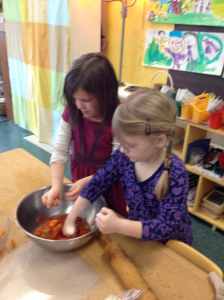
I experimented ahead of time with the tomatoes, squeezing 3 cups of them into mush by hand, pouring off a little of the water, and then adding them to a mixture of diced onion, garlic and oregano that I had sizzling in some olive oil in a medium sized frying pan. When the tomatoes had cooked down to a consistency that resembled sauce (about 15 minutes), I used a wand to puree the ingredients. Voila!…. a fine looking pizza sauce. You could  use a blender or food processor.

I  made the pizza dough ahead of time. The dough requires 2 hours in a warm place to rise. (Recipe is included in this article.) You can also find ready made pizza dough in most grocery stores. I’ve even seen ready made crusts….just add your favorite toppings and fire up the oven!

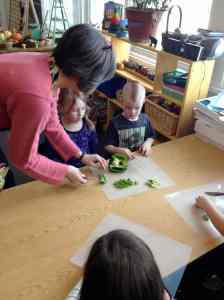
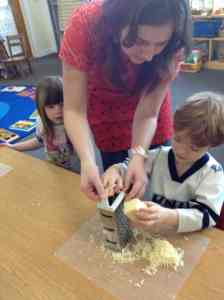
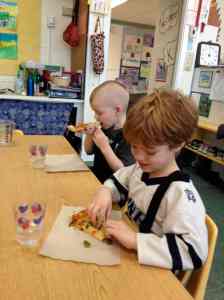
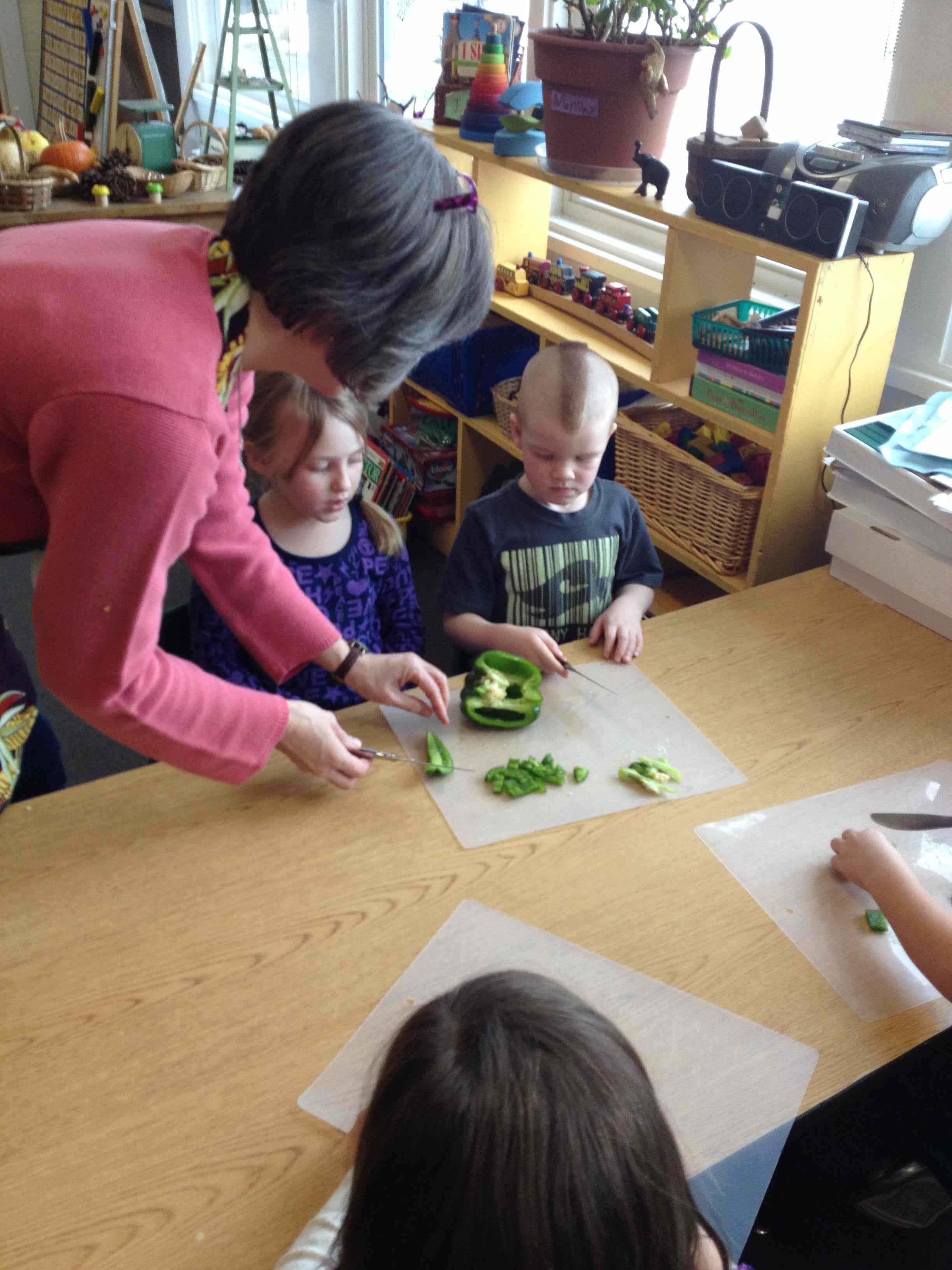
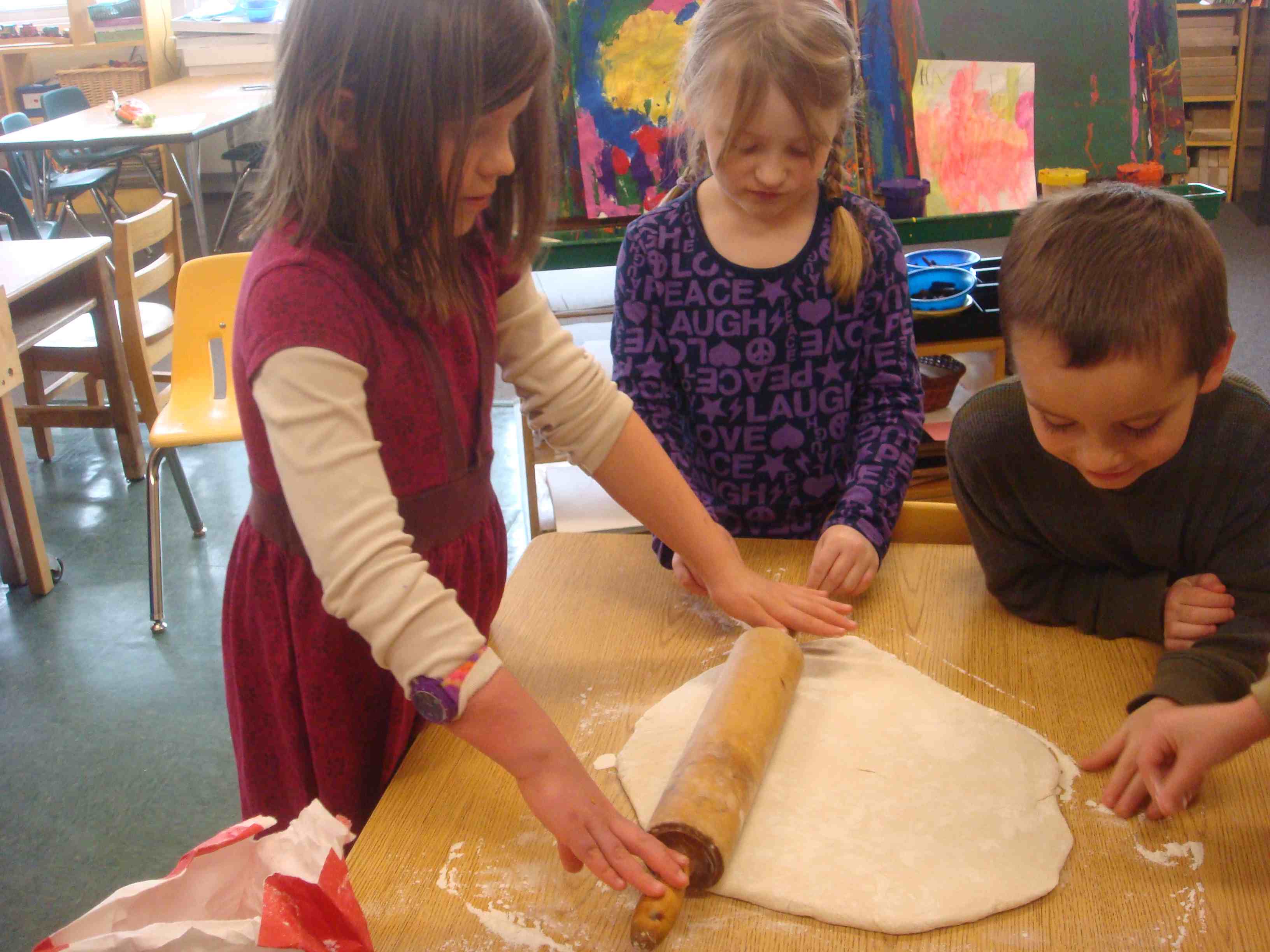
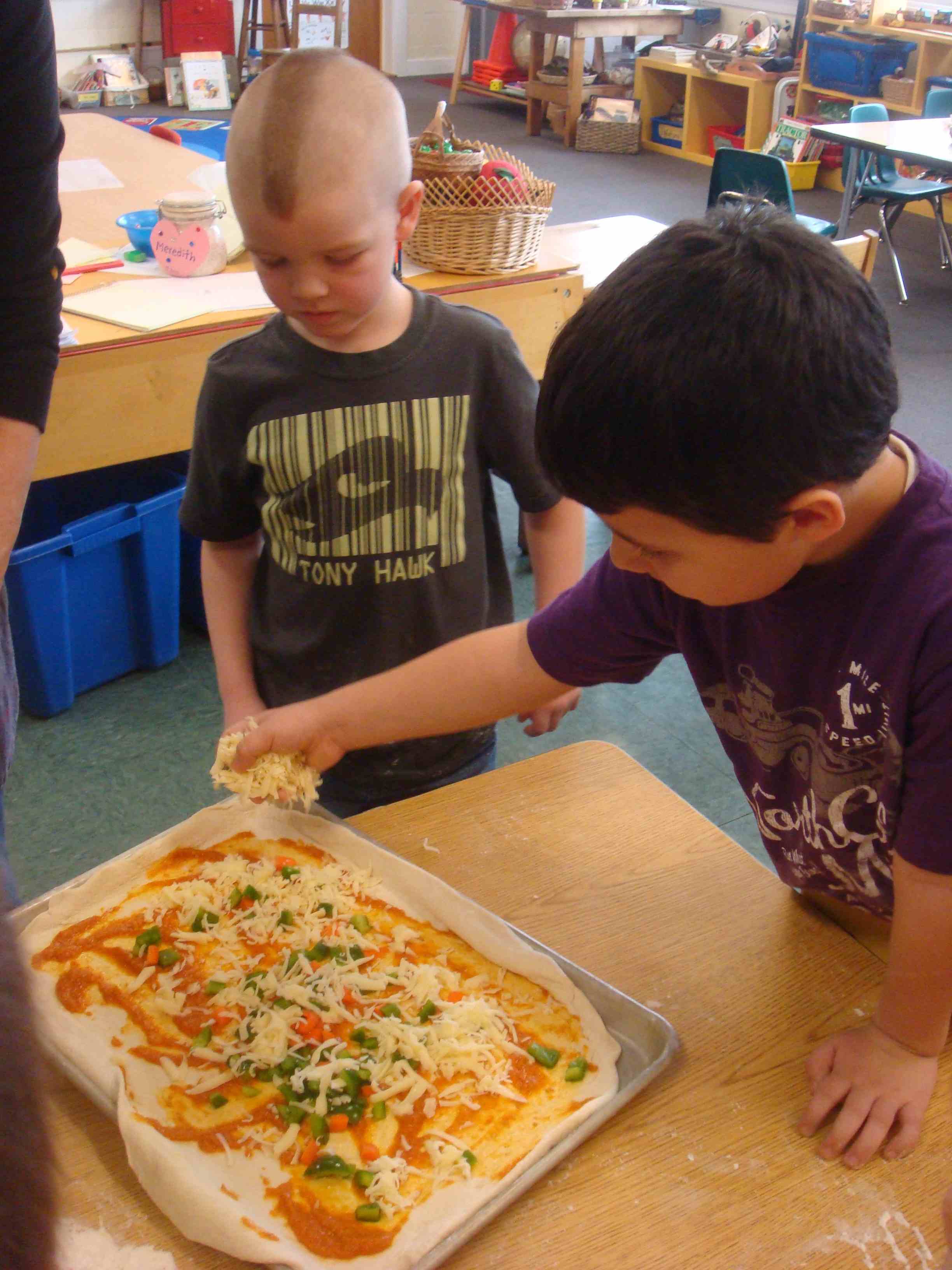
The kids rolled out the pizza dough, grated the mozzarella cheese and cut up a green pepper. Then it was time to put the pizzas together! While they were in Art class, the pizza baked in a preheated 475 degree oven for about 20 minutes. Good book to read together while you’re waiting: “Pete’s a Pizza” by William Steig!

Many thanks to Valerie Kosednar and her K’s.
Hadley squeezing tomatoes

cutting peppers Valerie, Christopher

Grating cheese Meredith Ty

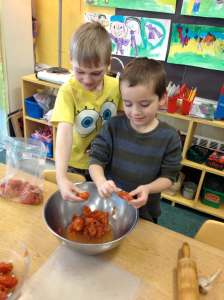
punching tomatoes Maya RhiannaJosh and Robert Kind. Tom.  sauce

assembled pizza

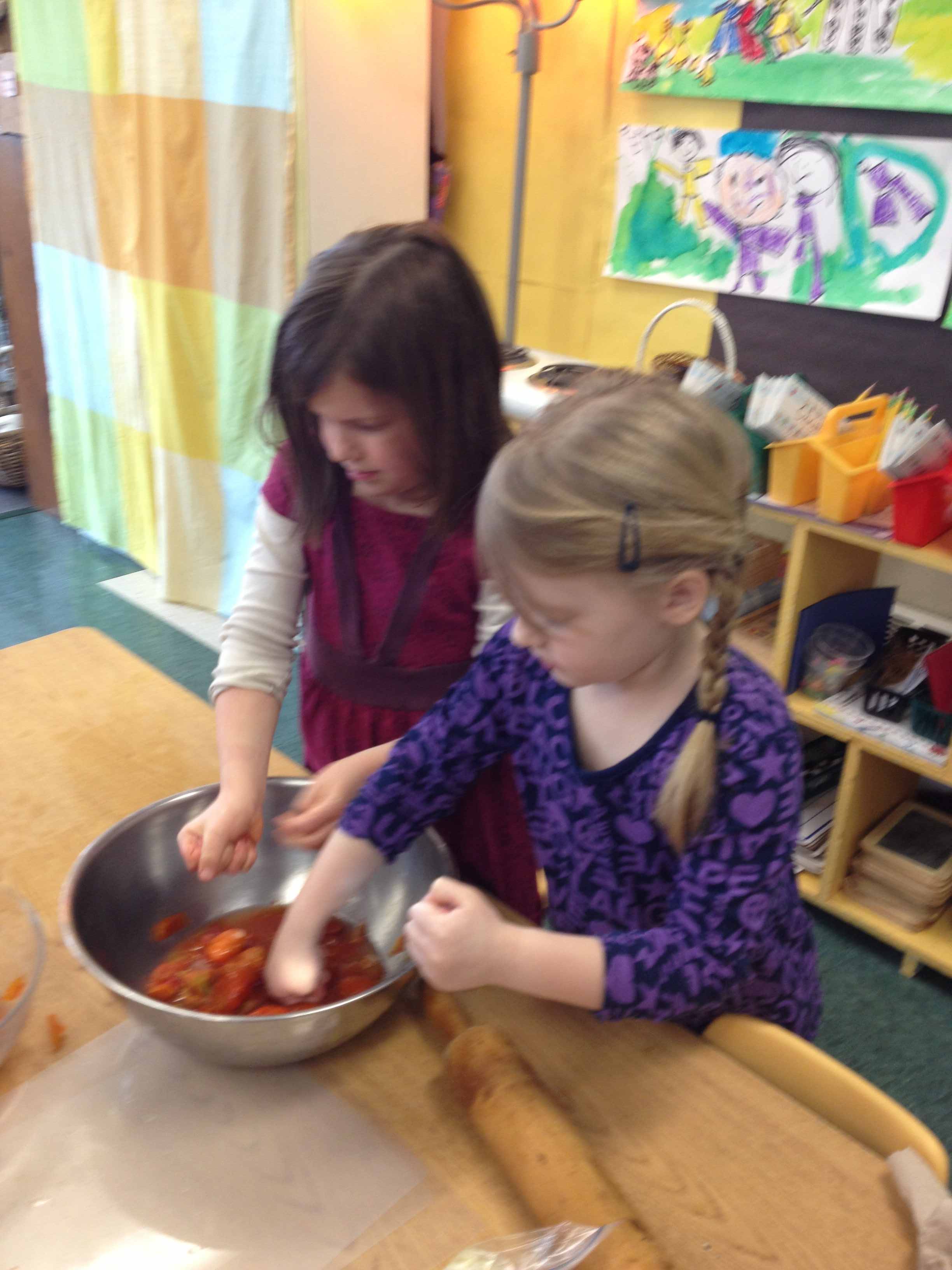
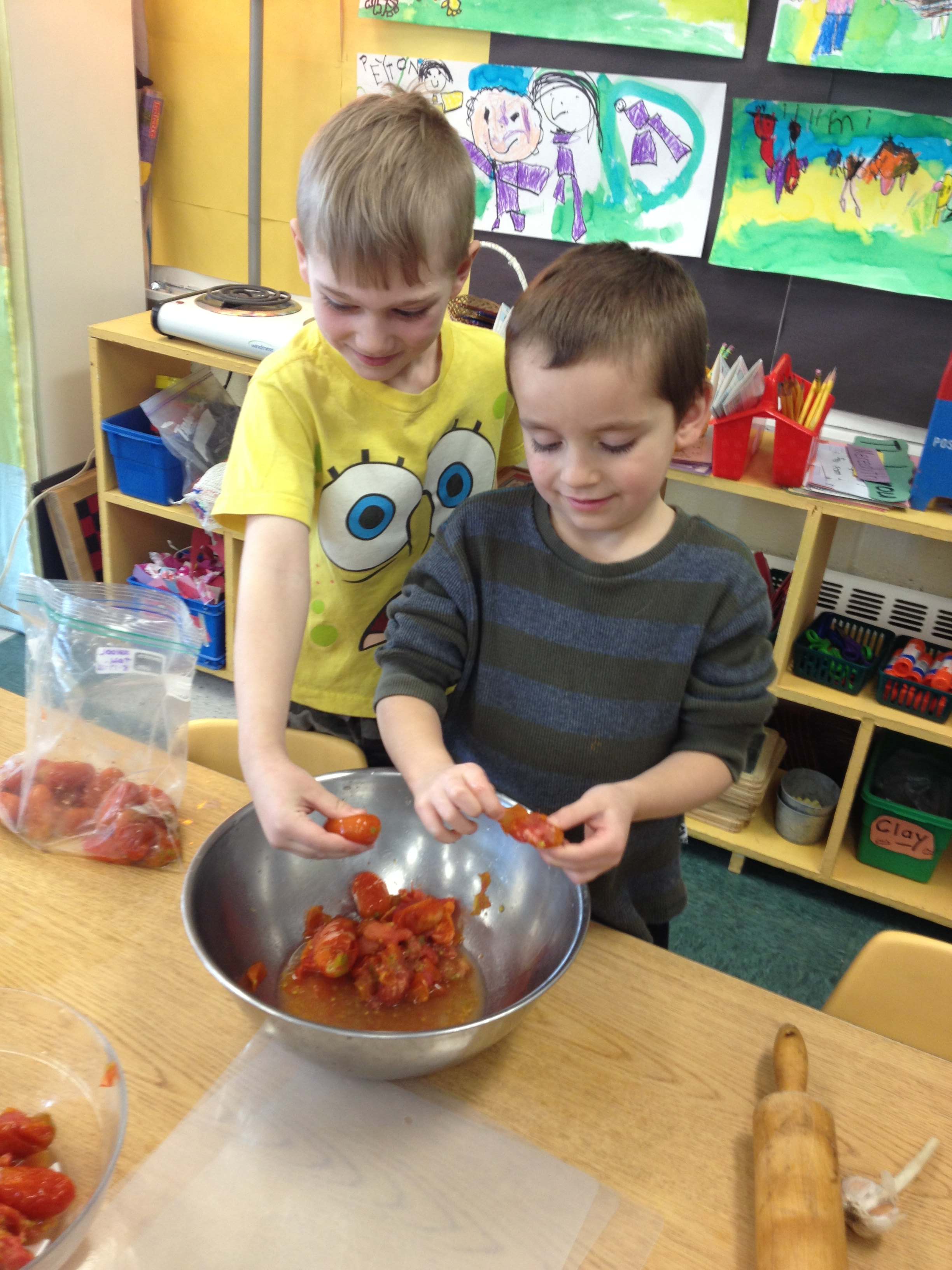
For a first hand experience, these Kindergartners made tomato sauce right in their classroom. Ooooh the giggles as they squished the tomatoes between their hands! I precut the onions and garlic. Those can be hard  for little ones to cut up. We cooked the sauce in a large pot on a hot plate, adding a little salt and oregano to taste. Then we froze it for a future cooking date. (Maybe spaghetti with our own garden tomato sauce?)

One Kindergartner’s reaction to our pizza: “Those peppers tasted so good they almost made me POP!”

It’s just about time to start tomato plants from seed for this summer’s tomato crop!

3 K's rolling dough for pizzacheese on pizza

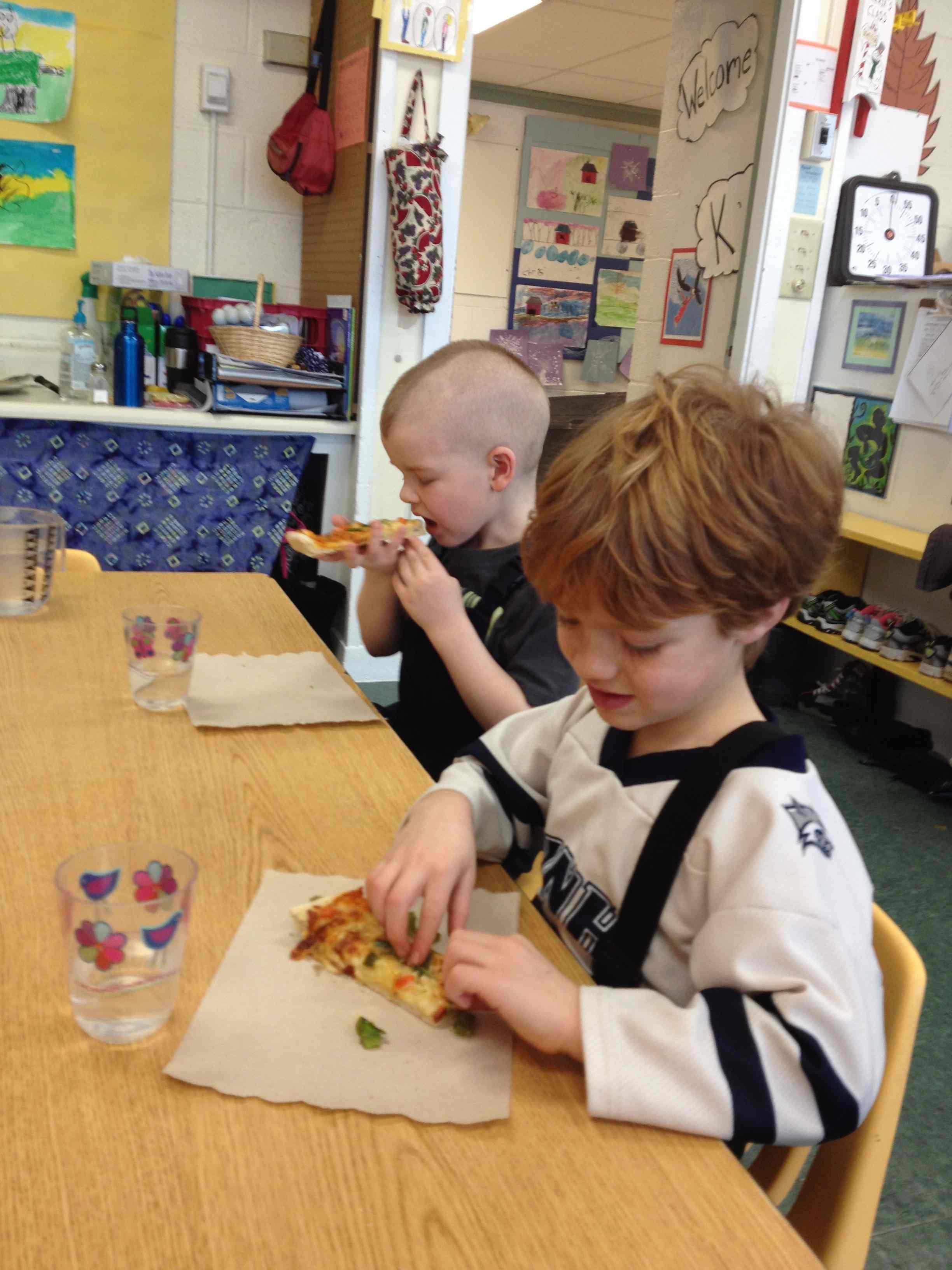
Tighe and Christopher eating pizza copy

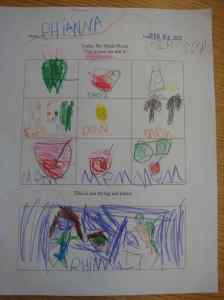
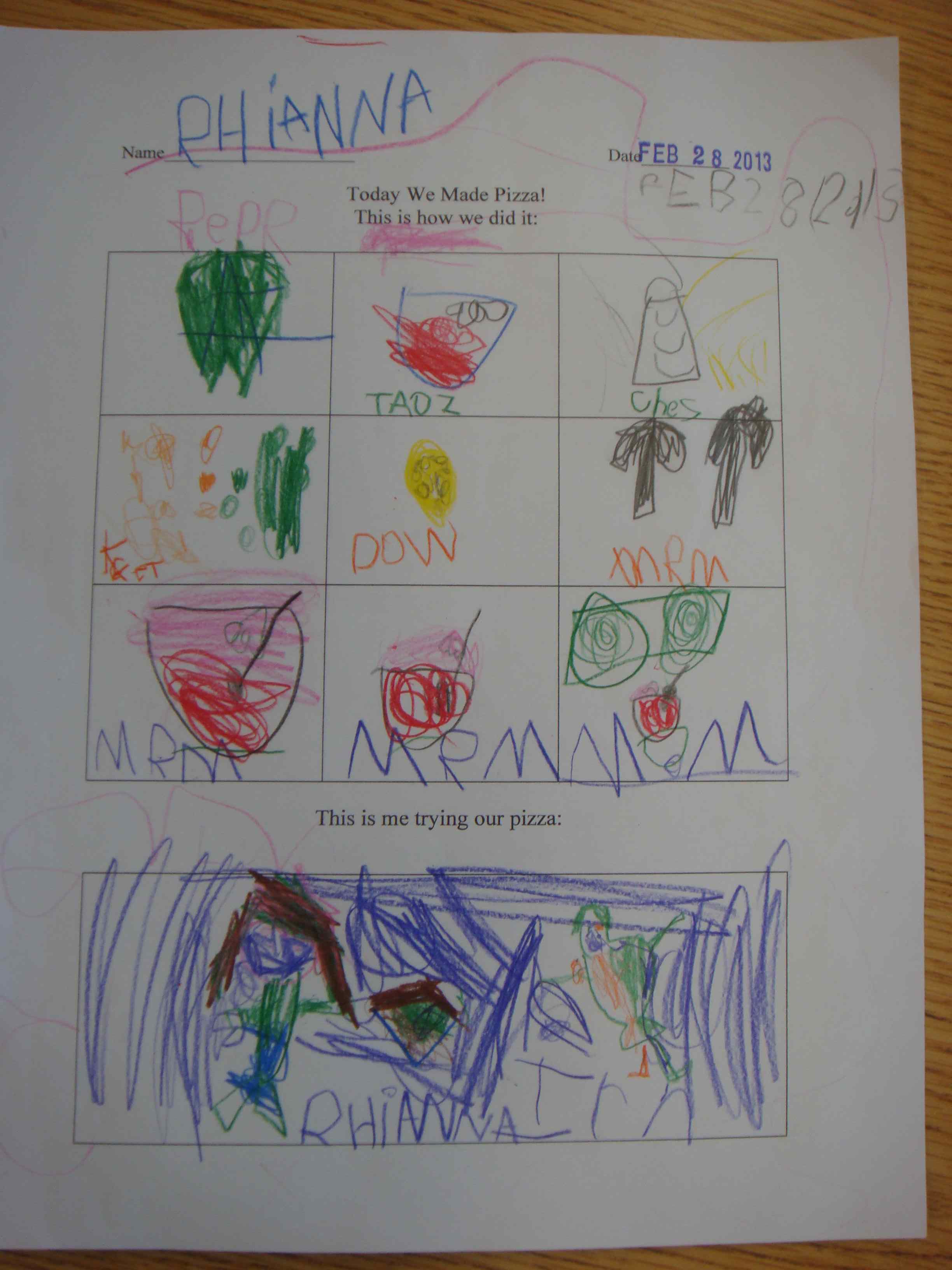
      pizza response paper

WHAT A SPRINGBOARD THIS LESSON WAS FOR ENCOURAGING KINDERGARTENERS TO WRITE! THEY WORKED HARD FOR TWO DAYS AT LABELING THEIR PICTURES WITH THE BEGINNING, ENDING AND MIDDLE SOUNDS THAT THEY COULD REMEMBER. THEY HELPED EACH OTHER WITH THIS WRITING ASSIGNMENT.

Homemade Pizza Dough Recipe

(makes one average-sized cookie sheet pizza)

4 cups flour                        1 Tablespoon yeast

1 1/3 cups warm water          1 teaspoon salt

2 Tablespoons olive oil           ¼ c. cornmeal

1.Dissolve yeast in water

2. Add salt, and olive oil and stir. Then slowly add flour until dough is soft but not sticky

3. Knead dough on a clean floured surface for 10 minutes.

4. Let dough rise in a warm place for about two hours.

5. Using more flour as needed, roll the dough out on a flat surface and fit it to the pan.

6. Oil pan and sprinkle with corn meal, then add dough, adjusting it to the edges of the pan

7. Add your favorite sauce and toppings.

8. Bake in a preheated 475 degree oven


Leave a comment

PUMPKIN PIE TARTLETS

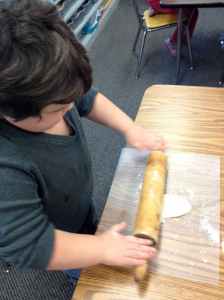
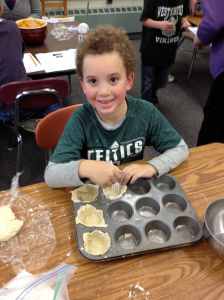
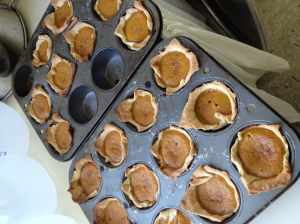
On Monday Mrs. Perry’s first graders made pumpkin tartlets in cupcake tins.
They used the pumpkin that they had cooked down earlier in the fall…the
same pumpkins that they harvested from our school garden back in October! (See November blog entry.)
In teams, the students followed the recipe for the tartlets.

rolling pie dough

rolling pie dough

They carefully
rolled out the pie dough and added the filling.

pricking pie dough

pricking pie dough

If you would like to try our
recipe for pumpkin tartlets look below !

finished pumpkin tarts

finished pumpkin tarts

PUMPKN PIE TARTLET RECIPE


1 Comment

Giving Thanks

Our Westminster Schools Thanksgiving Feast has, over the years, grown to colossal proportions. This year  we were expecting 400 to 600 attendees. I was in charge of the butternut squash (200 cups, please.) Our generous community farmers and friends at the Kurn Hattin School donated the milk, potatoes, butter and squash for these minions. Many thanks to them!

A powerful group of TEAM parents, led by the intrepid Molly Banik, provided the expertise, energy and initiative to get the monstrous undertaking off the ground.

Cheryl Rounds, former staff member and great grandma, and Molly Banik, feast coordinator and parent.

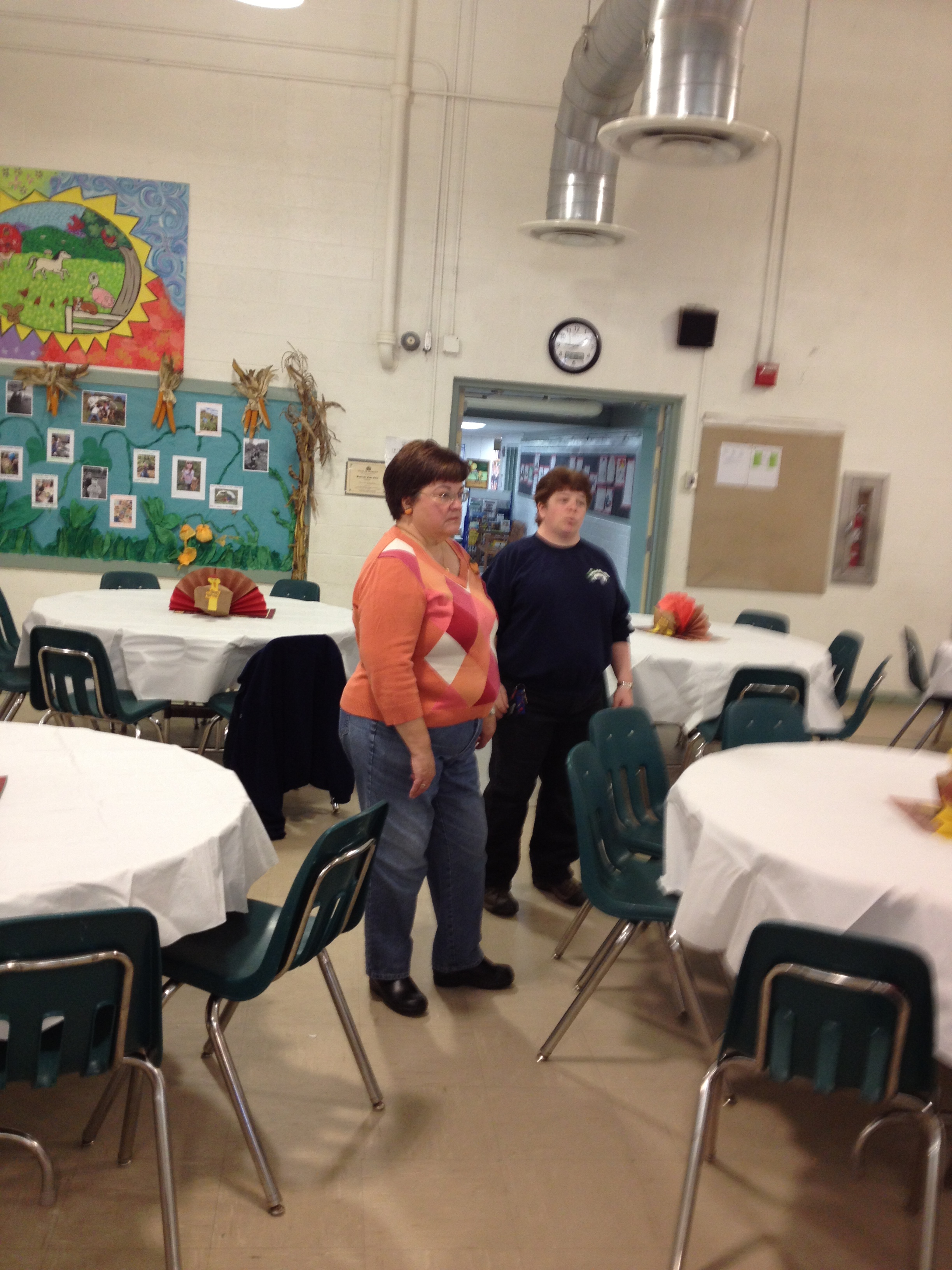
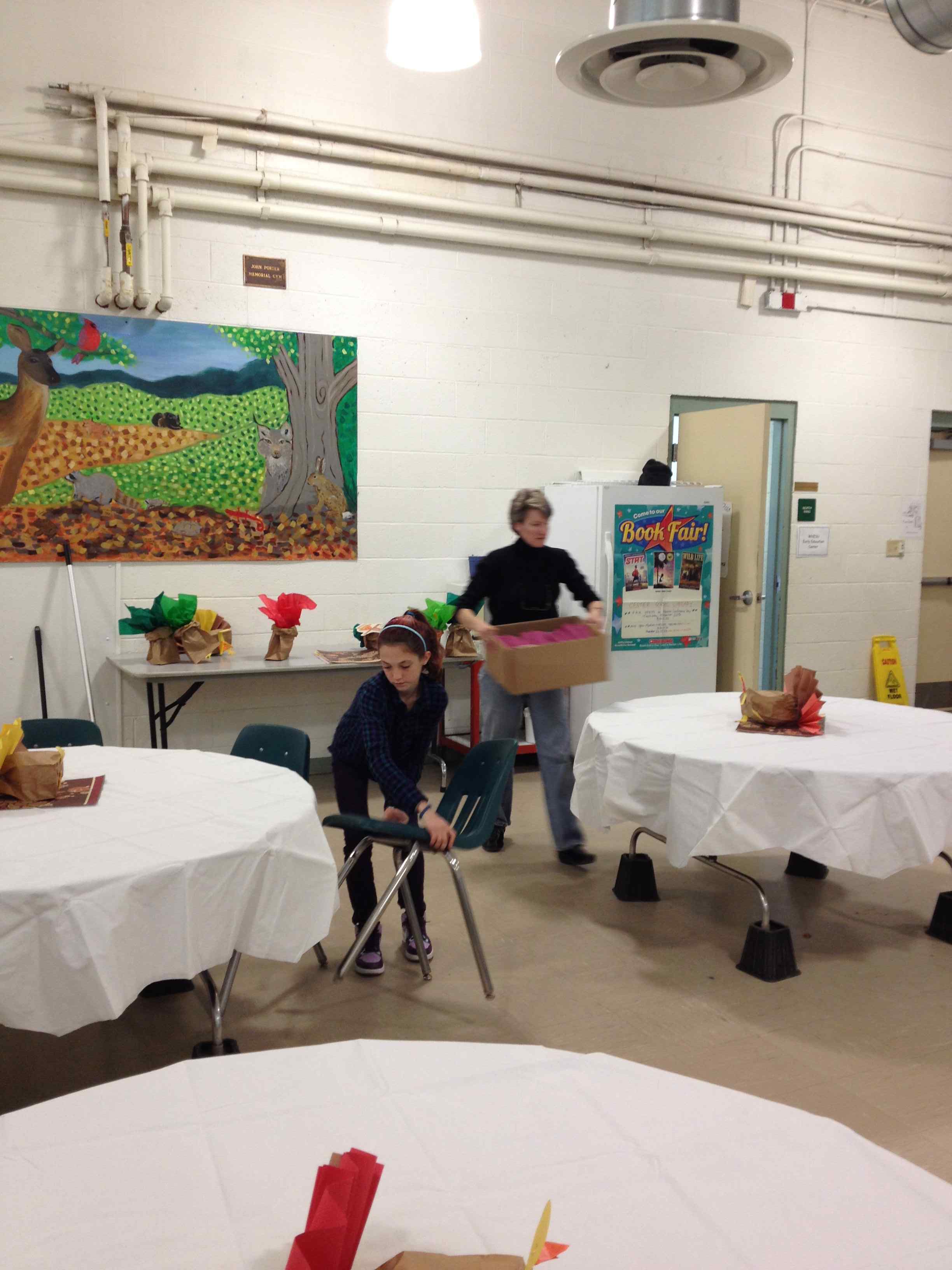
The sixth graders were on hand early in the morning for lessons on how to serve. Both the cavernous gymnasium and the dining hall were set up restaurant style with white table cloths and burgundy napkins. ‘Feasters’ would eat with their families and other families at tables of eight. Our principal, Steve Tullar, was on hand to welcome parents to the tables. Centerpieces were made by students and our talented Art teacher, Colleen Grout. Songs were sung by all 600 of us, under the direction of  Ashley Pane our Music teacher.

Setting up for the “Feast.”

Before 8 a.m., parents and students were at the ready, peeling an extra 50 lbs. of potatoes. (Our neighboring school, Kurn Hattin, helped with     cooking support…..so thankful that they’re just down the road!) Peter Terrell, our custodian, drove the huge pot of peeled potatoes, sloshing in icy water  to the Kurn Hattin School to be cooked. We welcomed someof their students and staff to the feast. Each Westminster student was responsible for providing a specific family contribution, such as bread or salad.

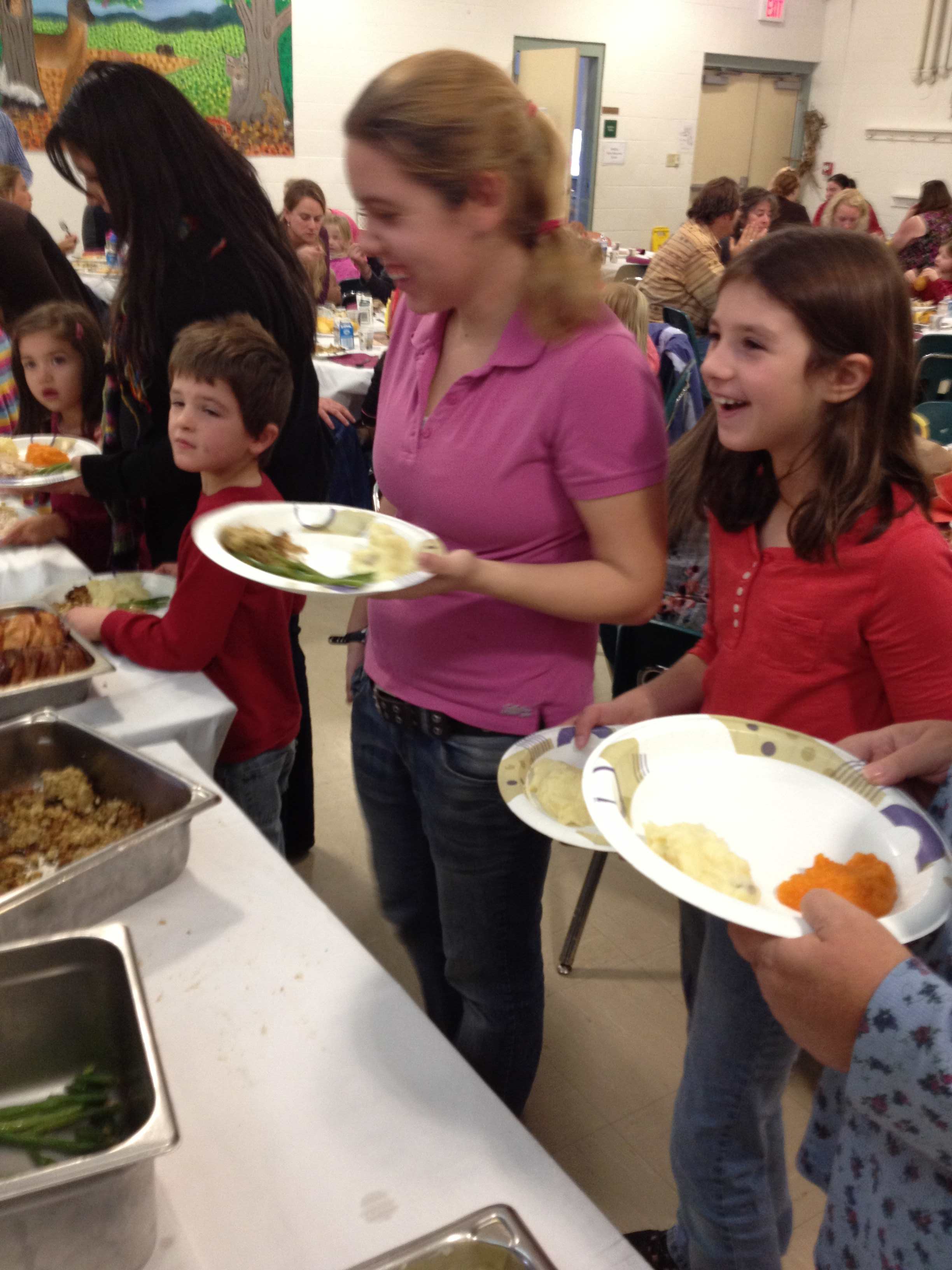
Kim Kinney, our chef, commandeered our own kitchen staff while stirring the enormous pot of turkey gravy. At the last minute someone donated 10 whole turkeys!! As you can see the spirit of  “giving” was the most important part of “giving thanks” this year at our school.

Thanksgiving buffet.

Ending  our feast, leftovers were made into dinners for hungry families. Any other leftovers were taken to the Bellows Falls Stone Church soup kitchen. (Mondays happen to be the days that they’re open for business.)

…………so thankful for the community energy that flows through this school!


Leave a comment

Pre Thanks

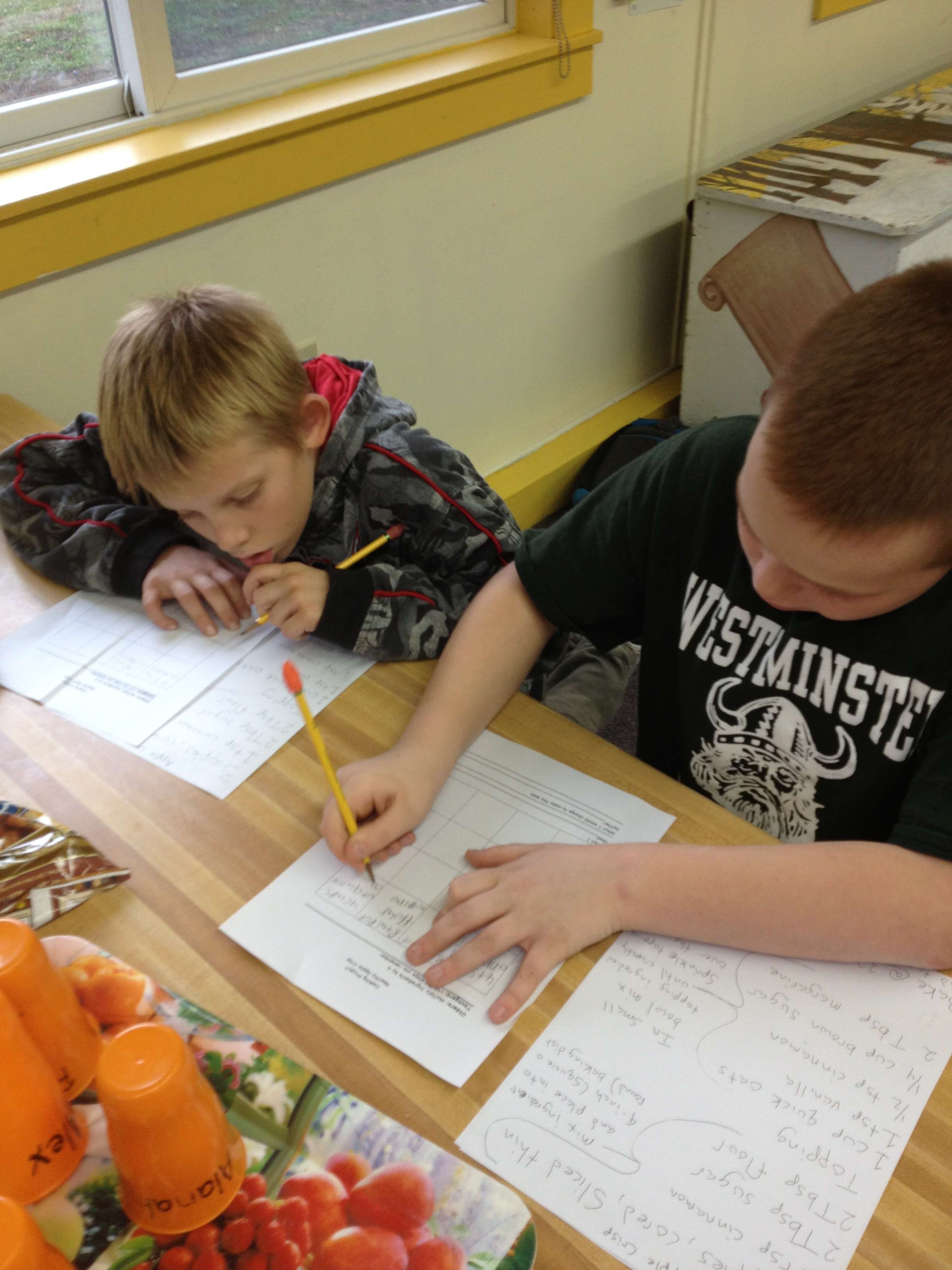
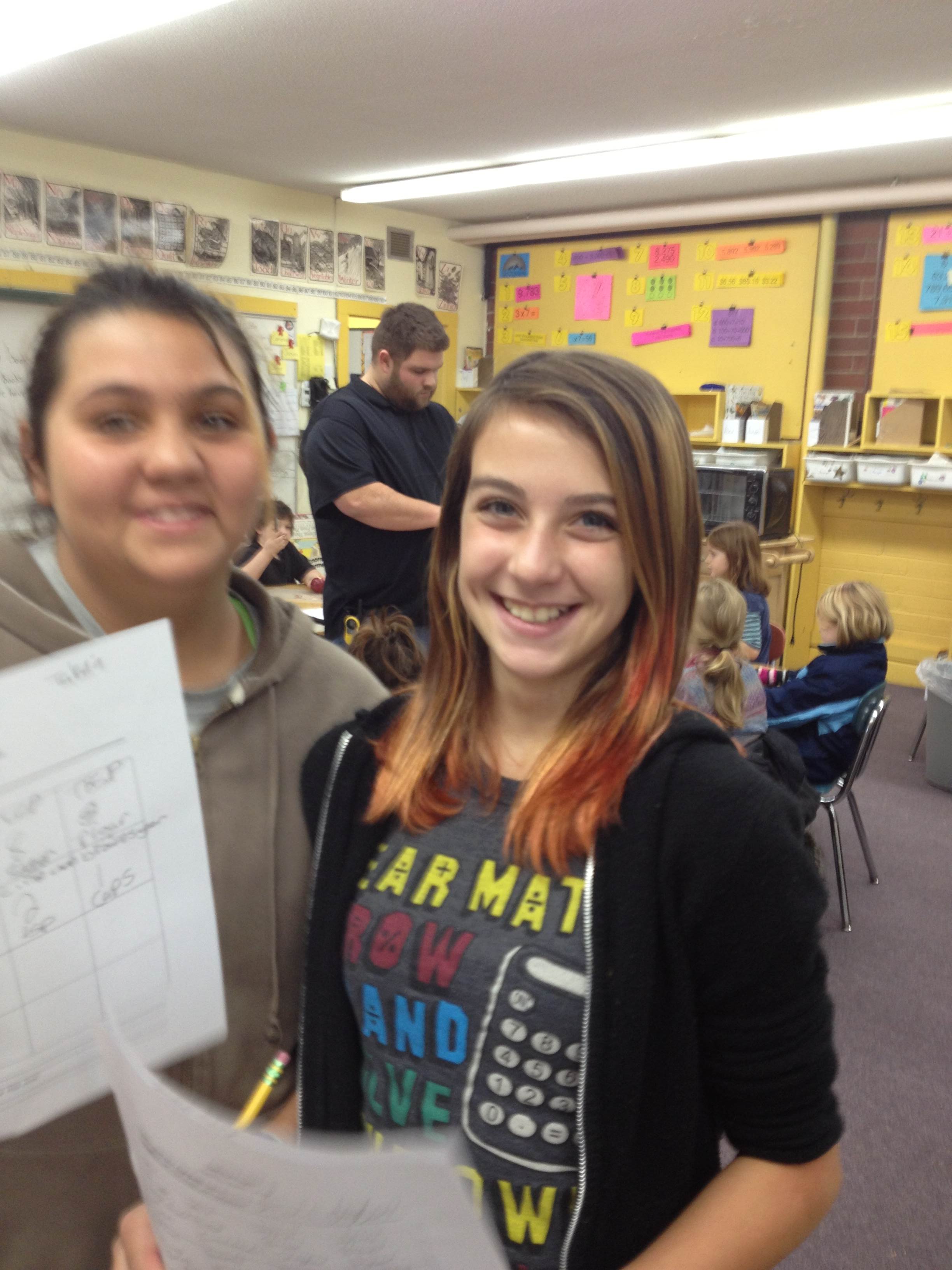
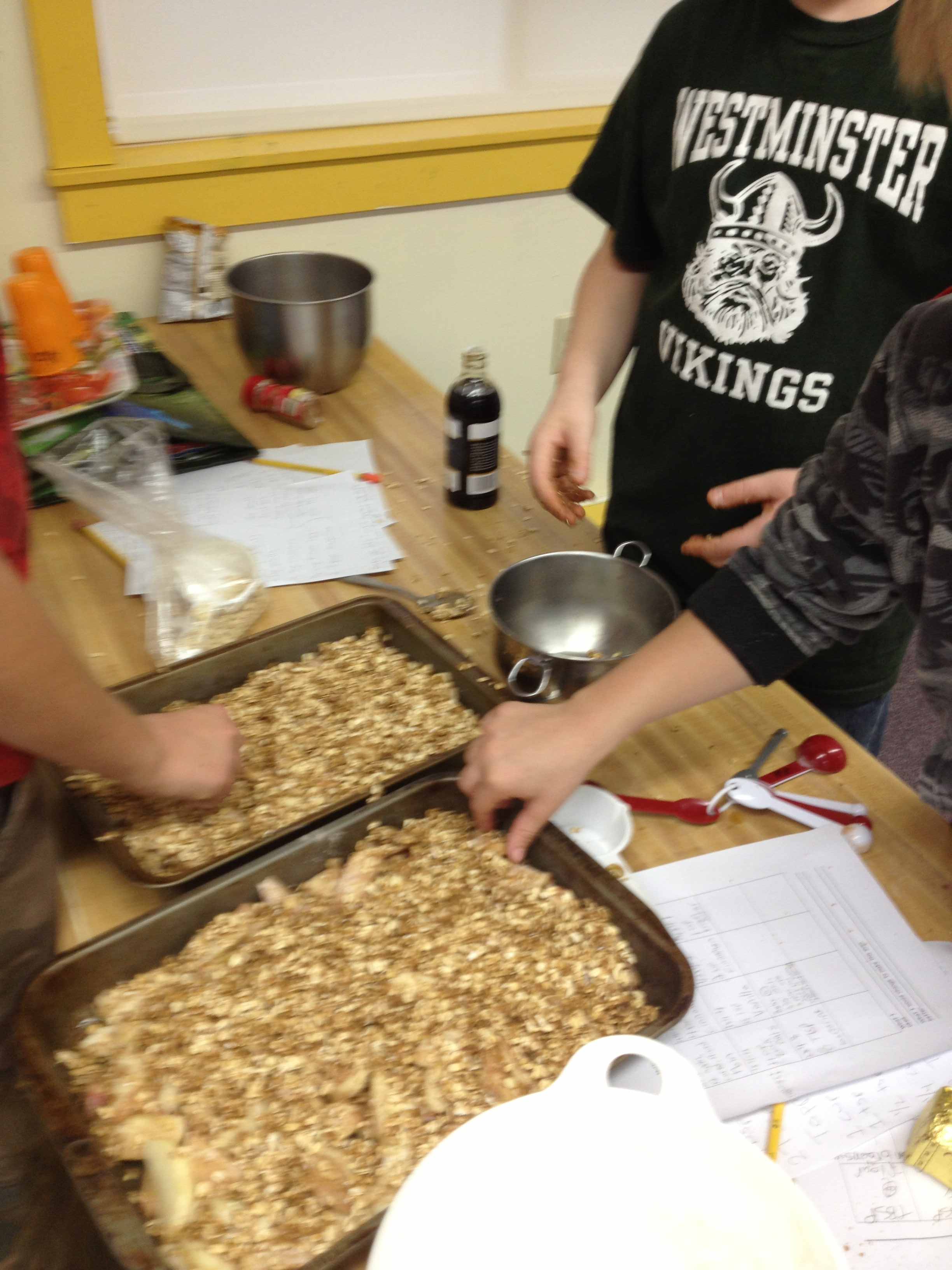
The After School class used local apples to make a healthy version of apple crisp last week. The older students quadrupled the recipe (no help with fractions; sorry kids!) while the younger ones learned apple peeling and coring skills. Those tricky older students joined forces to help each other multiply.

Multiplying ingredients by 4.

Math work in cooking.

They were done faster than you can say, “light the oven.” Next they mixed the dry ingredients together while the youngers continued to unravel the mysteries of the peeler. One student said, “I like my apples like they are, raw. Can’t we just eat them now?” “Of course!”

By the way, some children as well as adults have a hard time time managing the texture of cooked apples with skins on them because they aren’t used to the sensation. New food textures need promotional time just as  new food tastes do.

Assembling the apple crisp

After a little time to play outdoors while the apple crisp cooled, there were some happy chefs to gobble down one pan of apple crisp. The other pan went into the freezer, our contribution to the all school Thanksgiving Feast on the following Monday. The recipe for this low sugar apple crisp is just below this post. Enjoy!

When I got to school last Monday, to help set up for the Thanksgiving Feast, I saw students heading out to the garden. I had to walk out to see what they were up to.

Journey North Science experiment Gr. 3.

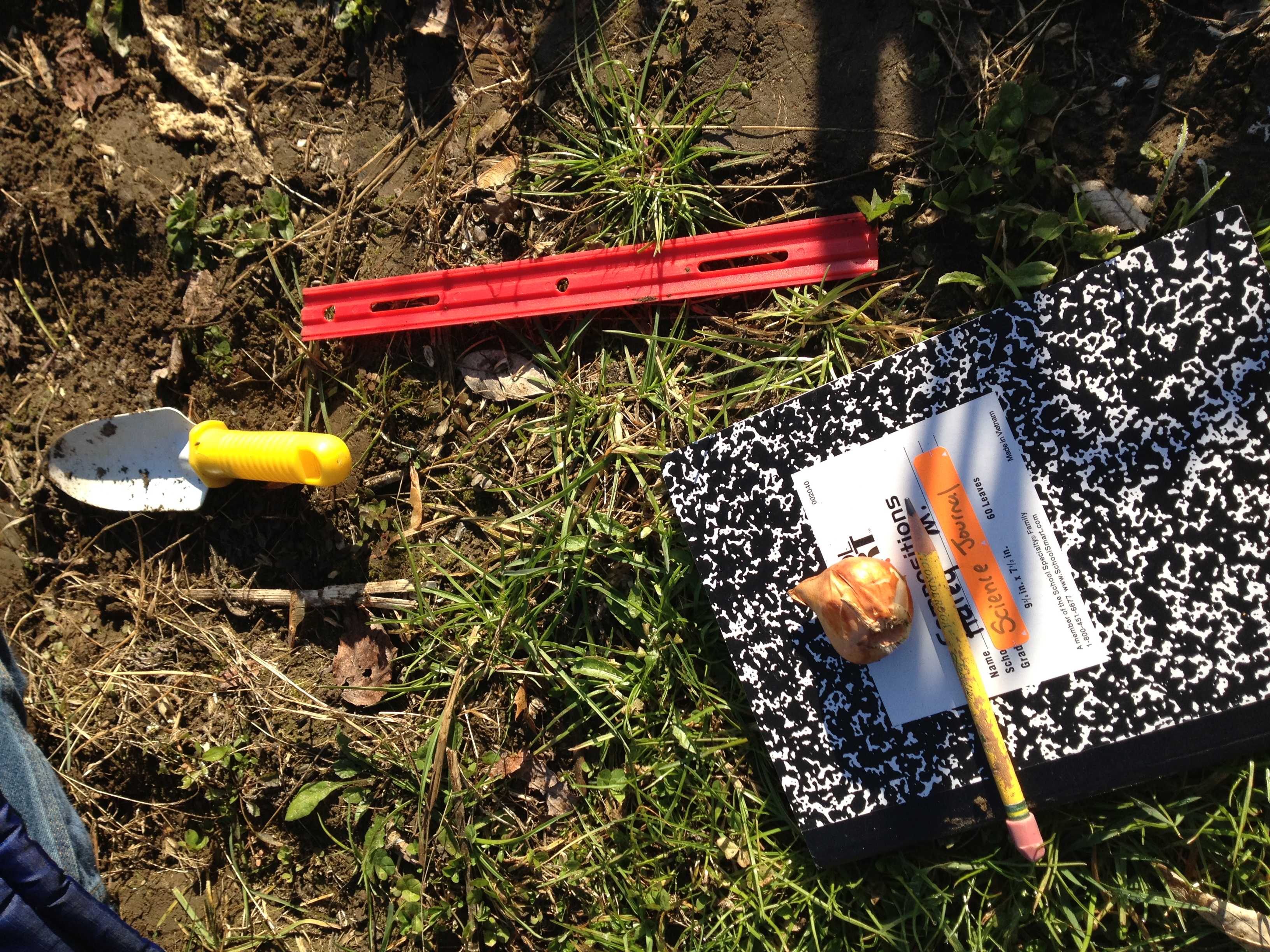
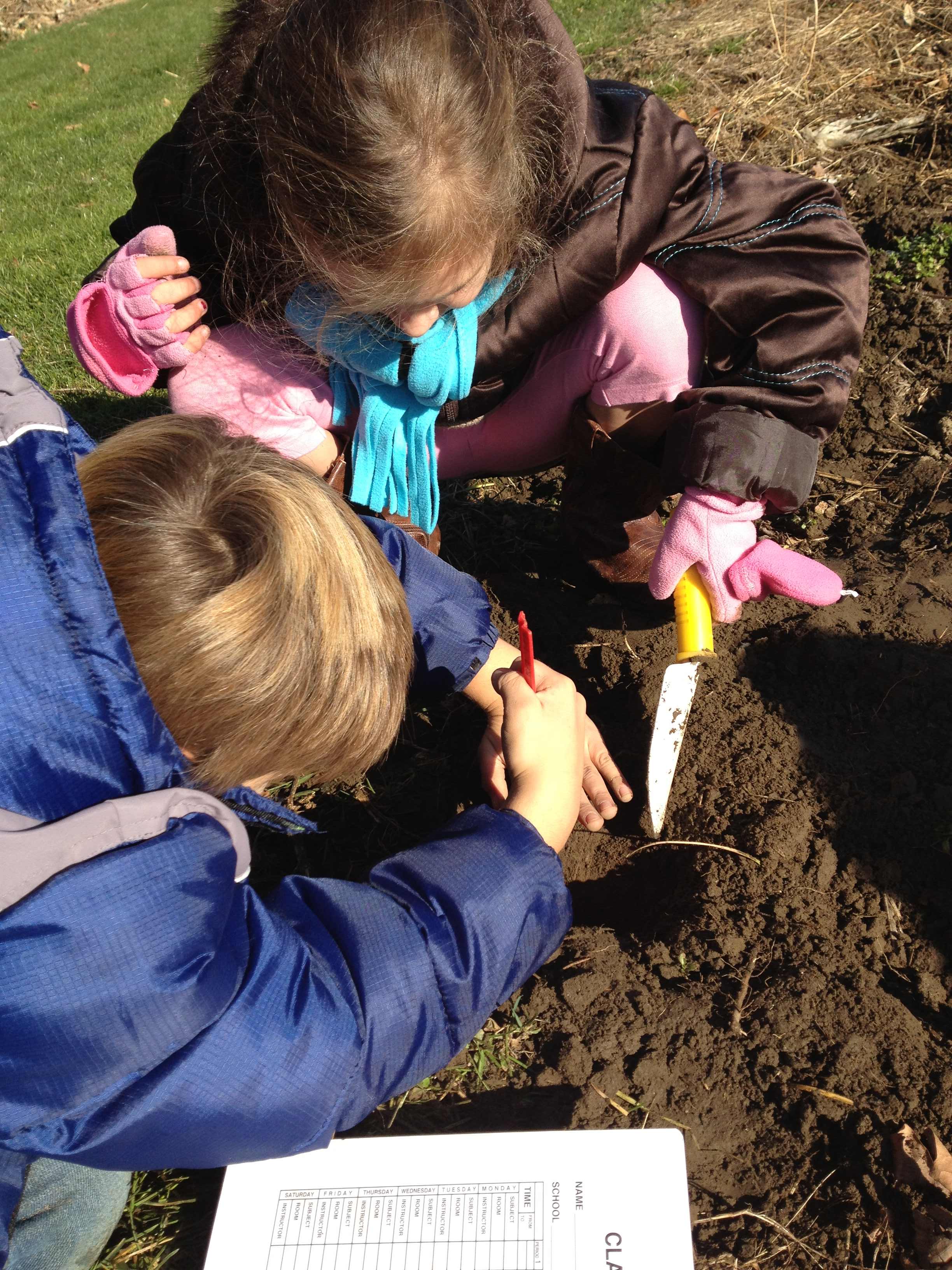
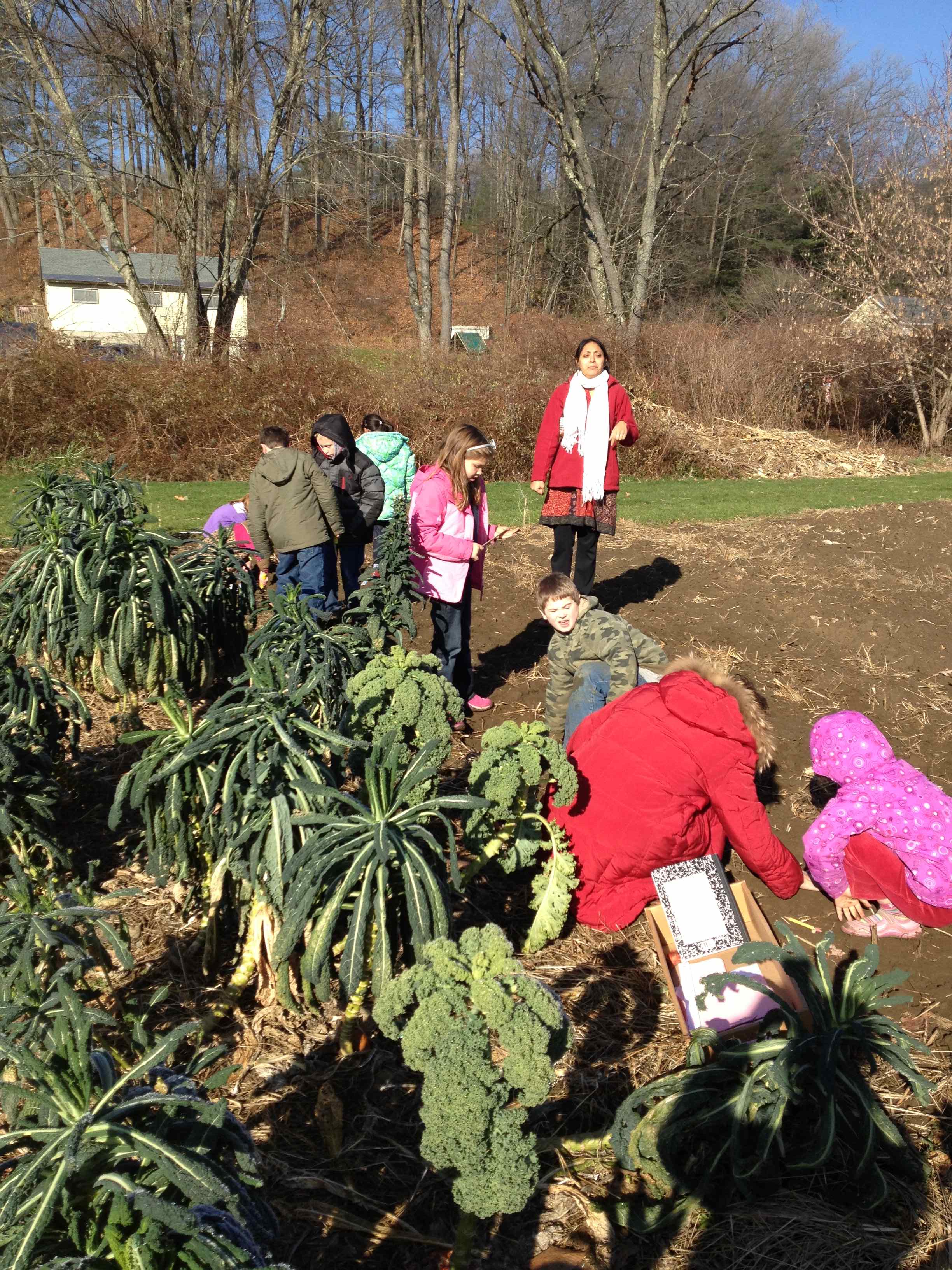
The 3rd grade was out in full force digging up the frozen earth to plant tulip bulbs.

measuring depth together

They explained that when they could see the bulbs sprouting up from the ground, they would know it was spring. I showed them the garlic bed that the After School students had planted the week before. Now they know about two bulbs that need to winter over before flowering. In pairs, these students and their teacher were breaking up the frozen earth and measuring to the exact 1/8th of an inch, the depth of their holes. Each has a science journal to record the procedure followed. Students were buzzing with interesting questions and hypotheses.

Third graders and their teacher, Atasi Das.

I think they’ll compare their data with other participating schools across the U.S.A.
Healthy Apple Crisp