Vermont School Garden

A visit to a Vermont public school garden through the seasons.


Leave a comment

Planting a Crop in November? Yes; Garlic!

Claudia McCarthy is the former Westminster Center School parent I think of when it’s time to plant garlic. I learned about this time honored planting tradition from her. I hope I haven’t made too many mistakes. (It’s been a few years since her sons were part of our garden program. They’re in college and beyond now.) Claudia and her husband, Ian Conway, hosted great garlic festivals at their home every fall. The price of admission was a garlic dish. I remember that garlic ice cream was a big hit one year.

When Claudia came to plant garlic with my class, she requested 25 gallons of composted horse manure. There is less seed (weed) potential in horse manure; I’ve learned since then that rabbit is the optimal manure for growing garlic…..no seed at all in pellet fed rabbit poop. There are plenty of horse owners in our area who LOVE to have someone cart away a few bags of old horse manure.

Claudia would bring five or six students at a time out to the garlic bed site. The first group would turn over the soil with pitchforks and shovels.

The next group would scatter the manure over a 20 x 4 foot bed. After the manure was turned into the soil, the children made a “chocolate cake’ out of the bed, building up the sides and making a little plateau on the top.  Here are some of my After School Program students doing the same thing a few days ago:
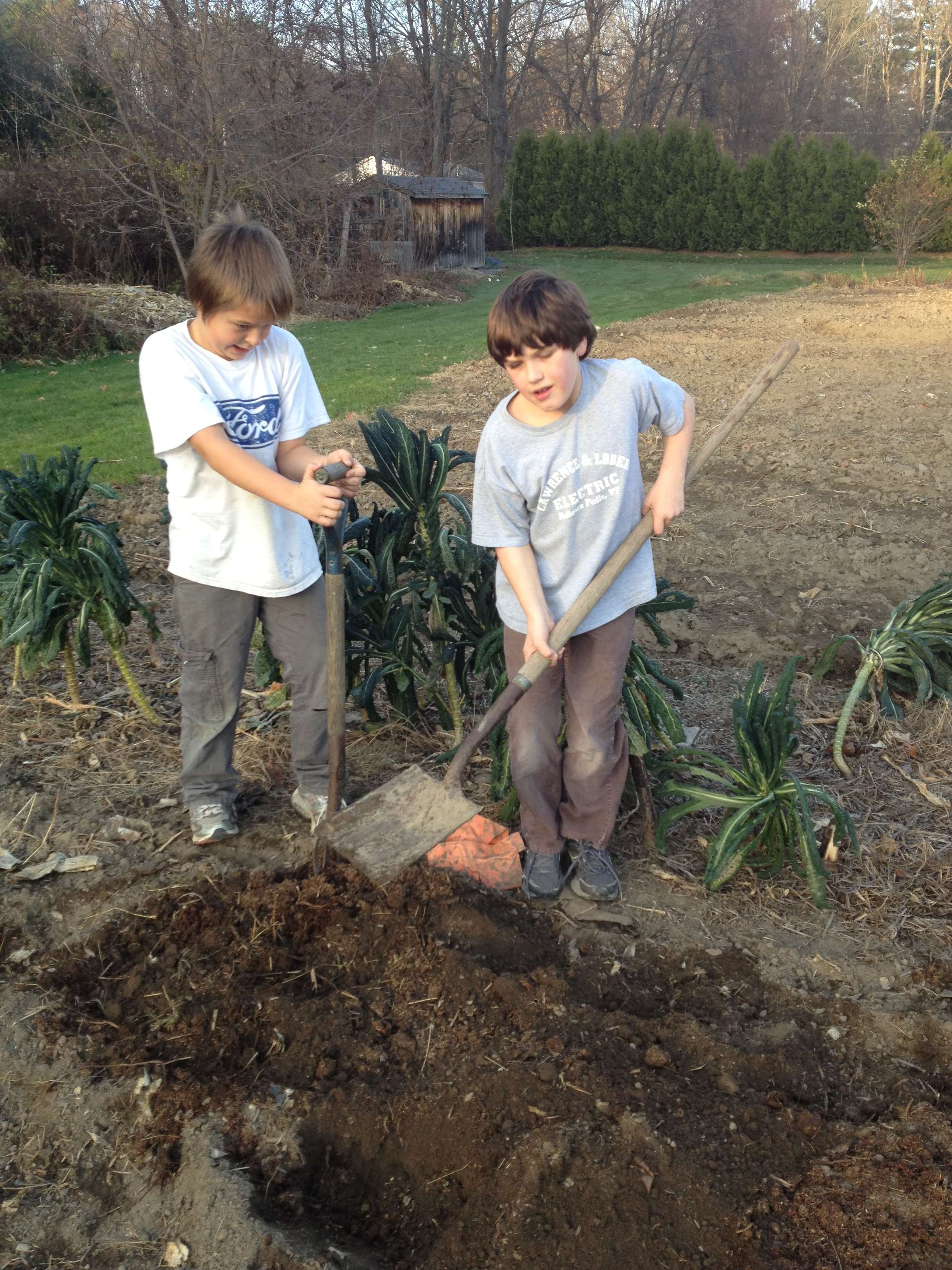
Turning composted horse manure under.

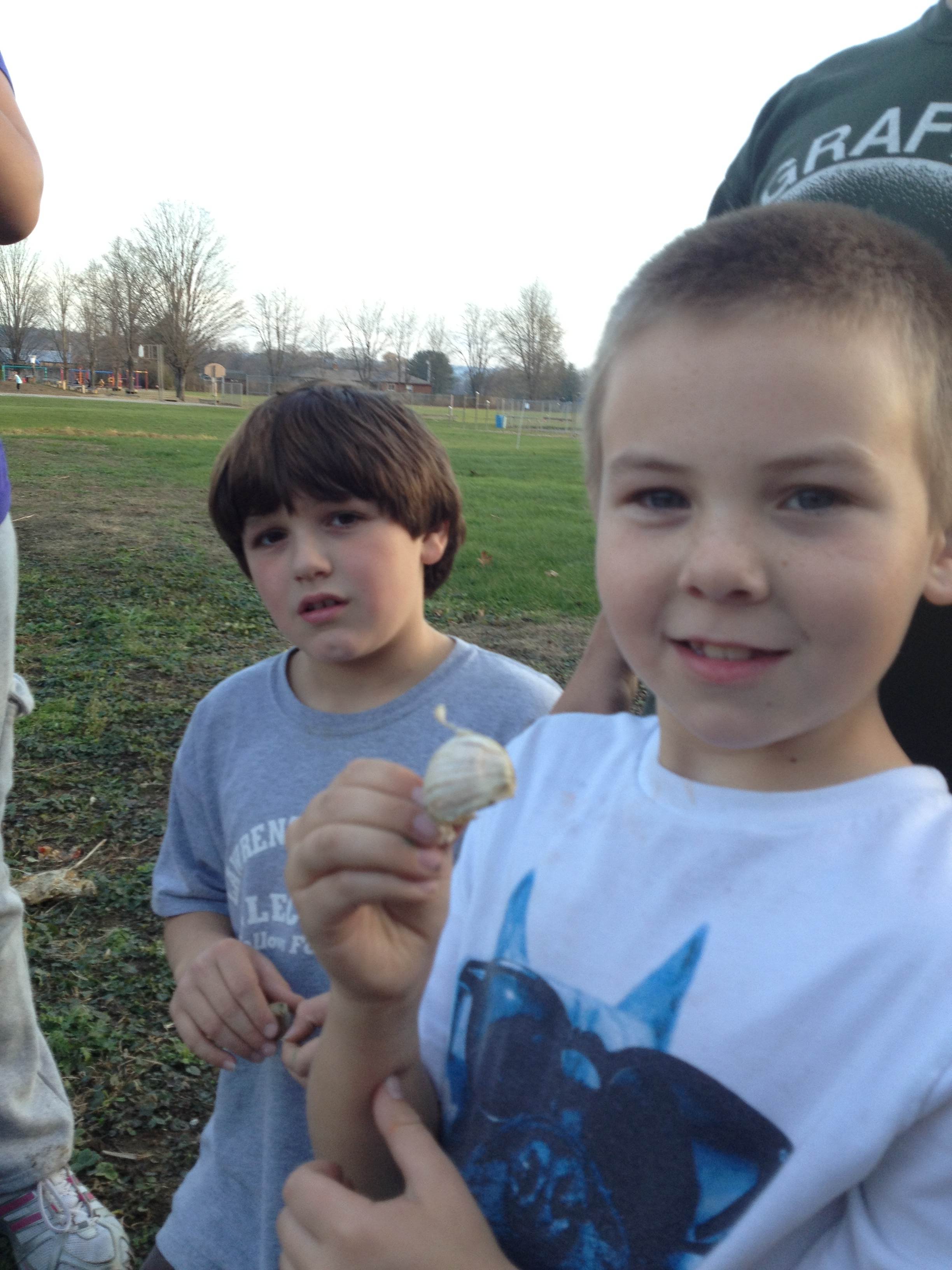
What is a garlic clove? It’s one section of the bulb of garlic that you buy from the market. Bulbs must be separated and each clove is planted individually, 6 inches from the others. We leave ours uncovered in the earth until all the cloves are planted so we don’t miss any spaces.
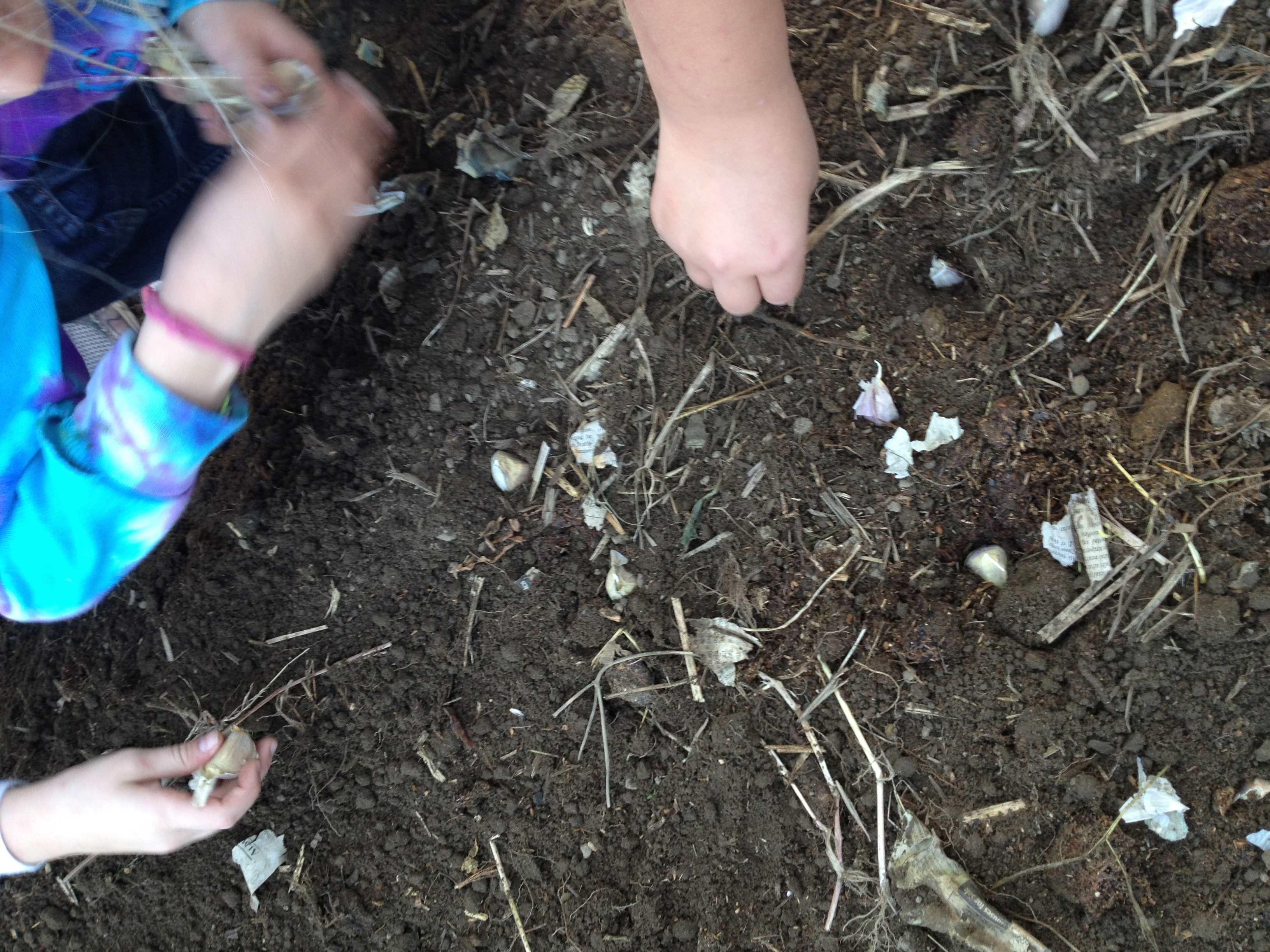
Planting cloves.
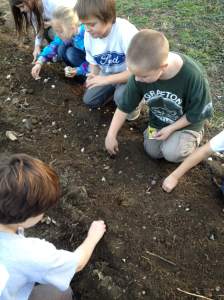
Plant cloves six inches apart.

Get your garlic for planting from someone who has a few bulbs left over from their own successful garlic crop OR find a commercial source.

Once the cloves are planted and covered with soil, a thin layer of mulch straw (not hay; there are fewer seeds in straw) is scattered on the “chocolate plateau cake.” I know our bed doesn’t begin to look like Claudia’s did many years ago, but we’re hoping for a good crop next July.
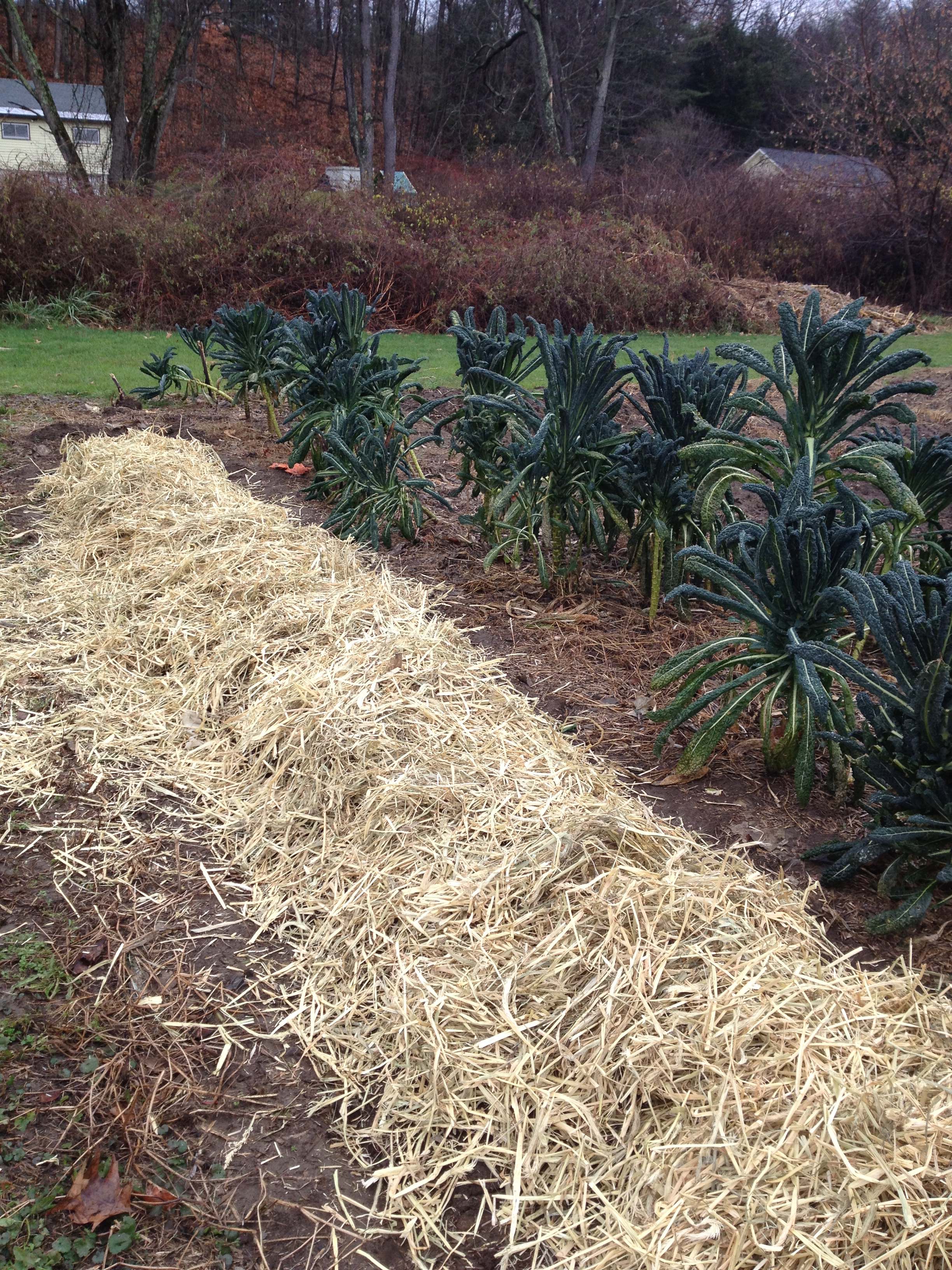
After straw mulch.
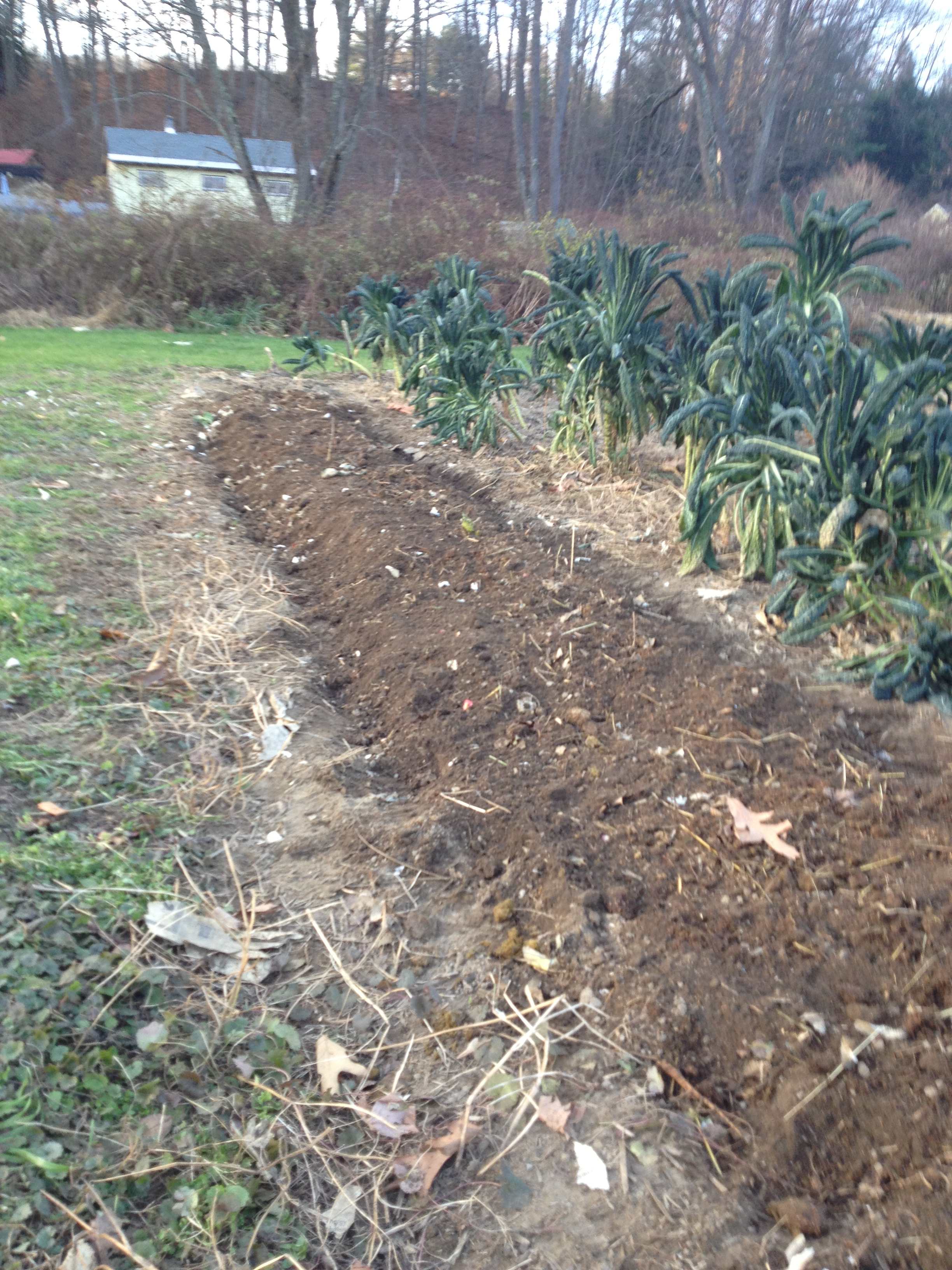
“Chocolate cake plateau,” after planting.

Garlic is one of those bulb crops that needs to overwinter. It may begin to show a few green shoots before the snow flies. I hope not. It’s better off snoozing for a while under the snow and then sprouting in the spring. When it first sends curly flower buds (scapes) into the air, cut them off and make your first pesto with them and a little olive oil! This pruning will give energy back to the growing bulbs. The bulbs will be ready to harvest in mid-July. I hope these same children will harvest them with me during Westminster Summer Camp….more about garlic harvest next July!
Leave a comment

Putting the Garden to Bed for the Winter

I don’t know who thought of the phrase, “putting the garden to bed,” but for me it conjures up memories of settling in with my class, or my own small children for the long dark winter months, reading lots of great fairytale picture books and knowing that our garden is sleeping safely under a deep blanket of Vermont snow. It’s a time for completing the traditions of the growing cycle and reflecting back on the great times we’ve had in this garden through the seasons.

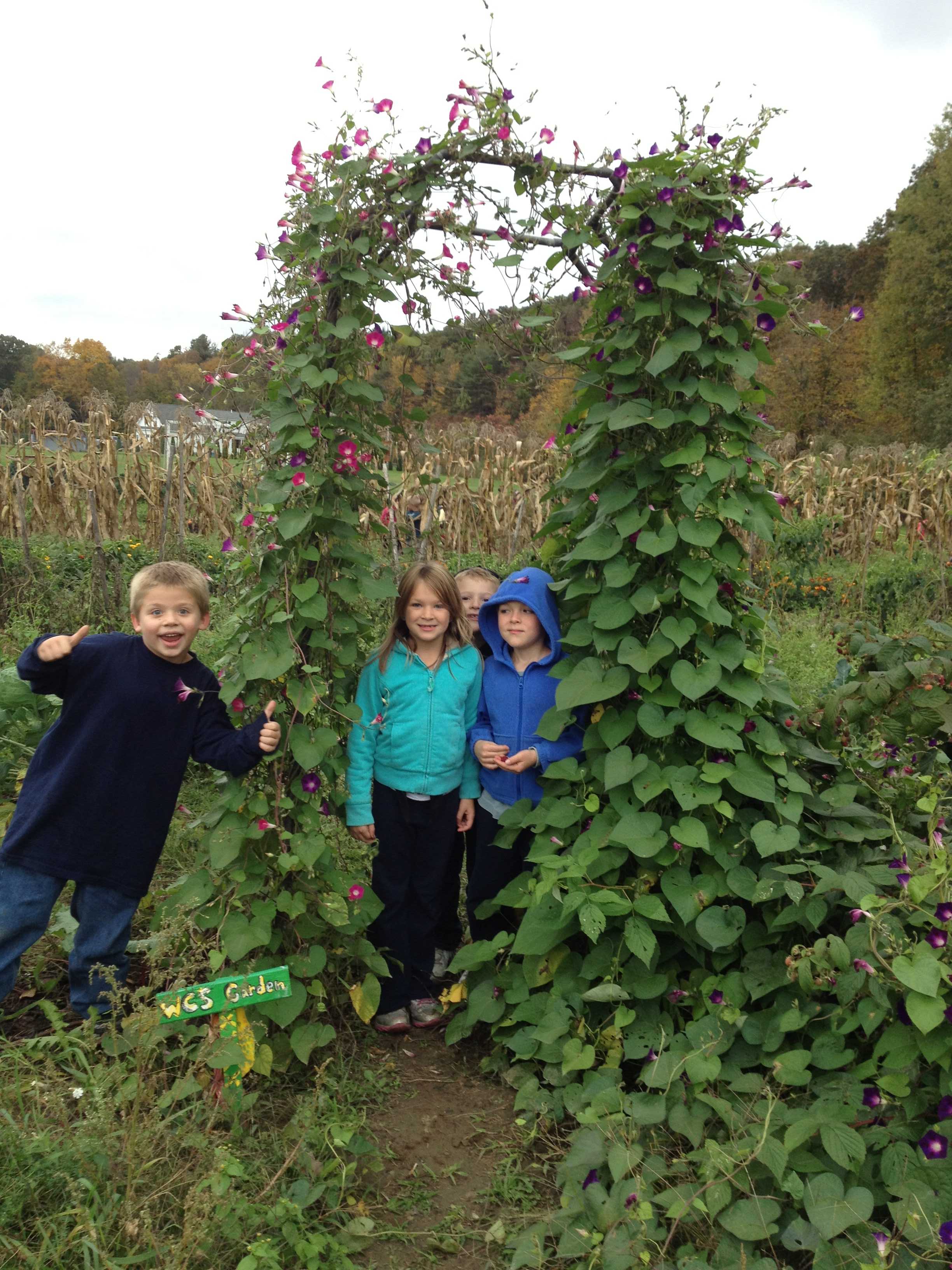
First graders under the morning glory arbor in October.

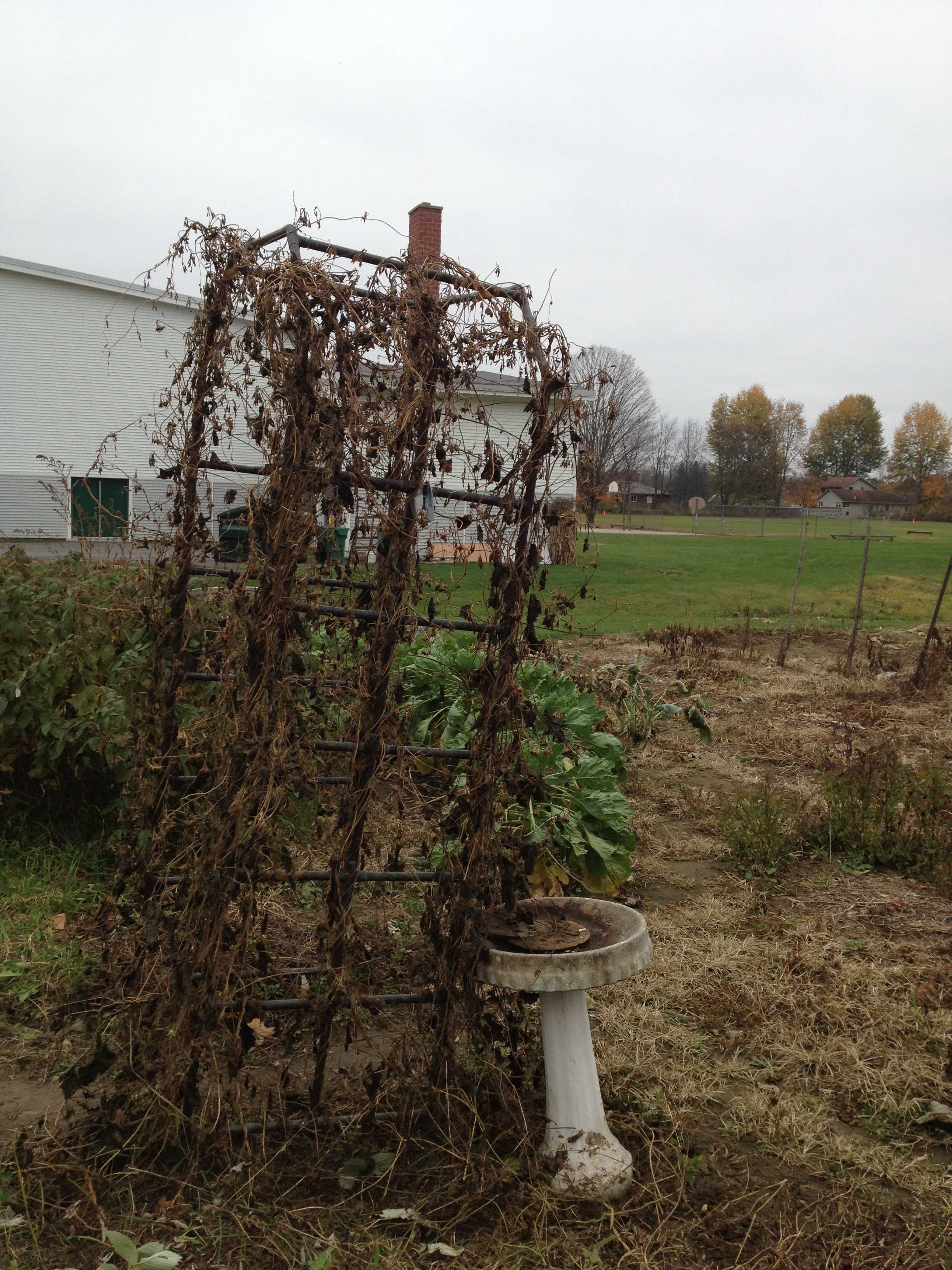
I thought a few photos of our arbor in summer and after the first frost would help to illustrate how a garden can encourage children to consider change over time.

Arbor, post frost.


Is it time to mourn the memories of brilliant marigolds or time to accept their inevitable decay and rebirth?

Cleaning up the marigold row.

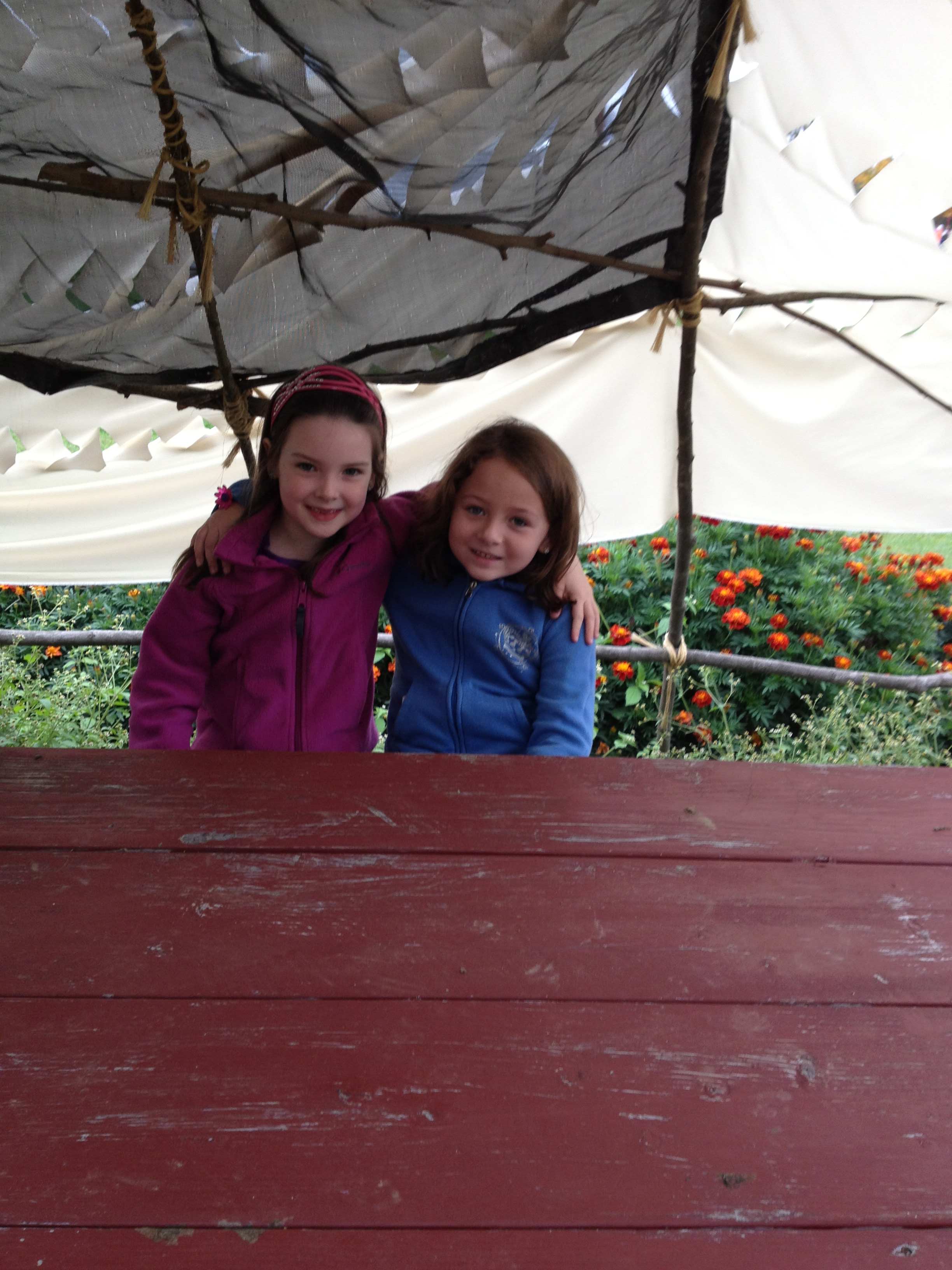
First grade friends.

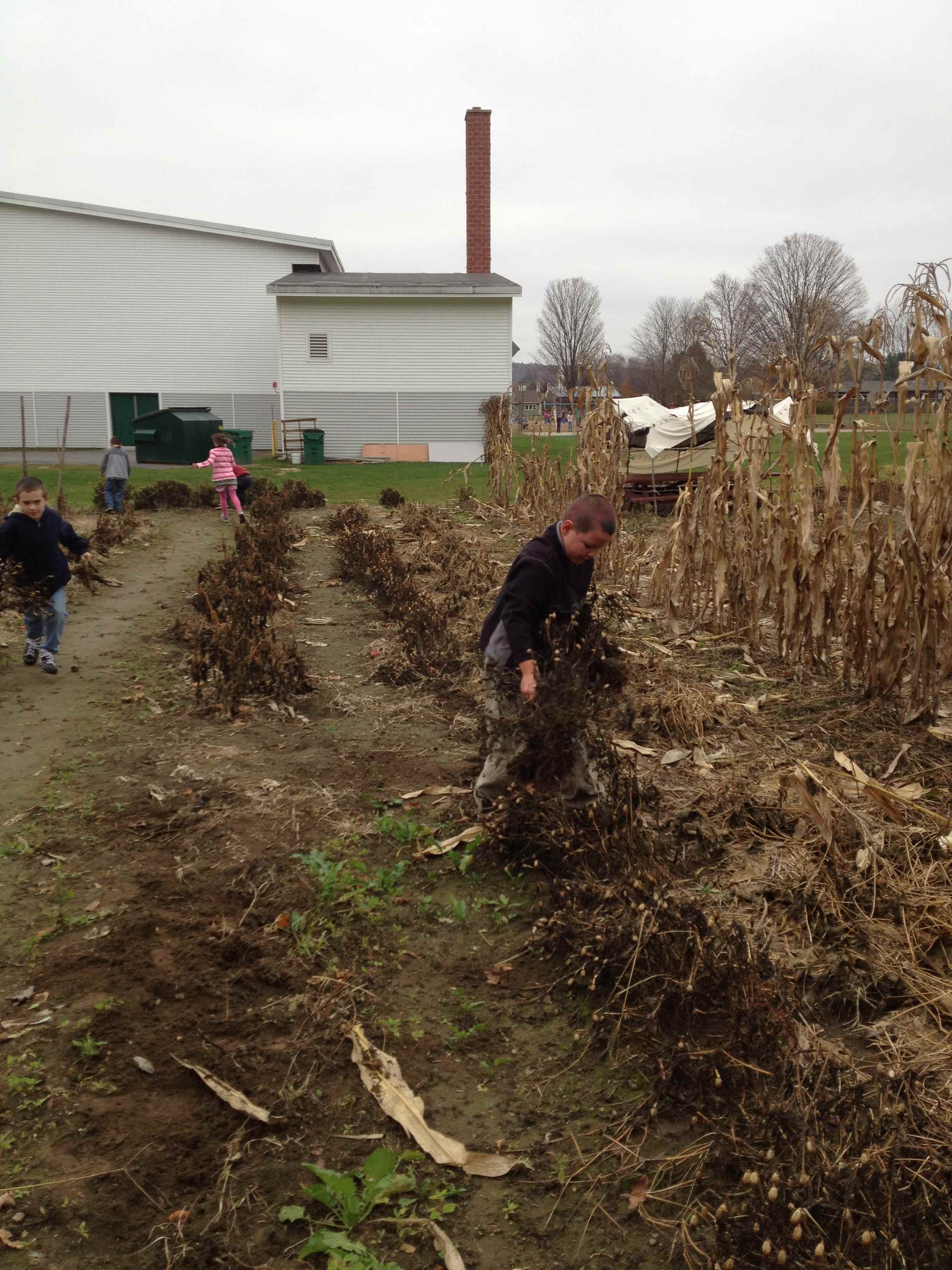
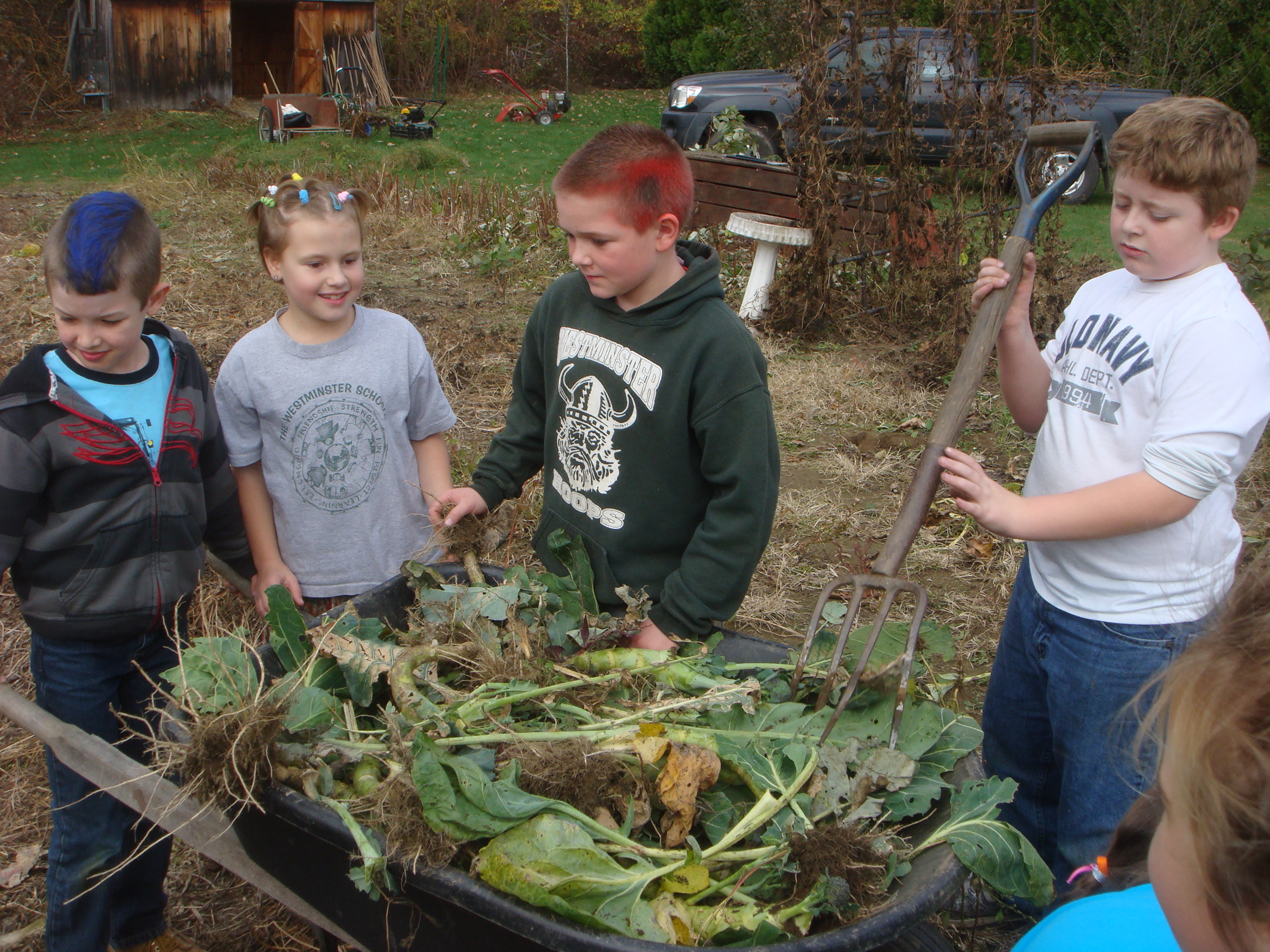
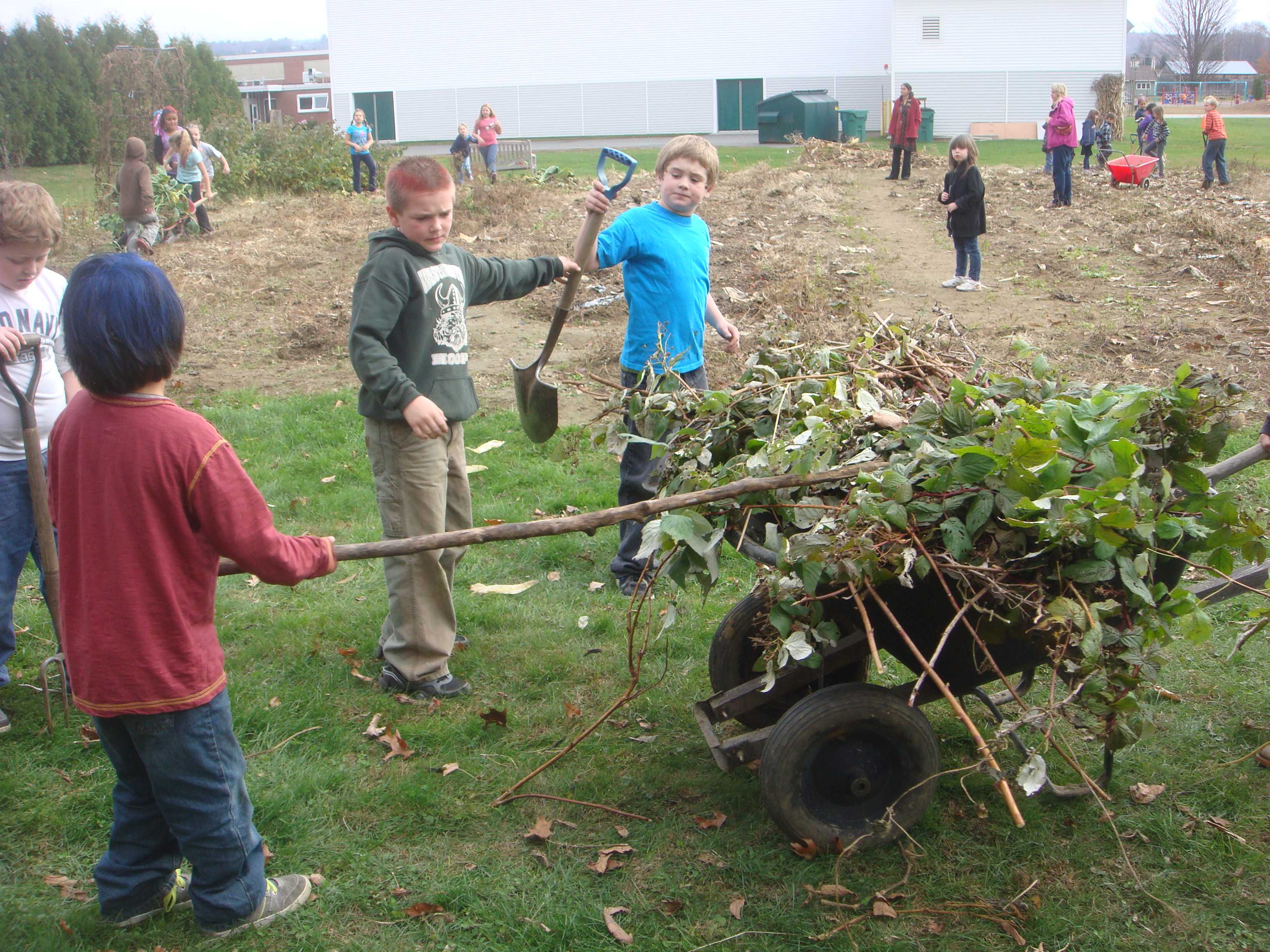
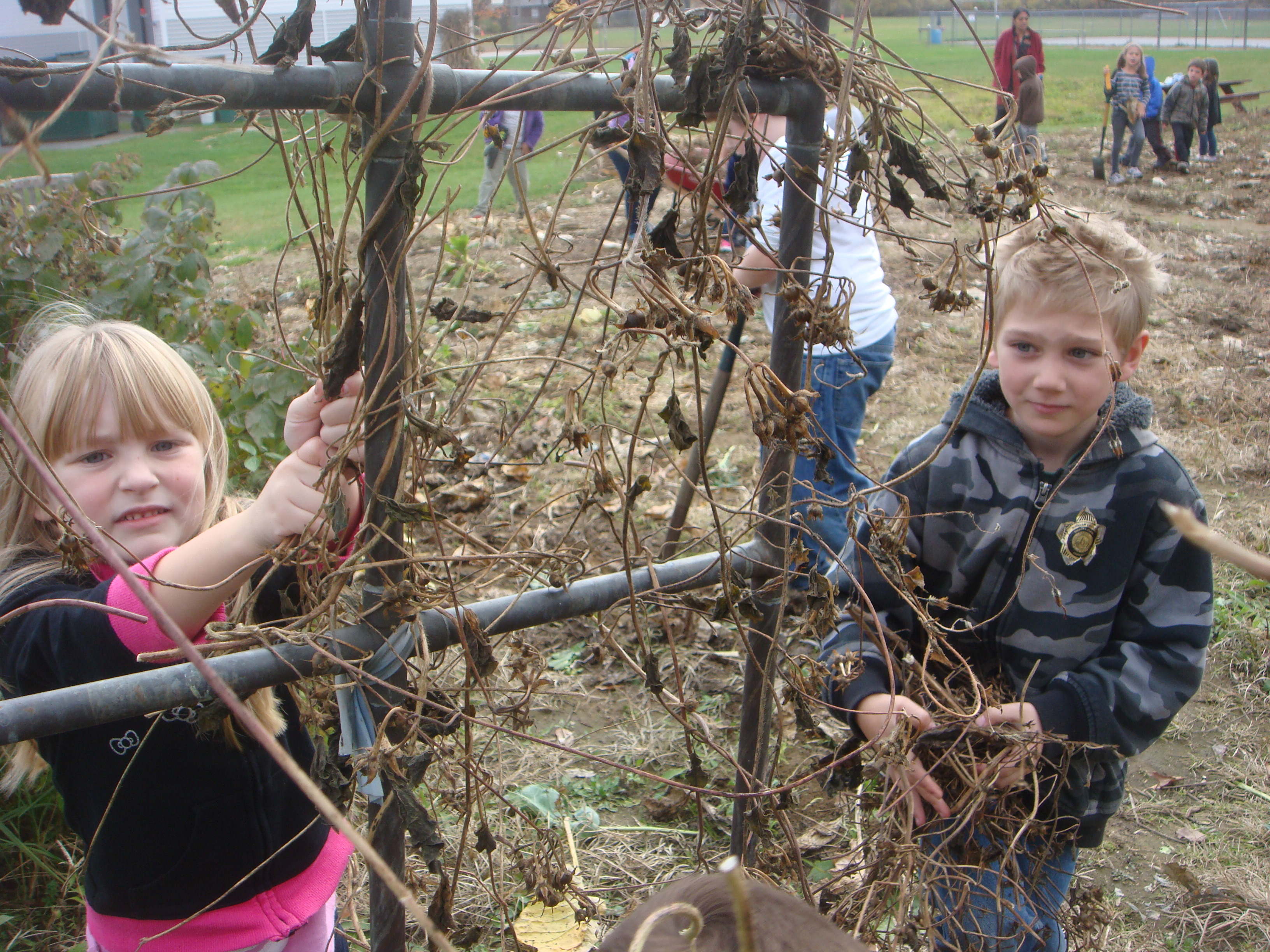
Students from Kindergarten to fifth grade participated in  clearing dead vines and tough root systems. They piled wheelbarrows high with decaying matter for our compost pile. Third graders and Kindergartners worked and played together on this warm fall “Garden to Bed Day.”

Multi-grade teamwork.

Good-bye sunflowers!
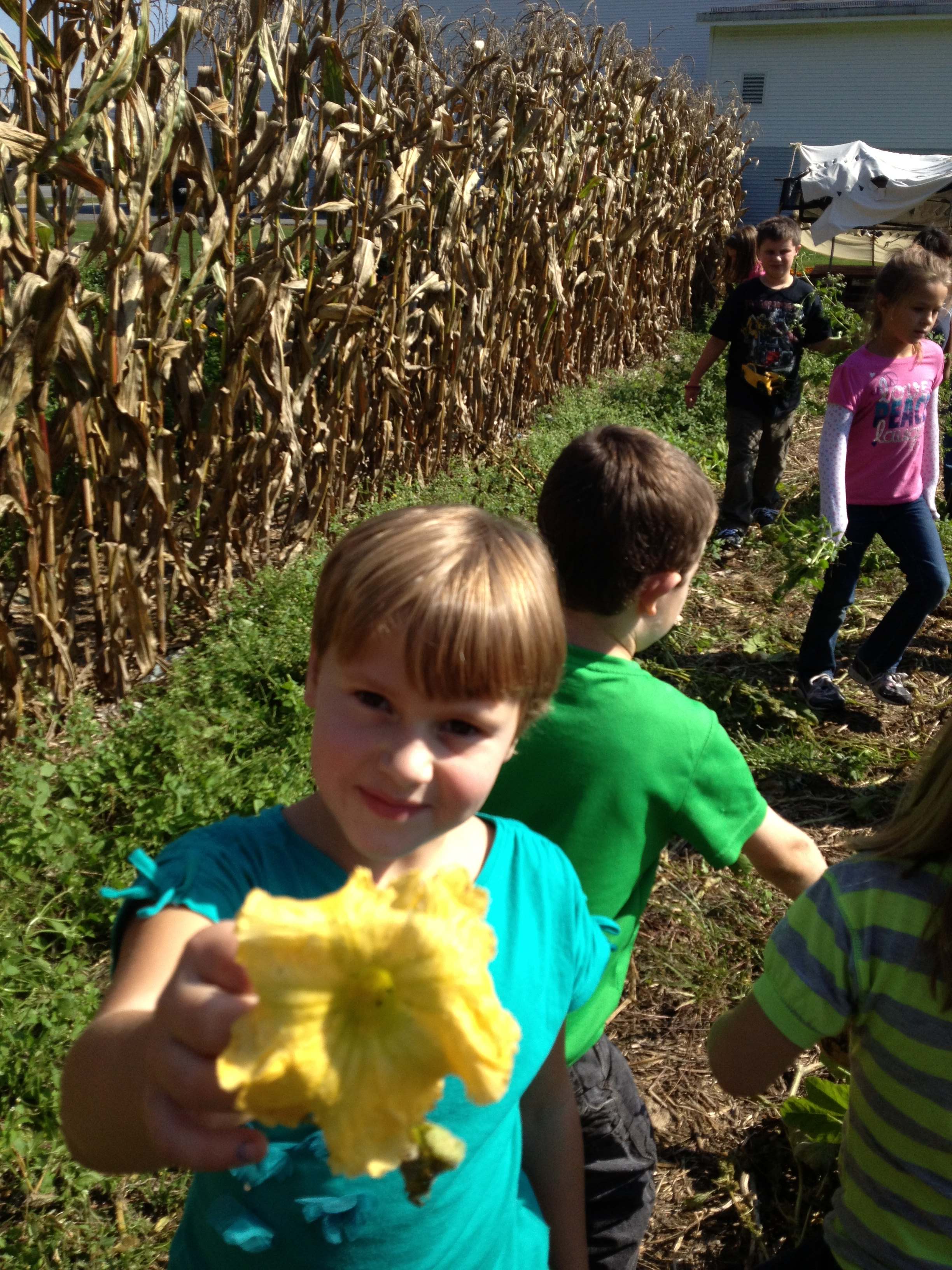
Earlier in the morning, I cut back half of the raspberries. The students carted them off to the compost pile. We’ll see if that side yields a better crop next June.

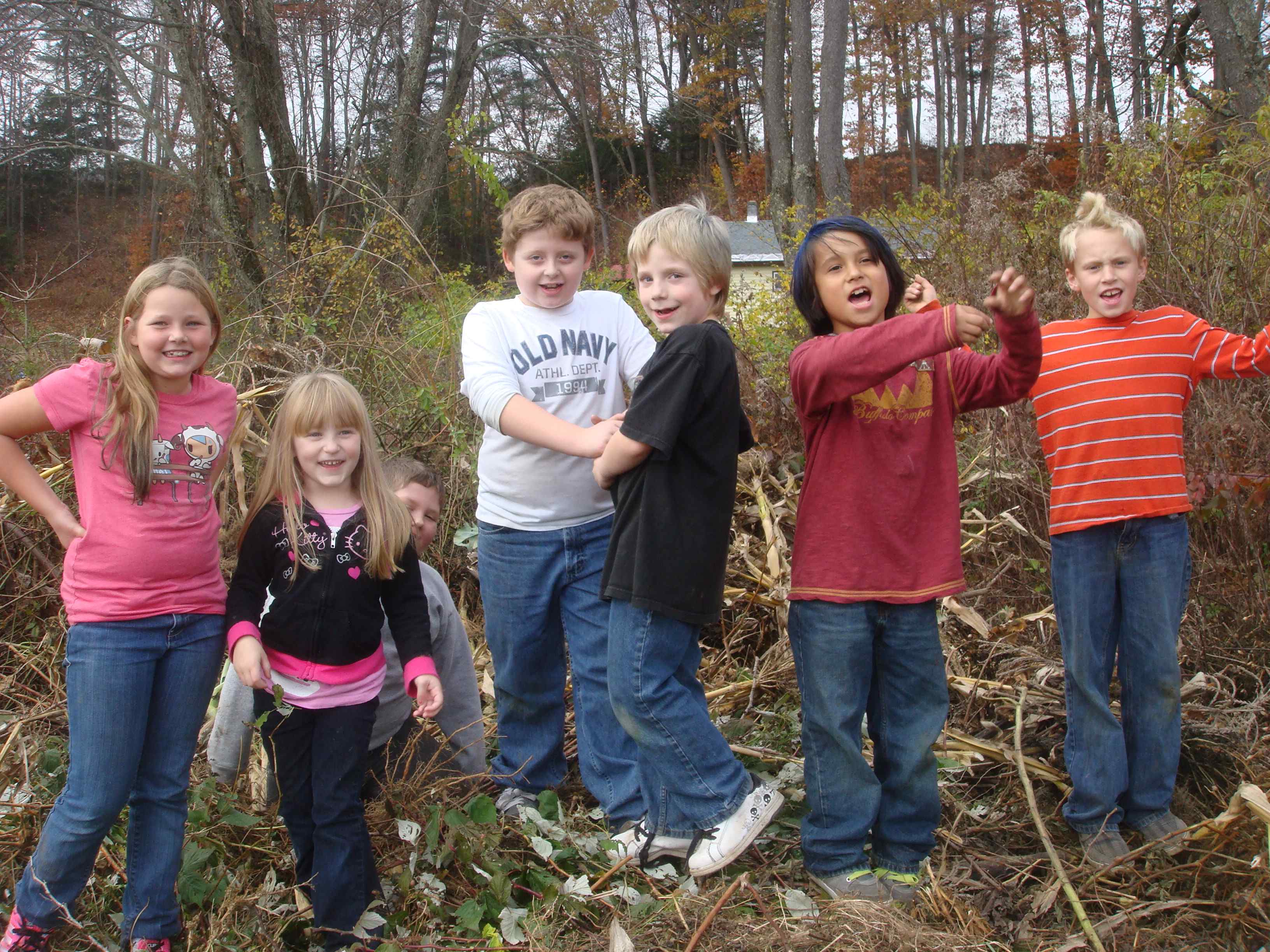
Happiness is dancing on a compost pile!

Clearing raspberry canes.

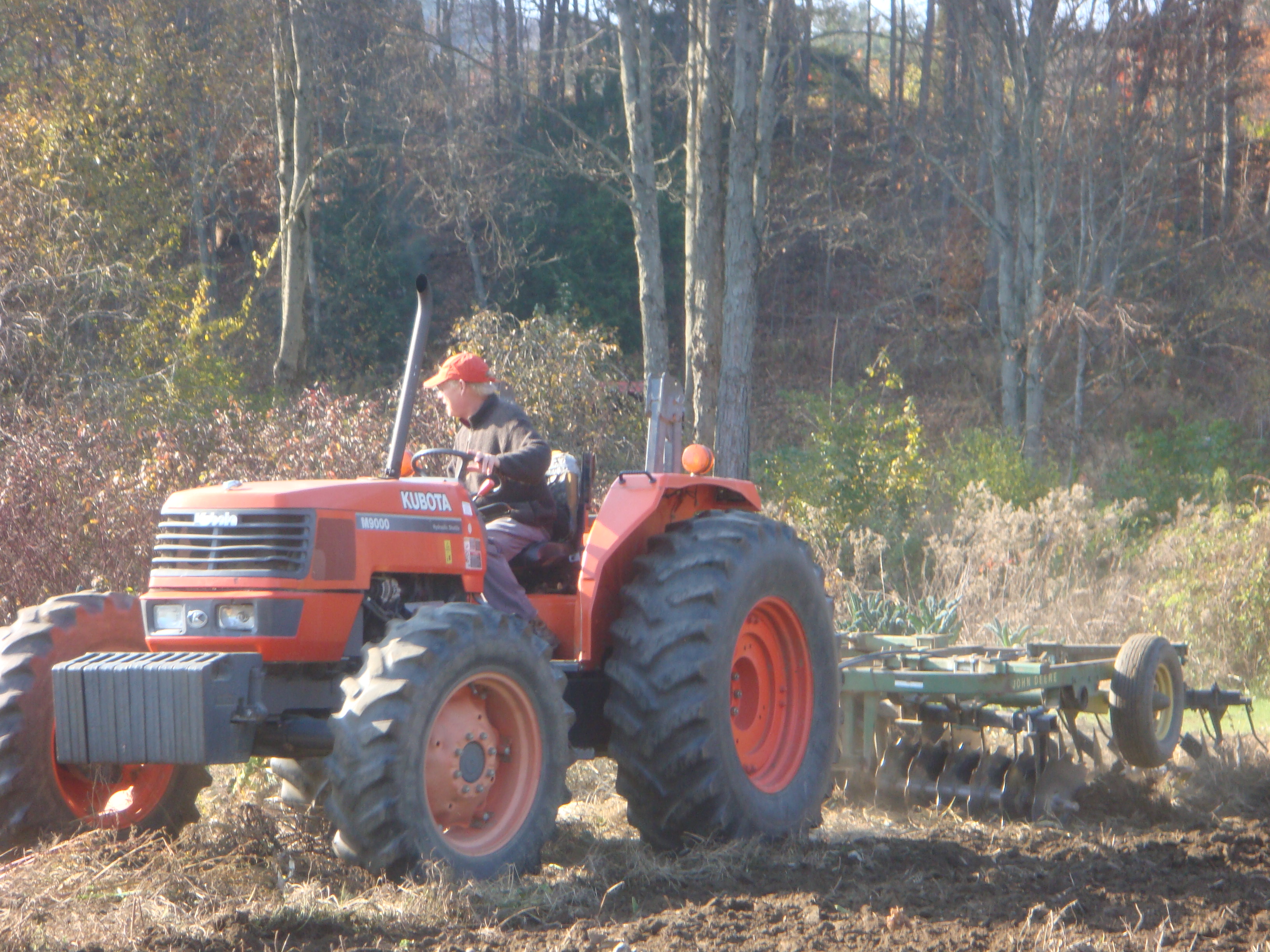
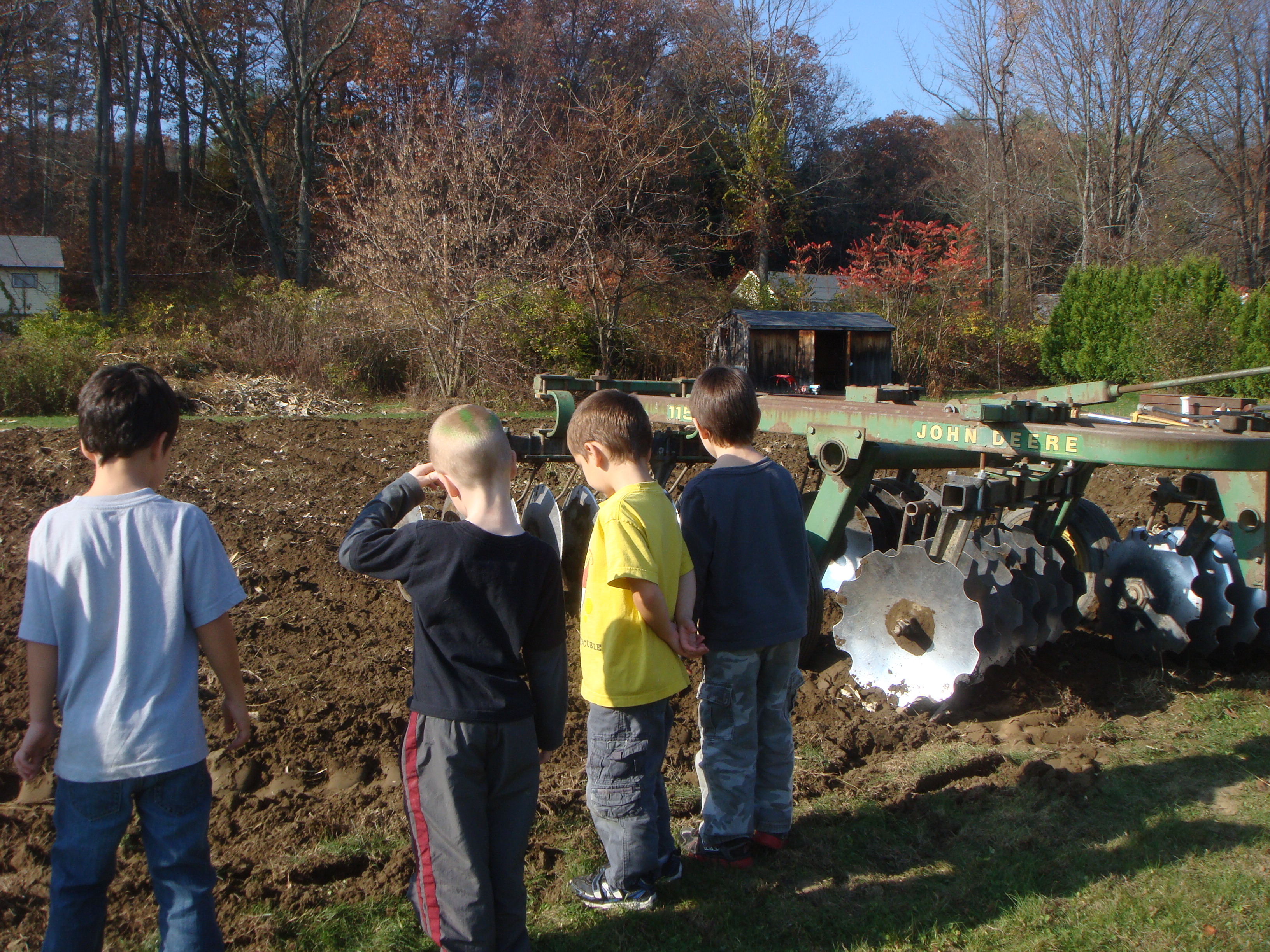
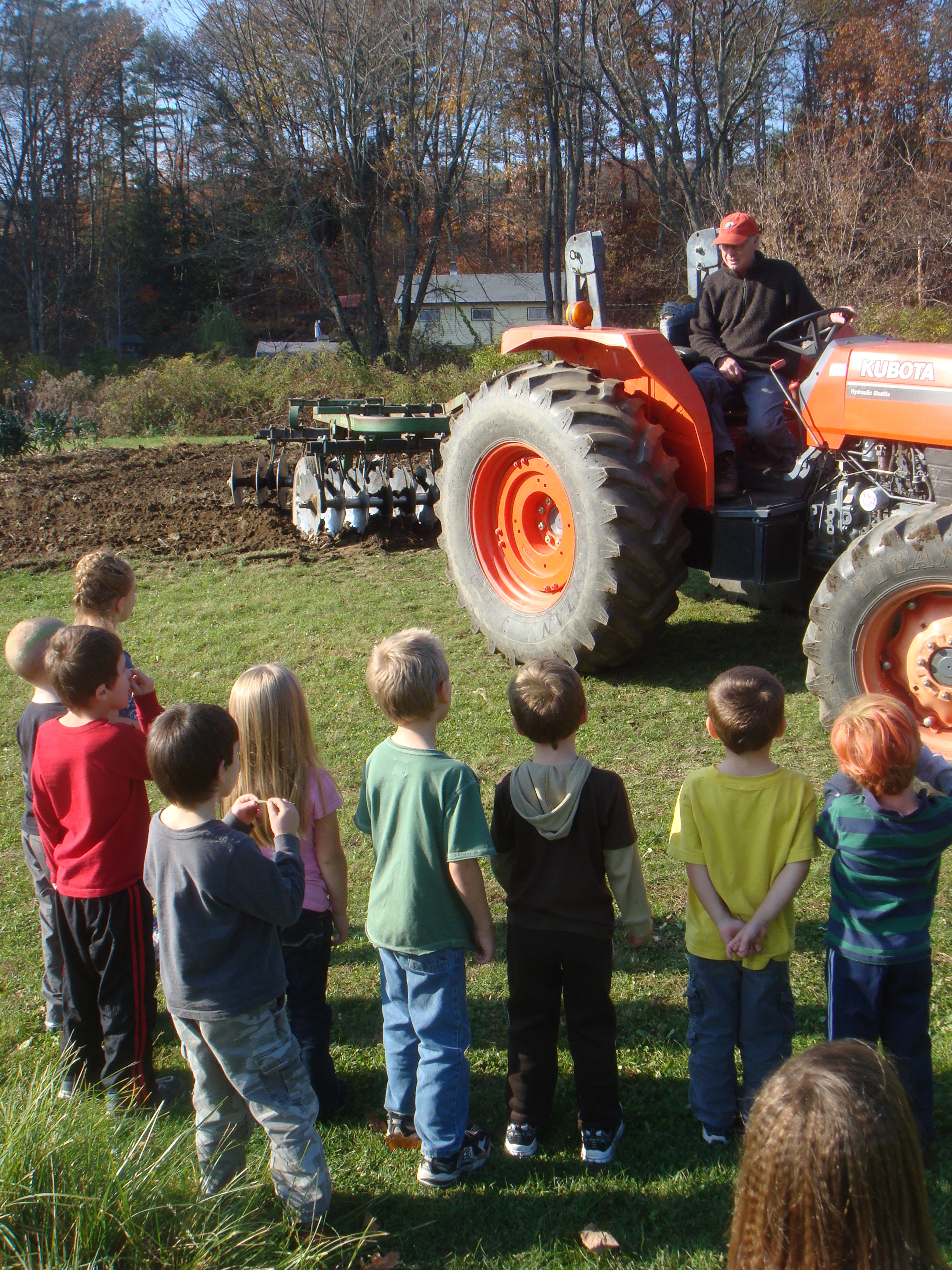
The great surprise at the end of their workday was the arrival of our local organic farmer Paul Harlow and his tractor tiller. The tiller is an impressive piece of machinery,  especially if you’re 3 feet tall. One Kindergartner waxed poetic at the sight of the gleaming disks. “Hey, those look like the cymbals we play in Music class!” Another pointed to the letters on the side of the tractor and carefully spelled aloud the word, ” KUBOTA.” Paul kindly fielded questions from his rapt young audience. Watching the earth  being turned over in preparation for winter is a time honored ritual in this town with its deep agricultural history.

Tilling the garden after clean-up.

Guest speaker, garden classroom.


Leave a comment

Back In Time: Pumpkin Work with First Graders

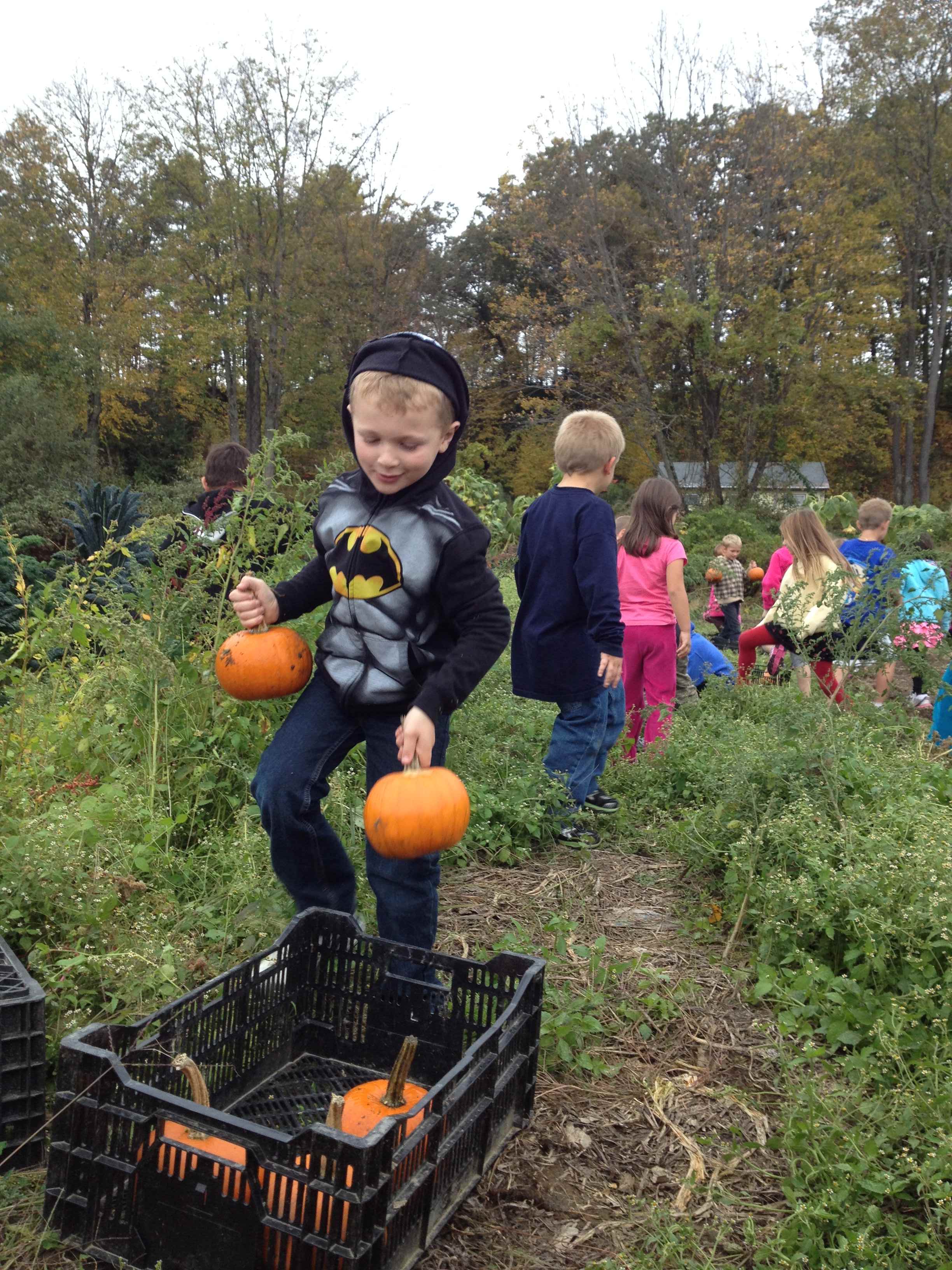
Last October, the first graders came out to the garden to harvest the pumpkins they had planted as Kindergarteners last June.

Harvesting pumpkins as first graders, having palanted them as Kindergarteners.

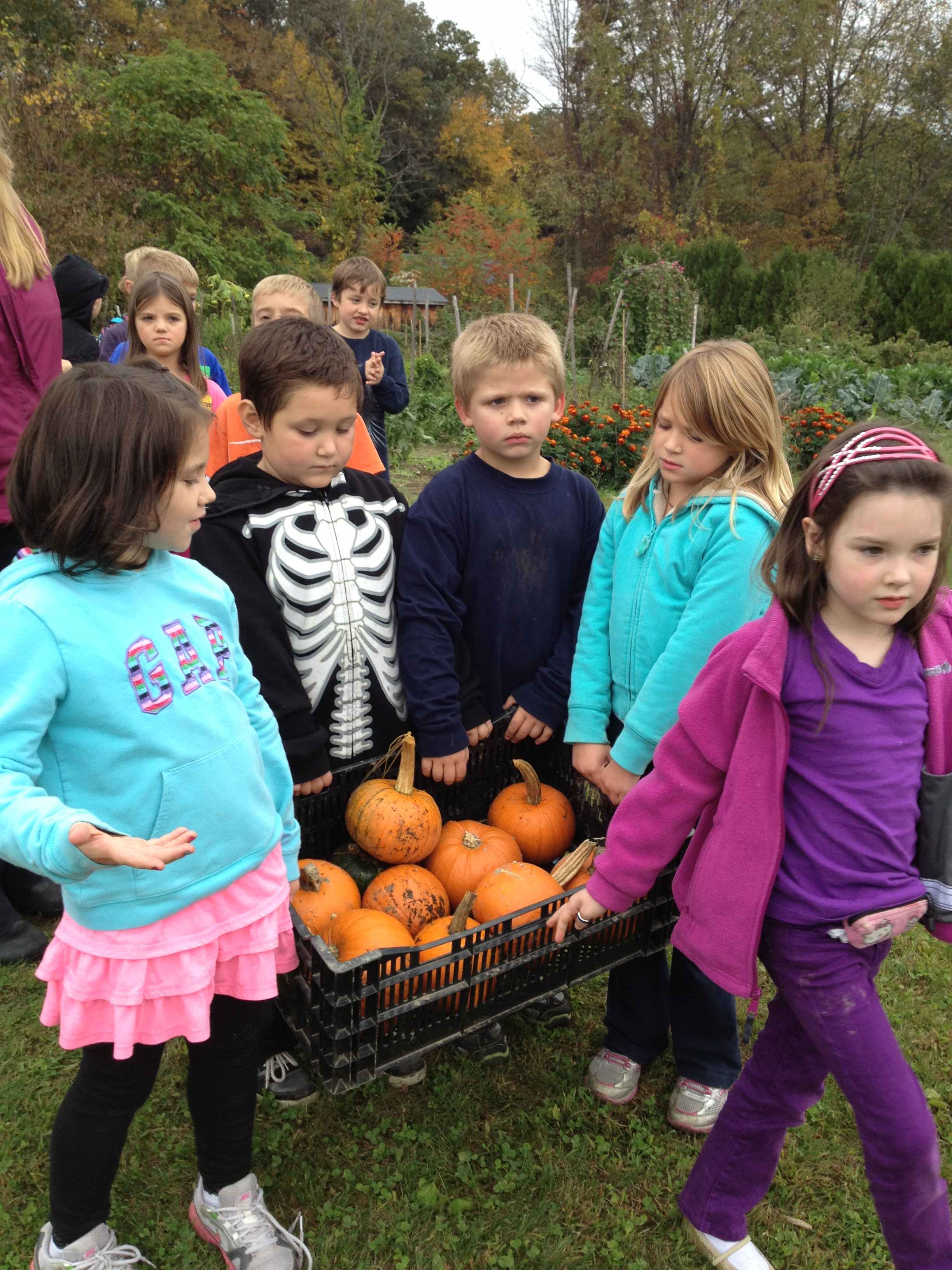
They were very serious about their job.

First Grade pumpkin harvesters.

You can see that teamwork is an assumed responsibility even among the youngest students. After they harvested their pumpkins, they had  fun discovering other late growing yummy surprises in our garden.

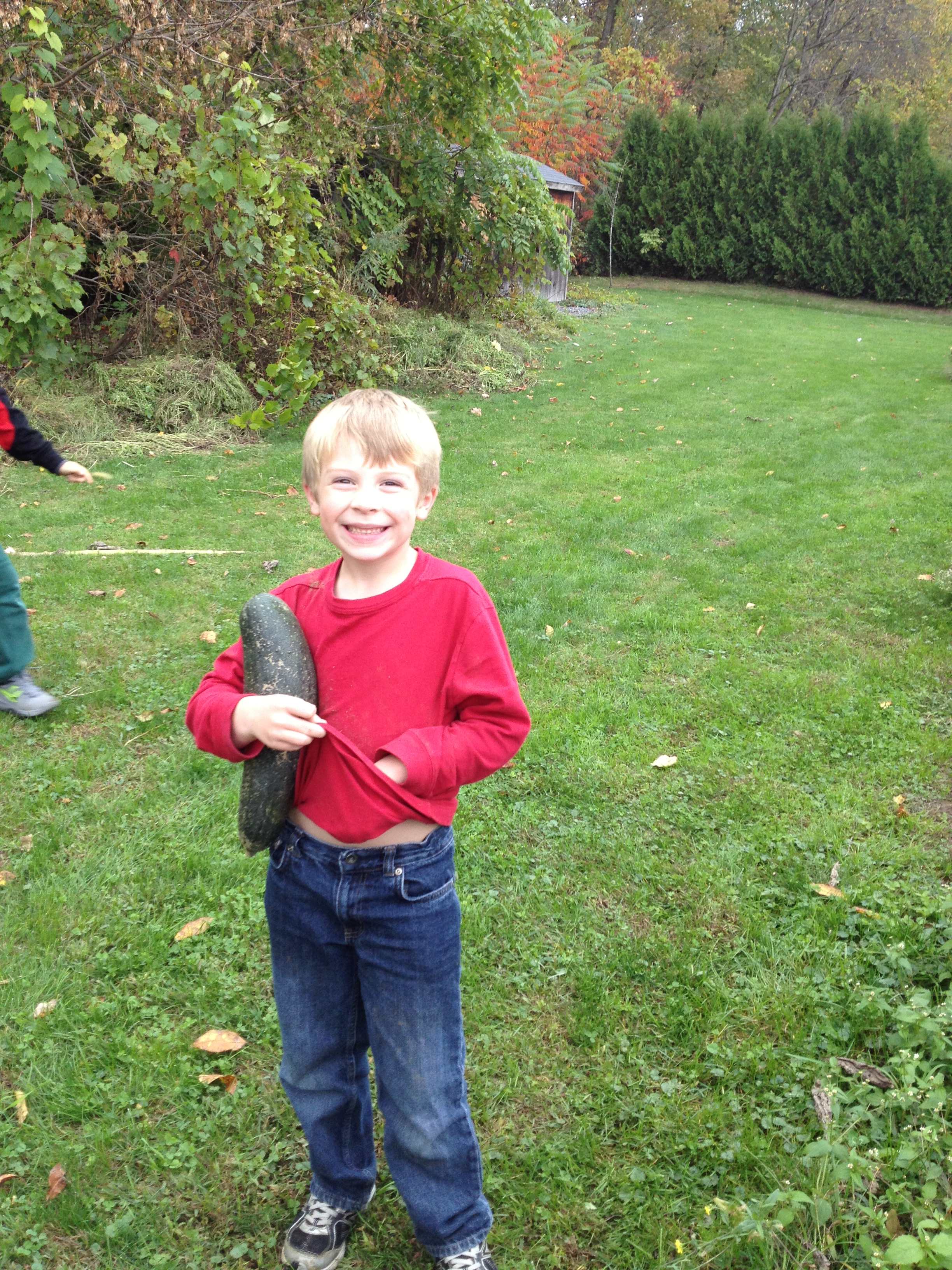
Happy to find a giant zucchini!

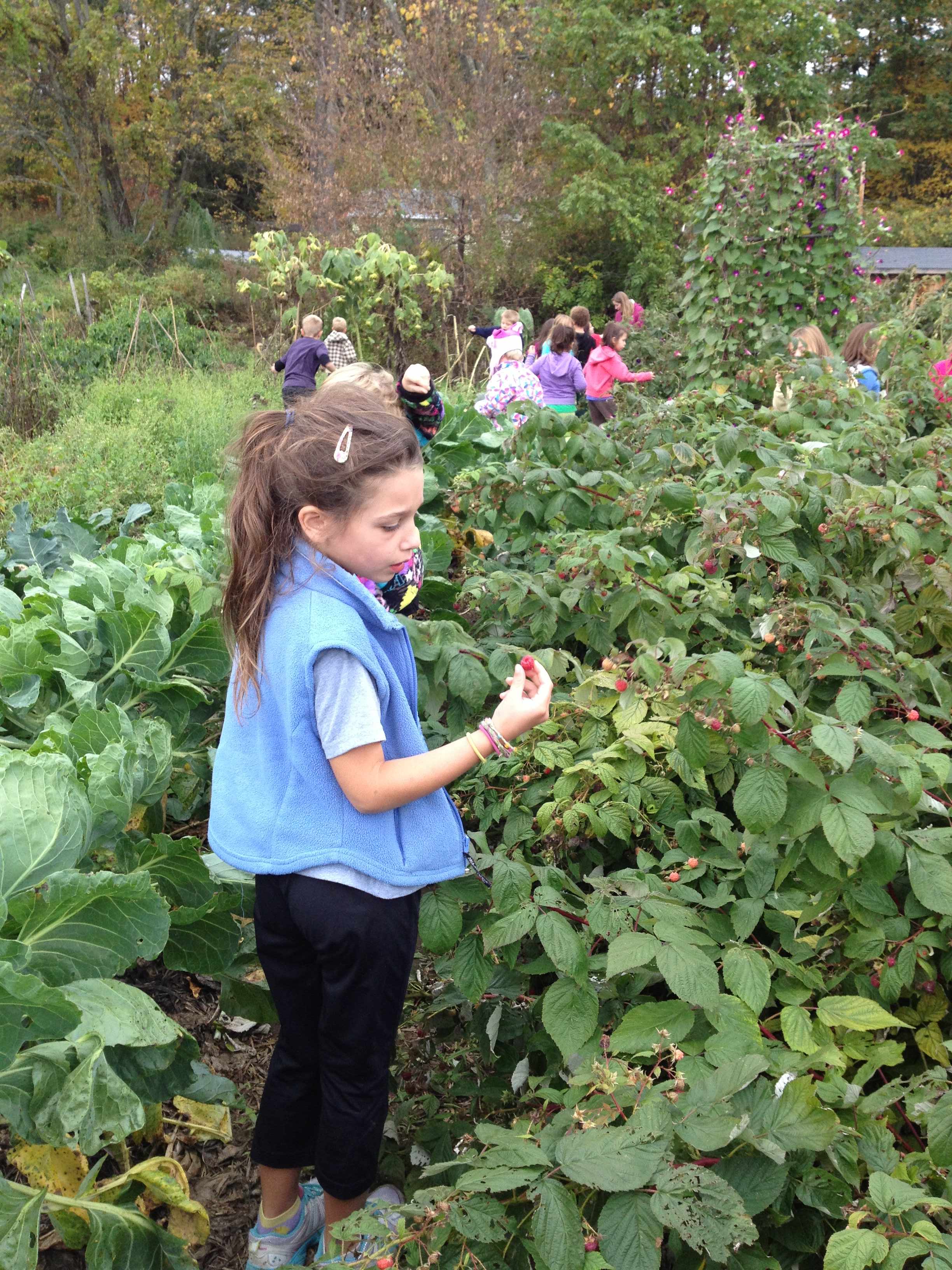
Fall raspberries were a great reward after garden work in October.

Raspberry rewards.

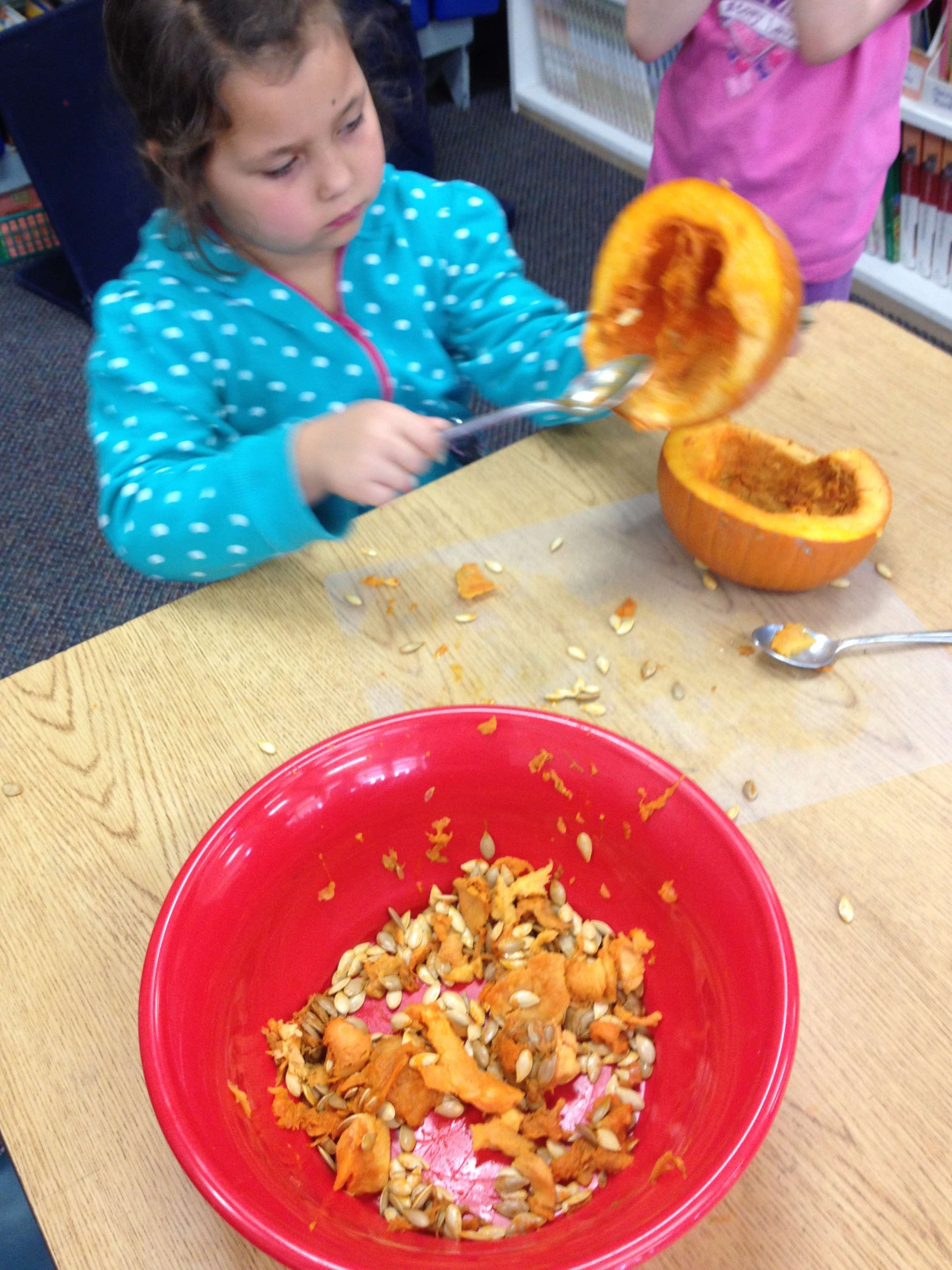
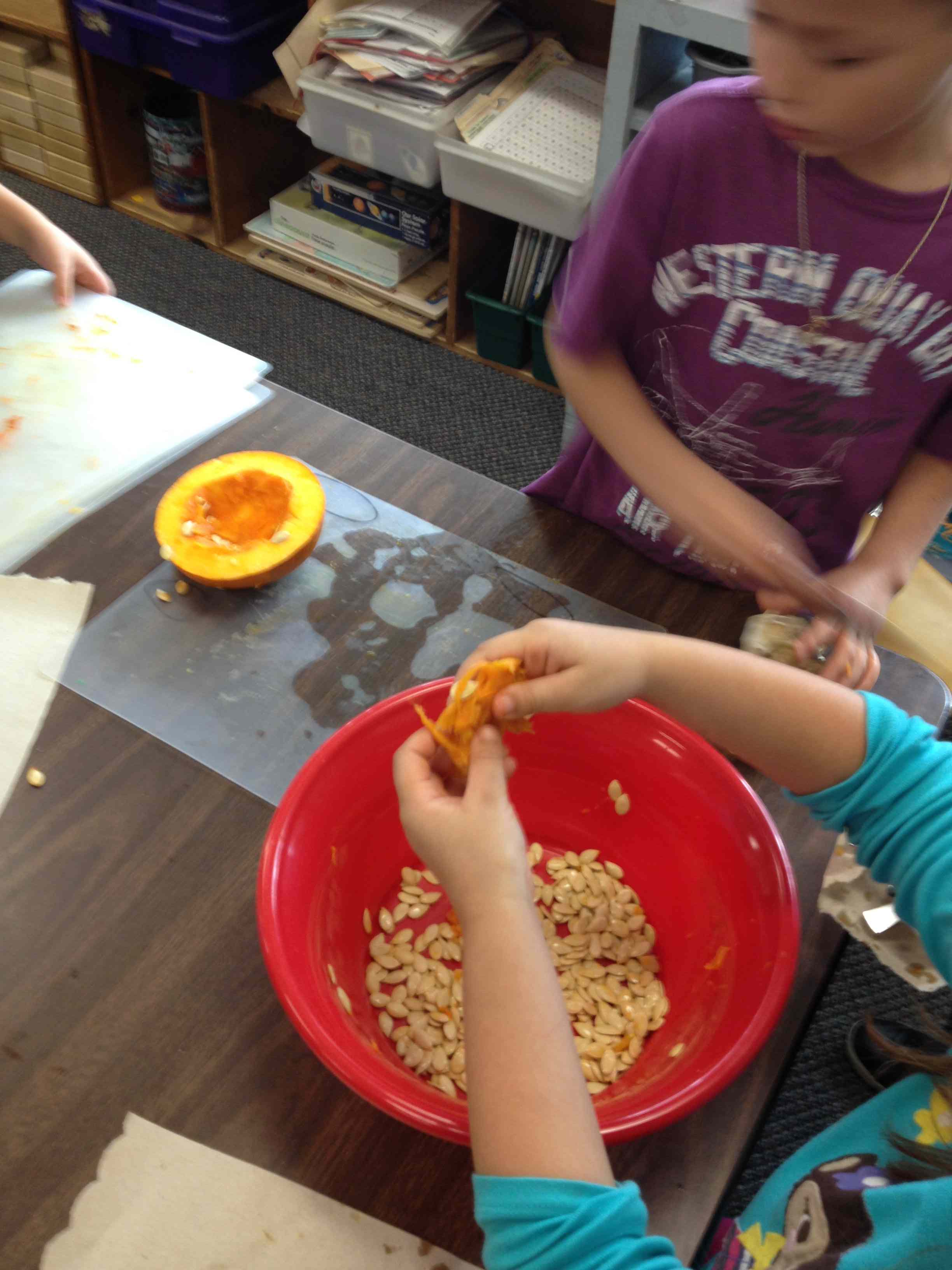
In the classroom, first graders worked in pairs to measure and record observations about them. They predicted how many seeds would be found inside the pumpkins and what else they might find when the pumpkins were cut open. They overcame any squeamishness as they separated pumpkin seeds from pulp!

Scraping seeds from pie pumpkins.

Seed estimation.

I helped the first graders bake their pumpkins in a preheated 350 degree oven. We cut the pumpkins in half and put them upside down on a foil lined cookie sheet with about 1/4 inch of water. (This allows the pumpkin to steam under its own shell.) When the shell is tender to the touch, you can pull the cookie sheets out of the oven. Allow time for cooling before scraping the pumpkin out. You can mash this cooked pumpkin easily and use it for cooking in place of canned pumpkin. We put a lot of ours into freezer bags and froze it  for cooking projects later in the winter. Winter cooking will be a great way to reinforce our memories of pumpkin harvest day.
Pumpkin observations grade 1
Best Ever Pumpkin Muffin Recipe


Leave a comment

Kale Harvesting with Second Graders

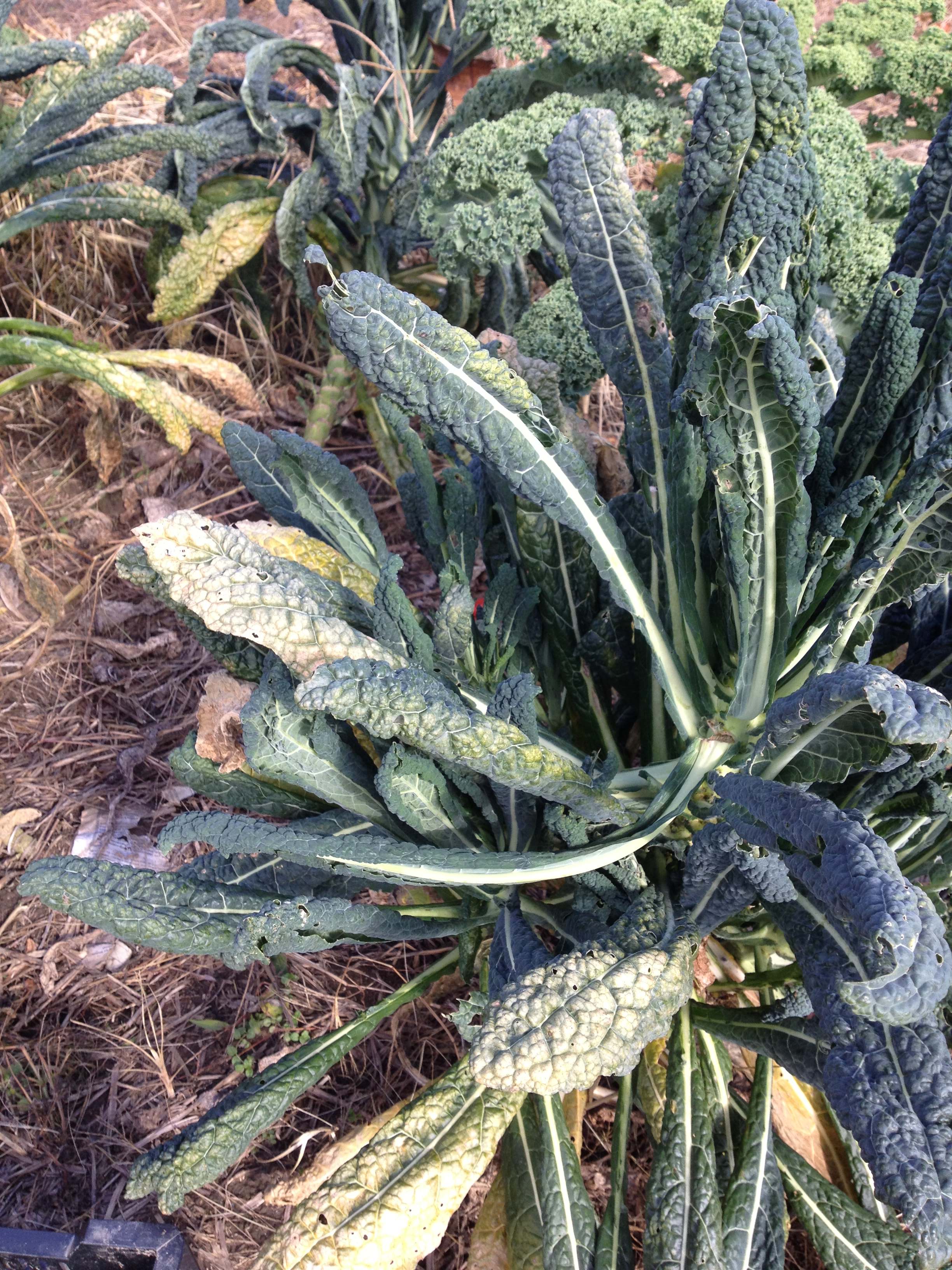
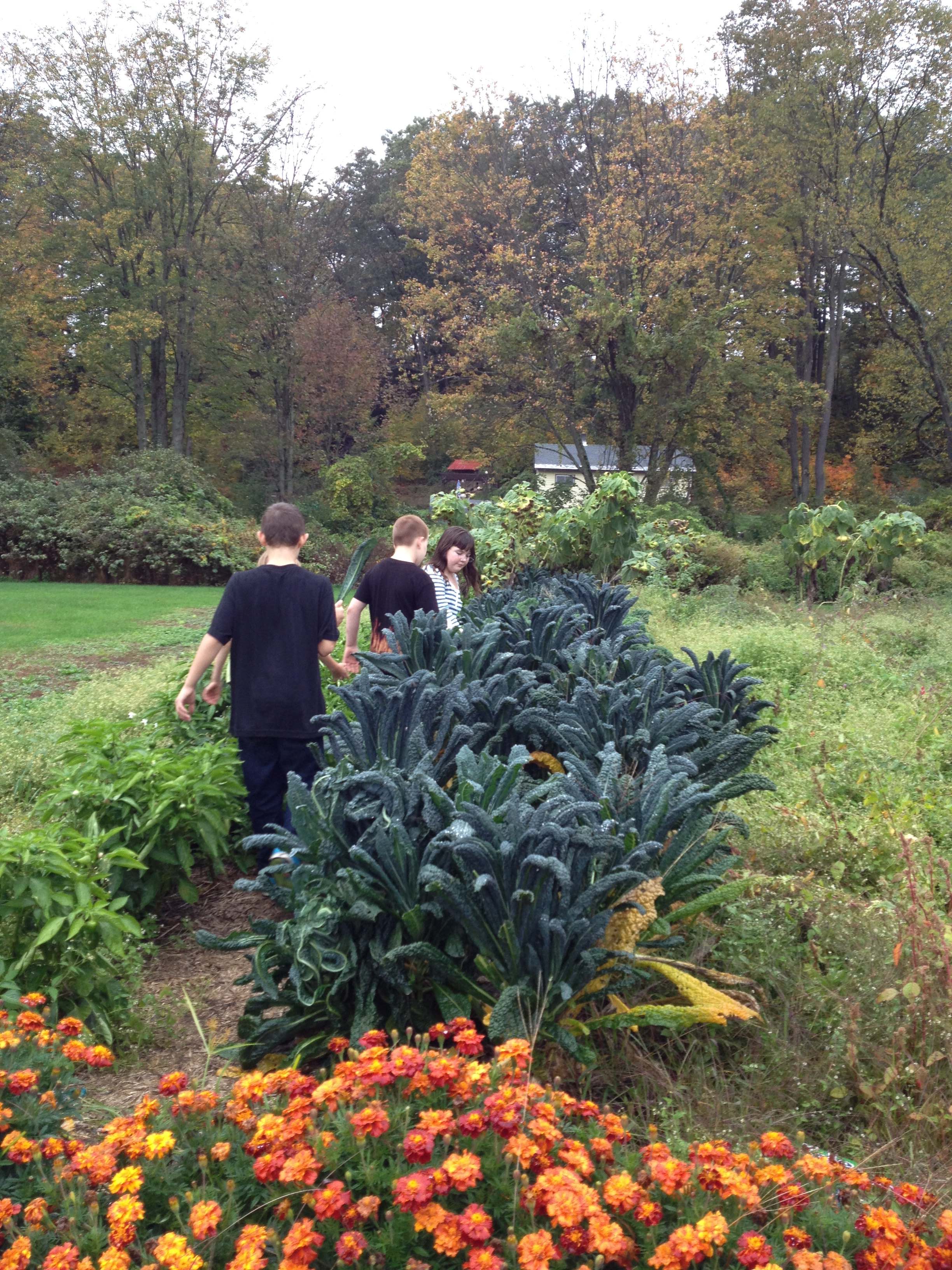
Ooops! The long rows of blue-green kale were beginning to turn yellow.

Frosted kale can be trimmed and harvested from the bottom leaves to the top ones.

We found out that although kale will continue to produce even after the snow falls, it needs to be continually harvested (from the bottom up) in October/November.

Great kale, still ready to harvest in late October.

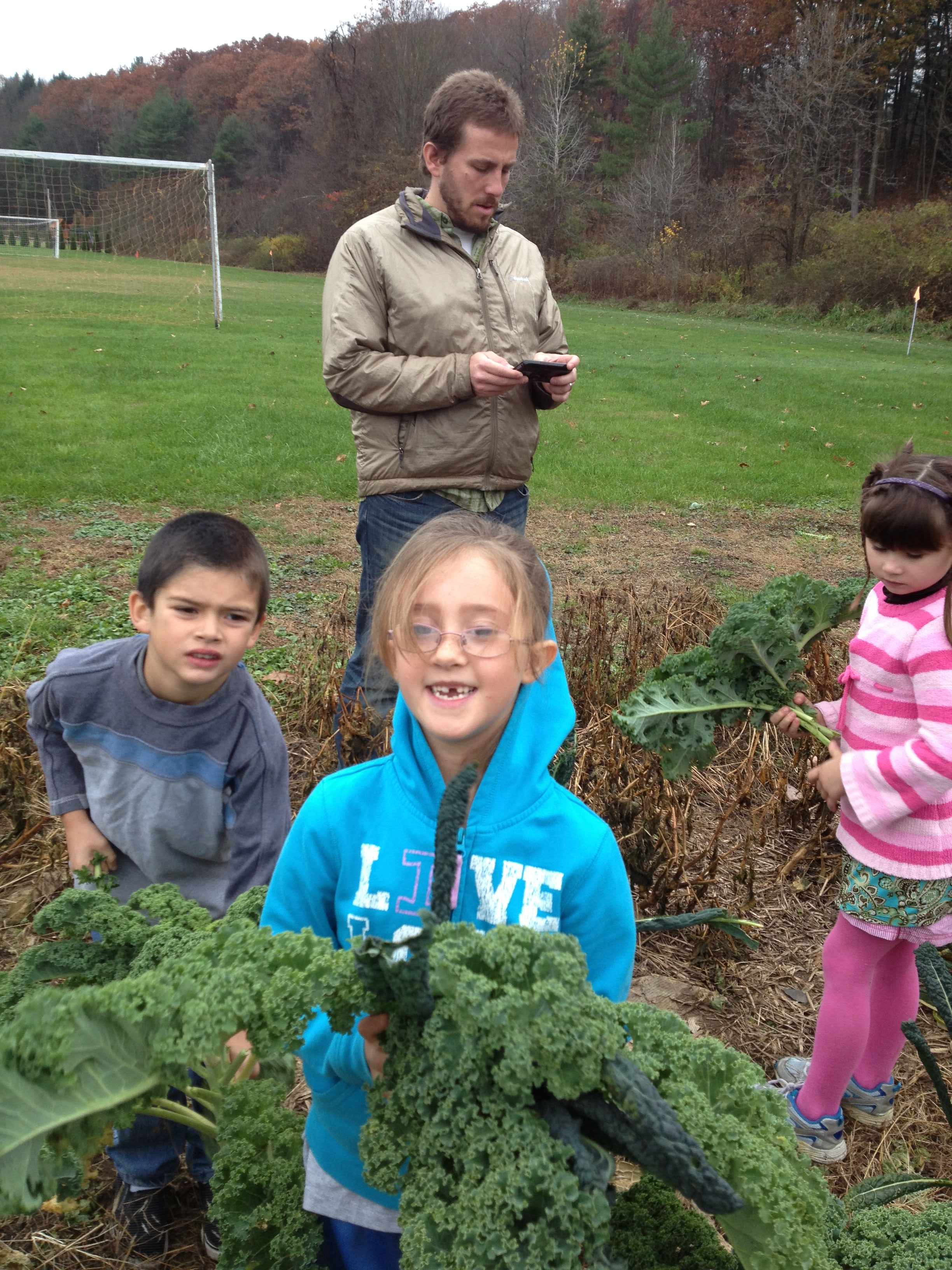
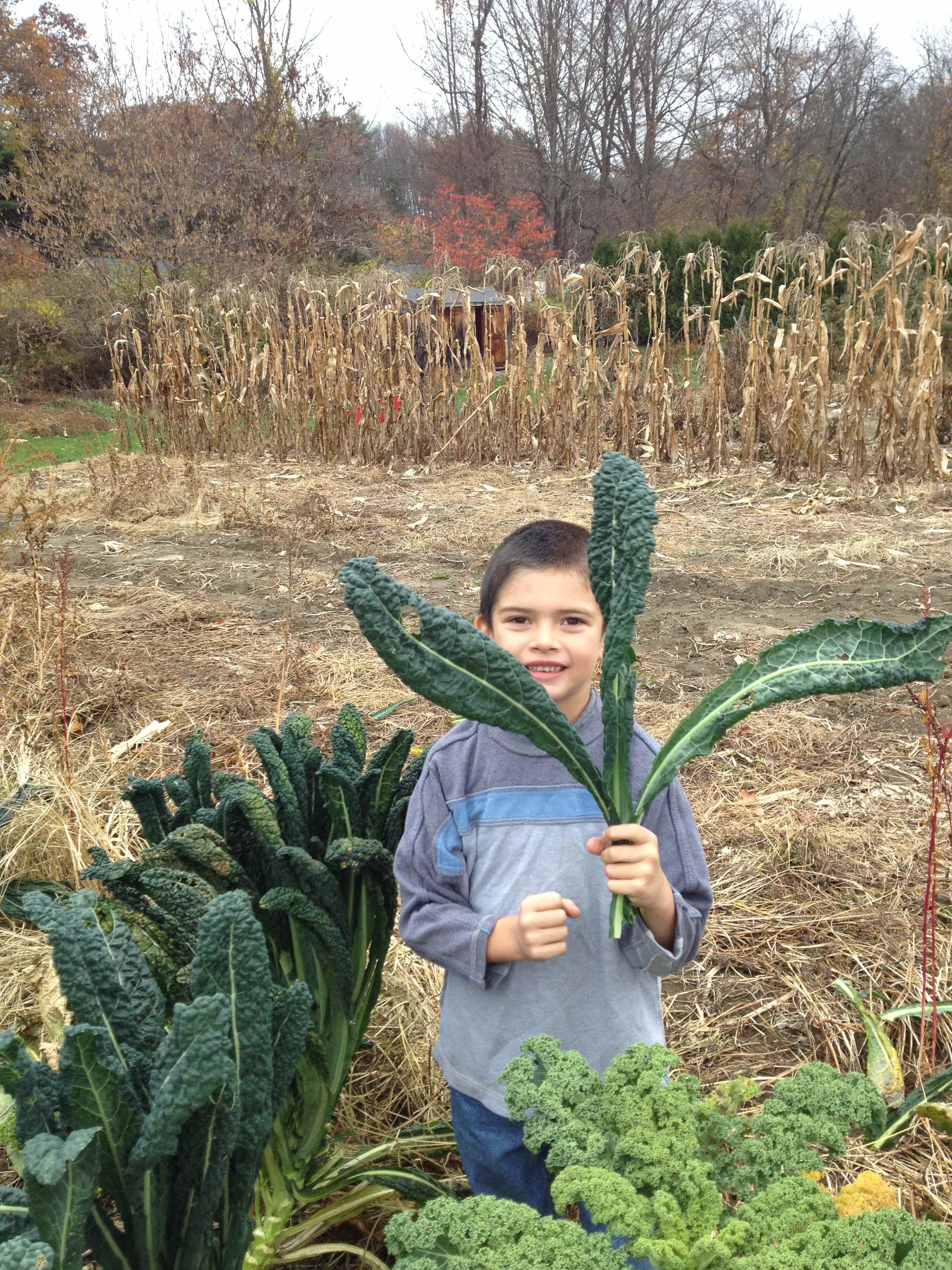
The second graders came out to trim back the kale they had planted last spring, composting the unusable leaves on the ground and picking the crisp green ones for a kale party after the Halloween parade.

Please take my picture with the kale!

Their teacher, Ian Levy, is a big fan of kale. His enthusiasm spills over into the developing tastes of his young students. They baked kale chips and kale soup together as a class and served them to their parents. I’ll get Ian’s recipes and include them in the next entry.
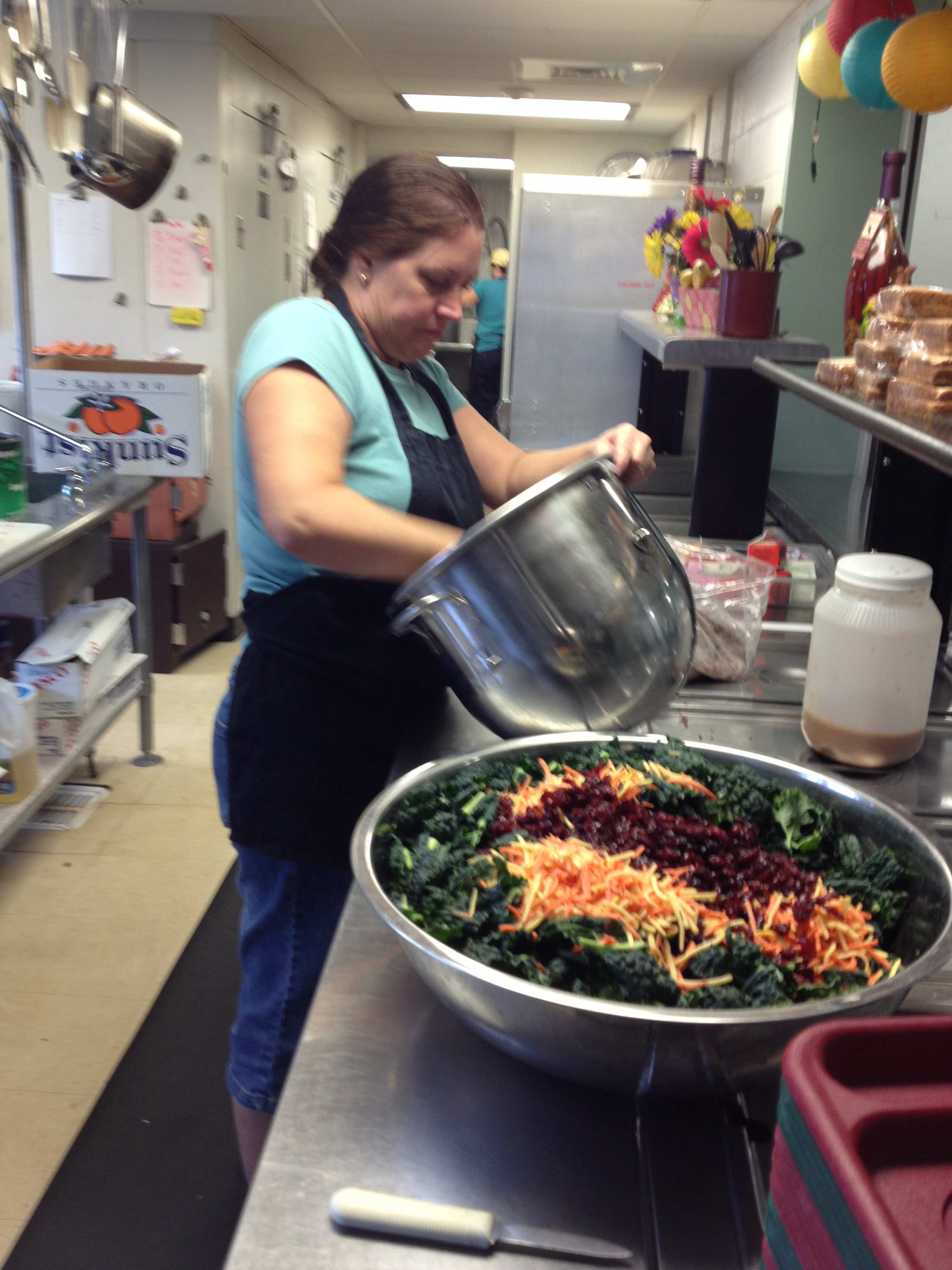
Our chef, Kim Kinney, is using the kale we harvest for her in yummy lunchtime salads.

Kale salad with carrots and craisins.


Leave a comment

Westminster Garden Vegetable Soup

Every year our school holds a family Open House at the end of October to share our fall schoolwork in progress. Families are invited to bring a pot luck soup and/or bread for a quick supper before visiting their children’s classrooms. This year the After School Program chefs and I invented our own soup to contribute to Open House.

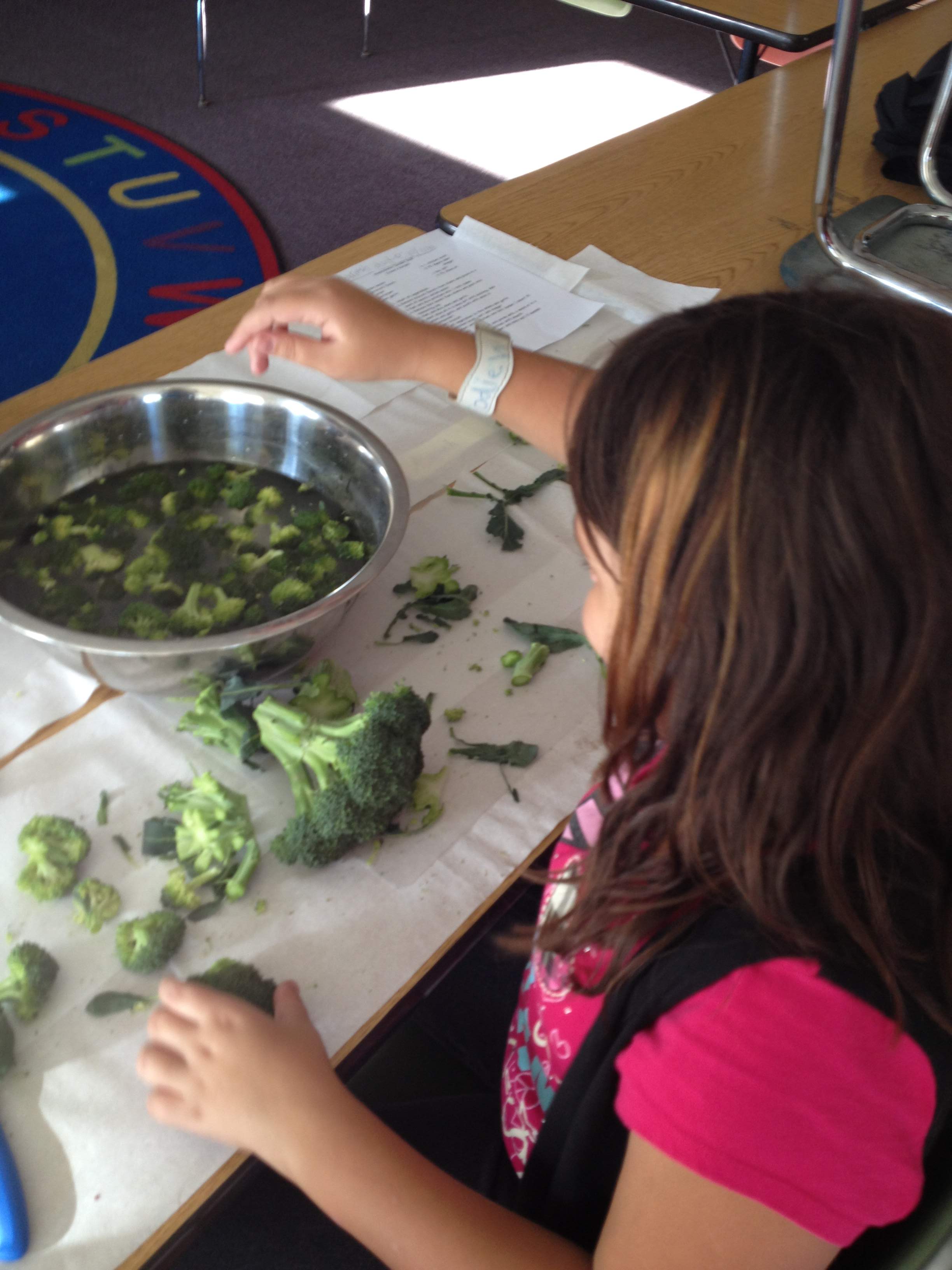
Adding broccoli florets.

All of the fresh produce except the garlic (next year we’ll grow our own) was harvested from our school garden.

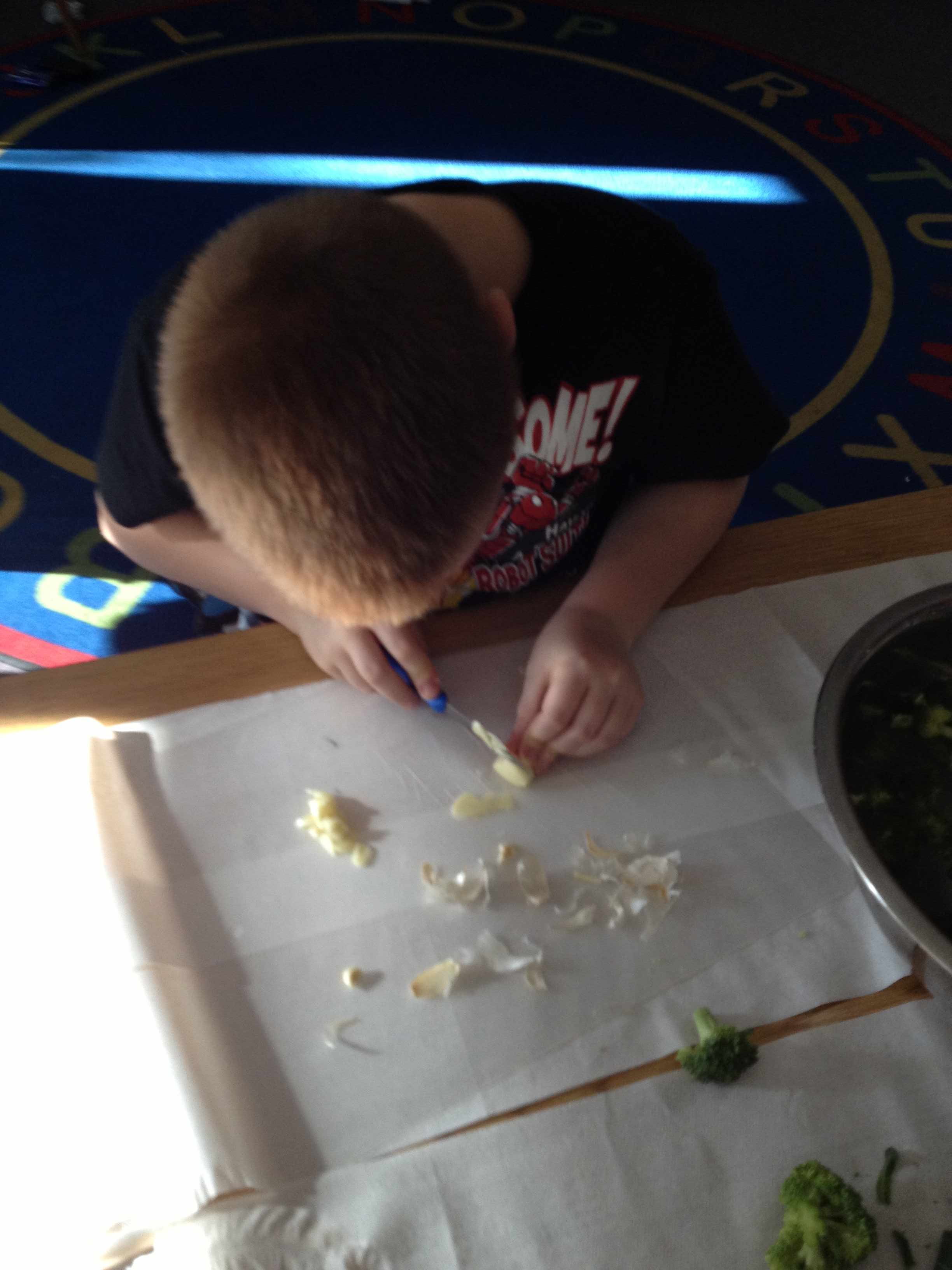
Dicing garlic.

Please note the concentration involved in food prep. I had tested this soup on the students earlier in the month. They loved it! Part of that might have been because they helped put it together. This is a great and quick recipe for a wintry night.

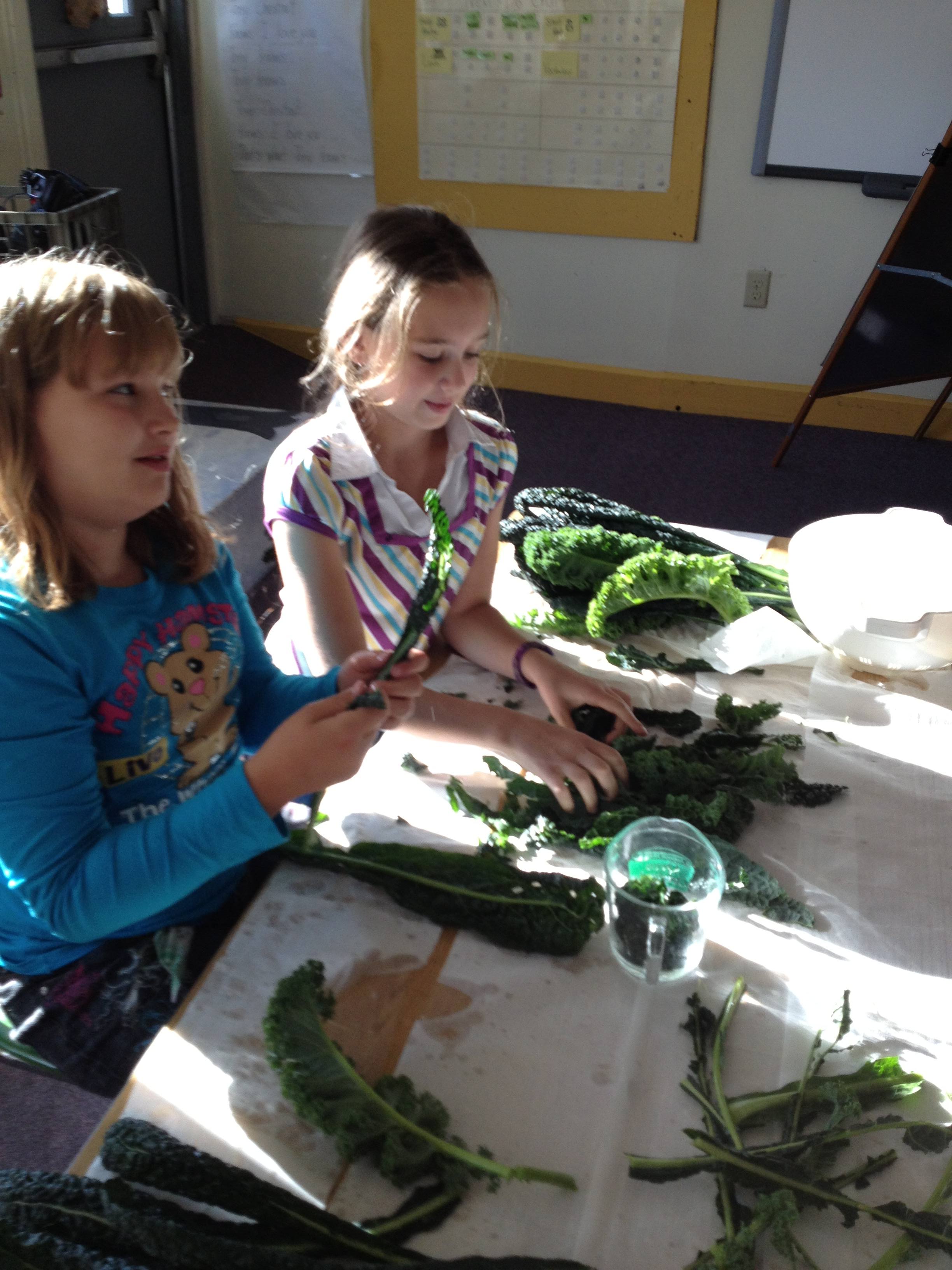
Kale de-ribbing and shredding.

The cider vinegar is just the right compliment for the green salty flavor. Add a garnish of yogurt to the top and serve with warm crusty bread.

Westminster Garden Soup Recipe


Leave a comment

Peppers and Popcorn in Before the Frost

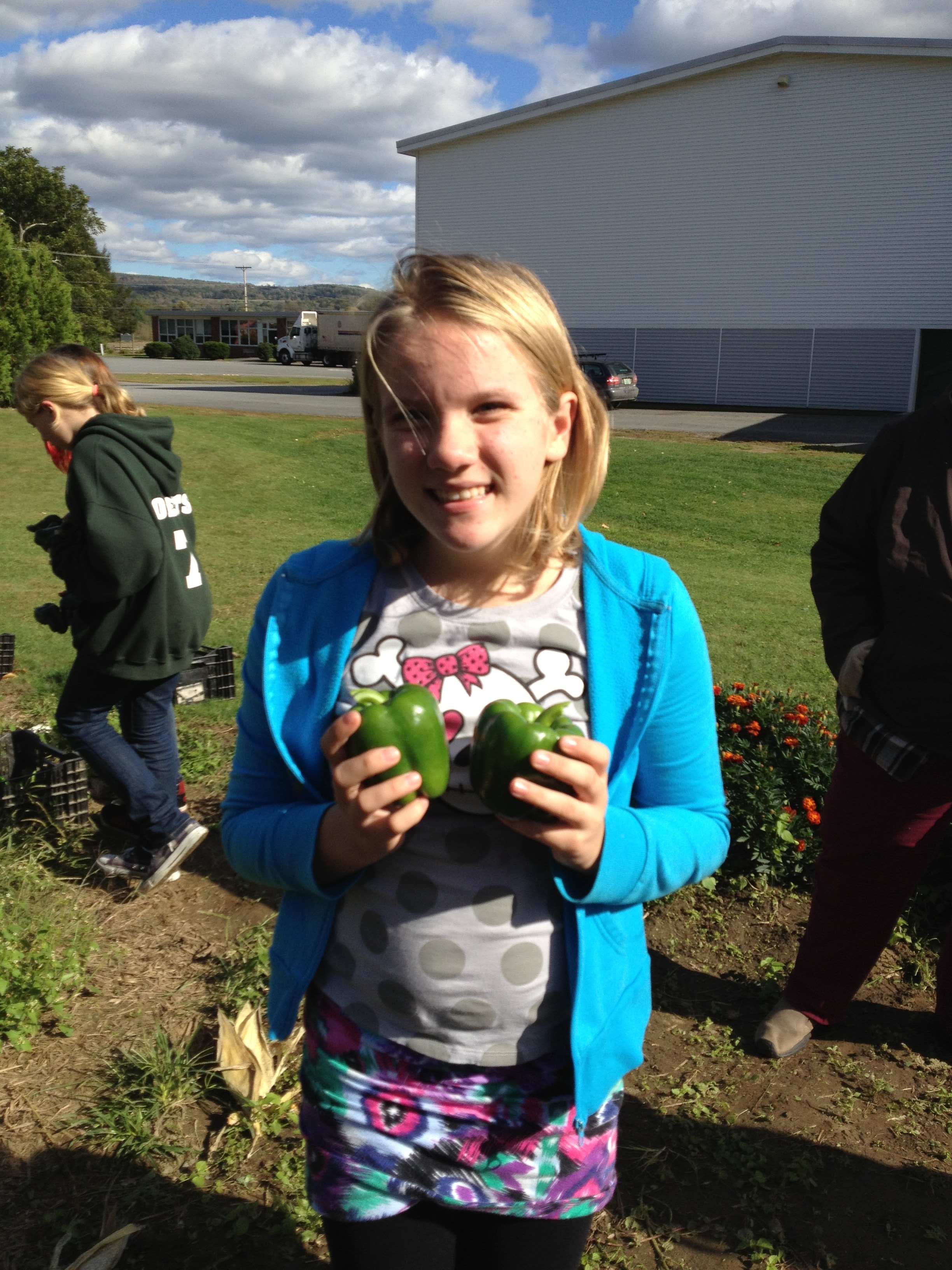
Sixth graders were on hand in the garden last week to harvest the peppers they helped plant last June.

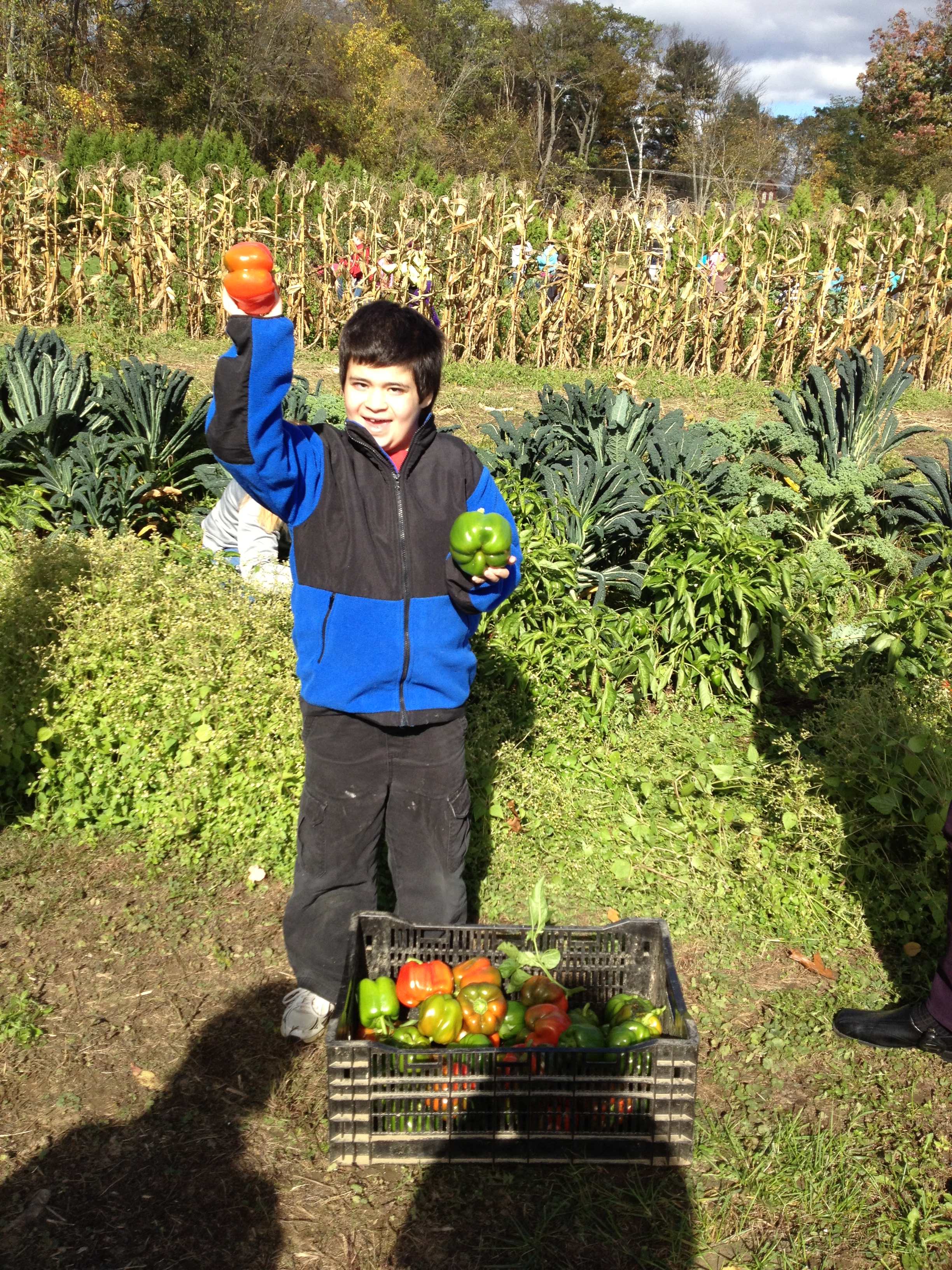
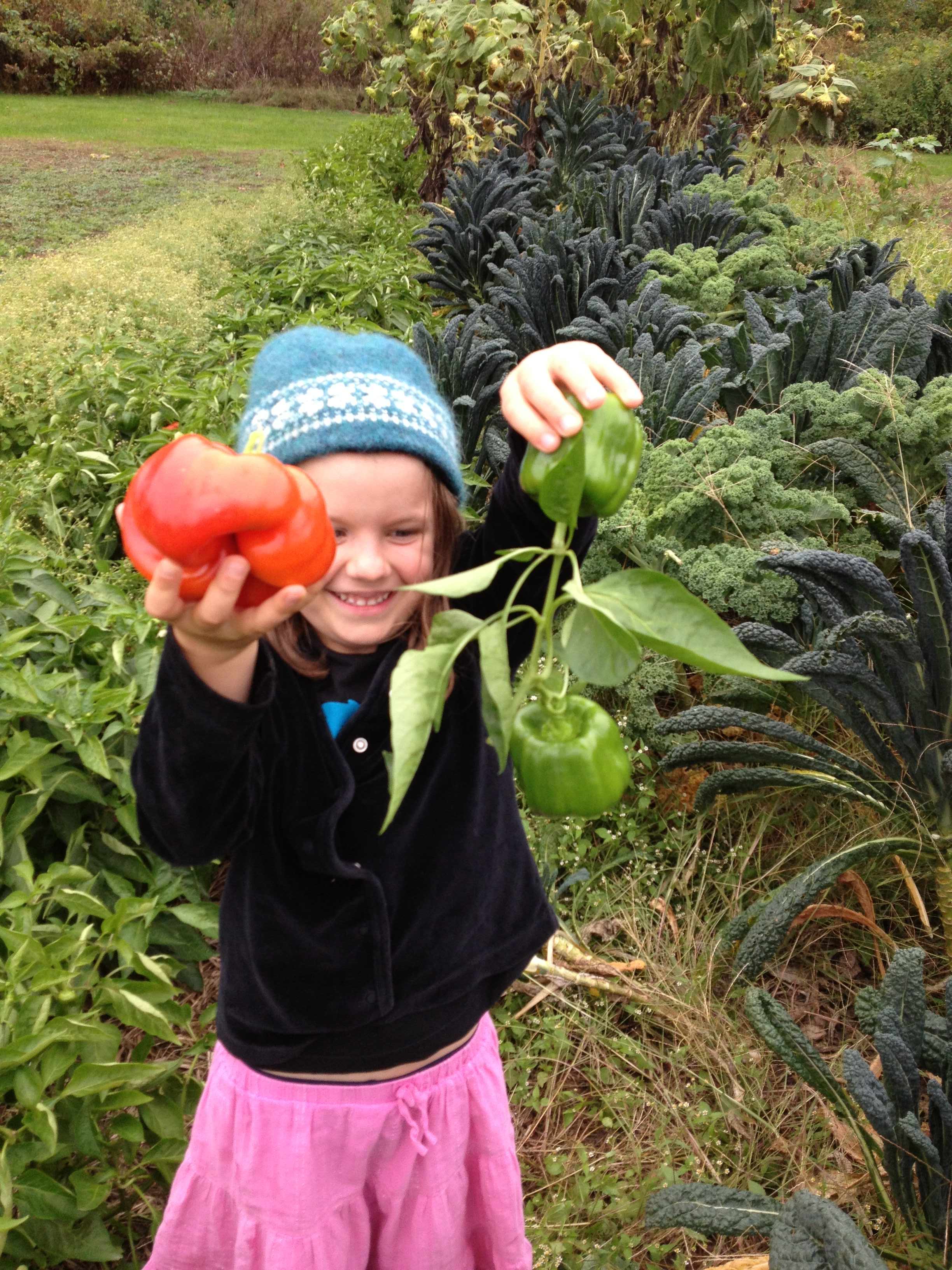
Why are some of these peppers red?

Pepper harvest!

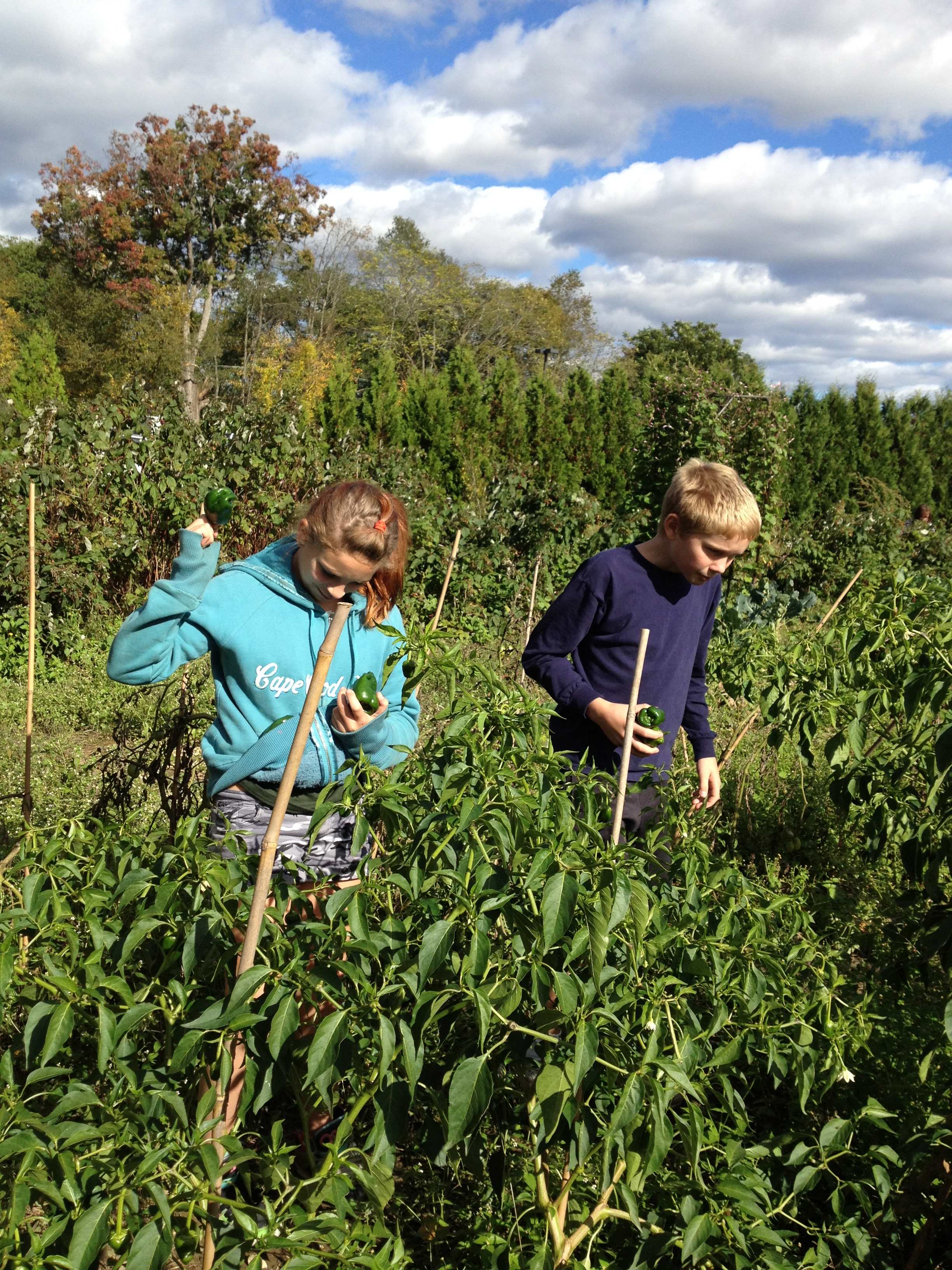
They came out on a crisp cold afternoon just before the first major frost transformed the colors of our garden from greens to browns. They poked around the plants, relentlessly picking every pepper hidden under leafy foliage.

Great conversations grew from the discovery of different types of peppers.

Some discussed the heat qualities of the different peppers they found. They wondered why some peppers had turned red while others were still green. (Peppers naturally turn red if left to ripen……Shhhhhh, don’t tell the sixth graders; let them discover this on their own.)

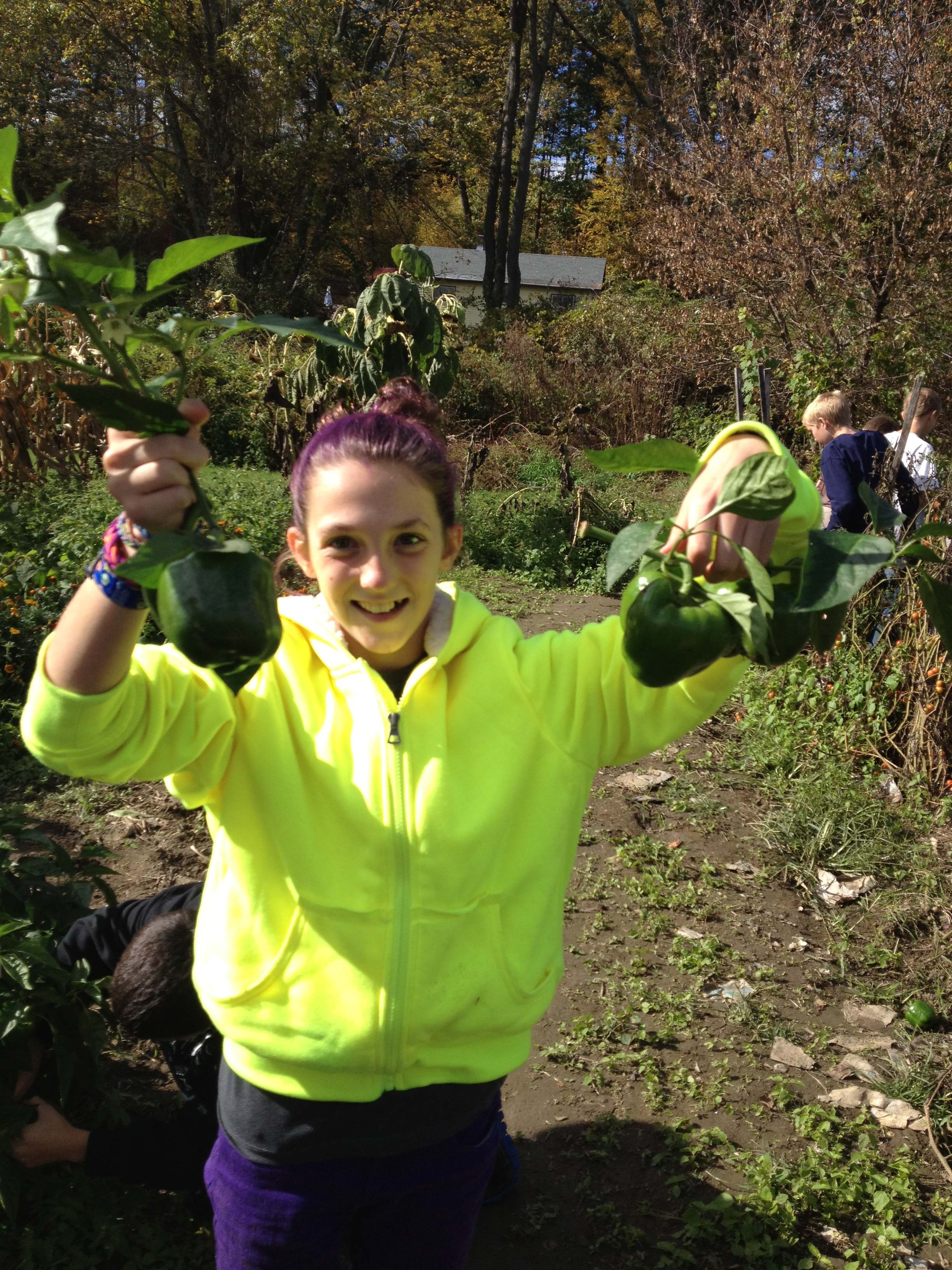
Proud pepper harvester.

I will take the peppers we harvested to Harlow Farm. They’ll keep well there in cold storage until we need them for snack or for the lunchtime salad bar this fall.

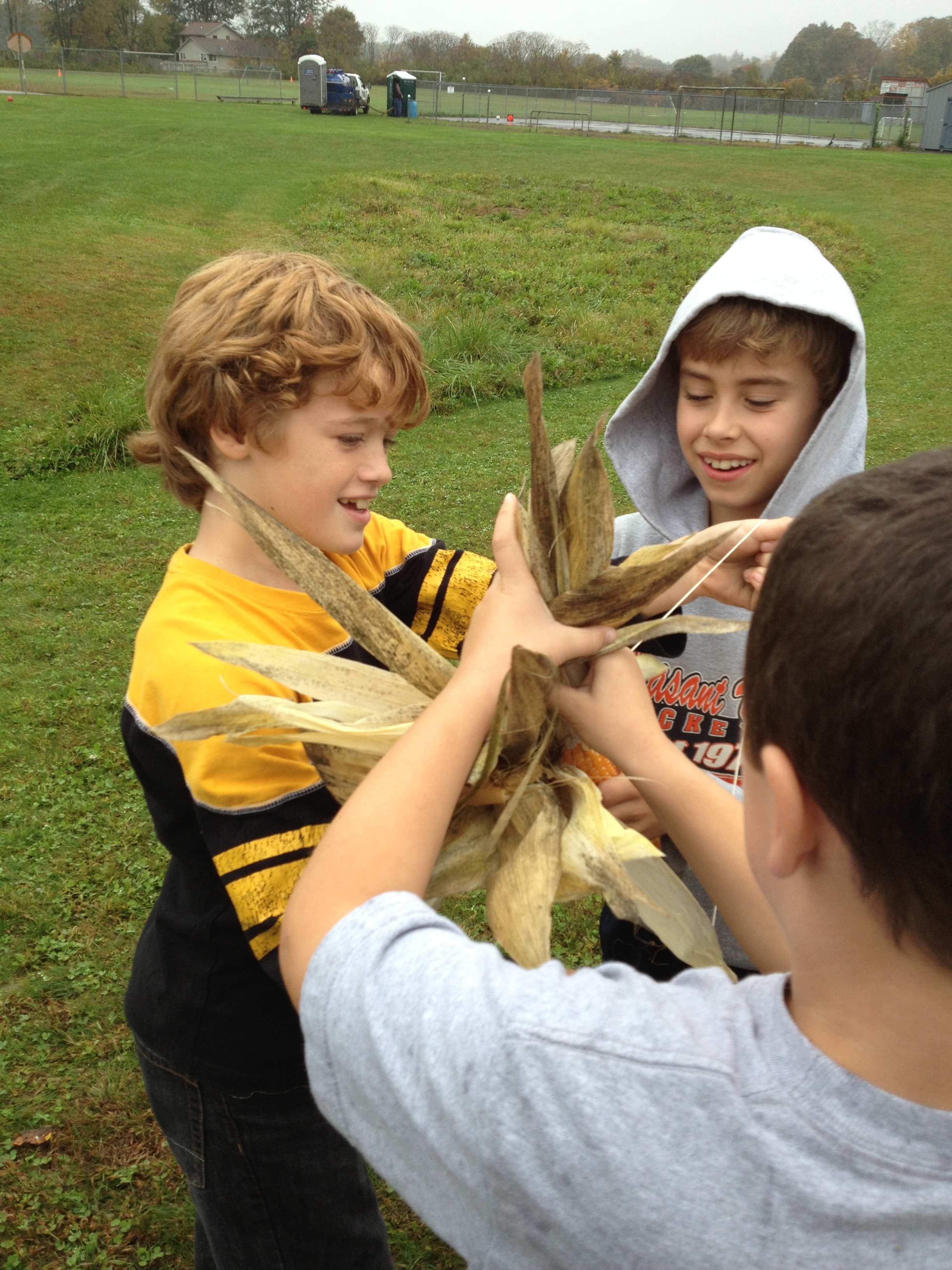
Our fourth grade classes took some time to think about the ideal environment for storing popcorn until it was ready for popping. Did you know that each popcorn kernel contains a single droplet of water inside a tiny circle of soft starch? The soft starch is surrounded by the kernel’s hard outer surface. As the kernel heats up, the water begins to expand. Around 212 degrees, the water turns into steam and changes the starch inside each kernel into a superhot gelatinous goop. The kernel continues to heat to about 347 degrees. The pressure inside the grain will reach 135 pounds per square inch before finally bursting the hull open! Popcorn needs between 13.5-14% moisture to pop. If the kernels are too dry or too wet, they won’t pop into the fluffy crisp kernels we know and love.

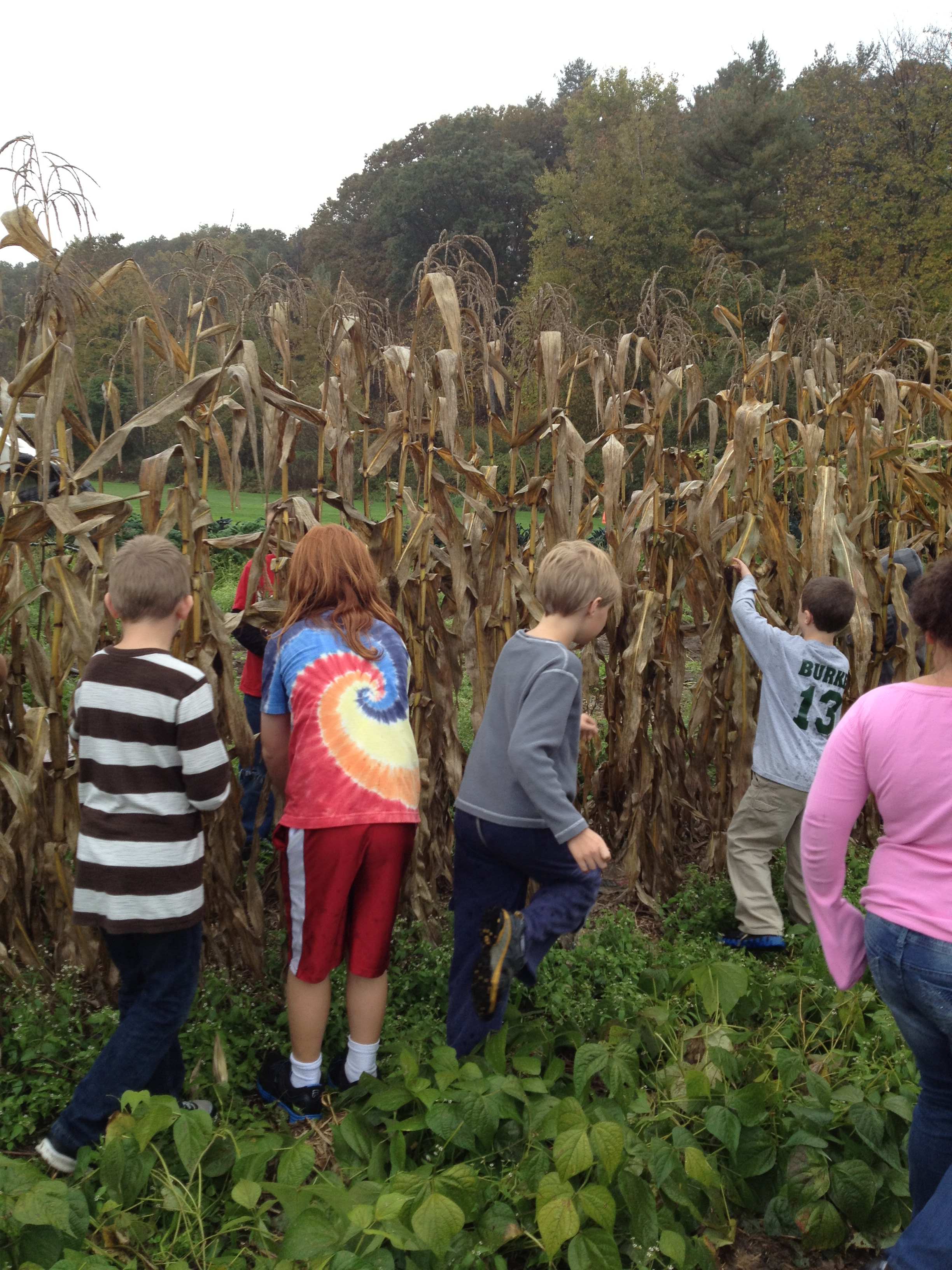
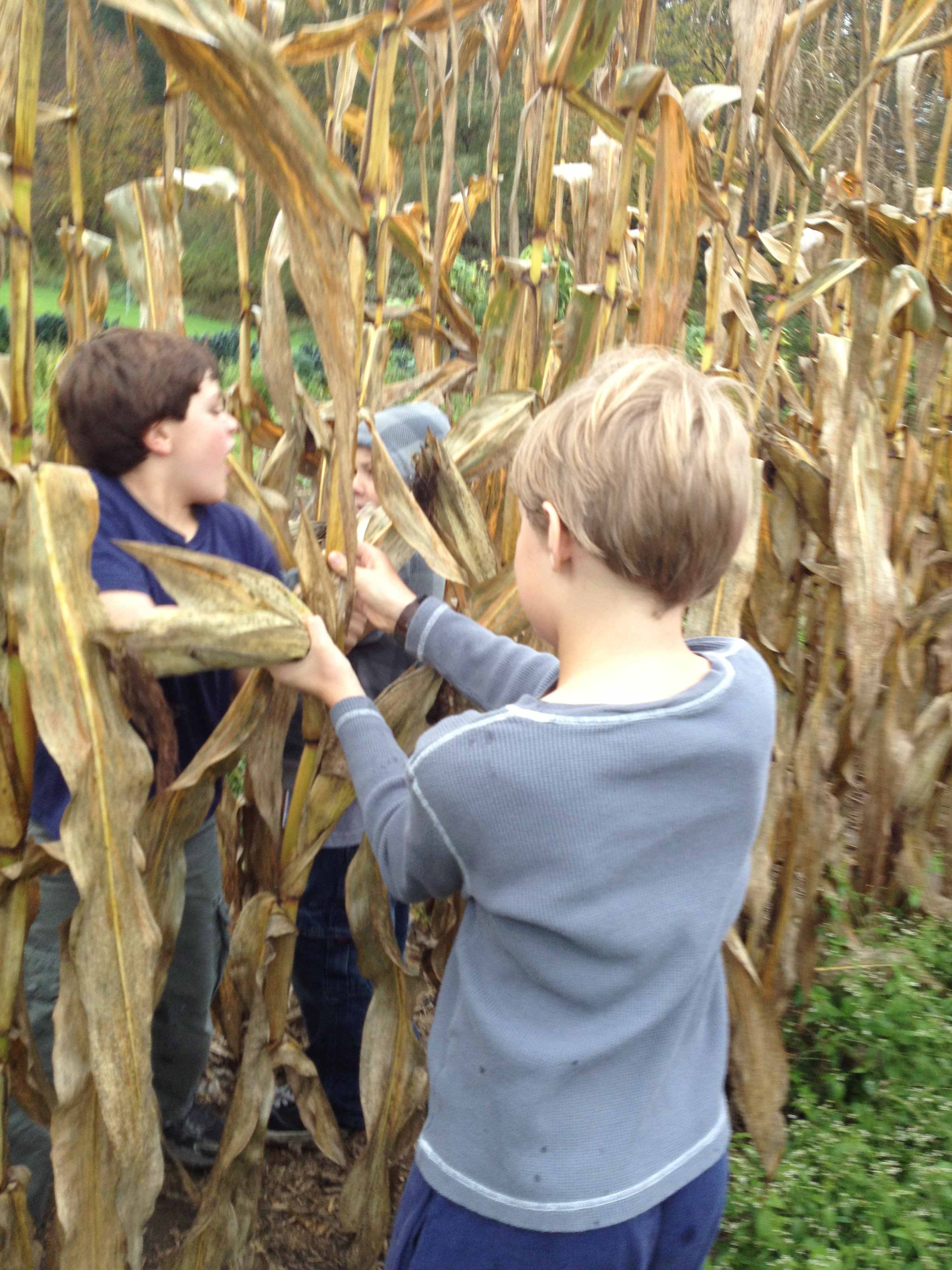
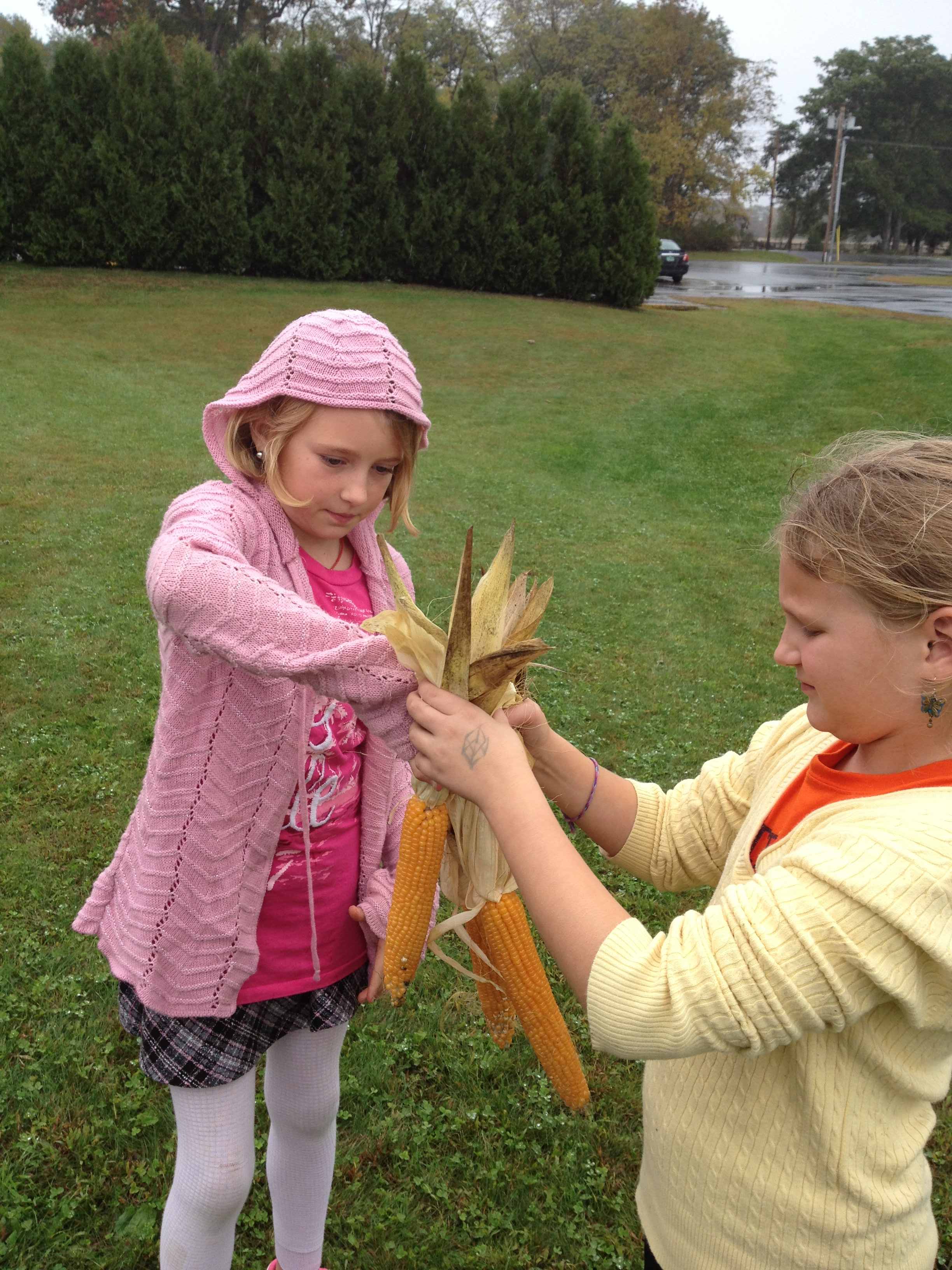
Popcorn Harvest.

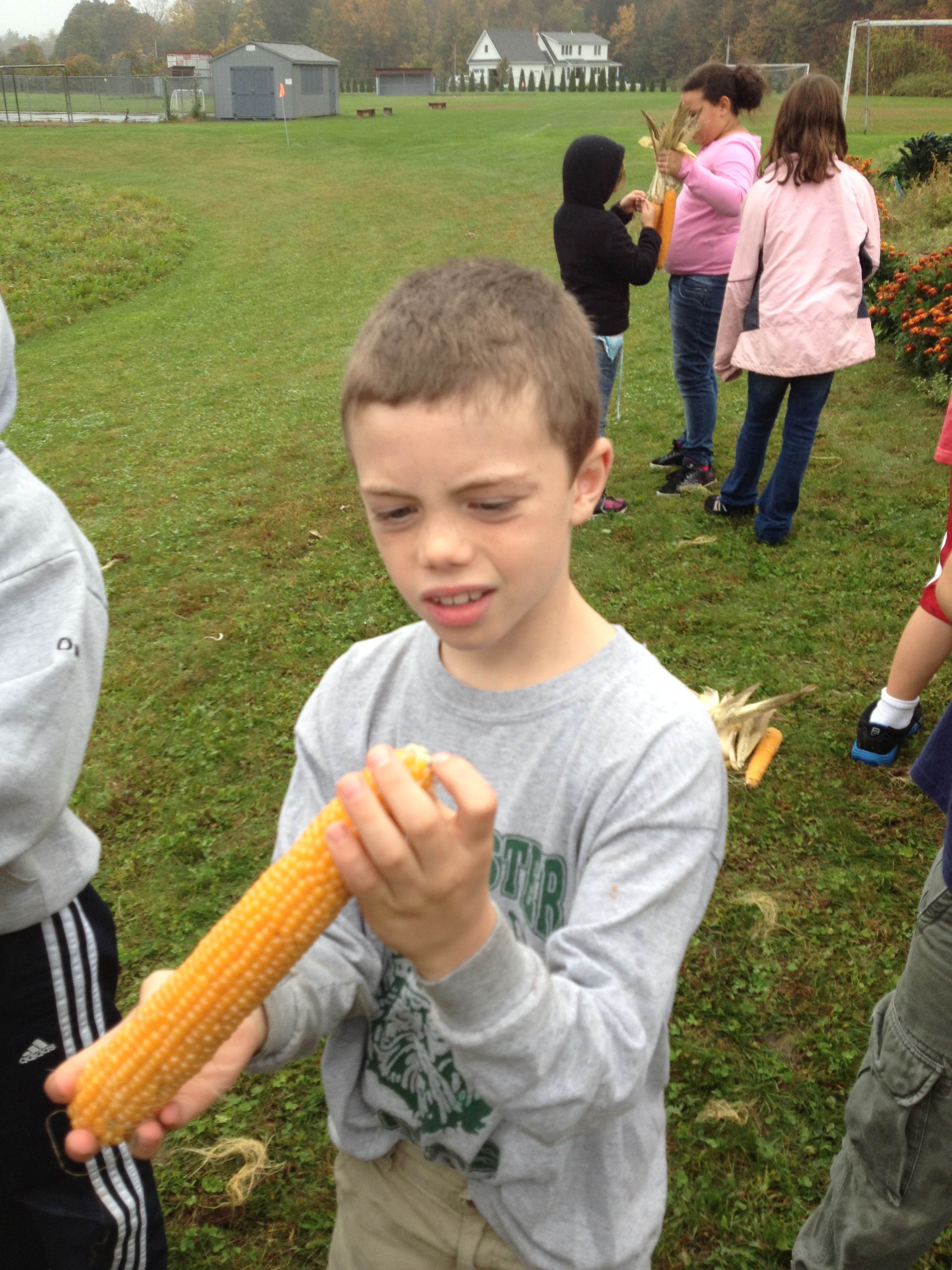
A close-up look at an ear of popcorn.

A team of popcorn harvesters.

Tying popcorn for hanging.

The fourth graders chose from four different ‘ideal’ environments for storing their popcorn. We’ll see which storage environment wins out when we conclude this experiment sometime in January with a popcorn ‘pop-off.’


2 Comments

After School Snack

Harvesting kale in October.

I’ve been visiting with the After School Program this week. many of these same children participated in the Westminster Schools Summer Camp Program. They had lots of experience harvesting kale and turning it into appetizing snacks. We made kale chips again this week and offered them to the kids on the playground. It was amazing to see how quickly they disappeared! I’ve read studies claiming that a new food needs to be introduced at least 12 times before it is accepted positively. I’m thinking that these kale chips got less promotional time and they seem to be a success.It may have something to do with accompanying group enthusiasm.
Maya, an enthusiastic ‘Kinder-gardener”, was on hand yesterday to harvest some peppers for snack.

Maya’s pepper harvest.

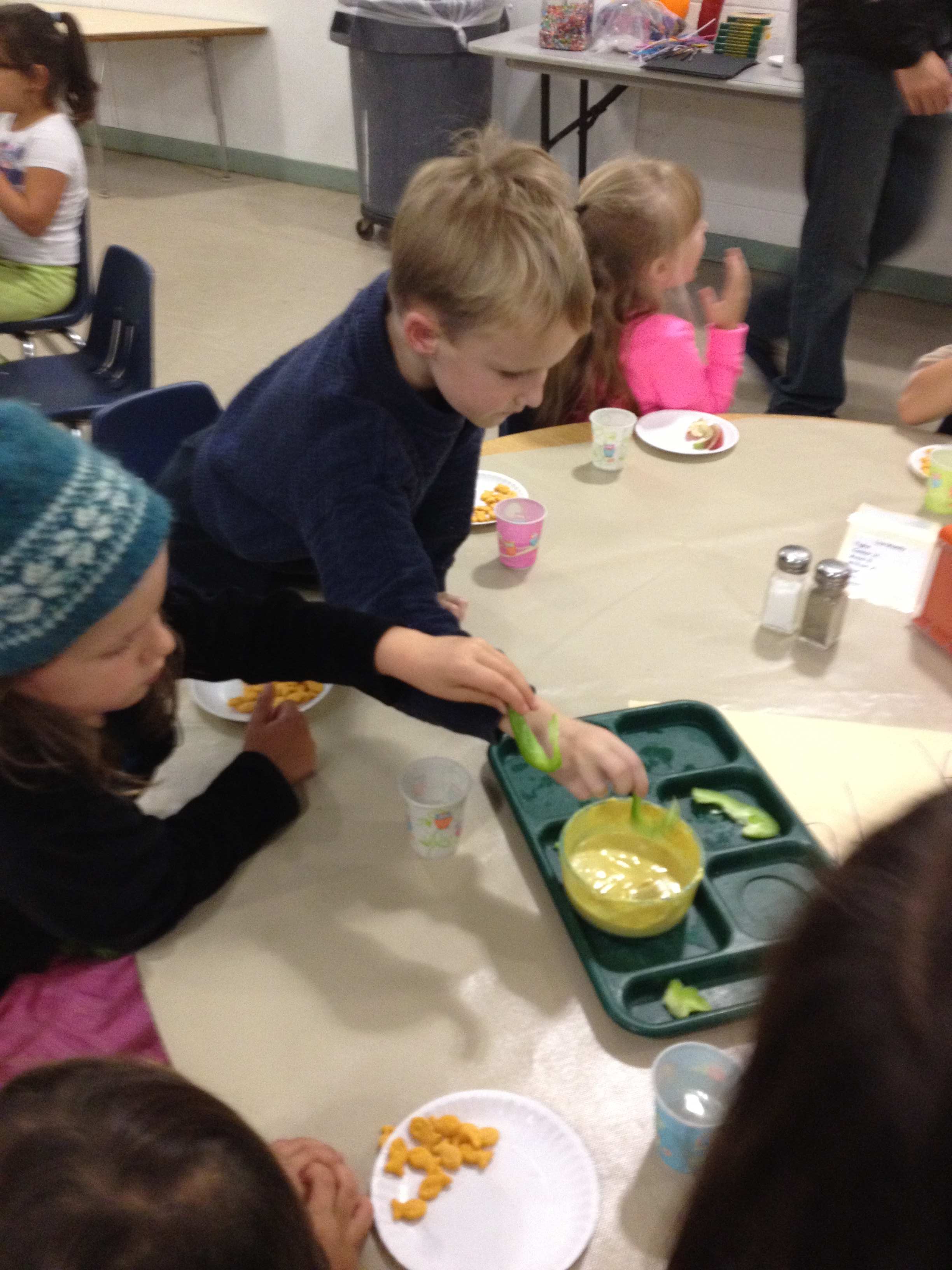
We brought them around to the After School snackers with a tofu dip I billed as ‘yellow ranch.’ One of the Kindergarters tried one and said, “I say ‘Y-E-S.’ I told her, “Then you can have ‘M-O-R-E!'”

Peppers and dip for snack.


Leave a comment

Harvesting Butternut Squash and Potatoes

Finally, last Friday we had one of those signature Vermont autumn days. “When fall comes to New England, the sun slants in so fine, and the air’s so clear

Third grade butternut squash harvest.

you can almost hear the grapes grow on the vine…”

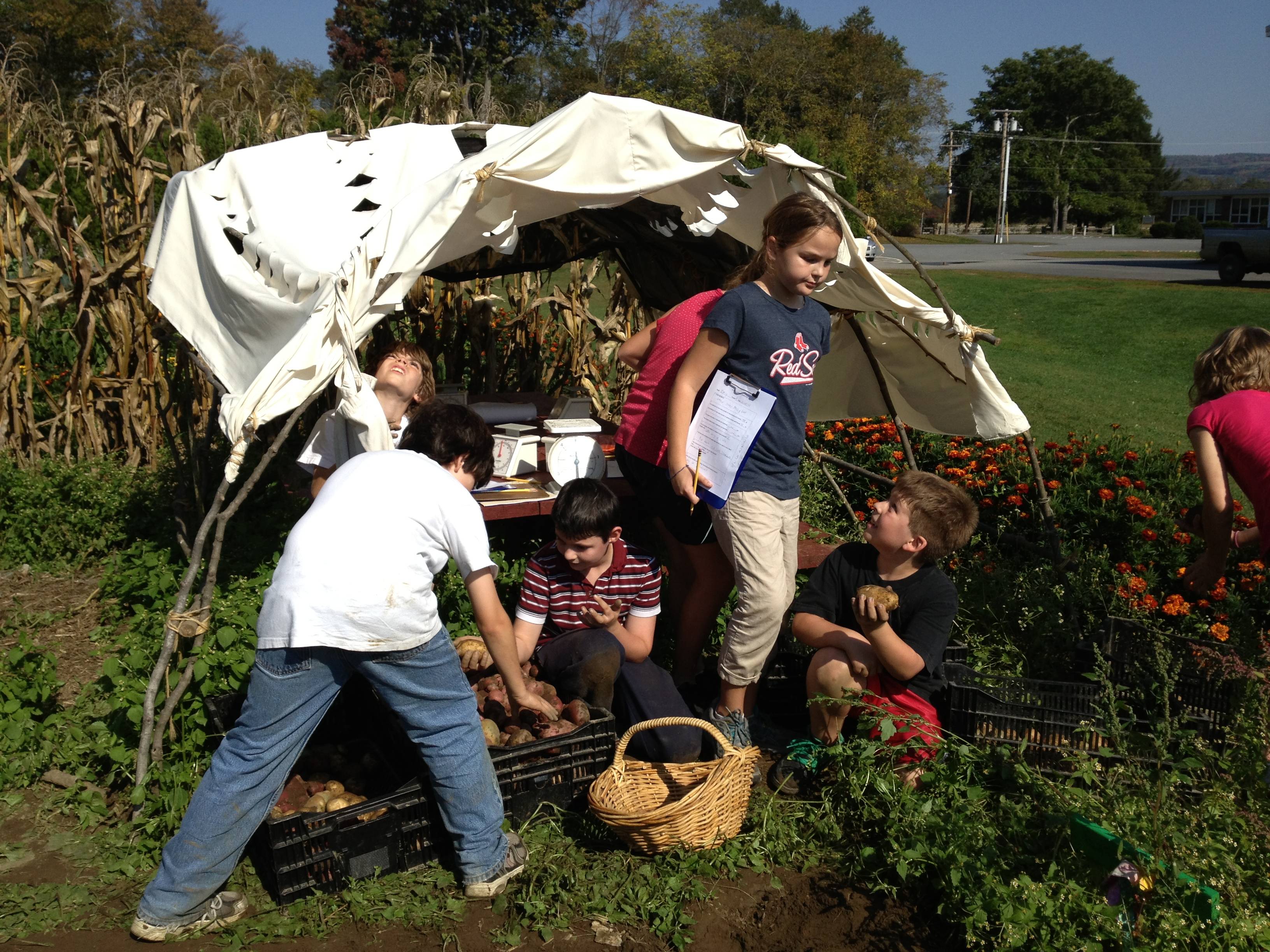
It was time to harvest our butternut squash. The second graders who planted this crop were now third graders. They were excited to discover the yellow butternut squash, once the weeds were cleared away. No matter how many times I observe the amount of kindness and cooperation children offer each other in the garden, I’m always impressed. This was a hard working third grade crew, moving wheelbarrows of weeds together, lending help wherever it was needed. They will work on cooking projects during the year using the squash. We’re so lucky to have cold storage space for our crops at the Harlow Farm.

We’re also very lucky to have farmer Paul Harlow, still supporting our Westminster Center School garden even as his daughter, Hannah, moves on to middle school.

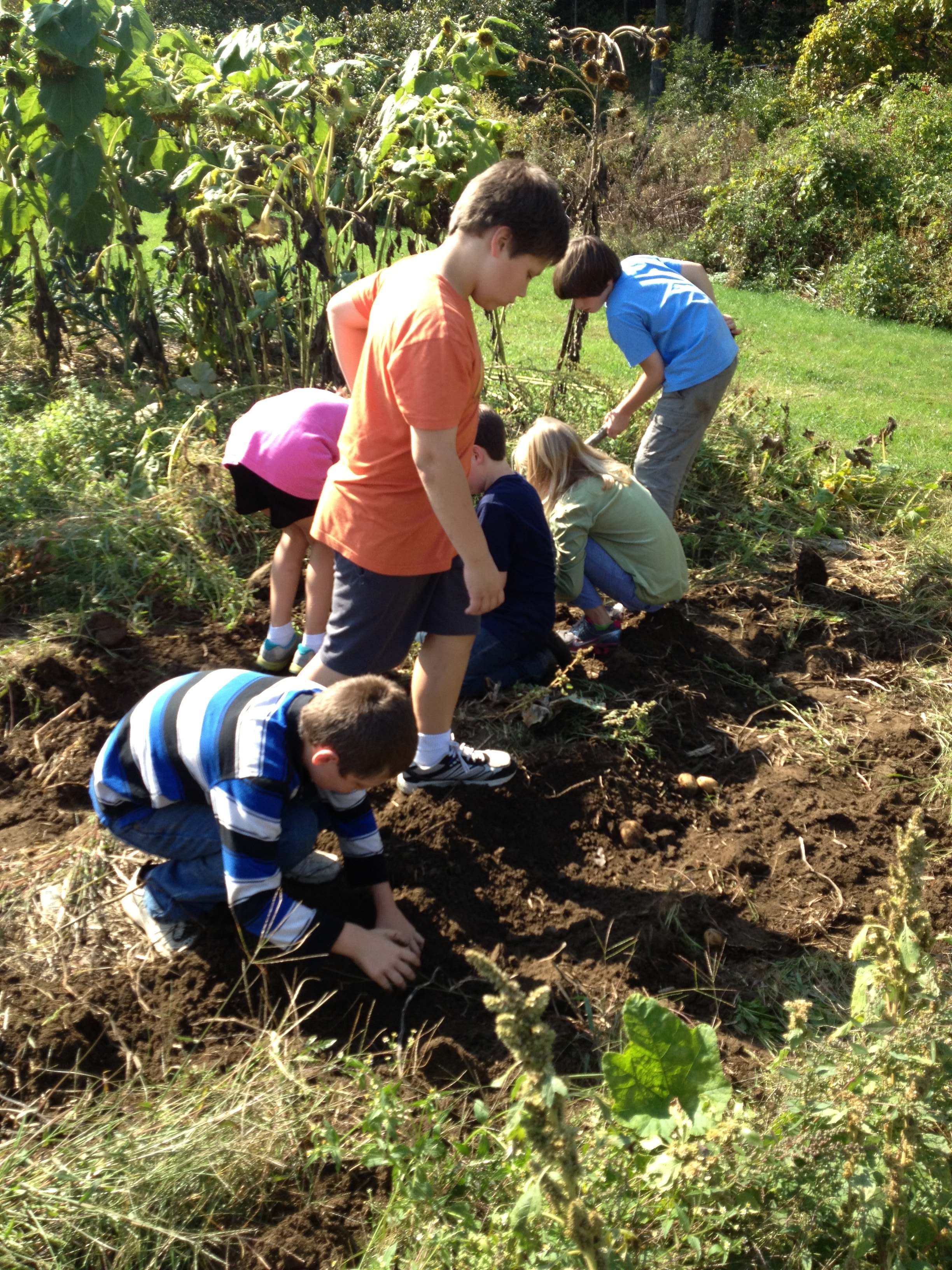
Paul Harlow helping fifth graders dig potatoes.

He pitched right in with our potato harvest and he posed some challenging questions about how many pounds of potatoes we would find. Hmmmm…..about a pound per foot….two 75′ rows……..OK, fifth graders, get to work! By the way, Teams, what was the diameter of the largest potato harvested? The smallest? These potatoes will find their way into the school lunchroom and the classroom for various projects throughout the year.


Leave a comment

Dilly Beans: A School Tradition

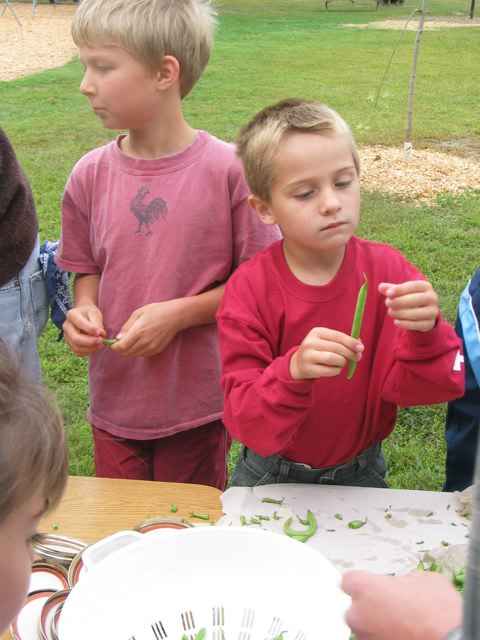
Three days after I arrived home from Colorado I got an emergency phone call from the After School Coordinator. One of the students had picked a backpack full of beans from the garden. Could I help put them up as dilly beans if the After School Program provided all the needed supplies? Dilly beans are crisp pickled beans with just the right balance of salty and tart flavor and a hint of garlicky kosher pickle flavor. I had made dilly beans every autumn for years with my multi-age class, so I accepted the challenge. The next day, after school, I met with ten sixth graders who were eager to help put up the beans.

Measuring the correct amount of spices.

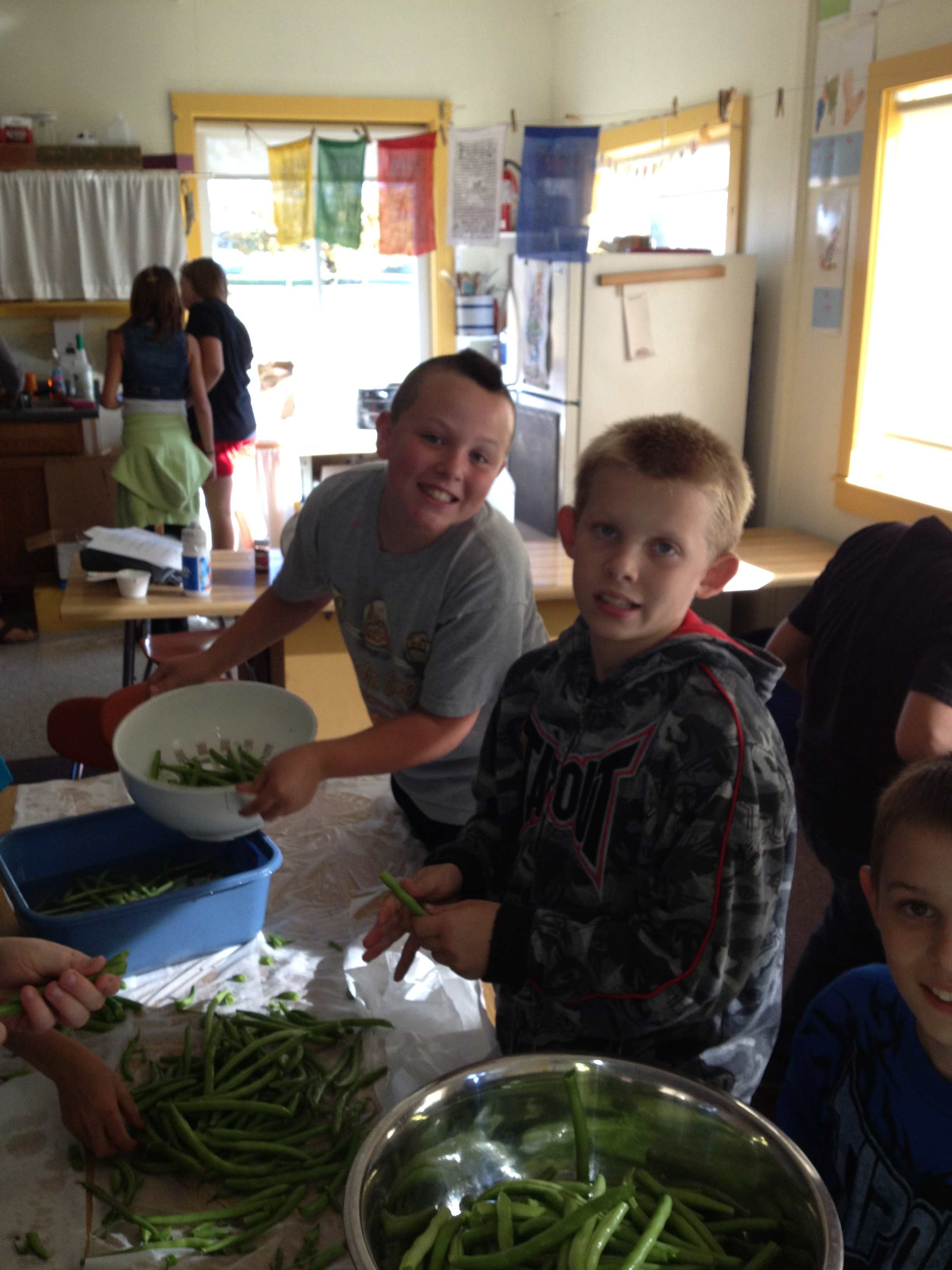
Some of these students had vague recollections of how to assemble the jars of beans for processing. They had been part of my dilly bean assembly line as first graders. Now, as sixth graders, they could read the recipe and multiply fractions of ingredients to double it. Fortunately we had the use of my old classroom. It boasts a fully equipped kitchen. The sixth graders got right to work, peeling garlic (daring each other to try some raw), washing and drying beans, and stuffing them into jars.

After School students assembling dilly beans.

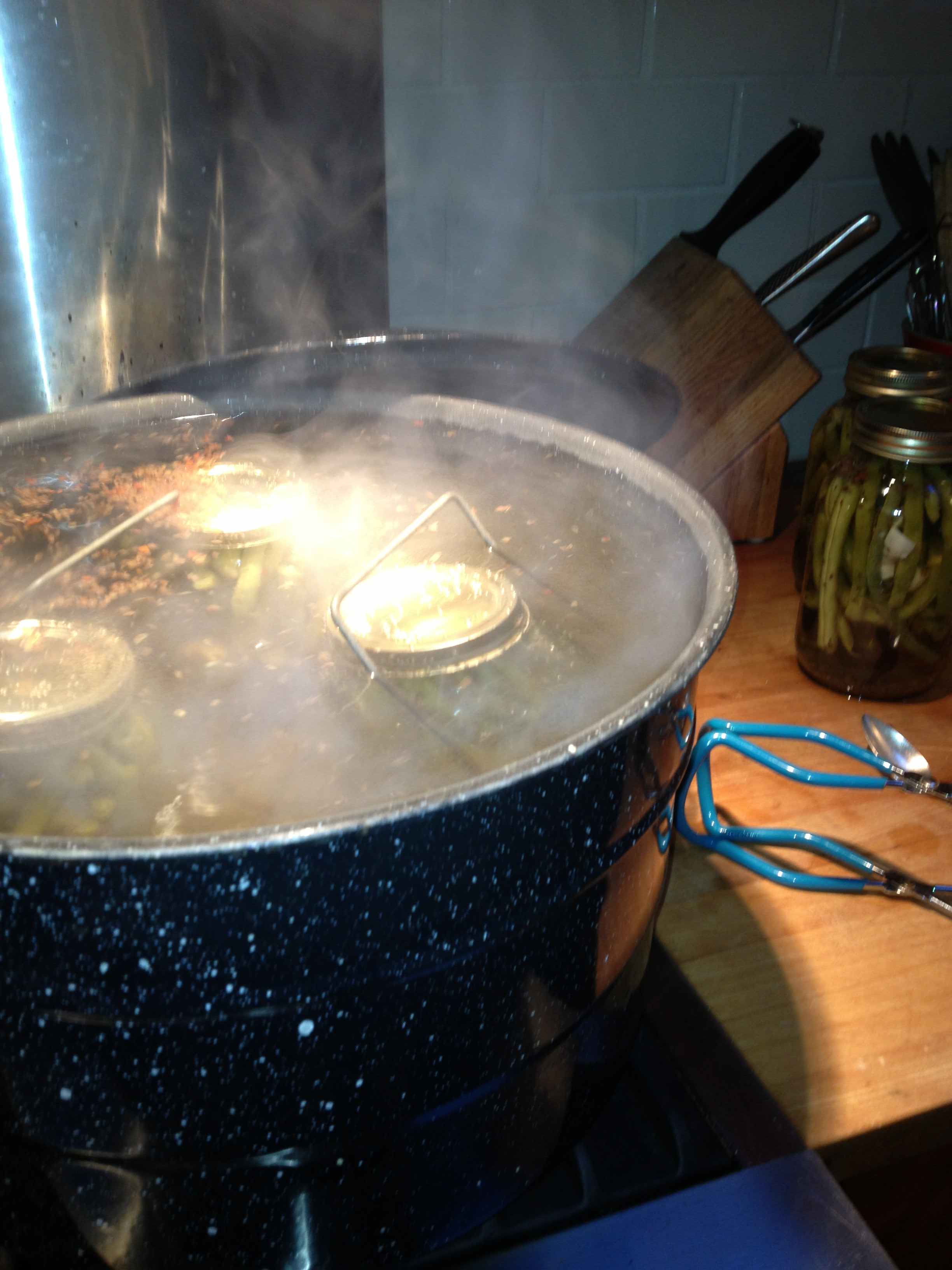
The students measured brine ingredients and I ladled it into the filled jars when it was boiling hot. I tried a new technique for sterilizing jars, having just returned from the land of bottle sterilization. We filled each washed jar with water and put it in the microwave oven for 4 minutes. Jars and caps must be sterilized before filling. I brought the half dozen quarts home with me to process. Processing ensures a good seal. Once water is boiling in the processor, jars are submerged an inch below the surface. When boiling starts again, the jars should be processed for ten minutes. After they are taken out of the boiling water, caps will cool with a ‘pop,’ indicating a good seal. I did lose one jar in the processing. You can see the dill seeds swimming on the surface of the water bath.The jars will need two weeks in a cool dark place to achieve full flavor. We’ll be trying our dilly bean this coming week. Some of the photos in section were taken a few years ago and many of these students are off to middle school. I wanted to give a sense of what an enjoyable team project this can be for an entire class. The Westminster West School happened to be making dilly beans on the same day we made them this year. Congratulations, West West!

Here’s a copy of the dilly bean recipe:

DILLY BEAN RECIPE CLASS PROJECT


Leave a comment

Student Harvesters In the Garden

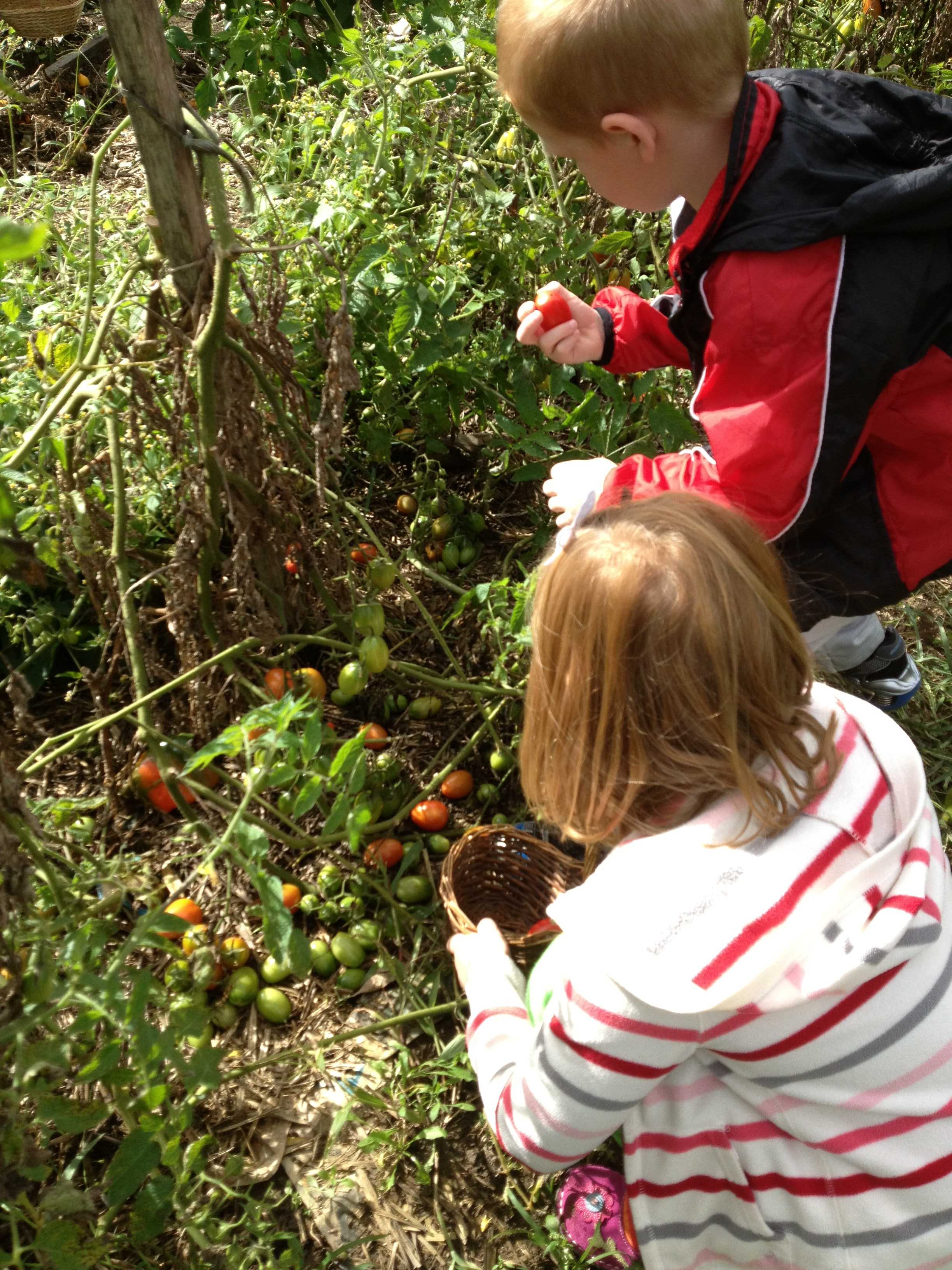
As you can see, the garden is already an outdoor classroom for returning students. I accompanied a Kindergarten as they searched for tomatoes and peppers the other day.

Harvesting tomatoes together.

They made many other observations in the 45 minutes that  they spent walking around the garden.Their sense of wonder brings me back to the small miracles I miss all the time, just not being that close to the ground anymore! They were great at figuring out how many tomatoes they needed if they were harvesting twice as many ‘as they were old.’ After their harvesting was finished, they grazed on the abundant fall raspberries.

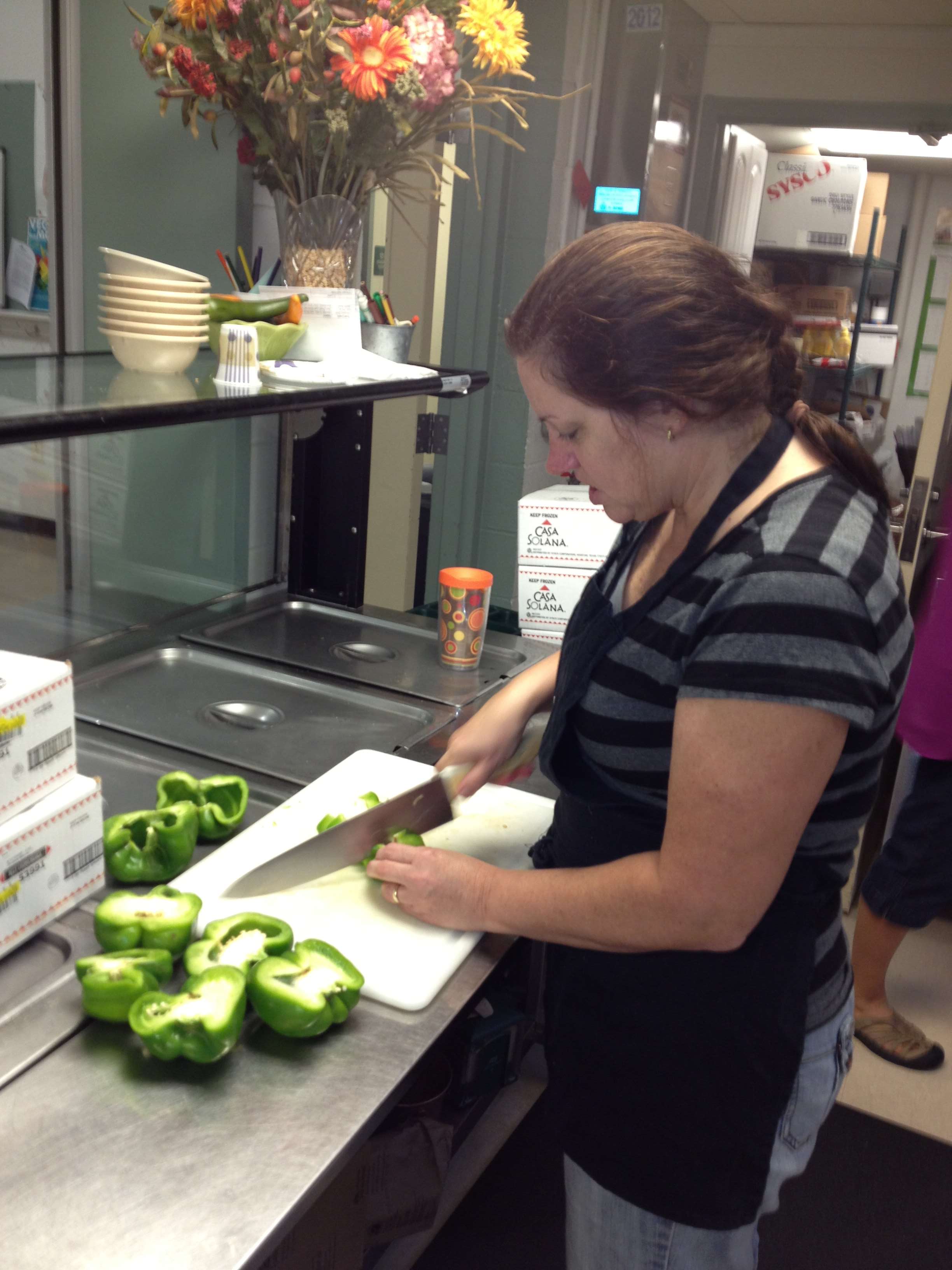
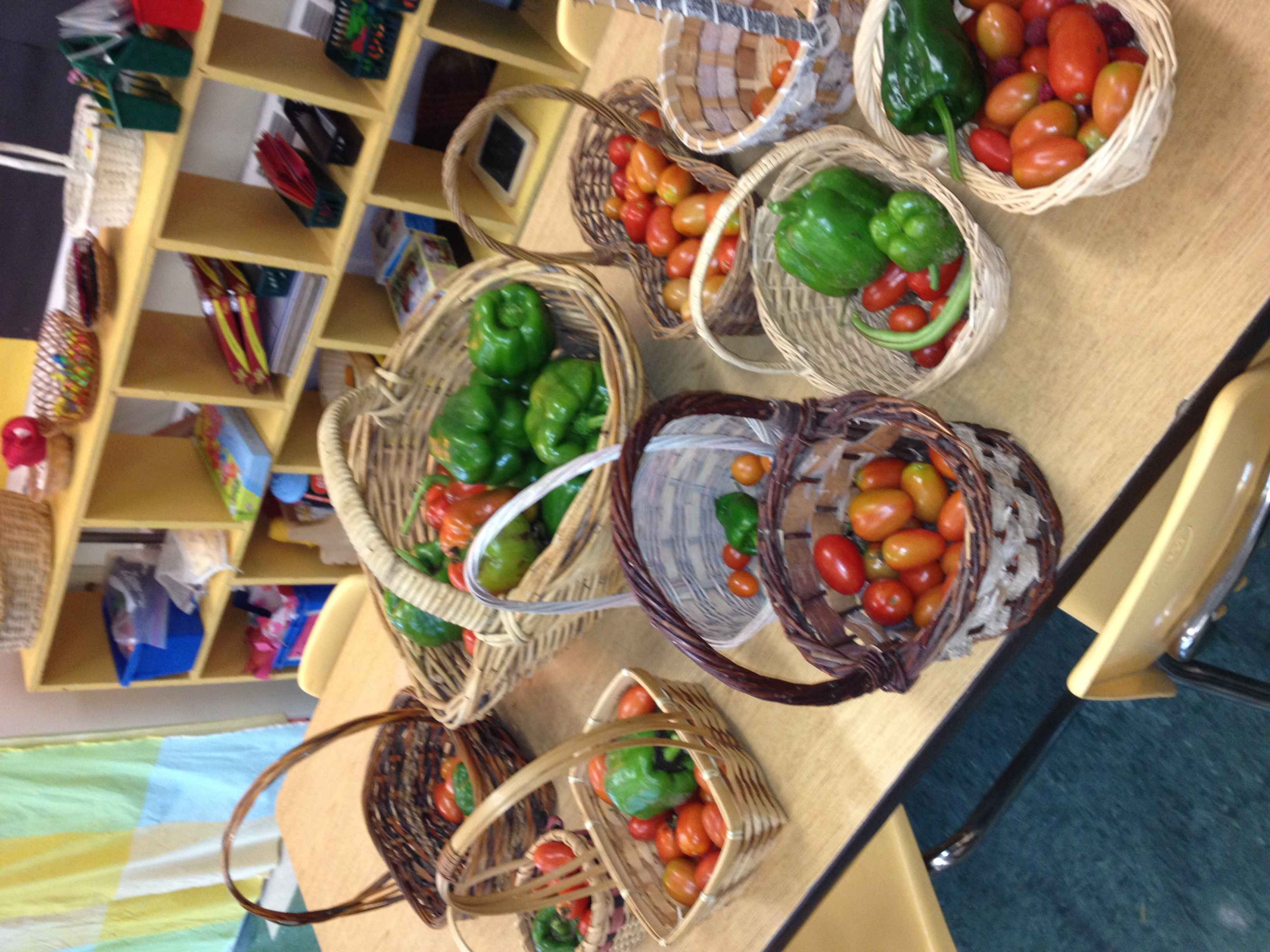
The peppers and tomatoes were given to our chef, Kim, to be used for making chili and for the salad bar. YUM!

Our chef, Kim, making chilli.

Kindergarten harvest.